
Succulents are a diverse group of plants that come in all shapes and sizes. Like many wonders of the natural world, many species of succulents are named for their resemblance to other creatures—Burro’s-tail, string of bananas, and the split-rock succulent, to name a few.
The split-rock succulent is a truly unique addition to an indoor garden. In this article, we’ll explore how to grow and care for this distinctive plant.
Let’s dig in!
Origins of the Split-Rock Succulent
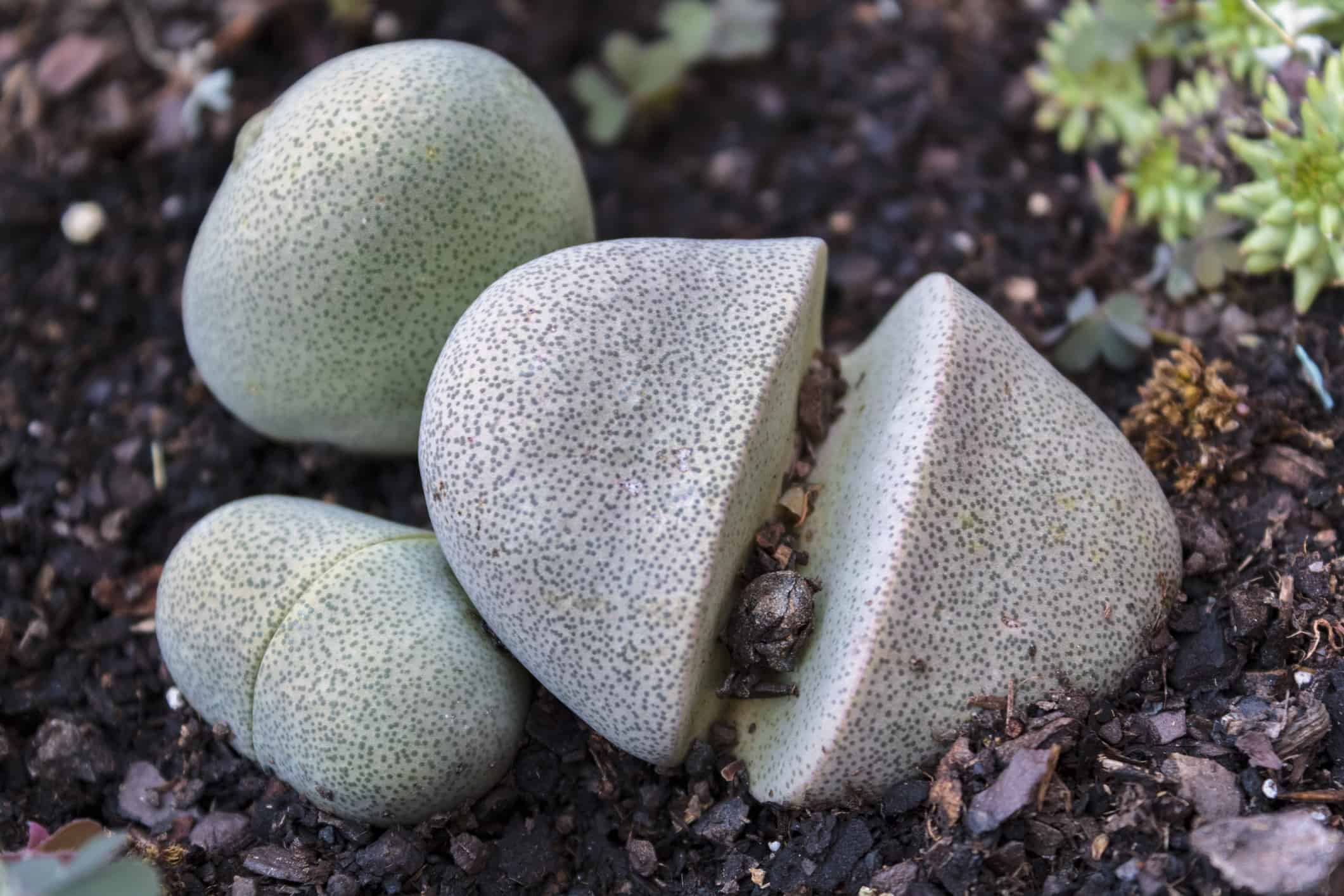
Split rock succulent Pleiospilos nelii.
©Sonia Bonet/Shutterstock.com
Several species are listed as split-rock succulents. However, Pleiospilos nelii is considered a “true” split-rock succulent. Also known as the Split Rock or Living Pebble, this plant grows naturally in South Africa.
Several species in the Lithops genus are also classified as split rocks. These beauties are also native to South Africa, as well as Namibia and Botswana.
Split-Rock Succulent Characteristics
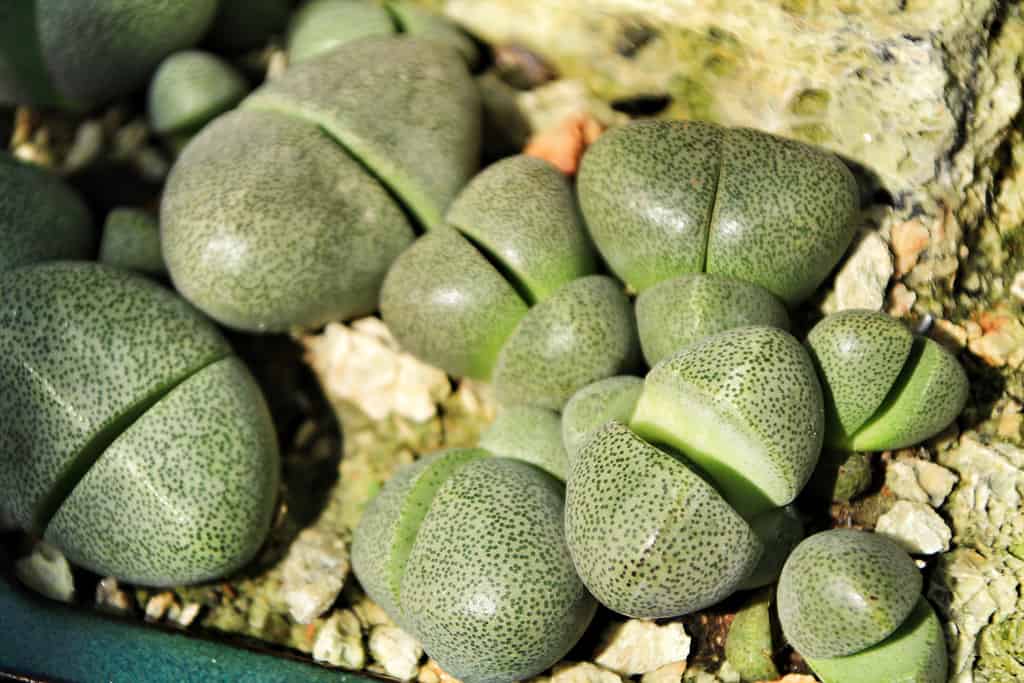
As the name implies, most succulents bearing the split rock moniker look like small pebbles that have neatly cracked in half. The distinct halves tend to have a flat top with rounded undersides.
Scientists believe that the resemblance to stones is a part of the plant’s natural defense mechanism in its desert environment, deterring hungry herbivores from taking a bite.
Common Split-Rock Succulent Varieties
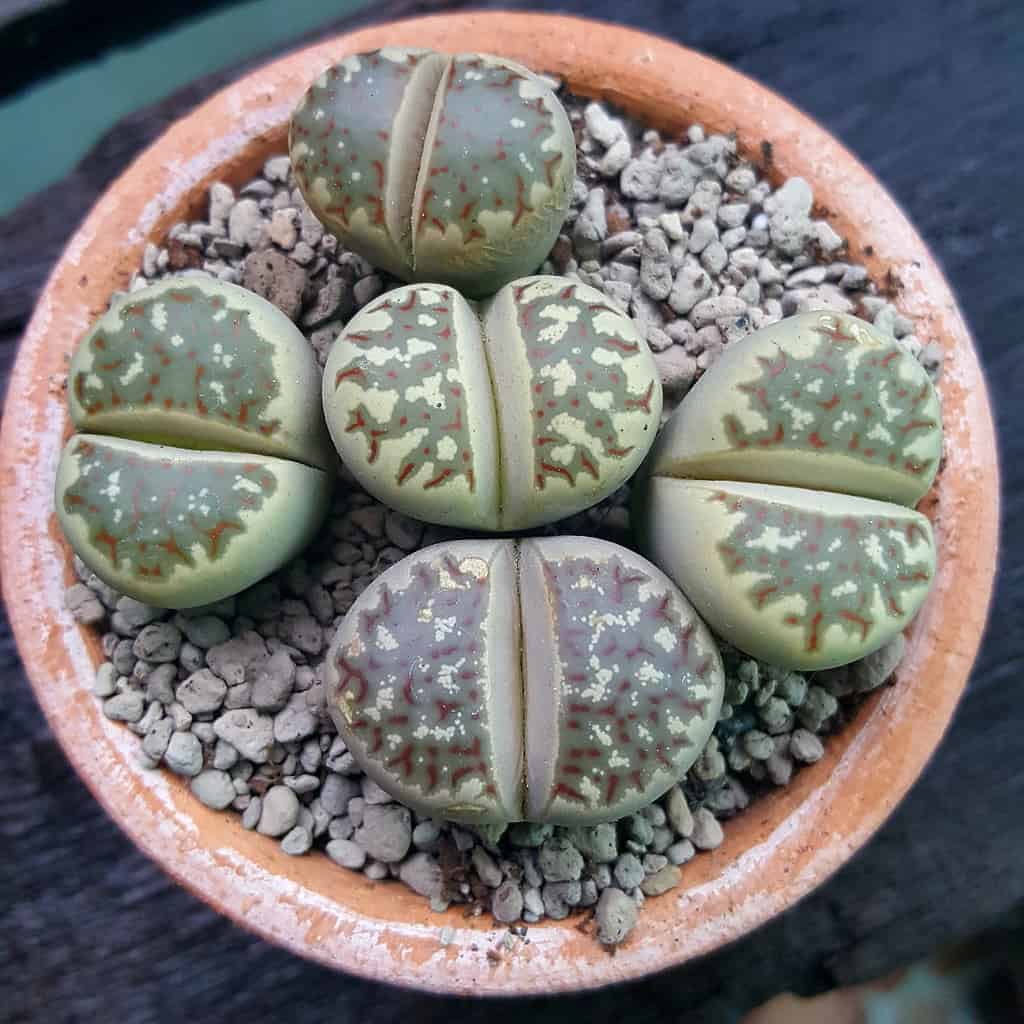
Cluster of Lithops dorotheae succulents in a pot.
©iStock.com/Nutsara Rukbangboon
There are many types of succulents that bear the split-rock moniker. Some of the most popular cultivars include:
- Pleiospilos nelii – the true split-rock succulent has flat, gray-green leaves with intricate lines and grooves. With proper care, a bright yellow-orange flower will bloom from the center.
- Lithops optica ‘Rubra’ – also known as Flowering Stones, this succulent has a stunning purple-red coloration and daisy-like flowers.
- Lithops dorotheae – also known as Dorothea’s Lithops, this succulent looks like colorful pebbles and can go months without water. Its flowers are yellow and similar to dandelions.
- Pleiospilos bolusii – also known as Bolus’s Split Rock, this larger variety of split-rock succulent grows outward, framing its bright yellow bloom.
- Pleiospilos Nelii ‘Royal Flush’ – this beautiful split-rock has an egg-like center with an eye-catching fuschia bloom.
- Lapidaria margaretae – this uncommon split rock succulent has an almost geometric shape with blush tones of pink and purple.
Split-Rock Succulent Benefits and Uses
People primarily use split-rock cultivars for ornamental purposes and indoor growth. These desert plants only grow outdoors in USDA zones 9-11.
As a low-maintenance plant, these succulents are ideal for filling in a terrarium and adding dimension to succulent arrangements.
How to Grow Split-Rock Succulents
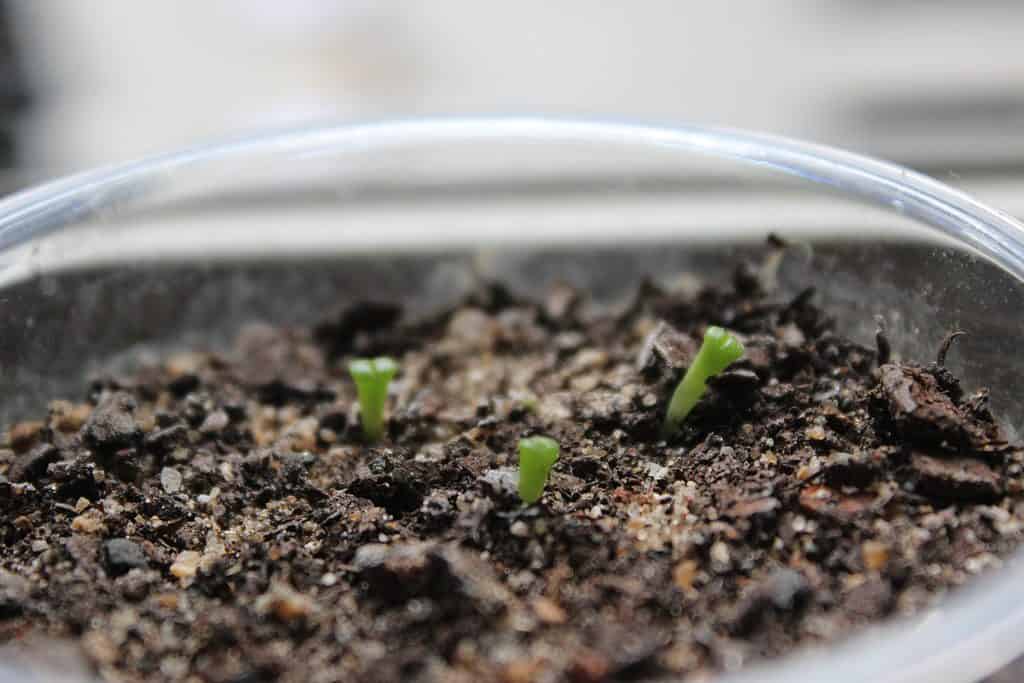
Succulent Lithops seeds germinated.
©Luciana_Oli27/Shutterstock.com
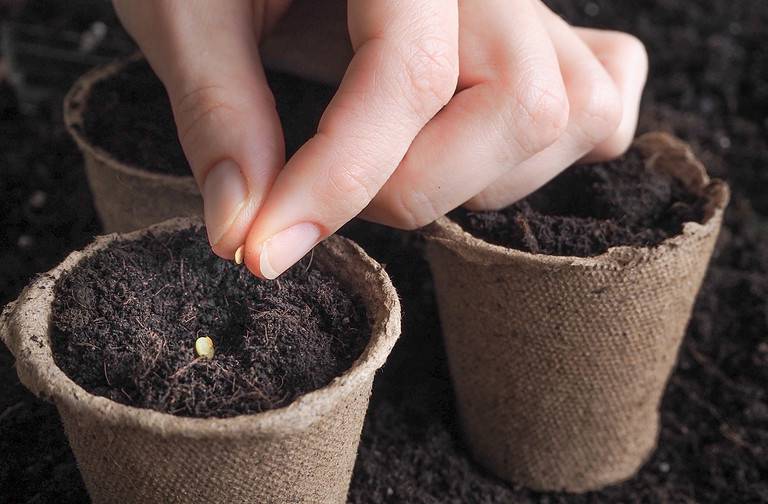
Like other succulents, split-rock cultivars are difficult to grow from seed. However, they’re also difficult to propagate from leaf cuttings and offshoots. Many aspiring split-rock growers prefer to invest the time and effort into growing this succulent from seed.
1. Soil Selection
Choose a well-draining cactus or succulent soil with a high ratio of perlite or pumice. Potting soil is not appropriate for growing split-rock seeds.
Select containers with plenty of drainage to prevent root rot.
2. Planting Method
Sprinkle the split-rock succulent seeds on top of the soil, leaving them exposed to the light. Do not cover them with soil.
Consider covering the seedlings with plastic wrap or a translucent cover to help trap moisture until the sprouts are rooted. Place the planters in bright, indirect light.
3. Watering
Water split-rock seeds using a mister. While mature succulents don’t require much water, the seeds need consistent moisture to sprout in an indoor setting.
Once the seeds are rooted, remove the plastic wrap and reduce the watering frequency. When the plants mature, cut watering back to biweekly or less, allowing the soil to dry in between.
4. Care and Maintenance
Keep your split-rocks in a temperature-consistent location. These succulents perform best set back from a sunny window with indirect sunlight.
Watch for these common pests when raising your split-rock succulents:
- Mealybugs
- Spider mites
- Scale insects
- Thrips
Fertilize these unique succulents at the end and beginning of the dormant season—in the spring and fall. Repot your succulent every two years or when it outgrows its current home.
How to Propagate Split-Rock Succulents
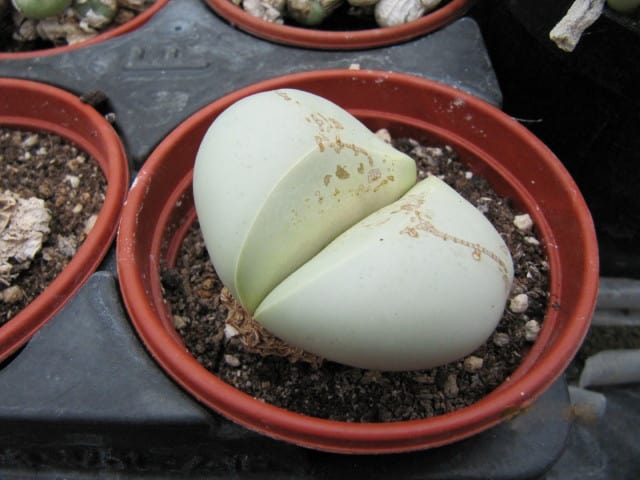
Split rock succulent, Argyroderma testiculare in a pot.
©Leonora Enking, CC BY-SA 2.0 via Wikimedia Commons – Original / License
While taking a leaf cutting doesn’t always produce results, it’s an option to try with established split-rocks.
- Cut away a healthy, plump leaf with a clean knife.
- Let the leaf-cutting callous over in indirect sunlight—this will take a couple of days.
- Dip in rooting hormone and place in well-draining cactus soil.
- Lightly water with a mister until roots are established.
Is the Split-Rock Succulent Safe for Pets?
The split-rock succulents are considered non-toxic to pets but should be kept out of reach of pets and children.