Weeping willows are perhaps one of the most recognizable trees in the world. They are known for their sweeping, elegant foliage and tall stature. Found thriving near lakes, rivers, and other bodies of water, weeping willows are definitely one of the most unique trees in the world. Did you know that they can be grown as Bonsai trees?
Here is everything that you need to know about growing, caring for, and shaping a weeping willow Bonsai tree!
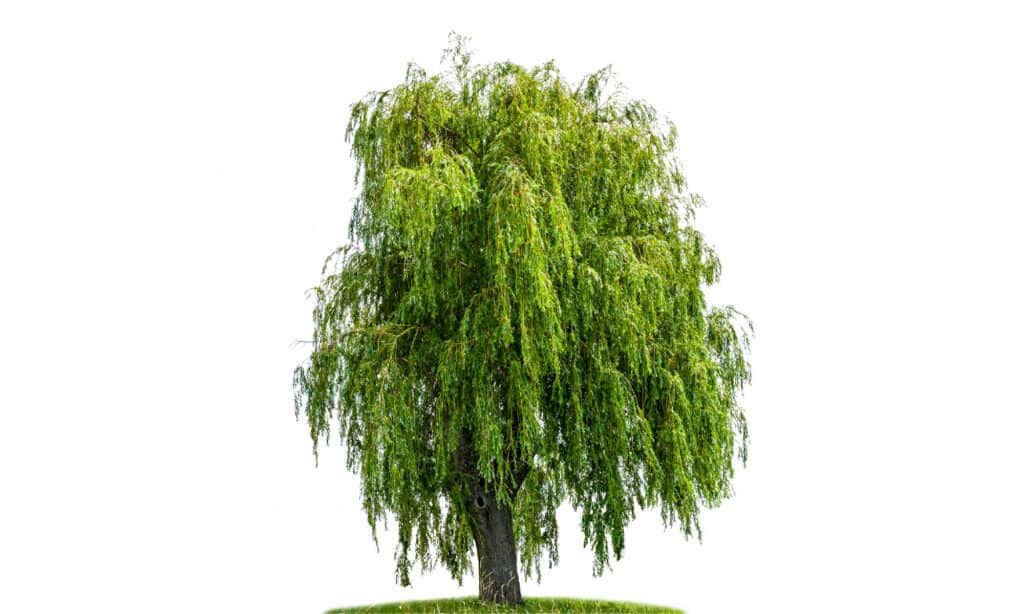
Among the most recognizable trees in the world, weeping willows can be grown as Bonsai trees!
©iStock.com/Zerbor
| Weeping Willow Bonsai Tree Information | |
|---|---|
| Botanical Name | Salix babylonica |
| Common Types | Niobe Weeping Willow, Golden Weeping Willow, Purple Weeping Willow, Dwarf Weeping Willow, White Willow, Corkscrew Willow, Prairie Cascade Weeping Willow |
| Sunlight | Full sun for at least 4 to 6 hours every day |
| Soil | Moist to wet, well-draining |
| Water | Well-draining; keep the rootball moist and be careful not to let it dry out |
| For Beginners? | Intermediate to advanced. Weeping willows can be difficult to care for, and pruning can be challenging. |
| Indoors or Outdoors? | Outdoors in cooler, wet climates. During extremes – hot summers or freezing winters – it can be beneficial to bring a weeping willow Bonsai tree indoors. |
| Pairs Well With… | Rocks and moss, other natural ornamentation |
Common Types of Weeping Willow Bonsai Trees
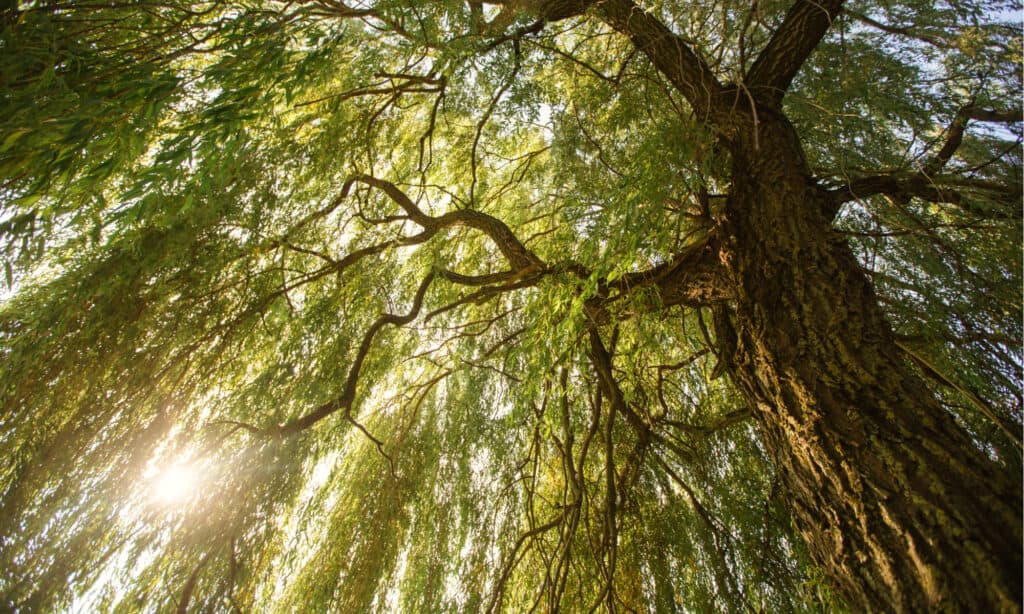
Usually, weeping willow trees can be found alongside lakes, rivers, swamps, and other bodies of water.
©Tatyana Volkova/Shutterstock.com
Originally, weeping willow trees came from the northern region of China. Interestingly enough, in China, they grew in relatively dry regions. Nowadays, weeping willows grow the best in wet conditions. Usually, they can be found alongside lakes, rivers, swamps, and other bodies of water.
There are several different cultivars of weeping willows. Some have been bred to be smaller, making it easier to plant them near homes and buildings. Some have been bred to be tolerant of cold temperatures or drier conditions. Each of these cultivars can be ideal for Bonsai tree art in its own way.
Here are some of the most common types of weeping willow cultivars to consider for your Bonsai tree!
Niobe Weeping Willow
Starting with the Niobe weeping willow, which is known as one of the hardiest willow cultivars out there. The foliage of these trees is bright yellow, tinged with green. They can thrive in just about all environments, though they do not enjoy hot, dry climates.
Niobe weeping willows thrive best beneath full, direct sunlight for several hours a day. They can grow in just about any soil condition, though they prefer moist soil. Another plus: these trees are used to being trimmed and pruned, which makes them ideal for Bonsai tree art.
Golden Weeping Willow
As suggested by the name, the foliage of the golden weeping willow is varying shades of yellow. When planted naturally, these trees can reach heights of around 100 feet tall. They can be just as wide, too, making for some impressive landscaping specimens!
These lovely trees prefer full sun to grow beneath, though they can tolerate partial shade and sun. Golden weeping willows can tolerate just about any type of soil as long as it is moist and well-draining.
Corkscrew Willow
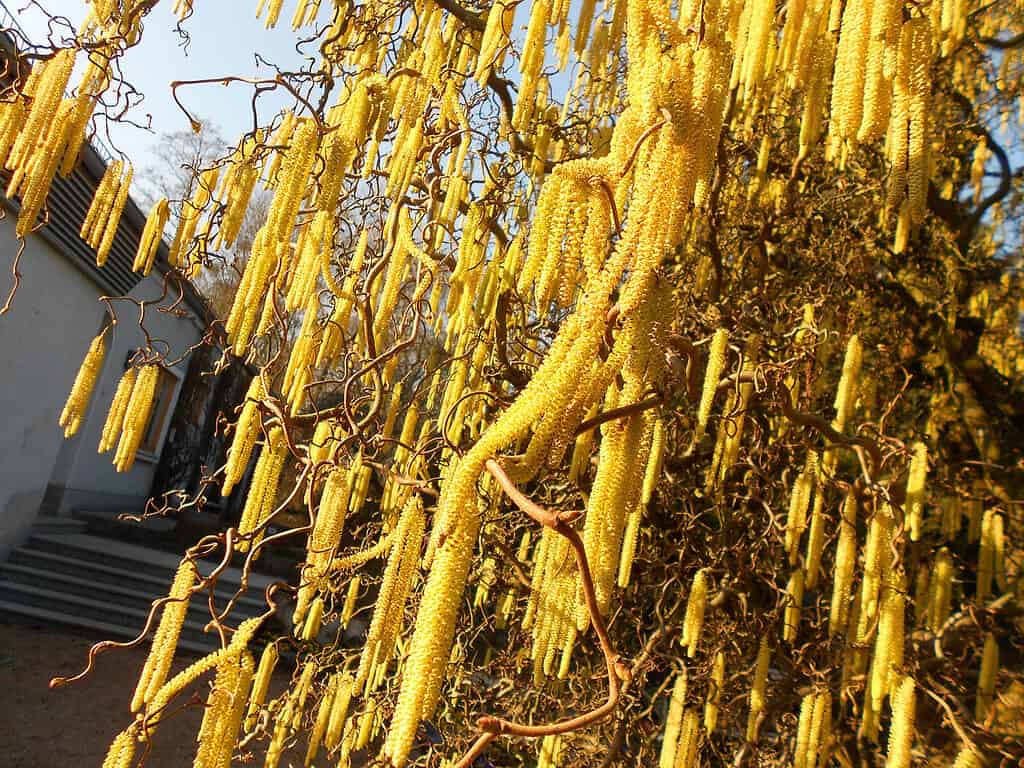
While beautiful, the corkscrew willow is not ideal for beginning Bonsai tree artists.
©Spitzi-Foto/Shutterstock.com
Indigenous to Korea and China, corkscrew willows are even more unique than the already unique weeping willow. The branches on this willow contribute to its name. These branches are twisted and curved, resembling a corkscrew. This is more noticeable when the leaves have started to fall. This system of branches would suit Bonsai tree art very well!
Corkscrew willow trees prefer full sun and tend to be more tolerant of drought than most other willow types. They are also tolerant of many different soil conditions. As long as the soil is moist, they’ll grow!
Purple Weeping Willow
The trees known as purple weeping willow are actually more shrublike. They are much smaller than most other weeping willows. This makes them perfect for Bonsai tree art! The leaves on these trees are a lovely blue-green. In the fall, they turn a golden color!
Purple weeping willow trees love moist and even wet, well-draining soil. They thrive best beneath full sunshine. When planted normally, like in gardens, purple weeping willows are used to being pruned. As another added bonus, these trees are also extremely cold hardy!
Dwarf Weeping Willow
The small stature of the dwarf weeping willow makes it ideal for Bonsai tree art! The leaves on these trees are bright green and appear slightly twisted or curled. Dwarf weeping willows are used to being pruned and can be pruned or trimmed throughout the year. These trees prefer full sun, though they can thrive in partial sun as well. They grow best in moist, well-draining soil.
White Willow
The leaves on the white willow have given the trees their name. While being green in color, each leaf has fine, soft white hairs on its underside. This gives the white willow a lighter appearance than other willows. White willows are known for their medicinal uses as well. For example, salicylic acid is derived from white willow trees!
White willow trees love moist, well-draining soil and full sunshine for at least a few hours a day.
Prairie Cascade Weeping Willow
Prairie Cascade weeping willows are known for being hardy! The leaves on these trees are a bright, glossy green throughout spring and summer. In the fall, they turn vivid shades of yellow. The dense system of branches and foliage makes it a beautiful choice for Bonsai tree art.
Prairie Cascade weeping willows love the sunshine, and will grow best when planted somewhere they can get at least a few hours of sunshine every day. As for soil, these trees are similar to other willows. They love moist, well-draining soil.
Caring for Your Weeping Willow Bonsai Tree
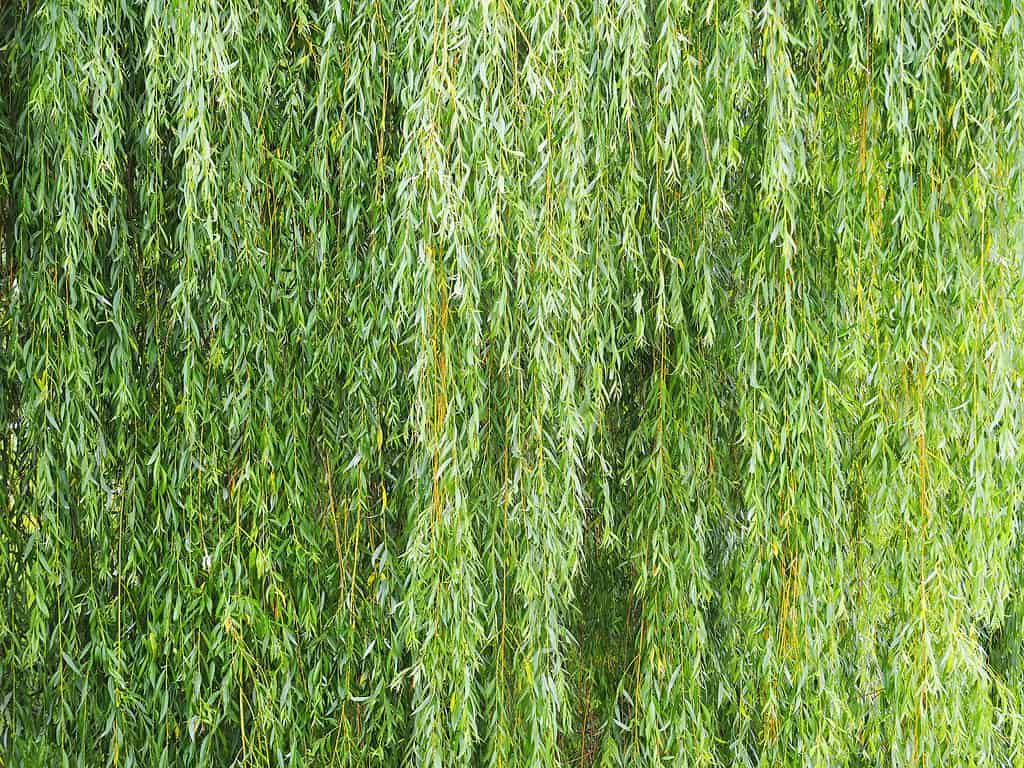
Especially when being grown as Bonsai trees, weeping willows need a lot of water.
©ANGHI/Shutterstock.com
Weeping willows can be picky when they want to be. This can make caring for one, especially in a Bonsai tree container, difficult. Just like with most plants and Bonsai trees, caring for a weeping willow Bonsai tree so it can thrive takes patience, time, and know-how.
From sunlight and water to soil and placement, here is everything you need to know about growing and taking care of a weeping willow Bonsai tree!
Sunlight
Weeping Bonsai trees can thrive in most sunlight conditions. They prefer full sun but can also grow well in partial shade. In the summer months, willow Bonsai trees placed where direct sunlight can reach them might need protection. Placing them under shade can keep them from getting scorched leaves or too dried out beneath the sun.
Soil Type
Just about every type of willow tree needs moist, well-draining soil. This goes double for Bonsai trees. Thankfully, soil made specifically for Bonsai trees has been designed to be well-draining. Apart from needing well-draining soil, different types of weeping trees have different soil requirements. Some need acidic soil. Others do best in loamy soil, some in sandy soil.
Water
Weeping Bonsai trees, especially weeping willows, need a lot of water. In the summer months, they need more water than usual and sometimes they even have to be watered more than a few times every day. The rootballs of these trees, as well as the soil, should not be allowed to dry out. Weeping trees are not known for their resistance to drought!
Placement
Since most weeping Bonsai trees prefer full sun, they can be kept outdoors. In the summer months, they can become dried out beneath direct sunlight, so moving them either indoors or beneath some shade is a good idea. They are also susceptible to cold, frost, and heavy winds. In the winter, it is best to keep them somewhere where they will be free from frosts, such as a shed, greenhouse, or garage.
Pruning Your Weeping Willow Bonsai Tree
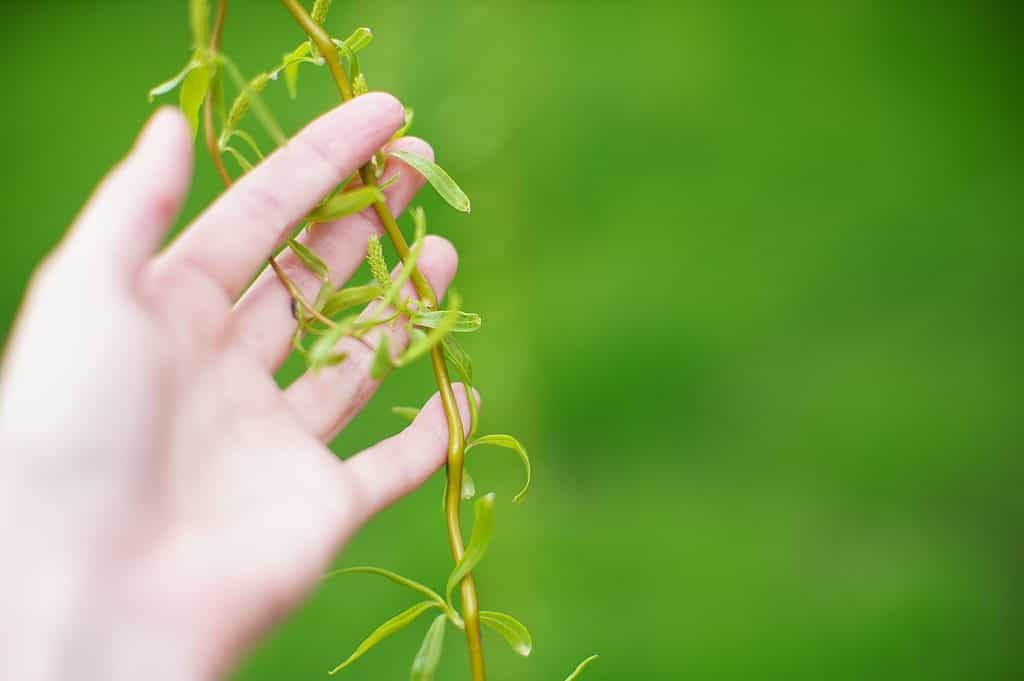
Some weeping willow cultivars have weaker wood than others. Be careful when pruning these types!
©newsony/Shutterstock.com
Heavy pruning on a weeping Bonsai tree, especially a weeping willow, should be done in the early summer. In the winter, you can trim back or away unwanted shoots and branches to maintain the look or style of your weeping Bonsai tree.
Pruning and root trimming regularly is recommended, given the fast growth habit of willow trees. In fact, many willow trees planted in natural landscaping invade sewer lines deep underground in search of water! While this won’t happen in a Bonsai tree pot, you should still be aware of just how voracious these trees are.
Some cultivars of the weeping willow are known to have weak wood. An example of this would be the white willow. Because of this, make sure to be extra careful when pruning, wiring, and shaping these trees!
Ideal Weeping Willow Bonsai Tree Styles
Weeping willow trees are dramatic and majestic all on their own. You can expand on this through different Bonsai tree styles.
One of the most popular, and probably the easiest to achieve, is the formal upright style known as Chokkan. This style involves shaping your Bonsai tree and letting it grow as straight as possible. As a whole, this style looks best with trees that have thick trunks, but it can be achieved with a weeping willow Bonsai tree, too!
Another common Bonsai style for weeping willows is that of the Moyogi style. This style is also known as the informal upright style. Generally, the trunk of the Bonsai tree is shaped into a figure resembling the letter S. This is easy to achieve with weeping willows because of their thinner trunks.
Another style that weeping willow Bonsai trees are suited for is the style of Kabudachi. This style involves shaping multiple branches. Because weeping willows have dense, intricate branches, they can be easily shaped into the Kabudachi style.
Propagating Your Weeping Willow Bonsai Tree
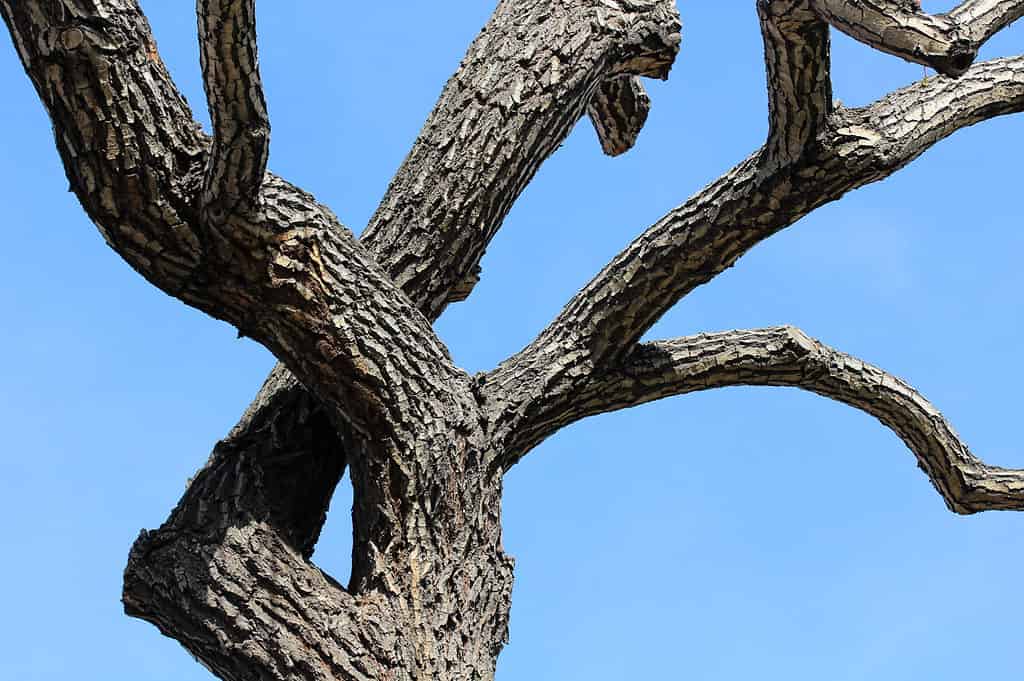
Your weeping willow Bonsai tree will need more water than other types of trees.
©Konevi/Shutterstock.com
Thankfully, weeping willow trees are easily propagated! They can be propagated from cuttings, even large ones. You can even put the cutting or cuttings in a glass of water and they will root.
Common Problems with Weeping Willow Bonsai Trees
There are several pests that can attack and infest your weeping willow Bonsai tree. Some of these include aphids, scale, willow borers, and caterpillars. White willows in particular are very susceptible to diseases and pests. To combat pests and diseases, you can use pesticides designed to target specific problems. If your weeping willow Bonsai tree does not improve after using these pesticides, you will probably want to consult a professional for more assistance.