
Quick Take
- Florida’s beaches double as nesting grounds for threatened shorebirds each spring and summer.
- Species like American Oystercatchers, Least Terns, and Black Skimmers nest directly on sand and rooftops.
- Human disturbance and off-leash dogs can cause nest failure and colony abandonment.
- Simple steps—respecting signs, giving birds space, and controlling pets—help protect eggs and chicks.
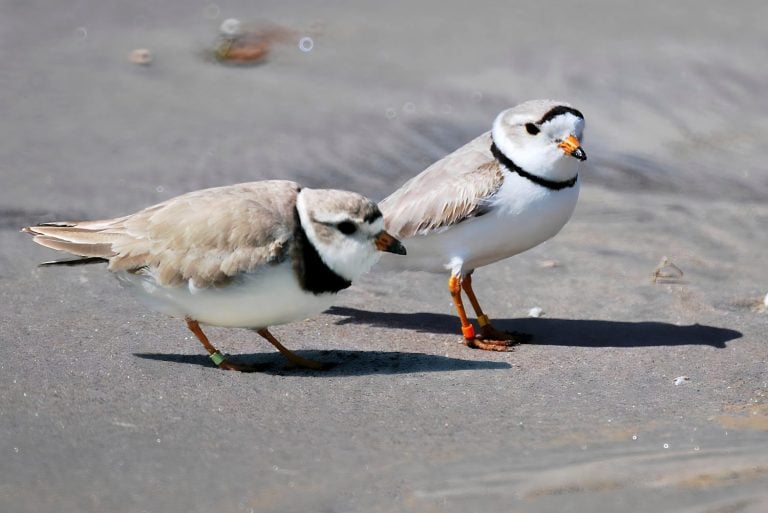
From a distance, a spring beach in Florida looks peaceful: rolling waves, bright umbrellas, and long stretches of pale sand. But look closer, and you’ll find a very different story written in tiny footprints and barely visible eggs. All along the Gulf and Atlantic coasts, threatened shorebirds are settling into nesting season, trying to raise families in the same places people come to play. Their future depends on whether beachgoers notice the warning signs—sometimes literally—and choose to share the shore instead of unknowingly stepping into a colony of invisible nests.
Florida’s Hidden Nesting Season
Every spring and summer, Florida’s beaches turn into crowded nurseries for sea and shorebirds. Instead of building nests in trees, many of these species lay their eggs directly on open sand, shell banks, and even gravel rooftops in busy coastal communities. Their speckled eggs are incredibly well camouflaged, blending in with pebbles and broken shells so perfectly that even trained biologists have to look twice. At the same time, spring break crowds, holiday weekends, and boating season bring thousands of people—and their dogs, coolers, and beach games—into the very same spaces. That overlap makes this time of year both exciting and risky: one careless shortcut across the sand can crush a clutch of eggs or send stressed parents flying from the nest.
Why Beach-Nesting Birds Are So Vulnerable
Beach-nesting birds evolved to survive harsh coastal weather, strong sun, and natural predators like gulls and raccoons. They did not evolve to handle constant human disturbance. When people walk too close, they see us—and our dogs, kites, or drones—as predators and will fly off their nests. This leaves their eggs and chicks exposed to heat and danger. Repeated flushing burns through the adults’ limited energy. It can cause entire colonies to abandon a nesting site for the season. Many species already have small, declining populations and low nesting success. This means losing even a few nests year after year adds up quickly. In Florida, several beach-nesting birds, including American oystercatchers, least terns, and black skimmers, are officially listed as state-threatened, which means every successful nest matters.
American Oystercatcher (Haematopus palliatus)
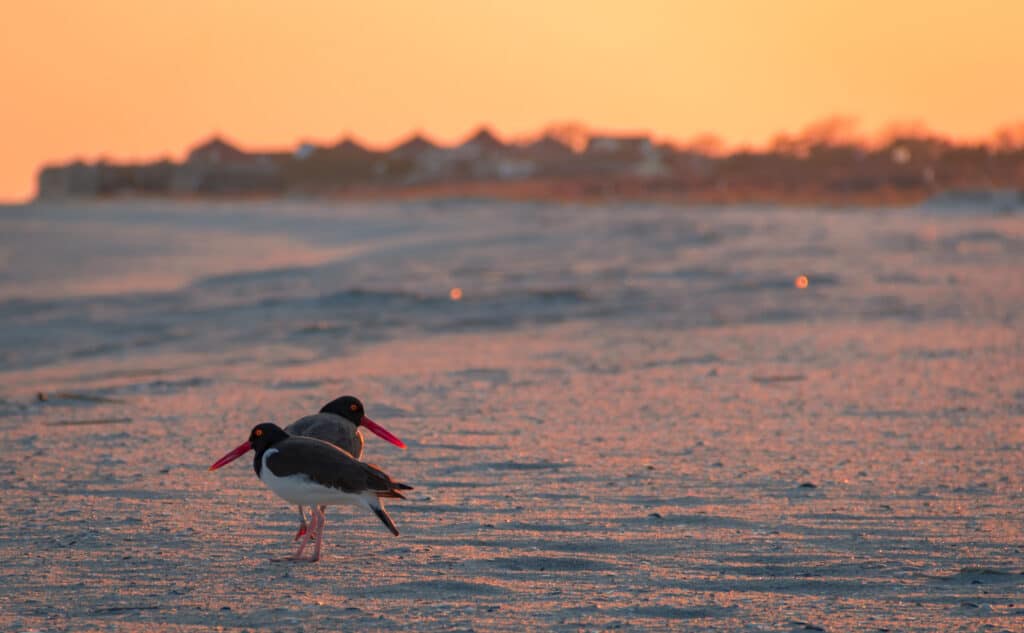
American oystercatchers foraging on the beach.
©iStock.com/Rabbitti
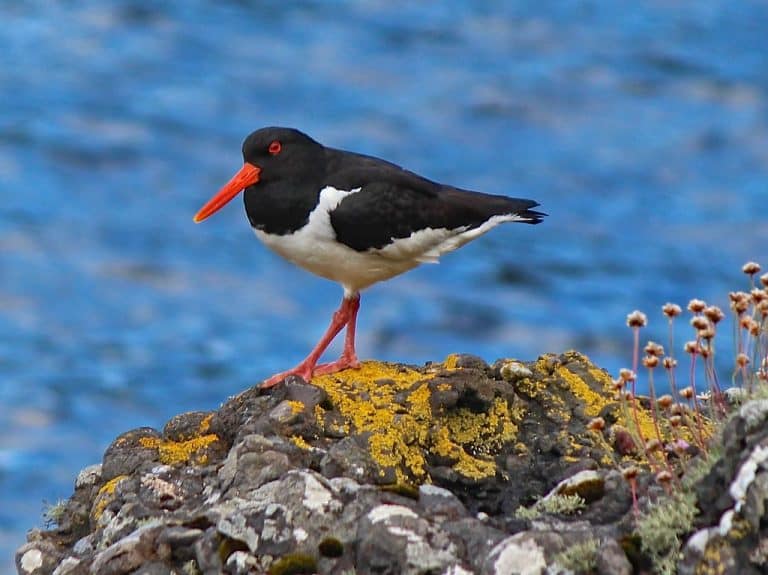
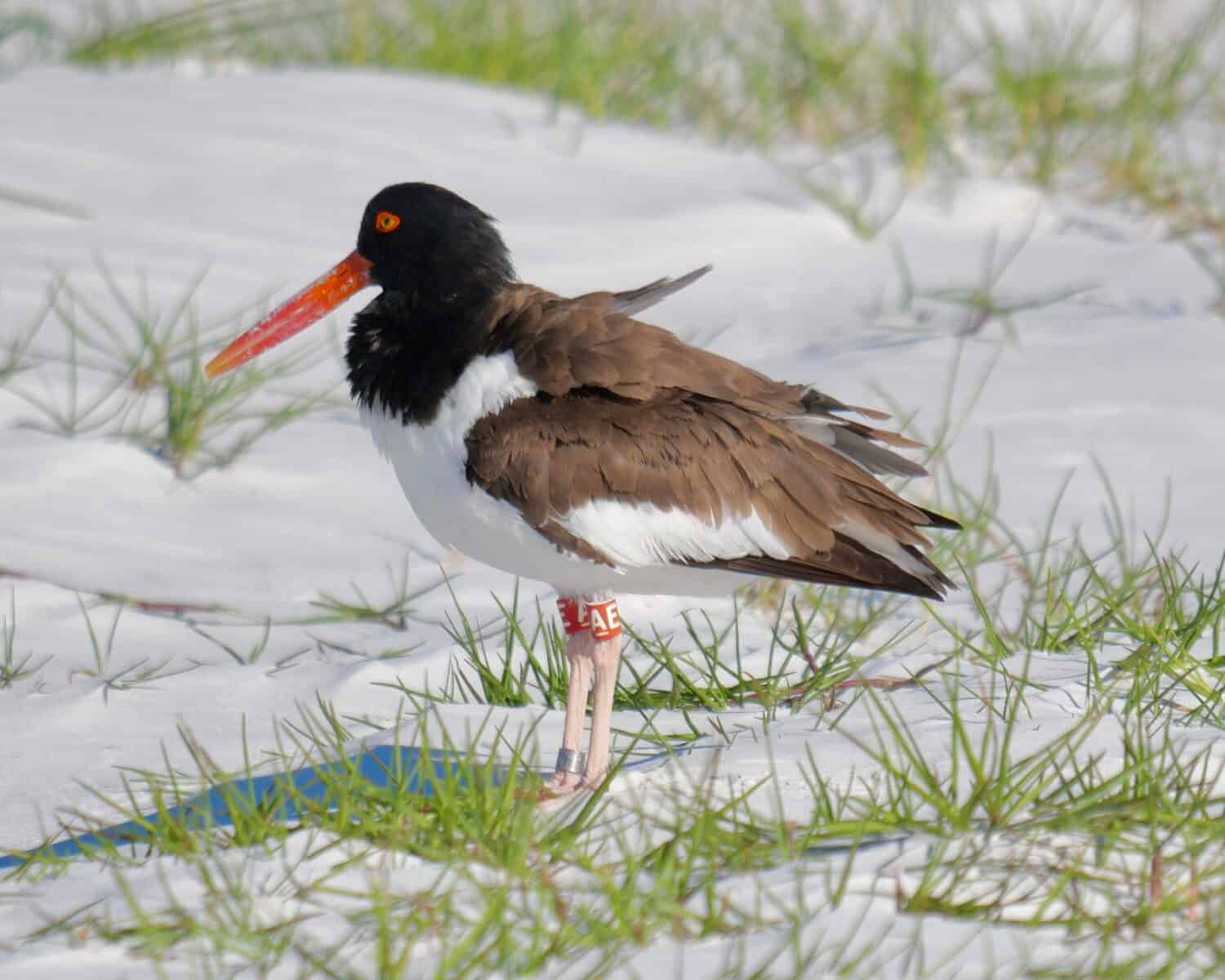
The American oystercatcher is hard to miss when you actually see one. It’s a large shorebird about 16 to 21 inches long with a bold black-and-white body, pink legs, and a thick, bright orange-red bill built to pry open shellfish. These birds live almost entirely along sandy and shell-strewn shorelines, salt marsh edges, and barrier islands. Habitats like this are abundant in oysters and clams.
They nest in shallow scrapes in the sand or on shell rakes just above the high-tide line. Their small colonies are often shared with other shorebirds. Their eggs look like spotted pebbles, which protects them from natural predators. At the same time, it makes them nearly invisible to people hurrying toward the water. The state’s oystercatcher population is relatively small and sometimes concentrated along developed coasts. As a result, even modest levels of disturbance, beach driving, or off-leash dogs can seriously affect breeding success.
Least Tern (Sternula antillarum)
Least terns are the smallest terns in North America. These birds measure only about 8 to 9 inches long. They have narrow, pointed wings and a deeply forked tail. Adults in breeding plumage have a gray back, white underside, and a sharp black cap above a yellow bill. All of this gives them a sleek, swallow-like appearance as they hover and dive for small fish.
They nest in loose colonies on open sandy beaches, shell bars, and flat gravel rooftops. Often, they choose nesting sites close to busy coastal development in Florida. They scrape shallow nests directly into the sand and lay tiny, speckled eggs. These match the surrounding shell fragments so closely that they can disappear from view a few feet away. Because they are state-designated threatened and experience low reproductive success when disturbed, biologists and volunteers carefully monitor colonies. They post them with rope and signs and sometimes protect rooftop chicks from falls and predators.
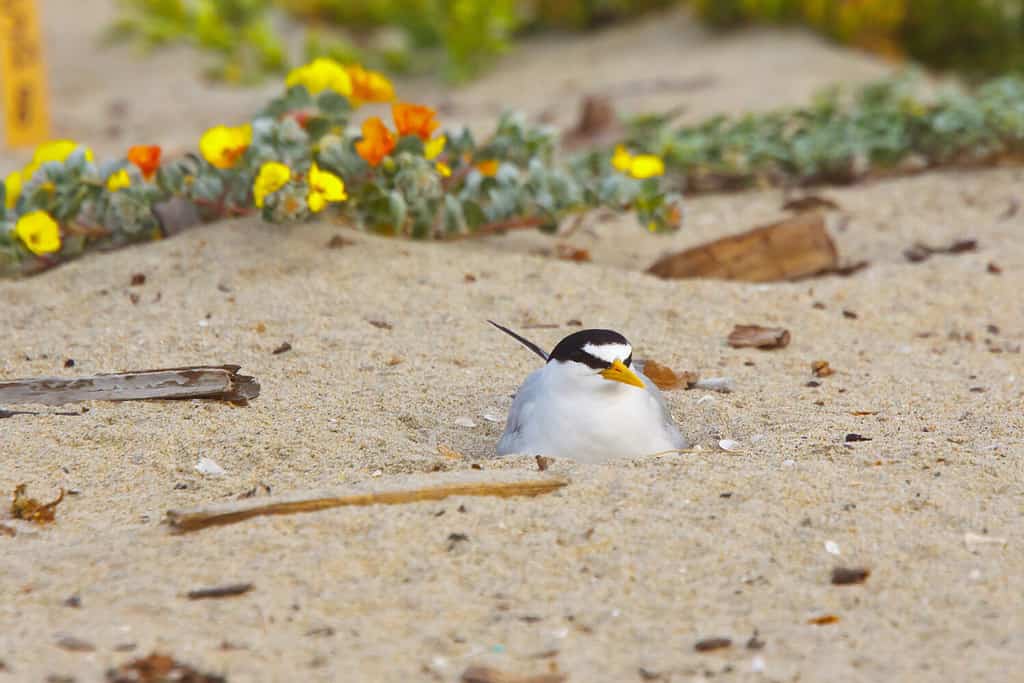
Least terns are one of the at-risk ground-nesting species.
©Elliotte Rusty Harold/Shutterstock.com
Black Skimmer (Rynchops niger)
Black skimmers are visually striking seabirds. They’re about 19 to 20 inches tall. They have long wings, a black back and cap, white underside, and a vivid red-and-black bill. An unusual feature is that the lower half of the bill is noticeably longer than the upper. At dusk and dawn, they fly just above the water’s surface, slicing their lower bill through the waves to feel for small fish. It’s this feeding style that gives them their name.
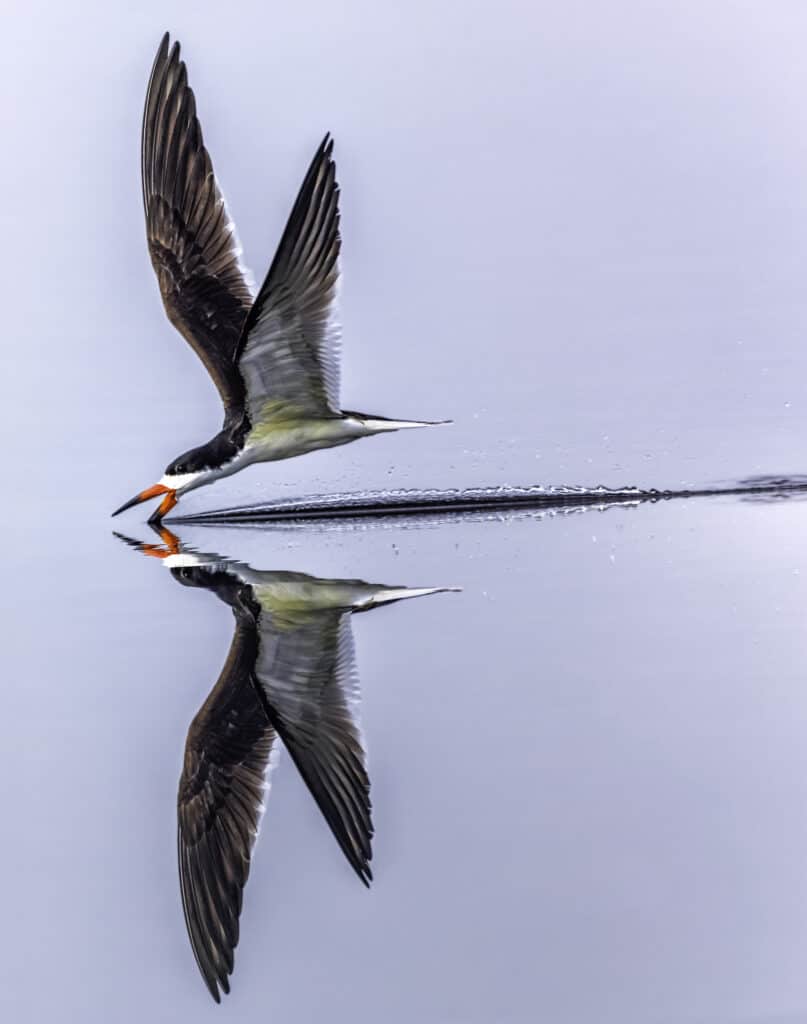
Black skimmers get their name from their hunting practice of flying along the surface of the water.
©iStock.com/Natures_Vision
Along Florida’s coasts, black skimmers nest in loose colonies on wide, flat beaches and sandbars. Their nests are shallow scrapes in open sand and shell. Like other beach-nesters, they rely on camouflage rather than sticks or grasses. This means their eggs and fluffy, sand-colored chicks can be almost impossible to spot until they move. Black skimmers in Florida are also classified as state-threatened and face projected population declines from disturbance, predation, and storms. Their vulnerable status makes it critical to protect each colony through posted sanctuaries and respectful beach use.
Rooftop Colonies in the City
When natural beaches become too crowded or eroded, some least terns and black skimmers move on. They can settle in an unexpected place: large, flat gravel rooftops on coastal buildings. These rooftops mimic the texture of open sand and shell and can offer refuge from beach traffic. However, they come with their own hazards, including hot surfaces, roof drains, and steep edges.
To help, Audubon Florida and state wildlife biologists survey rooftops from March through August. They work with property owners to identify nests, install chick protection shelters, and rescue any chicks that fall. Trained volunteers also act as extra “eyes and ears.” They report new colonies, help monitor nesting success, and educate neighbors about the birds living just overhead. For beachgoers and residents, one of the most helpful actions is simply to respect any rooftop access closures or work crews clearly focused on bird protection efforts.
How Human Disturbance Derails a Nesting Season
From a bird’s perspective, a busy beach can feel like a nonstop emergency. Every time a person, dog, or vehicle passes too close, adults may flush into the air, circling and calling loudly. All the while, their eggs bake in the sun or their chicks scatter across the sand.
On hot Florida days, even a few minutes of direct sun can overheat exposed eggs. Unattended chicks are more likely to be picked off by gulls or other predators. Repeated disturbance also costs the adults precious energy they need for feeding and caring for their young, making it harder for them to survive the season. In some cases, whole colonies may abandon a nesting site after too much harassment. This wipes out months of effort in a matter of days and sets back already vulnerable populations.
Spotting Nesting Areas Before You Step

Fortunately, it is possible to enjoy the beach without coming close to hidden nests if you know what signs to look for. Wildlife agencies and conservation groups typically mark active colonies with rope or string lines, brightly colored flags, and clear signs that may say things like “Nesting Birds—Do Not Enter” or “Area Closed to Protect Wildlife.”
These posted zones usually include the upper, dry part of the beach where nests are located, leaving plenty of room closer to the water for people to walk, swim, and play. Even outside marked areas, clusters of birds standing, sitting, or diving repeatedly in the same stretch of shoreline can signal nearby nests or chicks. If birds start calling loudly, flying at you, or feigning a “broken wing” while leading you away, they are telling you that you are too close and need to back up.
Simple Ways Beachgoers Can Help
Protecting these birds does not require special gear or advanced birding skills—just a few small changes to how you use the beach. While walking to the beach, stay on the boardwalk or established footpaths. Don’t allow your children or pets to run through the dunes. Stay out of any roped-off or signed nesting areas and give birds at least the length of a basketball court, about 100 feet, whenever possible; if they start flying or calling nervously, you should move farther away. Keep dogs off nesting beaches entirely or on a short leash in designated areas, since even friendly pets look like predators to adult birds. Choose a spot for umbrellas, chairs, and games closer to the water’s edge instead of on the dry, upper beach where nests are likely. Finally, pack out all trash and food scraps so you do not attract gulls and other predators that raid nests and steal chicks.
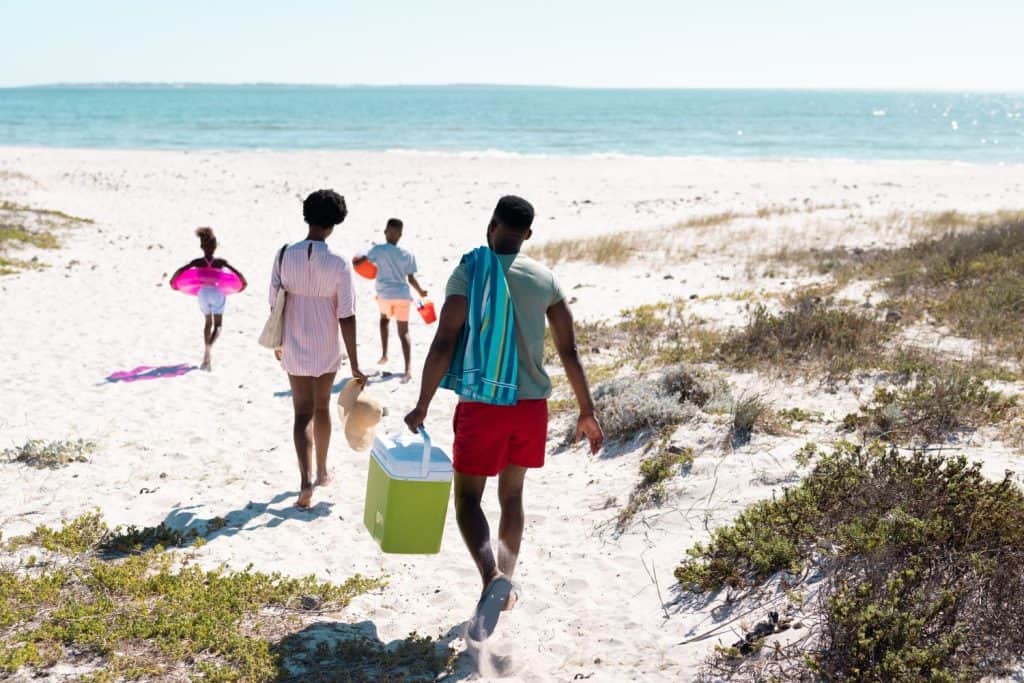
Use already-established footpaths to get to the water through the dunes to avoid disturbing shorebird nests.
©wavebreakmedia/Shutterstock.com
What Boaters and Beach Drivers Need to Know
Many vulnerable shorebird nesting sites are located on sandbars, spoil islands, and remote beach sections that are more often visited by boaters and beach drivers than by pedestrians. When you pull up to a sandbar or island, scan the area for resting birds before you land and avoid areas where flocks are gathered on the dry sand. Land your boat closer to the waterline, keep pets on board or leashed, and walk around any clusters of birds rather than through them. If local rules allow beach driving, stay on firm, wet sand near the water, drive slowly, and never cut across the upper beach or dunes where nests and chicks are concentrated. In all cases, obey “no trespassing” or wildlife area closures, which are set up specifically to protect sensitive nesting habitat that might otherwise be overrun.
How Volunteers and Agencies Share the Shore
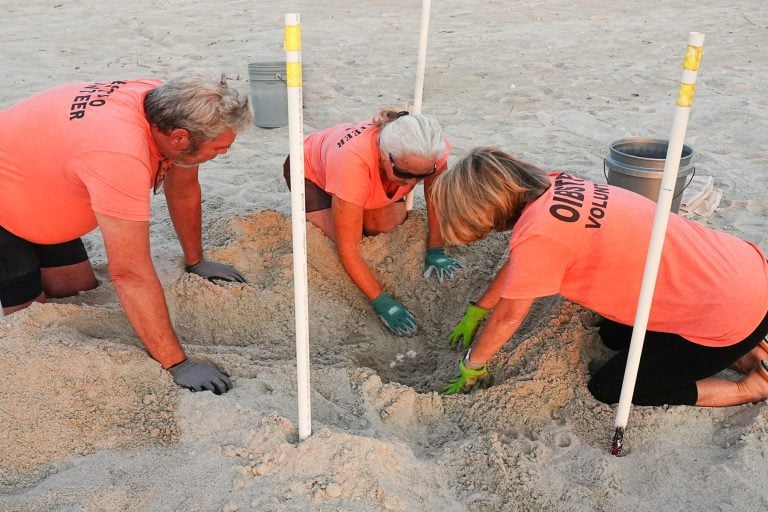
Behind every posted shorebird nesting area is a network of biologists, local governments, and volunteers working together to protect coastal birds. Audubon Florida, the Florida Fish and Wildlife Conservation Commission, and county partners survey beaches each spring to find colonies, count nests, and decide where to place protective rope and signs. Trained volunteers spend hours on busy weekends acting as “bird stewards,” talking with beachgoers, answering questions, and gently reminding people and dog owners to give colonies room.
These efforts are guided by statewide conservation plans and species guidelines that outline the steps needed to avoid harming threatened species while still allowing people to enjoy the coast. When beach visitors respect those boundaries, agencies can keep closures as small and targeted as possible, making it easier for everyone to share limited shoreline.
Your Choices on the Sand Matter
On a sunny Florida afternoon, it can be hard to believe that a single footprint or the path you choose to the water could influence the future of a species. Yet for shorebirds, each nest is a fragile investment in the next generation, balanced on open sand between ocean and crowds. By staying out of posted areas, keeping dogs and vehicles away from colonies, and giving birds generous space whenever you spot them, you can enjoy the coast while helping threatened species survive another hectic nesting season. The next time you head to the beach, remember that you are stepping into someone else’s nursery—and one thoughtful choice may be the difference between a lost clutch of eggs and a line of tiny chicks racing toward the waves.