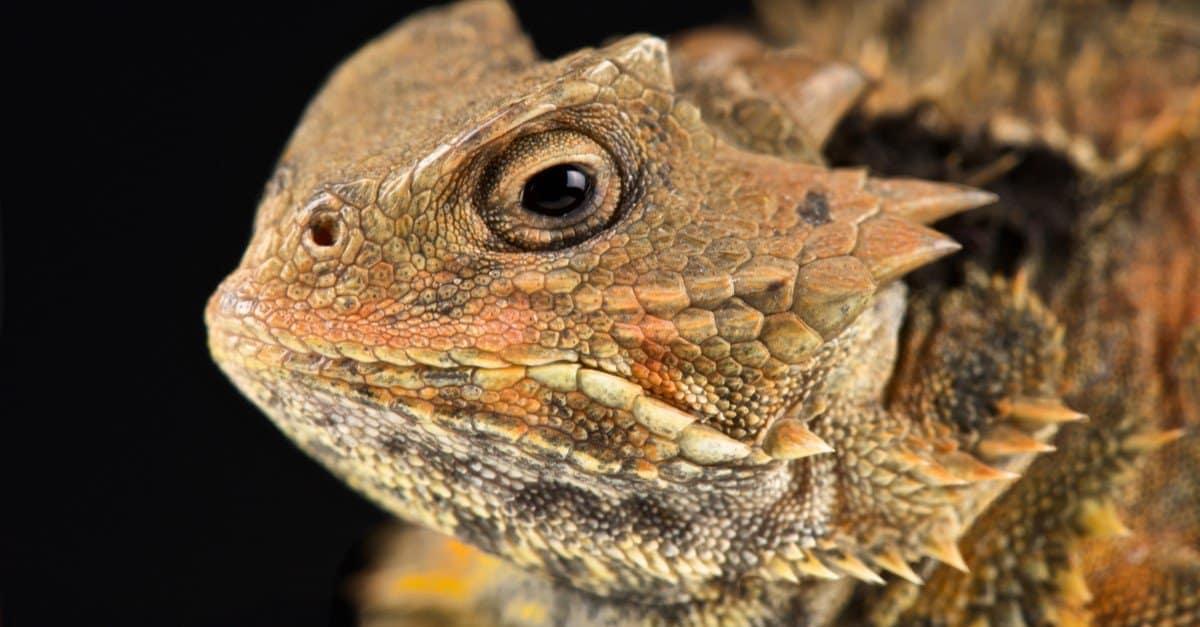

When you think of “gory” animals, creatures like great white sharks, tigers, and vampire bats might come to mind. But the most gruesome defense mechanism of any animal belongs to something much smaller. When threatened, this unique animal does something straight out of a horror movie: it shoots blood from its eyes!
This post was updated on November 8, 2025 to clarify the compounds mixed in the horned lizard’s blood, the average distance they can project their blood, and the number of species in North America.
No, It’s Not a Toad
©Matt Jeppson/Shutterstock.com
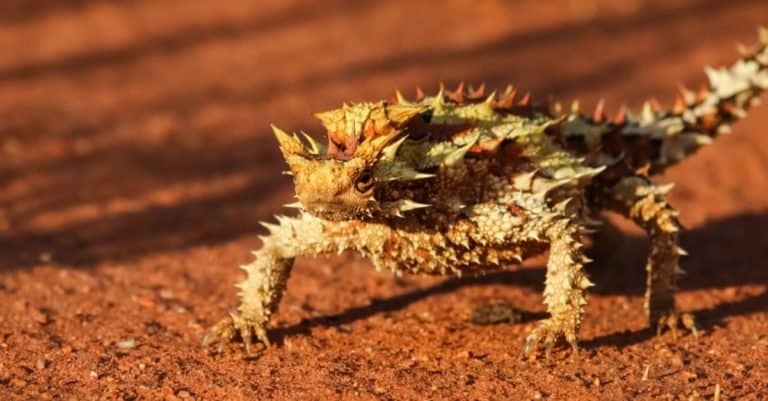
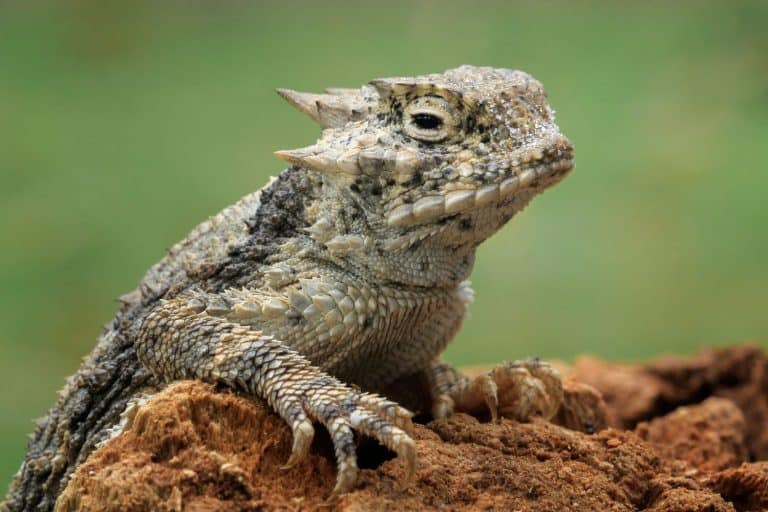
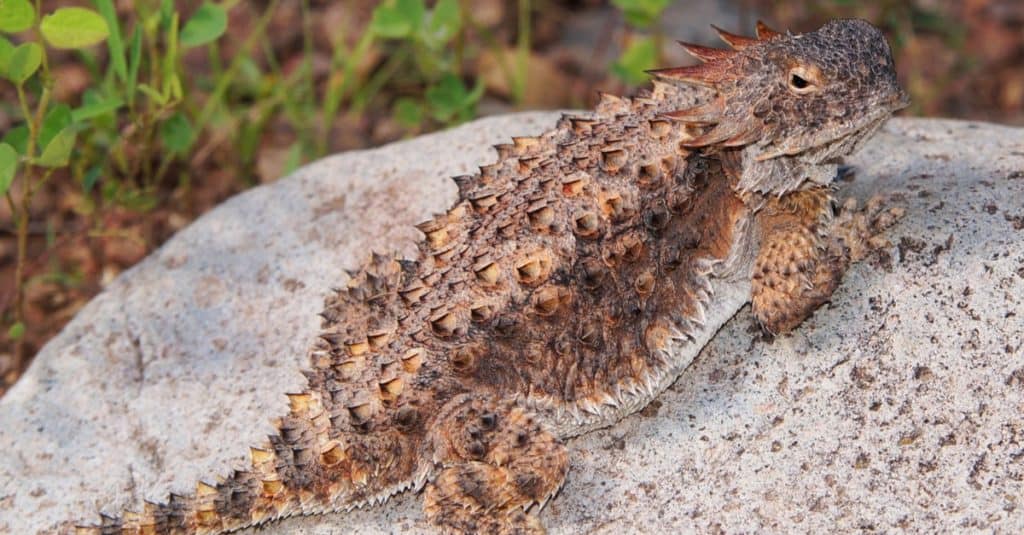
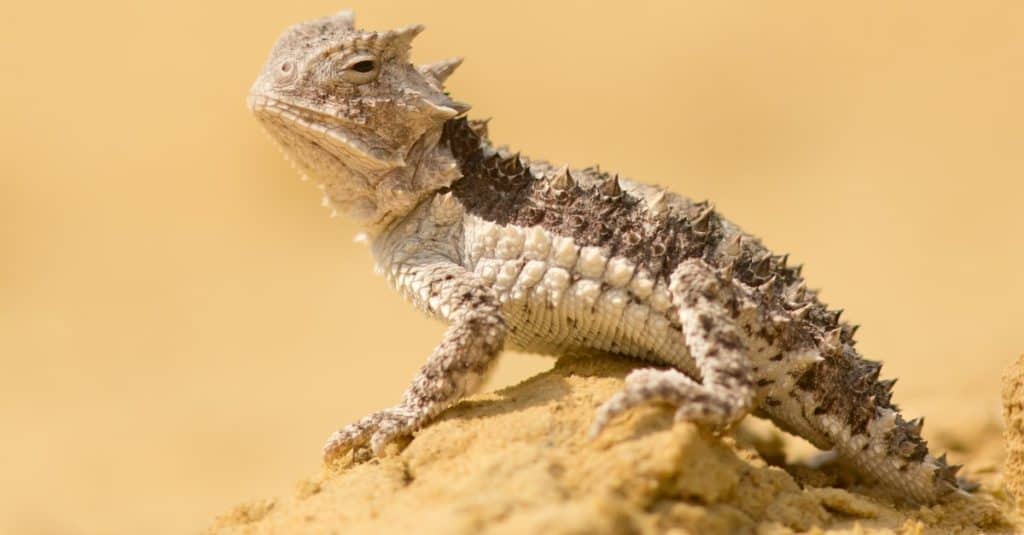
You might know this macabre creature as a horny toad or a horned toad, but it’s not an amphibian at all — it’s a lizard. It’s easy to see how the horned lizard got this mistaken nickname — its scientific name, Phrynosoma, means “toad-bodied”. That’s because horned lizards look a lot like toads! Instead of a long, slender body like other lizards, these unusual reptiles have short, round, and flat bodies.
But why would a reptile have such a toad-like body? In contrast to other reptiles, horned lizards are surprisingly sluggish. However, their unusually round and flattened bodies are perfect for soaking up the sun. This shape acts almost like a little solar panel, absorbing warmth and helping these spiky lizards stay warm, even in cooler temperatures.
If they get too hot, horned lizards can burrow into dirt. They vibrate their heads, using the scales on their lower jaw to cut through the soil. Their round shape also helps with burrowing, and their mottled colors provide excellent camouflage. This is especially important because horned lizards aren’t super-fast. When a predator gets close, horned lizards usually just stay still and blend into their surroundings unnoticed. But, if necessary, these spiny reptiles have a few interesting ways to protect themselves.
The Thorny Tactics of a Horned Lizard

©Matt Jeppson/Shutterstock.com
Horned lizards mostly hunt out in the open, licking up ants and other insects with their sticky tongues. However, this also makes the lizards easy targets for predators like roadrunners, coyotes, and hawks. Their primary defense is to stay still and blend into the background, but if that doesn’t work, they have a few more tricks to try.
A horned lizard can puff up its little round body to make it look twice its normal size and much more intimidating. This is sometimes enough to scare off a predator, or at least make the lizard look like a tough snack to swallow. In addition, horned lizards often run in short bursts, creating a quick and unpredictable start-and-stop pattern that confuses predators. However, a hungry and determined coyote might not be so easily deterred by these defenses, which is why the horned lizard has one last secret weapon.
A Rather Bloody Secret Weapon
©Emre Dikici/Shutterstock.com
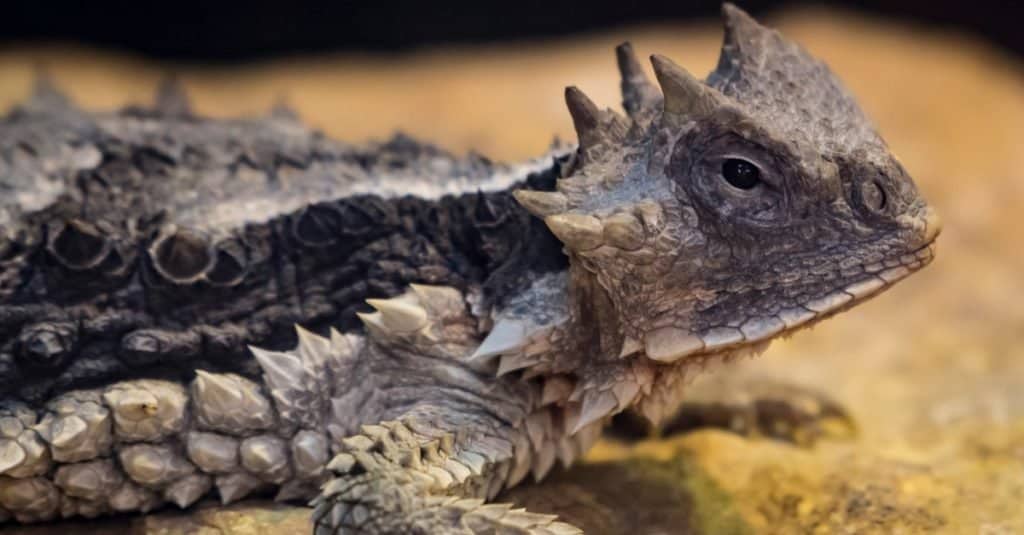
If all else fails, some horned lizards have a remarkable — and truly bizarre — defense: they shoot blood from their eyes. It’s not just an act, either. It’s an actual, biological technique known as “autohemorrhaging.” These lizards can control how much blood flows from their heads. By increasing the blood pressure in their heads, they rupture tiny blood vessels around their eyes and squirt the blood at predators! Though it typically shoots 1-2 feet, the stream of blood can project up to 5 feet away!
If that’s not bizarre enough, this projected substance isn’t just regular blood. Compounds from harvester ants (including formic acid–related chemicals) accumulate in the lizard’s blood after digestion, making it taste foul to predators like coyotes. So, if a coyote tries to grab a horned lizard, it’ll get a mouthful of nasty tasting blood.
Horned lizards love to munch on harvester ants. In fact, ants make up 90% of the diet of many horned lizard species. Although harvester ants are venomous insects, somehow their venom doesn’t affect horned lizards.
Where Do Horned Lizards Live?
©Milan Zygmunt/Shutterstock.com
There are roughly 17 species of horned lizards in North America. Many species are protected in parts of their range. You can admire them from a distance, but don’t try to pick them up or disturb them in any way.