
Quick Take
- One of these birds hunts in coordinated packs, earning a nickname borrowed from a very different predator entirely. Pack hunting hawks →
- Getting too close to certain birds' nests can trigger attacks even from species you'd never expect to be aggressive toward humans. Nest defense attacks →
- A popular belief about one of these birds' physical power turns out to be a complete myth, though that doesn't mean it's safe to approach. Swan strength myths →
When you think about birds, you likely don’t consider them to be dangerous or aggressive creatures, aside from a few species. You might immediately think of the melodious songbirds that remind you of springtime, or perhaps the peaceful doves that visit you early in the morning. However, there are many aggressive, territorial, and predatory birds out there—and you’ll want to exercise caution when near their nesting sites. Here are the most dangerous birds in North America, in no particular order.
1. Snowy Owl
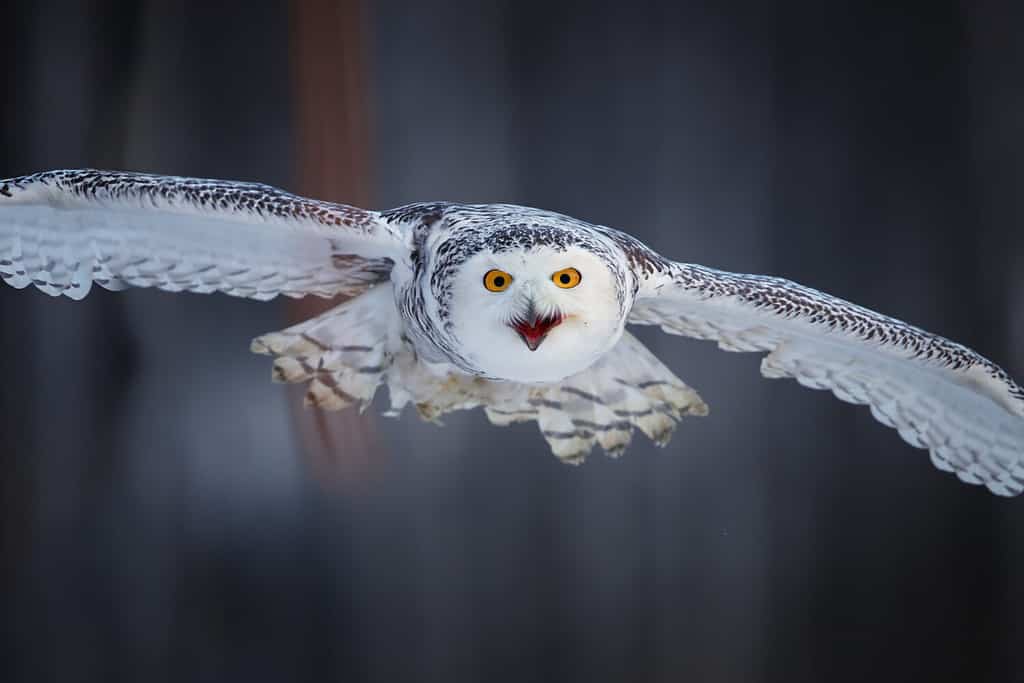
You do not want to be on the receiving end of a Snowy Owl attack.
©Martin Mecnarowski/Shutterstock.com
Snowy owls are fierce, territorial predators—among the most dangerous birds in North America. They’re known to ruthlessly hunt their prey, perching high up and scanning the area with their sharp eyesight before going in for the attack.
“Snowy Owls are native to Alaska, Canada, Greenland, and other cold, treeless Arctic tundra areas,” says August Abbott, Certified Avian Specialist from the Pet Advocacy Network. “They nest on the ground, and their snow-white feathers camouflage them beautifully.”
Typically, Snowy Owls hunt lemmings, which are small Arctic rodents. However, they’ll also often hunt voles, other rodents, and even other birds.
“Snowy Owls will also eat fish and amphibians,” Abbott adds. “If food is particularly scarce, they’ve been known to eat carrion left by other predator animals and even some bugs.”
2. Great Horned Owl
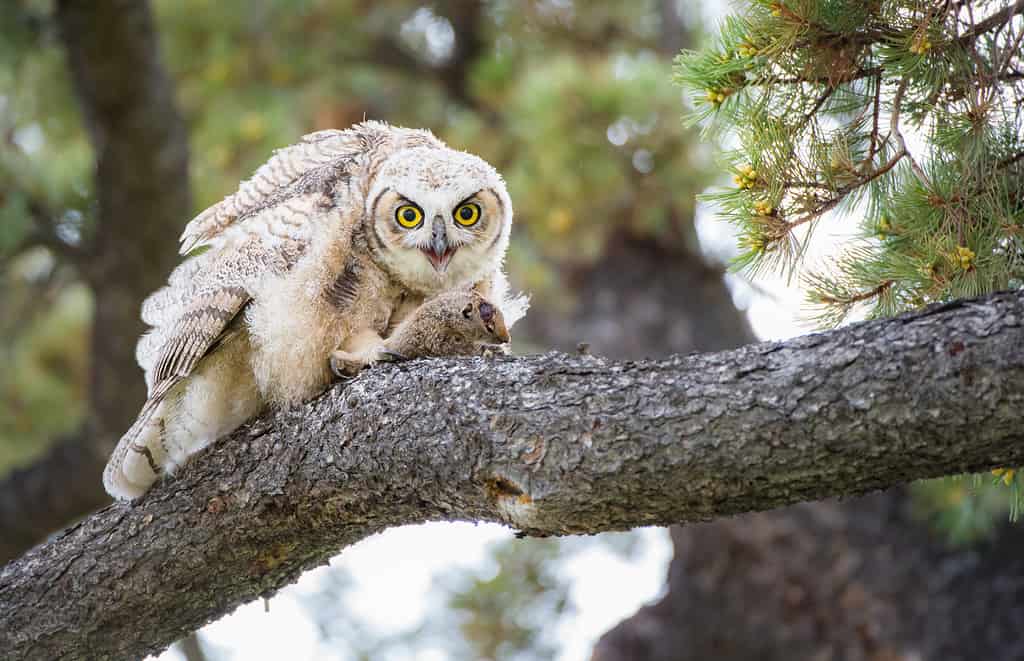
Great Horned Owls are aggressive and strong, which is not a good combination for their prey.
©Jillian Cooper/iStock via Getty Images
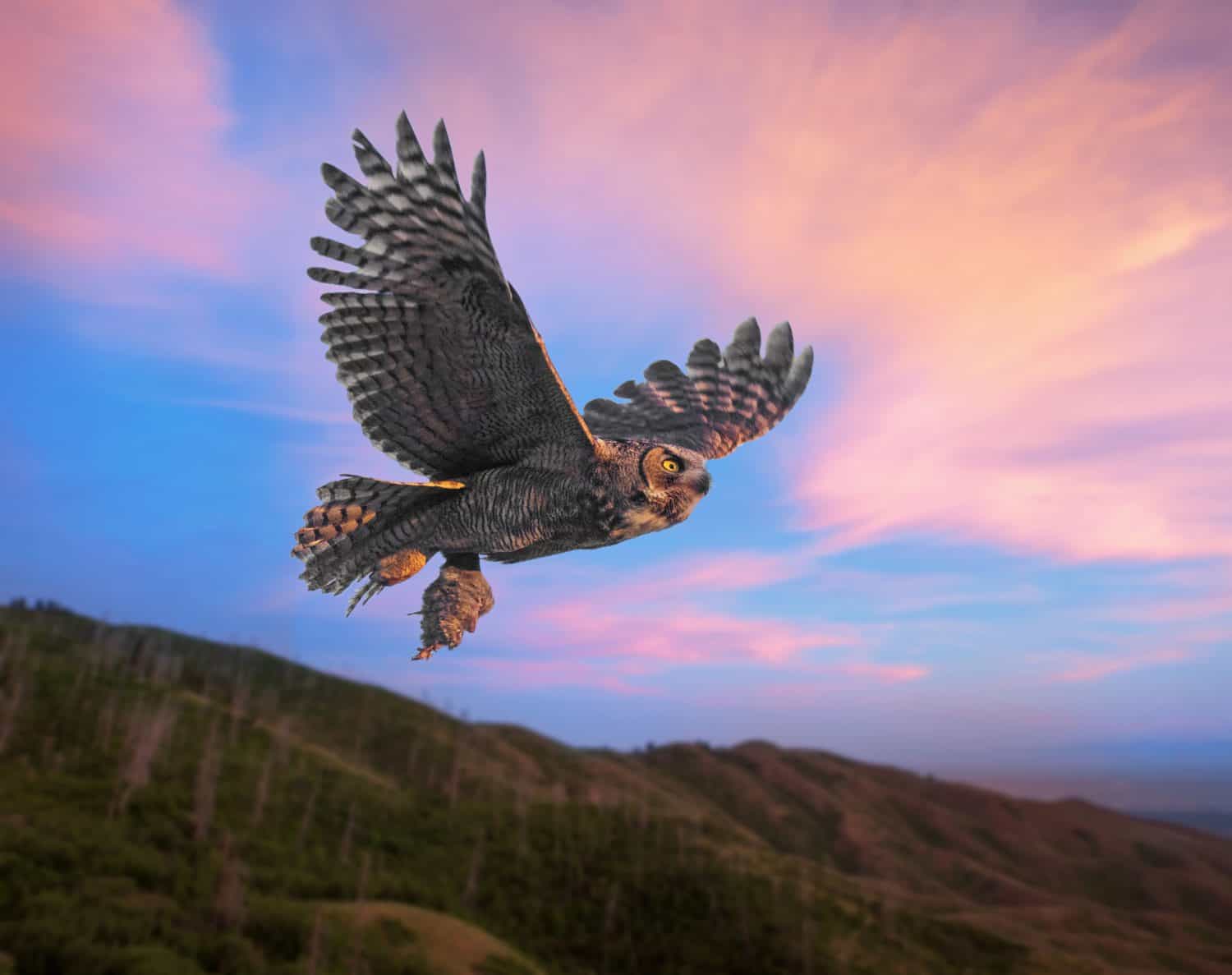
The Great Horned Owl is another dangerous bird, particularly to wildlife and pets. However, due to their territorial nature, they will sometimes attack humans who get too close to nests. While rare, attacks against humans can be severe, as the bird is extremely strong.
What’s more, the bird is an excellent predator, thanks to its ability to fly silently above its prey.
“On top of stealth, there are those magnificent eyes that have both a wide range of vision—and night vision at that,” Abbott explains. “Owls’ silence in flight isn’t just to enable it to be a surprise attack on rodents and other small ground animals, but their silent flight also enables them to hear where their prey went if they lose sight of it.”
“On top of the ideal visual, hearing, and stealth flying raptor these owls are, they are equipped with razor-sharp talons that lock in place around their prey so flying back to the nest or branch means the prey isn’t dropped,” Abbott adds. “Their beaks are capable of taking apart their prey in quick fashion.”
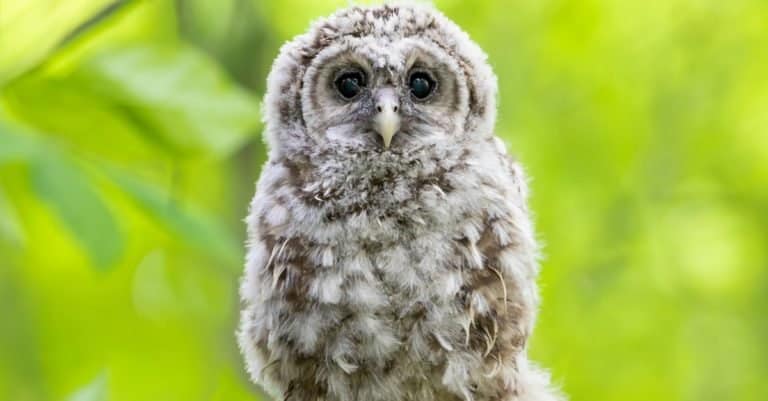
3. Barred Owl
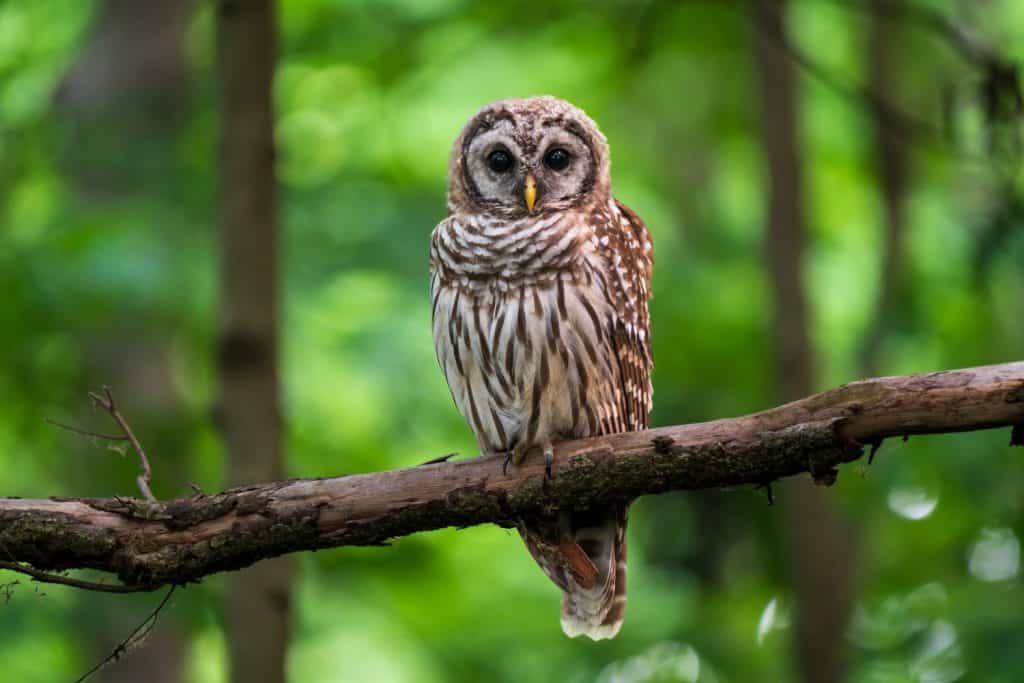
Don’t let their innocent faces fool you: Barred Owls are incredibly aggressive when defending their territory.
©KJ Quraish/Shutterstock.com
Barred Owls are yet another dangerous type of owl, in large part due to their territoriality. This is especially true during nesting and breeding seasons, when they might be fiercely defending their young. In fact, they might even divebomb you with their sharp talons if you get too close.
“As a worker for a large state nature preserve, we had non-releasable raptors on site. Watching an owl snack on a rodent most certainly gave me the utmost respect for these birds,” says Abbott. “Remarkably efficient and highly dangerous to rodents, rabbits, and any animal they target, yet there I was holding a magnificent Barred Owl on my arm, and the owl was just as trusting of me as I was of him. We are not enemies, and so, we need not fear them, but must always respect them and their nesting site.”
Barred Owls are native to eastern North America, but they’ve since expanded west. Because of this, they pose a large threat to native spotted owls in the area. Barred Owls tend to be larger and more aggressive, often outcompeting Spotted Owls for habitat and prey.
4. Herring Gull
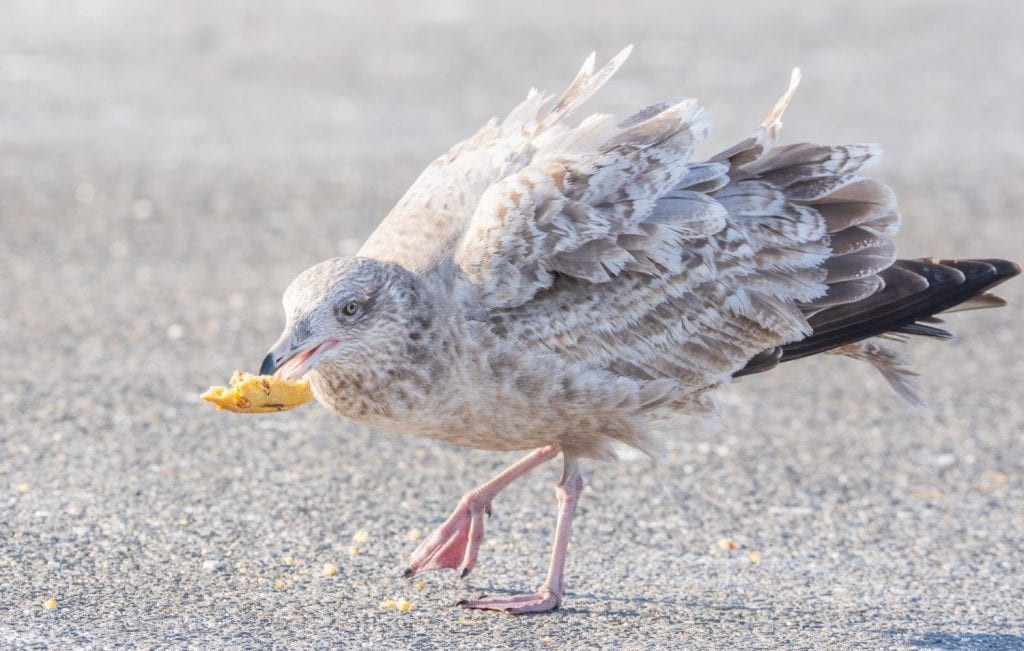
There are various types of gulls, but the Herring Gull is the most dangerous.
©Cami Johnson/Shutterstock.com
Herring Gulls typically live near coastal shorelines, lakes, and beaches. However, they sometimes frequent terrestrial and urban environments, including garbage dumps and city rooftops. This aggressive bird will sometimes dive-bomb humans for food. Due to their power, wide wingspan, and sharp beaks, they can knock humans over or even leave puncture wounds.
“They don’t discriminate either; they’ll dive bomb and wrestle food away from other birds and even each other,” says Abbott. “Oddly, if you see just one Herring Gull, it’s often just a matter of minutes before you’ll see a flock of them. Their natural mindset is that if one of their kind finds a reason to be somewhere, others will be there too in order to not miss anything.”
Not only are they aggressive hunters, but Herring Gulls are also territorial. If you get anywhere near their nesting sites or their young, you risk getting attacked.
“These gulls, like most, nest in a community of Herring Gulls near their food source (bodies of water) but more hidden in brush, logs, even rocks,” Abbott explains. “They co-parent [and] are fiercely defensive of their nest and their chicks.”
Oddly, if you see just one Herring Gull, it’s often just a matter of minutes before you’ll see a flock of them.
5. Harris Hawk
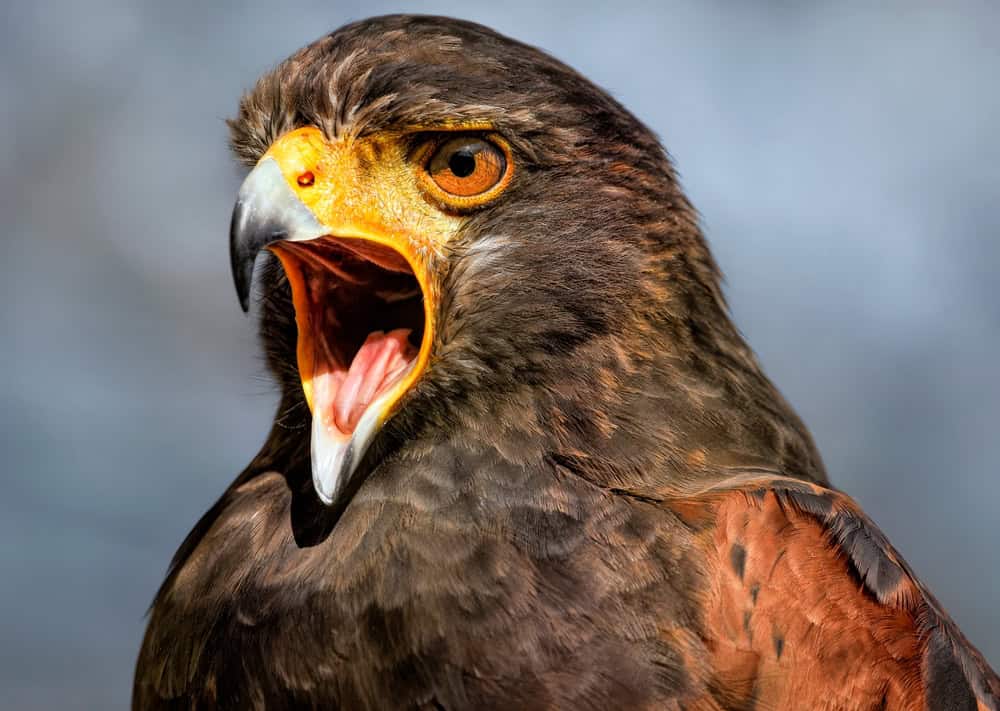
Due to their group hunting, Harris Hawks are often called “wolves of the sky.”
©ambquinn/Shutterstock.com
Harris Hawks are relentless predators that hunt in cooperative groups. Once they secure their prey, they often take turns consuming it. This is how they earned the nickname “wolves of the sky.” Typically, they eat small animals like rodents, rabbits, reptiles, and even other birds.
“The group life has a self-protective benefit as well,” says Abbott. “If some other predator encroaches on a Harris Hawk individual, the entire group will rally against the predator. Not that they care so much about the one hawk, but they care very much about their numbers being threatened by that predator, and together they are more successful in getting it to move on.”
6. Peregrine Falcon
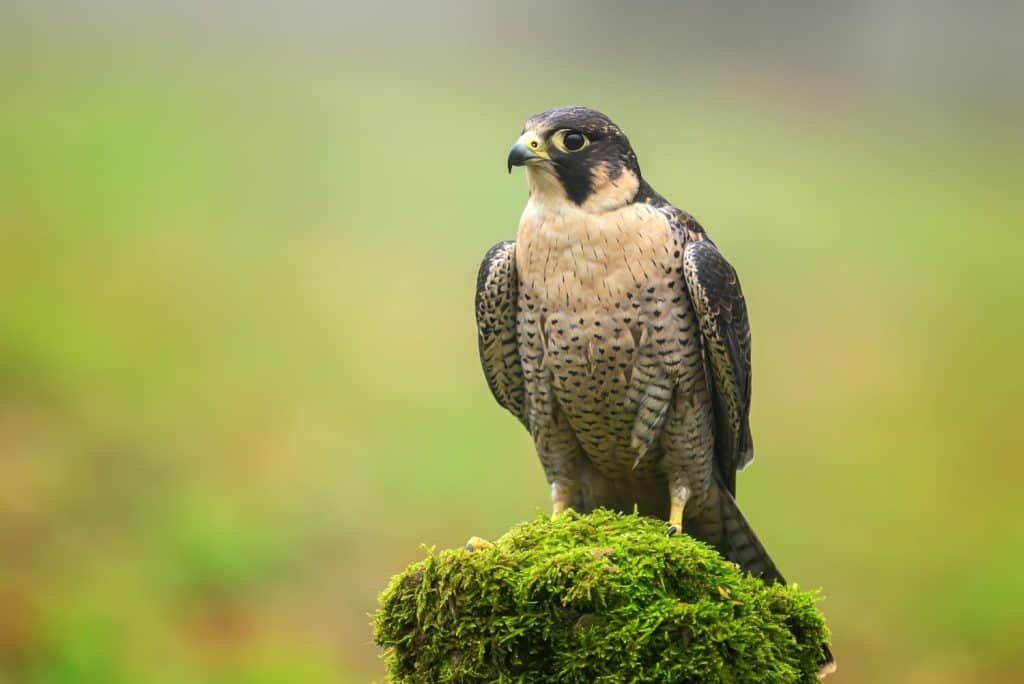
This bird can dive faster than any other in the world.
©Piotr Krzeslak/Shutterstock.com
The Peregrine Falcon is the fastest animal in the world. Some say it’s reached speeds of up to 300 mph, though documented dive speeds range between 200–240 mph. Additionally, their hunting abilities make them incredibly efficient apex predators.
“On their own, the Peregrines are formidable hunters of other birds, their preferred diet, but of course ground-dwelling animals as well,” says Abbott.
Thankfully, Peregrine Falcons don’t typically attack humans. However, like other birds on this list, if you get too close to their nests, their aggressive territorial instincts might kick in.
7. Swans
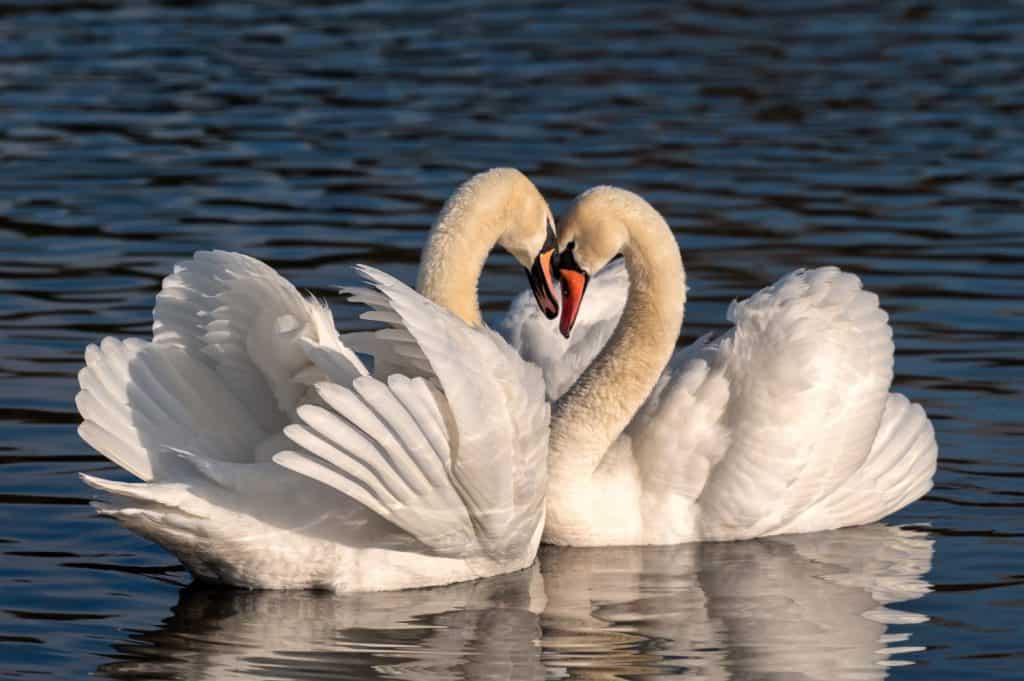
Swans might appear beautiful and docile, but they’re actually quite aggressive.
©oliver magritzer/Shutterstock.com
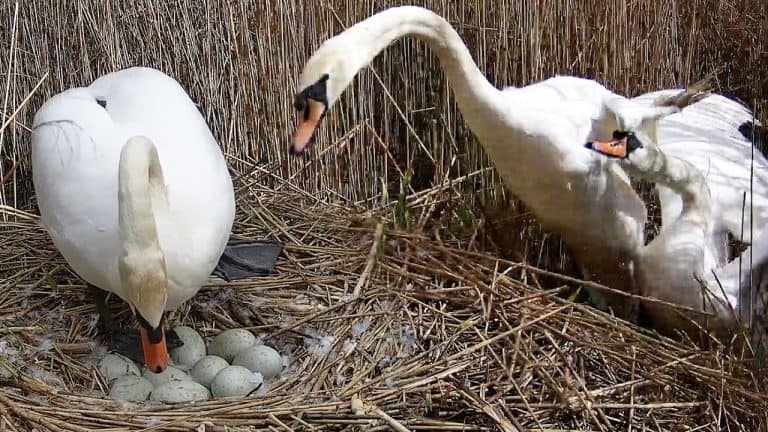
While you likely wouldn’t expect them to be one of the most dangerous birds in North America, swans have earned a spot on this list.
“Swans are aggressive defenders of their space, and they are not going to take ‘no’ for an answer,” says Abbott. “When they want you to leave, even a moment’s hesitation is enough to get them into high gear in helping you make a different choice.”
Some people claim that swans can break human bones, but that’s a common myth. The animal is simply not powerful enough to do so. Still, they can do damage through pecking, scratching, and even bruising.
“Swans don’t just attack with beaks, but incredibly strong wings as well,” says Abbott. “Between bites and strikes, humans surrender while hightailing it out of that swan’s area.”
Despite their aggressiveness, swans are primarily herbivores, meaning they don’t typically prey on other animals.
“They enjoy most all vegetation in their watery neighborhoods, but will eat crops that farmers don’t usually mind finding them eating,” says Abbott. “Finding swans in fields of barley, winter wheat, even corn is common. However, much to the farmers’ delight, they are eating ‘leftovers’—those plants littering the ground of the fields rather than healthy and growing plants.”
8. Great Northern Loon
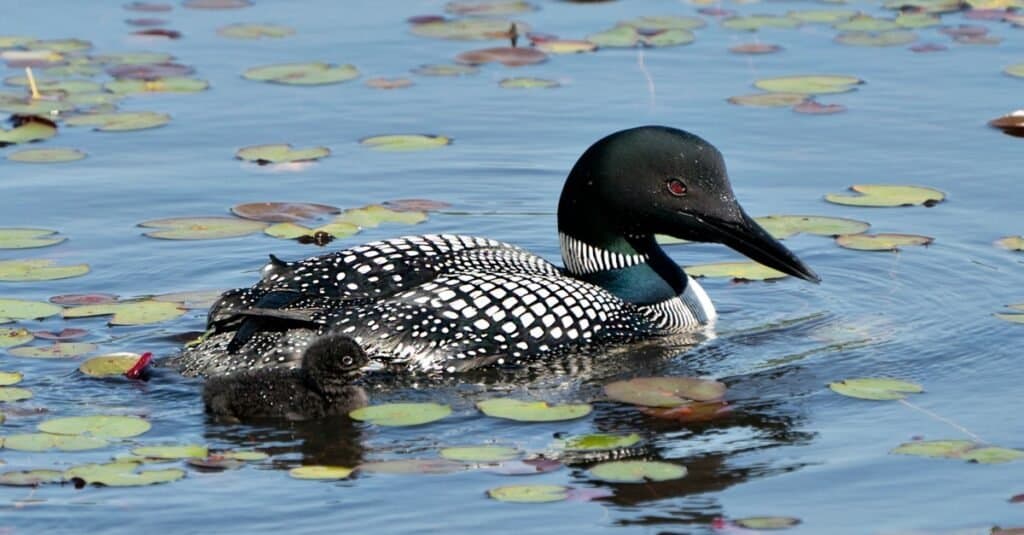
The Great Northern Loon is one of the most dangerous birds in North America.
©Rejean Bedard/Shutterstock.com
While the Great Northern Loon isn’t typically dangerous to humans, they are highly territorial and sometimes aggressive when their nest or chicks are threatened. For example, if a human gets near its territory, it might attack, using its sharp, pointed beak.
This bird primarily eats fish but will also consume crustaceans, reptiles, and amphibians. To kill its prey, the Great Northern Loon stabs it with its beak before swallowing it whole.