


Quick Take
- Producing 300 eggs in a single cycle is a baseline requirement for these 1,780 species.
- The 13.7-inch length of the Tinfoil barb creates a lethal risk for smaller tank inhabitants.
- Counter-intuitively, these brilliantly colored fish are aggressive predators that actively hunt smaller prey.
- The separation of the breeding pair is necessary to prevent the immediate destruction of the eggs.
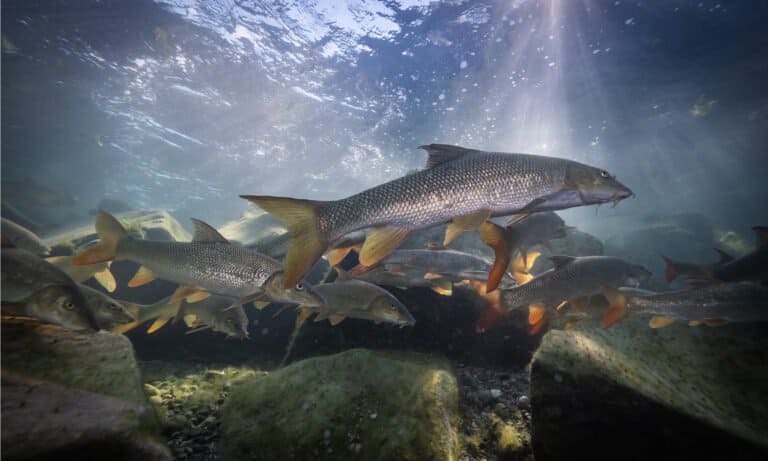
Barbs are freshwater fish belonging to a family of 1,780 species. They are popular aquarium fish because of their brilliant colors of gold, orange, rosy, silver, and cherry, along with others. Also, they are available for a low price at pet shops. Though small in size, they’re aggressive predators of fish, crustaceans, and insects.

3 Barb Facts
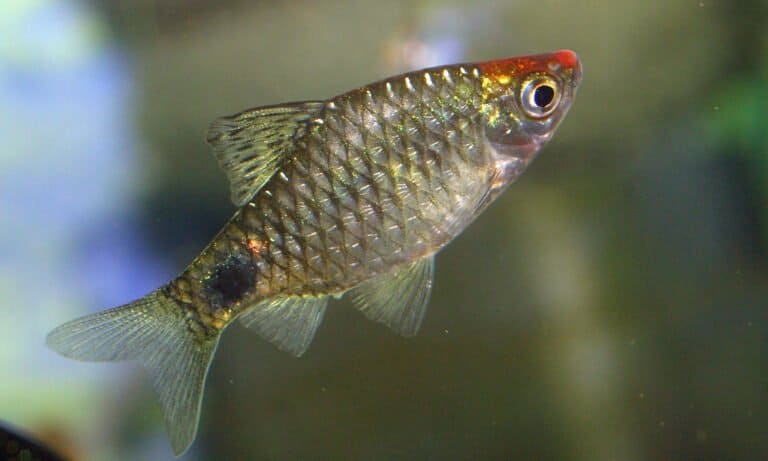
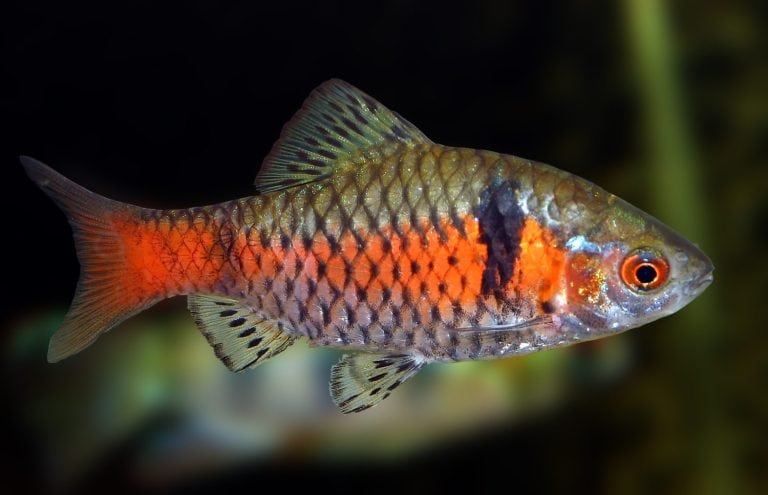
- Breeding colors: The rosy barb is notable for changing colors during the breeding season to attract mates. Male rosy barbs change from silver to a combination of gold and red. It’s rare for a female rosy barb’s yellow and pink scales to change, but the color does become more intense.
- Tough fish: Barb fish have an aggressive nature. They’re likely to eat smaller types of fish. This is why aquarium owners should only pair barbs with other barbs or larger types of fish.
- High adaptability: These fish have the rare quality of being able to adapt to changes in their habitat. This includes changes in water temperature and pH level.
Classification and Scientific Name
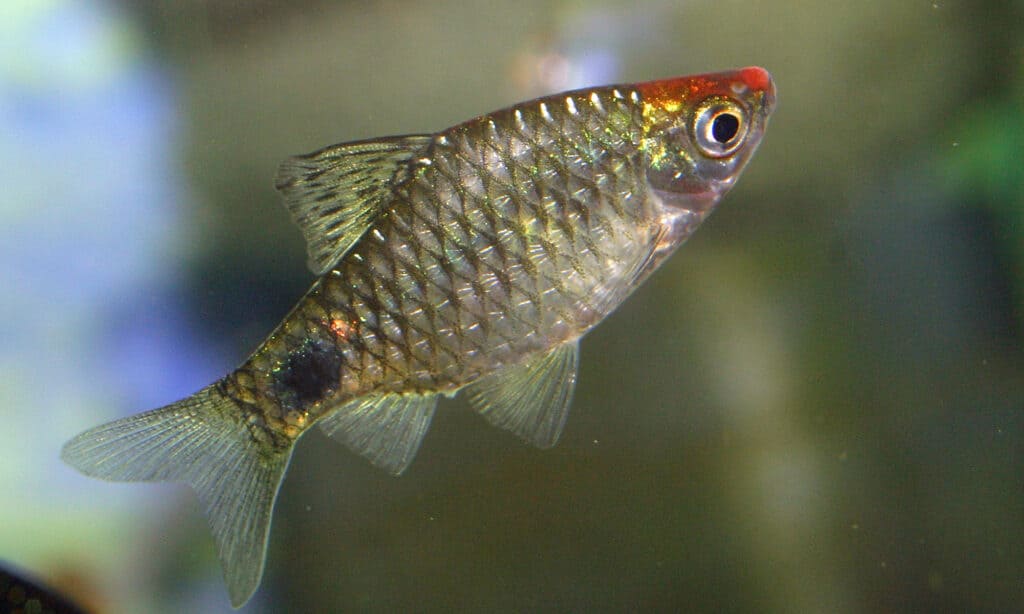
Barbs are freshwater fish belonging to a family of roughly 1,780 species.
©VladiMil/Shutterstock.com
Barb fish are a group of freshwater ray-finned fish classified in the family Cyprinidae (carp family). They are found in Africa, Asia, and Europe. Barb fish have barbels near the mouth and lack teeth. These are used to sense and locate prey. While historically often classified under the genus Barbus, many are now reclassified into other genera like Puntius, Barbodes, and Enteromius. They are also classified in the Cyprinidae family and the class Actinopterygii.
Types of Barb Fish: The Different Species
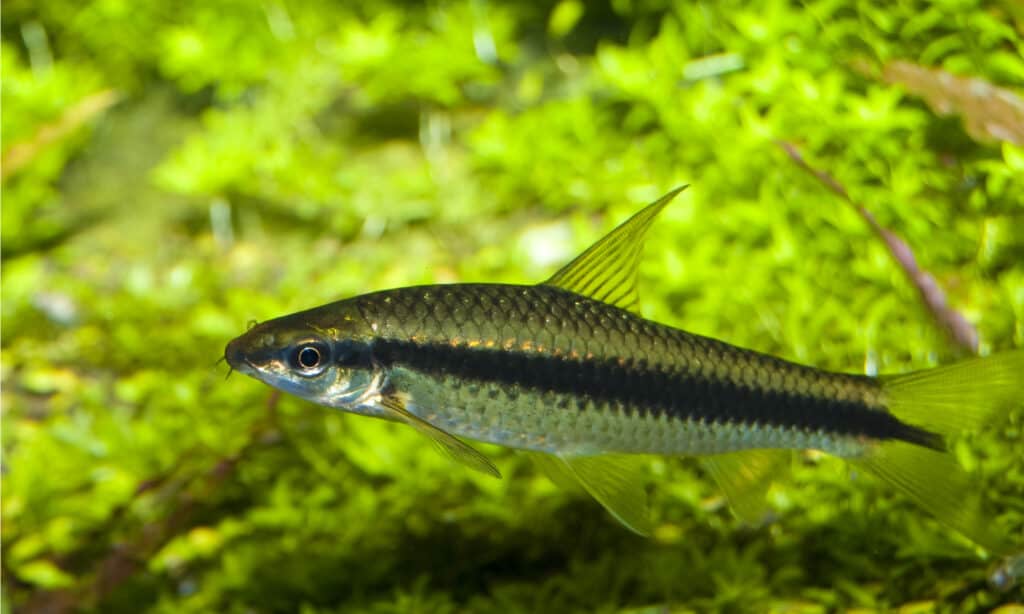
Barbs are popular pets — perfect for aquarium life.
©iliuta goean/Shutterstock.com
The Cyprinidae family contains hundreds of species that vary in size and color. This is what makes them so popular with people looking to add dynamic fish to a freshwater aquarium without paying a high price.
Some of the most notable and colorful examples of the barb family include:
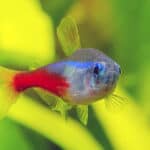
- Cherry barb (Puntius titteya): These fish live in the Kelani basin near Sri Lanka. Normally, they have brown or tan scales with red and orange tones. But, during the breeding season, males turn a brilliant cherry red.
- Tiger barb (Puntigrus tetrazona): It’s named for both its color and behavior. It has silver scales featuring black stripes with orange highlights on its fins and mouth. Not only does it have a color pattern like a tiger, but this fish is also known to nip at the delicate fins of other fish!
- Gold barb (Barbodes semifasciolatus): The gold barb is also called a Chinese barb because it’s from the Red River basin in China. This three-inch fish adds a flash of orange or gold scales to its aquarium habitat. Gold barbs are one of the common types sold in pet stores.
- Rosy barb (Pethia conchonius): These fish are native to the northern part of India. Rosy barbs have glowing red scales and a forked tail. They’re a little bigger than most barbs at six inches.
Appearance
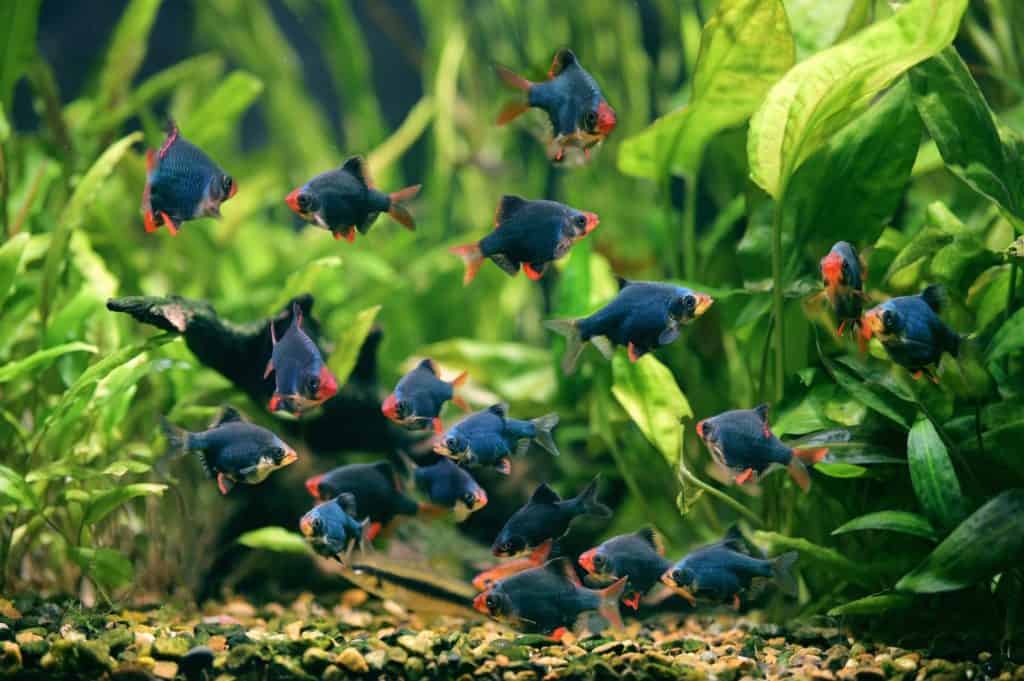
Barbs are aggressive, but they’re also hardy and adaptable.
©DMITRII STARTCEV/Shutterstock.com
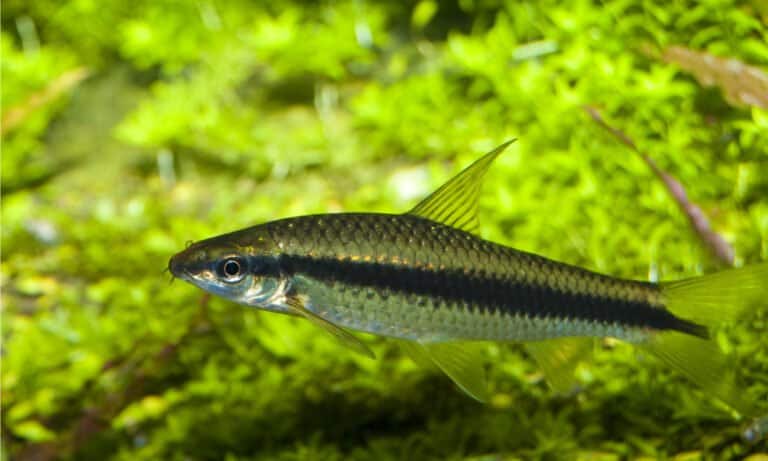
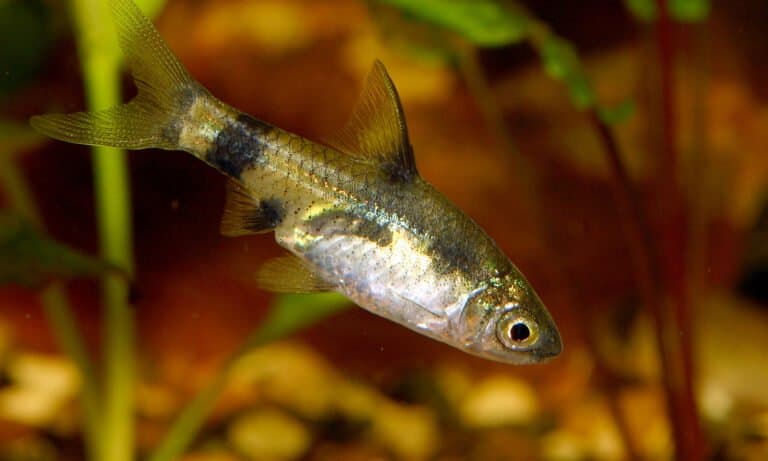
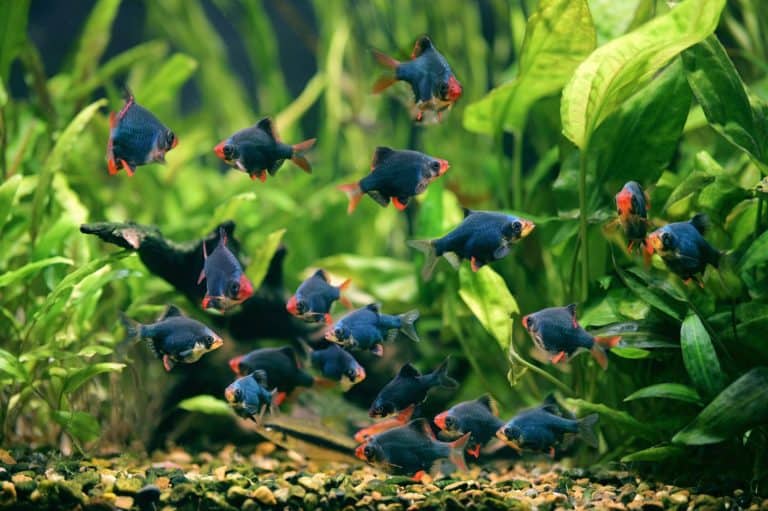
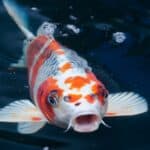
The different types of barbs can be orange, red, black, gold, striped, or even rosy. Some barbs are as small as two and a half inches, like the black ruby barb, while other types can measure 12 inches long. The longest is the Tinfoil barb at 13.7 inches. Alternatively, some of the most popular barbs, like the gold barb and the Tiger barb, are three inches in size.
These small fish have tiny barbels or bristles near their mouth. Barbels are used in the wild to find prey in murky water.
Barbs have an aggressive nature. Along with eating algae, they are excellent hunters. They go after smaller fish, worms, and crustaceans.
An aquarium owner needs to avoid putting smaller fish in the same tank as barbs. They are likely to eat the smaller fish!
Birds and larger fish are predators of barb fish. Not surprisingly, it’s difficult for a brightly colored barb to blend in with its environment to escape. So, these animals rely on their quick swimming abilities to get away from threats. Also, barbs live in schools, allowing most of them to escape when they encounter a predator.
Distribution, Population, and Habitat
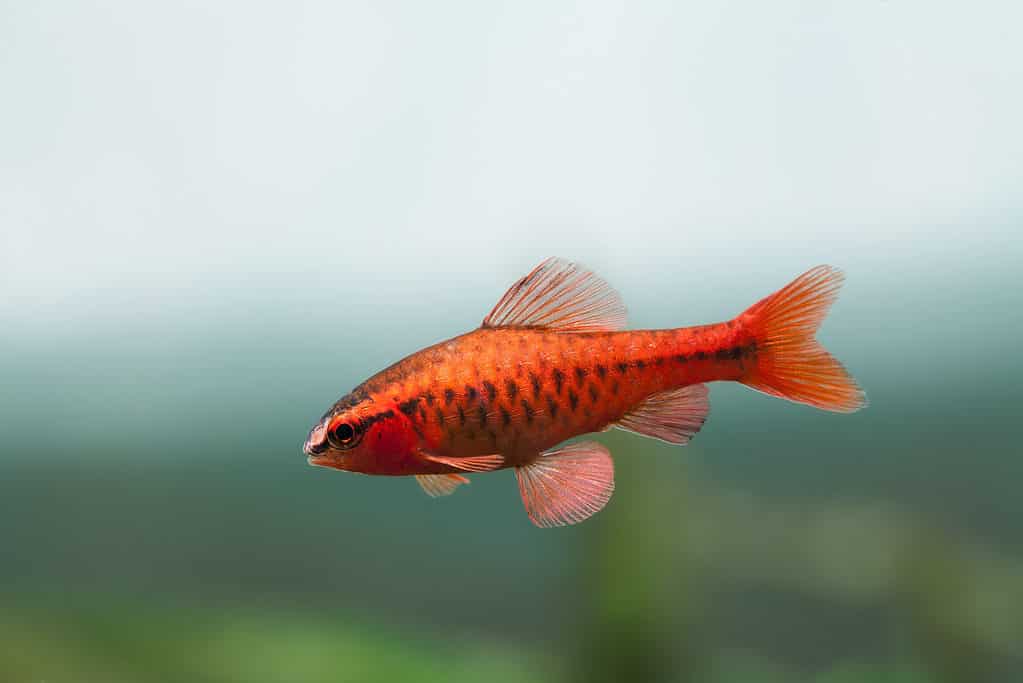
Barb fish come from many different regions, such as China and Taiwan.
©Besjunior/Shutterstock.com
Barbs are freshwater fish. Different types of barbs are from different regions. For instance, the gold barb is native to rivers and streams around China, Vietnam, and Taiwan. Rosy barbs live in lakes and streams around India. Tiger barbs are found in Borneo and Malaysia.
These fish can live in bodies of water three to 16 feet in depth.
The IUCN Red List reports that many barb species are classified as Least Concern, but some are threatened or endangered. Conservation efforts may exist for certain threatened species.
Predators and Prey
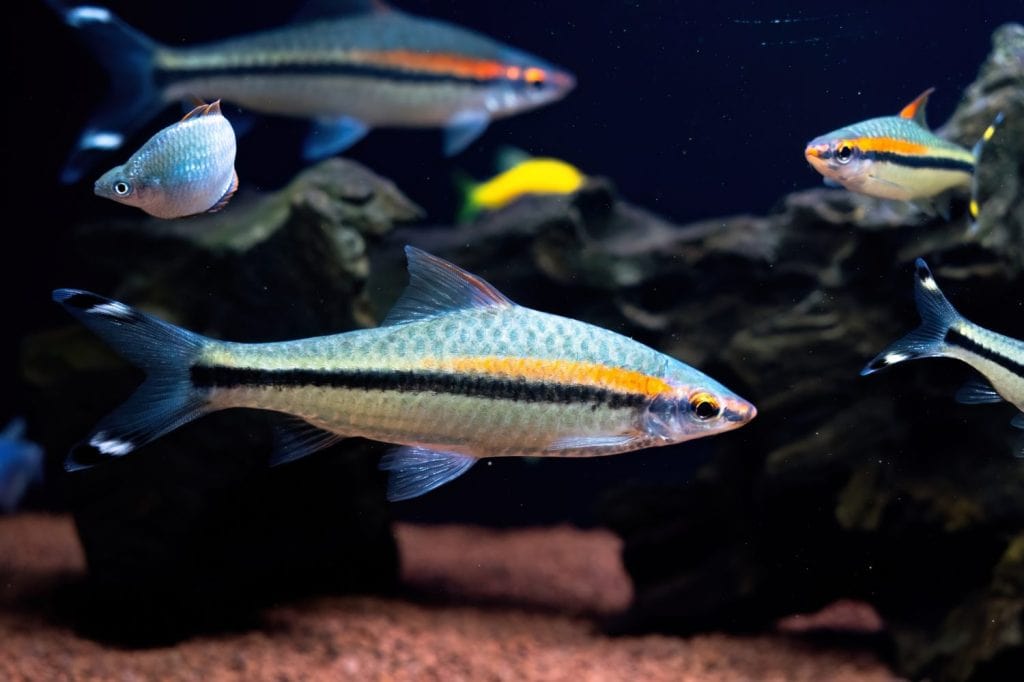
Barbs eat algae, smaller fish, insects, and crustaceans.
©Rossi R/Shutterstock.com
Barbs are omnivorous. They are notable for eating a variety of both plants and animals in their habitat.
What eats barb fish?
In the wild, barbs are eaten by larger fish, reptiles, and birds such as kingfishers. Humans also capture them for breeding and sale to aquarium enthusiasts.
What does a barb fish eat?
They eat algae, smaller fish, insects, and crustaceans. They are aggressive hunters and may go after larger fish, but that’s rare. Usually, their prey is smaller.
Reproduction and Lifespan
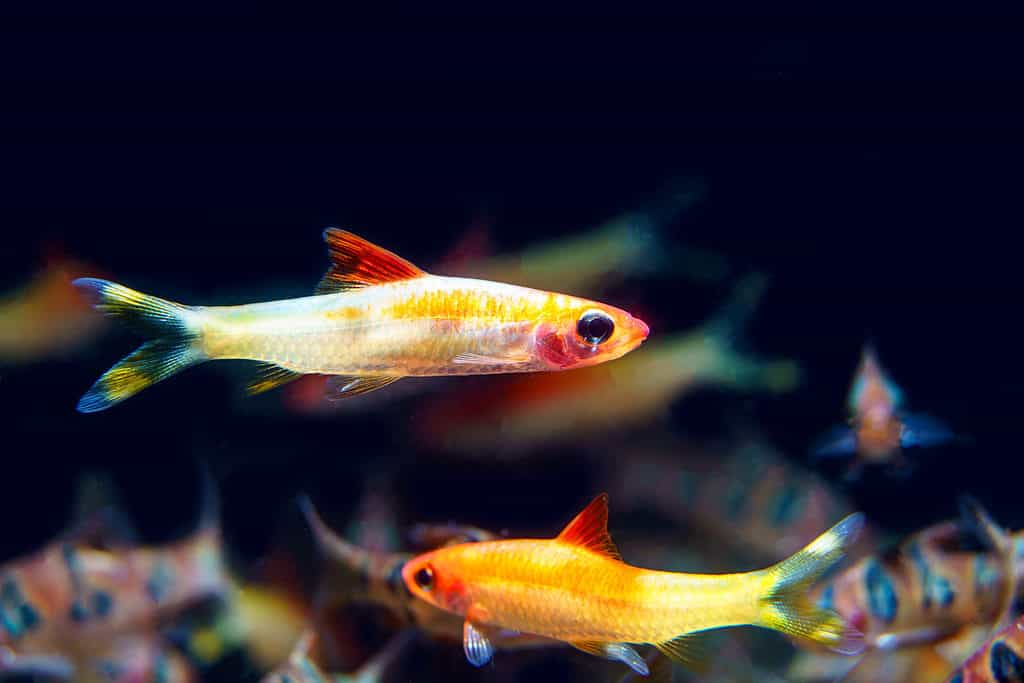
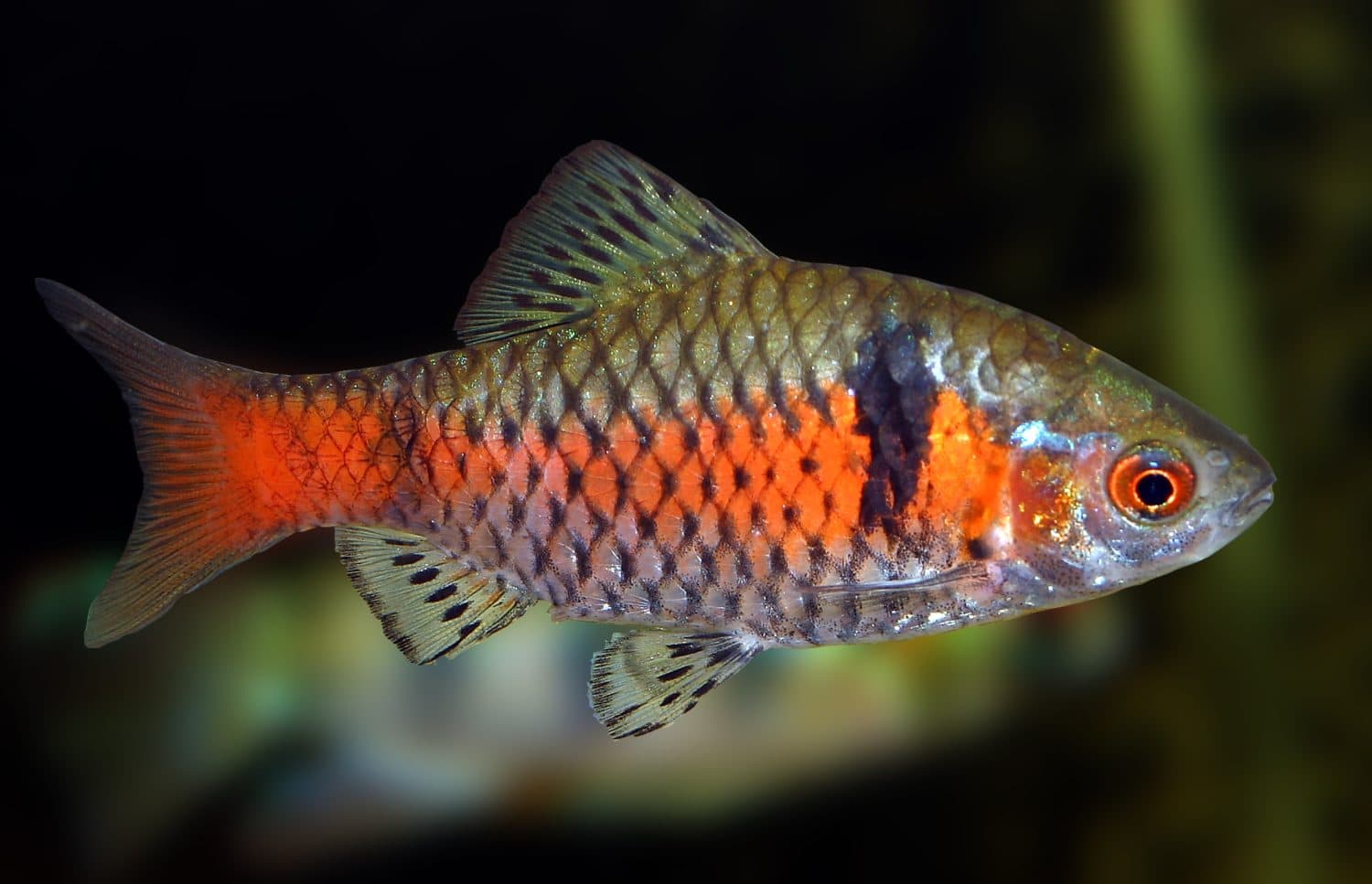
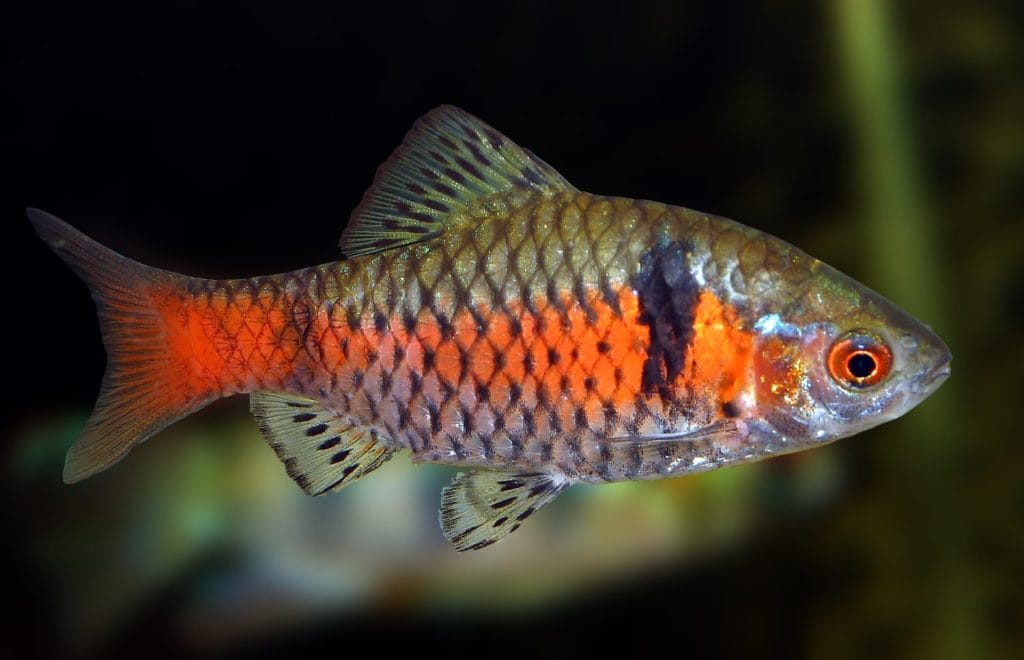
Depending on their skin and lighting conditions, a glisten of gold tones may appear on the Denison barb’s scales.
©chonlasub woravichan/Shutterstock.com
Barbs reach sexual maturity at six weeks old. In the spring, when the water is warm, a female barb releases 200 to 300 eggs into the water at one time. A male barb releases sperm and fertilizes the eggs. The eggs hatch in two to three days.
Someone breeding barbs should know these fish are likely to eat the eggs. So, it’s a good idea to put the male and female into another aquarium right away.
Fishing and Cooking
Barbs are too small to eat. Their colorful patterns and low price have made them popular with fish enthusiasts of all experience levels.
They are hardy fish, with many species living five to seven years, and some living up to 15 years with proper care.
Barb Pictures
View all of our Barb pictures in the gallery.

benny337/Shutterstock.com
How to say Barb in ...
Sources
- Our Marine Species / Accessed November 8, 2019
- Wikipedia / Accessed November 8, 2019
- IUCN Red List / Accessed November 8, 2019
- Learn About Nature / Accessed November 8, 2019
- The Aquarium Advisor / Accessed November 8, 2019
- The Spruce Pets / Accessed November 8, 2019
- Help Us Fish / Accessed November 8, 2019