
B
Species Profile

Bavarian Mountain Hound

Canis lupus familiaris

Born for the blood trail.
Aleksandr Abrosimov/Shutterstock.com

Bavarian Mountain Hound Distribution

Click a location to explore more animals from that region

Origin Location

This map shows the native origin of the Bavarian Mountain Hound. As a domesticated species, they are now found worldwide.

Loading map...

Found in 1 country

Size Comparison

Human 5'8"
Bavarian Mountain Hound 1 ft 7 in

Bavarian Mountain Hound stands at 28% of average human height.

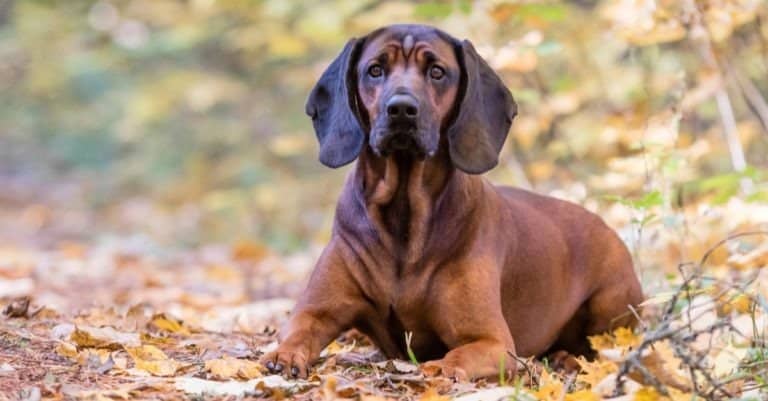
Bavarian Mountain Hound lying in grass

At a Glance

Domesticated
Also Known As Bayerischer Gebirgsschweißhund, Bayerischer Gebirgs-Schweißhund, Bavarian Mountain Scent Hound, Bavarian Scent Hound, Bavarian Hound
Diet Omnivore
Activity Crepuscular+
Lifespan 5 years
Weight 30 lbs
Status Not Evaluated
Did You Know?

Its traditional name includes the German word for "blood," referring to blood-trail tracking rather than sweat.

Scientific Classification

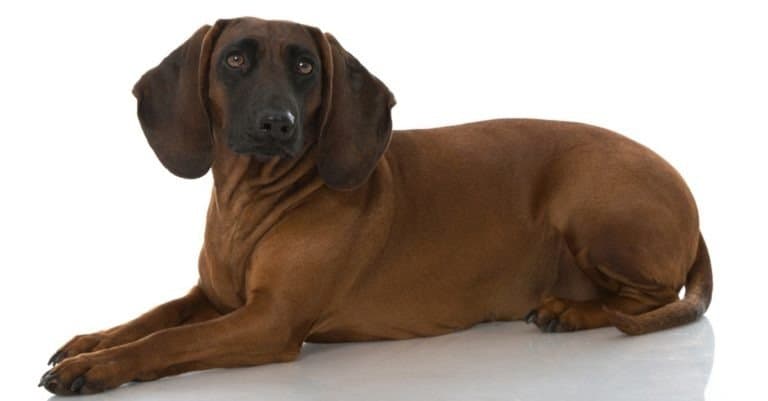
The Bavarian Mountain Hound is a German scenthound breed developed for tracking wounded game (especially deer) in mountainous terrain; it is a domestic dog variety of the gray wolf.

Kingdom
Animalia
Phylum
Chordata
Class
Mammalia
Order
Carnivora
Family
Canidae
Genus
Canis
Species
lupus

Distinguishing Features

  • Medium-sized, athletic scenthound built for endurance and rough terrain
  • Strong scent-tracking ability (used as a leash-tracking/‘blood tracking’ dog)
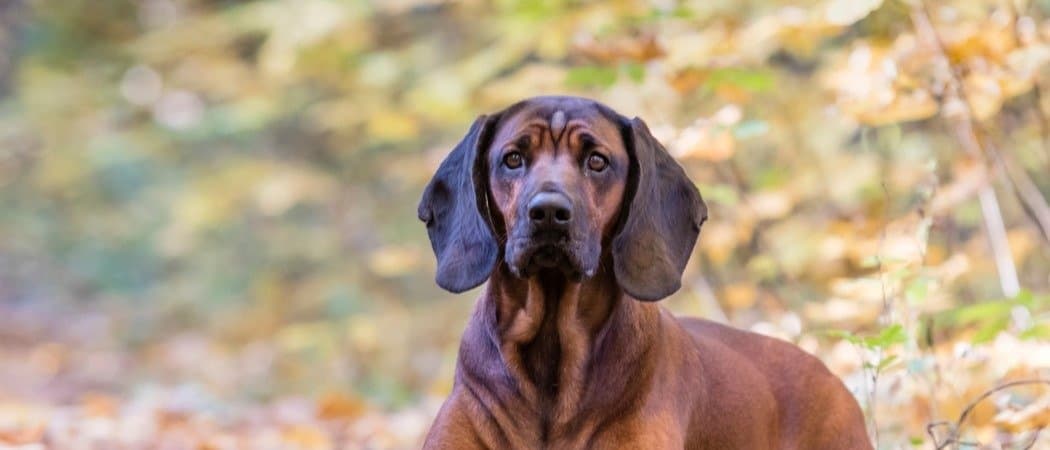
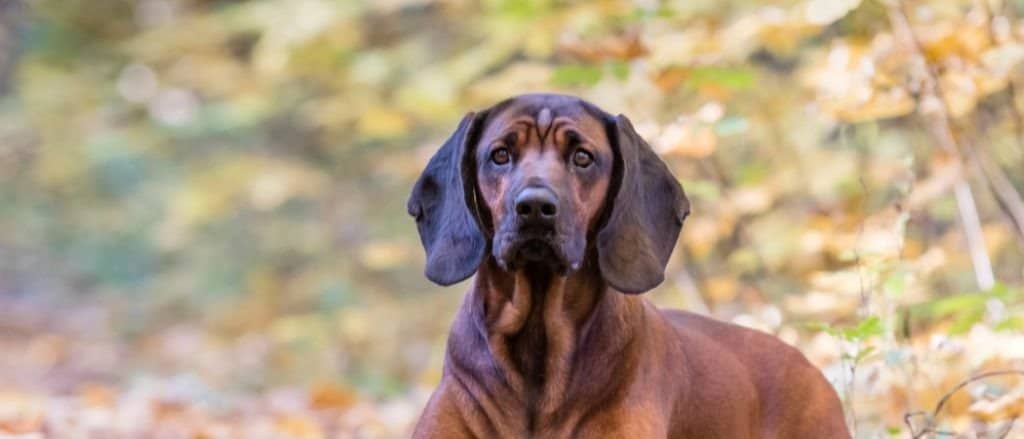
  • Typically short, dense coat; often reddish to fawn with darker shading
  • Drop ears, long muzzle, and overall hound-like proportions

Physical Measurements

Males and females differ in size

Height
1 ft 8 in (1 ft 7 in – 1 ft 8 in)
1 ft 6 in (1 ft 5 in – 1 ft 7 in)
Length
2 ft 11 in (2 ft 7 in – 3 ft 1 in)
Weight
61 lbs (55 lbs – 66 lbs)
49 lbs (40 lbs – 55 lbs)
Tail Length
9 in (8 in – 10 in)
10 in (9 in – 11 in)
Top Speed
28 mph
Not fast, built for endurance

Appearance

Primary Colors
Secondary Colors
Skin Type Domestic dog skin with a short, dense, harsh, close-lying coat; undercoat is scant (not a pronounced double coat). Skin is typically well-pigmented, often darker in masked/shaded areas.
Distinctive Features
  • Domestic dog (Canis lupus familiaris) scenthound selectively bred in Bavaria/Alpine regions for tracking wounded game (not a wild canid form).
  • Medium-sized, athletic, endurance-focused build optimized for steep, rough terrain; more compact and agile than many larger scenthounds.
  • Short, dense, weather-resistant coat suited to cold/wet mountain conditions; lies close to the body for brush resistance.
  • Head often shows a pronounced black mask; ears are medium-length, set high, hanging close to the cheeks-typical scenthound ear carriage aiding scent work.
  • Deep chest with strong heart/lung capacity for sustained trailing; firm topline and well-muscled hindquarters for climbing/descending.
  • Feet tend to be tight and robust with strong pads for rocky ground; overall frame emphasizes stamina over sprint speed.
  • Behavioral/working trait relevant to appearance/handling: very nose-driven and persistent; typically lower head carriage when working scent.
  • Distinguishing from the base species (gray wolf): reduced overall size and mass, shorter muzzle and less robust cranial profile, variable red/brown/tan coat with mask/shading from selective breeding, and a domestic temperament/management dependence.
  • Common breed-linked health concerns to monitor: hip dysplasia (working strain on joints), ear infections (pendulous ears and outdoor work), occasional gastric bloat risk as a deep-chested breed, and wear/abrasions to pads/claws from mountainous terrain.
  • Needs lots of daily exercise and scent-work/tracking; strong trailing drive needs firm recall and leash control. Clean and dry ears after wet work; brush coat in shedding seasons; keep weight and joints fit.

Sexual Dimorphism

Males are typically more robust with a heavier head/neck and slightly larger overall frame; females are usually lighter-boned and more refined while maintaining the same athletic proportions and coat characteristics.

  • Slightly larger stature and heavier musculature, particularly through neck, shoulders, and chest.
  • Broader head and more pronounced stop/muzzle strength; overall more substantial forequarters.
  • Slightly smaller and more refined build with a narrower chest/neck profile.
  • Often a lighter, more streamlined outline while retaining strong hindquarter muscling for endurance work.

Did You Know?

Its traditional name includes the German word for "blood," referring to blood-trail tracking rather than sweat.

Developed in late-19th-century Bavaria by refining heavier scenthounds for steep, rocky terrain.

Known for "cold-nose" work: calmly following older, faint scent lines for hours.

Often handled on a long blood-trail tracking leash to keep the dog precisely on the line.

Typically bonds tightly to one handler, reflecting its traditional role with professional hunters and foresters.

Compared with many hounds, it's more compact and agile-built to climb and descend safely.

Outside hunting circles it's relatively uncommon; many breeders place pups only with working homes.

Unique Adaptations

  • Athletic, medium-sized build with strong bone and musculature for long climbs and uneven footing (a refinement from heavier scenthounds).
  • Tight, weather-resistant coat and hardy constitution suited to cold, wet mountain forests.
  • Long, pendulous ears and well-developed nasal anatomy help funnel and retain ground scent near the nose (a classic scenthound trait).
  • Balanced proportions and strong pasterns/paws help maintain traction and stability on rocky trails.
  • Behavioral adaptation: exceptional focus on "wounded-game" scent (blood interdigital/hoof, disturbed ground), selected over generations for reliable recovery work.

Interesting Behaviors

  • Methodical "line work": moves steadily with nose down, correcting itself when the scent fades.
  • "Casting" in arcs when it loses the track, systematically searching until it re-finds the line.
  • Distinct hound vocalizations (baying/"tonguing") may appear when excited or on scent, though many work quietly on lead.
  • Strong handler-checking: pauses and looks back for direction-useful in controlled tracking.
  • Intense interest in hoofed-game scent; may ignore distractions once committed to a trail.
  • Reserved-with-strangers but deeply loyal at home; tends to be calm indoors if well-exercised.
  • High persistence can look like stubbornness-really a working mindset that rewards patient, consistent training.

Cultural Significance

Bavarian Mountain Hound (Canis lupus familiaris) is a German hunting dog known for humane tracking and finding wounded game. A working, leash-trained tracking specialist used by Bavarian and Alpine hunters, bred from wolves for strong scent work and teamwork.

Myths & Legends

In Central European hunting tradition, the story of Saint Hubert and his hound became a symbol of the 'holy' blood-trailing hound and shaped how scenthounds were seen as noble in German-speaking hunting culture.

German-speaking hunters have long repeated the saying that a true blood-trailing hound can "follow a single drop," a piece of hunter's lore celebrating the near-miraculous perseverance of blood-trailing dogs in dense forest and mountain terrain.

In Bavarian forest tales, the Nachsuche dog (Bavarian Mountain Hound, Canis lupus familiaris) is a quiet guardian of fair hunting, guiding hunters to wounded game so animals are found, not lost.

The name Bavarian Mountain Scent Hound (Canis lupus familiaris) shows where it came from, Bavaria, and that it is a working mountain hound trained to follow the scent of wounded game on a blood trail.

Conservation Status

NE Not Evaluated

Has not yet been evaluated against the criteria.

Population Stable

Life Cycle

Birth 6 pups
Lifespan 5 years

Lifespan

In the Wild
3–8 years
In Captivity
10–14 years

Reproduction

Mating System Polygynandry
Social Structure Managed Domestic
Breeding Season Year-round (non-seasonal); females typically enter estrus about twice per year
Breeding Pattern Transient
Fertilization Managed Selective
Birth Type Managed_selective

Bavarian Mountain Hound (Canis lupus familiaris): breeding is human-managed, often polygynandrous with selected sires used across dams. Mating is internal with a copulatory tie; pairs are temporary during estrus. No cooperative breeding; owners plan matings.

Behavior & Ecology

Social Pack Group: 4
Activity Crepuscular, Diurnal, Cathemeral
Diet Omnivore High-protein meat-based meals (often venison- or poultry-based, as tolerated)

Temperament

Handler-bonded, steady, and purposeful; typically reserved with strangers but not inherently sharp when well-socialized.
High scent-drive and persistence: more "nose-led" and methodical than the base species' broader hunting toolkit; can appear stubborn because attention locks onto scent trails.
Calm in the home when adequately exercised; outdoors shows strong prey/track motivation (especially deer-related scent) and may ignore recall if untrained.
Generally confident in rough terrain; selective breeding favors sure-footed, enduring trail work rather than wolf-like endurance pursuit and pack coordination.
HUBS (breed-group patterns): scenthound problem-solving, strong trail commitment, and handler orientation are common; variation is mainly in sociability with unfamiliar dogs/people, vocal tendency (quiet vs. more baying), and intensity of prey drive.
Care requirements: daily substantial exercise plus structured scent work (tracking games, mantrailing) to prevent frustration; secure fencing/leash management due to tracking impulse; gentle, consistent training works better than harsh correction.
Can have hip dysplasia—keep weight down, steady exercise, and avoid hard jumps when young. Check and clean pendant ears. Deep-chested lines risk bloat—feed carefully and rest after meals. May become overweight if not exercised.

Communication

Bark Alert/attention-seeking in domestic context
Baying/hound voice during or when anticipating tracking work Varies by individual
Whine/whimper Excitement, frustration, or contact-calling
Growl Resource guarding or boundary-setting; often preventable with training/socialization
Scent-based communication: intense sniffing, tracking posture (nose-down), scent marking; distinguishes breed behavior from many pet dogs by frequency and persistence.
Body language: tail carriage changes with trail confidence; ear position and head carriage used heavily to signal arousal/uncertainty.
Handler-directed signals: checking back, leash tension patterns, and directional pulls to indicate scent strength; learned communication with humans is more prominent than in the base species.
Pawing/nudging/leaning to solicit interaction or signal readiness to work; may pace or "cast" (zig-zag) when searching for scent.

Habitat

Biomes:
Temperate Forest Alpine Boreal Forest (Taiga) Tundra Temperate Grassland Mediterranean Desert Hot Desert Cold Wetland Freshwater Marine Tropical Dry Forest Tropical Rainforest Savanna Temperate Rainforest +9
Terrain:
Mountainous Hilly Valley Rocky
Elevation: Up to 16404 ft 3 in

Ecological Role

Domestic working dog (scent-trailing/track-and-recovery specialist) rather than a wild predator; dietary intake is primarily human-provided.

Humane recovery of wounded game (reduces unrecovered-carcass waste) Supports wildlife management and regulated hunting practices by enabling accurate tracking Acts as a companion/working partner that can reduce the need for broader pursuit methods that may disturb non-target wildlife

Diet Details

Main Prey:
Other Foods:
Cooked grains and starches Starchy vegetables Non-starchy vegetables Fruit

Human Interaction

Domestication Status

Domesticated

Domestic dog (Canis lupus familiaris) is a tamed form of the gray wolf. The Bavarian Mountain Hound was developed in Germany in the 19th century by crossing regional scent hounds with lighter hounds to make a blood-trailing dog for following wounded deer in mountains. It is more people-focused, trainable, and agile than wolves.

Danger Level

Low
  • Bites if mishandled, cornered, or if pain/fear-reactive (as with any dog)
  • Strong prey drive may lead to chasing wildlife/small pets; risk is typically indirect (collisions, leash accidents) rather than predatory aggression toward people
  • Mouthy/grabby behavior in adolescents if under-exercised or under-trained
  • Protective behavior toward handler/territory can occur if poorly socialized

As a Pet

Suitable as Pet

Legality: Generally legal as a companion animal in most jurisdictions where domestic dogs are permitted; typically not subject to breed-specific bans. Local rules may apply (licensing, leash laws, hunting/working-dog regulations, or landlord/insurance restrictions).

Care Level: Experienced

Purchase Cost: $800 - $2,500
Lifetime Cost: $18,000 - $45,000

Economic Value

Uses:
Working/hunting assistance Scent-tracking services Breeding and kennel programs Companion animal market
Products:
  • Wounded-game tracking (blood trailing) for hunters/foresters
  • Leashed tracking work and handler-guided recoveries
  • Occasional use in search-and-rescue-style trailing (where permitted/trained)
  • Puppy sales and stud services (working lines)
  • Training services, equipment, and veterinary/maintenance spending associated with ownership

Relationships

Ecological Equivalents 6

Animals that fill a similar ecological role in their ecosystem

Hanoverian Scenthound Canis lupus familiaris A German blood-trailing scenthound used to track wounded hoofed game; the Bavarian Mountain Hound was developed from the Hanoverian Scenthound as a lighter, more agile dog suited to mountainous terrain.
Bloodhound
Bloodhound Canis lupus familiaris Comparable niche as an endurance scent hound selected for intense olfaction and persistent trailing. Differs by being heavier, looser-skinned, and more commonly used for human scent trailing, whereas the Bavarian Mountain Hound is typically selected for wounded-game tracking in rugged terrain.
Alpine Dachsbracke
Alpine Dachsbracke Canis lupus familiaris Mountain-capable tracking and trailing dog used for wounded game. Shares steady, methodical nose-work and stamina, but is shorter-legged and longer-bodied and often works at a different pace and with a different handling style.
Plott Hound
Plott Hound Canis lupus familiaris Scent-driven hunting dog used in rough terrain with strong trailing instincts and toughness. Overlaps in endurance and drive, although Plott types are more often associated with pursuing and holding game, while Bavarian Mountain Hounds are typically managed for controlled post-shot tracking.
Eurasian Lynx
Eurasian Lynx Lynx lynx Not taxonomically close, but shares a forest and mountain hunting context focused on ungulates in parts of Europe; included as a niche-relative predator tied to deer ecology in mountainous habitats, contrasting with the dog's human-directed tracking role.
Domestic Dog
Domestic Dog Canis lupus familiaris Bavarian Mountain Hound. Human-bred scenthound used for controlled trailing; medium-sized and sure-footed with a strong nose. Calm but scent-driven and often reserved and bonded to a handler. Requires ample exercise and training; recommended hip screening, regular ear checks, and tick prevention.

Bavarian Mountain Hounds are descendants of Bracken, the original hunting dogs of Germany. Called Gebirgsschweisshund in German, they were the result of mixing a Hanoverian Scenthound with a Red Mountain Scenthound.

The breed is excellent at finding the injured game that has been shot down. They use their scent to track down the prey. Bavarian Mountain Hounds still make excellent hunting partners; they are very fast, persistent, and courageous. Bavarian Mountain Hounds are also gaining more popularity in Germany, the United States, and Great Britain.

Whether you adopt a Bavarian Mountain Hound from a rescue organization or purchase one from a breeder, it can make an excellent family pet. The breed is very loyal and affectionate.

Origin

In the 18th century, German breeders created the Hanoverian Scenthound from hunting breeds most skilled at following scents of prey on the ground, including the “Bracken,” having the finest nose and a strong will to follow the trail of hunted game. These dogs were perfect for hunting in lower elevations. When hunters began using guns in the mid-19th century, a dog was needed that could retrieve downed game rather than seek it out. In the 1870s, Baron Karg-Bebenburg of Reichenhall crossed a Hanoverian Scenthound with a red Mountain Scenthound to produce the Bavarian Mountain Hound.
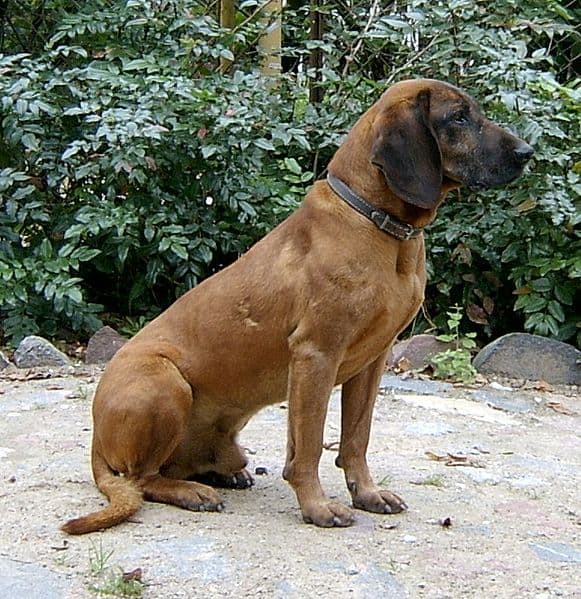
Bavarian mountain hounds have an impressive lineage among hunting dogs.

Owning a Bavarian Mountain Hound: 3 Pros and Cons

ProsCons
Good with children: These dogs do very well with children; they are playful and affectionate.Heavy Shedders: Bavarian Mountain Hounds shed a lot and will need daily brushing to remove loose hairs and keep their coats looking good.
Excellent hunting companion: Bavarian Mountain Hounds can make an excellent hunting partner. They use their scent to track down prey that has been shot down.Separation Anxiety: This breed gets very connected to the members of their family. They can develop separation anxiety if they are left alone for too long.
Less expensive to purchase: Bavarian Mountain Hounds are relatively less expensive to purchase than many other breeds.High activity needs: These dogs are a very active breed and need a lot of exercise.
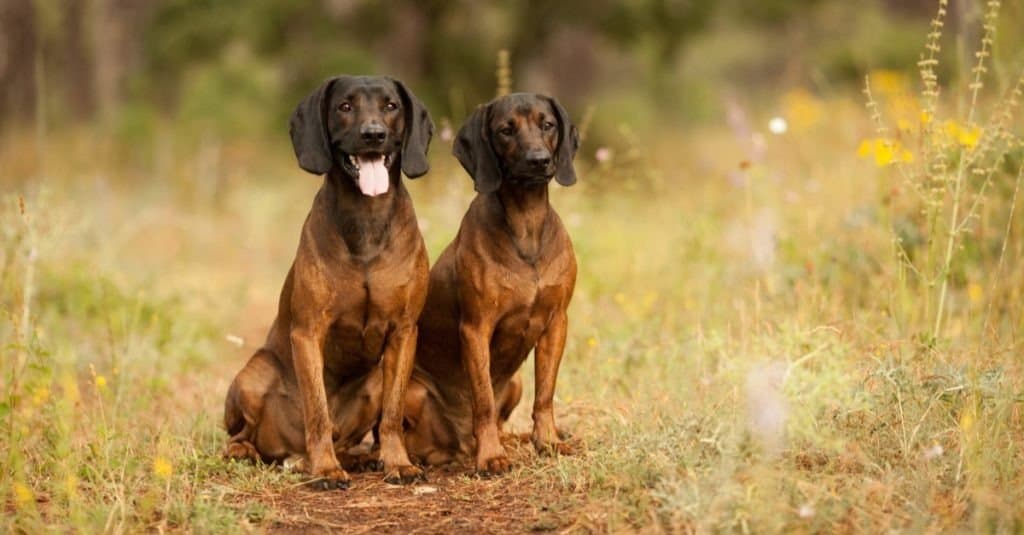
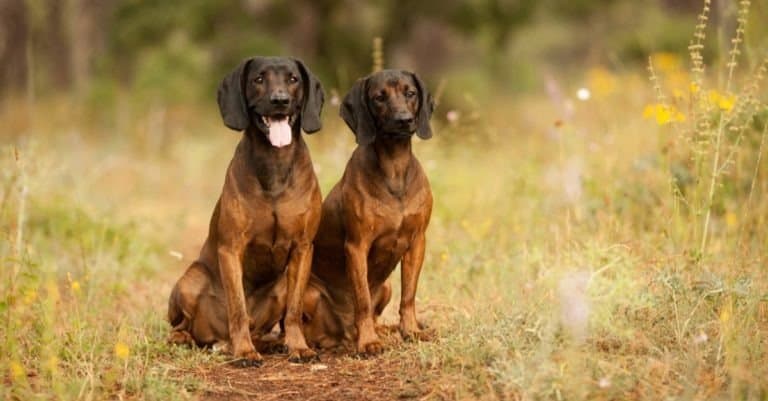
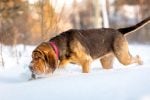
Two hunting dogs, Bavarian mountain hound hunting in the woods

These medium-sized dogs weigh up to 66 pounds in adulthood.

Size and Weight

This breed is a medium-sized dog. Males and females are both between 17 and 20.5 inches tall and weigh between 37 and 66 pounds. 12-week-old puppies weigh between 2.5 and 5 pounds. By six months, puppies should weigh between 15 and 50 pounds.

Common Health Issues

These dogs may suffer from different genetic disorders that are passed down from their parents. For this reason, it is important to do your research to choose a reputable and respected breeder who will be honest.

Hip and Elbow Dysplasia are two conditions that these dogs may develop. These disorders occur when a dog’s joints don’t develop correctly, and the bones end up rubbing against one another. This can make it very painful for them to walk and may sometimes require surgery.

Another possible condition that they may suffer from is progressive retinal atrophy or PRA. This eye disease is marked by the gradual degeneration of the retina of the eye, which eventually results in a loss of vision. At this time, there is no cure for this disorder.

Some of these dogs also suffer from epilepsy. This seizure disorder is controllable with medicine, but dogs will need to remain on the medication for the rest of their lives.

Temperament and Behavior

As pets, these dogs are very loyal and bonded with their family. They have calm personalities and are very intelligent dogs. They can make good family pets and generally get along well with children. They are not very outgoing with strangers and are more reserved until they feel comfortable with a person.

As a hunting dog, the breed exhibits very courageous traits. They can also show very persistent behaviors when hunting.
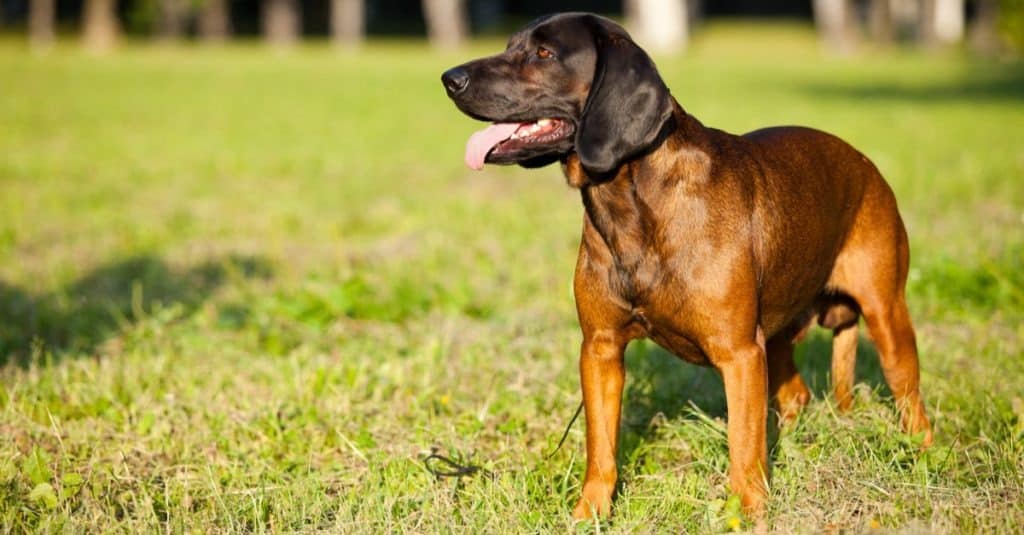
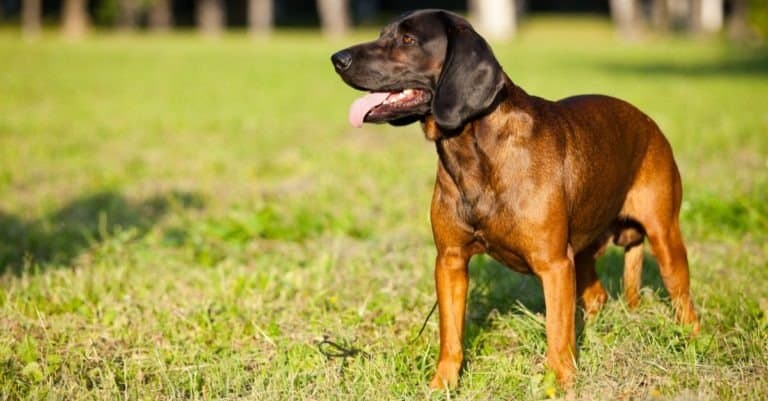
Bavarian Mountain Hound standing in grass

Bavarian mountain hounds should be trained from an early age using positive reinforcement.

How to Take Care of a Bavarian Mountain Hound

As these dogs are different from other dog breeds, they will require a unique care plan. Think about temperament, health concerns, exercise requirements, dietary needs, and other factors when you prepare to care for a hound.

The Best Dog Food

When choosing food for your dog, look for food from a reputable manufacturer that is formulated for high-energy, medium-sized breeds. The exact amount of food your dog will need can vary based on the food you select, their activity level, age, weight, health concerns, and other factors. Check with their veterinarian to make sure you’re feeding them the proper amount each day. A Bavarian Mountain Dog’s food should be portioned out into two meals each day. Do not leave their food sitting out all day, as it can lead to weight gain.

Puppies will need to eat more frequently throughout the day. Divide the total amount of food the puppy should get into three or four meals until they are about six months old. At this time, they should be fine with eating just two meals. Choose a high-quality puppy formula for your dog, and check with their veterinarian if you are unsure about which food is best for your dog.

Maintenance and Grooming

These dogs are heavy shedders, but they are pretty easy to groom. Their dense coat should be brushed at least a few times each week to remove loose hairs or dirt.

Their nails also grow very quickly and will need to be clipped regularly to prevent them from getting too long. You should also brush your dog’s teeth a few times each week and check their ears to keep them clear of wax and debris.

Training

These dogs are highly intelligent and social. For training to work, you will want to start as early as possible and use positive reinforcement. Training methods that focus on punishing the dog for bad behaviors will not work well with them. This breed can also become bored easily if they don’t get enough mental stimulation, which can lead to destructive behaviors. To prevent this, you’ll want to keep your dog active and make sure they get enough attention.

Exercise

These dogs require regular exercise. They do best living with hunters who go out more than just casually. If you won’t be taking your Bavarian Mountain Dog Hunting on a regular basis, look for ways to make sure his high needs for both mental and physical stimulation are met. Make sure your home has a large yard with a high fence where your dog can run around.
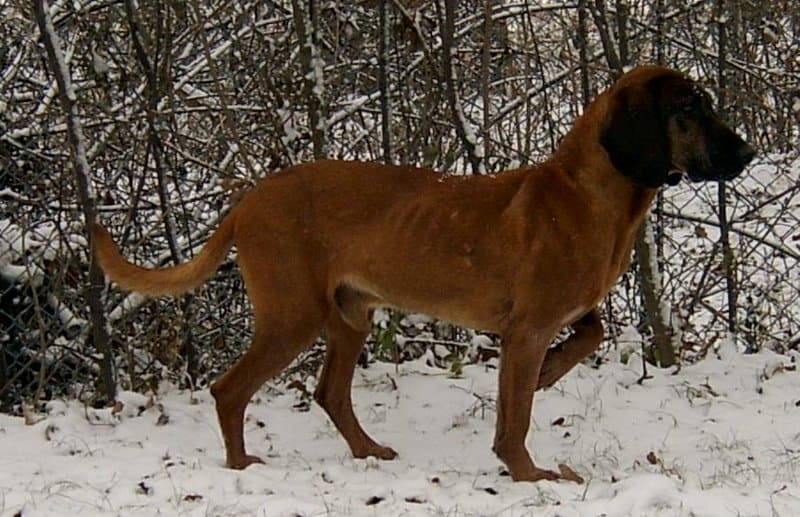
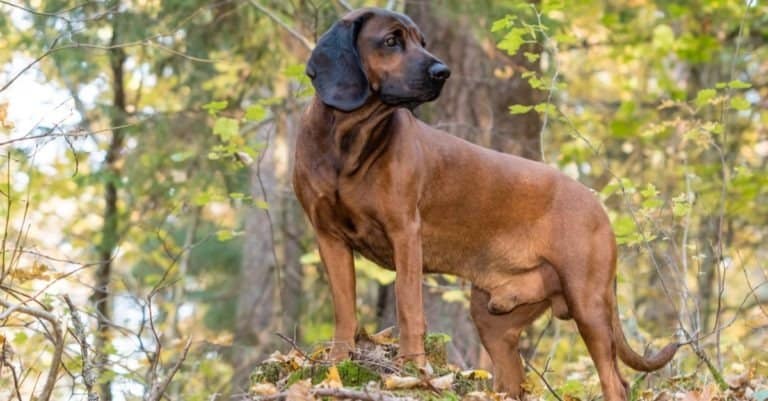
Bavarian mountain hounds need plenty of exercise.

Puppies

Puppies will need special care. Before you bring home a new puppy, make sure your home is ready and puppy-proof by removing anything that could cause harm to a dog and anything you wouldn’t want a puppy to destroy.

You should also set up an appointment with a veterinarian and purchase all the food, treats, and supplies your new puppy will need before bringing it home. That way, when you are ready to adopt or purchase the dog, everything will be set up and ready to go home.
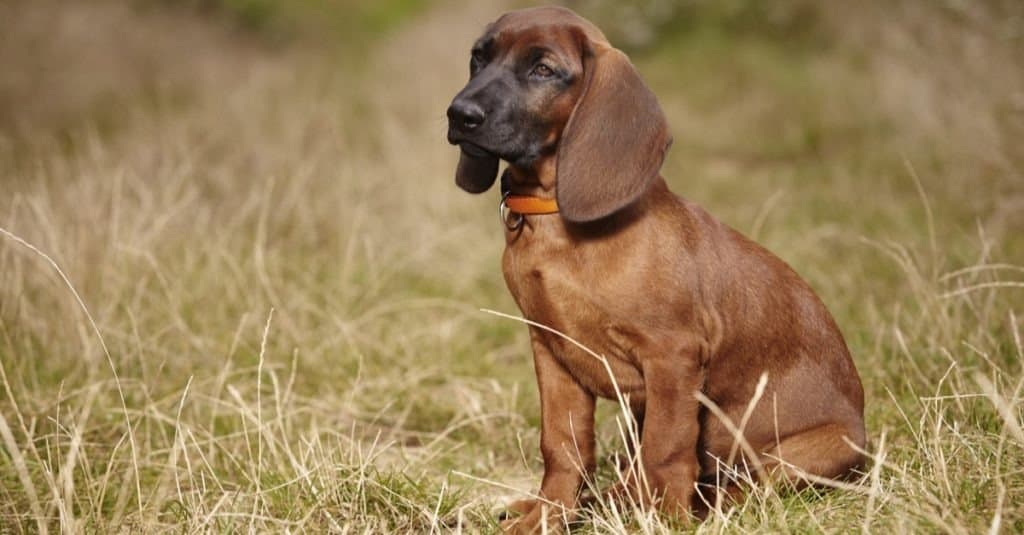
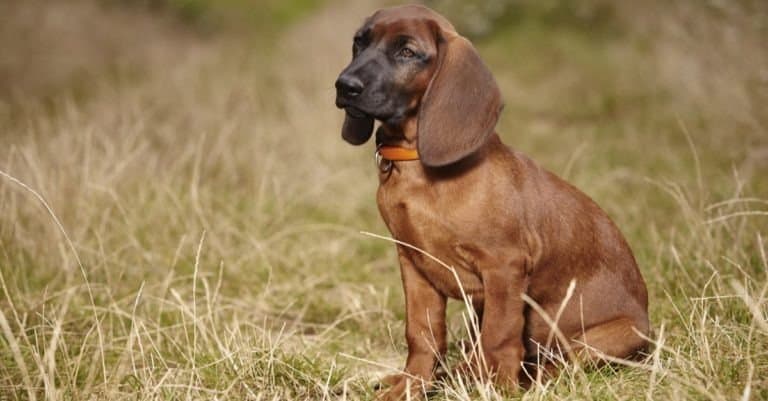
Bavarian Mountain Hound puppy sitting in the field

Bavarian Mountain Hound puppies need to be socialized early.

Bavarian Mountain Hounds and Children

These dogs generally do very well with children. They get along well with them and can be very loyal to their family members. This breed also loves getting lots of attention and will appreciate extra attention from children.

Dogs similar to the Bavarian Mountain Hound

Bloodhounds, Bluetick Coonhounds, and Beagles are three breeds that are similar to these dogs.

  • Bloodhound: Bloodhounds and Bavarian Mountain Hounds are both scenthounds that use their scent to find prey. Both breeds can be very affectionate and social with trusted members of their families. Bloodhounds, however, are larger than Bavarian Mountain Hounds. Male Bloodhounds have an average weight of 100 pounds compared to the 49.5 average weight of a Bavarian Mountain Hound.
  • Bluetick Coonhound: Bluetick Coonhounds and Bavarian Mountain Hounds are both friendly with children and many other dogs. Bluetick Coonhounds are more vocal than Bavarian Mountain Hounds and are much more likely to bark.
  • Beagle: Beagles are another scent hound, like the Bavarian Mountain Hound. Neither dog is recommended for apartment living as they are both active breeds who need space to run around. Beagles are smaller in size than Bavarian Mountain Hounds. Males have an average weight of 23.5 pounds, which is over 25 pounds lighter than the 49.5-pound average weight of a Bavarian Mountain Hound.
View all 453 animals that start with B

Sources

  1. American Kennel Club / Accessed January 29, 2021
  2. Dogtime / Accessed January 29, 2021
  3. Wikipedia / Accessed January 29, 2021
  4. Dogzone / Accessed January 29, 2021

Lisha Pace

About the Author

Lisha Pace

After a career of working to provide opportunities for local communities to experience and create art, I am enjoying having time to write about two of my favorite things - nature and animals. Half of my life is spent outdoors, usually with my husband and sweet little fourteen year old dog. We love to take walks by the lake and take photos of the animals we meet including: otters, ospreys, Canadian geese, ducks and nesting bald eagles. I also enjoy reading, discovering books to add to my library, collecting and playing vinyl, and listening to my son's music.

Thank you for reading! Have some feedback for us?


Bavarian Mountain Hound FAQs (Frequently Asked Questions)

Bavarian Mountain Hounds are less expensive than most other breeds, but they may be harder to find. The price to purchase a Bavarian Mountain Hound from a breeder is around $800. You may also be able to find Bavarian Mountain Hounds from a rescue or shelter. The price to purchase this breed from a rescue organization will be a few hundred dollars to cover application fees and vaccinations.

Purchasing a Bavarian Mountain Hound puppy is only one of the costs associated with ownership. You’ll also need to budget money to cover the cost of food, supplies, veterinary care, and other expenses for your dog. These will likely be the most expensive for your first year of ownership, and you can expect to spend between $1,000 and $1,500. In the following years that you own the dog, your expenses should be a bit lower, but you will still want to budget between $500 and $1,000 to cover everything.