Giant Panda Bear
Ailuropoda melanoleuca
 Verified by: AZ Animals Staff
Bamboo makes up 99 per cent of their diet!
Advertisement
Giant Panda Bear Scientific Classification
- Kingdom
- Animalia
- Phylum
- Chordata
- Class
- Mammalia
- Order
- Carnivora
- Family
- Ursidae
- Genus
- Ailuropoda
- Scientific Name
- Ailuropoda melanoleuca
Read our Complete Guide to Classification of Animals.
Giant Panda Bear Conservation Status
Giant Panda Bear Facts
- Prey
- Bamboo, Fruits, Rodents
- Name Of Young
- Cub
- Group Behavior
- Solitary
- Fun Fact
- Bamboo makes up 99 per cent of their diet!
- Estimated Population Size
- 2,000
- Biggest Threat
- Habitat loss
- Most Distinctive Feature
- Extension of wrist bone acts as a thumb
- Other Name(s)
- Giant Bear Cat, Bamboo Bear
- Gestation Period
- 5 months
- Habitat
- High-altitude, moist bamboo forest
- Diet
- Omnivore
- Average Litter Size
- 1
- Lifestyle
- Diurnal/Nocturnal
- Common Name
- Giant Panda, Giant Panda Bear
- Number Of Species
- 1
- Location
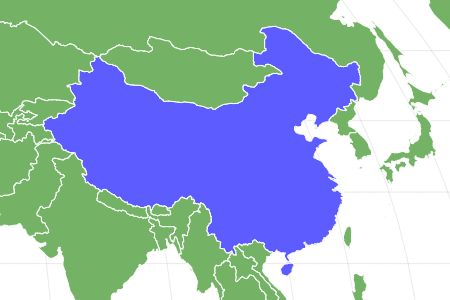
- Mountains of central China
- Slogan
- Bamboo makes up 99 per cent of their diet!
- Group
- Mammal
Giant Panda Bear Physical Characteristics
- Color
- Brown
- Black
- White
- Skin Type
- Fur
- Top Speed
- 20 mph
- Lifespan
- 20 - 35 years
- Weight
- 110kg - 250kg (242lbs - 551lbs)
- Height
- 1.5m - 1.8m (4.9ft - 6ft)
- Age of Sexual Maturity
- 4 - 8 years
- Age of Weaning
- 12 - 15 months

 © Jeff Kubina - Public Domain
View all of the Giant Panda Bear images!



How to Add Us to Google News


The giant panda is a species of bear that is found in the mountains of central and western China. One of the most popular and distinguishable animals in the world, the giant panda is also one of the rarest. Habitat loss threatens this gentle creature although the Chinese government has done much to improve its outlook. The giant panda is unique among bears as they do not hibernate, have very small babies at birth and survive on a diet that is almost entirely vegetarian. Since the giant panda was first discovered by a French naturalist in 1869, it has become a global symbol for conservation with the World Wildlife Fund using it as its logo. The Chinese people also see the giant panda as a symbol of peace and numerous efforts have been made to try and protect the remaining populations in their native habitats.
Anatomy and Appearance
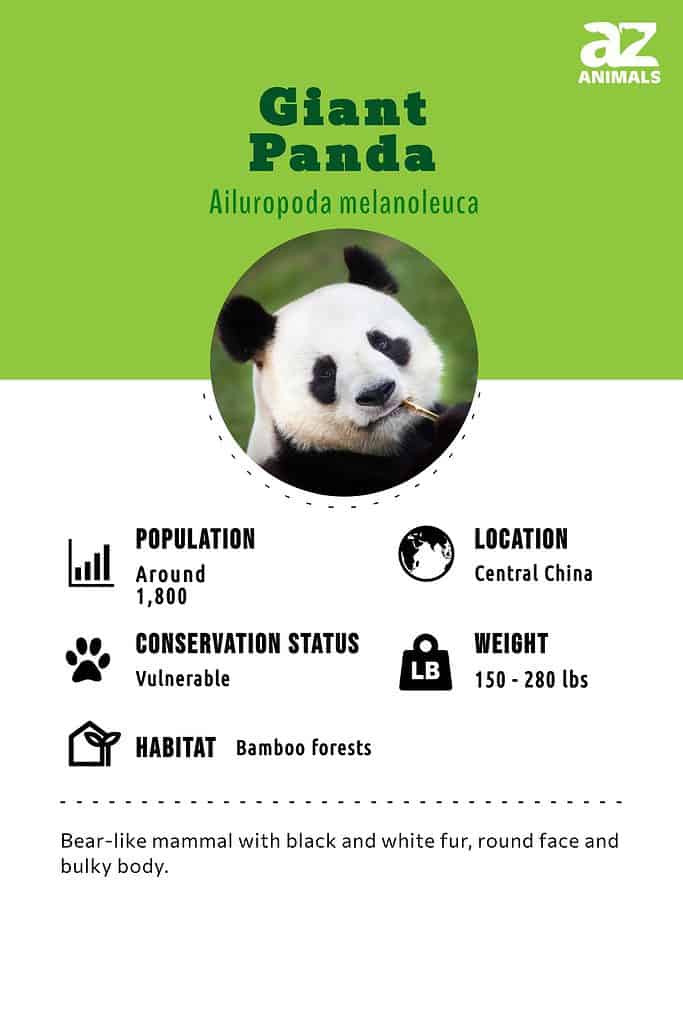
The giant panda is a medium to large-sized bear that like other species has a large head, short tail, and a long muzzle with a large nose, which gives them an excellent sense of smell. The thick fur of the giant panda is creamy-white in color with large patches of black on the limbs, shoulders, ears, and nose, and distinctive black patches around their small eyes. The giant panda eats almost only bamboo and so has a number of physical adaptations to help with its consumption including an extension of their wrist bone which acts a bit like a thumb, allowing the giant panda to grip onto bamboo stems. They also have large jaws with strong jaw muscles that along with their flat molars, allow the giant panda to crush bamboo stems and leaves in order to extract nutrients.
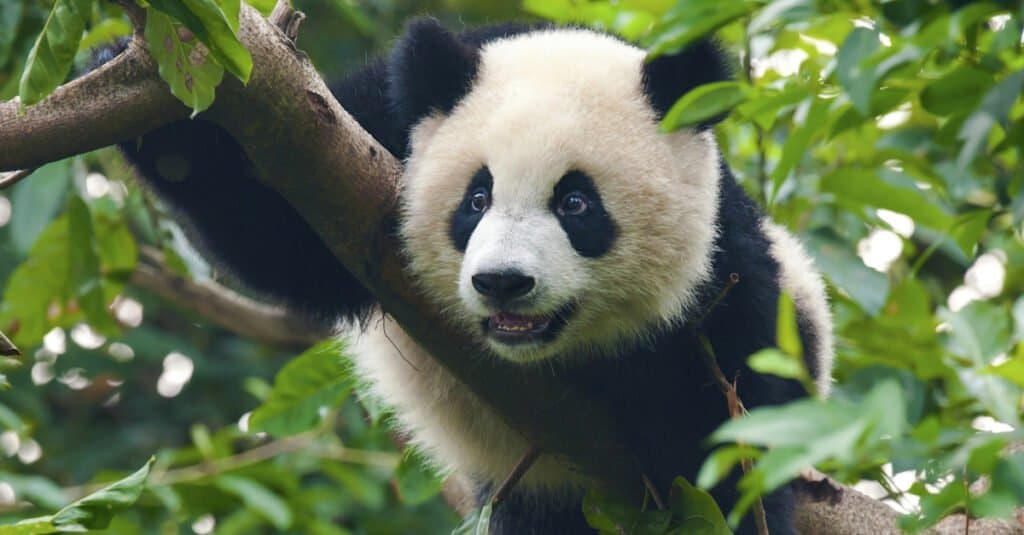
The giant panda is a bear and a member of the family Ursidae.
©Hung Chung Chih/Shutterstock.com
Classification, Evolution and Subspecies
For many decades, there was a dispute over the giant panda’s lineage because it shares traits of bears and raccoons. However, the giant panda has been proven to be a bear – a member of the family Ursidae. Referred to as living fossils, giant pandas are unique among all other bear species – having evolved without breeding with other types of bears.
In addition to the subspecies, m. melanoleuca, the black and white panda we know and love, there is one other subspecies. The Qinling panda, m. quinlingensis, lives in the Quinlin Mountains of China and looks like its cousin except its fur is light brown and white. The Qinling panda is also smaller than the giant panda and has larger molars. The separation of the Qinling panda from the giant panda occurred about 300,000 years ago.
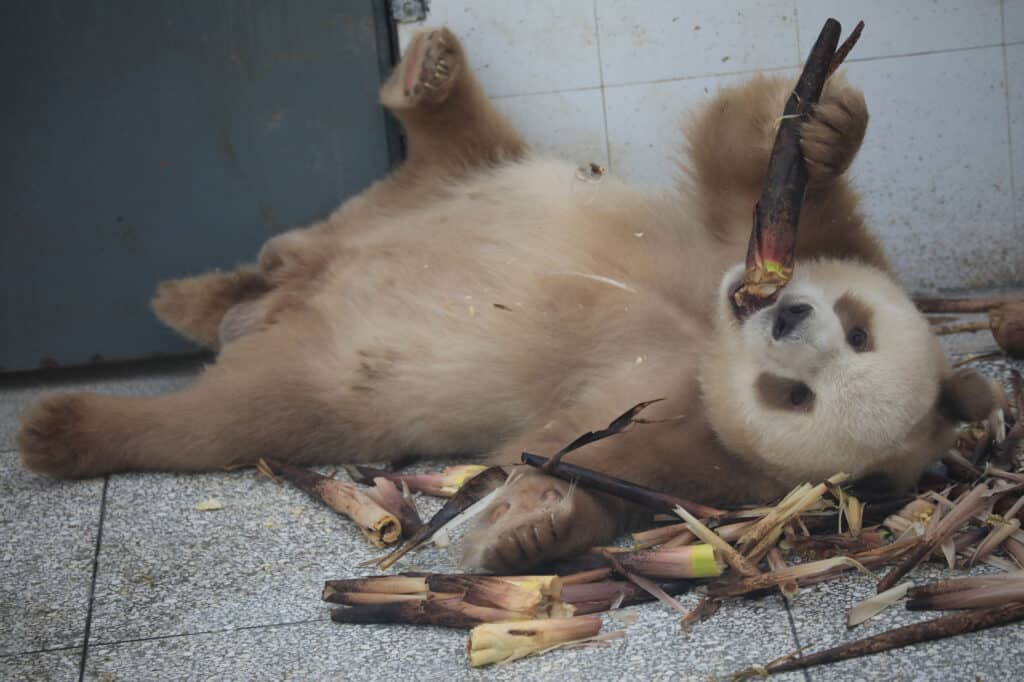
The Qinling panda can be found in the Quinling Mountains of China.
©canghai76/Shutterstock.com
Distribution and Habitat
Historically, the giant panda would have been found throughout the lowlands of the Yangtze River Basin but increased Human activity in these areas has pushed the giant pandas high up into the mountains. Remote populations are still found in six different mountain ranges in central and western China, where they inhabit broadleaf and coniferous forests with a thick bamboo under-story at elevations between 5,000 and 13,000 feet. These high-altitude forests are cool, cloudy, and moist and are generally subjected to a high level of rainfall. It is thought that the unique coloration of the giant panda may help them to blend into these misty forests when they are foraging for food. It is, however, the loss of these habitats to deforestation that is the biggest threat to the giant panda today as they rely almost solely on bamboo to survive.
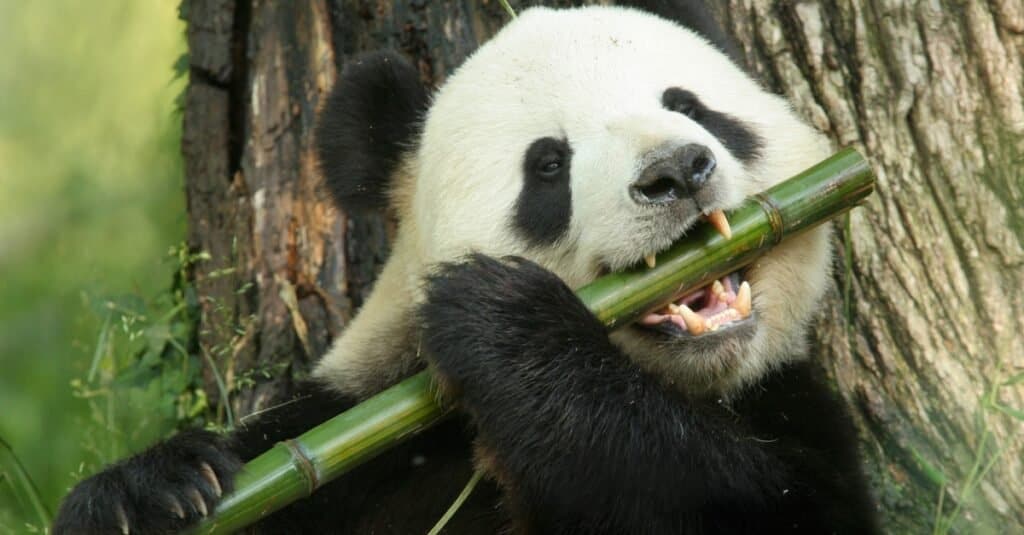
A panda eats a large bamboo stalk. Giant pandas have a false thumb made up of an enlarged carpal bone.
©Bryan Faust/Shutterstock.com
Behavior and Lifestyle
The giant panda is a solitary animal that occupies a territory marked with secretions from scent glands and scratch marks on trees. Male giant pandas roam home ranges more than double the size of a female’s, with their territory overlapping those of several female giant pandas with which he holds breeding rights. As bamboo is not particularly nutritious, the giant panda must eat lots of bamboo every day and can consume up to 30kg of bamboo leaves, shoots, and stems which is roughly 40% of its body weight. Giant pandas, therefore, dedicate between 12 and 15 hours a day to munching bamboo which they do by sitting down, allowing their front paws to grip the plants. Even though the bear appears to spend its whole day either eating or sleeping, they are also known to be good at climbing trees and can even swim well when needed.
Pandas are typically solitary, but they occasionally form groups. Check out this article to learn about panda group names and how this species functions within one.
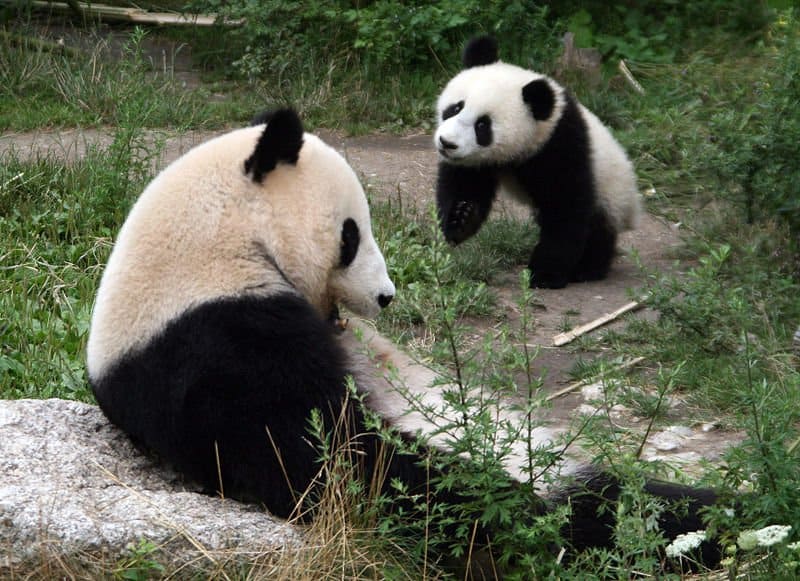
Panda bear cubs are weaned when they are around a year old but don’t leave their mother until they are 18 months old.
©Manfred Werner / Tsui, CC BY-SA 3.0, via Wikimedia Commons – License
Reproduction and Life Cycles
Giant pandas breed between March and May when the female begins to indicate her want to mate by making a series of groans and bleats to attract a male. After a gestation period that lasts for around five months, the female giant panda gives birth to one or two cubs in the base of a hollow tree or cave. Panda bear cubs are very underdeveloped at birth measuring as little as 15cm and weighing only 100g, they are made even more vulnerable by the fact that they are also blind and hairless and don’t begin to crawl until they are nearly three months old. Female pandas are only able to care for one cub at a time – even if they have twins. Cubs ride on their mothers’ back until they can walk as fast as her – at around six months. Panda bear cubs are weaned when they are around a year old but don’t leave their mother until they are 18 months old. Some cubs may stay with their mother for a few years until she becomes pregnant again and they leave to establish a territory of their own.
Diet and Prey
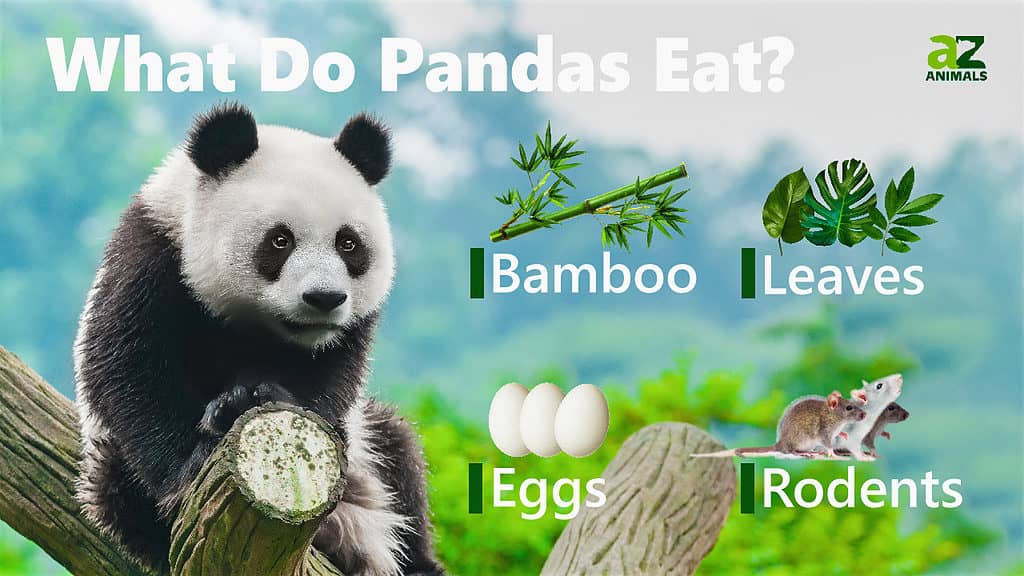
Despite being classified as a carnivorous animal (not to mention a species of bear), the giant panda eats almost exclusively bamboo in the forest surrounding it. Known to consume more than 30 different species of the bamboo plant, giant pandas feed on different parts of the plant at different times of the year in order to get the most out of it. Capable of eating up to 30kg of bamboo a day, the giant panda uses its strong jaws to crush the various plant parts into a more easily digestible paste. Spending more than half of their day eating, giant pandas also supplement their diet with other plants including grasses and fruits, as well as rodents and birds on occasion. Even though they can eat nearly half of their body weight in bamboo parts in just one day, the giant panda still needs to drink water and does so from mountain streams that are supplied by the melting ice and snow higher up the slopes.For a complete list of foods red pandas eat, check out our “What Do Pandas Eat?” page.
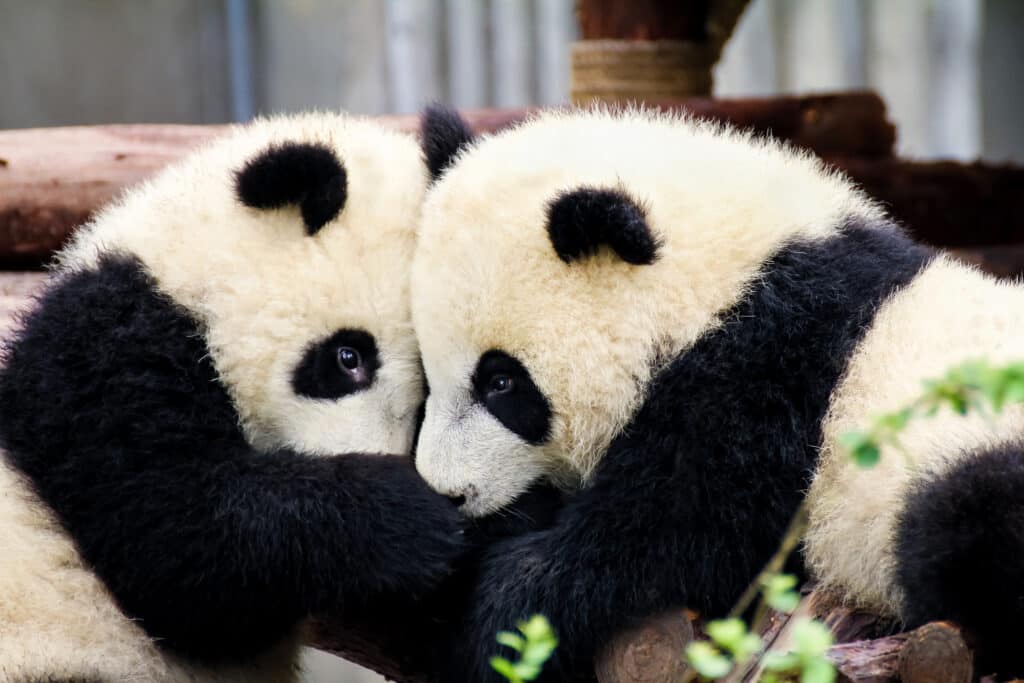
Giant panda bear cubs are completely helpless until they are a year old and are threatened by leopards and birds of prey.
©KoSei/Shutterstock.com
Predators and Threats
Due to the large size and unique habitat of the giant panda, adults have no natural predators within their cool, bamboo-filled world. Cubs however are completely helpless until they are at least a year old and are preyed upon by larger predators such as leopards and birds of prey. Humans however are the biggest threat to giant pandas in the Chinese mountains as they have hunted these remarkable animals for their unique fur, almost to extinction in some areas. Although harsh punishments for poaching have now slowed hunting down, giant pandas are under extreme threat from habitat loss in the form of deforestation for timber and land clearance for agriculture. They have therefore been forced into small and isolated pockets of their once vast natural range, and have been subjected to severe declines in their population numbers.
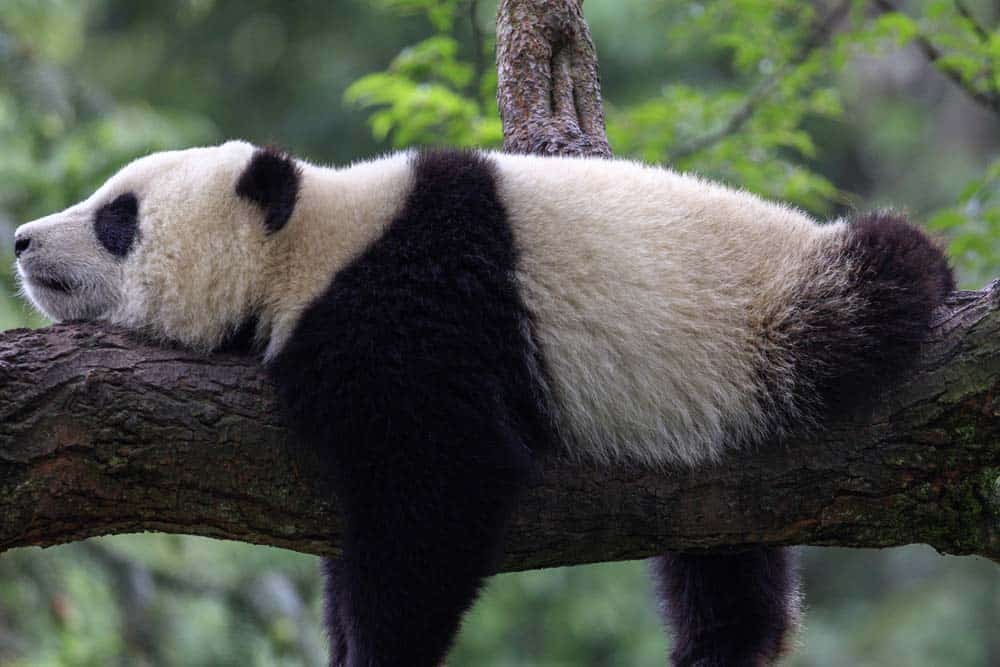
Giant pandas are sometimes known as bamboo bears.
©clkraus/Shutterstock.com
Interesting Facts and Features
The giant panda has always fascinated people and therefore goes by a number of different names its scientific name means “cat-foot black and white” and its Chinese name translates literally to “Giant Bear Cat”, as the giant panda has slits for pupils in their eyes much like a cat. They are also known as Bamboo Bears by locals due to the enormous amount that they consume. Giant panda cubs are so small at birth that they weigh about the same as an average mouse and at 100g are roughly 0.001% of their mother’s weight. In the Qinling Mountains in China’s Shaanxi Province, a small population of brown and white giant pandas can be found existing amongst the standard black and white ones. Giant pandas communicate with one another using a series of calls, with 11 different giant panda noises having been identified.
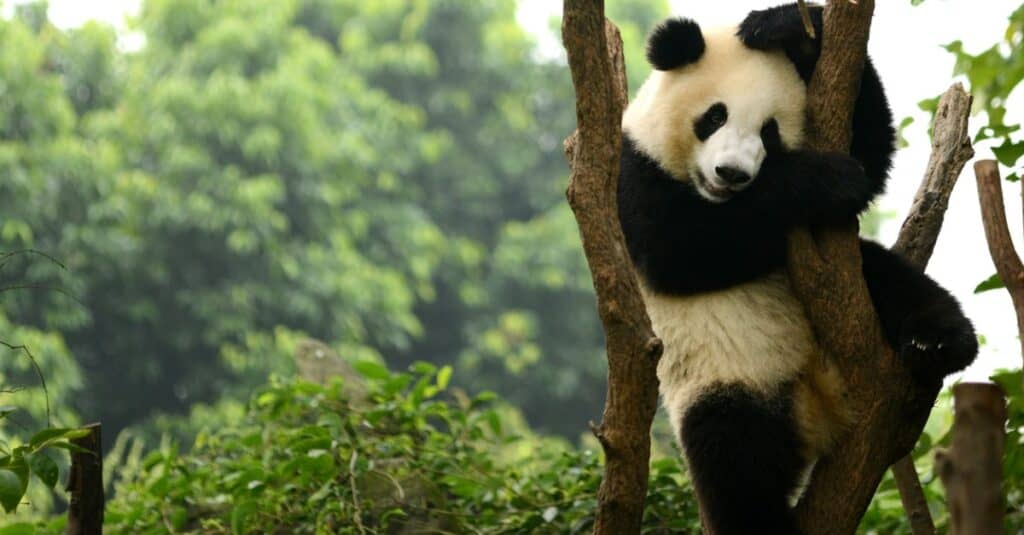
Bamboo is the main nutrient of a giant pandas diet.
©iStock.com/dangdumrong
Relationship with Humans
The giant panda has been admired by people for hundreds of years but more for their beautiful black and white pelts in the past. Since their discovery by the western world and the realization of their rareness in the wild, giant pandas have become one of the most well-known of the world’s large animals with increasing projects and efforts being put in place to try and save them from extinction. They have however been drastically affected by increasing Human activity in their native habitats which have ultimately led to vast population declines and the isolation of the remaining populations. Despite their seemingly cuddly appearance though, the giant panda is a species of bear and although attacks on Humans are rare, it is not unheard of for harm to be caused to people (particularly those who attempt to enter captive enclosures).
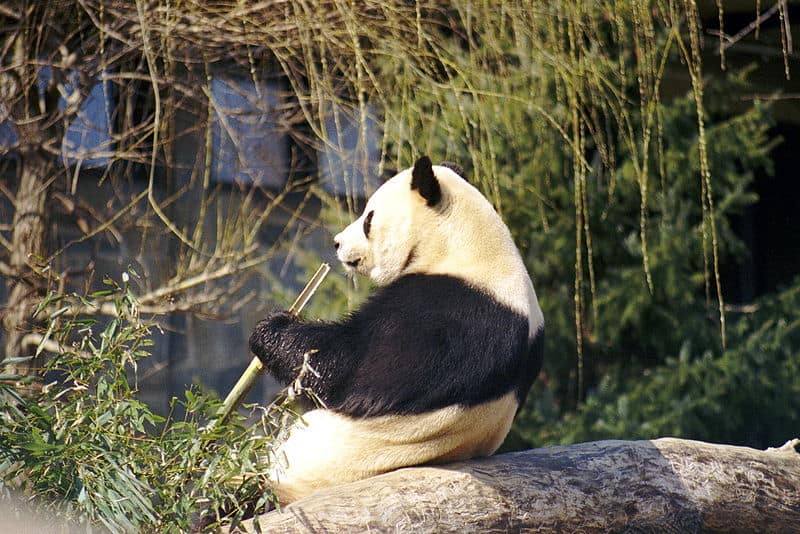
Giant pandas are classified as Vulnerable by the IUCN.
©Jeff Kubina – Public Domain
Conservation Status and Life Today
For decades the giant panda was listed by the IUCN as an animal species that was Endangered in the wild. It was strongly believed that the giant panda was facing extinction in wild in the near future if more was not done to protect it. The Chinese government has created 33 giant panda reserves and more than 50% of its natural habitat is now protected by law. Extensive research has also gone into preventing the giant panda from becoming extinct but it simply cannot survive without its unique bamboo forests. However, after 10 years of increasing population numbers to around 2,000 adult individuals, the giant panda has now been removed from the endangered species list and is instead classed as Vulnerable by the IUCN mainly thanks to efforts by the Chinese government to not only protect their natural habitats but also by successful reproduction programs.
Check out how many pandas are in the world.
Similar Animals
View all 170 animals that start with G How to Add Us to Google News

Giant Panda Bear FAQs (Frequently Asked Questions)
Are Giant Panda Bears herbivores, carnivores, or omnivores?
Giant Panda Bears are Omnivores, meaning they eat both plants and other animals.
What Kingdom do Giant Panda Bears belong to?
Giant Panda Bears belong to the Kingdom Animalia.
What class do Giant Panda Bears belong to?
Giant Panda Bears belong to the class Mammalia.
What phylum to Giant Panda Bears belong to?
Giant Panda Bears belong to the phylum Chordata.
What family do Giant Panda Bears belong to?
Giant Panda Bears belong to the family Ursidae.
What order do Giant Panda Bears belong to?
Giant Panda Bears belong to the order Carnivora.
What type of covering do Giant Panda Bears have?
Giant Panda Bears are covered in Fur.
What genus do Giant Panda Bears belong to?
Giant Panda Bears belong to the genus Ailuropoda.
Where do Giant Panda Bears live?
Giant Panda Bears live in the mountains of central China.
In what type of habitat do Giant Panda Bears live?
Giant Panda Bears live in high-altitude, moist bamboo forests.
How many babies do Giant Panda Bears have?
The average number of babies a Giant Panda Bear has is 1.
What is an interesting fact about Giant Panda Bears?
Bamboo makes up 99% of a Giant Panda Bear’s diet!
What is the scientific name for the Giant Panda Bear?
The scientific name for the Giant Panda Bear is Ailuropoda melanoleuca.
What is the lifespan of a Giant Panda Bear?
Giant Panda Bears can live for 20 to 35 years.
What is a baby Giant Panda Bear called?
A baby Giant Panda Bear is called a cub.
How many species of Giant Panda Bear are there?
There is 1 species of Giant Panda Bear.
What is the biggest threat to the Giant Panda Bear?
The biggest threat to the Giant Panda Bear is habitat loss.
What is another name for the Giant Panda Bear?
The Giant Panda Bear is also called the giant bear cat or bamboo bear.
How many Giant Panda Bears are left in the world?
There are 2,000 Giant Panda Bears left in the world.
How fast is a Giant Panda Bear?
A Giant Panda Bear can travel at speeds of up to 20 miles per hour.
What's the difference between pandas and red pandas?
There are many differences between pandas and red pandas. Pandas are much larger than red pandas, and red pandas have long tails, while pandas don’t. However, they have similar diets and occupy the same habitat.
How to say Giant Panda Bear in ...
Thank you for reading! Have some feedback for us? Contact the AZ Animals editorial team.
Sources
- David Burnie, Dorling Kindersley (2011) Animal, The Definitive Visual Guide To The World's Wildlife
- Tom Jackson, Lorenz Books (2007) The World Encyclopedia Of Animals
- David Burnie, Kingfisher (2011) The Kingfisher Animal Encyclopedia
- Richard Mackay, University of California Press (2009) The Atlas Of Endangered Species
- David Burnie, Dorling Kindersley (2008) Illustrated Encyclopedia Of Animals
- Dorling Kindersley (2006) Dorling Kindersley Encyclopedia Of Animals
- David W. Macdonald, Oxford University Press (2010) The Encyclopedia Of Mammals
- Giant Panda Facts, Available here: http://animals.nationalgeographic.com/animals/mammals/giant-panda/
- Giant Panda Information, Available here: http://nationalzoo.si.edu/animals/giantpandas/pandafacts/default.cfm