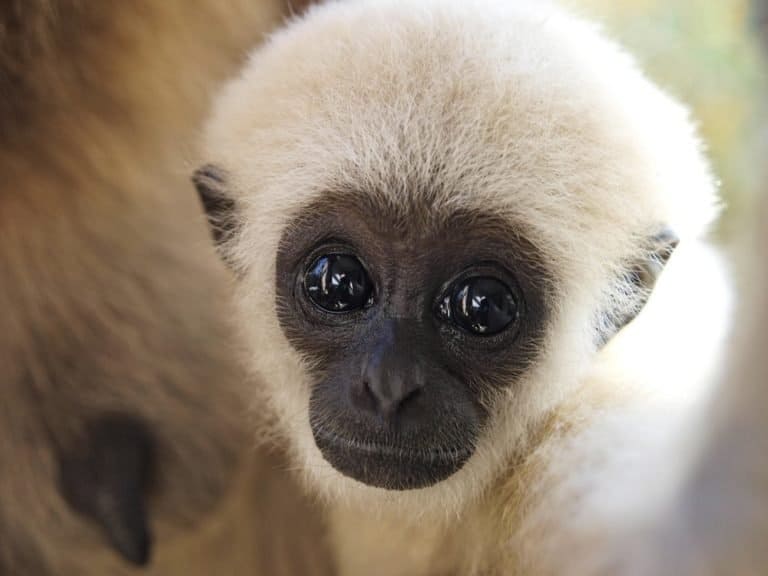



“The fastest-moving tree-dwelling mammal”
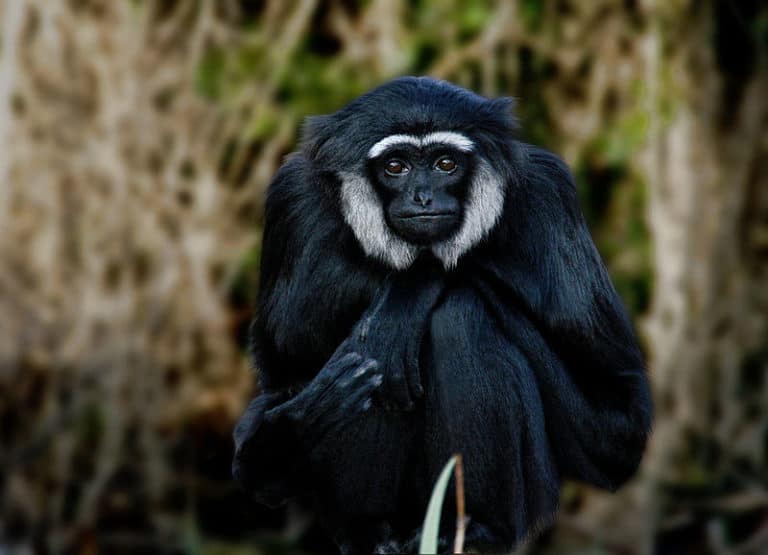
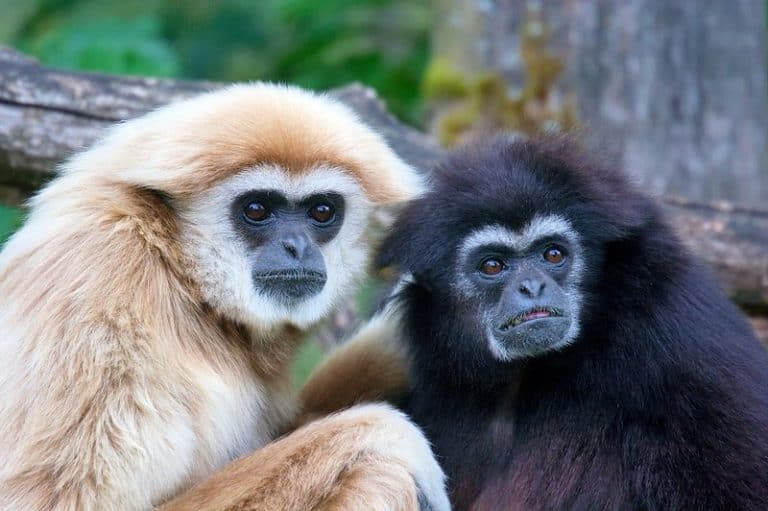
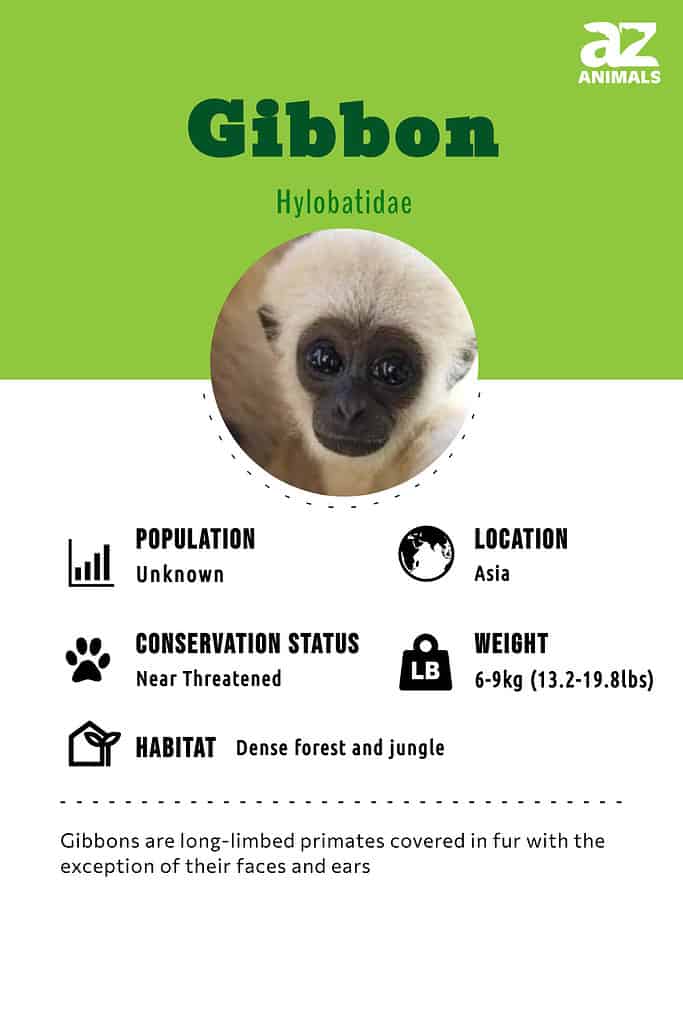
Gibbons are tree-dwelling apes that live in Asia and Indonesia. Known as the lesser apes, gibbons are quick and agile, brachiating through the treetops at speeds up to 22 miles per hour (35 kph). There are 20 distinct species in four different genera of this arboreal, or tree-dwelling, mammal, including white-handed, siamang, and lar gibbons. The majority of gibbon species are endangered, and some are critically endangered.
Incredible Gibbon Facts!
- Depending on the sex and species, gibbons can weigh between 13 and 31 pounds (6-14 kilograms).
- They can live up to 25 years.
- Gibbons have extra-long arms and powerful legs for swinging and leaping from tree to tree.
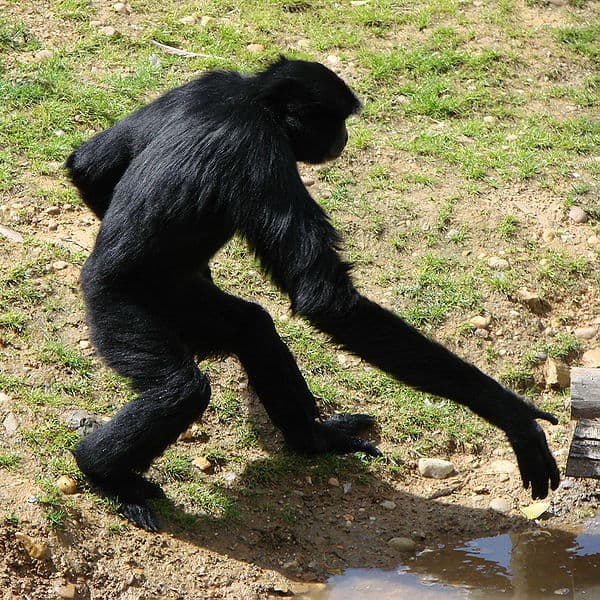
- Gibbons are better at walking on two feet than any other ape or monkey.
Scientific Name
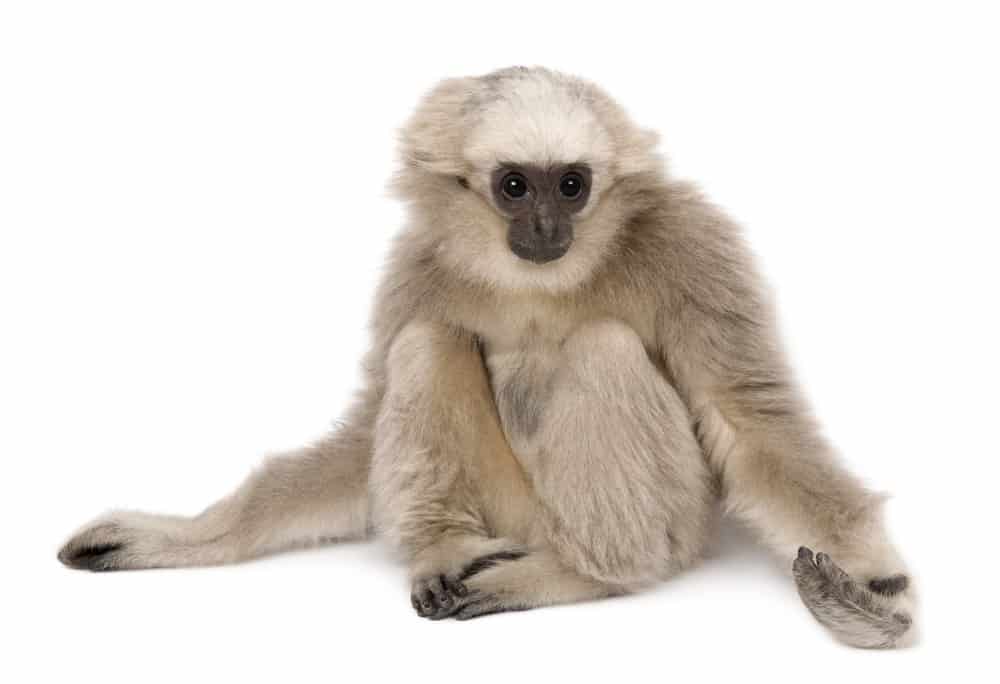
There are 20 species of gibbon across four genera, divided according to the number of their diploid chromosomes.
©Eric Isselee/Shutterstock.com
This primate belongs to the Hylobatidae family, which is divided into four genera based on the numbers of their diploid chromosomes. The four genera are Hylobates (44), Hoolock (38), Nomascus (52 or 54), and Symphalangus (50). The number in the parentheses refers to the number of diploid chromosomes of the species in each genus. Twenty distinct species are divided among these four genera. At one time, all gibbons were classified in the genus Hylobates and then divided into subgenera (Hoolock, Nomascus, and Symphalangus), each of which is now recognized as their own genus.
Hylobates
The dwarf gibbons belong to the Hylobates genera and include the lar or white-handed gibbon (Hylobates lar) and its five subspecies: Malaysian lar gibbon (H. lar lar), Carpenter’s lar gibbon (H. lar carpenteri), central lar gibbon (H. lar entelloides), Sumatran lar gibbon (H. lar vestitus), and Yunnan lar gibbon (H. lar yunnanensis). The other species are the following:
- Bornean white-bearded gibbon (H. albibarbis)
- Agile or black-handed gibbon (H. agilis)
- Western grey gibbon or Abbott’s grey gibbon (H. abbotti)
- Eastern grey gibbon or northern grey gibbon (H. funereus)
- Müller’s or southern grey gibbon (H. muelleri)
- Silvery gibbon (H. moloch) and its two subspecies: western silvery gibbon or western Javan gibbon and eastern silvery gibbon or central Javan gibbon
- Pileated or capped gibbon (H. pileatus)
- Kloss’s gibbon (H. klossii)
Hoolock
The Hoolock genus includes three species: the western hoolock gibbon (H. hoolock), the eastern hoolock gibbon (H. leuconedys), and the Skywalker hoolock gibbon (H. tianxing). This genus includes the second largest of the gibbon species.
Nomascus
Crested gibbons make up the Nomascus genus, and there are seven species:
- Northern buffed-cheeked gibbon (N. annamensis)
- Concolor or black-crested gibbon (N. concolor)
- Eastern black-crested gibbon or Cao Vit black-crested gibbon (N. nasutus)
- Hainan black crested gibbon (N. hainanus)
- Northern white-cheeked gibbon (N. leucogenys)
- Southern white-cheeked gibbon (N. siki)
- Yellow-cheeked gibbon (N. gabriellae)
Symphalangus
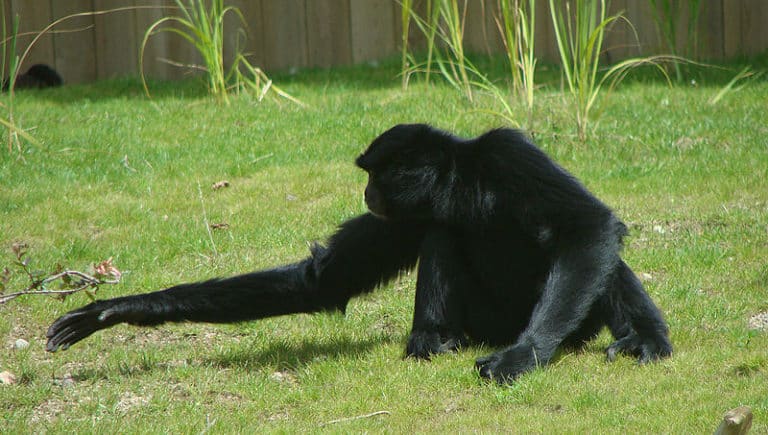
The last genus, Symphalangus, contains one species and the largest of all gibbon species: the Siamang (S. syndactylus).
Evolution and Classification
Gibbons, classified in the Hylobatidae family, form part of the Hominoidea superfamily, which also includes the larger or great apes, Hominoidea, as well. However, gibbons are significantly smaller (hence why they are called the lesser apes) when compared to their larger cousins and prefer to live in smaller families. Like other apes, gibbons adhere to a somewhat omnivorous diet consisting of fruit, leaves, and grubs.
Paleontologists believe that apes first diverged to form a distinct group about 25 million years ago, and then seven million years after that, gibbons separated to form their own unique family.
Appearance
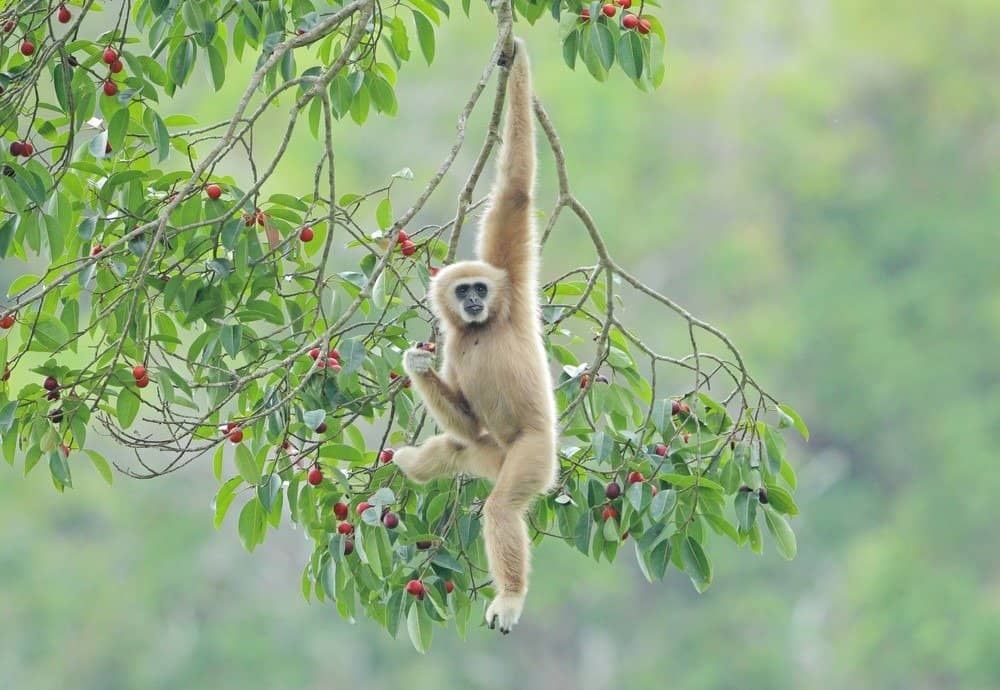
A lar gibbon, also known as a white-handed gibbon, hangs from a tree. Gibbons have specialized wrist joints.
©teekayu/Shutterstock.com
These are light, agile apes. Their height ranges from 15 to 36 inches (40 to 90 cm), depending on their species. Siamangs are slightly more than half the height of an average adult human. All species have small heads and smooth, apelike faces framed with fur. Just like the great apes and unlike monkeys, they do not have tails.
One of their most noticeable features is their uncommonly long arms, which they use to brachiate through the canopies of trees that serve as their habitat. When these apes walk upright, they hold their arms up by their heads to keep their balance.
These animals have specialized wrist joints that allow them to move their hands from side to side as well as back to front. This promotes fast, efficient progress from branch to branch.
The hands and feet of these lesser apes are elongated. Each hand has a deep cleft that helps them grip strongly onto branches. The siamang gibbon, which is the largest of these apes, has two toes on each foot that are partially joined by a membrane (syndactyly).
Their fur can be any color of brown or black, sometimes mixed with white. Their faces, feet, and hands often have contrasting markings, as seen in the Bornean white-bearded or yellow-cheeked species.
Behavior
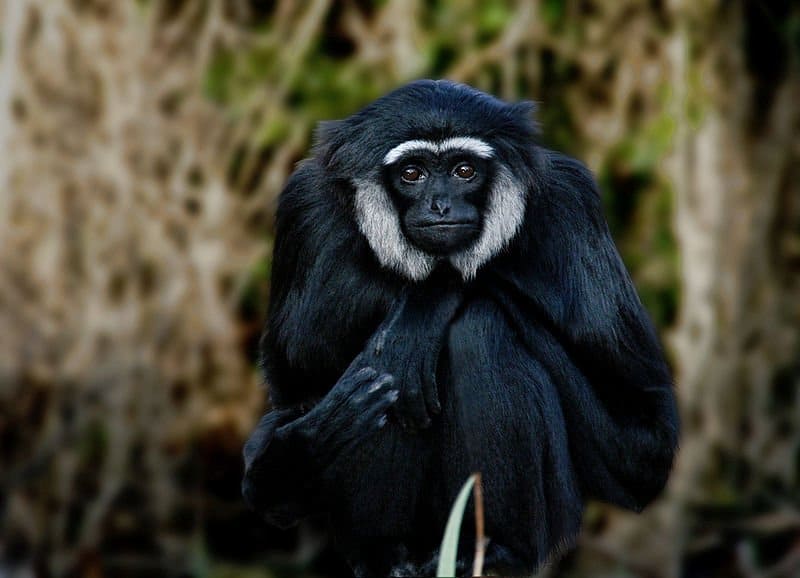
All gibbon species are vocal and are known for their musical voices which can be heard over great distances
©Julielangford / Creative Commons – Original
These lesser apes spend the greater part of their lives aloft in the rainforest canopy. Their long reach and powerful legs make them the world’s greatest brachiators. They can travel quickly, spanning distances between 30 and 40 feet in a single leap. Occasionally, they will miss a branch or misjudge the distance between trees, which can result in broken bones.
They venture to the forest floor only occasionally. Perhaps they need to look for food or flee from another animal in the treetops. When they are on the ground, these lesser apes often travel on two feet, holding their arms above their heads to stay upright.
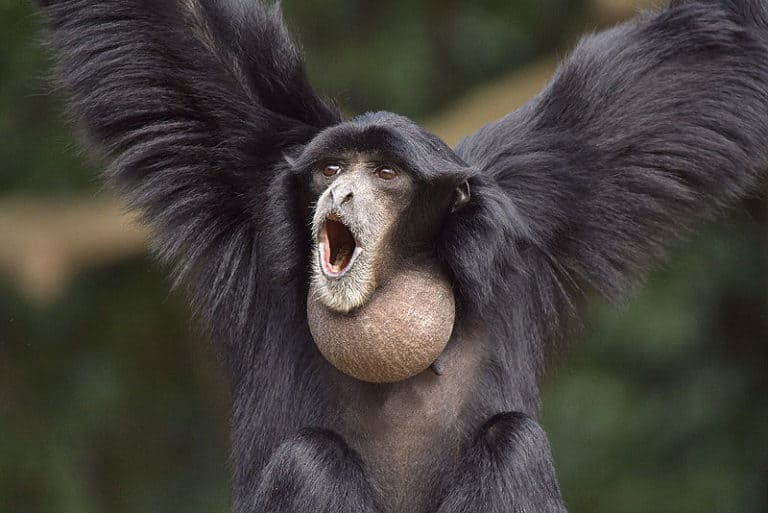
All gibbon species are vocal and known for their musical voices, which can be heard over great distances. They use sound to locate other gibbons, warn away intruders and woo their mates. The wooing song, often performed as a duet with an intended mate, is known as the great call.
Siamang gibbons and some other species have uniquely developed throat sacs. When the animal inhales, filling the throat sac with air, it amplifies its call through the tropical forest, helping to locate other apes, mark territorial boundaries, or join in a mating duet. The largest species, the siamang, has a loud voice that travels up to two miles.
In general, these primates mate for life. They live in small, nuclear families made up of a mated pair and their juvenile offspring. Although they sleep in the trees, these animals do not build nests like other apes. Once the juvenile matures, it ventures out to form its own family group.
Habitat
These animals inhabit the rainforests of Southeast Asia in these countries:
- Bangladesh
- Borneo
- Cambodia
- China
- India
- Indonesia
- Java
- Laos
- Malaysia
- Myanmar
- Sumatra
- Thailand
- Vietnam
These arboreal animals need a dense forest canopy that provides food, shelter, and a means of transportation. Various species live in different regions such as mountains or valleys, but they all share a preference for treetop habitats.
Diet
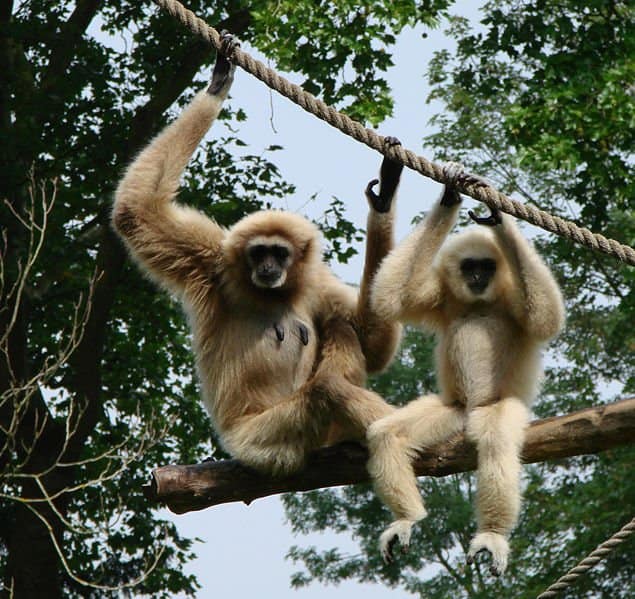
Gibbons eat a rather varied diet composed of fruit, bird eggs, insects, and small creatures
©Vassil – Public Domain
These animals mostly eat fruit and vegetation available in the rainforest canopy. They are omnivores, however, so they occasionally eat meat such as insects, bird eggs, and small animals.
Predators and Threats

Predators such as tigers consider gibbons a tasty menu item
©Ondrej Prosicky/Shutterstock.com
Large cats native to Southeast Asia, such as clouded leopards and tigers, prey on these lesser apes. Big snakes and eagles also pose a threat to these arboreal apes. One significant study of Maroon Langur monkeys in Borneo showed that white-bearded gibbons made warning calls to alert their own species as well as other animals like the monkeys when predators were nearby, giving them the chance to seek safety.
Humans hunt these animals in the wild to sell them to zoos. People in some cultures purchase parts of the animals for healing or eating.
The biggest threat by far, however, is human encroachment on the rainforests they call home. As civilization claims more and more of these forests, these animals have less food and rapidly shrinking habitats, which is the primary reason so many of the species are endangered.
Reproduction, Babies, and Lifespan
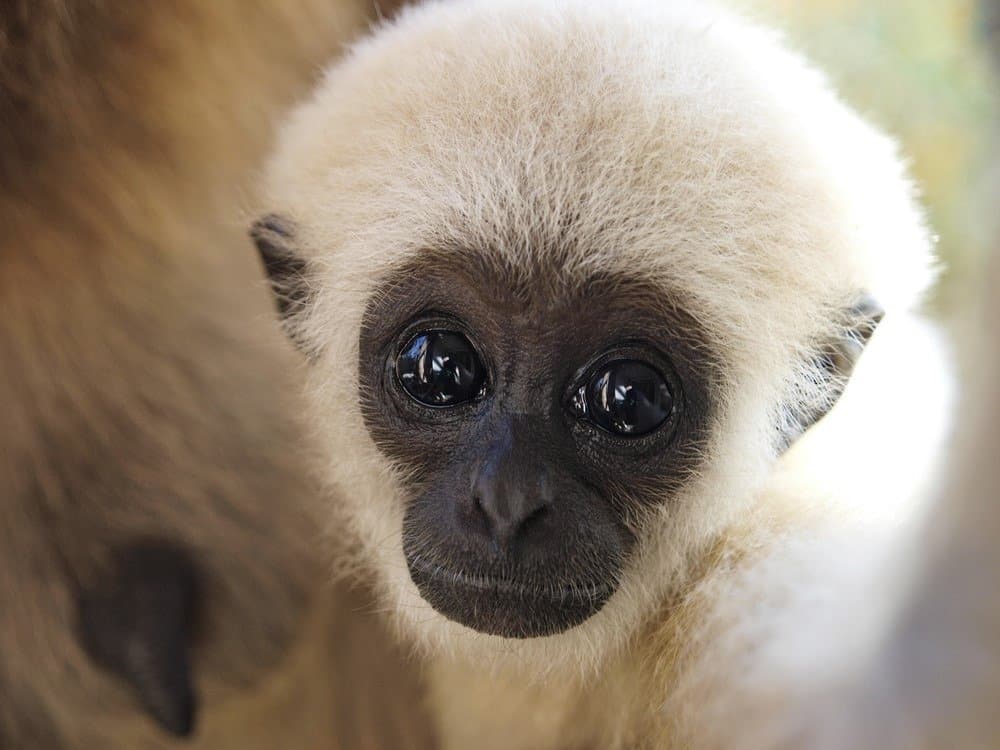
Both male and female gibbons provide parental care to their young
©Simia Attentive/Shutterstock.com
The female gives birth to a single offspring at a time. They may have as many as six babies over the course of their breeding period. Females in the wild reach sexual maturity around eight years of age while males mature a bit later, around 10 years old. These arboreal mammals take a single mate at a time, but they may change partners once their offspring have grown up and left.
Female pregnancy lasts six and a half months. Once she gives birth, both parents care for the baby until it is old enough to leave home.
On average, these animals live approximately 30-35 years in the wild. Those in captivity tend to live longer, up to 50 years. The longest-lived individual on record, a Mueller’s gibbon named Nippy at New Zealand’s Wellington Zoo, died at age 60.
Population
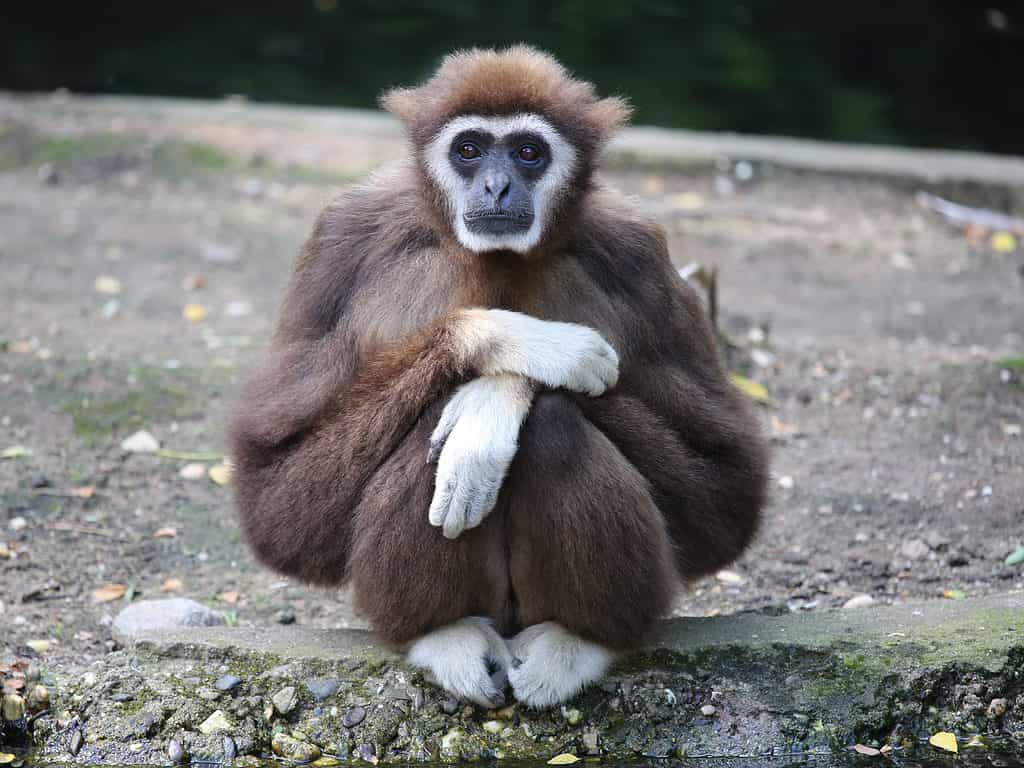
Gibbon populations are declining regardless of the species.
©Edwin Butter/Shutterstock.com
All gibbon species are dwindling. The majority of the 20 species are in danger of extinction. In fact, fewer than 25 Hainan black-crested gibbons (N. hainanus) remain, making this species the most critically endangered primate on Earth. The other gibbons on the critically endangered list, according to the IUCN Red List, also belong to the Nomascus genus; they are the black-crested gibbon (N. concolor), Cao-vit gibbon (N. nasutus), southern white-cheeked gibbon (N. siki), and northern white-cheeked gibbon (N. leucogenys).
The gibbons with endangered status on the IUCN Red List are the following:
- Bornean white-bearded gibbon (H. albibarbis)
- Agile or black-handed gibbon (H. agilis)
- Western grey gibbon or Abbott’s grey gibbon (H. abbotti)
- Eastern grey gibbon or northern grey gibbon (H. funereus)
- Silvery gibbon (H. moloch)
- and its two subspecies: western silvery gibbon or western Javan gibbon and eastern silvery gibbon or central Javan gibbon
- Pileated or capped gibbon (H. pileatus)
- Kloss’s gibbon (H. klossii)
- Lar gibbon (H. lar) and two of its subspecies: the Malaysian lar gibbon (H. lar lar) and Sumatran lar gibbon (H. lar vestitus)
- Western hoolock gibbon (H. hoolock)
- Skywalker hoolock gibbon (H. tianxing)
- Red-cheeked gibbon (N. gabriellae)
- Northern yellow-cheeked crested gibbon (N. annamensis)
- Siamang gibbon (S. syndactylus)
The eastern hoolock (H. leuconedys) and central lar gibbons (H. lar entelloides) are listed as vulnerable.
Gibbons in the Zoo
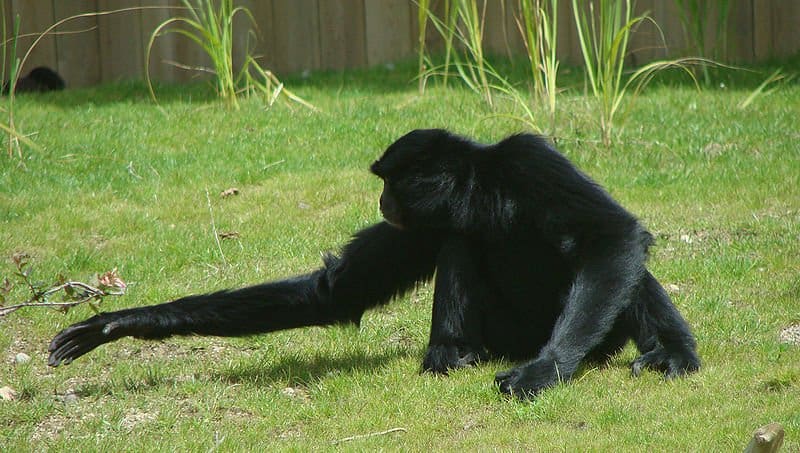
Gibbons are a regular fixture at several U.S. zoos.
©Vassil – Public Domain
Many zoos in several major U.S. cities have these animals on exhibit. Some of the species you can see in these zoos include the lar, the siamang, and the white-cheeked gibbon. Other types of these tree-dwellers in zoos are the Javan gibbon, the eastern hoolock, and the pileated gibbon.
In Canada, the Toronto Zoo has white-handed gibbons. A grey female gibbon at the Assiniboine Zoo in Winnipeg lived to be 50 years old. Now, the zoo is home to a family of white-handed gibbons. Many other zoos throughout Canada have gibbons too.
In fact, zoos throughout the world have different gibbon species. The most common gibbons in captivity are the siamang, the white-cheeked, and the lar.
Gibbon Pictures
View all of our Gibbon pictures in the gallery.

Sources
- David Burnie, Dorling Kindersley (2011) Animal, The Definitive Visual Guide To The World's Wildlife / Accessed October 5, 2009
- Tom Jackson, Lorenz Books (2007) The World Encyclopedia Of Animals / Accessed October 5, 2009
- David Burnie, Kingfisher (2011) The Kingfisher Animal Encyclopedia / Accessed October 5, 2009
- Richard Mackay, University of California Press (2009) The Atlas Of Endangered Species / Accessed October 5, 2009
- David Burnie, Dorling Kindersley (2008) Illustrated Encyclopedia Of Animals / Accessed October 5, 2009
- Dorling Kindersley (2006) Dorling Kindersley Encyclopedia Of Animals / Accessed October 5, 2009
- David W. Macdonald, Oxford University Press (2010) The Encyclopedia Of Mammals / Accessed October 5, 2009
- Wikipedia / Accessed November 10, 2020
- National Geographic / Accessed November 10, 2020
- Britannica / Accessed November 10, 2020
- BBC News / Accessed November 10, 2020
- Gibbon Conservation Center / Accessed November 10, 2020
- Science Daily / Accessed November 10, 2020
- Gibbon SSP / Accessed November 10, 2020
- Smithsonian's National Zoo & Conservation Biology Institute / Accessed November 10, 2020