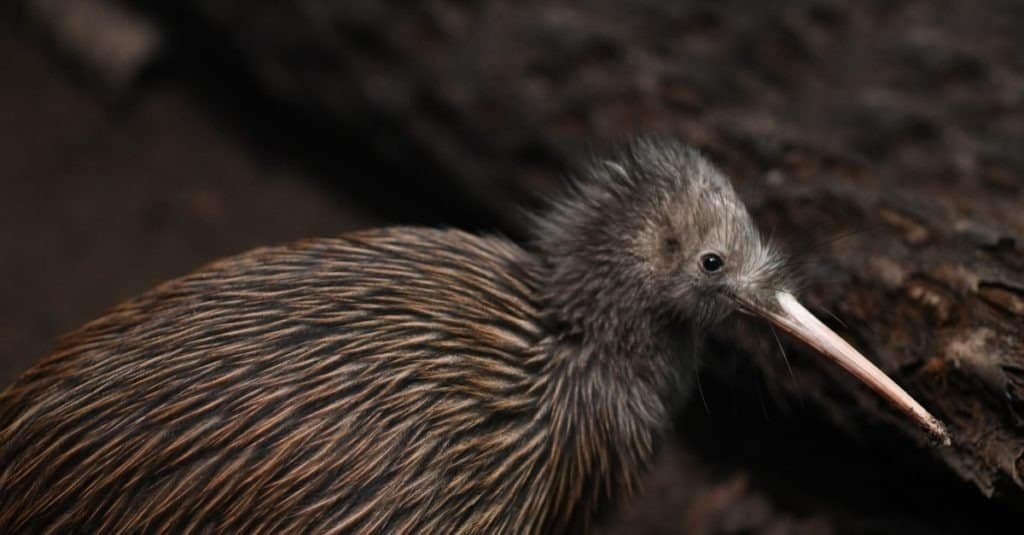



A national symbol of New Zealand, the flightless kiwi is among the most unique birds in the world. Evolving in the absence of most large predators, the kiwi bird fills a similar ecological niche as many land mammals elsewhere, a fact reflected by the kiwi’s anatomy. Like many mammals, their bones are filled with marrow. They rely on their sense of touch and smell, and their soft feathers feel very much like fur. Nevertheless, despite considerable conservation efforts, this animal is in danger of becoming extinct.
An Amazing Bird: 4 Kiwi Bird Facts!
- The kiwi bird first evolved some 30 million years ago, which makes it one of the oldest types of birds still living.
- The kiwi has one of the lowest body temperatures among birds.
- One of the more amazing facts is that the kiwi bird has a highly developed sense of smell. It is the only bird in the world with nostrils at the tip of the bill. If the nostrils become filled with dirt, then the kiwi can deliberately sneeze to remove the obstructions.
- The female kiwi bird is one of the few birds with a functioning pair of ovaries. Most birds only have a single ovary.
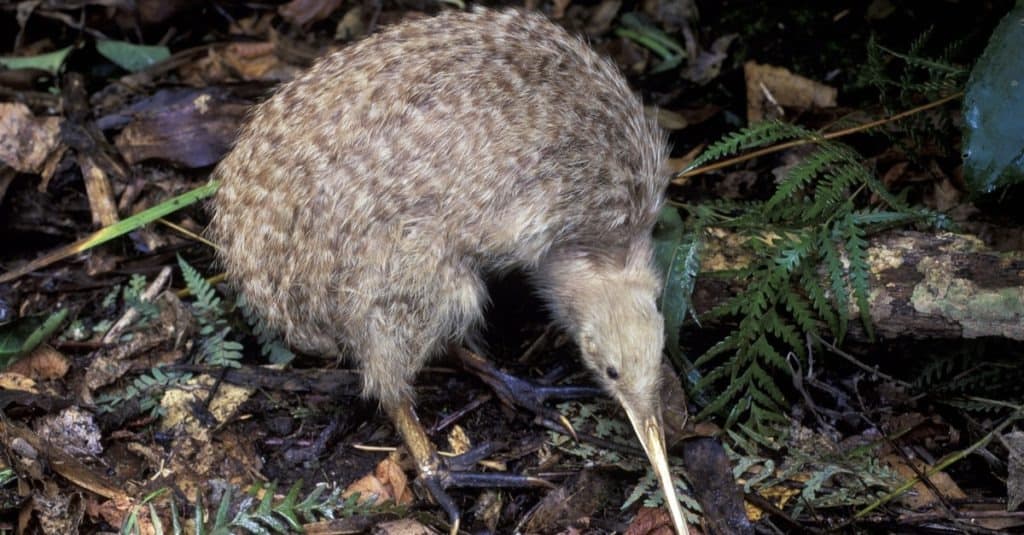
The kiwi is the only bird in the world with nostrils at the tip of the bill.
©John Carnemolla/Shutterstock.com
History and Evolution
Around 50 million years ago, the kiwi made their way to New Zealand, which is where they have stayed until today, and they have, like other species that end up on isolated islands, evolved into a very interesting animal.
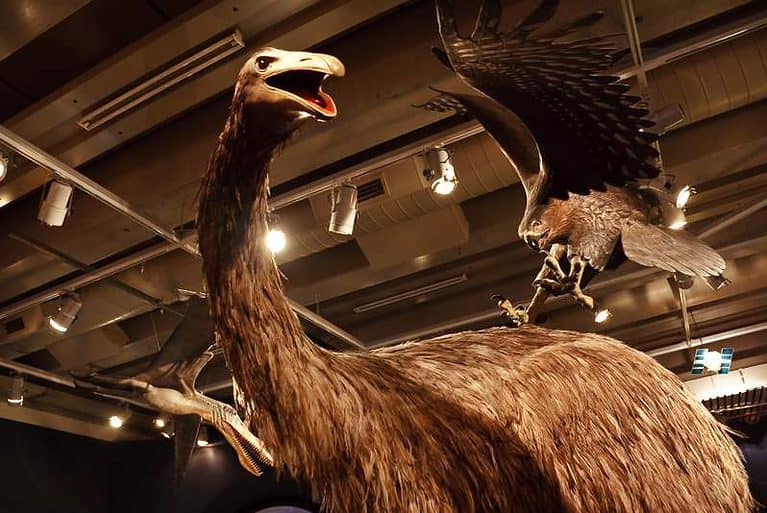
At some point in their evolution, kiwis were adapted to become nocturnal. This could have been due to competition from the diurnal moa, which were also flightless and found their food on the ground. Working in the nighttime hours, the kiwis were able to survive. Similar to mammals that evolved to become nocturnal, the kiwis’ olfactory senses increased in their bills to help them forage on the forest floors.
Where to Find Them
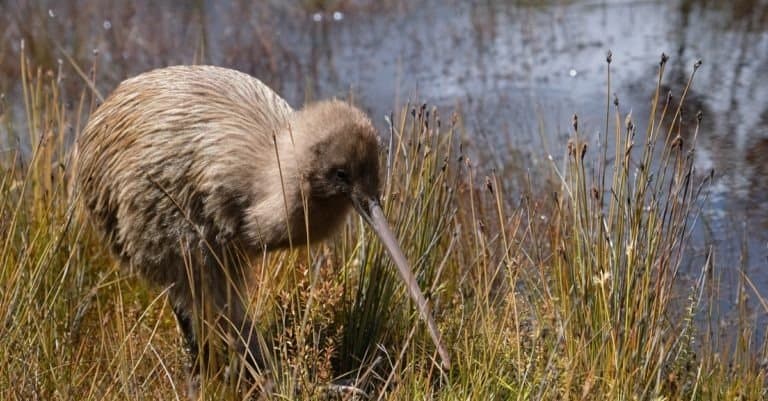
This forest-dwelling bird prefers steep wetlands surrounded by tall shrubs or trees. It was once common throughout mainland New Zealand, but many species have been relegated to the small outer islands.
Nests
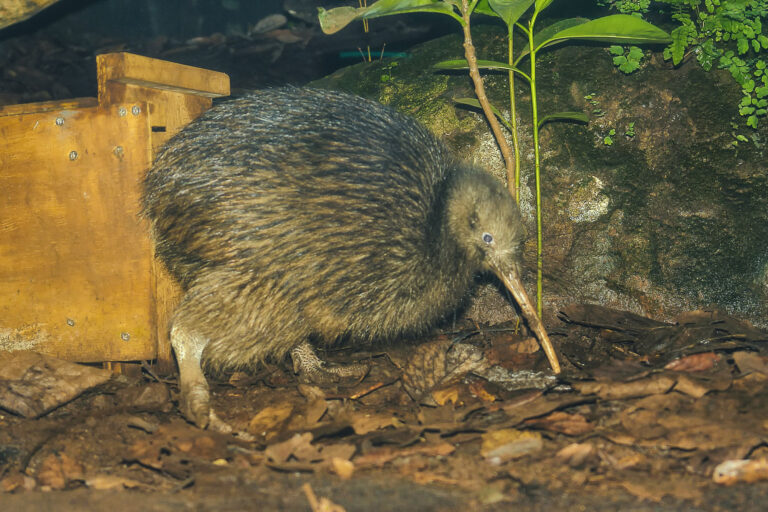
These birds do not construct nests at all. Instead, it digs burrows in the ground with its sharp claws.
Scientific Name
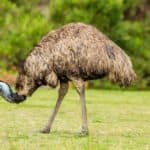
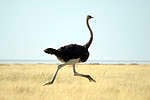
The kiwi is classified in the genus Apteryx. This is derived from the Greek term meaning “without wing.” The suffix “a” means without, and “pterux” means wing. There are five known species, all with the same general appearance and behavior, but they vary in subtle ways. The kiwi is an example of a ratite: a diverse and somewhat distantly related group of flightless birds that also includes emus, cassowaries, and ostriches. However, the kiwi bird is the only living member of its order, Apterygiformes.
Types of Kiwi
- Tokoeka (Apteryx australis): Also known as the Southern Brown Kiwi, the Tokoeka Kiwi is one of the largest types of this bird. They have a dark brown coloration with streaks on their feathers. Their legs are fairly short, and they have a long bill.
- Brown Kiwi (Apteryx mantelli): The Brown Kiwi is one of the most commonly found kiwis in New Zealand. They can be found on the North Island of New Zealand, specifically in the Lowland and coastal forest and subalpine regions.
- Rowi (Apteryx rowi): The Rowi Kiwi is the rarest kiwi species, with a population of over 600 individuals, primarily found in the Okarito forest on the West Coast of New Zealand’s South Island.
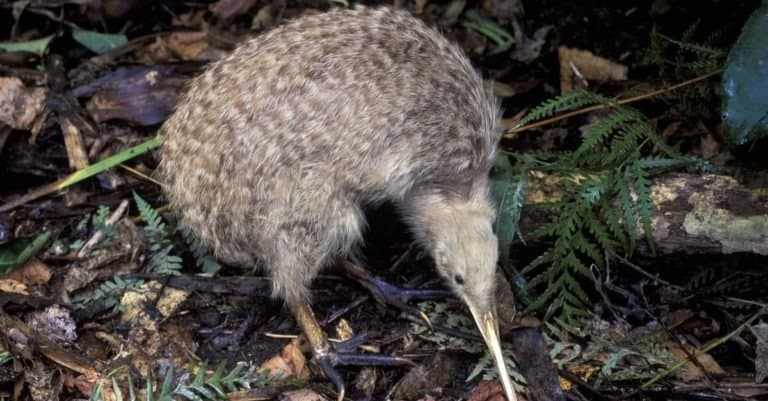
- Little Spotted Kiwi (Apteryx owenii): Appropriately named, the Little Spotted Kiwi is one of the smallest of these birds. Although they previously were the most common of the kiwi birds, they are the only one that became extinct on the mainland of New Zealand. Thanks to conservation efforts, they have been living in sanctuaries on the mainland and in the wild on a few of the other islands.
- Great Spotted Kiwi / Roroa (Apteryx haastii): The largest kiwi, the Great Spotted Kiwi, is found in several regions of the South Island. This particular species dwells in higher altitudes than other kiwi birds. Their population is estimated to be 14,000.
Size, Appearance & Behavior
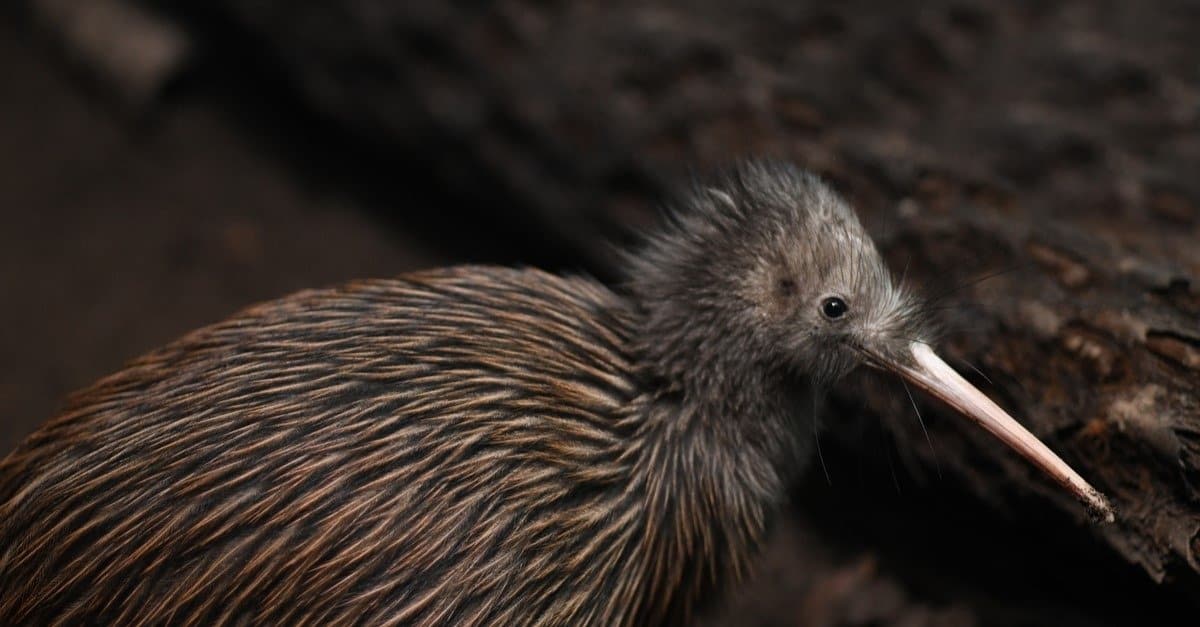
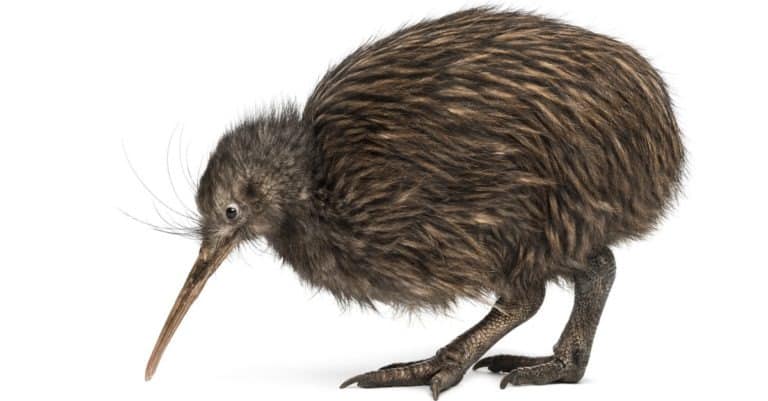
These are unusual-looking birds with a round body, a long, slender bill, strong feet, highly reduced wings with claws at the end, small whisker-like feathers around the face, and brown or gray plumage that almost resembles fur. The largest species is the great spotted kiwi, which can stand up to 18 inches tall and weigh up to 7.3 pounds, making it significantly larger than a domesticated chicken. Females are slightly larger than males, but they are otherwise similar in appearance.
Although they do sometimes travel in the company of other members of the same species, the kiwi bird is a highly territorial bird that maintains a very tight grip on its land and does not tolerate trespassers easily. If another bird does not heed its warning sound to stay away, then it may resort to attacking with its feet. The bird communicates via a series of sounds such as shrieks, clicking noises, and ascending and descending whistles. During the day, the bird curls up in a ball and sleeps in its burrow. At night, the bird pokes its head out and sniffs the air for predators. If the coast is clear, then it will come out and begin foraging for food.
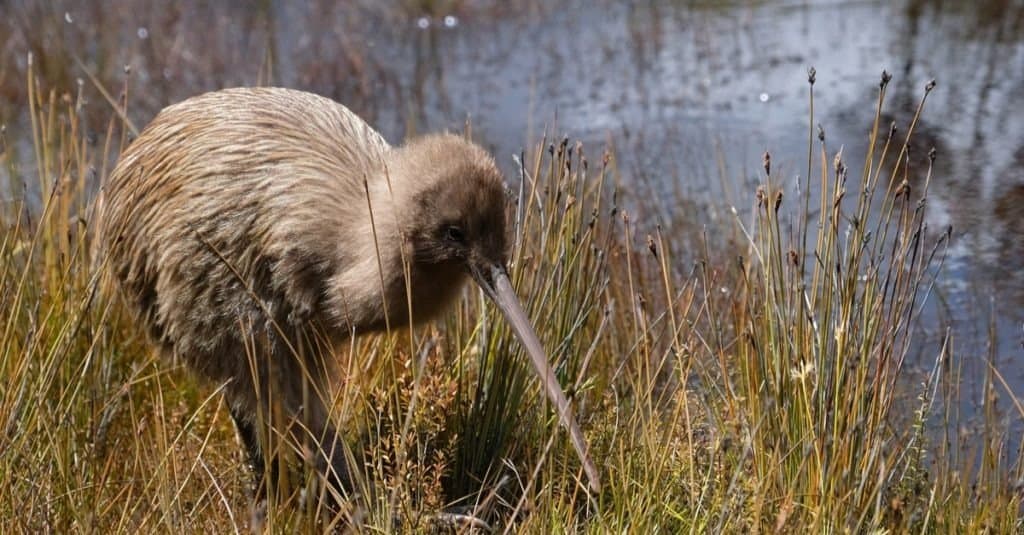
These are unusual-looking birds with a round body, a long, slender bill, strong feet, and highly reduced wings with claws at the end.
©Vee Snijders/Shutterstock.com
Diet
The kiwi bird spends the dusk-to-dawn period feeding. With its powerful scent, the kiwi finds prey and then uses the highly developed sensory pads on its bill to catch food.
What do they eat?
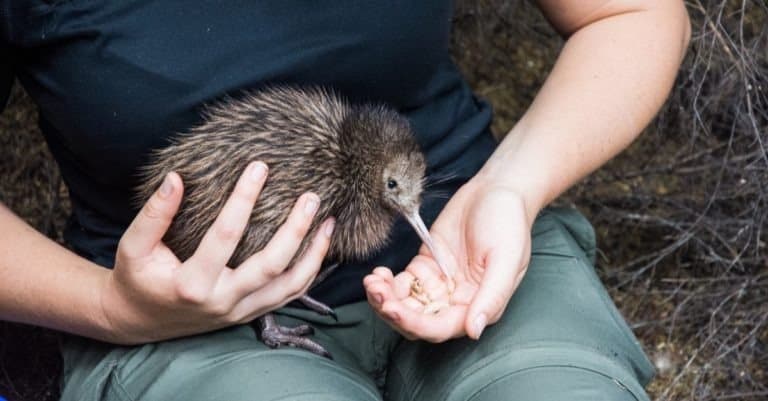
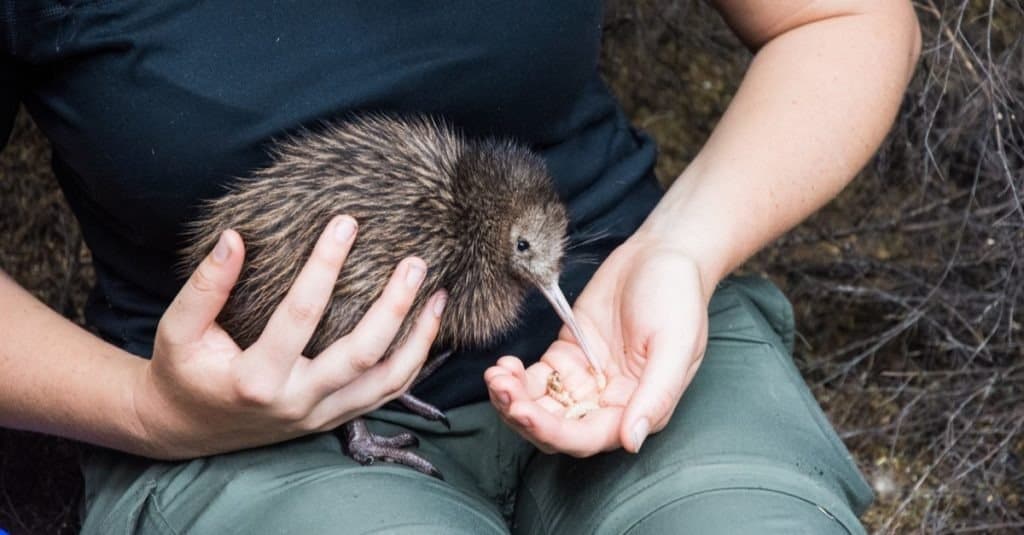
The bird consumes a diet of worms, grubs, berries, and seeds.
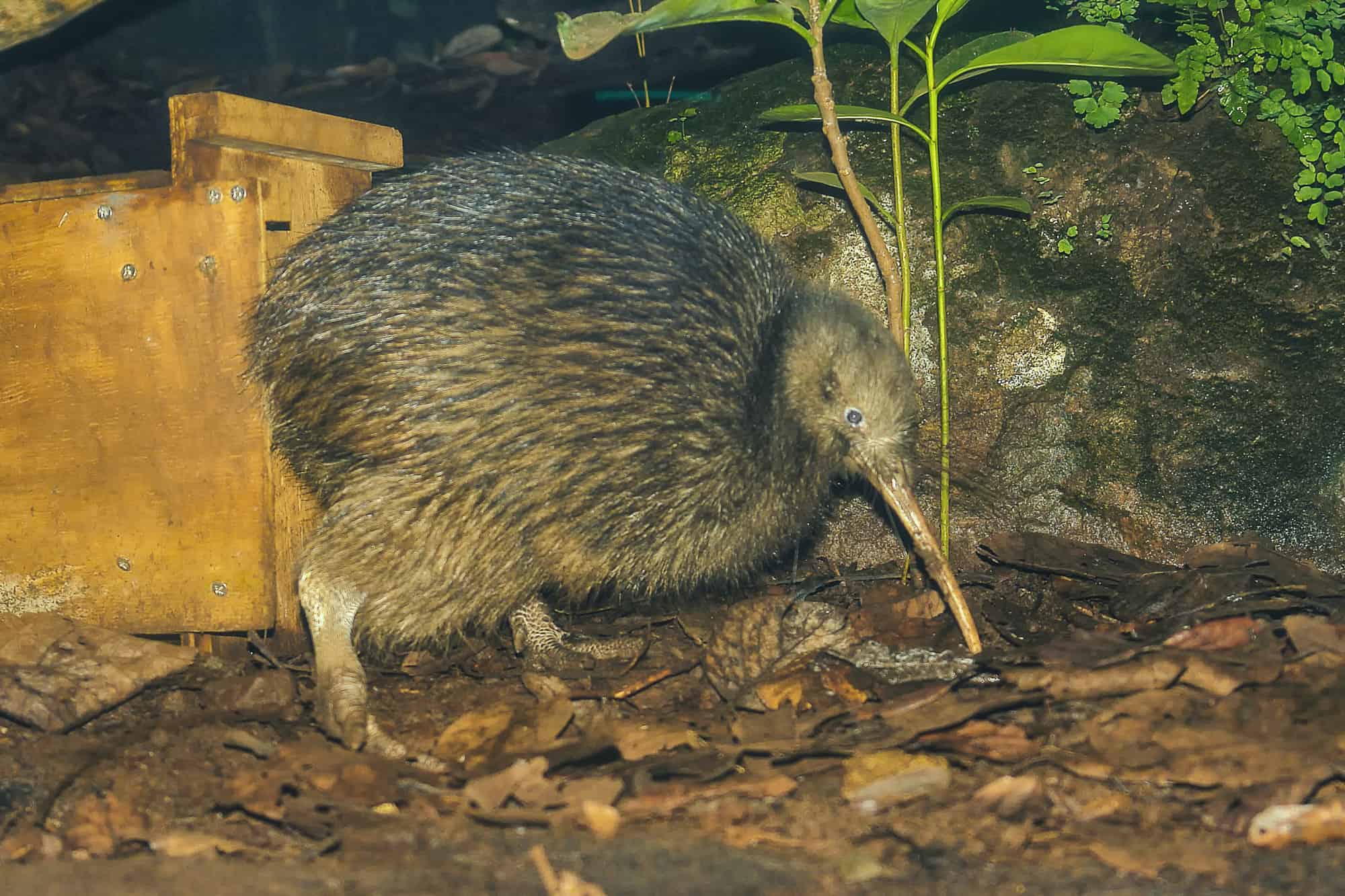
Kiwis consume a diet of worms, grubs, berries, and seeds.
©Arthur Simoes/Shutterstock.com
Predators, Threats, and Conservation Status
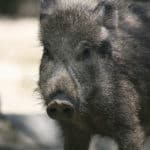
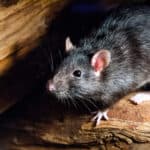
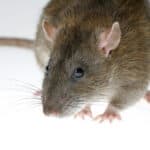
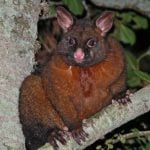
For millions of years, the kiwi faced very few threats in the wild. But the arrival of the first humans on the island centuries ago marked the beginning of the kiwi’s decline. This accelerated with the arrival of Europeans, who cut down vast swaths of forest habitat and introduced cats, weasels, stoats, and ferrets to the islands. Since kiwi birds were poorly equipped to deal with the new mammalian threat, numbers began to fall rapidly. Today, four of the five kiwi species are vulnerable to extinction, while the little spotted kiwi is near threatened.
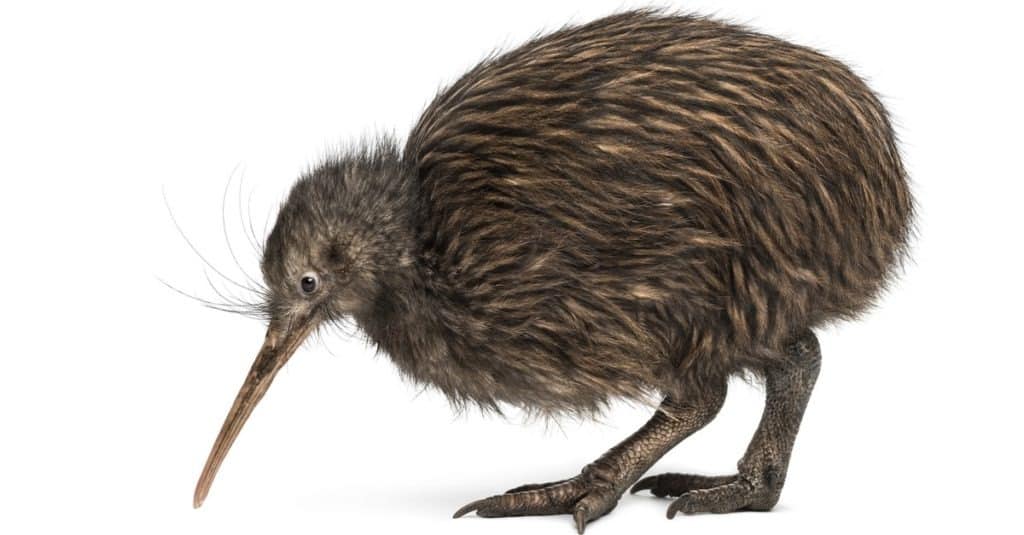
Since kiwi birds were poorly equipped to deal with threats from other animals, numbers began to fall rapidly with the arrival of humans.
©Eric Isselee/Shutterstock.com
What eats them?
Before the arrival of people, the kiwi was only preyed upon by the now-extinct laughing owl. But once carnivorous mammals poured into the island, they fed on the vulnerable kiwi chicks and sometimes even the adults in large numbers.
Relationship With the Māori
The native Māori had a more sacred relationship with kiwis. They respect them, believing them to be protected by one of their gods, but they did consume the birds and utilized their feathers for ceremonial cloaks called kahu kiwi. The Māori no longer hunt the birds but do collect feathers from ones that have already passed on.
The Māori had a sacred relationship with kiwis.
©K Ireland/Shutterstock.com
Reproduction, Babies, and Lifespan
Every year, between March and June, the kiwis undergo a unique mating ritual. After calling out to each other, the pair then meets in the nesting burrow every three days, and while copulating, males emit a distinctive purring sound. The kiwi form close breeding pairs that usually mate for life unless a more desirable partner happens to come along.
Among the most amazing facts is that the kiwi bird produces the largest eggs of any bird in relation to body size. Even though the average kiwi is about the same size as a chicken, the eggs are about six times as large as a chicken’s egg. The sheer size means that the kiwi can only lay one egg at a time, but the female may still produce a second egg several weeks later, before the first one has hatched. The male incubates the eggs by himself.
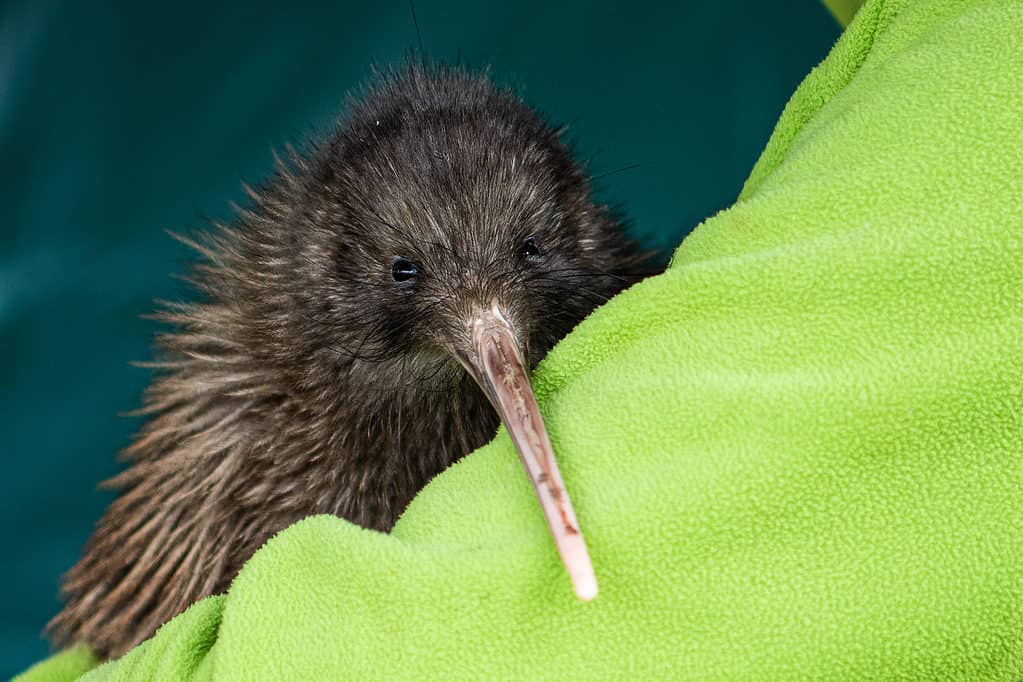
When the chicks emerge from the egg by kicking out the shell, they are fully independent and feathered. Since the parents play a minimal role in feeding the offspring, the chicks must survive their first 10 days of life by feeding on the yolk sac. The eggs are also anti-bacterial and anti-fungal to cope with the damp underground burrows. Although the birds are soon ready to forage on their own, some may choose to stay around their parents and help them raise the next generation of young.
These birds have a rough early life. Approximately 90% of wild kiwi will die, mostly from predator attacks, within the first six months of their life. When pests are absent from an area, the survival rates of young kiwis are considerably higher. Both male and female kiwis generally reach sexual maturity at around 2 to 3 years of age, though this can vary by species. If they survive adolescence, then the bird has a long lifespan of 50 years in the wild and about 30 years in captivity.
The kiwi forms close breeding pairs that usually mate for life unless a more desirable partner happens to come along.
©iStock.com/Liu Yang
Population
Kiwi bird populations have fallen sharply since their height, and although conservationists have devoted significant resources to reviving numbers, they remain in decline throughout most of New Zealand. One success story is the little spotted kiwi. It is estimated that this species fell to a low of only five individuals in the early 20th century. Since being relocated to the kiwi sanctuary on Kapiti Island, population numbers have rebounded to more than 1,200 mature individuals. Other species have more than 10,000 mature individuals left in the wild, but their populations are falling slightly every year.
Kiwi Pictures
View all of our Kiwi pictures in the gallery.

Lakeview Images/Shutterstock.com
Sources
- San Diego Zoo / Accessed January 17, 2021
- New Zealand / Accessed January 17, 2021