











Quick Take
- Weasels were deliberately released into new countries to solve a problem, but their introduction ended up creating a far bigger one. Their impact on new regions →
- The world's smallest carnivore regularly kills prey more than twice its size, a feat explained by its body, which is both the reason it can do so and the reason it has to. How weasels hunt larger prey →
- Male and female weasels have drastically different lifespans, a gap that traces back to one fatal instinct. Lifespan differences by sex →
- Weasels change color twice a year, and the timing of this change is more precisely timed than most people would expect. Seasonal coat color changes →
The ferocious and greedy nature of the weasel has led to them getting a bad reputation amongst farmers, particularly those who trap and kill them to prevent loss of livestock.
They have, however, been introduced to countries where they are not naturally found due to their versatile and dominant nature as a form of natural pest control. Along with several native British species, weasels are often found as characters in books and appear in children’s songs.

Classification and Evolution
The Weasel is a small carnivorous mammal that is found on every continent with the exception of Australia and Antarctica.
There are numerous weasel species that all vary in size, color, and slightly in their behavior, depending on where in the world they live.
The Common Weasel (also known as the Least Weasel or Little Weasel) is the most widespread and can be found across much of the northern hemisphere. These tiny but vicious predators are the smallest carnivorous mammals in the world, growing to between 6.5 and 8.5 inches from their nose to the tip of their tail.
Weasels belong to the mustelid family of carnivores and are most closely related to similar species such as stoats, which are larger in size and have a black tip at the end of their brown tail.
Although Weasels are fairly common animals throughout much of their natural range, populations in certain areas have been affected by habitat loss, and they are often seen as pests by farmers.

Weasels are carnivores, having very sharp teeth and claws. While older children may understand to be careful around weasels, they are not suitable pets if you have younger children.
©Stephan Morris/Shutterstock.com
Anatomy and Appearance
The Weasel has evolved to prey on small animals like no other carnivore, as its long, slender body is perfectly suited for following mice into their burrows.
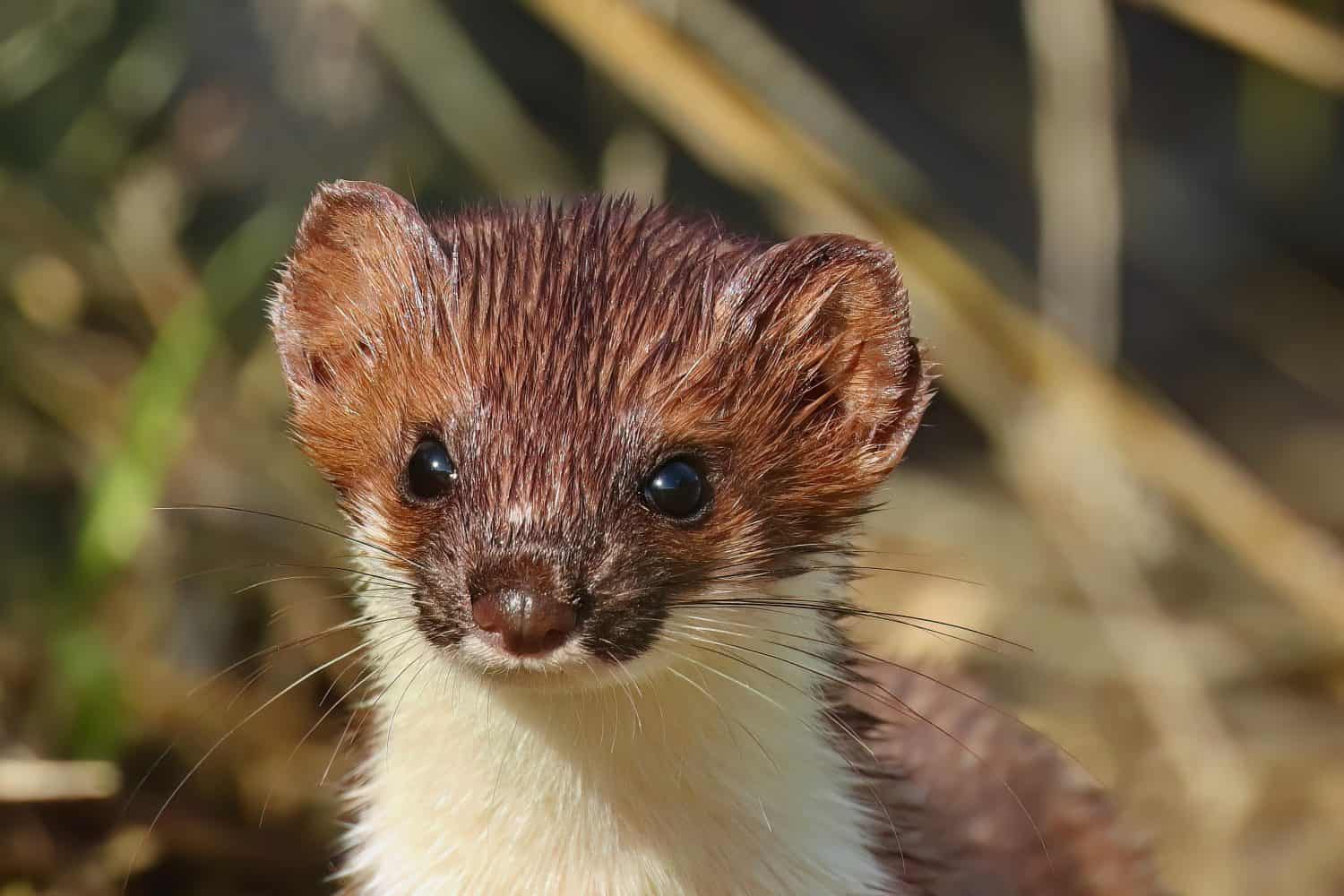
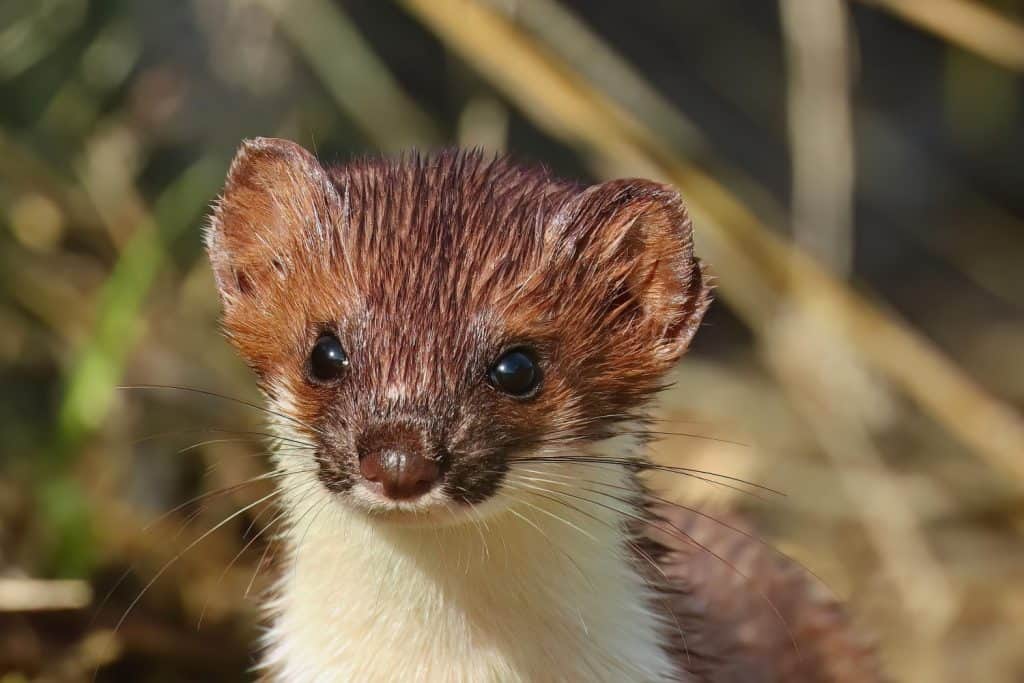
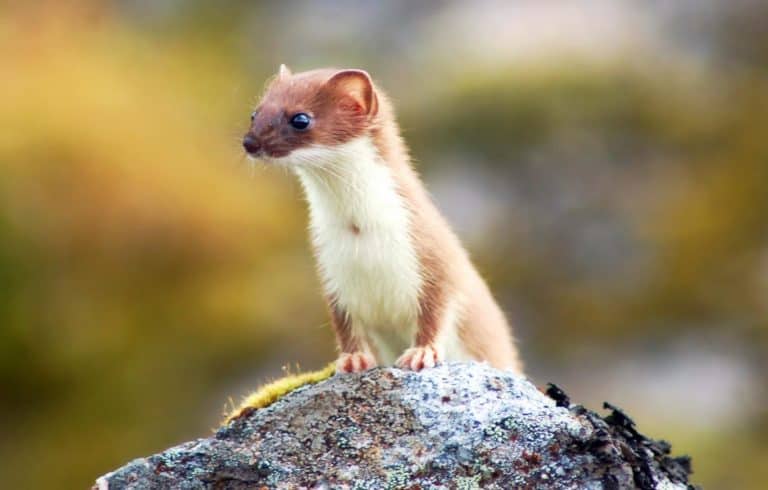
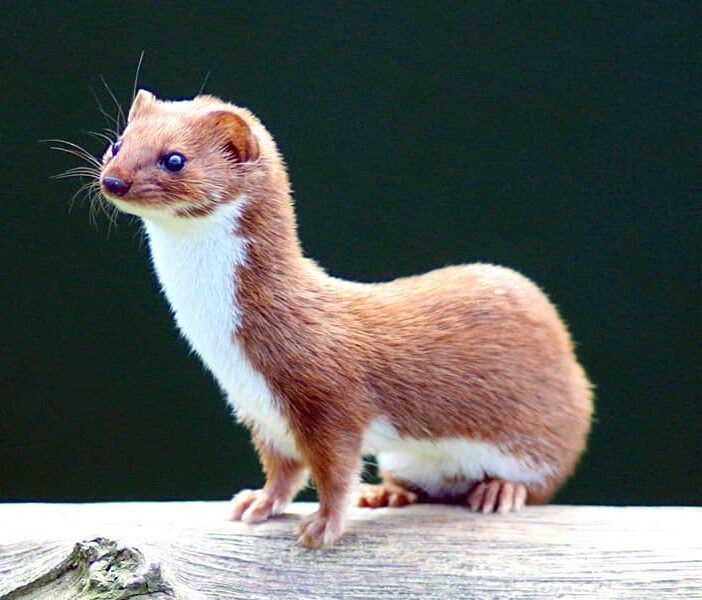
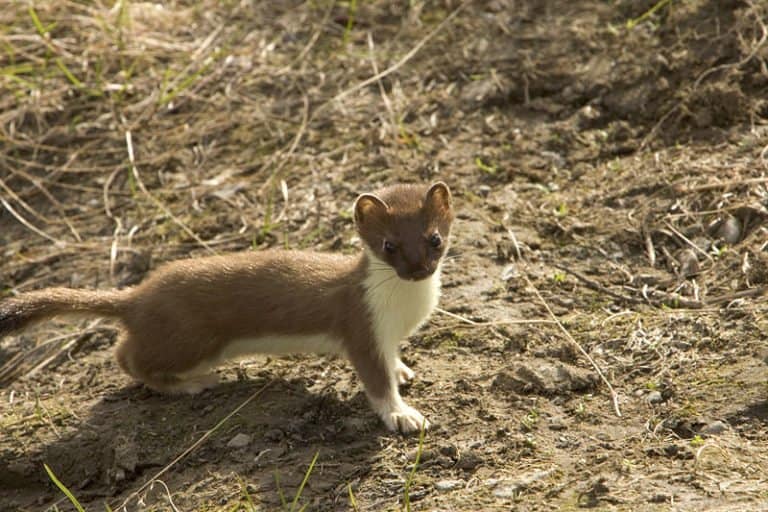
Weasels have small and narrow heads that are not much thicker than their necks, and their short legs and flexible spines mean that they are able to easily maneuver themselves around in small, confined spaces. The weasel has a sharply pointed snout and triangular head, small rounded ears, and black eyes.
Their coat is dark or light brown on their head, back, legs, and tail, and white on their underside, and molts twice a year from the darker winter coat to the flatter, lighter one in March or April, and again from the summer to the winter coat in October or November.
This not only ensures that by November the Weasel is as warm as possible, but in areas further north, individuals will often change from brown to white in color so that they are camouflaged amongst the snow.
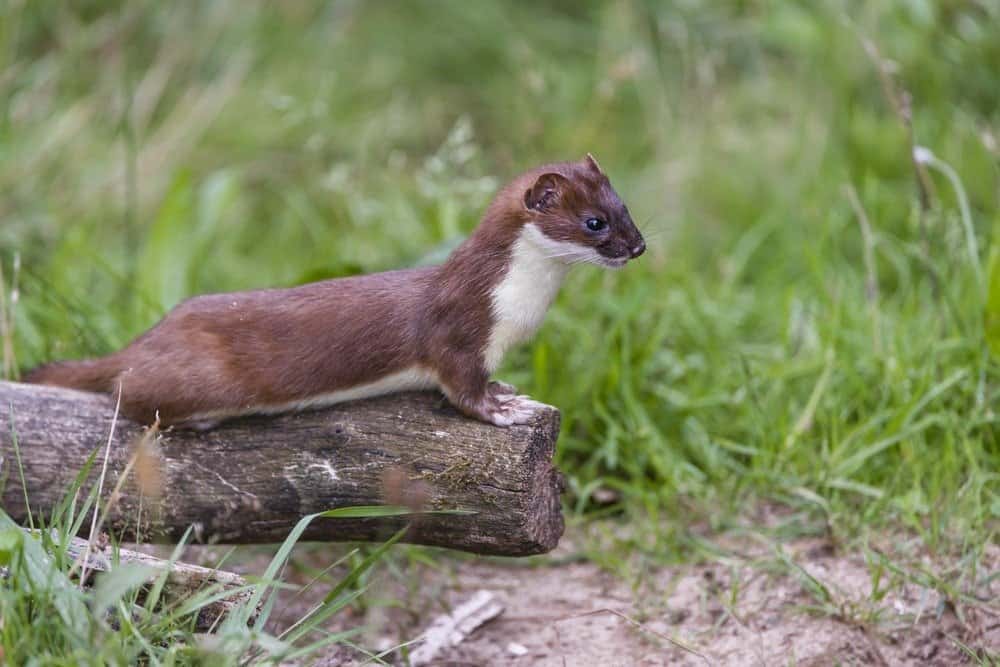
The Weasel has evolved to prey on small animals like no other carnivore, as its long, slender body is perfectly suited for following mice into their burrows.
©Bildagentur Zoonar GmbH/Shutterstock.com
Distribution and Habitat

Stoat (Mustela erminea), also called ermine or short-tailed weasel, standing on a log among grasses.
©Agami Photo Agency/Shutterstock.com
Weasels are natively found in a variety of habitats such as woodlands, coniferous forests, and grassy plains in North America, Europe, Asia, and in northern parts of Africa.
Like their larger cousin, the stoat, weasels have also been introduced to other countries (mainly as a form of pest control) like New Zealand and several other islands.
However, like the introduction of several small predators to such isolated places, weasels have had a profound effect on native wildlife, which has evolved in the same way for millions of years without the threat of small, terrestrial carnivores.
Weasels are opportunistic predators and can also be found in more urban areas and particularly close to farms where there is a varied and tempting supply of food. Despite their adaptability, weasels are threatened by habitat loss in parts of their natural range.
Behavior and Lifestyle

The weasel is a solitary animal that spends a great deal of its life hunting for small mammals on the ground.
©Steve Hillebrand – Public Domain by U.S. Fish and Wildlife Service
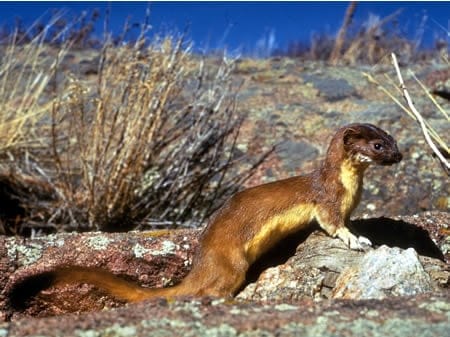
The weasel is a solitary animal that spends a great deal of its life hunting for small mammals on the ground during both the day and night.
Weasels are territorial animals that patrol home ranges that vary in size depending on the habitat and the availability of food, and although the home ranges of males and females are known to overlap, the two tend to avoid each other except when mating.
Within their territory, weasels are known to make nests in crevices, tree roots, and abandoned burrows, which are lined with grass and fur and are where the weasel is able to safely rest.
Weasels are incredibly strong for their size and are able to catch and kill animals that are much larger than themselves, before carrying them back to their burrow. In order to make sure that they have the best view of their surroundings, weasels are known to sit up on their hind legs, exposing their white underside.
Reproduction and Life Cycles
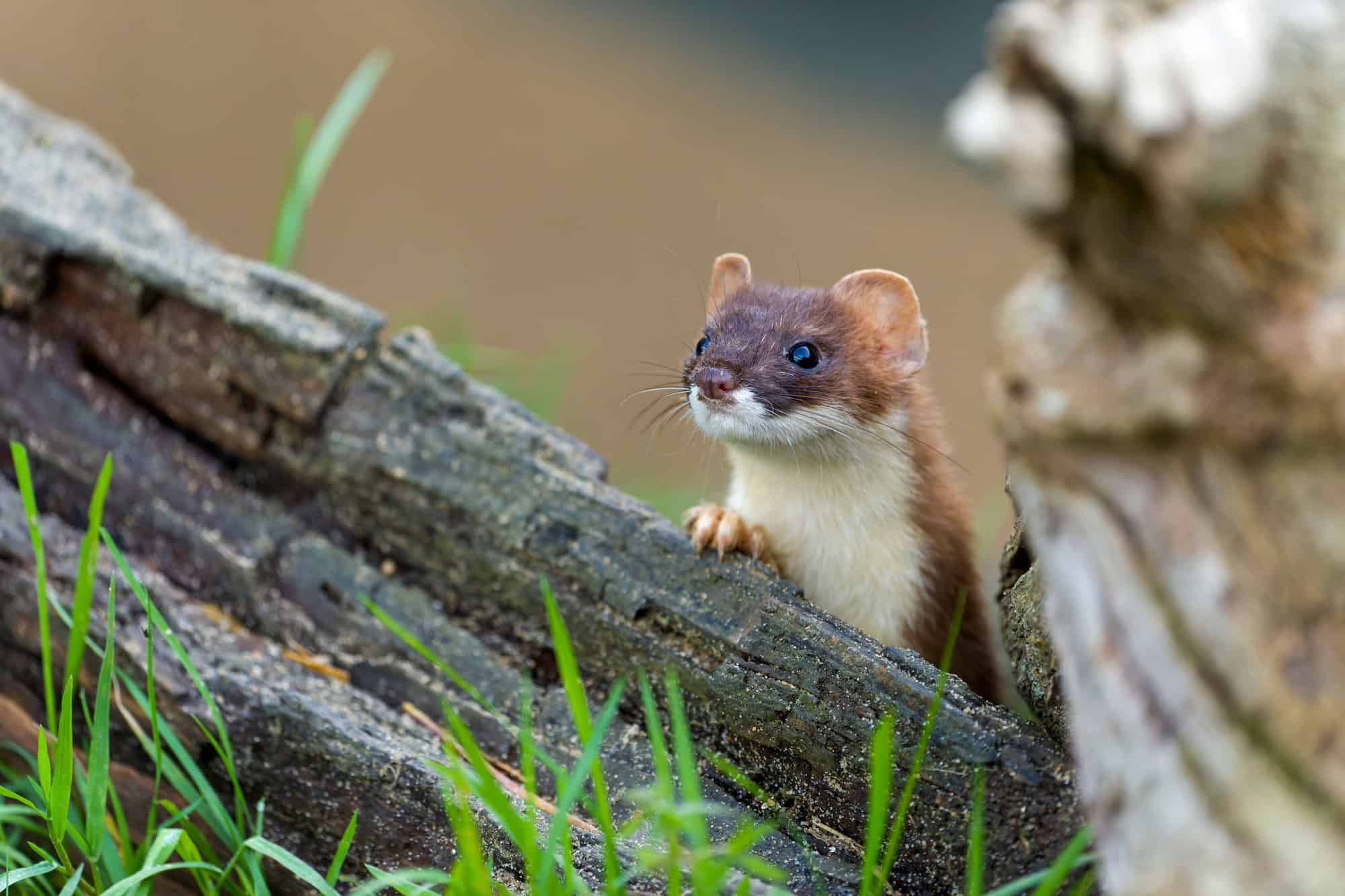
Weasels are natively found in a variety of habitats such as woodlands, coniferous forests, and grassy plains.
©iStock.com/MikeLane45
The only time Weasels will tolerate one another is when a male and female meet to mate. After a gestation period that lasts for around five weeks, the female weasel gives birth to a litter of between three and eight kittens, though litters of up to ten have been recorded, in her burrow.
Weasels are also able to hunt small prey and will leave their mother within the next few weeks to establish a territory of their own.
Although female weasels tend to live for only one to two years, they are able to breed as early as two to three months of age, in the summer of their birth year. Males, however, will rarely survive beyond one or two years as their inclination to roam further in search of a mate means that they are often more vulnerable to numerous predators.
Diet and Prey
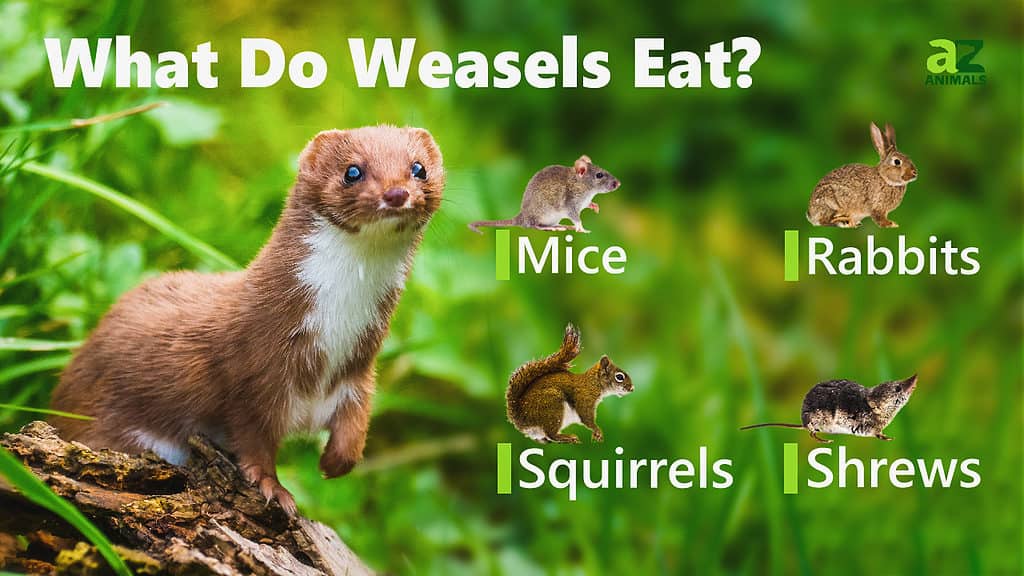
The weasel is a skilled and ferocious hunter that is able to actually enter the burrows of its prey, which is something that most predators are unable to do.
By tracking small mammals using the tunnels that they make through the undergrowth and even under the snow, the weasel is able to follow its victim back to its burrow and then catch it inside. Rodents such as mice and voles, along with lemmings further north, make up the bulk of the weasel’s diet, along with the occasional bird.
They are also known to eat eggs and are able to kill animals larger than themselves, such as ducks and rabbits. Although the weasel may be the perfect shape to get into small burrows, their long body covers a relatively large surface area and so loses a lot of body heat.
To ensure that they have enough energy, weasels must eat anywhere from a third to two-thirds of their body weight every day to survive, leading to them being such prolific hunters.
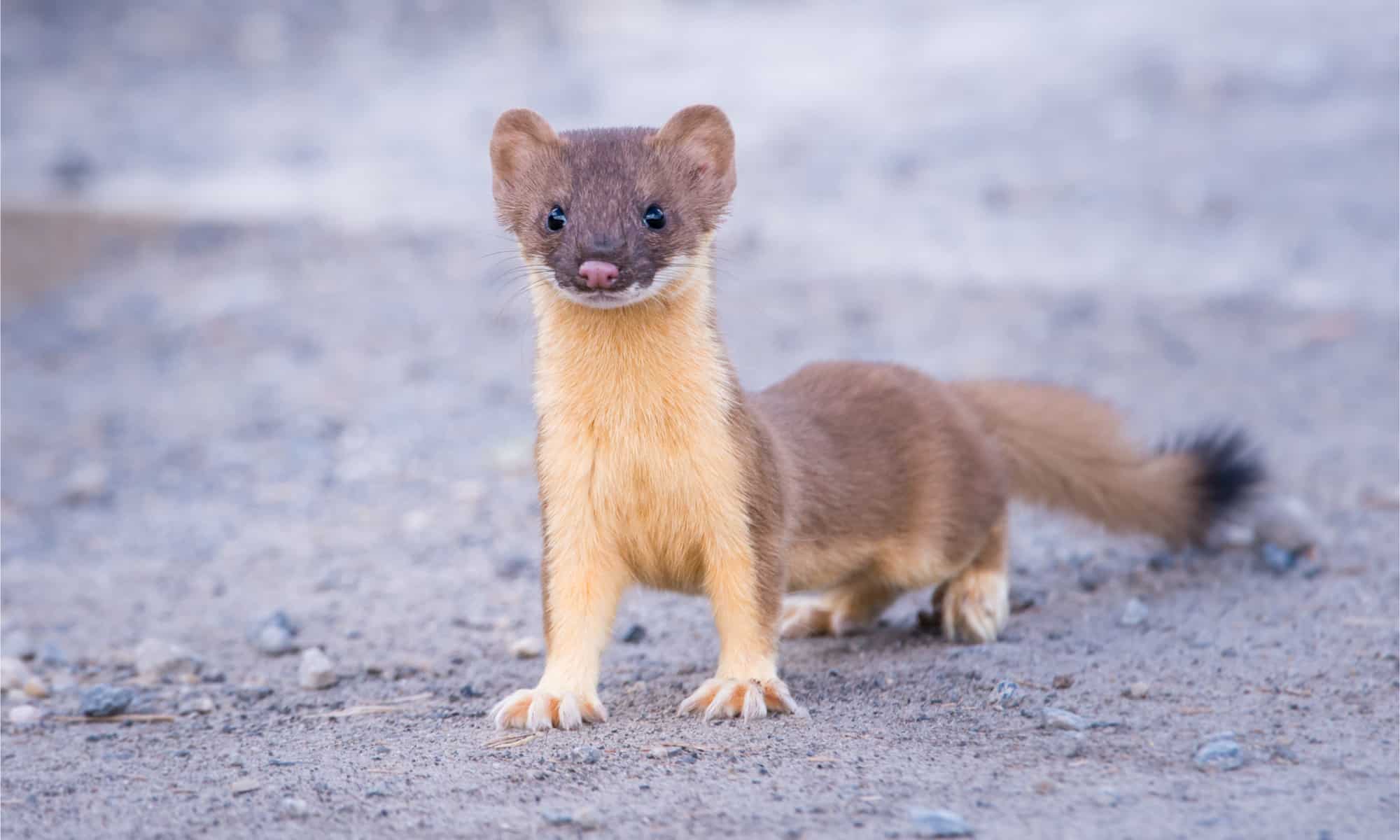
Natural predators of the weasel include birds of prey, foxes, snakes, and domestic cats and dogs.
©Ghost Bear/Shutterstock.com
Predators and Threats
Despite their fast and dexterous nature, the small size of weasels means that they are preyed upon by a number of different predators throughout their natural range. Birds of Prey such as owls, hawks, and eagles that are able to spot them from high in the sky are the most common predators of the weasel, along with foxes and snakes.
Weasels are also preyed upon by domestic cats and dogs in areas where they exist close to human settlements. Their opportunistic nature also means that they are seen as pests by farmers and are often persecuted for stealing livestock, mainly poultry and eggs. In some areas around the world, weasels are threatened by habitat loss, and a lack of their prey species can also have devastating effects on local populations.
Interesting Facts and Features
The weasel is a carnivorous animal that has sharp, pointed canine teeth, which are used for biting and shearing flesh. Although small, their teeth are incredibly sharp and are capable of delivering a fatal bite to animals more than double their size. Weasels have five toes on each of their paws that are tipped with small, non-retractable claws.
Although these are primarily used for holding onto prey, their claws also help weasels to burrow into the ground surprisingly quickly. Although males and females have similar coat colors and markings, males are actually substantially bigger, with a body length around a quarter longer than that of females and weighing roughly one and a half to two times as much.
Conservation Status and Life Today
Although they are considered widespread but rare in North America, they are common throughout Europe and Asia, and introduced populations in other countries are also stable. Some isolated populations, however, are becoming increasingly vulnerable.
Weasel Pictures
View all of our Weasel pictures in the gallery.

How to say Weasel in ...
Sources
- David Burnie, Dorling Kindersley Animal, The Definitive Visual Guide To The World's Wildlife / Accessed November 10, 2008
- Tom Jackson, Lorenz Books The World Encyclopedia Of Animals / Accessed November 10, 2008
- David Burnie, Kingfisher The Kingfisher Animal Encyclopedia / Accessed November 10, 2008
- Richard Mackay, University of California Press The Atlas Of Endangered Species / Accessed November 10, 2008
- David Burnie, Dorling Kindersley Illustrated Encyclopedia Of Animals / Accessed November 10, 2008
- Dorling Kindersley Dorling Kindersley Encyclopedia Of Animals / Accessed November 10, 2008
- David W. Macdonald, Oxford University Press The Encyclopedia Of Mammals / Accessed November 10, 2008
- IUCN Red List / Accessed November 10, 2008