Reindeer
Rangifer Tarandus
 Verified by: AZ Animals Staff
Also known as the Caribou
Advertisement
Reindeer Scientific Classification
- Kingdom
- Animalia
- Phylum
- Chordata
- Class
- Mammalia
- Order
- Artiodactyla
- Family
- Cervidae
- Genus
- Rangifer
- Scientific Name
- Rangifer Tarandus
Read our Complete Guide to Classification of Animals.
Reindeer Conservation Status

Reindeer Facts
- Main Prey
- Grass, Herbs, Berries
- Habitat
- Forests close to the Arctic tundra
- Diet
- Herbivore
- Average Litter Size
- 1

 © iStock.com/Sergey_Krasnoshchokov
View all of the Reindeer images!



How to Add Us to Google News


“Travels more land space by foot annually than any other creature roaming the Earth”
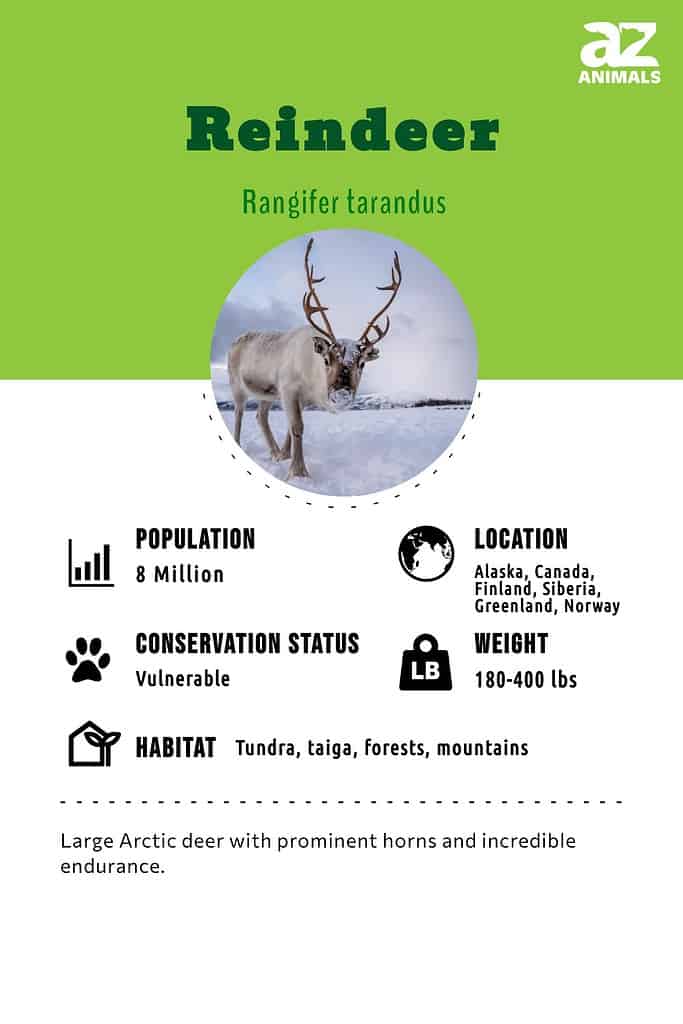
The reindeer has become somewhat of a whimsical animal. Tales of their ability to fly to pull Santa’s sleigh and other such stories have made them a fun focus for people both young and old. However, there is much to learn about these large animals that are found in colder climates around the world.
Reindeer are one of the largest species of deer behind the caribou. These animals are known to cover as much as 3,100 square miles of land space during their travels throughout the year. Traveling in herds, the reindeer can be very protective of other members within their group. For the most part, the reindeer is a gentle and relaxed animal.
6 Amazing Reindeer Animal Facts
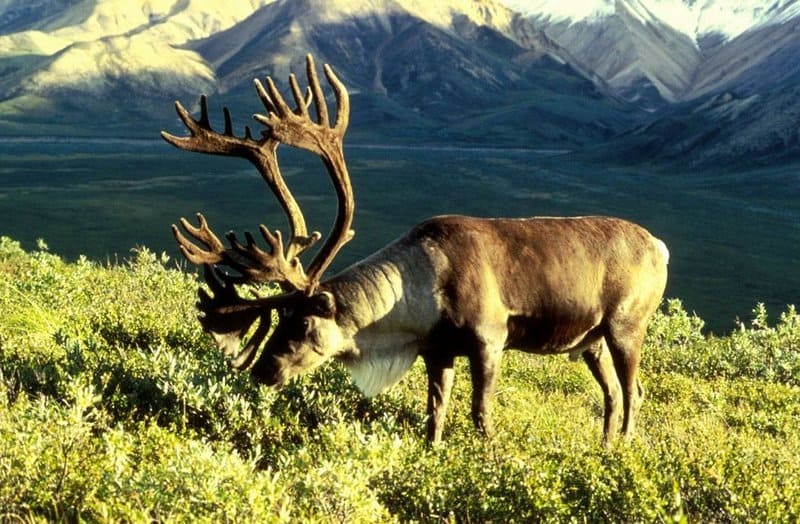
Reindeer can run up to 50 mph.
©Dean Biggins – Public Domain
- Amazing eyes: Reindeers are the only mammals known to see ultraviolet light! This adaptation allows them to spot predators whose white fur is more visible in UV light.
- Natural air heaters: A reindeer has the ability to use their nose to warm the air they breathe in before it enters its lungs.
- Watch out for eagles: Golden eagles are one of the largest predators of reindeer calves when born.
- Yes, they’re fast: Reindeer are animals that can reach high speeds while sprinting. In fact, even at 24 hours of age, a newborn reindeer can outrun an Olympic sprinter!
- Reginald the red-nosed reindeer: The world’s most famous reindeer today is Santa’s trusty red-nosed reindeer Rudolph, but that wasn’t always his name! Rudolph first came from a 1930s coloring book from the department store Montgomery world. Originally he was almost named Reginald and instead of having a glowing nose had glowing eyes!
- Four (yes, four) stomachs: Reindeer are an animal with multiple stomachs. In fact, they have four! As a member of the deer family, reindeer are ruminants with four different stomachs that each handle a different digestive function.
Classification of Reindeer
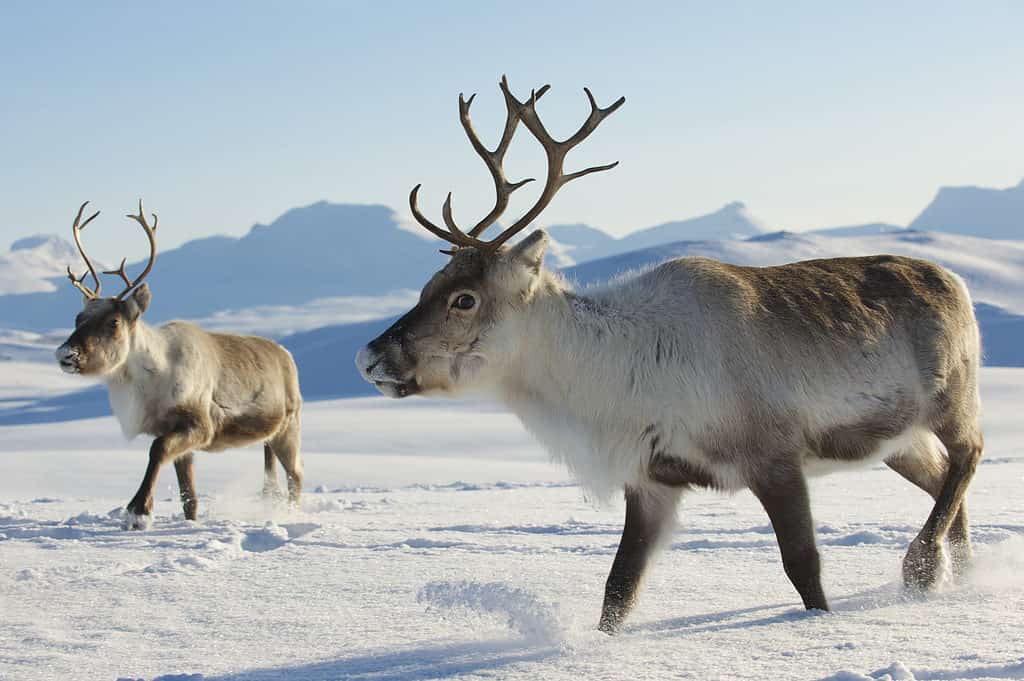
Reindeer are the only living members of the genus Rangifer.
©Dmitry Chulov/Shutterstock.com
Reindeers are classified as mammals that belong to the family of Cevidae. In addition to reindeer, this family includes deer, brockets, elk, and pudu.
Rangifer Tarandus is the scientific name for reindeer. Rangifer is originally known as a small constellation found between the constellations of Cassiopeia and Camelopardalis. In Latin, both Rangifer and Tarandus mean reindeer with Rangifer being the generic name and Tarandus being the specific name.
Reindeer vs. Caribou
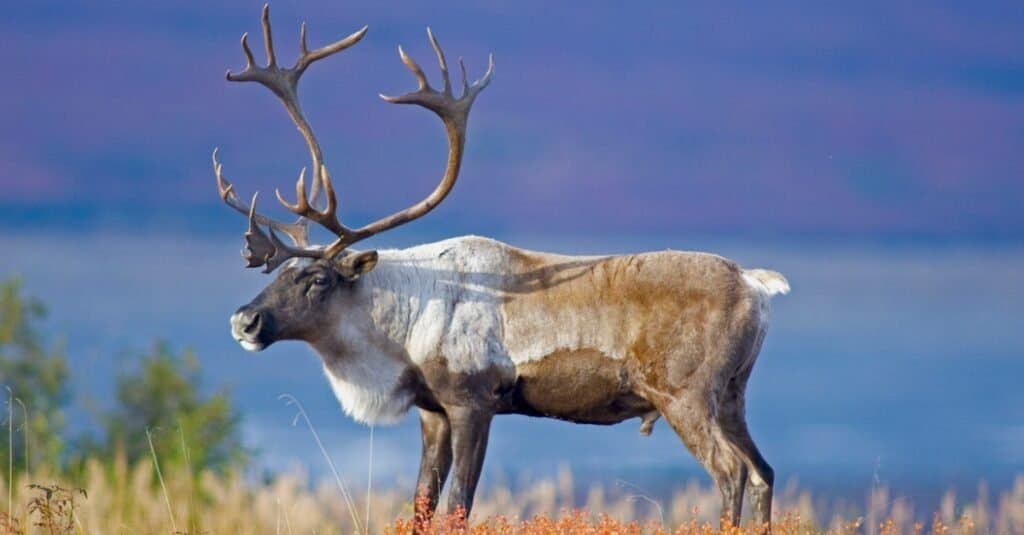
Reindeer and caribou are two names for the same species.
©Jeff McGraw/Shutterstock.com
The name reindeer are called varies by their geography. In North America, reindeer are commonly called reindeer when domesticated and caribou when living freely in nature. In Europe, regardless of domestication, the species is called reindeer.
Domestication and hunting of reindeer are extremely important to many cultures across Arctic regions. For example, the Sami people of Finland’s Lapland region have long relied on reindeer for not only food but also clothing and also travel needs.
Physical Features
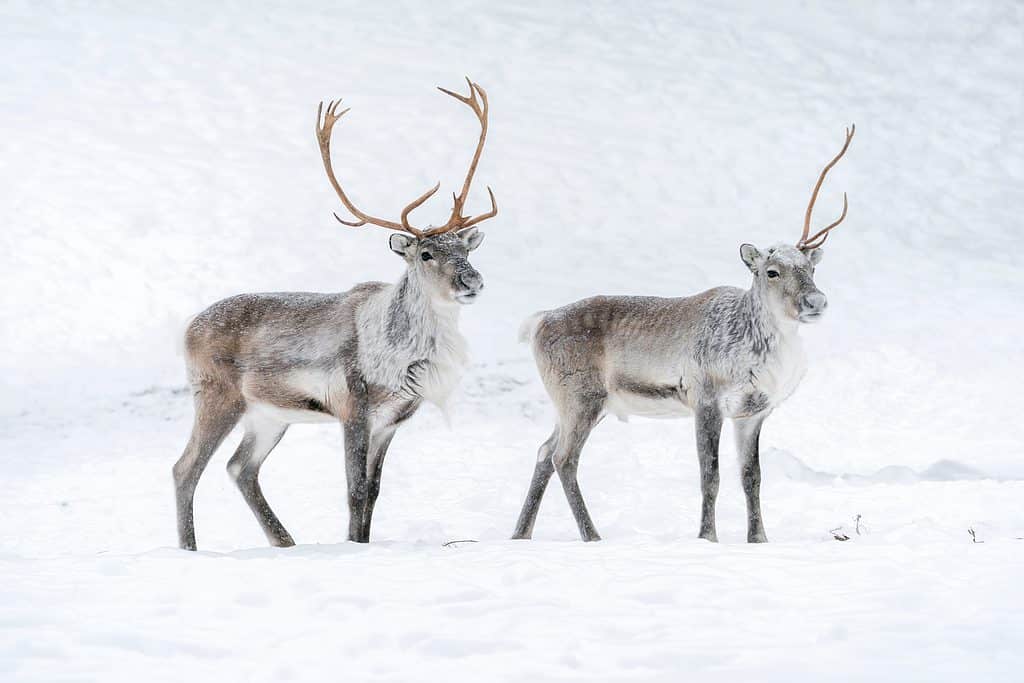
In addition to their antlers, reindeer can be distinguished by the thick tufts of fur on their chests.
©Tam and Trace Photography/Shutterstock.com
While there are different types of reindeer that can vary in size from one species to another, the common reindeer stand an average of 4 feet at the shoulders. Reindeer are animals that can grow to be six feet long. This is the same length as a twin-size bed.
The weight of a reindeer can range widely from one type to another. The average female reindeer weighs around 240 pounds, which is twice as heavy as an average octopus. A male has an average weight of 365 pounds, a little less than half the weight of a grizzly bear. However, it has been recorded that some reindeer can reach as much as 700 pounds. This is one-fifth the weight of an average car.
To protect them in the cold Arctic conditions in which they live, reindeer have thick fur that covers their entire body. This fur is made up of hollow hairs that allow for air to be trapped and heated to keep the reindeer warm. This insulated hollow hair also gives the animal more buoyancy in the water to float when necessary. This feature makes river crossings much easier during migrations. Reindeer fur can be one of many shades of brown and a light beige color. White patches are found on the chest, belly, neck, and areas above the hooves.
The hooves of a reindeer are useful tools that are important for their survival. The hooves are wide in size. In the winter the hooves are hard, allowing the reindeer to cut into the snow and ice for traction. In warmer seasons the hooves of the reindeer become softer and allow for easier swimming and gripping in the mud. There is a distinguishable sound created when the tendons rub across the bone of the hooves.
Antlers
Both male and female reindeer grow antlers. However, male reindeer antlers tend to be twice as big in size. The velvet surrounding the male’s antlers tends to fall off in late August. They shed their antlers following the Fall rut which occurs at the end of October or November. Females don’t tend to shed their antlers until Spring.
Want more details about reindeer antlers? Make sure to give ‘Reindeer Antlers: Everything You Wanted to Know‘ a read!
Behavior & Lifestyle
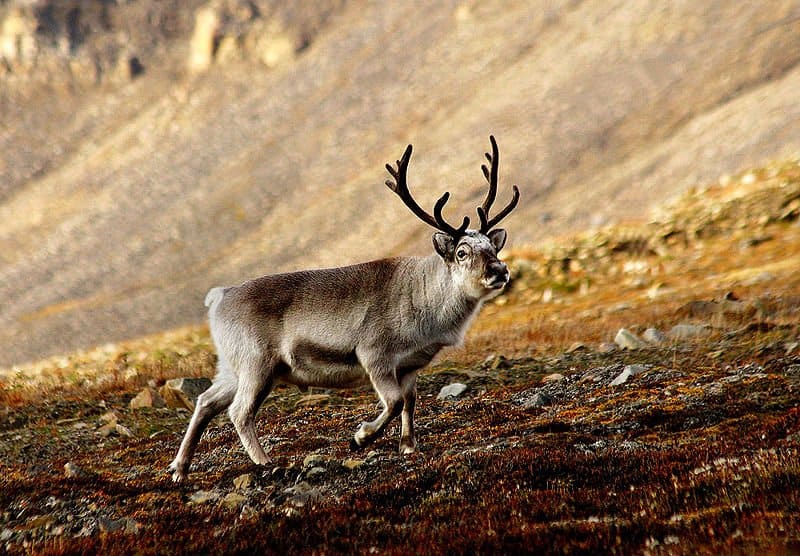
Reindeer can run up to 50 miles per hour! Beyond being fast sprinters, reindeer are also migration champions. The animals are known to travel more than 3,100 miles in a single year – the same length as Brooklyn’s self-transcendence race, the world’s longest certified footrace.
The reindeer travel in large packs that can contain tens of thousands of animals at any given time during the summer months. These groups are known as a herd. Scientists believe that this provides relief from mosquitoes, warble flies, and nose bot flies that can become bothersome to the reindeer. When the weather begins to cool off, the herd starts thinning out. During this time the herds can dwindle to as little as just ten members at a time. This often occurs during the rut season that takes place in the fall. It is also the time when breeding most often occurs in the herd.
Evolution
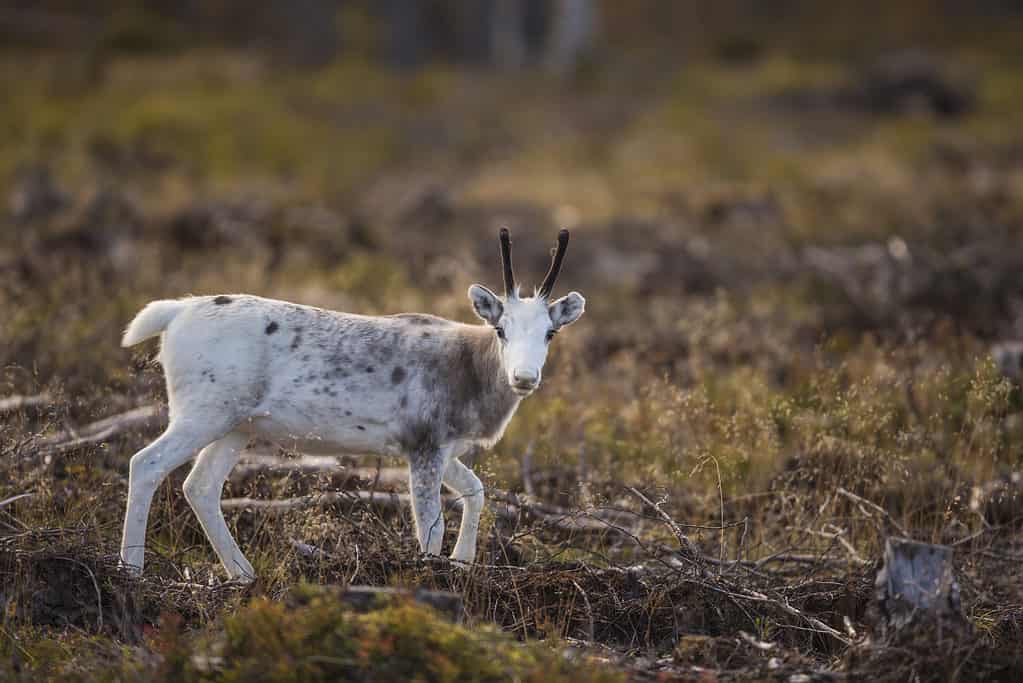
Reindeer populations expanded greatly during the Ice Age, as conditions suited them perfectly.
©iStock.com/Mats Lindberg
Fossil records indicate that the first known reindeer first evolved around 3.6 Million to 2.6 Million years ago. These resilient creatures have had to adapt many traits in order to survive in their frigid Arctic homes. Some of these genetic anomalies include an optimized absorption of Vitamin D for antler growth, ideal patterns of fat distribution for insulation, and the lack of a “Biological clock” that typically influences behaviors based on whether it is day or night, possibly due to the extremely short days of the Arctic circle.
Habitat
You will find the reindeer living in polar and Arctic climates. Most reindeer are found in the northern hemisphere. Herds have been spotted in Europe, Asia, and North America. These animals prefer forests as these spaces are filled with the food resources that the animal needs for survival. The thick cover of trees such as pines, spruce, and other conifer trees gives the reindeer places to bed down. These trees offer some protection from the weather elements and from being easily spotted by predators.
Give our article ‘Where Do Reindeer Live‘ a read for the full details on where they can be found!
Location of Reindeer Subspecies Around the World
There are six main subspecies (sometimes called reindeer breeds) of the reindeer known to roam the Earth today. These include the following:
- Svalbard reindeer – Found in the Svalbard archipelago of Norway, this is the smallest subspecies of the reindeer recorded.
- Finnish forest reindeer – This subspecies of the reindeer is rare and classified as a threatened breed. The Finish forest reindeer are common in Russian Karelia and provinces including North Karelia, Kainuu, and Savonia in central south Finland.
- Boreal Woodland caribou – More commonly known as the Woodland caribou, the Boreal Woodland caribou live in the forests of Canada and North America.
- Barren-ground caribou – This subspecies of the reindeer includes the Porcupine caribou as well. These animals are found throughout the Canadian territories including Nunavut and the Northwest Territories. There have been recordings of the barren-ground caribou roaming throughout Kitaa, Greenland as well.
- Eurasian Tundra reindeer – Also known as the mountain reindeer, this subspecies of the reindeer can be found enjoying the atmosphere of the western Scandinavian Peninsula. You will find the majority of these herds located in Norway.
- Peary caribou – The smallest of the North American caribou, these reindeer relatives live in the High Arctic Island of Nunavut as well as the Northwest Territories of Canada.
Diet
Classified as herbivores, reindeer live on diets of plants and vegetation.
What do reindeer eat?
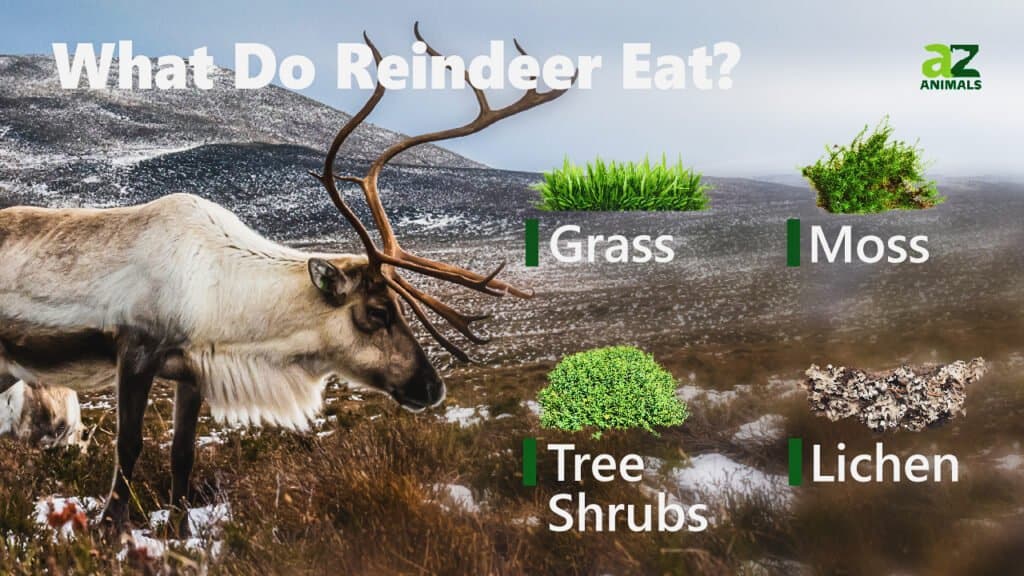
Some of the favorite foods of the reindeer include willow and birch leaves, mushrooms, sedges, cotton grass, and ground-dwelling vegetation. The animals do enjoy fruits and berries when available. However, while these foods are okay as a treat, eating them in abundance is not healthy for the reindeer.
During colder seasons when plants and vegetation are limited, reindeer use their keen sense of smell to locate lichen under the snow. Using their hard hooves to break through the snow and ice covering, the animals are able to access this food. Cows will use their antlers in these situations to help gain access to the lichen. On average, a reindeer will consume between 9-18 pounds of food every day.
While it is not their first choice in food, reindeer have been known to eat small rodents on occasion. This gives them the ability to sustain their nutritional needs and fulfill the need for protein and iron in their diets.
For a full analysis of what reindeer eat, make sure to read ‘What Do Reindeer Eat: 7 Important Foods for their Diet.’
Predators and Threats
Living in the wild, reindeer face the threat of different types of predators.
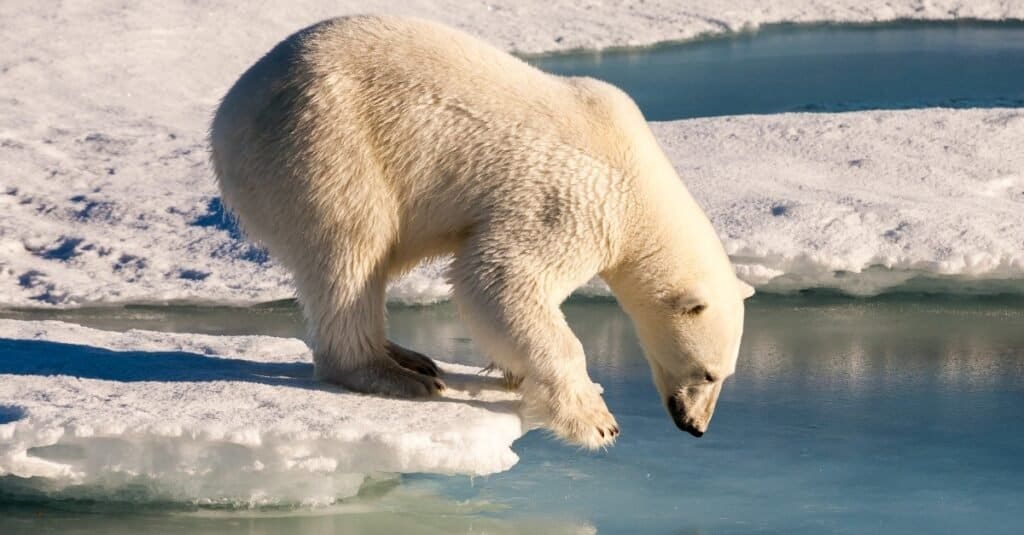
Polar bears are a common threat to reindeer in the Arctic circle.
©Mario_Hoppmann/Shutterstock.com
What eats reindeer?
The most common animals that prey on reindeer include wolves, golden eagles, and several species of bear. However, when killed, scavengers will often consume the meat of the reindeer.
Humans are among the biggest predators of reindeer. They hunt them for meat, hides, and fur. The fur is used to create warm clothing for extremely cold weather conditions. The hides are tanned. This creates a waterproof leather material that is ideal for making shoes, tents, and clothing.
While domesticated reindeer don’t often worry about predators as being a threat to their livelihood, there are other types of threats that they face. Most reindeer kept in captivity are not provided with the proper type of environment to sustain their type of lifestyle. This can cause the animals to die due to depression, disease, and even starvation when the right types of food are not provided.
Reproduction and Life Cycles
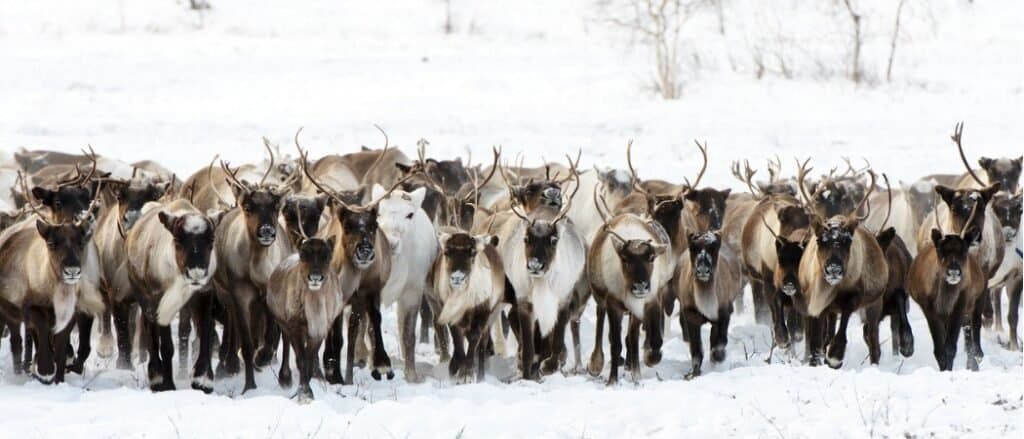
Reindeer live about 15 years in the wild.
©longtaildog/Shutterstock.com
Breeding season for the reindeer takes place from early October until the end of November. This is known as the Fall rut. The male selects 5-15 females from the herd during the breeding season to create a harem. To prepare for this annual event, the male will rub the velvet from their antlers. Their body begins to increase in size with the neck swelling and a mane of hair forming under their neck.
The total gestation period for a reindeer pregnancy is 228-234 days. To prepare for the birth of their babies, the cows leave their herd and travel to a common calving ground in the Spring. It is common for mothers to give birth to one calf at a time. There are rare instances in which twins are born to the mother. This is the only litter the female reindeer will have for the year.
Calves suckle for the first week of their life. Solid foods are added to their diet after this period. By two weeks of age, the babies most often double their birth weight. Weaning begins for the baby at about six months of age. However, the babies will stay with their mothers for the first year. The average life expectancy for reindeer living in the wild is 15 years. This duration of time is even less for domesticated animals as they lack the same stimulation as what is found in their natural habitats.
Population
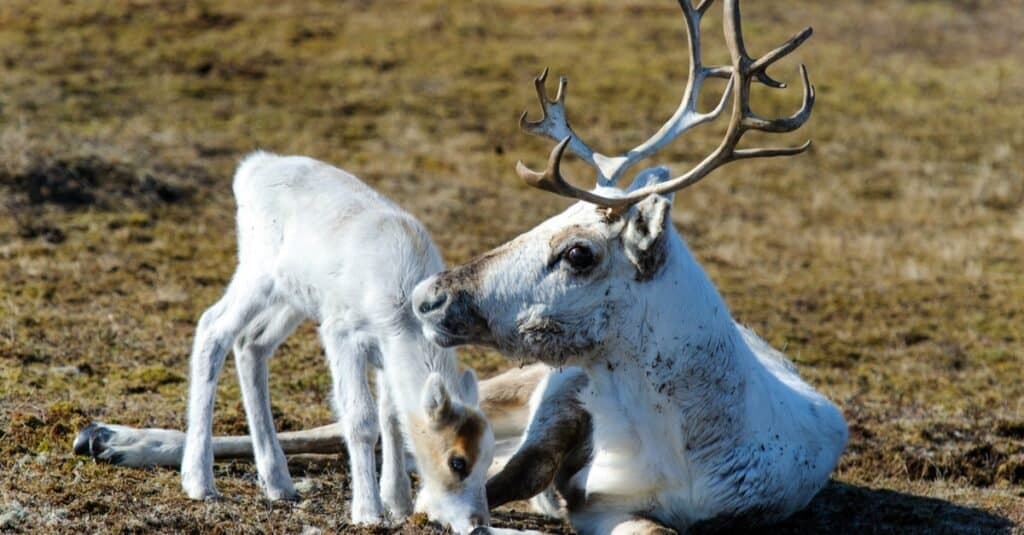
Reindeer populations have declined by more than half in the last 30 years.
©V. Belov/Shutterstock.com
There are 2.1 million reported reindeer and caribou herds that live in different regions around the world. This is less than half of the population reported in 1996. At that time researchers estimate that 4.7 million herds roamed the Earth.
The decline in population has many causes. For one, the environments in which the reindeer depend of for shelter and food are diminishing with ongoing human development. Increases in wolf and bear populations also create more of a threat to the animals. Lastly, human hunting for furs continues to be a threat to these animals.
Reindeer in Pop Culture
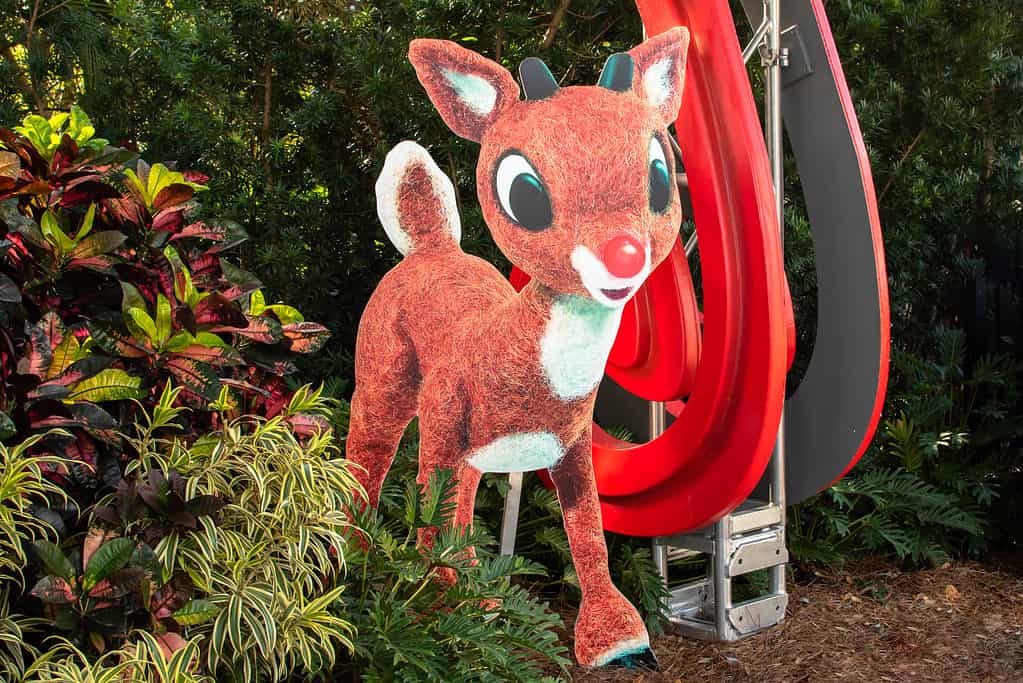
Rudolph the Red-Nosed Reindeer is one of the most popular reindeer in pop culture.
©VIAVAL TOURS/Shutterstock.com
Reindeer have become extremely iconic in pop culture thanks to their association with Santa Claus and Christmas folklore. We have the full details in ‘What’s the Story Behind Santa and Reindeer.’
Rudolph the Red-Nosed Reindeer first appeared in a Montgomery Ward catalog in 1939. The character was originally conceived as “Reginald,” a reindeer with glowing red eyes that could guide Santa’s sleigh, but was later changed to “Rudolph” before publication. The popularity of Rudolph and the association of reindeer with Santa Claus reached new heights after a stop-motion film in 1964.
View all 114 animals that start with R How to Add Us to Google News

Reindeer FAQs (Frequently Asked Questions)
What's the difference between reindeer and elk?
Reindeer and elk are both large members of the deer family, but they have important differences. First, elk can weigh up to 850 pounds while reindeer are smaller. Second, they have different appearances suited to their climates. For example, reindeer have wider hooves suited to walk on deep snow.
How do reindeer survive the Arctic winters?
Reindeer have a number of adaptations that allow them to survive in extremely cold temperatures. For example, female antlers are the only deer species to have antlers, this is an adaptation to dig through snow for food. In addition, the feet of reindeer have several adaptations to make walking through snow easier.
For a complete analysis of how Reindeer survive in such harsh environments, read ‘Reindeer in the Arctic: How Do They Survive?‘
Why do we call them reindeer?
Reindeer are one of the largest species of the deer. The name “Reindeer” is an adaption of an Old Norse word known as hreindyri. The word “dyr” means animal. The term “hreinn” when used by itself references a horned animal.
The horns found on both male and female reindeer are important features to the survival of the reindeer. The horns are used to dig through thick snow and ice found in the tundra where the animal lives. They are also used in battling off competing animals from other herds and predators that the reindeer encounter when living in the wild.
What is the difference between a deer and reindeer?
The main differences between deer and reindeer is that reindeer have a different build that is adapted to their Arctic habitat. Keep in mind that reindeer are a species of deer.
There are many differences that can be found when comparing the common deer with a reindeer. Among them, the type of areas in which these animals can be found. Common deer are found in milder climates including all continents except for Australia and Antarctica. Reindeer are found in polar and arctic regions including Europe, Asia, and North America.
The physical features found on most species of deer and reindeer vary widely as well. Other deer species commonly have thin boney antlers. Only male deer have the ability to grow the antlers. This compares to both male and female reindeer, which can grow antlers. Their antlers are wide and span more space from side to side than the width of their body.
What is the difference between caribou and reindeer?
The names reindeer and caribou are often used interchangeably. However, there are many differences that set these animals apart. When considering the idea of reindeer vs caribou it is important to note that both types of animals come from the same lineage. Reindeer were the result of domesticating the caribou. Caribou can be found living in the southern hemisphere while reindeer are more prominently found in the northern hemisphere.
Physical differences are seen between the reindeer and caribou as well. Reindeer tend to be shorter and wider than the caribou. The fur of the reindeer is thicker also. The caribou is known to migrate during season. These animals move make long trips during colder seasons to warmer areas. They make reverse trips when the weather warms up as well.
Are Reindeer herbivores, carnivores, or omnivores?
Reindeer are Herbivores, meaning they eat plants.
What Kingdom do Reindeer belong to?
Reindeer belong to the Kingdom Animalia.
What phylum do Reindeer belong to?
Reindeer belong to the phylum Chordata.
What class do Reindeer belong to?
Reindeer belong to the class Mammalia.
What family do Reindeer belong to?
Reindeer belong to the family Cervidae.
What order do Reindeer belong to?
Reindeer belong to the order Artiodactyla.
What genus do Reindeer belong to?
Reindeer belong to the genus Rangifer.
What type of covering do Reindeer have?
Reindeer are covered in Fur.
In what type of habitat do Reindeer live?
Reindeer live in forests close to the Arctic tundra.
What do Reindeer eat?
Reindeer eat grass, herbs, and berries.
What are some predators of Reindeer?
Predators of Reindeer include humans, bears, and wolves.
What is the average litter size for a Reindeer?
The average litter size for a Reindeer is 1.
What is an interesting fact about Reindeer?
Reindeer are also known as Caribou.
What is the scientific name for the Reindeer?
The scientific name for the Reindeer is Rangifer Tarandus.
What is the lifespan of a Reindeer?
Reindeer can live for 12 to 15 years.
How fast is a Reindeer?
A Reindeer can travel at speeds of up to 50 miles per hour.
What are the differences between a moose and a reindeer?
The key differences between a moose and a reindeer are size, appearance, lifespan, habitat, habitat, and physical features.
What are the differences between a deer and a reindeer?
The key differences between deer and reindeer are size, appearance, physical features, habitat, lifespan, and habits.
Thank you for reading! Have some feedback for us? Contact the AZ Animals editorial team.
Sources
- David Burnie, Dorling Kindersley (2011) Animal, The Definitive Visual Guide To The World's Wildlife
- Tom Jackson, Lorenz Books (2007) The World Encyclopedia Of Animals
- David Burnie, Kingfisher (2011) The Kingfisher Animal Encyclopedia
- Richard Mackay, University of California Press (2009) The Atlas Of Endangered Species
- David Burnie, Dorling Kindersley (2008) Illustrated Encyclopedia Of Animals
- Dorling Kindersley (2006) Dorling Kindersley Encyclopedia Of Animals
- David W. Macdonald, Oxford University Press (2010) The Encyclopedia Of Mammals