
S
Species Profile

Scorpion Fish

Scorpaenidae

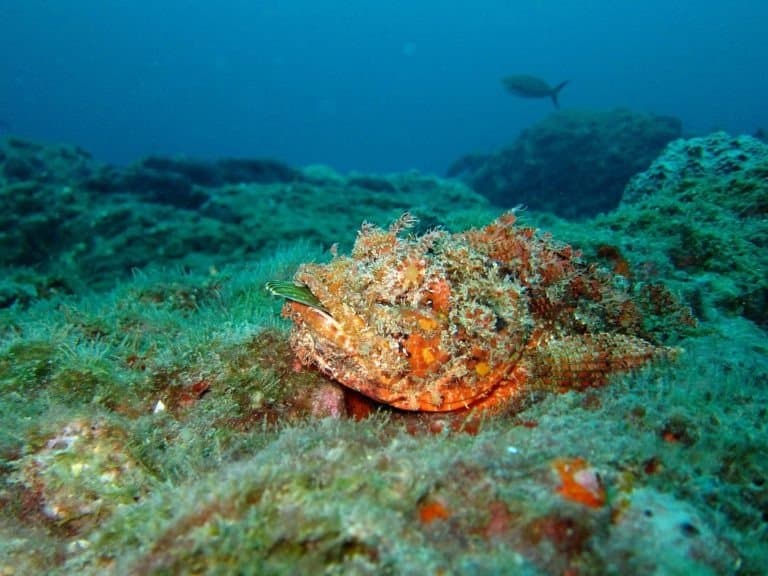
Beautiful camouflage, serious spines.
Alex Navarro Menal/Shutterstock.com

Scorpion Fish Distribution

Click a location to explore more animals from that region

Invasive Species

This map shows coastal regions where Scorpion Fish are found.

Loading map...
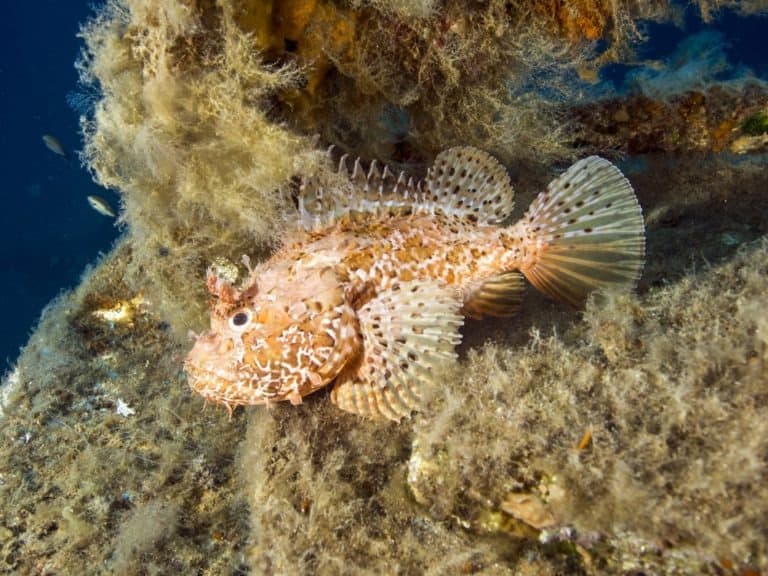
Scorpion fish or rock fish from the Azores and Macaronesia archipelagos (Scorpaena maderensis)

At a Glance

Family Overview This page covers the Scorpion Fish family as a group. Stats below are general traits shared across the family.
Also Known As Lionfish, Rockfish, Rock cod
Diet Carnivore
Activity Nocturnal+
Lifespan 10 years
Weight 3.5 lbs
Status Not Evaluated
Did You Know?

Family size ranges from tiny scorpionfishes ~5-8 cm to large species approaching ~45-50 cm long.

Scientific Classification

Family Overview "Scorpion Fish" is not a single species but represents an entire family containing multiple species.

Scorpionfishes (family Scorpaenidae) are mainly marine, bottom-associated ray-finned fishes characterized by heavy spination, often elaborate head ridges and skin flaps, strong camouflage, and venom glands associated with dorsal (and sometimes pelvic/anal) spines. They are ambush predators that strike quickly at small fishes and crustaceans.

Kingdom
Animalia
Phylum
Chordata
Class
Actinopterygii
Order
Scorpaeniformes
Family
Scorpaenidae

Distinguishing Features

  • Venomous fin spines (especially dorsal) used defensively; stings can be extremely painful
  • Cryptic coloration and skin appendages for camouflage
  • Large head with bony ridges and spines; stout body
  • Sit-and-wait ambush predation; quick suction-feeding strikes

Physical Measurements

Males and females differ in size

Length
10 in (1 in – 3 ft 3 in)
8 in (2 in – 2 ft 6 in)
Weight
1 lbs (0 lbs – 11 lbs)
1 lbs (0 lbs – 20 lbs)
Top Speed
5 mph
burst swimming
Venomous

Appearance

Primary Colors
Secondary Colors
Skin Type Mostly rough-scaled, thick-skinned fishes with head ridges/spines; many have skin flaps (cirri) and venom glands associated with stout dorsal (and sometimes pelvic/anal) spines.
Distinctive Features
  • Family-wide size range roughly ~3-50 cm total length (small cryptic reef forms to large coastal species).
  • Lifespan varies broadly by species and habitat, commonly ~3-20+ years in the family.
  • Bottom-associated ambush predators; typically sit motionless then strike rapidly at fishes and crustaceans.
  • Camouflage is a dominant trait: mottling, appendages, and posture mimic rocks, algae, or rubble; degree varies by genus.
  • Robust body with large head, bony ridges, and strong cranial spination; often a "warty" or lumpy profile.
  • Venom apparatus on sharp fin spines (especially dorsal); potency and medical risk vary-defensive envenomation is a key safety concern.
  • Expanded pectoral fins used for maneuvering, bracing, and threat displays; in Pterois, fins are especially elongated and showy.
  • Occupy diverse marine habitats from shallow reefs/rocky shores to deeper slopes; some tolerate estuarine influence, but most are marine.

Sexual Dimorphism

Sexual dimorphism is generally subtle across Scorpaenidae and varies by genus. Some species show males with slightly larger size or longer fin rays/spines, while females may be deeper-bodied when gravid, but many are externally similar.

  • Sometimes slightly larger adults in certain species or populations.
  • In some genera (e.g., Pterois), longer or more filamentous fin rays may occur.
  • Occasionally more pronounced head/spine development or thicker jaws in mature males.
  • Often fuller abdomen or deeper body when gravid.
  • In some species, slightly shorter fin rays and less exaggerated spination.
  • External differences frequently minimal outside reproductive condition.

Did You Know?

Family size ranges from tiny scorpionfishes ~5-8 cm to large species approaching ~45-50 cm long.

Most are bottom-sitters with "leafy" skin flaps and ridged heads that break up their outline like living rock or algae.

Their famous sting comes from venom glands linked to sharp fin spines (especially dorsal; often also pelvic/anal).

Many can change shade/pattern over time to better match local rocks, sand, or corals.

Lionfishes are scorpionfishes-showy fins, same venomous spine system, but often more active hunters than classic sit-and-wait scorpionfishes.

A quick "suction strike" lets them inhale prey in a split-second once it's within range.

Some members are culturally important as prized seafood in the Mediterranean and as notorious invaders (Atlantic lionfish).

Unique Adaptations

  • Venom-delivery apparatus: grooves/spine sheaths plus venom glands associated with fin spines provide potent defense; stings are extremely painful and require medical attention.
  • Extreme cryptic morphology: bony head ridges, skin tabs (cirri), and irregular textures help them mimic rock, coral rubble, algae, or sand.
  • Color and pattern flexibility: many can shift tones to match backgrounds, enhancing camouflage across different microhabitats.
  • Wide mouth + rapid buccal expansion: a suction-feeding "vacuum" strike captures prey with minimal pursuit-ideal for ambush lifestyles.
  • Fin architecture for signaling and defense: tall dorsal spines and, in lionfishes, enlarged pectoral fins increase apparent size and can help manipulate prey movements.
  • Bottom-association traits: robust bodies and fin placement support resting on substrates and making short, powerful bursts rather than sustained cruising.

Interesting Behaviors

  • Ambush predation is the default: many species rest motionless on reefs, rubble, rocky bottoms, or sand, then lunge and suction-feed on small fishes and crustaceans.
  • Variation across the family: lionfishes (Pterois) often hunt more actively in the water column and may use outspread pectoral fins to corner prey; many Scorpaena-type scorpionfishes rely more on stillness and camouflage.
  • Defensive posturing: when threatened, individuals may raise dorsal spines and "present" the venomous fin array rather than flee.
  • Site fidelity is common: adults of many species repeatedly use the same crevice, ledge, or patch of rubble, though roaming behavior varies by habitat and species.
  • Activity timing varies: many are crepuscular/nocturnal hunters, but some feed by day-especially where camouflage is strong or prey availability favors daylight.
  • Reproduction and early life are typically pelagic: eggs/larvae drift in the plankton, aiding dispersal between reefs, with settlement to bottom habitats later.

Cultural Significance

Scorpionfish link food, caution, and conservation. In the Mediterranean (southern France) they add rich flavor to traditional stews but need careful handling. Lionfish were popular aquarium fish, then became invasive in the western Atlantic and Caribbean, leading to education, removal efforts, and 'eat-the-invader' campaigns.

Myths & Legends

Ancient name legend: the scorpionfish name traces to an ancient Greek word associated with "scorpion," emphasizing a painful spine "sting" rather than a bite.

Classical natural-history tradition: Greek and Roman writers (for example, Aristotle and later compilers) treated scorpionfish as cautionary shore fishes, noted because they could wound careless handlers.

Marseille fish-stew lore (Provence, France): local culinary tradition holds that an authentic Marseille-style fish stew depends on bony, strongly flavored Mediterranean reef fish, with scorpionfish often cited as a defining ingredient.

Modern maritime storytelling (Atlantic/Caribbean): the invasive lionfish has entered contemporary coastal folklore as a 'beautiful menace,' inspiring derby tales, restaurant bravado, and community narratives about turning a dangerous invader into food.

Conservation Status

NE Not Evaluated (family-level hub; conservation status is assessed at the species level)

Has not yet been evaluated against the criteria.

Population Unknown

You might be looking for:

Reef stonefish

22%

Synanceia verrucosa

One of the most venomous scorpaeniform fishes; often conflated with scorpionfishes in common usage.

View Profile

Devil firefish

18%

Pterois miles

A lionfish (venomous spines); frequently grouped under ‘scorpionfish’ in casual speech (Scorpaenidae: Pteroinae).

Red scorpionfish

16%

Scorpaena scrofa

Well-known Mediterranean scorpionfish with strong camouflage and venomous dorsal spines.

California scorpionfish

14%

Scorpaena guttata

Eastern Pacific species (also called sculpin locally) that can cause painful stings.

Spotted scorpionfish

12%

Scorpaena plumieri

Common western Atlantic scorpionfish associated with reefs and rocky habitats.

Life Cycle

Birth 100000 frys
Lifespan 10 years

Lifespan

In the Wild
3–25 years
In Captivity
4–20 years

Reproduction

Mating System Promiscuity
Social Structure Aggregation Group
Breeding Pattern Transient
Fertilization Broadcast Spawning
Birth Type Broadcast_spawning

Across scorpionfishes, mating is generally opportunistic with brief courtship and external fertilization during seasonal or event-based spawning. Adults are often solitary but may aggregate to spawn; pair bonds are not maintained and there is typically no parental care.

Behavior & Ecology

Social Aggregation Group: 1
Activity Nocturnal, Crepuscular, Diurnal
Diet Carnivore Small bottom-associated fishes and crustaceans (relative emphasis varies widely among genera, habitats, and life stages).

Temperament

Cryptic and sit-and-wait predatory
Generally non-social and avoidance-oriented
Territorial or site-attached in many adults
Defensive when approached; fin-spine erection and venom use
Bold/persistent hunters in some taxa (e.g., more roaming reef-associated forms)

Communication

often silent; low-frequency grunts/clicks reported in some species during disturbance or handling
occasional stridulation-like sounds from fin/spine movement documented in a minority of species
visual signaling: fin erection, posture changes, and rapid color pattern shifts
threat displays emphasizing venomous dorsal spines and expanded fins
tactile contact during courtship/spawning in some species
chemical cues likely important for mate finding and habitat recognition Evidence varies by species
mechanosensory cues via lateral line for detecting prey/predators in low light

Habitat

Coral Reef Rocky Shore Kelp Forest Coastal Beach Seabed/Benthic Deep Sea Estuary Mangrove Open Ocean +4
Biomes:
Terrain:
Coastal Island Rocky Sandy Muddy
Elevation: Up to 3280 ft 10 in

Ecological Role

Benthic/reef-associated mesopredators that regulate small fish and mobile invertebrate populations across shallow to deep coastal habitats.

Top-down control of small demersal fish and crustacean communities Energy transfer from benthic/reef production to higher trophic levels (as both predator and prey for larger fishes, sharks, and marine mammals) Structuring of local prey behavior and habitat use via ambush predation risk

Diet Details

Main Prey:
Small demersal and reef-associated fishes Crustaceans Cephalopods Benthic invertebrates

Human Interaction

Domestication Status

Wild

Scorpionfishes (Scorpaenidae) are not domesticated. People catch them for food, as bycatch, and for marine aquariums. Sizes range from about 2.5 cm to 50 cm; lifespans about 3–20+ years. They ambush prey, have venomous spines that can sting, and are studied for venom, camouflage, and reef ecology.

Danger Level

High
  • Venomous spine punctures (dorsal and sometimes pelvic/anal spines), commonly during handling, netting, stepping on camouflaged individuals, or aquarium maintenance
  • Immediate intense pain, swelling, bleeding, and local tissue injury; pain can be severe and prolonged
  • Systemic symptoms in some cases (nausea, sweating, weakness, dizziness, numbness); severity varies by species, puncture depth, and victim sensitivity
  • Secondary infection risk from puncture wounds in marine settings
  • Rare severe outcomes (e.g., significant systemic reactions) are possible; fatalities are very uncommon but medical evaluation is prudent for serious stings
  • Envenomation risk persists after death-spines can still inject venom when fish are dead or on ice

As a Pet

Not Suitable as Pet

Legality: Laws vary. Many scorpionfish (Scorpaenidae) can be kept in home saltwater tanks but often need venom rules, collection or import permits, invasive-species limits (some lionfish), and welfare/transport rules. Check local laws; never release them.

Care Level: Expert Only

Purchase Cost: $30 - $3,000
Lifetime Cost: $2,000 - $20,000

Economic Value

Uses:
Commercial and artisanal fisheries (regionally variable) Subsistence/food fish (some species/regions) Bycatch with handling risk costs Marine ornamental/aquarium trade (select species) Public aquarium display/education Biomedical and toxin research interest Dive tourism/ecotourism value (viewing/photography)
Products:
  • fresh/processed fish for food markets (where targeted or retained as bycatch)
  • ornamental live fish for marine aquaria (select species)
  • educational exhibits in public aquaria
  • research materials related to venom, spines, and camouflage biology

Relationships

Predators 7

Grouper
Grouper Epinephelinae
Snapper
Snapper Lutjanidae
Moray eel
Moray eel Muraenidae
Sharks Selachii
Large predatory bony fishes Carangidae; Sphyraena spp.
Seals and sea lions Pinnipedia
Human
Human Homo sapiens

Related Species 6

True scorpionfishes Scorpaena Shared Family
Reef scorpionfish Scorpaenopsis Shared Genus
Lionfishes Pterois spp. Shared Family
Dwarf lionfishes Dendrochirus Shared Family
Dwarf scorpionfishes Scorpaenodes Shared Family
Scorpionfish
Scorpionfish Sebastinae Shared Family

Ecological Equivalents 5

Animals that fill a similar ecological role in their ecosystem

Stonefish
Stonefish Synanceiidae Similar benthic ambush strategy, extreme camouflage, and venomous dorsal spines; often occupy comparable reef and rocky-bottom microhabitats.
Frogfishes Antennariidae Sit-and-wait predators on reef bottoms that rely on camouflage and rapid suction strikes; they overlap in prey types, mainly small fishes and crustaceans.
Weeverfish Trachinidae Bottom-associated fishes with venomous spines that can defensively envenomate waders and handlers; they occupy sandy and soft‑bottom habitats in many regions.
Flatfishes Pleuronectiformes Demersal, cryptic predators that feed on benthic prey and use similar habitats (sand/rock interfaces), though flatfishes lack venomous spines.
Lizardfish
Lizardfish Synodontidae Ambush predators on small reef and soft-bottom fishes and crustaceans. They have ecological overlap in diet and hunting mode despite differing morphology.

Types of Scorpion Fish

15

Explore 15 recognized types of scorpion fish

Red scorpionfish Scorpaena scrofa
Black scorpionfish Scorpaena porcus
Spotted scorpionfish Scorpaena plumieri
California scorpionfish (sculpin) Scorpaena guttata
Shortfin scorpionfish Scorpaena brasiliensis
Devil scorpionfish Scorpaenopsis diabolus
Tassled scorpionfish Scorpaenopsis oxycephala
Reef scorpionfish Scorpaenopsis venosa
Common lionfish Pterois volitans
Devil firefish (lionfish) Pterois miles
Zebra lionfish Dendrochirus zebra
Fuzzy dwarf lionfish Dendrochirus brachypterus
Spotted scorpionfish (Indo-Pacific dwarf scorpionfish) Sebastapistes cyanostigma
Orangebanded scorpionfish Scorpaenodes corallinus
Caribbean scorpionfish Scorpaenodes caribbaeus

Quick Take

  • Neutralizing Scorpaenidae toxins requires a 30-minute application of extreme heat to the affected area.
  • Reaching the 800-meter depth creates a significant camouflage risk within the littoral zone ecosystem.
  • These venomous predators are actually world-famous delicacies that require less than 10 minutes to prepare.
  • Following the mid-Miocene, a mandatory diversification event was required to stabilize the Scorpaenidae lineage.

The scorpionfish, also known as Scorpaenidae, is a large family of fish and usually includes hundreds of members. Most fish from this family are venomous and can sting predators to defend themselves.

The sting from this fish can cause intense pain and can also cause swelling. It is said that the venom from the sting can spread to other parts of the body quickly, requiring fast medical attention.

These fish usually exist at a depth of around 800 meters in the littoral zone and are often known to be motionless around rocks and algae.

A comprehensive green and tan infographic about scorpionfish, illustrating their biological classification, physical appearance, world distribution, and culinary preparation.
Masters of disguise with venomous spines, these predators are the ocean’s most dangerous culinary surprise—if you know how to survive the sting. © A-Z Animals

Classification And Scientific Name

The Scorpion fish belong to the family Scorpaenidae, the kingdom Animalia, and the Phylum Chordata. They come from the class and order Actinopterygii and Scorpaeniformes, respectively. There are nearly 400 recognized species of scorpionfish.

The name Scorpaenidae comes from New Latin, combining Scorpaena and the suffix -idae. Scorpaena can be traced back to the Ancient Greek σκόρπαινα, which comes from the Greek word for scorpion. Interestingly, the Greek word for Scorpion is rooted in the Proto-Indo-European verb (s)ker, which means “to cut.”

Evolution And Origin

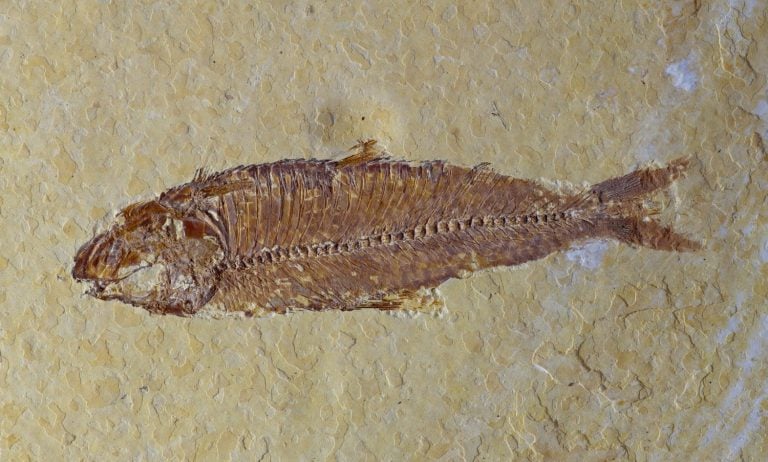
The scorpionfish, which is also called a rockfish, belongs to a family of fish that is believed to have evolved during the mid-Miocene period, around 15.97 million to 11.6 million years ago. Based on fossil information discovered, it is believed that this species began to diversify in the late Miocene.

Types Of Species
Animals With Camouflage: Scorpionfish

This marine family is made up of nearly 400 members.

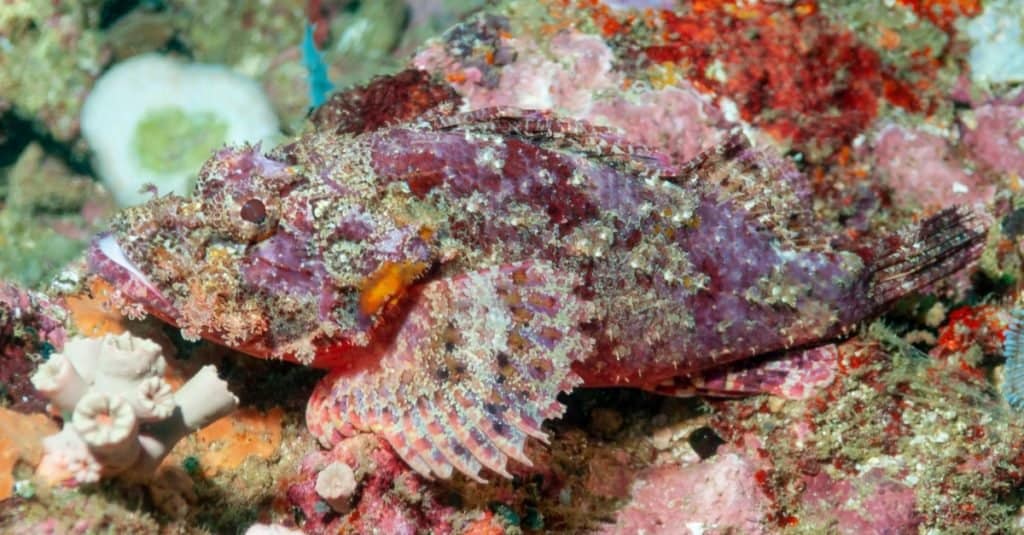
Scorpionfish make up one of the largest marine families and consist of nearly 400 different fish family members. Some of the more popular species include lionfish, firefish, turkey fish, stingfish, and stonefish. The stonefish is the deadliest species of Scorpaenidae. Each of these is then broken down into multiple types within its own family.

Presently, there are a total of 10 subfamilies, and nearly 400 species fall into these categories, according to recent taxonomic sources. However, the total amount will vary based on where you get your information.

Scorpionfish vs. Stonefish

Scorpionfish have longer bodies, while stone fish have more of a round body shape. Meanwhile, the scorpionfish have eyes that protrude, and the stone fish have eyes that dig deeper down into their skulls. Another difference between the scorpionfish and the stonefish is that the former has a forward-sitting jaw while the latter has a more upturned, grumpier-looking one.

Appearance
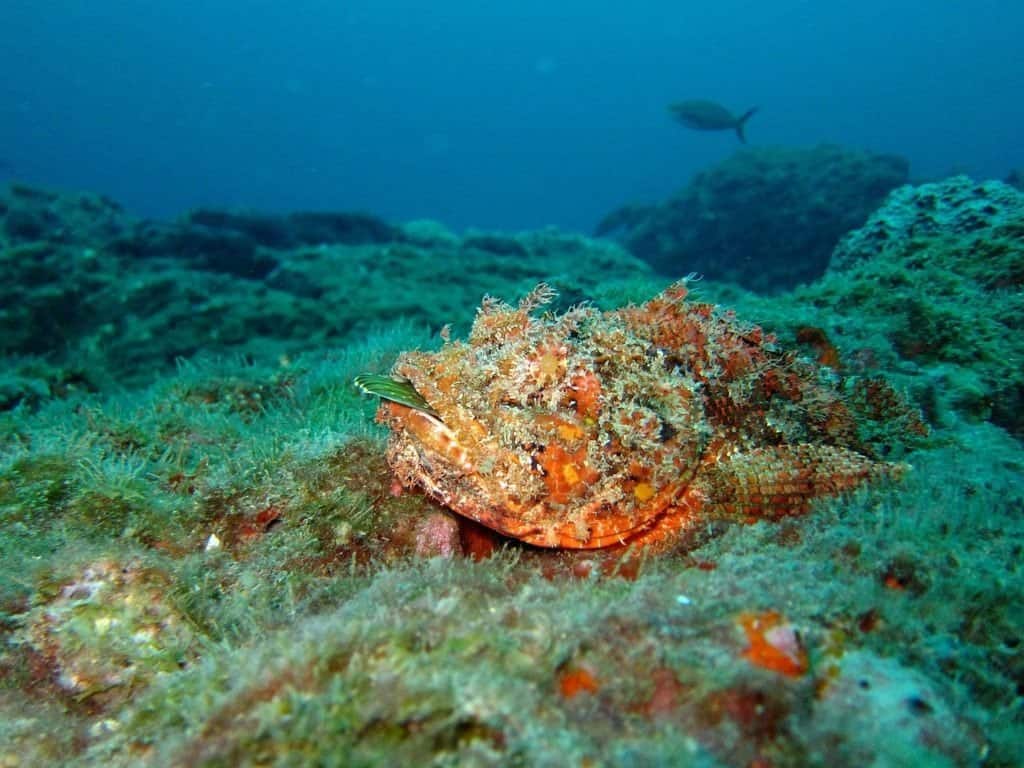
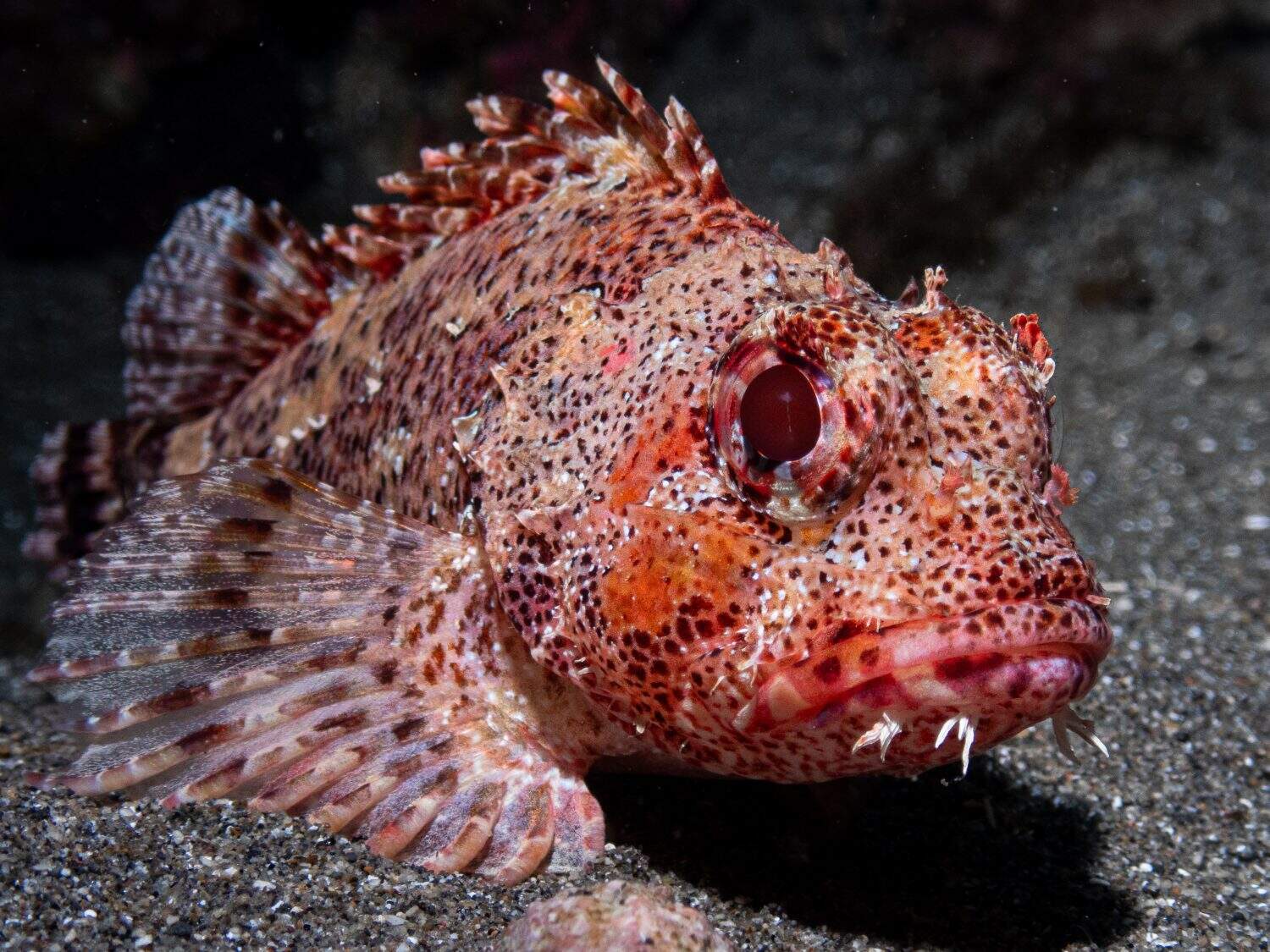
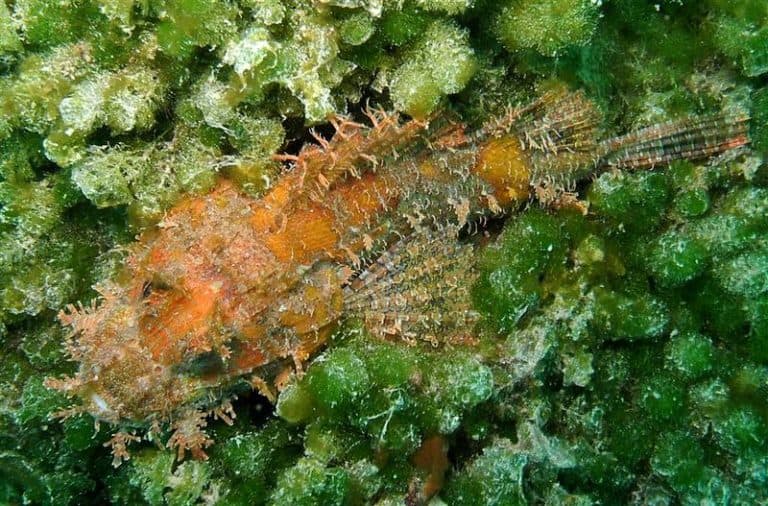
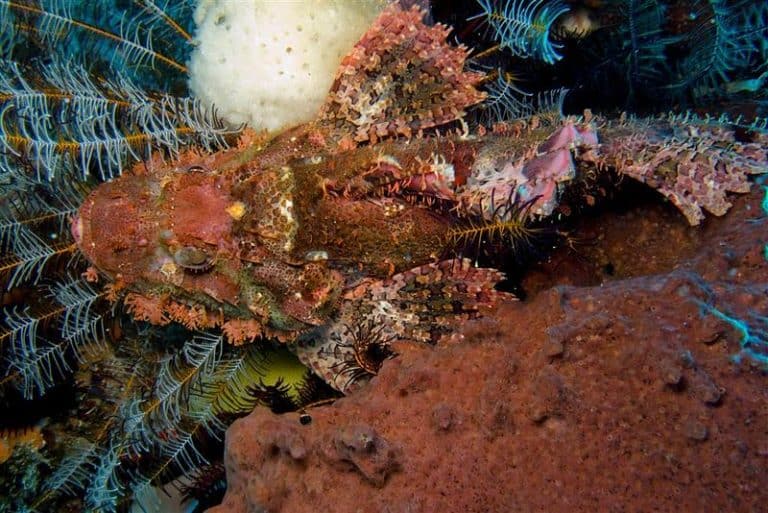
Scorpionfish camouflage themselves with the seafloor and wait to ambush passing prey

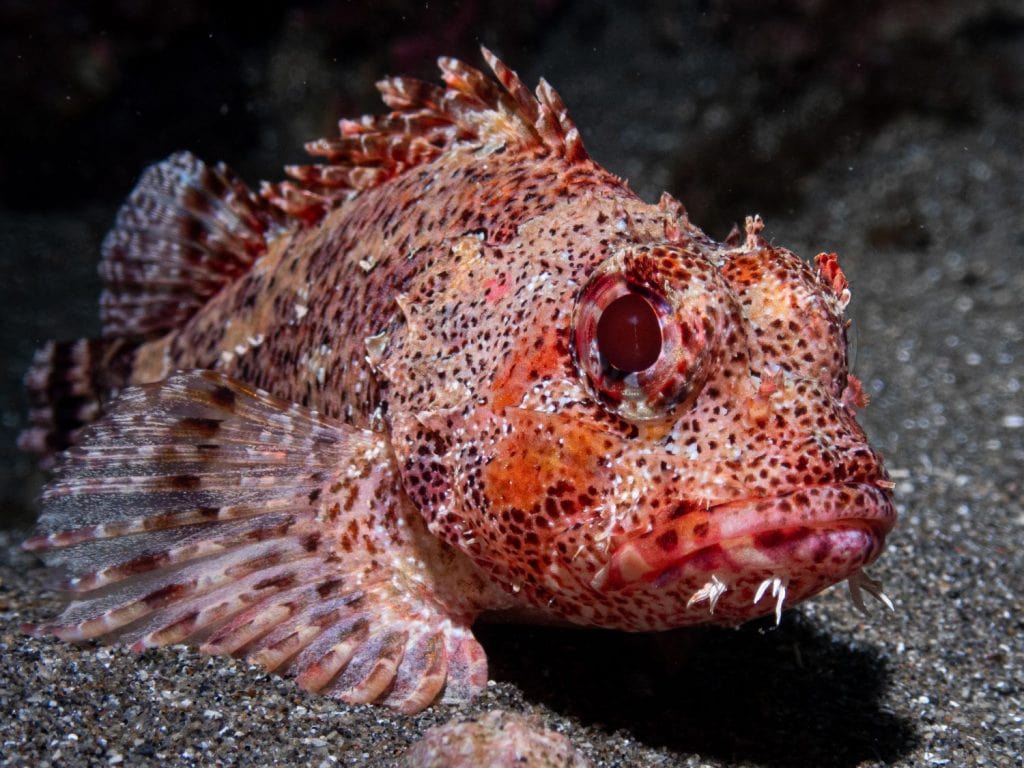
Scorpionfish camouflage themselves on the seafloor and wait to ambush passing prey

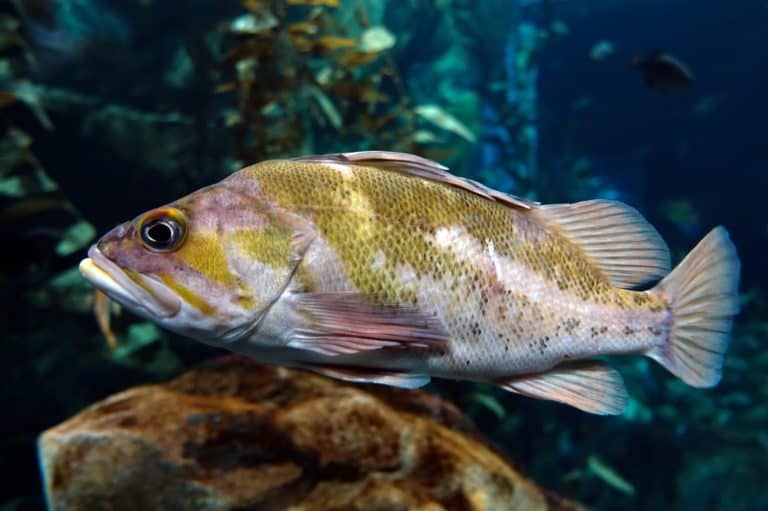
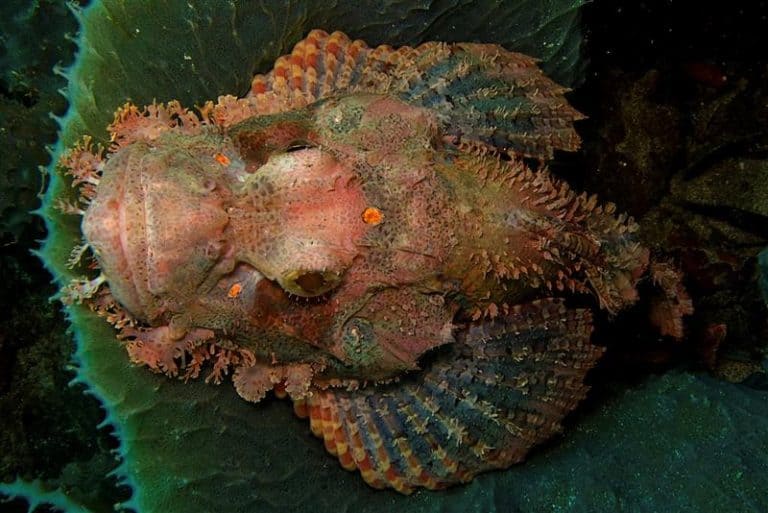
Scorpionfish have long bodies that are covered in feather-laden fins. They have skin flaps that also help them easily camouflage and blend in with their surroundings.

Some scorpionfish are brown or yellow, while others exhibit bright colors like red or orange. They are known to become almost invisible when they are near reefs and rocks.

The size of the scorpionfish is about 8 inches to 12 inches, and it weighs around 3.4 pounds.

They are usually motionless while near algae or rocks and also have venomous spines that are sharp and covered in poisonous mucus.

Distribution, Population, And Habitat
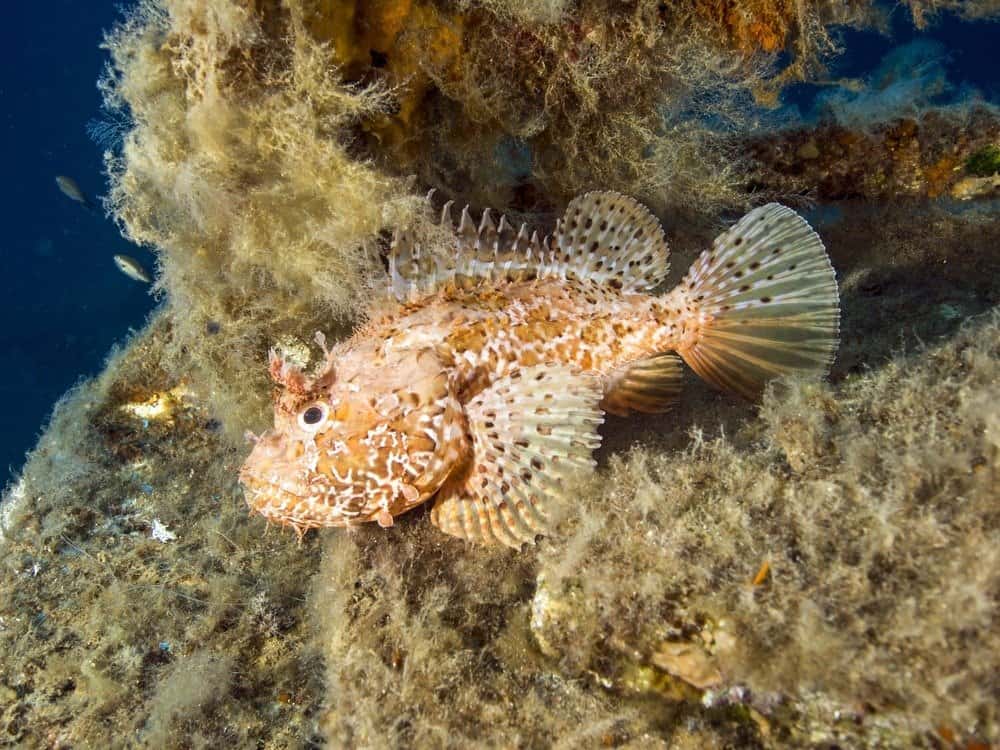
Scorpion fish swimming among rocks

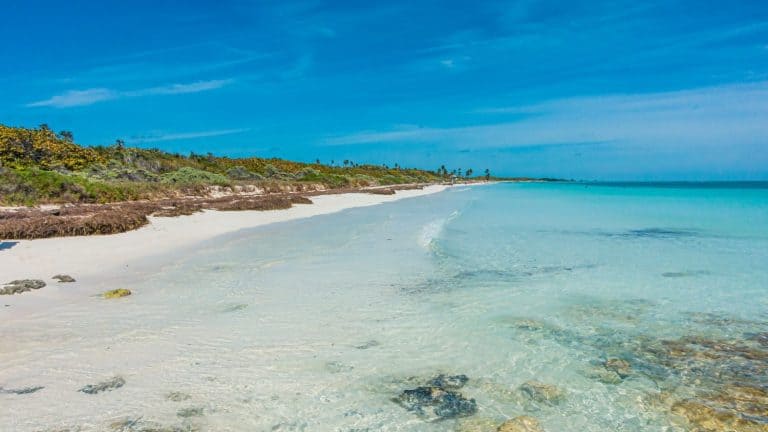
Scorpionfish are usually found where there is plenty of coral and the water is temperate.

The scorpionfish are usually found in the Indo-Pacific regions and also inhabit the tropical underwater of the Indian Ocean. Apart from that, these fish are also found in the central and western parts of the Pacific Ocean, and also in several parts of Indonesia.

These fish usually exist where there are plenty of coral reefs and the temperature of the water is temperate. This is because the right temperatures help them survive better, and the coral reefs help these fish hide from predators efficiently.

The population of the scorpionfish is not known. However, fish belonging to these families do exist in large numbers, as almost 400 fish are part of this family. They are, however, ‘not extinct’ as listed by the NOAA.

Predators And Prey

Even though the scorpionfish themselves are poisonous and dangerous, they still fall prey to some of the sea creatures, including large snappers, rays, and sharks. With so few predators, the scorpionfish can thrive greatly when it releases thousands of eggs to be fertilized. Still, this fish is dominant in its own right, so the predators that come after it must be equally threatening.

Meanwhile, they also feed on certain creatures, including small fish and snails. They also feed on crustaceans and coral reefs. Humans can become a victim of their sting, which will require immediate medical attention. While waiting for emergency services, the wound needs to be cleaned with the hottest water that the skin can handle for at least 30 minutes.

Reproduction And Lifespan
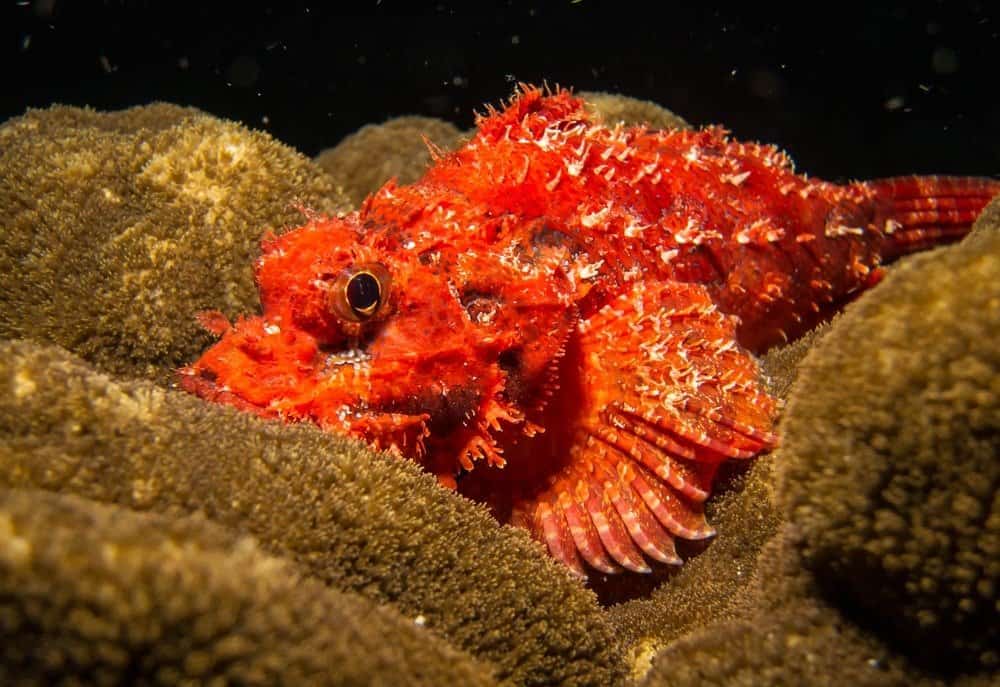
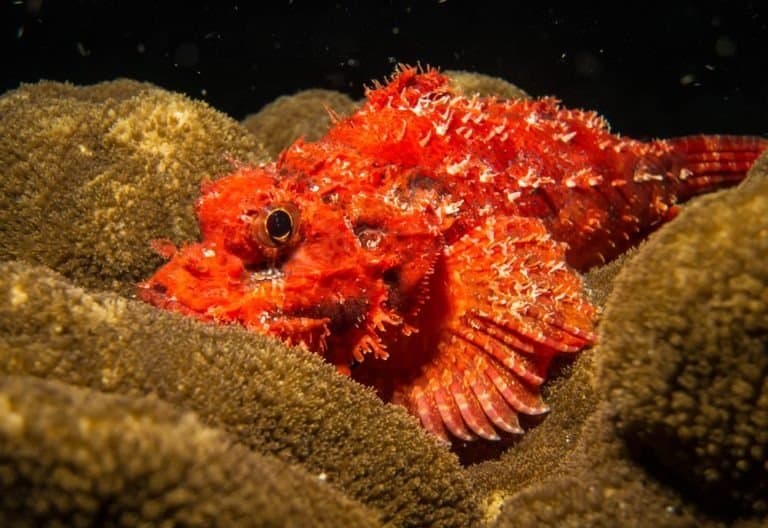
Scorpion fish among rocks on the seafloor

Scorpion fish eggs are released in the water and stay afloat near the surface, where they are later hatched.

These fish are oviparous. The female scorpionfish often produce transparent or greenish eggs.

The eggs, as well as the sperm from the female and male scorpionfish respectively, are released in the water and stay afloat near the surface of the water, where they are later attached.

However, other than that, not much is known about the mating process of these fish. The lifespan of these fish is usually about 15 years.

In Fishing And Cooking

Even though these fish are not commonly caught because of the venom they carry, some people do fish for them and also cook them. Scorpionfish are safe to consume and are also world-famous delicacies. Scorpionfish chips are very famous, and most people compare the flavor to a combination of sea bass and monkfish.

The easiest place to fish for them is in the South Pacific Ocean since they are commonly found in coral reefs. Still, fishers should be careful while fishing around these reefs so that they don’t destroy the local environment.

There is no shortage of recipes online for scorpionfish, depending on the species that is prepared. Due to their lack of meat, the cooking process doesn’t take long, and most dishes are ready within a matter of 10 minutes or less. When cooked properly, it doesn’t quite have the flakiness that some other fish do, but it is also incredibly tender.

Their thin meat absorbs other flavors well, much like crustaceans. Anyone looking to prepare scorpionfish at home will want to stock up on some butter and spices, regardless of the recipe chosen.

To get the maximum flavor, try out the pan-roasted method seen here.

View all 390 animals that start with S

Sources

  1. David Burnie, Dorling Kindersley Animal, The Definitive Visual Guide To The World's Wildlife / Accessed November 4, 2009
  2. Tom Jackson, Lorenz Books The World Encyclopedia Of Animals / Accessed November 4, 2009
  3. David Burnie, Kingfisher The Kingfisher Animal Encyclopedia / Accessed November 4, 2009
  4. Richard Mackay, University of California Press The Atlas Of Endangered Species / Accessed November 4, 2009
  5. David Burnie, Dorling Kindersley Illustrated Encyclopedia Of Animals / Accessed November 4, 2009
  6. Dorling Kindersley Dorling Kindersley Encyclopedia Of Animals / Accessed November 4, 2009
  7. Wikipedia / Accessed November 19, 2020
  8. Oceana / Accessed November 19, 2020
  9. Florida Museum / Accessed November 19, 2020
A-Z Animals Staff

About the Author

A-Z Animals Staff

AZ Animals is a growing team of animals experts, researchers, farmers, conservationists, writers, editors, and -- of course -- pet owners who have come together to help you better understand the animal kingdom and how we interact.
Connect:

Thank you for reading! Have some feedback for us?


Scorpion Fish FAQs (Frequently Asked Questions)

A scorpionfish is a long, venomous marine creature. This family includes a variety of fish and has almost 400 different fish as family members. They have exceptional camouflage abilities and are known to be some of the most poisonous fish in the world.