
Antelopes are renowned for their elegant appearance and distinctive horns. However, when we think of antelopes, it’s easy to assume that they are a single group of animals. In fact, “antelope” is a term used to describe members of the Bovidae family that are not sheep, cows, or goats. Although antelopes are most often associated with Africa, some species also live in Asia and the Middle East. There are over 90 species of antelopes in a wide range of sizes. In this article, we’ve compiled a list of the largest antelopes in the world by height.
10. Common Tsessebe
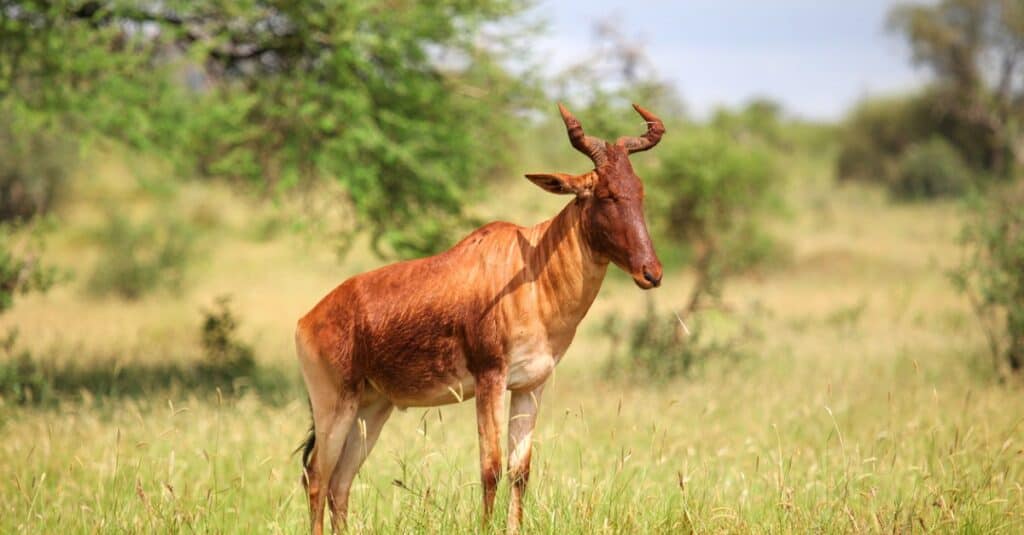
Common tsessebes have a distinctive hump at the base of their necks.
©iStock.com/DarthArt
First on the list is the common tsessebe (Damaliscus lunatus lunatus), which reaches a shoulder height of around 4 feet and weighs up to 300 pounds. The common tsessebe is a subspecies of tsessebe (Damaliscus lunatus) found in grasslands and open plains of Angola, Botswana, Eswatini, Namibia, Zimbabwe, Zambia, and South Africa. They are large, dark brown antelopes that have a noticeable hump at the base of their necks. Both males and females have ringed horns that can grow up to 16 inches long. The horns are one of the most noticeable features of this subspecies, as they are set further apart and curve outward before curving inward.
9. Waterbuck
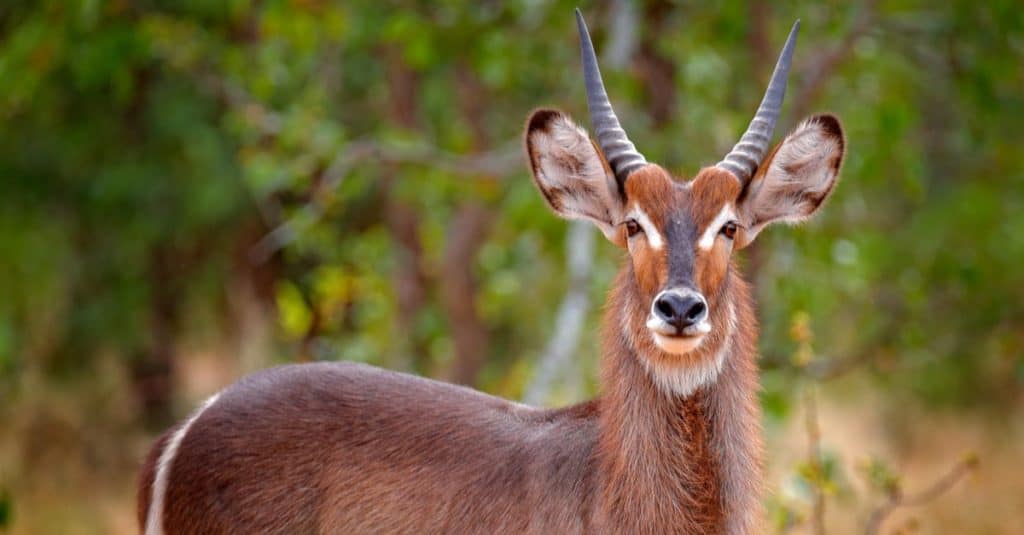
Waterbuck are distinguished by the white patches on their face, throat, and rump.
©Ondrej Prosicky/Shutterstock.com
Waterbucks (Kobus ellipsiprymnus) live in grasslands near permanent water sources across southern and eastern Africa. They reach about 4 feet 6 inches at the shoulder and weigh up to 600 pounds. Waterbucks are reddish-brown, and their coats get darker as they age. They have white muzzles and white patches on their throats, rumps, and inside their ears. However, only the males have horns, which curve backward at the base and forward at the tips. Their horns can reach up to 39 inches, with the oldest bulls having the longest horns.
8. Giant Sable Antelope
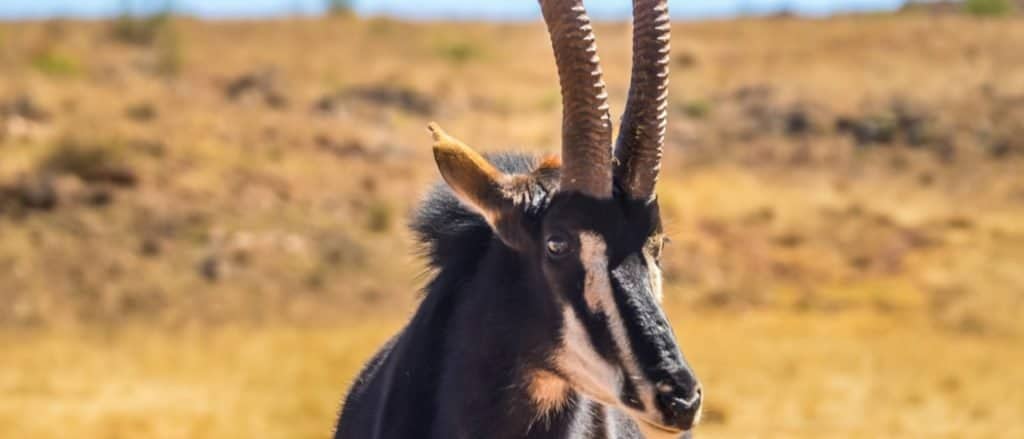
The giant sable antelope is the national animal of Angola.
©iStock.com/Shams
Giant sable antelopes (Hippotragus niger variani) are a critically endangered subspecies of sable antelope native to Angola. These antelopes can reach 4 feet 7 inches at the shoulder and weigh around 600 pounds. Giant sable antelopes are the national symbol of Angola. For many years, it was thought that the entire population had been wiped out as a result of the Angolan Civil War. However, they were rediscovered in 2004, and efforts are underway to restore the giant sable population. Males are black, while females are reddish-brown. Both sexes have white patches on their faces, rumps, and under their bellies. Both sexes have long, impressive horns that curve backward and can reach over 60 inches long.
7. Blue Wildebeest
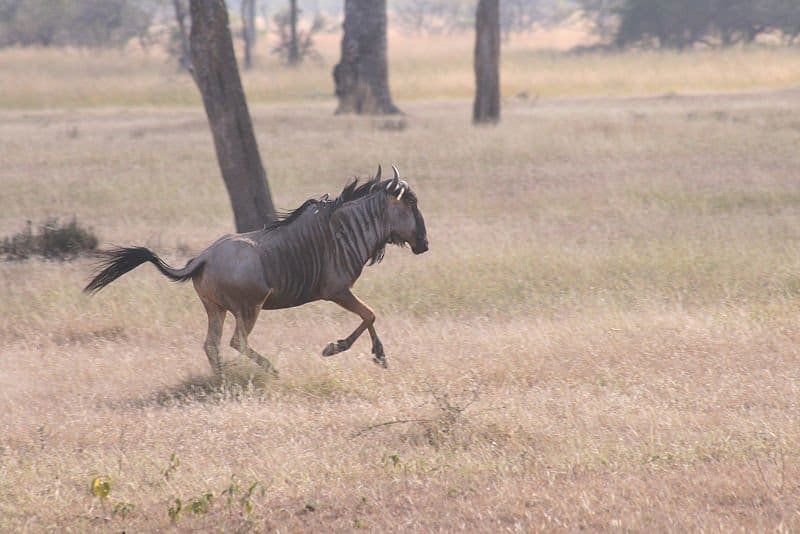
The blue wildebeest has dark, vertical stripes on its shoulders and back.
©Muhammad Mahdi Karim / GNU Free Documentation License – Original / License
Blue wildebeest (Connochaetes taurinus) are widespread across a variety of habitats throughout southern and eastern Africa. These wildebeests can reach 4 feet 9 inches at the shoulder and weigh around 550 pounds. They are grayish-brown with large heads, black manes, throat beards, and long black tails. They also have dark, vertical stripes on their muscular shoulders and backs. Both males and females have short, curved horns that resemble those of buffalo.
6. Hartebeest
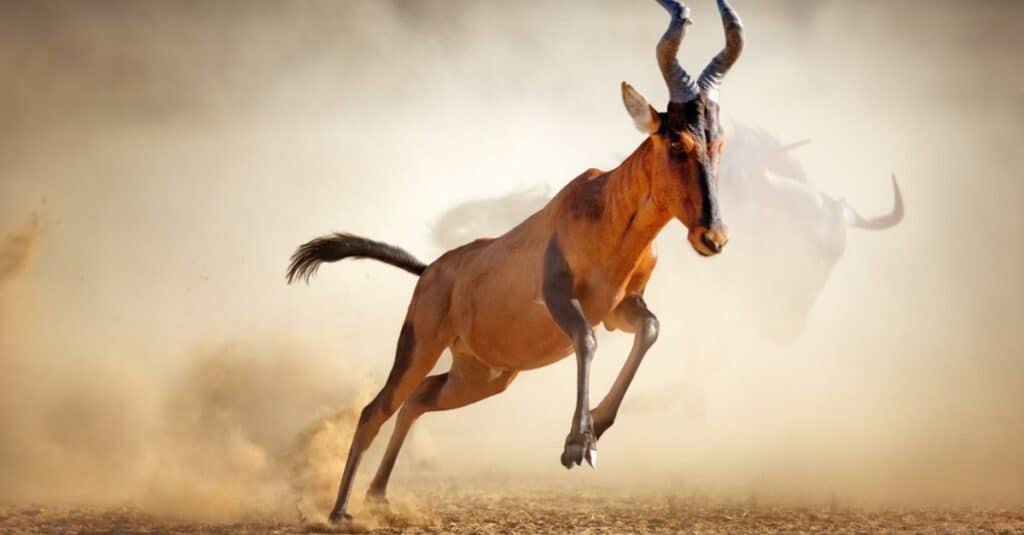
Hartebeests live in huge herds of around 300 animals.
©iStock.com/johan63
Hartebeests (Alcelaphus buselaphus) live in large herds of up to 300 animals in the grasslands and savannas of sub-Saharan Africa. They can reach around 4 feet 11 inches at the shoulder and weigh nearly 450 pounds. Both sexes have horns. The horns can grow up to 27 inches, and they curve in a variety of ways, depending on the subspecies. Their bodies are brown or tan, with black markings on their legs and long, narrow faces.
5. Nilgai
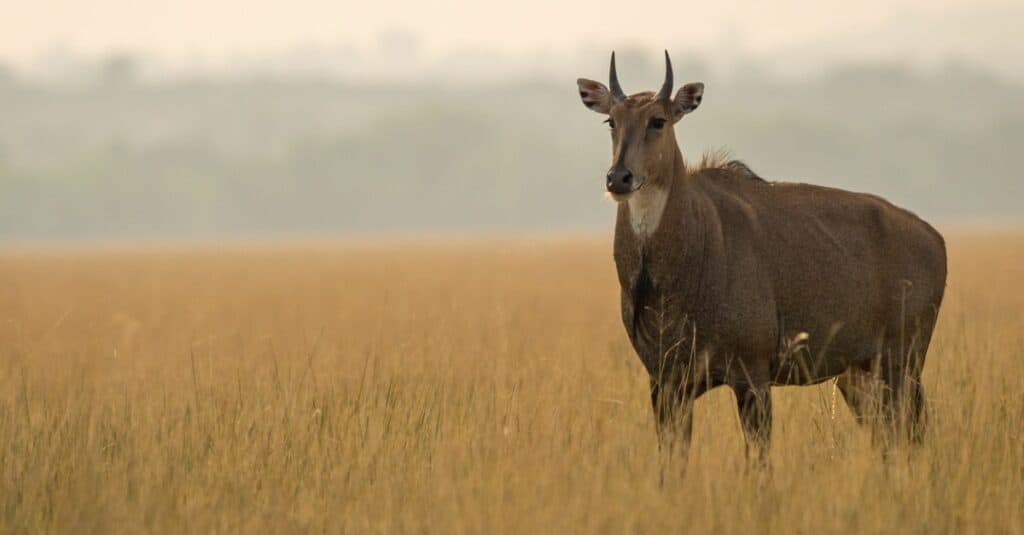
Nilgai are the largest antelopes in Asia.
©iStock.com/Sourabh Bharti
Also known as blue cows, nilgai (Boselaphus tragocamelus) are found in India, Nepal, and Pakistan. They prefer scrub forests and grasslands. They are the largest antelopes in Asia, reaching 4 feet 11 inches at the shoulder and weighing over 500 pounds. Nilgai can be easily distinguished by their sturdy bodies, sloping backs, and white patches on their throats. Females are yellowish-tan, while males are a striking bluish-grey. However, only males have sharp, curved horns, which can grow to about 10 inches in length.
4. Greater Kudu
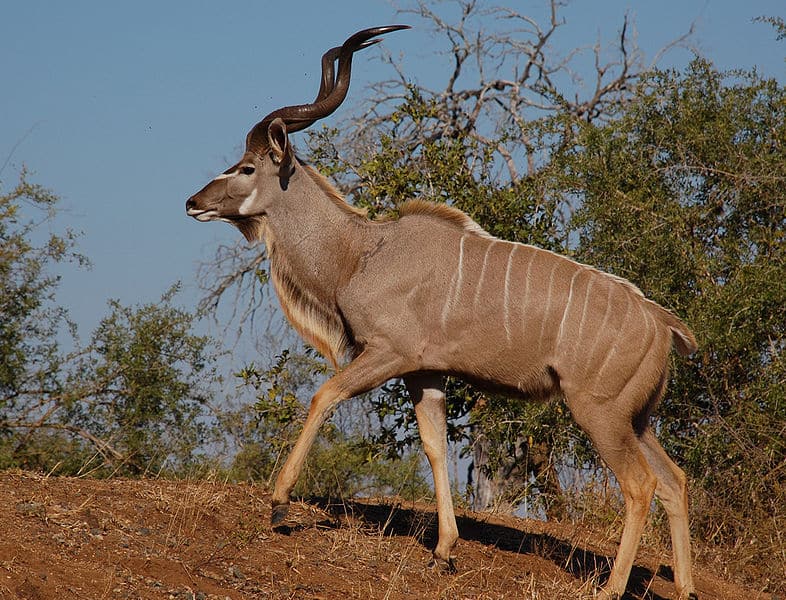
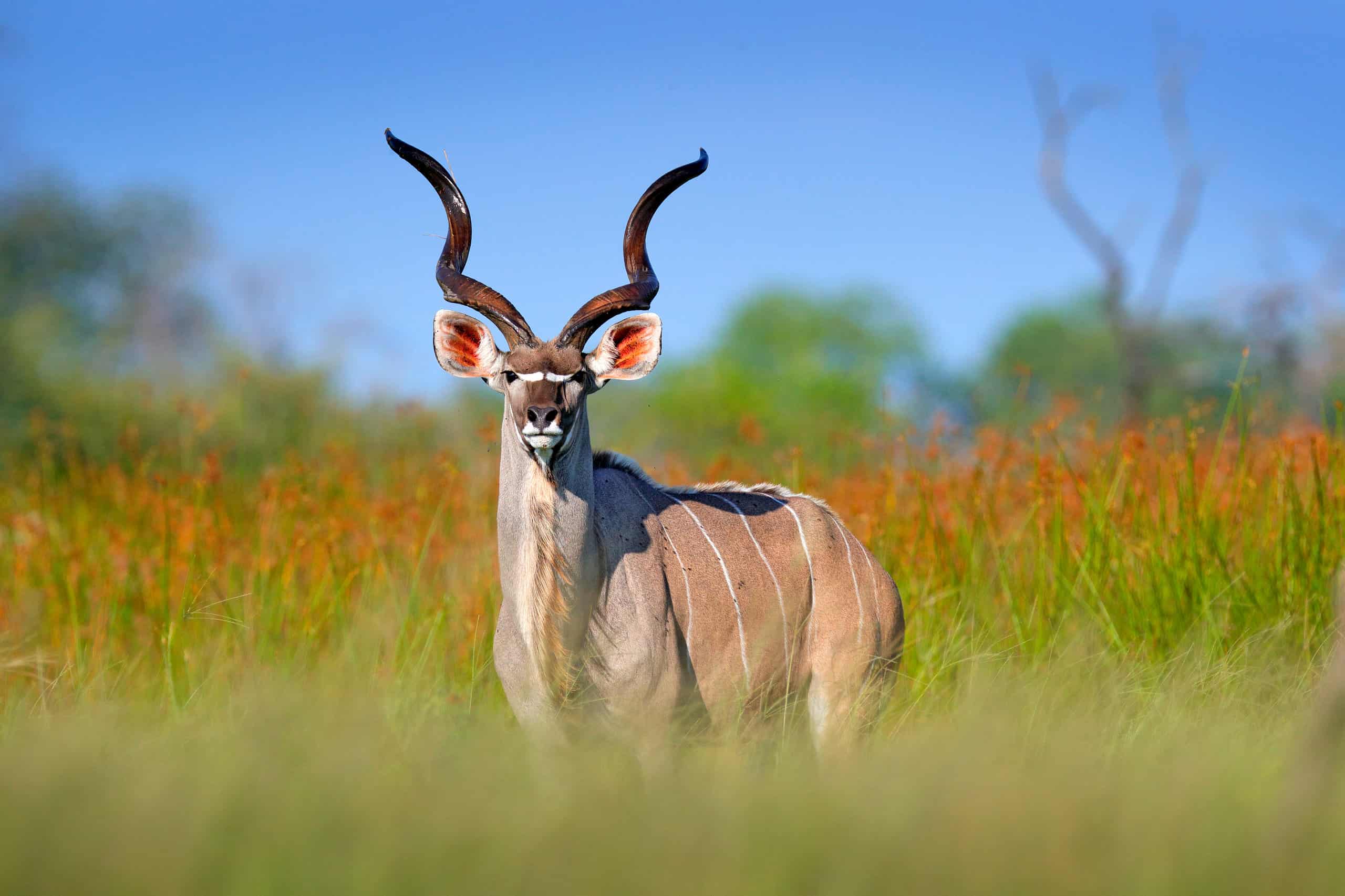
Male greater kudus do not begin to grow their horns until at least 6 months of age.
©L0k1m0nk33 / CC BY-SA 3.0 – Original
Greater kudus (Tragelaphus strepsiceros) are stunning antelopes that can reach about 5 feet tall at the shoulder and weigh nearly 800 pounds. They are generally brown or reddish-brown with 6-10 thin white stripes and a small white mark between their eyes. Males have large, twisted horns that average around 47 inches in length. The horns do not begin to grow until the kudu is between 6 and 12 months old. Greater kudus are usually found in woodland areas of East and South Africa.
3. Roan Antelope
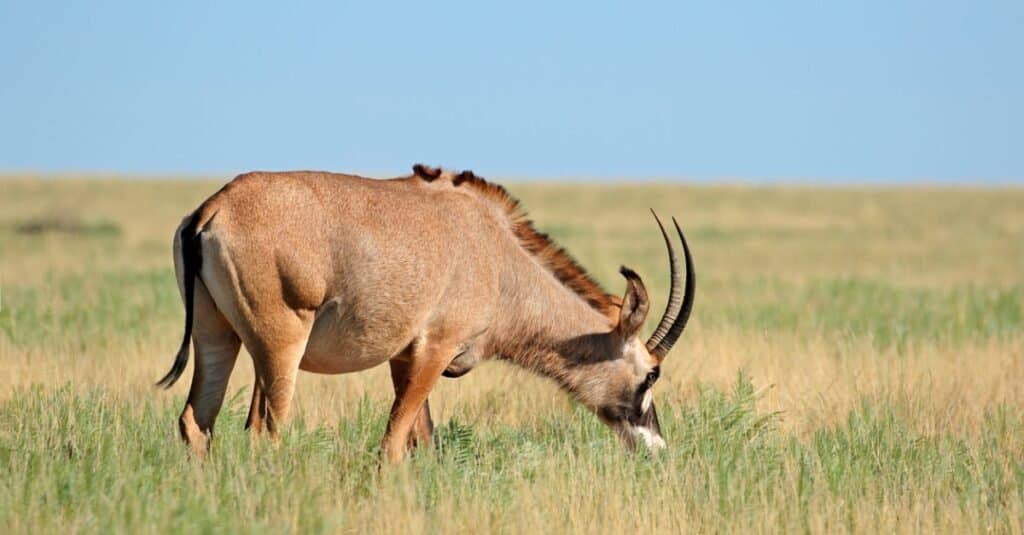
Both male and female roan antelopes have ridged horns that curve backward.
©iStock.com/EcoPic
Roan antelopes (Hippotragus equinus) are the third-largest antelope species after elands. These antelopes can reach a shoulder height of 5 feet 3 inches and weigh over 650 pounds. They are widespread across the grasslands and savannas of Africa and are often confused with sable antelopes. Roan antelopes are a reddish-brown color with lighter hair under their bellies and white patches on their faces. Both sexes have ridged horns that curve backward, and the males’ horns can grow more than 3 feet long.
2. Common Eland
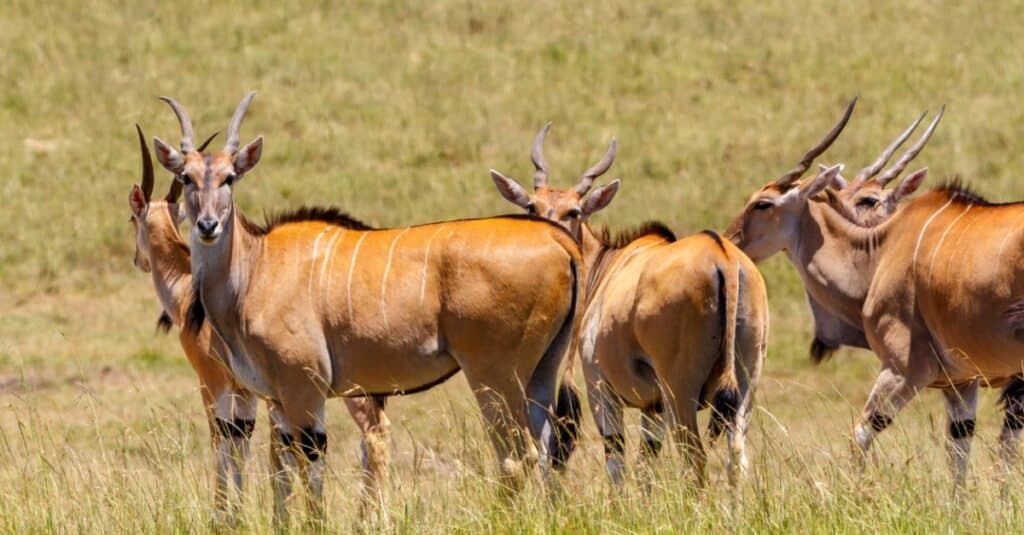
Common elands have corkscrew horns that can reach four feet in length.
©iStock.com/TT
Reaching shoulder heights up to 5 feet 3 inches and weights up to 2,000 pounds, common elands (Taurotragus oryx) are the second largest antelope on our list. Common elands are found in the open plains and savannas of eastern and southern Africa. Females are tan, while males are bluish-grey, and both have distinctive white stripes on their sides. Both males and females have corkscrew horns, which can grow up to 4 feet long in males. Males also have large dewlaps hanging from their chins.
1. Giant Eland
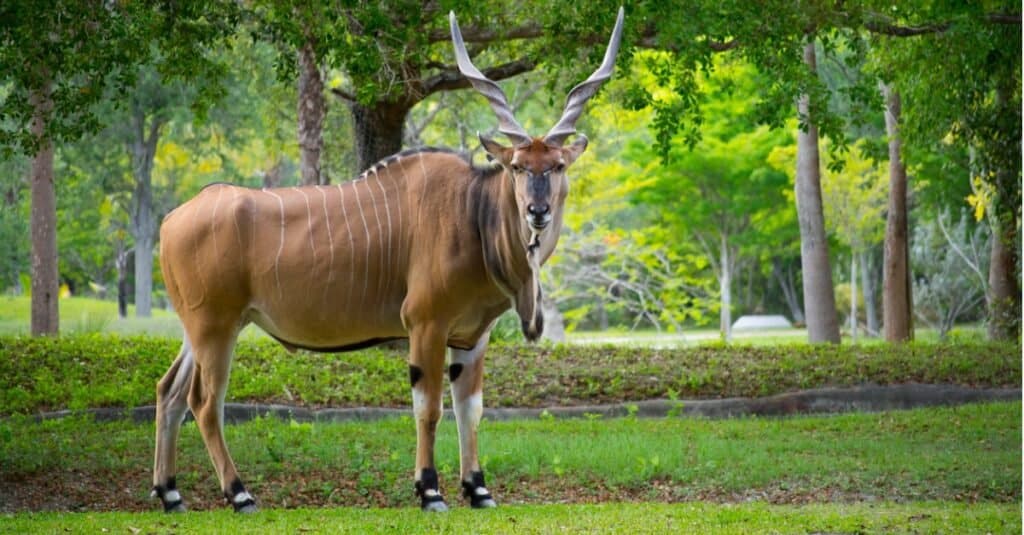
Giant elands are the largest antelopes in the world.
©iStock.com/Jose_Gonzalez_Jr
The largest antelope in the world is the giant eland (Taurotragus derbianus), measuring about 6 feet at the shoulder. These enormous antelopes can also reach lengths of more than 11 feet and weights of over 2,200 pounds. Giant elands are found in open forests and savannas in central and western Africa, from Senegal to Sudan. They are reddish-brown with vertical white stripes on their bodies. Mature males have a large dewlap that extends from the chin to the chest. Both males and females have V-shaped corkscrew horns that can grow over 4 feet long in males.