
Quick Take
- The Goliath frog's record-breaking size is not random. Scientists think one very physical parenting habit drove its evolution to such extremes. Explore the size theory →
- These frogs build three distinct types of nurseries, with the most impressive one requiring a level of brute strength most frogs simply don't have. See the three nest types →
- Goliath frog tadpoles will only eat one specific plant on Earth, and where that plant grows shapes everything about where these frogs can survive. Discover the tadpole's only food →
- Despite being the largest frog on the planet, the Goliath frog has only one confirmed predator, and it is probably not what most people would guess. Find out the lone predator →
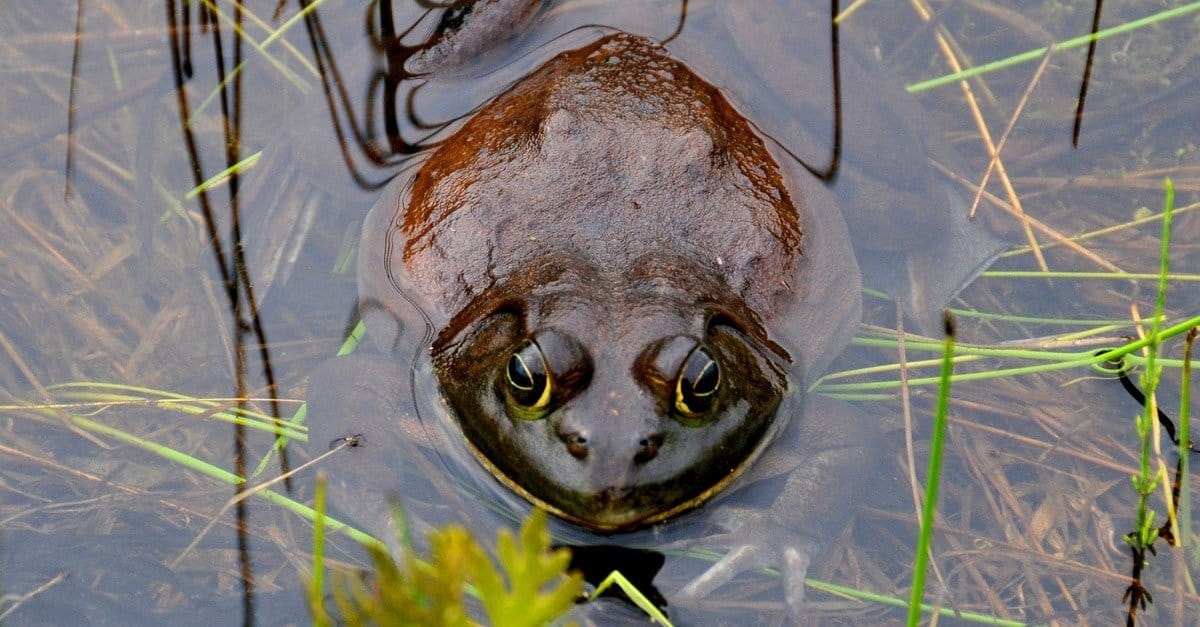
Frogs and toads rely on ponds as a place to lay their eggs and for their young to develop. Some use permanent bodies of water, others use temporary vernal pools. Research has revealed, however, that some frogs create their own ponds, and they may have to move large stones out of the way. To do that, they need to be big! Meet the Goliath frog, the largest frog on the planet. We will tell you all about them and how their massive size may be linked to the way in which they build their nests.
©meunierd/Shutterstock.com
Essential Goliath Frog Facts
Goliath frogs (Conraua goliath) are found only in coastal, equatorial Guinea and Cameroon in West Africa. They can be spotted in habitats near fast-flowing rivers and waterfalls. They like dense rainforests where it is warm and humid. These frogs are most active at night, hunting along the river for prey.
Younger frogs spend most of their time in the water, but older individuals climb out to bask on rocks for up to half an hour at a time. However, they are not very comfortable on land and appear exhausted after just a few leaps. If they are startled, they will leap back into the water. Some individuals have also been seen burying themselves in sediment and leaves at the bottom of rivers.
Adult Goliath frogs feed on insects, crustaceans, fish, mollusks, small mammals, and even other amphibians, including newts, salamanders, and smaller frogs. Male Goliath frogs can be territorial, and some males have been observed lunging at other males, wrestling, and even biting rivals if they encroach on their territory.
Goliath Frog Size and Pressures
These frogs have granular greenish-brown dorsal skin, which allows them to blend in perfectly with wet moss-covered rocks along the riverbank. This helps to keep them hidden when they are basking. That said, their only confirmed predator is humans. The people of Cameroon and Equatorial Guinea hunt them for food using poisons, nets, traps, and snares. This hunting sometimes takes place at the frog’s nesting sites. Despite their large size, these frogs are potentially vulnerable. They have a narrow geographic distribution and narrow ecological requirements. If something happens to this habitat, they are in trouble.
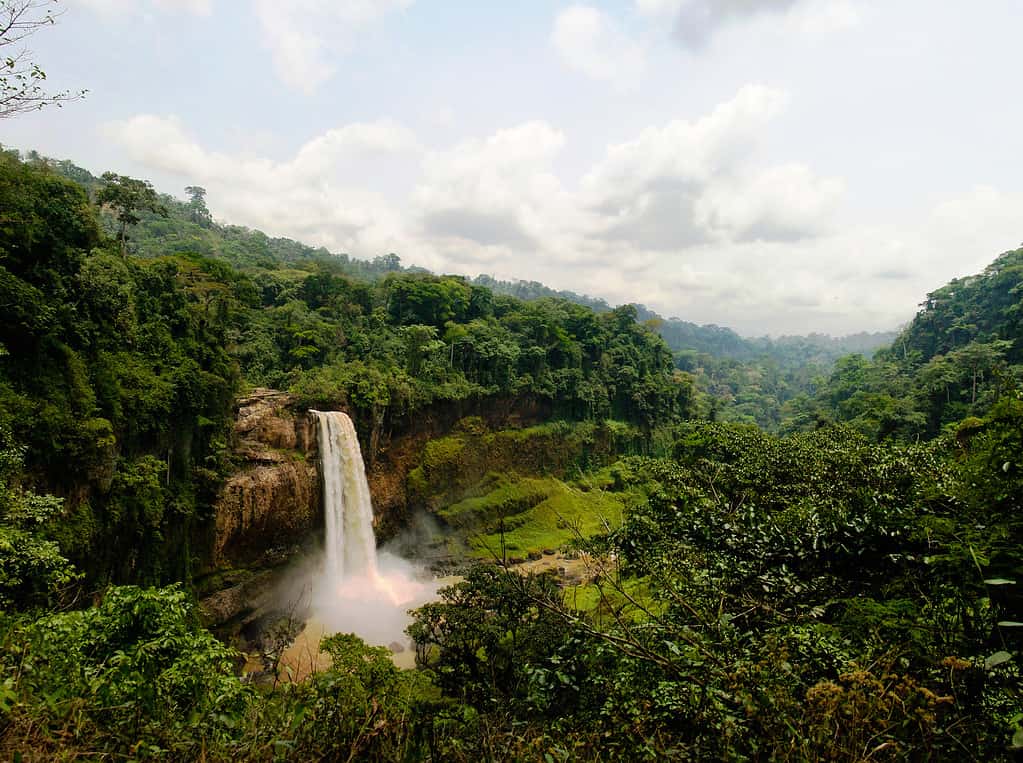
Goliath frogs live in rainforests in Cameroon.
©HomoCosmicos/iStock via Getty Images
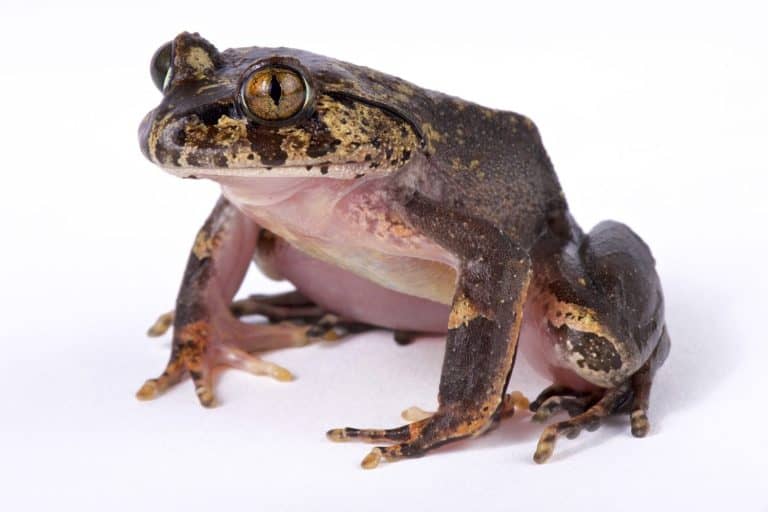
Goliath frogs have a flattened, wide body and a triangular head. The hind legs are long, but the front legs are short and stout, and all of their feet are webbed for efficient swimming. However, their most striking feature is their size! These frogs can be up to 18 inches long and weigh over 9 pounds, making them the biggest frogs on Earth. There is some evidence that Goliath frogs living farther from human settlements are both more abundant and larger, possibly due to reduced hunting pressure. As of 2026, they are the only amphibian species afforded special protection status in Cameroon.
Reproduction and Tadpoles
Details about their mating systems have yet to be scientifically confirmed. But the male frogs likely perform a calling ritual by holding their mouths open to make a long whistling noise. This frog species does not have vocal sacs. The females lay several hundred eggs at a time in nests. These stick to vegetation at the bottom of the water. When they hatch, the tadpoles grow for the next 75 to 90 days and reach nearly 2 inches in length. While females may tend to the eggs initially, the tadpoles are left to fend for themselves, with no further parental involvement. The tadpoles are herbivores and feed exclusively on a single aquatic plant, Dicraea warmingii, which is found in fast-flowing water and near waterfalls.
Why Are Goliath Frogs So Huge?
A study published in 2019 revealed a little-known fact about the Goliath frog. The observations were made on the Mpoula River, Littoral District, in West Cameroon. The researchers identified three types of nests. Once created, the nests could be used for several cohorts of tadpoles. The first was rock pools, which the frogs had cleared of leaf litter. The second was existing washouts at the riverbanks, which the frogs may expand and also clear out. The third, however, was the most impressive. These frogs sometimes dug depressions into gravel riverbanks.
The process of creating these gravel nests may involve removing large stones, sand, and leaves. Making nests in this way protects the eggs and tadpoles from getting washed away by the river water and from predators. This gives these giant frogs an evolutionary advantage over other amphibians. Scientists have suggested that this may explain why these frogs evolved to be such a huge size!