
Quick Take
- Australian shepherds are high-energy dogs that need a job to do. Fail to give them one and you might not like the outcome.
- Spay or neuter timing carries a hidden trade-off for this breed. Is there a window you should watch?
- A short window early in life primes your pup's brain for everything. Miss it and you may pay later.
- Even a well-meaning training method can backfire when it masks what your pup is trying to tell you.
Are you preparing to bring home an Australian shepherd puppy, or are you thinking about adopting one? Check out our guide to learn all about Australian shepherd progression, including growth chart, milestones, and training tips. We’ll also discuss the importance of forming a secure, supportive bond with your pup. Read on to learn more.
Australian Shepherd Breed Summary
According to the United States Australian Shepherd Association, although the specifics of their origins are still up for debate, the breed as we know it today was developed in the U.S. Basque sheepherders brought their dogs to the U.S. from Australia in the 1800’s, and this association gave the Australian shepherd its name.
The dogs became popular along with Western culture after WWII, and their intelligence, trainability, and strong herding instincts made them excellent farm and ranch dogs. American stockmen continued refining the breed into what it is today. The Australian Shepherd breed was accepted into the American Kennel Club’s (AKC) Herding Group in 1993.
Attributes
While genetic research does support that some characteristics can be linked to certain breeds, this genetic connection does not guarantee an individual dog’s personality or portray the whole story of that individual.
Instead, evolutionary history and genetics are an important part of that story alongside other contributing factors of behavioral expression. These other factors include the maternal relationship that the pup may have had in infancy, how safe the dog feels in their daily life, the type of attachment bond created between the pup and primary human caregiver, the health of the dog, their learning environment, their social environment, if and how their species-specific and individual needs are met, etc.
With the above said, people familiar with Australian shepherds often describe them as highly intelligent, interested in learning, active, and easily bored and distressed without enough mental, physical, and social enrichment.
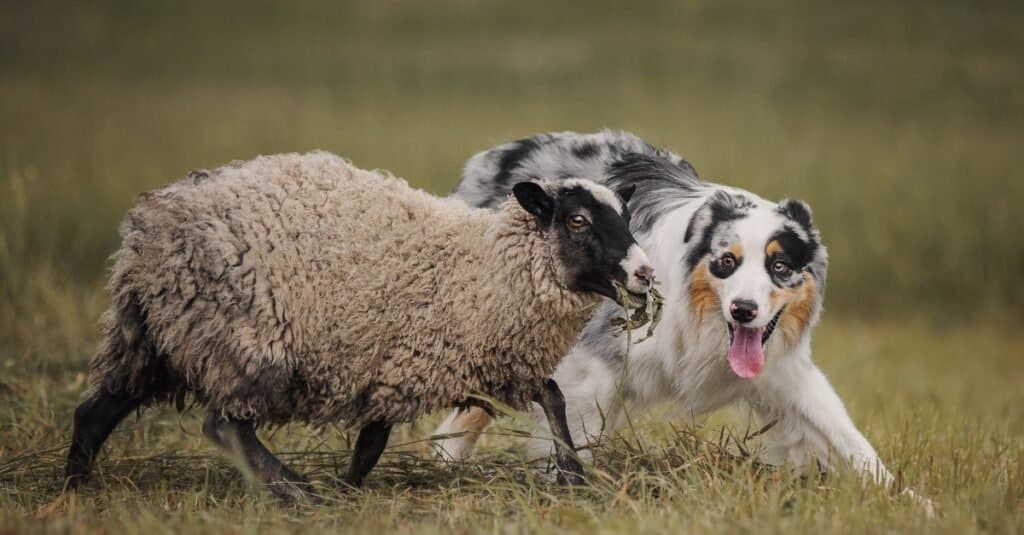
Australian shepherds are well-known for their herding capabilities.
©iStock.com/Julia_Siomuha
Growth Chart
In this guide, we’ll focus on the standard Australian shepherd, as opposed to the miniature variety. Below is our growth chart from 2 months to 18 months for healthy male and female Australian shepherds. Please note that natural variation is normal and that this is simply a guide.
| Age | Female Australian Shepherd Weight in Pounds | Male Australian Shepherd Weight in Pounds |
|---|---|---|
| 2 Months | 4-9 | 7-10 |
| 3 Months | 13-18 | 16-20 |
| 4 Months | 18-25 | 21-30 |
| 5 Months | 23-30 | 29-40 |
| 6 Months | 26-35 | 35-48 |
| 7 Months | 29-39 | 43-54 |
| 8 Months | 32-47 | 46-57 |
| 9 Months | 34-49 | 47-58 |
| 10 Months | 36-50 | 48-59 |
| 11 Months | 37-51 | 49-60 |
| 12 Months | 38-52 | 50-61 |
| 18 Months | 40-55 | 50-65 |
When Will My Australian Shepherd Stop Growing?
As a medium-sized breed, the Australian shepherd typically reaches their maximum size and weight at 16-18 months old. They usually reach their maximum height at 12 months old and continue filling out until 16-18 months.
To ensure that your Australian shepherd puppy is properly developing, it’s best to schedule regular developmental checkups with your vet at the 2, 4, 6, 9, 12, and 18-month marks.
How Big Will My Australian Shepherd Be When It’s Fully Grown?
A healthy female Australian shepherd should reach about 40-55 pounds when fully grown and stand 18-21 inches tall at the withers. A healthy male Australian shepherd typically weigh 50-65 pounds and stand 20-23 inches tall at the withers.
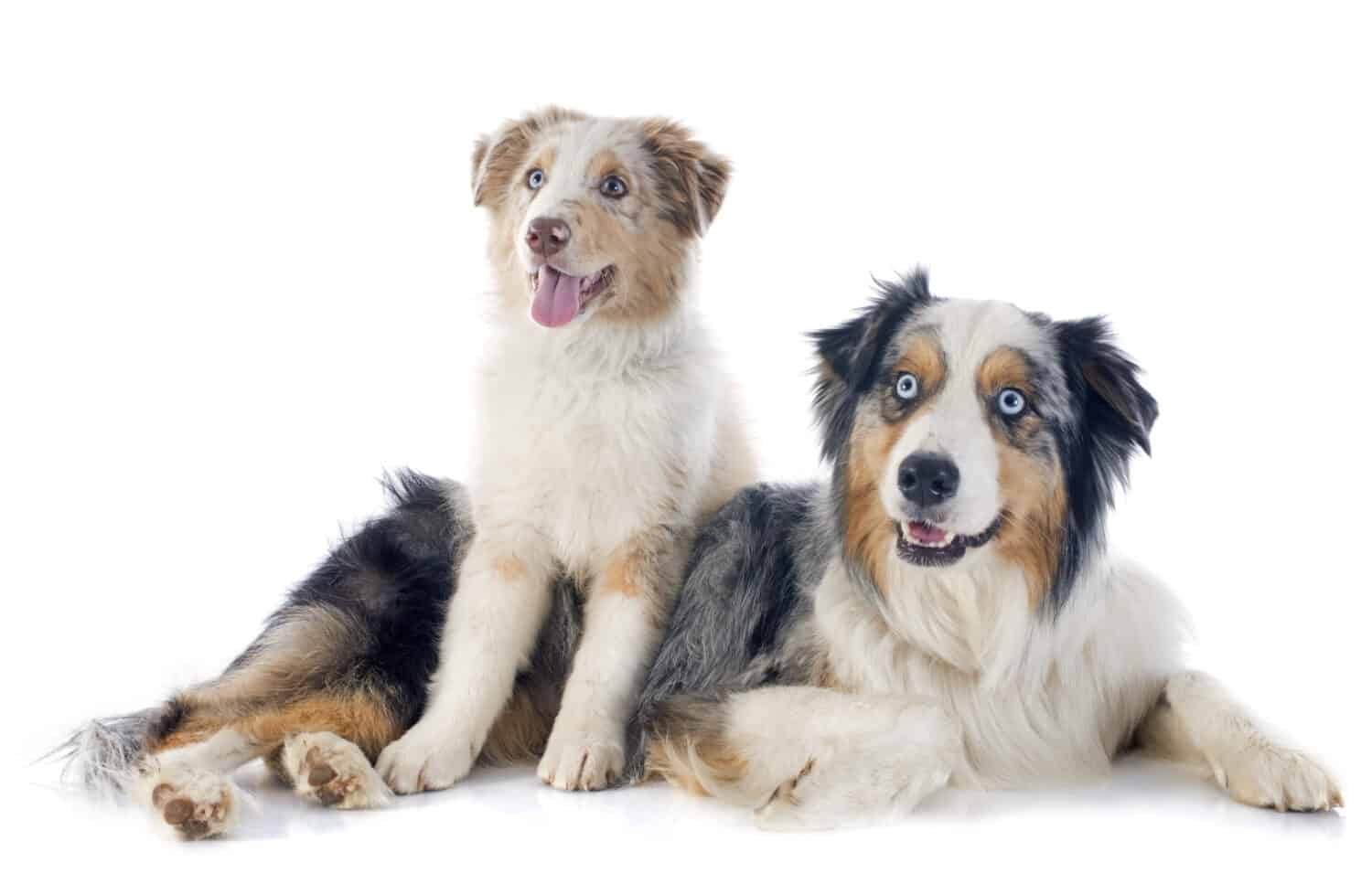
You can expect your Australian shepherd to reach their full height and weight by 16-18 months old.
©cynoclub/Shutterstock.com
When Should My Australian Shepherd Be Spayed or Neutered?
Deciding when or if to spay or neuter your dog can be a complex question. There can be risks associated with keeping a dog intact and risks associated with altering it, so it’s important to consider what’s best for your specific dog. Some breeds, such as boxers, face a higher rate of certain cancers when altered, so it’s important to know the risks specific breeds may face and at what age ranges.
According to a study that included 35 breeds, Australian shepherds do not face a significantly increased risk of developing cancers or joint diseases when altered under 2 years of age. However, spaying females between 2-8 years of age may be associated with an increased risk of developing some cancers. As such, your vet may opt to spay a female Australian shepherd before she reaches 2 years old.
When Should I Potty Train My Australian Shepherd?
You can begin gently potty training your Australian Shepherd puppy at 8 weeks of age. However, it’s crucial to understand that pups at this age can only hold their bowels and bladder for about 2 hours. So, if you want to help teach your puppy to go to the bathroom outside, make sure to bring them outside before this 2-hour mark.
Focus on building happy associations with going outside so your pup feels safe, confident, and supported. Using puppy pads at night indoors will alleviate the need to bring them outside every 2 hours at night. If you keep them in a puppy pen at night, it’s important to create ample space between their cozy bed setup and the puppy pads.
When Should They Stop Eating Puppy Food?
You can begin transitioning your Australian shepherd from puppy food to adult food around 9-12 months of age. Confirm with your vet the exact time, but this is the average time frame for this breed. It’s important to not transition to adult food too early as puppy food is formulated to provide for the specific needs of a growing pup.

You can begin transitioning your Australian Shepherd pup to adult food around 9-12 months of age.
©Ermolaev Alexander/Shutterstock.com
When Will My Australian Shepherd Start Losing Teeth?
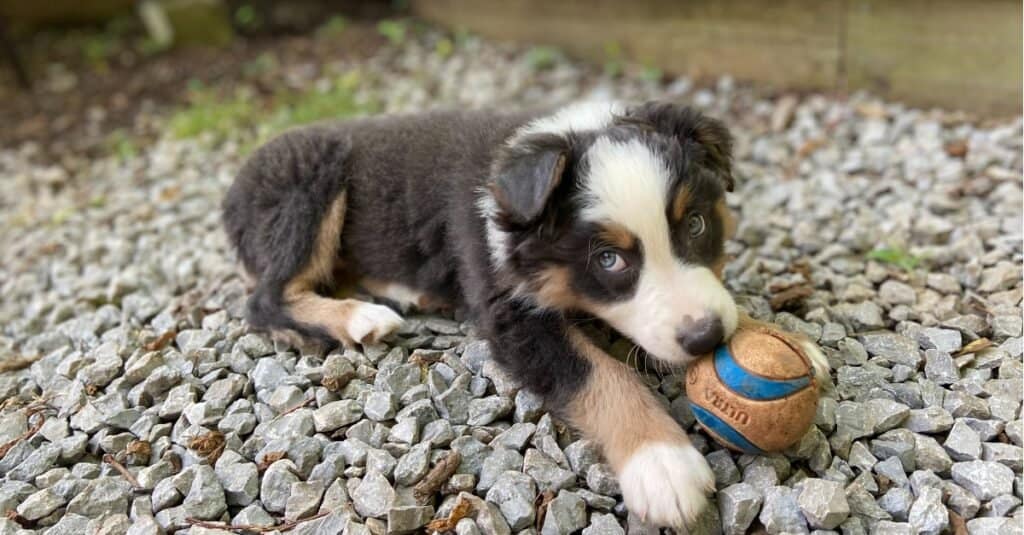
You can expect your Australian shepherd to start losing their set of 28 puppy teeth at about 12 weeks old. At this point, your pup’s set of 42 adult teeth will start coming in. This process can be quite uncomfortable for your puppy, so make sure to provide lots of chew toys to help soothe their sore gums. Frozen vegetables such as carrots can also be a great option.
Try to have these toys available in every room of the house that your puppy has access to. This will help prevent them from chewing inappropriate items. If you do find your pup chewing on something they shouldn’t, simply trade them for an equally good or better appropriate option, such as a chewy treat or toy. Trading rather than simply taking is crucial to helping your puppy feel safe around you and can help prevent the development of habitual resource guarding towards you.
When Should I Start Training?
You can begin training your puppy as soon as you bring it home. Australian shepherds are very intelligent dogs, have high energy, and bond strongly with their families. Forming these secure attachment bonds will reduce the risk of your pup suffering from separation anxiety and other issues associated with insecure attachment.
It’s very important to offer a constructive outlet for this breed’s energy. These dogs need plenty of exercise each day to prevent them from becoming bored or frustrated and developing destructive habits. However, all of the Australian shepherd’s traits makes these dogs easy to train.
It’s also important to provide them ample opportunity for safe, positive early socialization experiences. The early socialization period for dogs is between 3-12 weeks of age. At this time, their brain is primed for learning about novel experiences. So, if you bring home an Australian shepherd at 8 weeks of age, it’s imperative to begin the process of positively introducing them to new things. This can includes making new animal friends, meeting new people, and experiencing new scents, sights, sounds, tastes, and textures.

It’s important to facilitate positive new experiences and interactions for your Australian shepherd puppy.
©Ermolaev Alexander/Shutterstock.com
What Cues Should I Teach My Australian Shepherd First?
You can also teach your pup some cues using positive reinforcement. Positive reinforcement uses rewards to increase the likelihood of a desired behavior happening again. To be actually reinforcing, these rewards need to be motivating for your individual dog. Common positive reinforcers include treats, high-valued toys, play, etc.
Positive reinforcement should never be a replacement for building and maintaining a secure attachment bond and shouldn’t be used to suppress behaviors that are actually our pups trying to express discomfort, pain, fear, an illness, need for space or connection, trauma, hyperarousal, etc. For behavioral symptoms, it’s always best to consult with a force and fear-free certified behaviorist or veterinary behaviorist.
Train your pup using positive reinforcement to ensure they repeat the desired behaviors.
©iStock.com/Brad Covington
Other Cues to Teach Your Australian Shepherd Puppy
One of the first cues you can teach your pup is “come.” Pairing having your pup come to you with cuddles, play, a treat, toys, etc., will build a strong association that coming to you when called is a good thing. Of course, “sit” is always a helpful cue, as it can help your pup refocus and practice control.
Other cues you can teach your Australian shepherd puppy include:
- “Go to place” or “go to mat.” This is a great skill for teaching your puppy to settle on a specific spot when out at a café, for example. They can settle on the mat and, then you can give them a chew toy or snack to occupy themselves.
- “Leave it” will prevent your dog from picking up or eating dangerous items or food.
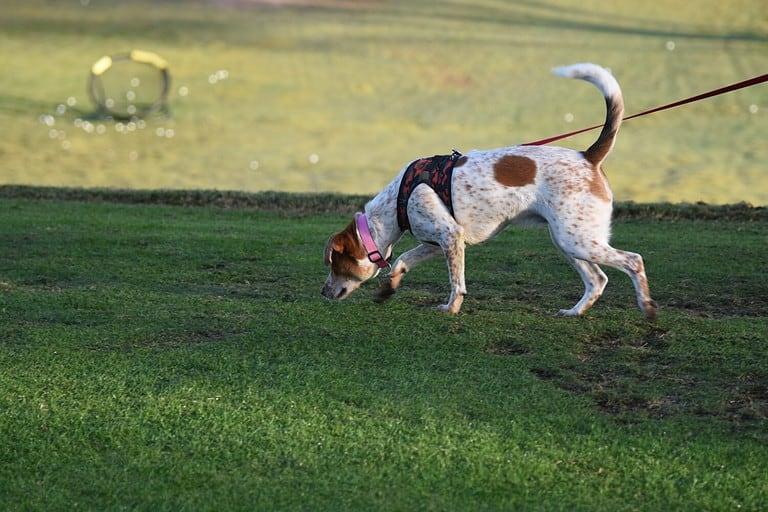
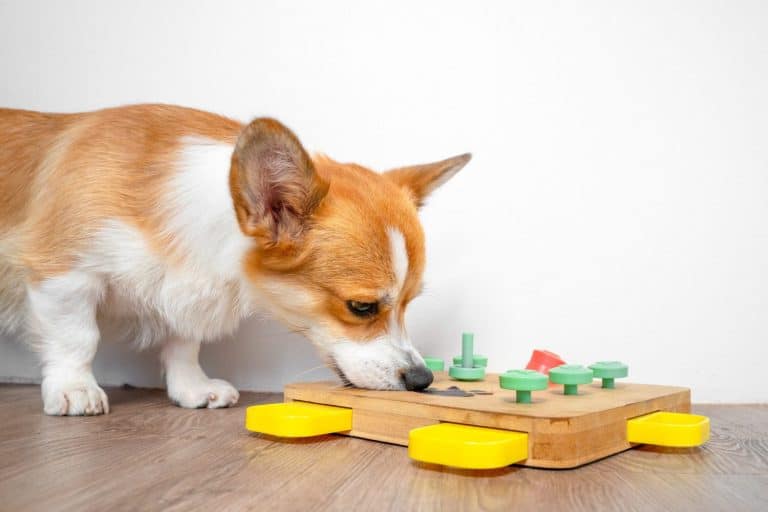
- Teaching “find it” involves saying this cue and then tossing a treat for your puppy to find. Start out by tossing the treat only a couple of inches away, increasing the distance as your pup succeeds. This cue helps increase your pup’s cognitive abilities, encourages sniffing which lowers stress levels, and is great for redirecting your puppy’s attention when needed.
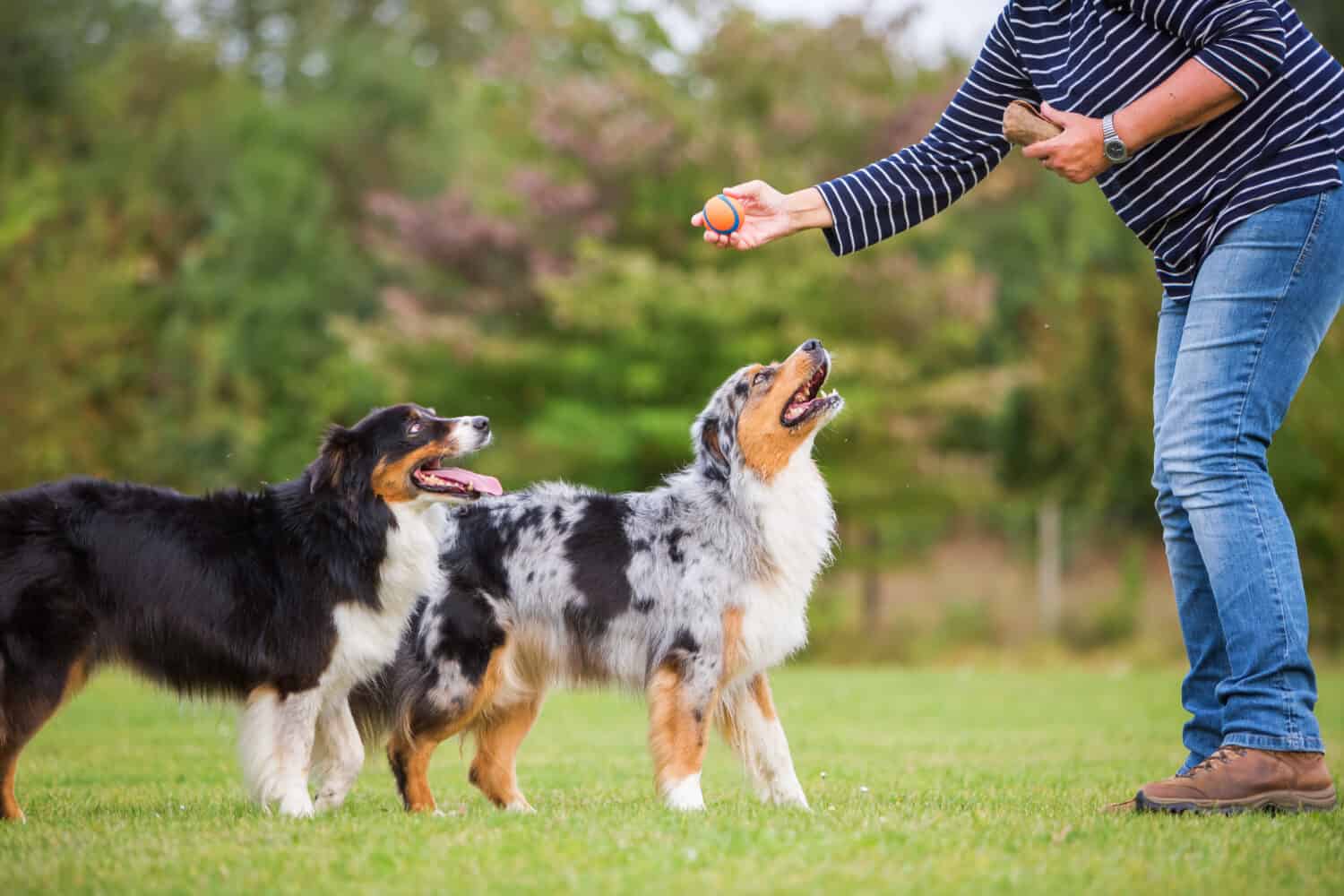
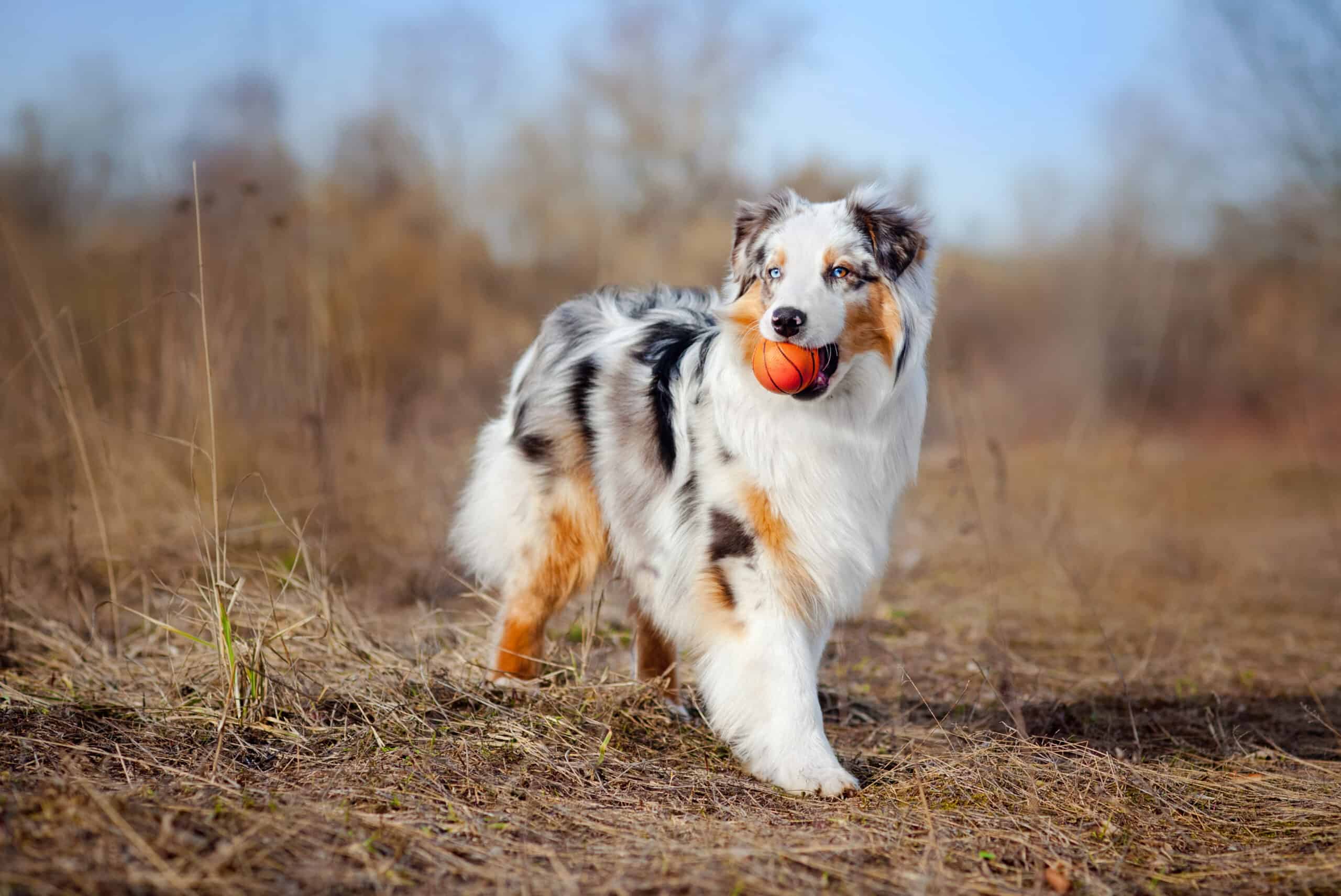
Toys can be an excellent positive reinforcer for dogs who love to play.
©Christian Mueller/Shutterstock.com
When Will My Australian Shepherd Calm Down?
Your Australian shepherd will likely reach social maturity between 1 and 3 years of age. At this point, you may notice that your canine companion settles a bit easier and is less rambunctious. However, and this is a huge caveat, if your pup, especially breeds like Australian shepherds, does not consistently have their needs for social, physical, and mental enrichment met, they may very well exhibit signs of frustration, hyperexcitability, difficulty settling, and even concerning repetitive behaviors such as tail chasing.
While you can teach cues that may encourage your dog to look or act calm, this state is only truly achieved through a calm, content internal environment. Essentially, the pup should actually feel calm because their human caregiver consistently meets the dog’s needs.

The Australian shepherd is a high-energy breed that needs a job to do and plenty of exercise.
©Melounix/Shutterstock.com
Common Health Issues Your Australian Shepherd Might Experience
There are a few health issues that Australian shepherds are prone to experiencing. Careless breeding can greatly increase the risks of these health issues. These health concerns include:
- Multidrug resistance 1 (MDR1)-related drug sensitivity
- Eye conditions such as cataracts
- Hypothyroidism
- Idiopathic epilepsy
- Hip dysplasia
- Partial or complete hearing and vision impairments in double merle Aussies.
Irresponsible breeding practices increase the risks of your canine companion developing these conditions, especially congenital hearing and vision loss. If you purchase an Australian shepherd puppy from a breeder rather than rescuing it, it’s important to make sure the breeder is practicing the highest standards of care and can provide genetic health testing and proof of using enough genetic diversity.
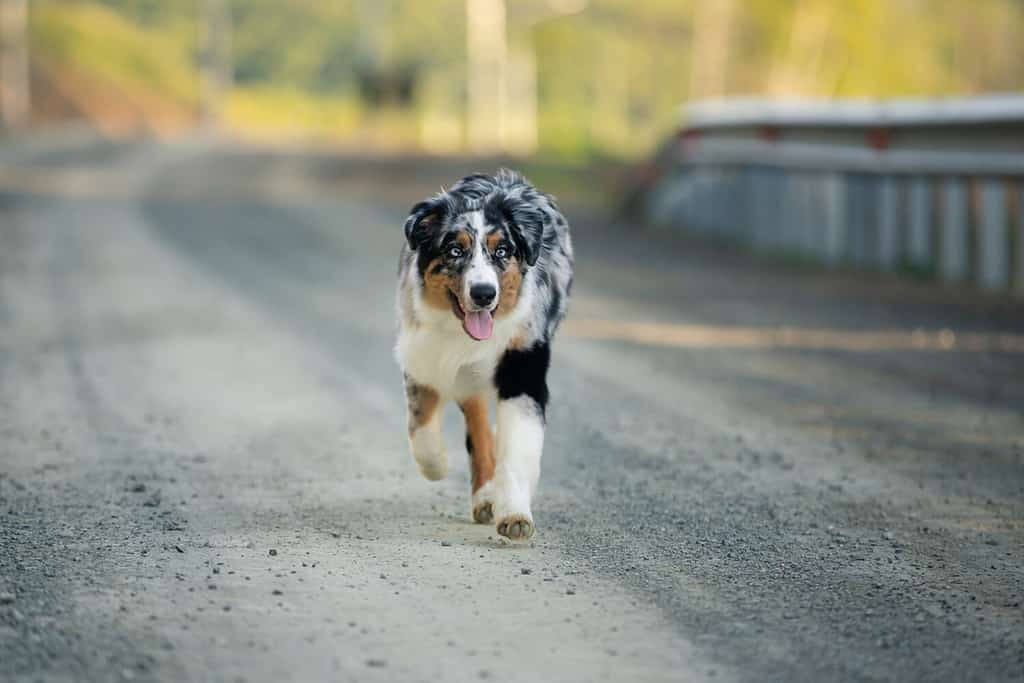
Hip dysplasia is one of the congenital issues breeders must test for in Australian shepherds.
©Anastasiia Cherniavskaia/Shutterstock.com
Is an Australian Shepherd Right for Me?
Australian shepherds are an extremely high-energy breed and are thought to be one of the most high-maintenance dogs as well. While they have personalities that include excellent self-control, they are intelligent and need frequent stimulation, both mentally and physically. Australian shepherds demand a lot of attention and require a generous amount of space to release their energy.
This shepherd needs not only extensive grooming but exercise as well, and they often have a higher need for human companionship. In addition to Australian shepherds needing a lot of exercise, they need additional training, although they are able to understand commands rather quickly, and with the correct owner, they will flourish. They can be an excellent choice for a family dog and are very loving but if you want a dog that is easy to care for, this is not the one for you.
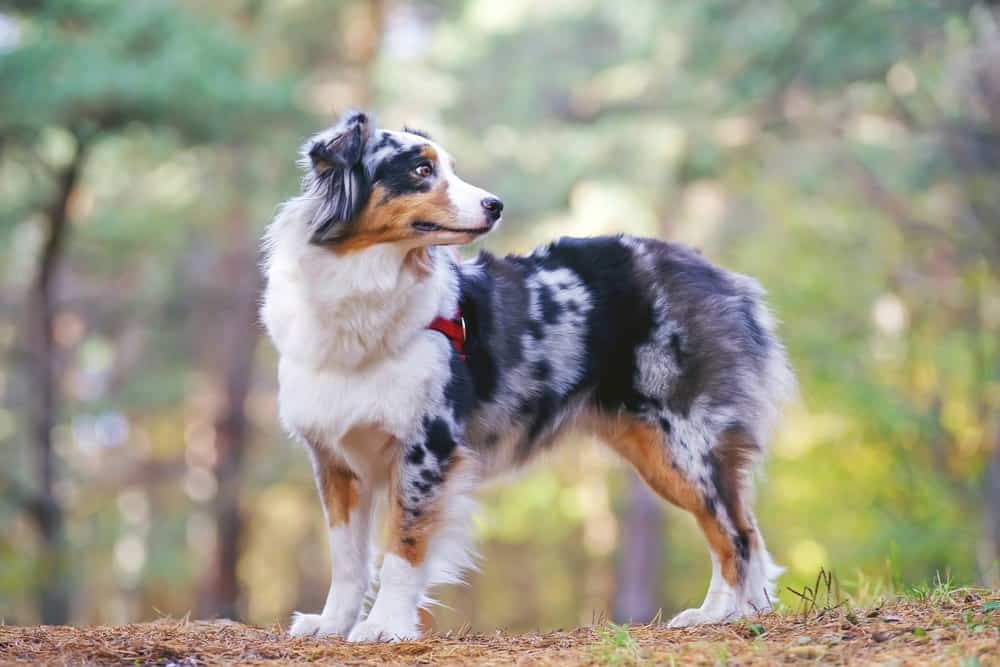
Australian shepherds need frequent stimulation, both mentally and physically.
©Eudyptula/Shutterstock.com