
Quick Take
- In 1971, no one knew how to save an oiled bird. One nurse refused to accept that. Meet the founder →
- Rescuers race the clock after a spill, and the window is shorter than you'd guess. See the response window →
- A month among a million nesting birds changed how one rescuer sees wildlife. Read the Midway story →
Any time you hear about an oil spill, you likely think of the broad environmental implications like contaminated waters, habitat degradation, and the devastating impacts on wildlife. Every year, over 500,000 birds die worldwide due to oil spills.
The International Bird Rescue exists for this very reason. Founded in 1971, the organization has responded to 300+ oil spills and wildlife emergencies on six continents and cared for 250,000+ birds. In this article, I speak with CEO and Executive Director JD Bergeron about what happens when a spill hits, how oiled birds are cleaned and rehabilitated, and what is required in a rescue.
About the International Bird Rescue
- Jan 1971 800,000 gallons of crude oil spill into San Francisco Bay Over 7,000 birds are oiled.
- Apr 1971 Alice Berkner officially creates International Bird Rescue
- 48 years later
- 2019 Bergeron's team spends a month on Midway Atoll They join a nesting albatross census.
Former Registered Nurse Alice Berkner founded the International Bird Rescue after 800,000 gallons of crude oil spilled into the San Francisco Bay in January of 1971. Back then, there were no recognized practices for helping oiled wildlife, especially birds.
In response to this concerning gap in wildlife conservation, Berkner brainstormed solutions while attempting to help the over 7,000 oiled birds from the spill. By April of that year, she officially created International Bird Rescue.

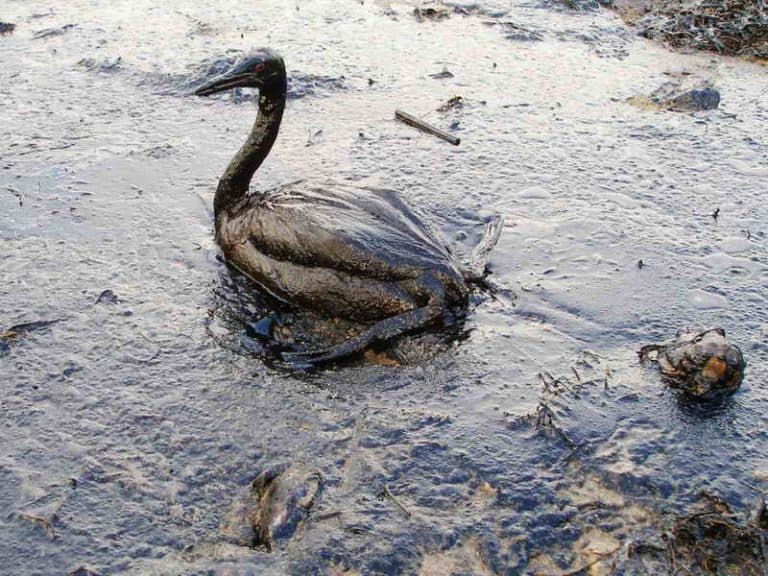
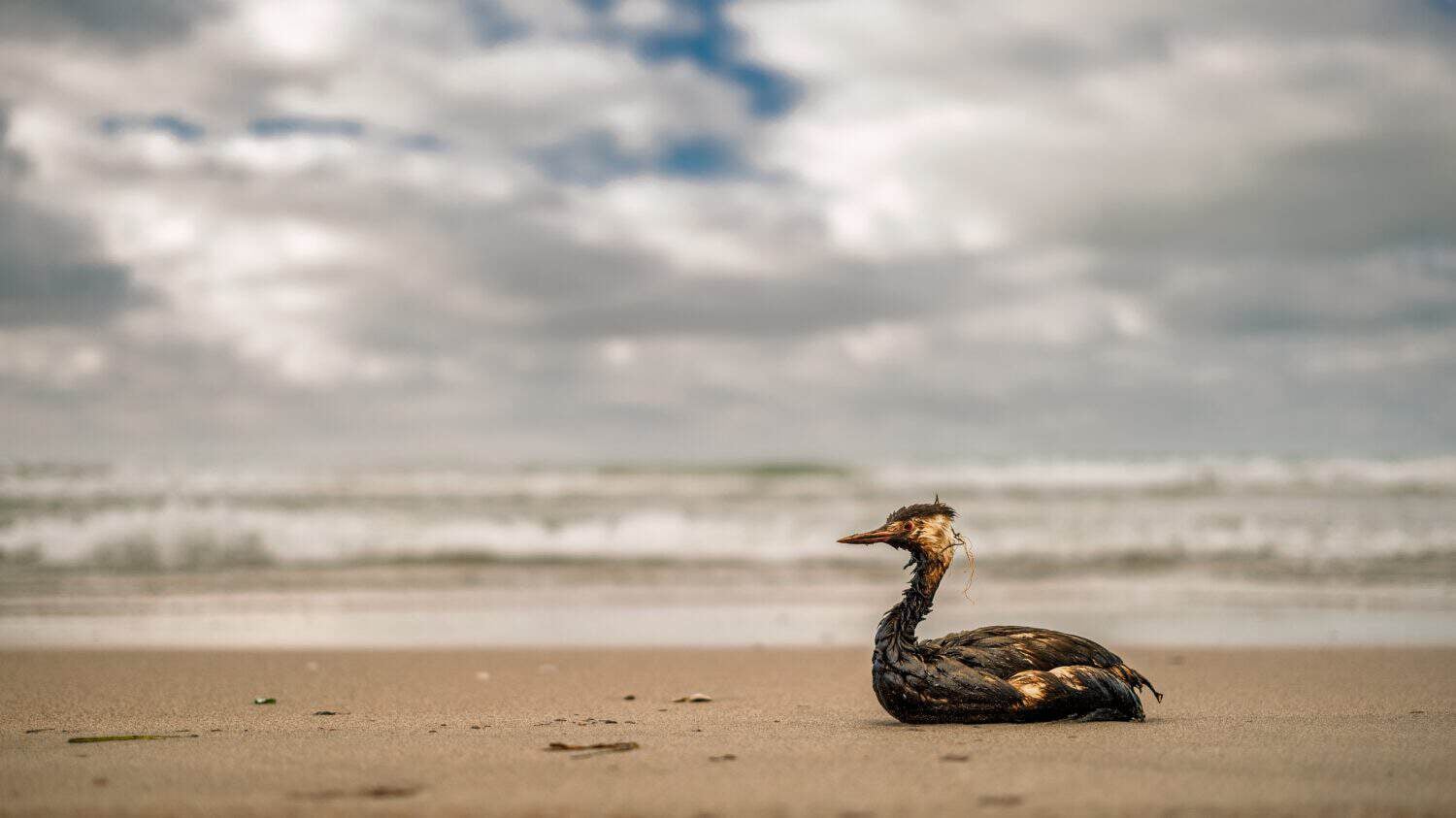
Oil spills can be lethal to waterbirds.
©Korelidou Mila/Shutterstock.com
Since then, the nonprofit has responded to over 300 oil spills and wildlife emergencies, caring for over a 250,000+ birds on six continents. The organization has crisis response centers in San Francisco, Los Angeles, and Anchorage, offering emergency response and aquatic bird rehabilitation worldwide.
Steps Involved in a Rescue
The rescue maintains a specialized oiled-wildlife response team that responds to reported spills with urgency and expertise. Here are International Bird Rescue’s steps for a successful mission:
1. Preparation for Quick Response
According to JD Bergeron, preparation is key to emergency response. The organization ensures its teams are ready before a spill is reported. To do this, they participate in regular trainings and drill exercises.
“It is critical for us to get boots on the ground as quickly as possible after an oil spill since contaminated wildlife may show up immediately and in dire need of support,” says Bergeron. “Ideally, that happens within 6-24 hours depending on how far we have to go, since we respond all over the world.”
They also determine how they’ll mobilize the right staff and resources to a given spill location.
“In a wildlife crisis — and we respond to large-scale bird challenges that are not oil spills as well — it is critical to understand what is the structure for decision-making, which agencies will be involved, [and] who will be assigned to key roles,” says Bergeron.
2. Field Reconnaissance and Animal Capture
Once a team is deployed to a rescue mission, the staff performs field reconnaissance to locate the hurt birds. They observe and evaluate the birds before safely handling them.
“Field reconnaissance and capture of animals is very important, including medical stabilization of animals as well as a method for safe transport of these animals to a care facility,” Bergeron shares.
3. Rehabilitation
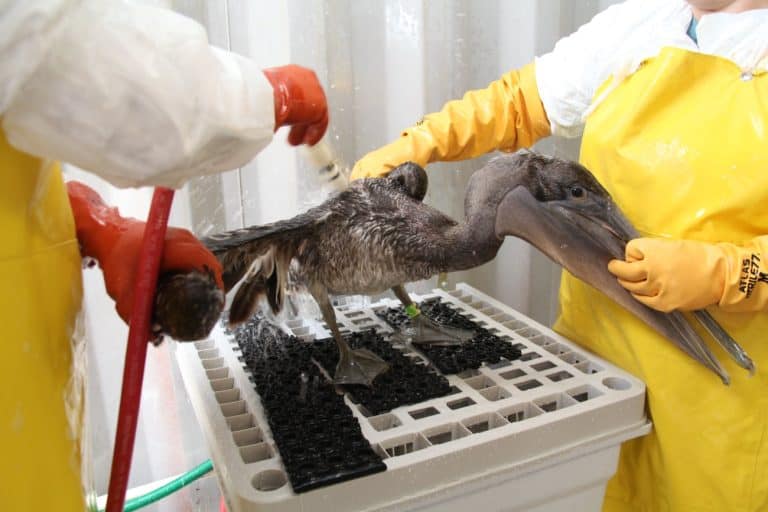
After the birds have been safely transported to a care facility, they receive food, medicine, and safe and clean enclosures.
“Once in care, it is important for animals to be strong enough for the stressful process of cleaning and care, as wild birds do not like being handled by humans,” Bergeron states. “We aim always to be efficient and to minimize stress for our patients.”
Staff then provide proper cleaning and rehabilitation to prepare them for an eventual release back into the wild.
“To be releasable, patients must be free of infection, fully nourished, no longer on medications, and fully able to fly and compete for food back in the wild,” Bergeron explains. “Releasing birds back to the wild is one of the most rewarding things we get to do.”
To be releasable, patients must be free of infection, fully nourished, no longer on medications, and fully able to fly and compete for food back in the wild
Albatross Adventures on Midway Atoll
As part of a nesting albatross census back in 2019, Bergeron and his team spent a month on Midway Atoll. The habitat is considered a sanctuary for millions of seabirds and marine life. In fact, it hosts the largest albatross colony on the planet.
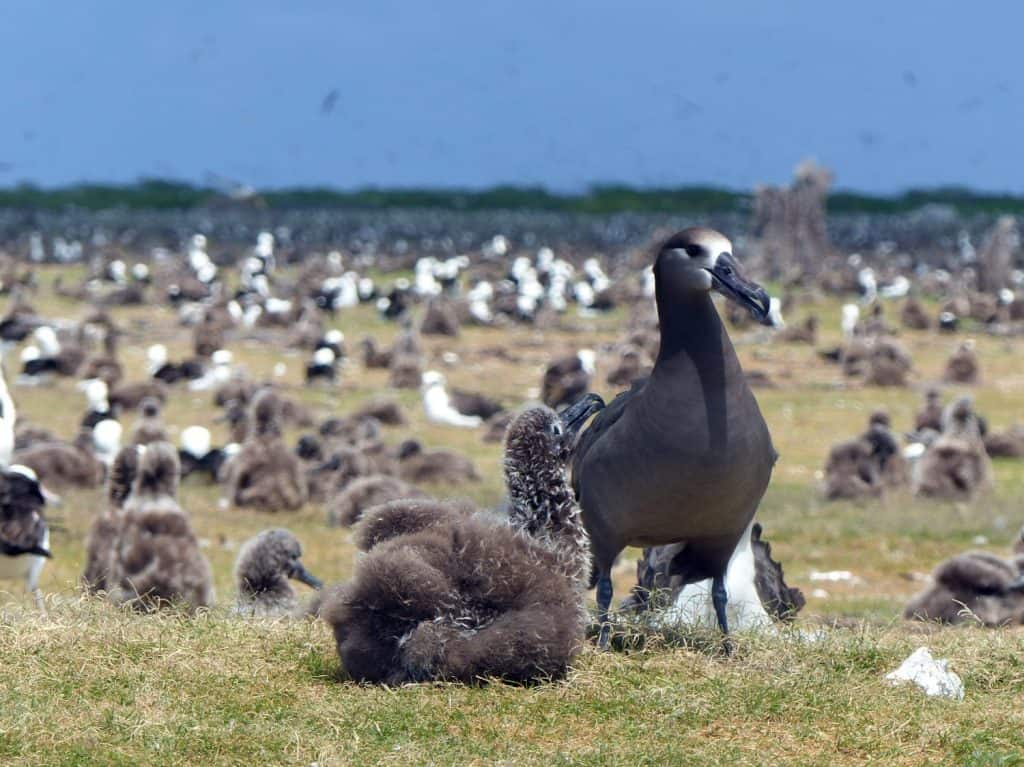
The Midway Atoll is home to millions of seabirds, boasting the world’s largest colony of Laysan albatrosses.
©Mark Sully/Shutterstock.com
Bergeron and his team dedicated themselves to cleaning the beaches and studying the birds’ behavior. While there, he witnessed parent albatrosses’ dedication to finding sufficient food for their chicks. (Fun fact: albatrosses only lay one egg per breeding season, or every one to two years.) After spending so much time with the birds, Bergeron returned with a renewed commitment to wildlife protection.
“I feel like I learned a lot from albatrosses, which can be sweet and brutal and also oddly trusting of humans,” Bergeron shares. “Seeing a million nesting birds teaches you a lot about the challenges wild birds face: broken bones, oil contamination, plastic ingestion, rodent attacks, and so many other challenges.”
How to Support International Bird Rescue
If you’d like to give back to the International Bird Rescue, consider volunteering your time or donating to the organization. Bergeron also recommends educating yourself on how to recognize wildlife in distress and who to call for support. The rescue also has a Bird HelpLine at 866-SOS-BIRD to call if you find a bird in distress.
“The world is changing for wildlife and for us, and I am deeply inspired by people who choose to take actions that help wildlife, whether counting nests, cleaning cages at a rehab center, or sharing stories with others,” says Bergeron. “All of these things make a difference.”