
Quick Take
- Achieving a 5.6-foot wingspan is the primary requirement for the Great Flying Fox to maintain dominance.
- The narrow wing structure of the Greater Noctule Bat creates extreme vulnerability despite enabling high-speed flight.
- The Spectral Bat presents a shift by adopting lifelong mating over traditional mammalian breeding cycles.
- Scouting intermediate canopy heights in Cameroon was necessary to determine why Hammer-Headed Bats avoid certain forest levels.
Researchers recently investigated hammer-headed bat populations in southern Cameroon. The mixed-methods investigation was conducted in a mature rainforest, where these massive, bizarre-looking bats dwell. Scientists tracked the movements of nine hammer-headed bats via GPS tags to discover nuances of movement trajectories. The findings showed this bat species tends to prefer intermediate canopy heights. The shortest nightly moving distances were within swampy areas dominated by Raphia palms, suggesting dense swamp zones are favorite roosting places. The study also revealed hammer-headed bats usually limit flights to between two and three destinations per night. Results of this research show how GPS tracking can reveal a host of details about difficult-to-view species.
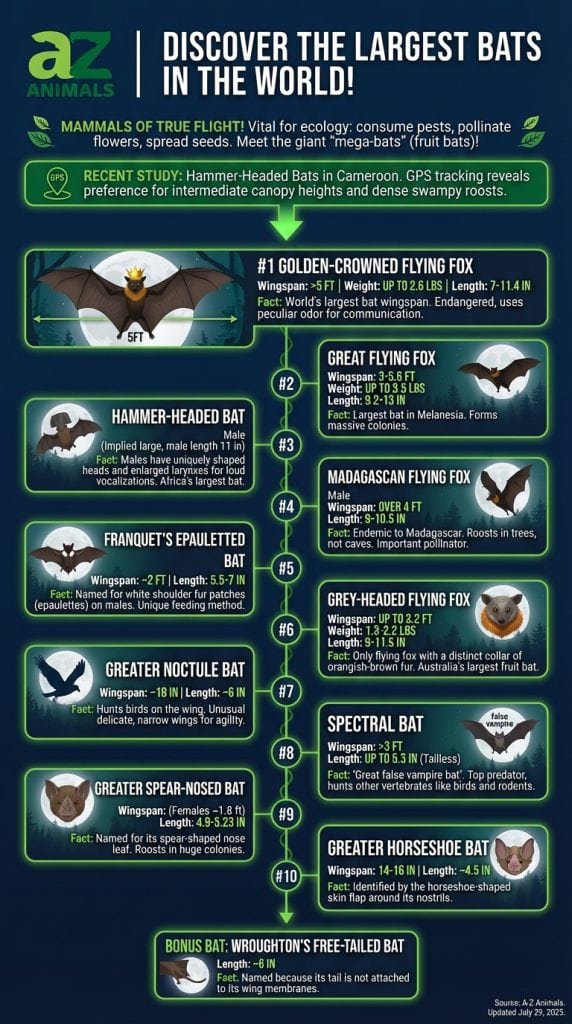
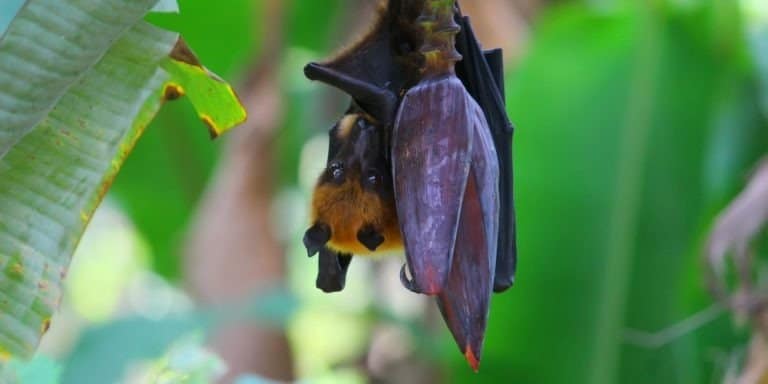
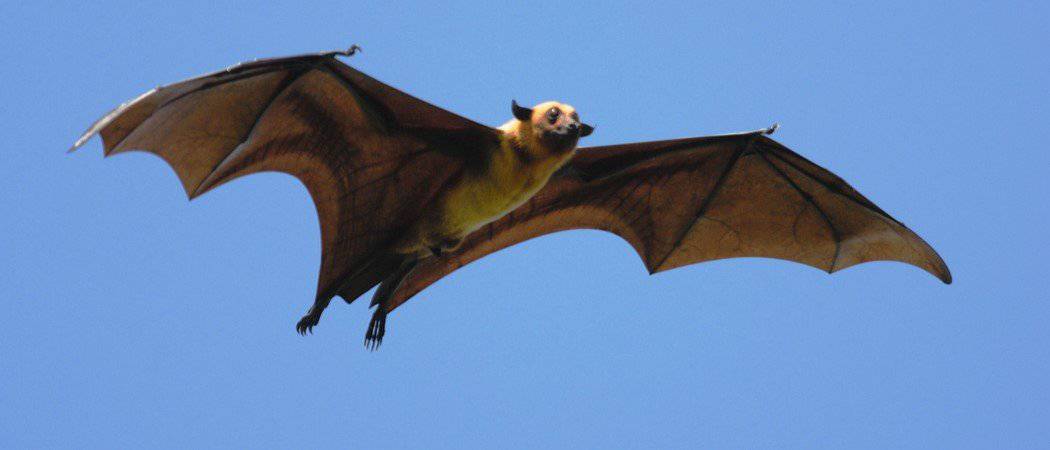
With wingspans reaching over five feet, these ‘mega-bats’ are the giants of the sky—and new GPS tracking data just revealed where they’ve been hiding.
©A-Z Animals
Bats are some of the most fascinating animals in the world, but, as mammals that have achieved true flight, they strike some folks as a little strange. Their leathery wings and nocturnal habits only add to the intrigue. However, bats are enormously important for the environment. They eat pests such as mosquitoes, help pollinate flowers, and help the spread of plants by dropping their seeds. The biggest bats in the world are fruit bats, or mega-bats, though not all fruit bats grow to a great size. So, let’s discover the largest bats in the world!
This post was updated on July 29, 2025, to include the recent study on hammer-headed bats in Africa.
#10 Greater Horseshoe Bat
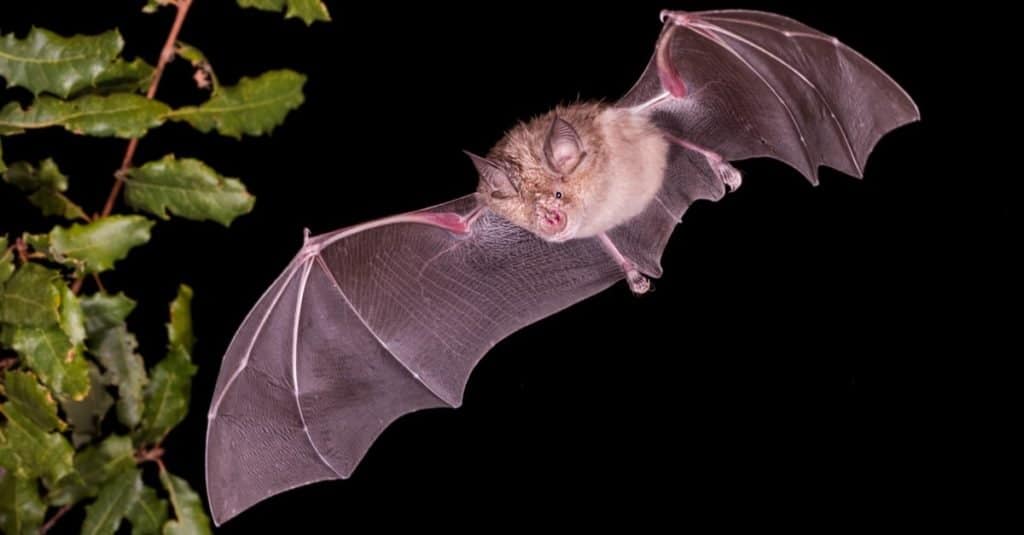
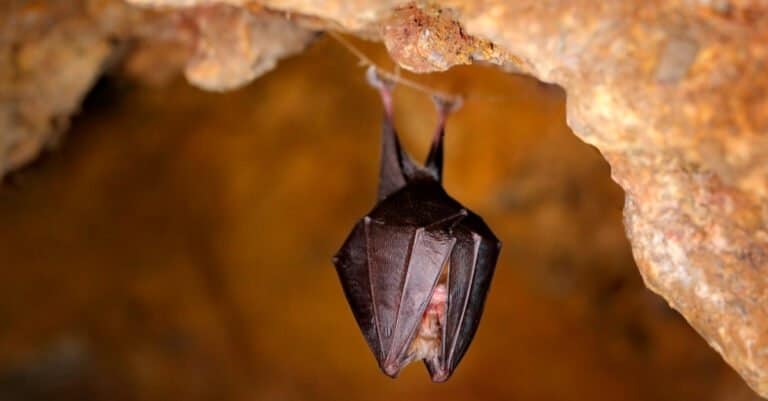
The greater horseshoe bat can be identified by the flap of horseshoe-shaped skin around its nostrils.
©Carl Allen/Shutterstock.com
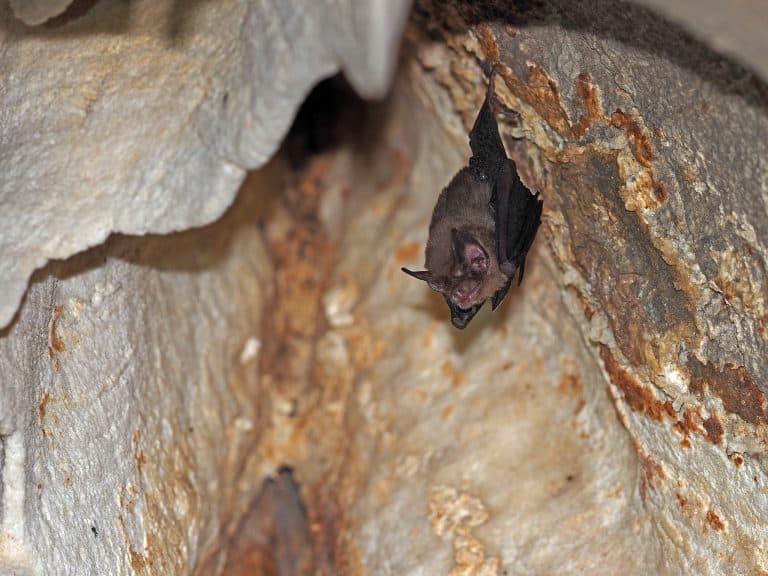
The greater horseshoe bat is found in Europe, Northern Africa, and Central and Eastern Asia. It is considered non-migratory because its winter and summer habitats are only about 19 miles apart. This bat is about 4.5 inches from nose to tail, with females being a little larger than males. They have a 14 to 16-inch wingspan and can be distinguished by their nose. The top of the nose is pointed, while the bottom is shaped like the horseshoe that gives the animal its name. The greater horseshoe bat has fluffy gray fur and light grayish-brown wings. They mainly prey on moths and can live for up to 30 years.
#9 Greater Spear-Nosed Bat
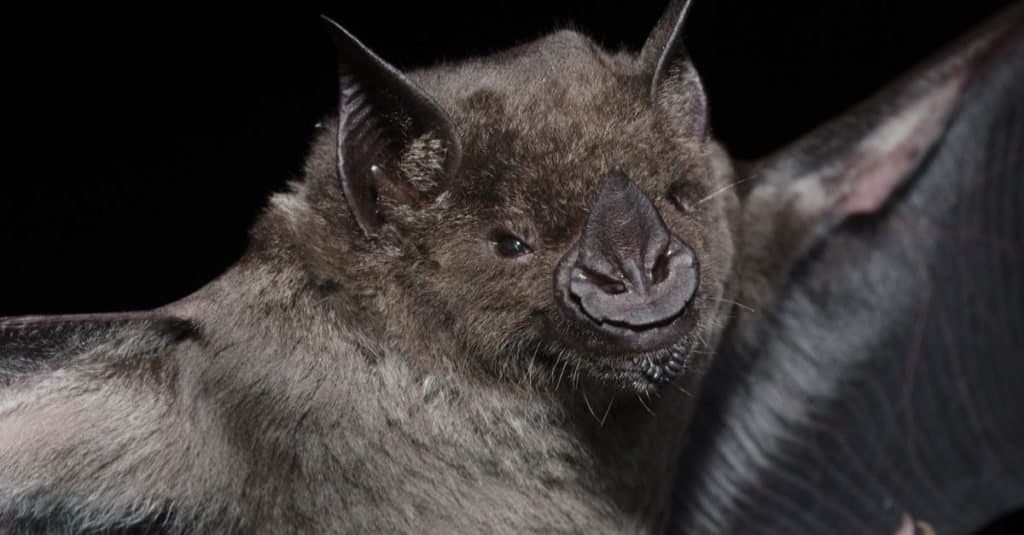
Greater spear-nosed bats roost together, sometimes forming colonies of several thousand individuals.
©Mendesbio/Shutterstock.com
The greater spear-nosed bat is the second-largest bat species in central and southern America, with the average length of males being 5.23 inches and females being 4.9 inches. However, females have a greater wingspan of around 1.8 feet. The greater spear-nosed bat is notable because of its nose, which is shaped like a spear. These bats usually eat birds, but they also eat other bats and small rodents, though they will also take insects and fruit if the usual prey isn’t available. Greater spear-nosed bats spend much of the day in enormous colonies, which are found in caves and abandoned buildings, and emerge when the sun goes down.
#8 Spectral Bat
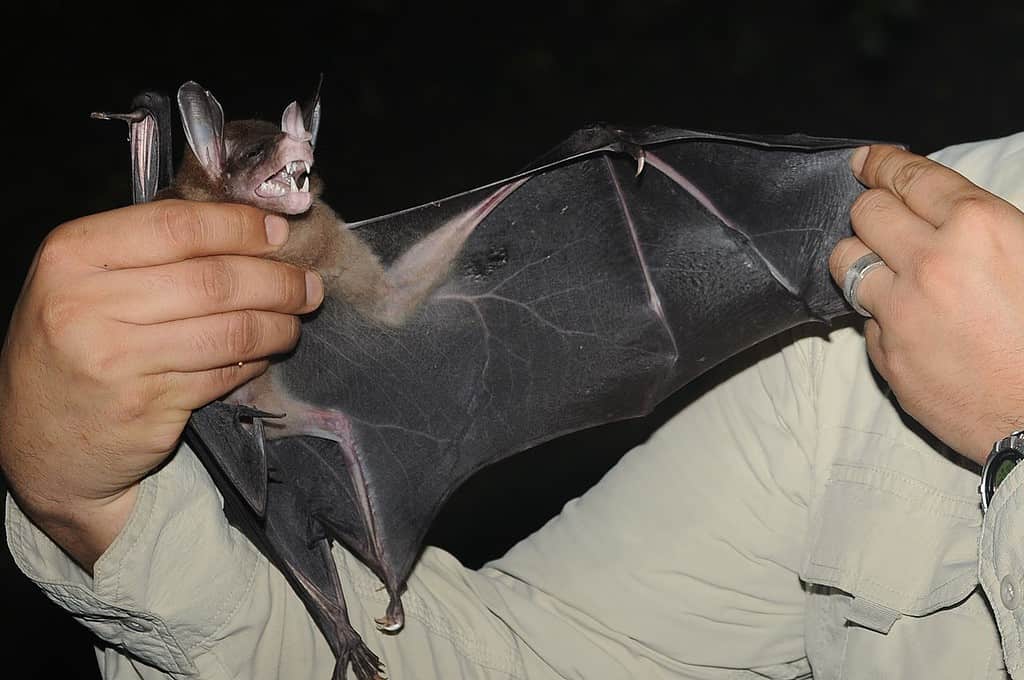
The spectral bat uses an extremely advanced sense of smell to hunt their prey in pitch-black forests.
Spectral bats are tailless, but they can still be as long as 5.3 inches, with a wingspan greater than three feet. They are also the largest bats in the Americas. These bats have reddish-brown fur and large round ears, as well as a large nose leaf. The spectral bat is a bit unusual for bats as it mates for life, though scientists don’t know when its breeding season occurs. However, they do know that the females give birth to one offspring from late spring to mid-summer. They are also again unusual for bats as the male helps care for the young.
The spectral bat is also known as the great false vampire bat because it was once thought to feed on blood. Although this is not the case, spectral bats are considered to be some of the best hunters in the forests of Central and South America, second only to jaguars, because of their keen sense of smell. They prey on small birds, rodents, frogs, lizards, and other bats. Once they locate a victim, they swoop down and crush its skull with their powerful bite.
#7 Greater Noctule Bat
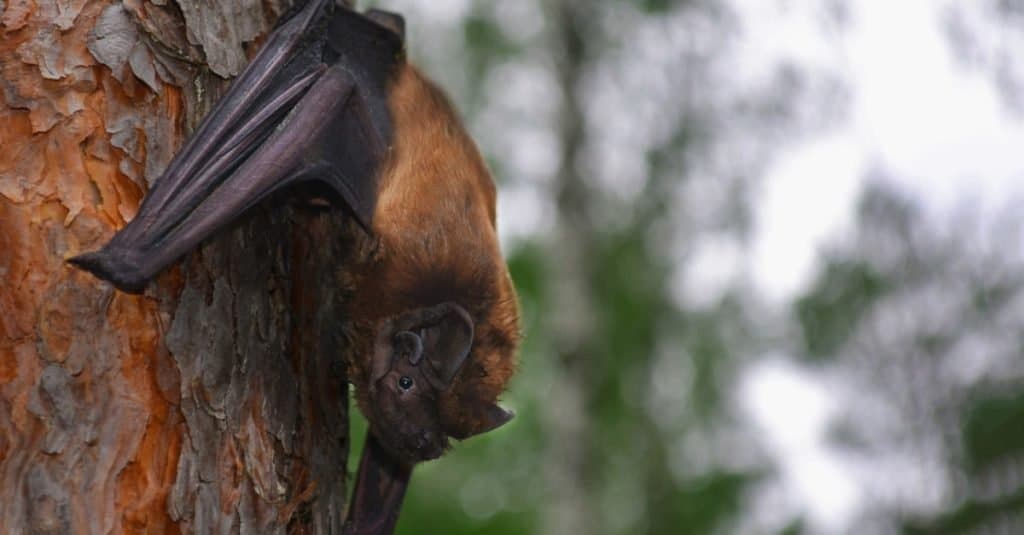
The greater noctule bat is one of the few bat species to feed on passerine birds.
©AlRenard/Shutterstock.com
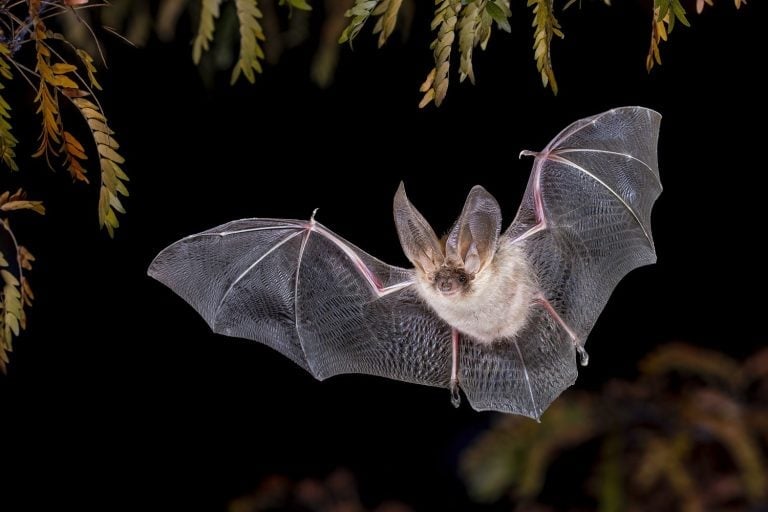
The greater noctule bat is around six inches long from nose to tail and has an 18-inch wingspan. They may be large, but they are fast and capable of traveling long distances. They prey on birds and are one of the few species of bats to prey on animals larger than insects. Not only this, but they even hunt birds on the wing. To do this, greater noctule bats use echolocation and have wings that are unusually narrow and delicate. Though the wings are more susceptible to damage, they allow the animal to outmaneuver their prey even in darkness. The greater noctule bat is a golden-brown color with a darker tone found on the face and wings and lives in North Africa, Western Asia, and Europe.
#6 Grey-Headed Flying Fox
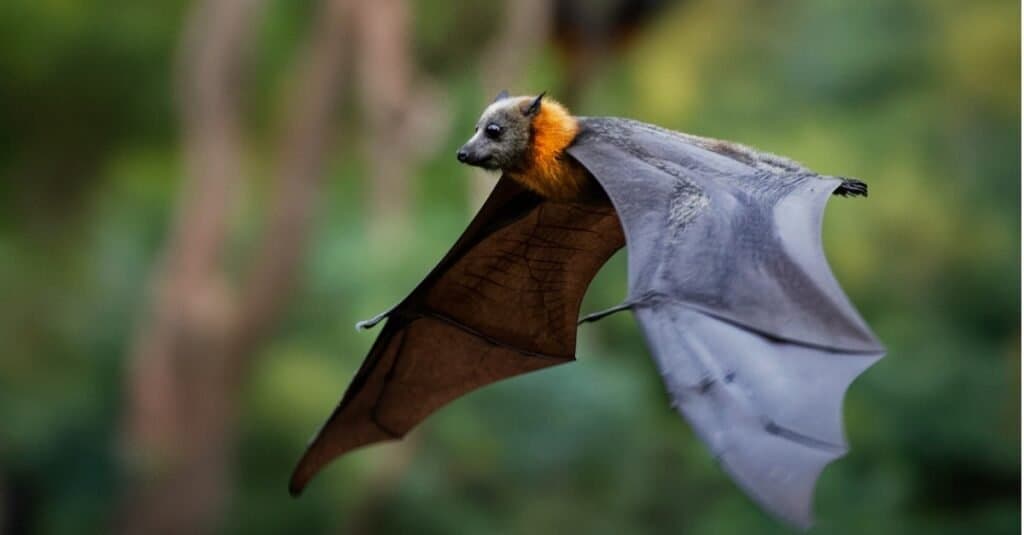
The grey-headed flying fox is the only flying fox species that has a collar of orangish-brown fur.
©iStock.com/phototrip
The wingspan of Australia’s largest fruit bat, the grey-headed flying fox, stretches up to 3.2 feet (1 meter). You’ll find these giant (true) flying mammals along Australia’s east coast from central Queensland in the northeast to western Victoria in the southeast and inland to the western slopes. They are one of the easiest bats to identify, thanks to a collar of orangish brown or rusty red fur that fully encircles the head. The head is grey, hence the name, and its belly is usually grey with white- or ginger-colored flecks. These grizzled bats typically weigh 1.3-2.2 pounds and are 9-11.5 inches in length. They live in Australia’s rainforests, mangroves, paperbark swamps, wet and dry sclerophyll forests, and cultivated areas, although these flying foxes are listed as vulnerable by the IUCN, so encountering them outside their typical habitats is becoming somewhat common. They are well-known for being quite noisy, as more than 30 different calls have been identified. They utter these calls to attract mates, defend territory, and locate their young.
#5 Franquet’s Epauletted Bat
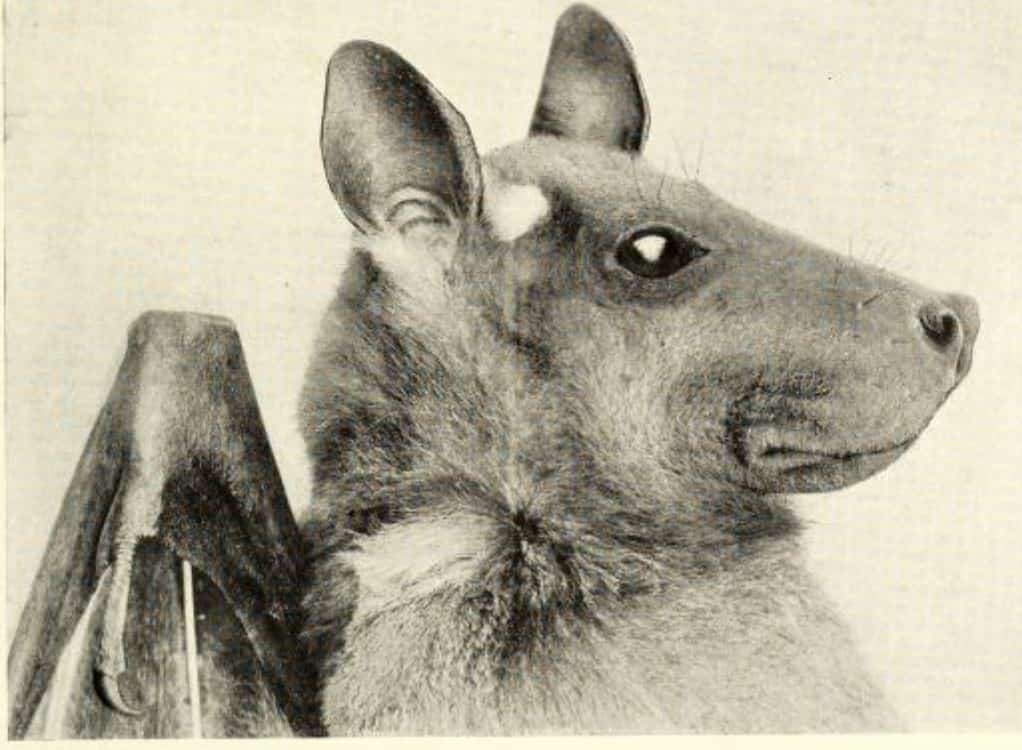
The word Epaulette refers to the white fur on the male bats’ shoulders that covers a sunken glandular pouch.
©Joel Asaph Allen / public domain, Wikimedia Commons – Original / License
Franquet’s epauletted bats are found in West Africa in countries such as Niger, Nigeria, Cameroon, and Cote d’Ivoire. They can also be found in Congo, Sudan, Angola, and Zambia. On average, they have a 2-foot wingspan and range from 5.51 to 7.01 inches long. These animals tend to keep to themselves or live in small groups. Franquet’s epauletted bats are so named because of the white patches on their shoulders, which contrast with the dark brown or orange color of much of the rest of their fur.
Franquet’s epauletted bats are frugivores, but they eat in a unique way. They crush the fruit against the back of their hard palate, swallow the juice and the seeds, then spit out the pulp. They also eat flowers.
#4 Madagascan Flying Fox
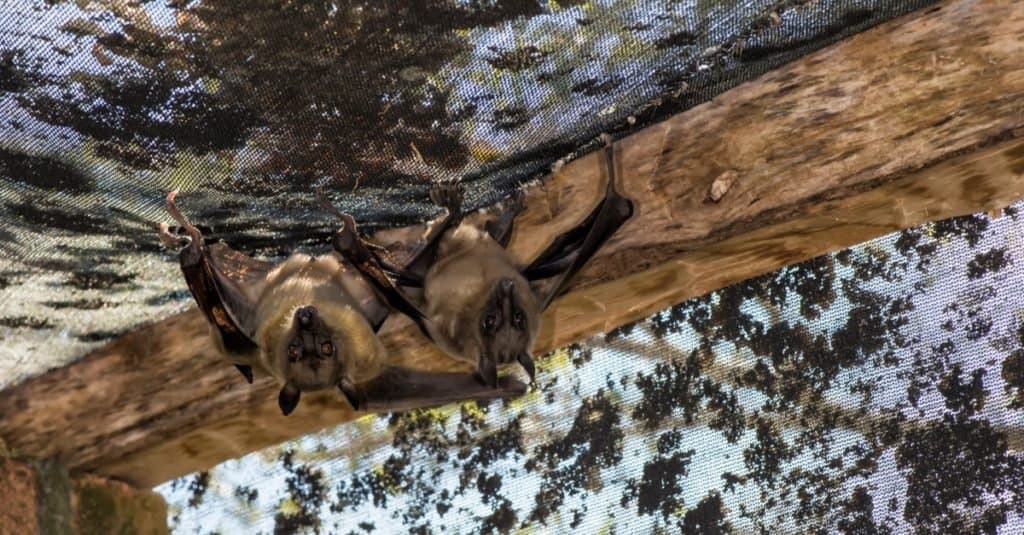
The Madagascan flying fox doesn’t use sonar like smaller, insect-eating bats; only their eyes and ears.
©GTW/Shutterstock.com
The Madagascan flying fox is endemic to the African island country of Madagascar and is its largest bat. It can attain a length of 9 to 10.5 inches and has a wingspan of over four feet. It has an alert, vulpine face, brown fur, and gray or black wings. The head of the male is just a bit larger than that of the female, otherwise, both sexes are alike.
This flying fox doesn’t roost in caves but in trees old and big enough to support huge colonies. The Madagascan flying fox eats fruit, especially figs, and disperses the seeds far and wide as they pass through their digestive tract. The Madagascan flying fox also eats flowers and leaves and laps nectar. It is believed to be a pollinator of the kapok tree, an ornamental grown for its beauty and whose flowers are used to make teas and soups.
#3 Hammer-Headed Bat
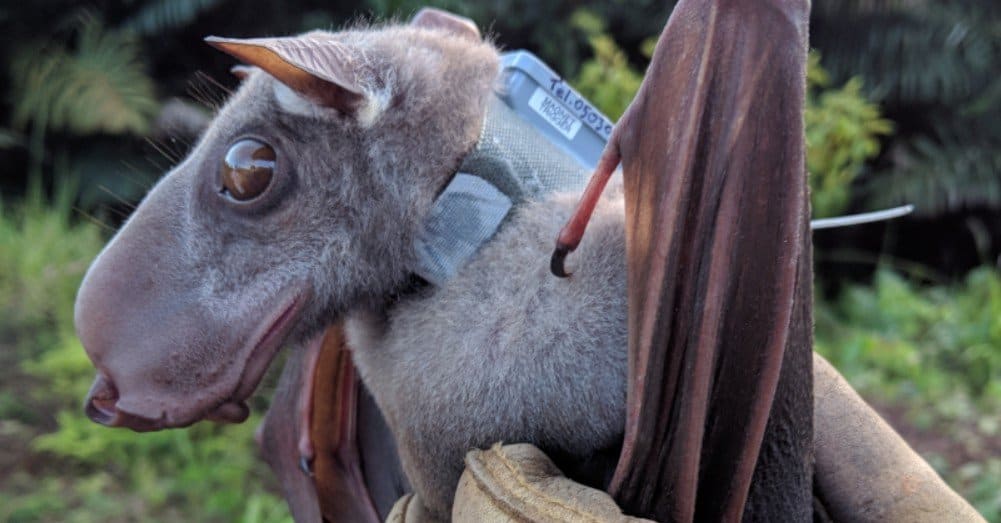
Hammer-headed bats are named for the males which have uniquely shaped heads and enlarged larynxes.
©Sarah H. Olson, Gerard Bounga, Alain Ondzie, Trent Bushmaker, Stephanie N. Seifert, Eeva Kuisma, Dylan W. Taylor, Vincent J. Munster, Chris Walzer / CC0 1.0 – Original / License
The hammer-headed bat is a creature with the unfortunate scientific name of Hypsignathus monstrosus and is found near bodies of water in the forests of central Africa. Males can weigh close to one pound and be as long as 11 inches, with females being up to 8.8 inches. Their large size makes the hammerhead the largest bat on the African mainland.
It is the males who give these bats their hammerhead moniker because they have a huge larynx and enlarged structures on their heads that help their vocalizations carry. They have oversized lips, a warty, humped snout, fat cheek pouches, and a split chin. In comparison, the female looks more like a typical flying fox. Additionally, the sounds the male hammer-headed bat makes are so loud that it is considered a pest in some places.
#2 Great Flying Fox
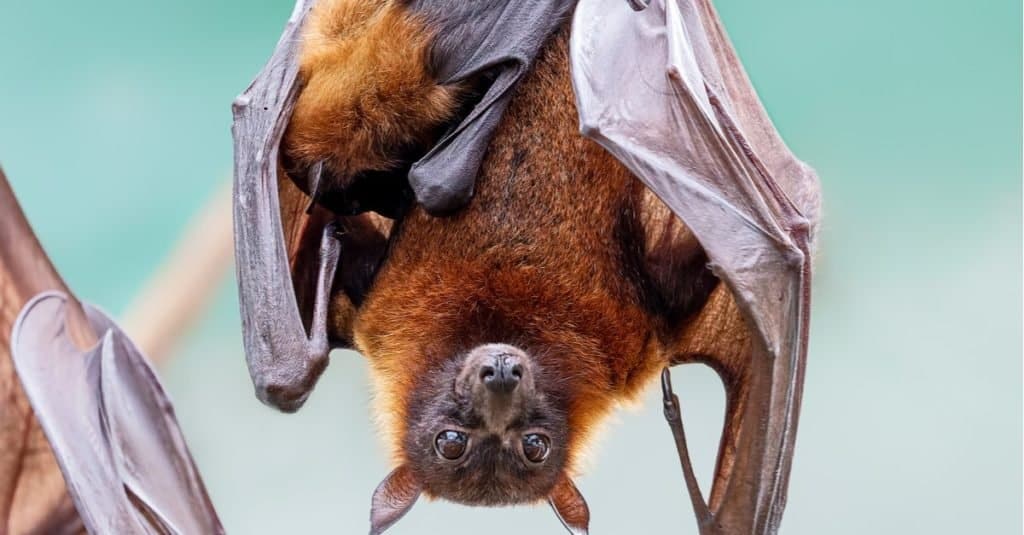
The great flying fox is the largest bat in Melanesia.
©iStock.com/tane-mahuta
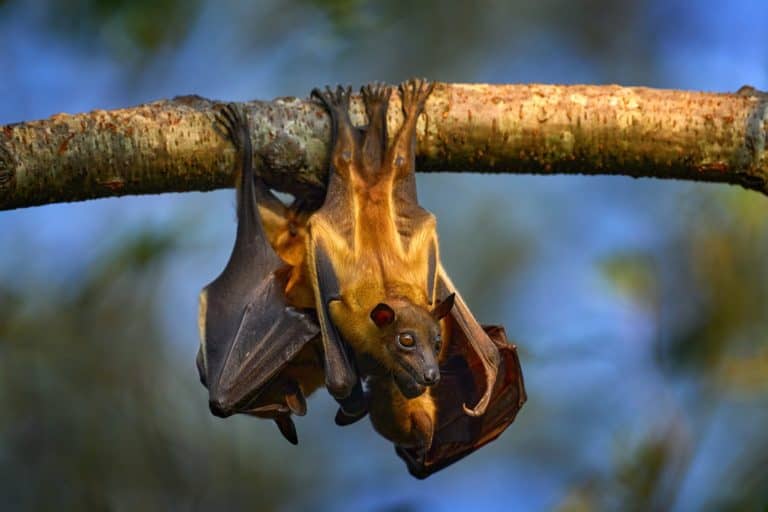
The great flying fox is found in New Guinea and the Bismarck Archipelago, which gives it its other name, Bismarck flying fox. At 10.5 to 13.0 inches in length for the males and 9.2 to 11.0 inches in length for the females, it’s the largest bat found in Melanesia. It’s also one of the heaviest, at up to 3.5 pounds, and has an impressive wingspan of three to four feet, sometimes reaching 5.6 feet. Like most other flying foxes, it eats fruit, especially figs. Since the great flying fox often lives close to the sea, it sometimes finds fruit floating on the ocean waves and plucks it up.
Great flying foxes range from golden brown to russet, though they may have a bare back and lighter-colored fur on the rump. The bat is gregarious and likes to form colonies that may be made up of thousands, all hanging from the tops of trees.
#1 Golden-Crowned Flying Fox
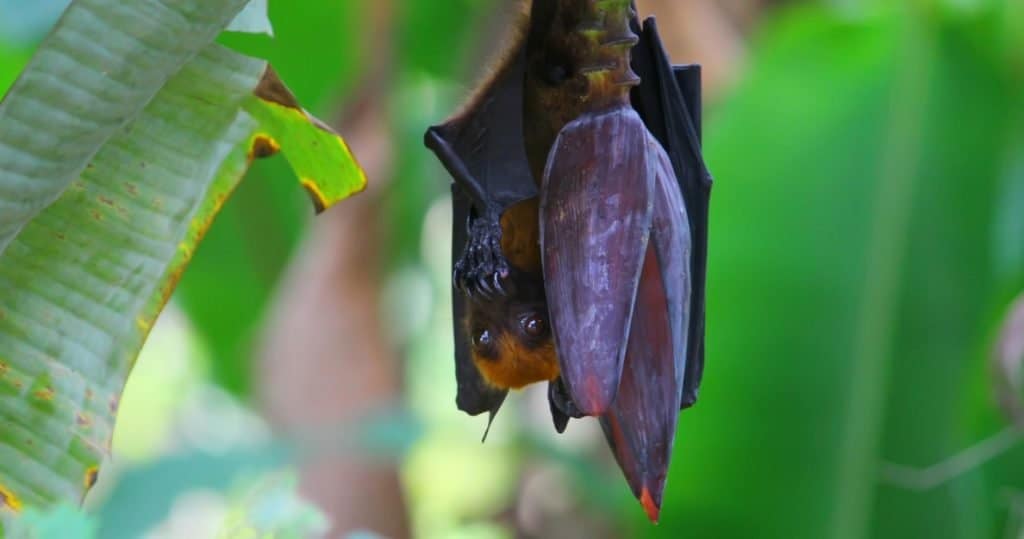
The world’s largest bat, the golden-crowned flying fox, has a wingspan of more than 5 feet.
©OREON Digital Composition/Shutterstock.com
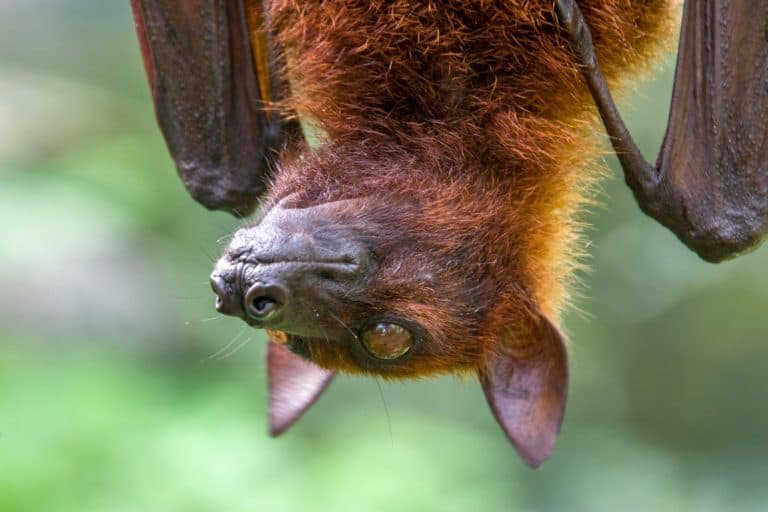
The golden-crowned flying fox is the largest bat in the world. Though its body length of 7.01 to 11.42 inches makes it shorter in length than some other species, it makes up for this with a wingspan of more than 5 feet and can weigh as much as 2.6 pounds. Golden-crowned flying foxes have short, smooth fur that is brown or black on the head, russet around the shoulder, cream on the nape of the neck, and golden hairs across the body. These bats do have a peculiar odor that can be off-putting. Scientists suspect this odor helps the bats communicate.
Golden-crowned flying foxes are found in the Philippines and live in hardwood forests near the edges of cliffs, swamps, mangrove forests, and other places where they can stay clear of human habitation. They are frugivores and help to disperse seeds, especially those of the fig. Golden-crowned flying foxes like to roost with other kinds of fruit bats. They leave their colony when the sun sets to find fruit, then come home before the sun rises. Due to extensive habitat loss in the Philippines, the golden-crowned flying fox is endangered.
Bonus Bat: Wroughton’s Free-Tailed Bat
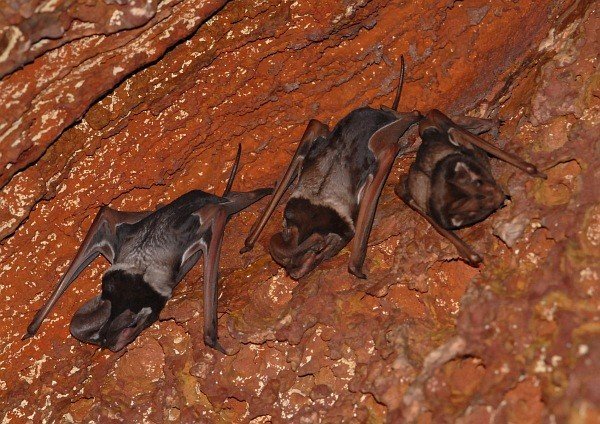
Wroughton’s free-tailed bat is so named because its tail is not attached to its wing membranes.
Wroughton’s free-tailed bat gets its name because its tail is free, or not attached to its wing membranes. These bats are about six inches long from head to tail, have large ears that point forward, and a large nose pad on a furless face. They are dark brown on the top of their head, back, and rump, though the back of the neck and shoulders are silvery. Wroughton’s free-tailed bats live in India and Cambodia and prey on insects.
CORRECTION: This article was updated on January 9, 2026, to include the grey-headed flying fox.