
Quick Take
- Comet moths, also called Madagascan moon moths, are large moths in the Saturniidae family.
- They are among the world’s most beautiful insects.
- They have tragically short lifespans.
You’ve heard of the famous Luna moth, and now, we’ll introduce you to another moth named aptly for the cosmos. The comet moth, also known as the Madagascan moon moth, is in the same Saturniidae family. Rather than having the Luna’s neon green wings, comet moths are a brilliant shade of gold and orange. Then enormous moths are one of the most beautiful insects in the world. Sadly, similar to the Luna moth, they lead tragically short lives. But during their short time on Earth, they manage to dazzle in more ways than one.
Why Are Comet Moths So Unique?
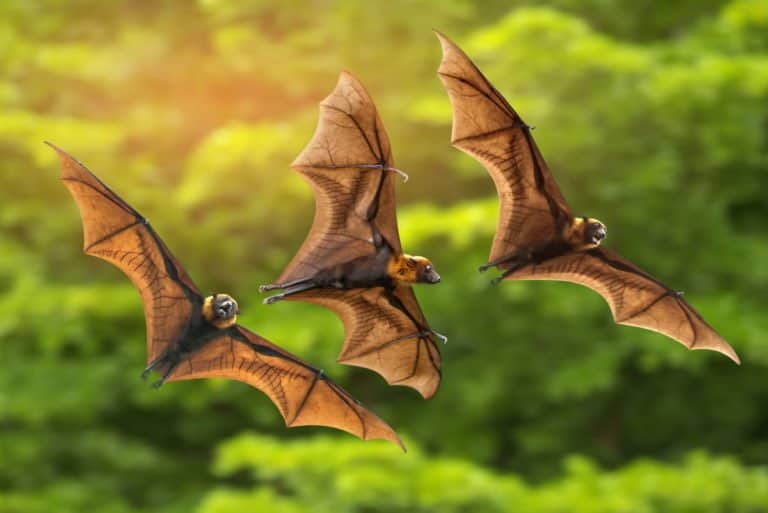
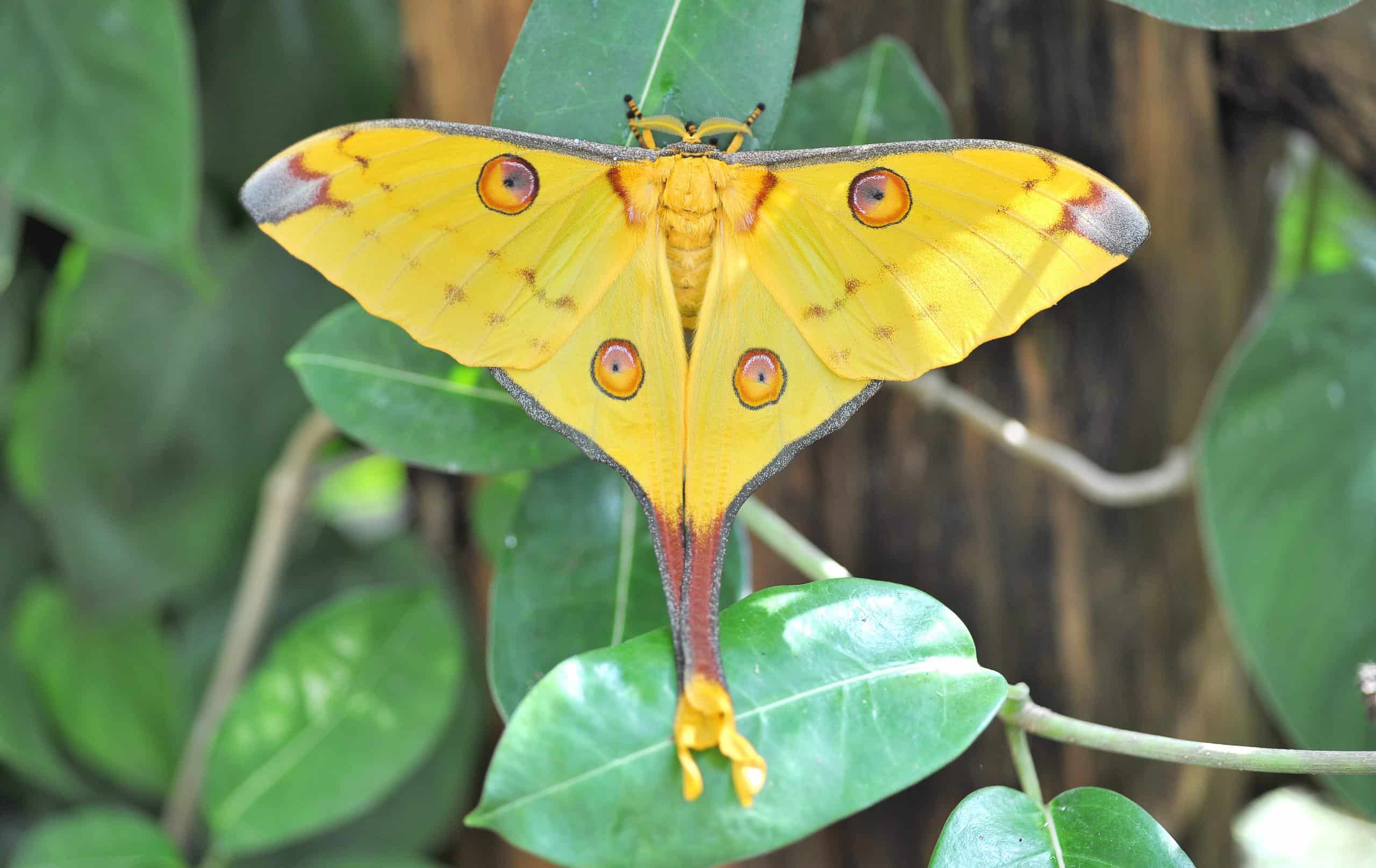
The first features most people notice about the comet moth is its size and vivid colors. With such bright shades and bold patterns across a wide wingspan, this moth is a head-turner. Its name matches its appearance, as this moth sports long hindwings that twirl behind it while flying, reminiscent of a comet’s characteristic streaming tail. But these hindwings serve a practical purpose. Moths are a major prey item for bats, which use echolocation to find them. As the comet moths glide through a bat’s vicinity, the hindwings throw off its echolocation. Instead of biting the moth’s body, bats get confused and typically bite their hindwings. While the moth doesn’t escape unscathed, it does survive.

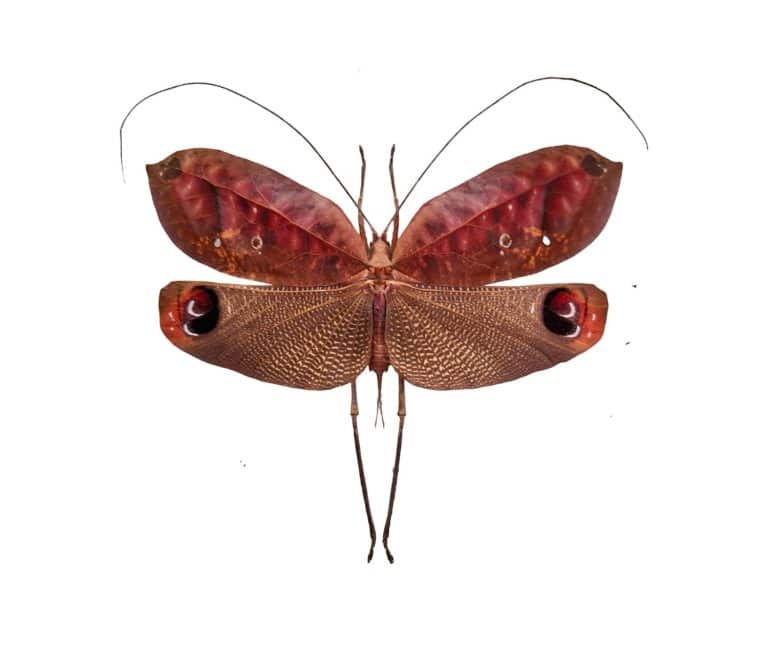
One of the most striking features of the Argema mittrei is the large eyespots on the upper and lower parts of the moth’s wings.
©Eugen Haag/Shutterstock.com
Comet moths have equally impressive defenses during the day. Their colorful wings help conceal them in Madagascar’s rainforests, as they tuck away among trees and bushes. To predators, they appear as just another flower, leaf, or brightly colored petal. If this doesn’t work, the comet moth has one more trick up its wing: mimicry. The shimmering “eyes” on its upper and lower wings aren’t just for show. When a predator is hot on the tail of a comet moth, these eye spots reflect light, mimicking the appearance of actual eyes. This deterrent is so effective that part of the comet moth’s name, “Argema,” means “speckled eye” in Greek.
Why Do They Live Such Short Lives?
The primary goal of a comet moth is to ensure the survival of the species. This comes at a severe cost to the moth, which only lives for about one week. Its anatomy is a direct result of this evolutionary adaptation, as it lacks a mouth and a digestive system. This might seem counterintuitive since food typically helps insects survive, but it would only hinder to the comet moth. This species survives on energy stored during its caterpillar stage, which is released when it emerges from its cocoon.
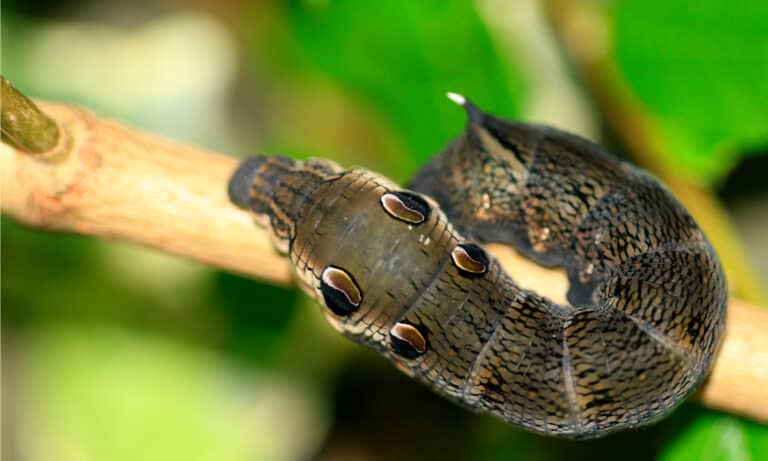
Males typically live the shortest lives, with many dying after 5 to 7 days. Females live slightly longer, surviving for 7 to 10 days on their fat reserves. Interestingly, comet moths live longer lives as caterpillars. This stage lasts roughly two months, and it’s when they begin storing energy for the final phase of their metamorphosis.

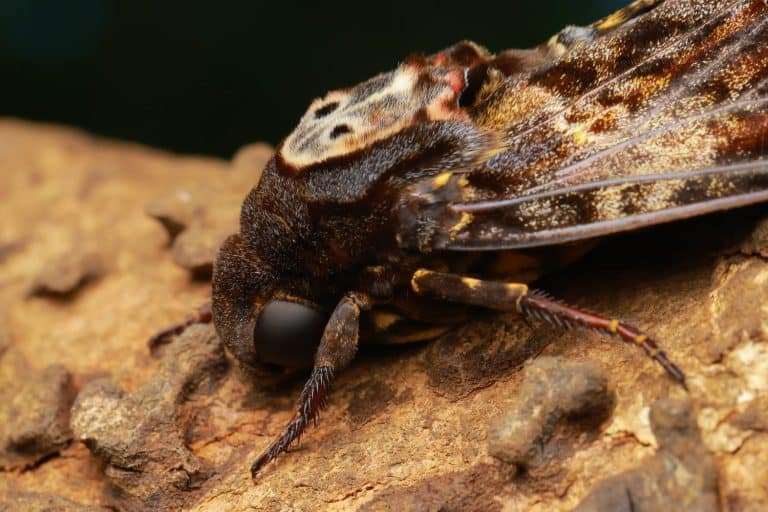
Comet moths are among the largest silk moth species in the world.
©AlessandroZocc/Shutterstock.com
As adult moths, their only goal is to reproduce. They spend their winged week in search of a mate. Typically, females remain in one location while relying on males to find them. A built-in radar in the form of fluffy-looking antennae helps males track down females. Once a female has found a male to aid in fertilization, she lays between 120 and 170 eggs. After this is done, so is her purpose. Few female moths live for very long after laying their eggs, dying shortly after they’ve done their reproductive duty.
The Conservation Status of the Comet Moth
These moths are considered endangered but do not have official status from organizations such as the IUCN Red List. This is because they can be bred in captivity, though they are struggling in the wild. The undomesticated species, as a whole, is threatened. Deforestation in Madagascar has damaged the comet moth’s natural habitat, leaving many without homes.
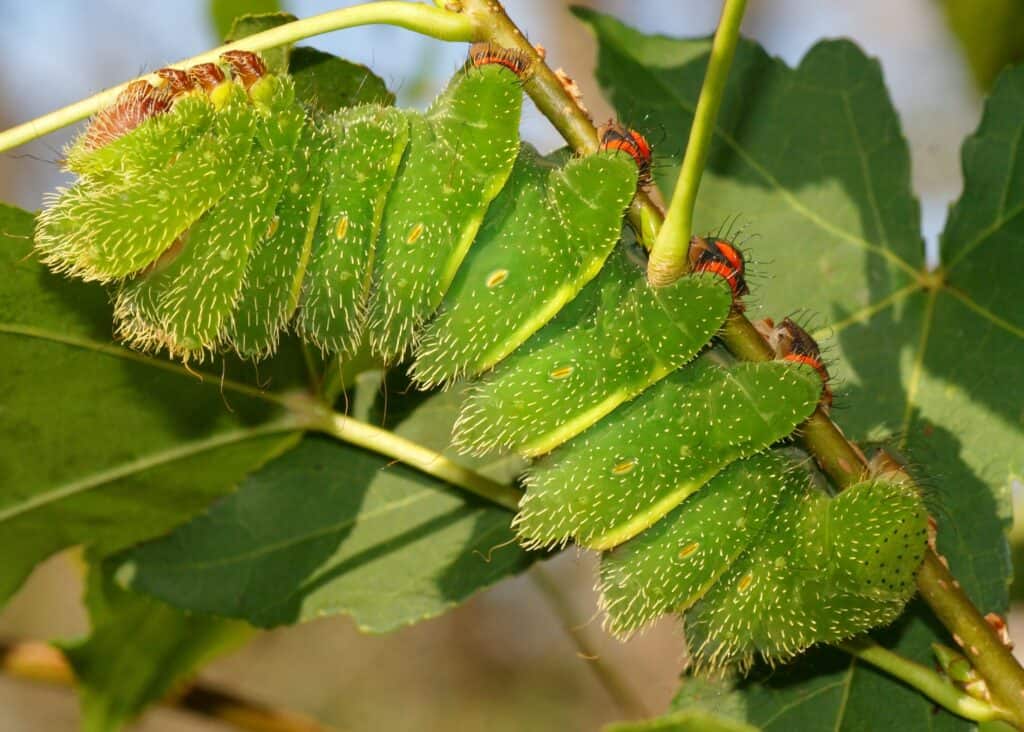
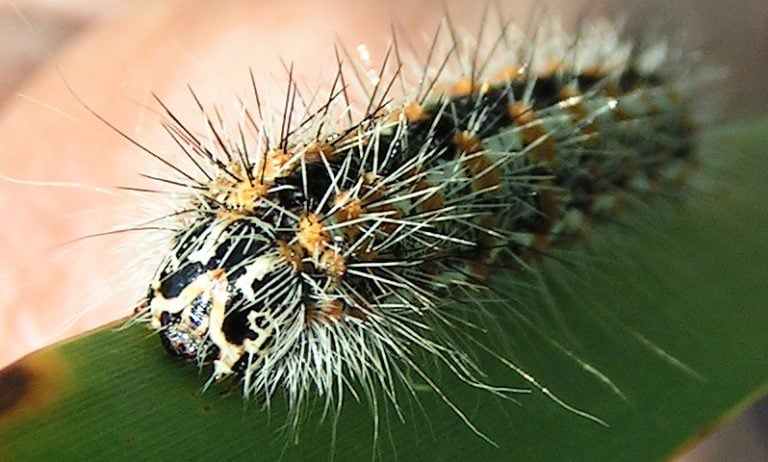
Comet moths change color as they grow from caterpillar to moth.
©Matt Jeppson/Shutterstock.com
While comet moths do not require food as adults, they do sustenance during their life as caterpillars. Without the rainforests they call home, food can be scarce. Additionally, these rainforests provide a safe space for their cocoons, where they remain for approximately 90 days. Without forest protection, the species will be at greater risk, leading to potentially devastating populations in years to come. Current efforts to sustain the population include education and awareness, sustainable farming, captive and commercial breeding, and bioresearch. Active conservation efforts, such as habitat protection through reserves like Ranomafana National Park, are key to the survival of the comet moth.