
Quick Take
- The Danube River is home to many large fish, include the Danube salmon and the beluga sturgeon.
- Beluga sturgeon can reach 11 feet in length and up to 529 pounds.
- An individual sturgeon can produce 33 to 44 pounds of roe, or caviar.
- The WWF has released over 50,000 beluga sturgeons into the Danube to combat current extinction trajectories.
The Danube River is the second longest river in Europe. It is one of the most important cultural and economic features in the regions through which it flows. Furthermore, this river is home to one of the largest freshwater fish to have ever lived. This river monster isn’t just huge — its eggs are considered a delicacy to people worldwide. Keep reading to discover the biggest fish in the Danube River.
Where Is the Danube River?
The Danube River is the second longest river in Europe, traveling for 1,770 miles. It flows through most of Central and Southeastern Europe, beginning in the Black Forest in Germany and ending in the Black Sea north of Turkey. The river is an ancient trade route and is currently an important source of drinking water and hydropower for many countries. Additionally, many of today’s modern borders are settled along the Danube’s shores.
The Biggest Fish in the Danube River
Many large fish live in the Danube River, including the Danube salmon (Hucho hucho), the largest species of freshwater salmon, which can reach nearly 6 feet in length and weigh over 110 pounds. The Danube is also home to six different species of sturgeon, five of which are critically endangered. In fact, the portions of the Danube River that flow through Romania and Bulgaria are home to the only viable wild sturgeon populations in the European Union.
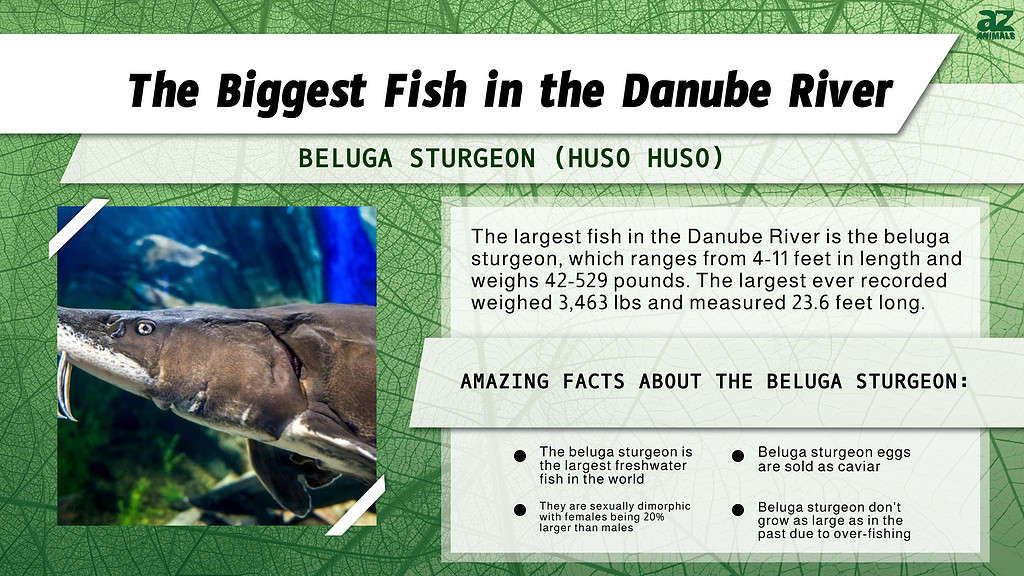
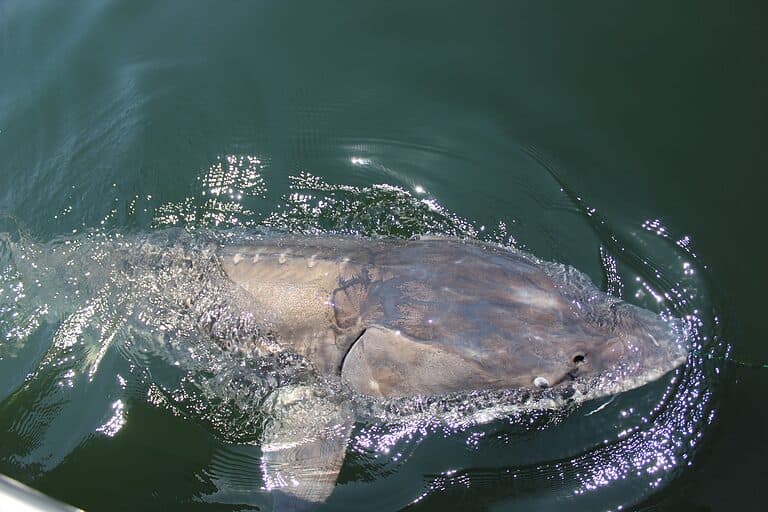
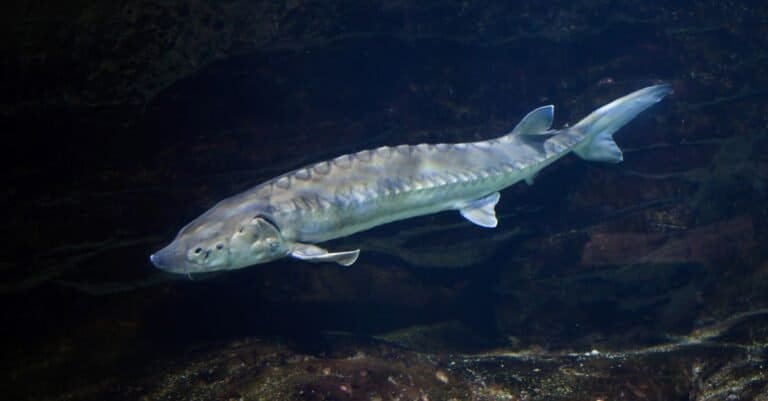
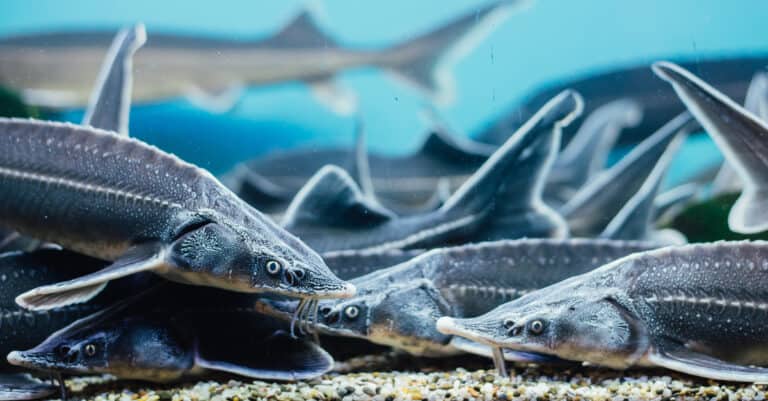
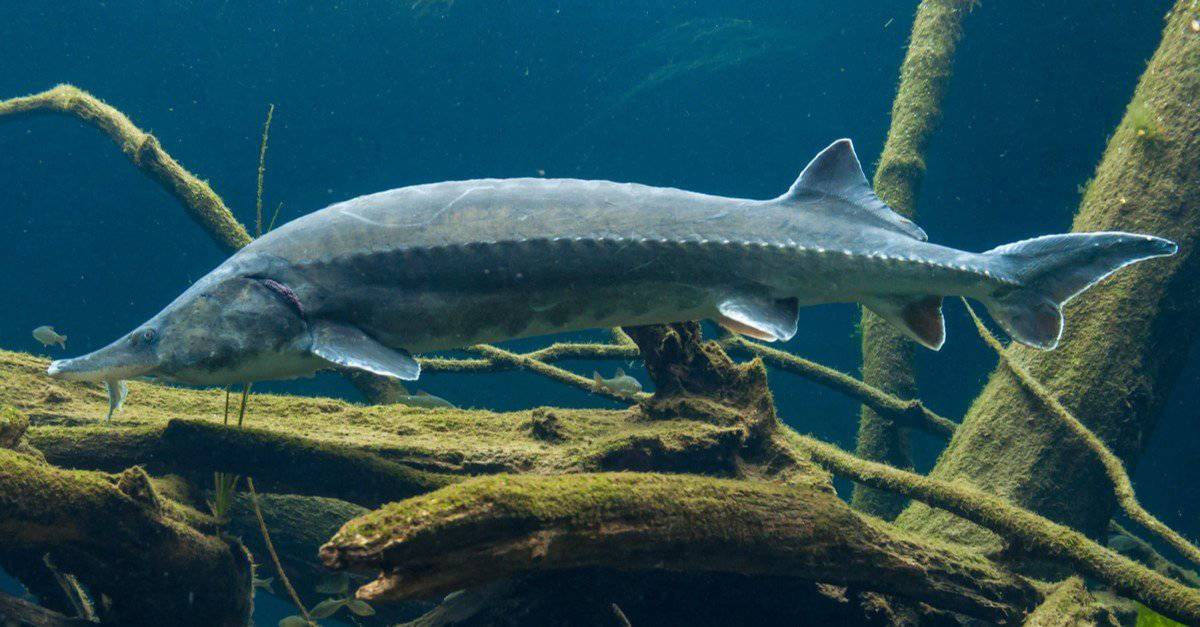
However, the largest fish in the Danube River is the beluga sturgeon, widely recognized as the largest freshwater fish in the entire world. The largest beluga sturgeon ever recorded was caught in the Volga estuary. It was 3,463 pounds and measured 23.6 feet long. That’s larger than the average female great white shark, which averages 16-17 feet long and weighs around 2,400 pounds.
Beluga sturgeon regularly grow to between 4 and 11 feet in length and weigh between 42 and 529 pounds. These fish are sexually dimorphic, with the females being about 20% larger than the males, on average. The primary reason beluga sturgeon no longer reach their former sizes is overfishing. Belugas grow throughout their entire lives and can live for over 100 years, which allows them to reach massive sizes.
What Makes the Beluga Sturgeon so Special?
Aside from being the largest freshwater fish in the world, beluga sturgeon are also among the most sought-after fish globally. Beluga roe, which are unfertilized beluga eggs, are the most prized caviar in the world. At peak prices, beluga caviar may cost around $5,000 per pound, with some premium varieties reaching even higher prices, depending on the origin. The most expensive caviar is Almas caviar. This rare type of caviar is taken from albino Iranian beluga sturgeons between 60 and 100 years old. These fish are primarily found in the South Caspian Sea. Almas Iranian beluga caviar can sell for $34,500 per kilogram, which is 2.2 pounds.

Beluga caviar is the most expensive caviar in the world.
©Subbotina Anna/Shutterstock.com
An individual sturgeon can produce 33-44 pounds of roe each time they spawn. So, at $5,000 a pound, 44 pounds of roe equals $220,000. Such extreme prices fuel high levels of fishing that are unsustainable for the long-term survival of the sturgeon. Although there are methods to extract the caviar without killing the fish, it isn’t always performed. Even when the eggs are removed without killing the fish, no new sturgeon are produced.
Beluga Sturgeon and a Battle for Survival
Currently, the beluga sturgeon is listed as Critically Endangered by the IUCN and is protected under various conventions, including the Convention on International Trade in Endangered Species of Wild Fauna and Flora (CITES) and the General Fisheries Commission for the Mediterranean (GFCM-FAO). Furthermore, the United States Fish and Wildlife Service has banned the import of caviar from the Caspian Sea since 2005, after placing the animal under the Endangered Species Act.
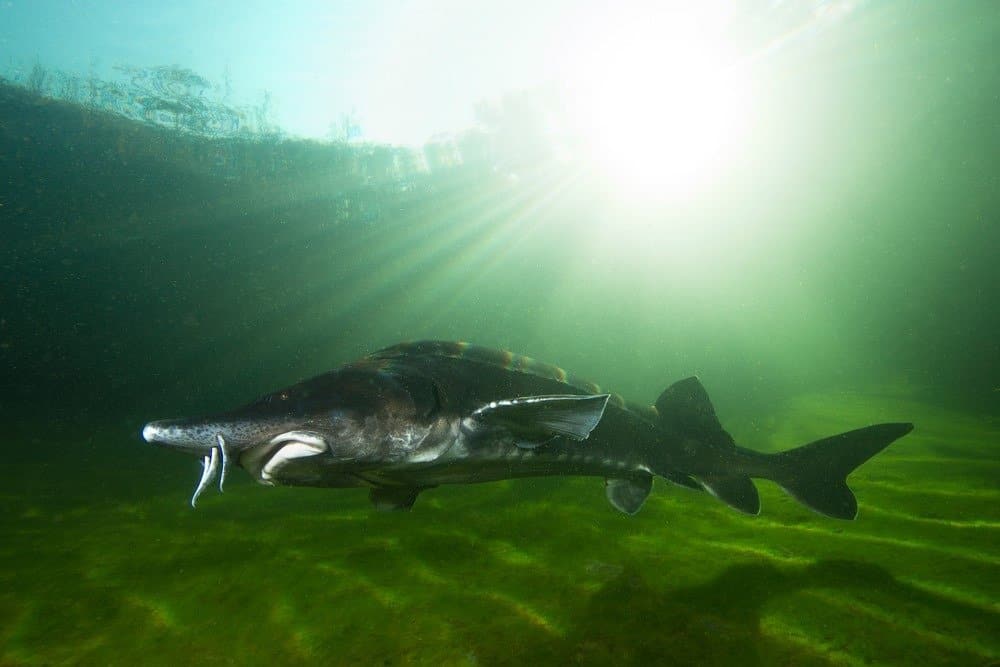
Beluga sturgeon are at risk of extinction due to overfishing.
©Rostislav Stefanek/Shutterstock.com
Currently, re-population efforts are in place to ensure the long-term survival of these ancient fish. In 2020, the World Wildlife Fund (WWF) released 7,000 young sturgeons into the Danube River in Bulgaria to stimulate re-population efforts. So far, the WWF has released over 50,000 sturgeons into the Danube. Progress is slow, but as awareness grows, more governments, companies, international organizations, and fisher communities are aiding in the recovery of these ancient animals.