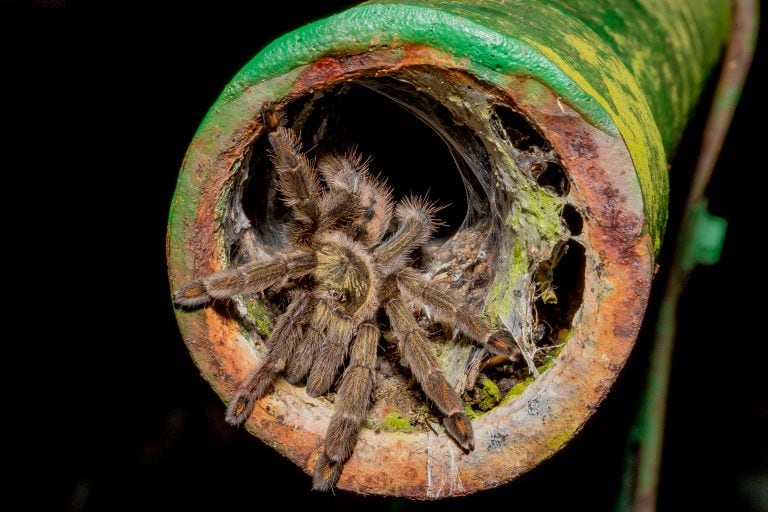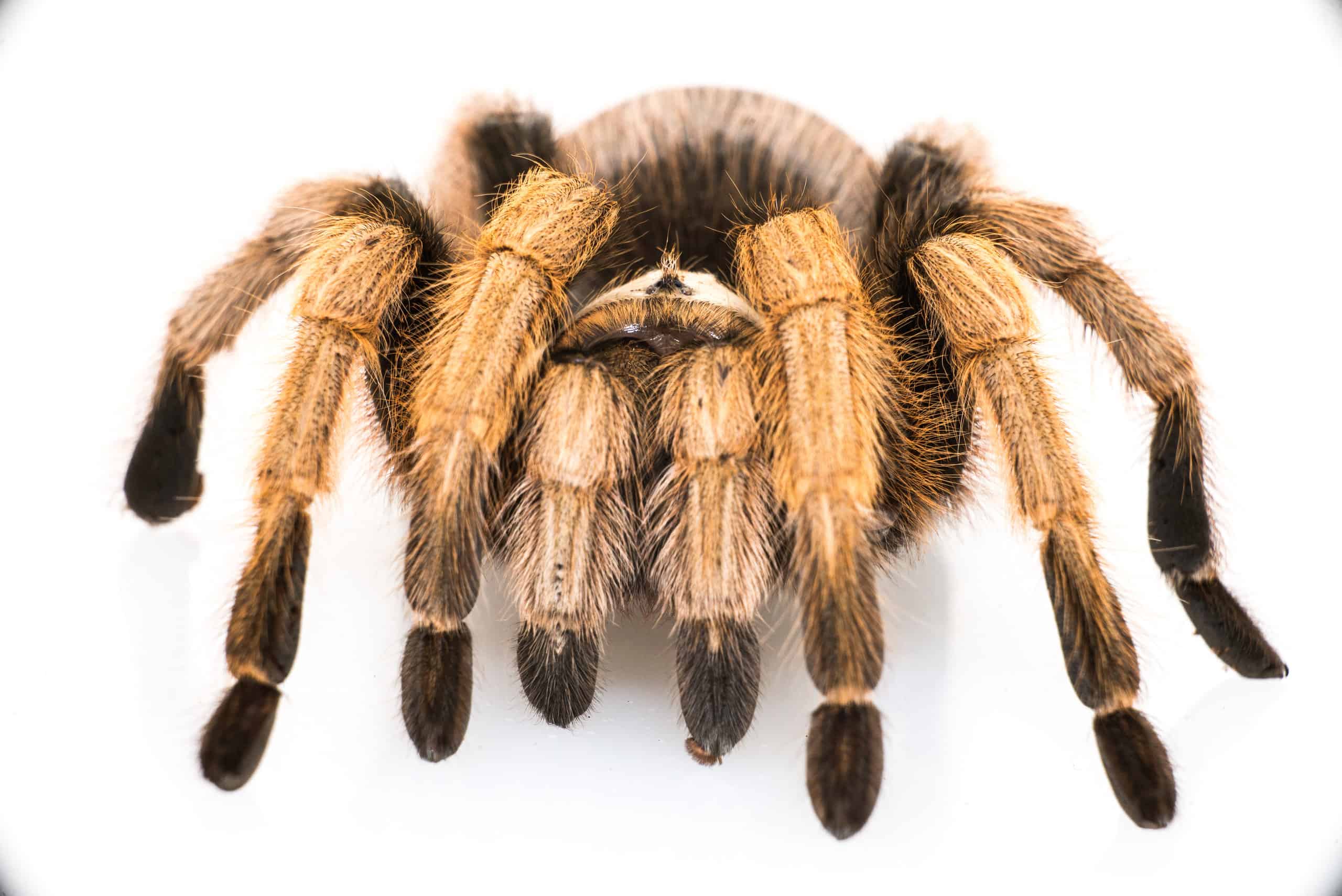

Arizona, home of the Grand Canyon, is also home to some big spiders. While it is primarily known for its hot desert climate, the state also has mountains and forests, which provide a wide variety of environments for many different spider species. Arizona boasts at least 30 different tarantula species alone. There are several other large spiders that live in the state, including wolf spiders and huntsman spiders. But how large do these spiders get, and where are they found? Keep reading to learn more about five of the biggest spiders in Arizona.
5. The Giant Crab Spider
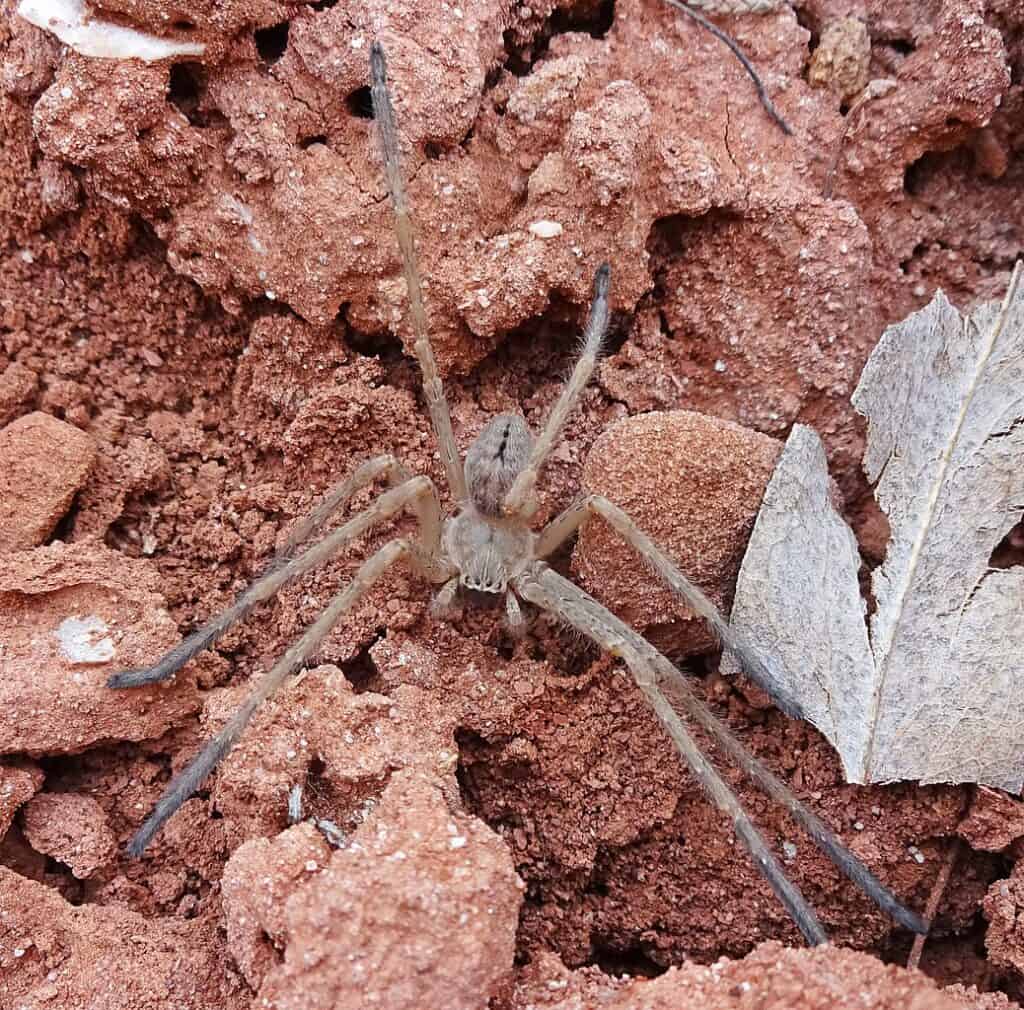
Giant crab spiders can orient their legs horizontally to move sideways like a crab.
The giant crab spider (Olios giganteus), or golden huntsman spider, can be found throughout Arizona and Sonora, Mexico. They have a body length of about 0.8 inches and a leg span of 2 to 2.5 inches, although some sources suggest their leg span can reach up to 3 inches. The females are larger than males.
The legs and cephalothorax of the giant crab spider are light brown and covered in short hairs, with the ends of the legs being darker. They also have a thin, black arrow shape running down their abdomens. Their legs can be oriented at a 90° angle to their bodies, allowing them to move sideways very quickly, like a crab. They are ambush predators, waiting on flat surfaces such as trees, walls, and ceilings to sink their curved, needle-like fangs into small insects. Their bite is reportedly painful, but the venom is not dangerous to humans.
4. The Carolina Wolf Spider
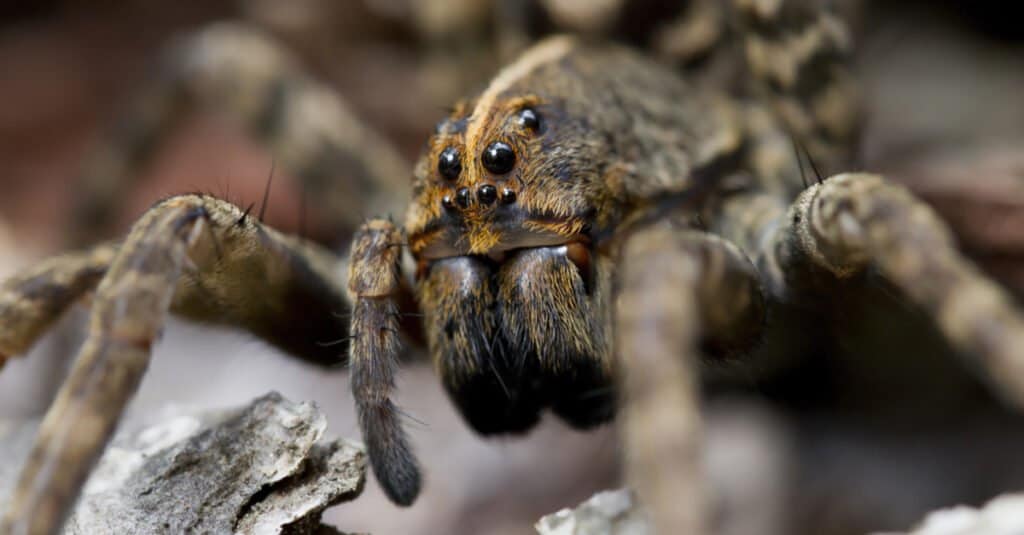
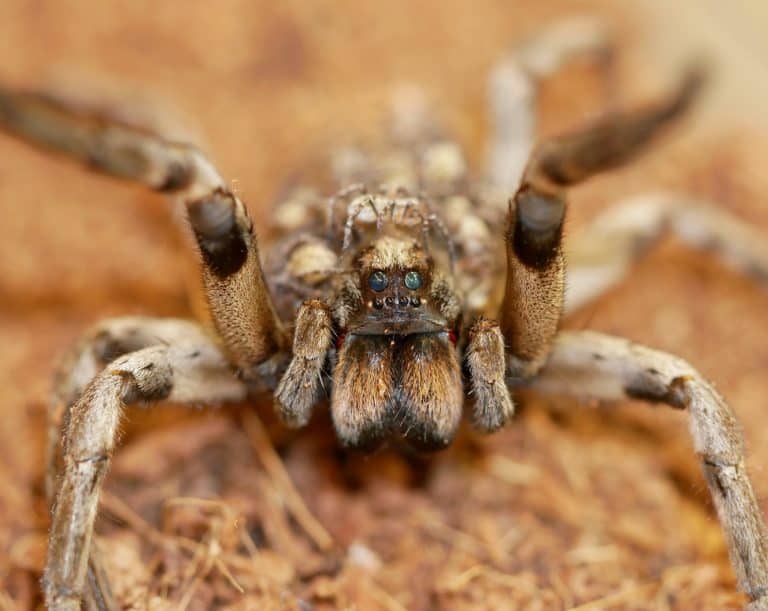
Carolina wolf spiders are the largest wolf spider species in North America.
©Will E. Davis/Shutterstock.com
The Carolina wolf spider (Hogna carolinensis) is widely distributed across the U.S., including Arizona. These spiders make their burrows in the sandy, rocky soil of the desert and are most common in the Arizona Upland region. It is the largest species of wolf spider, measuring up to 1.4 inches in body length and having a leg span of up to 4 inches. As in many spider species, the males are smaller than the females.
These hairy spiders are mottled grey to brown with peachy-orange on the front of their chelicerae, or mouthparts. Males can also have orange down their sides. They have dark, stripe-like markings on the cephalothorax and abdomen. They do not catch prey in webs but instead hunt for insects on the ground at night. Wolf spider venom paralyzes their prey, but it is not dangerous to humans and typically only causes mild, localized symptoms.
3. The Grand Canyon Black Tarantula
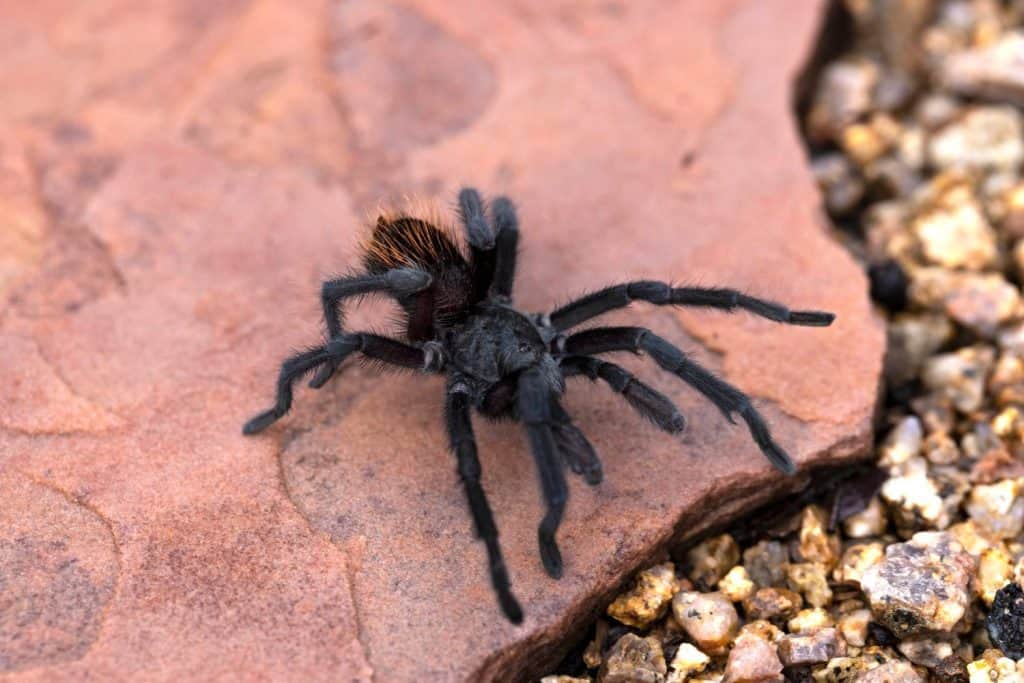
Spiders inside the Grand Canyon are said to grow larger than those on the rim.
©Malisa Nicolau/Shutterstock.com
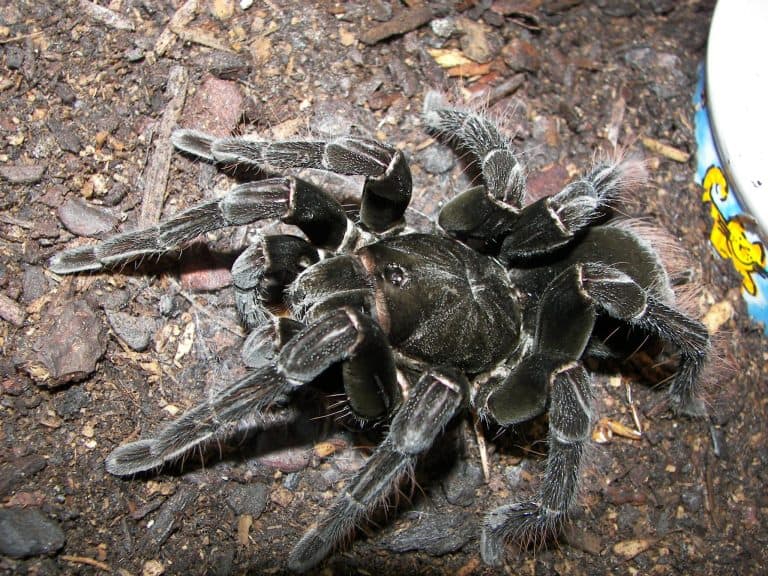
Grand Canyon black tarantulas (Aphonopelma marxi) are found throughout Grand Canyon National Park and at higher elevations in northern Arizona, New Mexico, Utah, and Colorado. These spiders can reach lengths of up to 2 inches and leg spans of 4 inches, with females being larger. Spiders that live inside the canyon are also said to grow larger than those that inhabit the rim.
As the name suggests, these spiders are covered in black hair, but the hair on their abdomens can be a reddish-orange color. They have urticating hairs, which cause a stinging sensation when thrown into the faces of predators. These spiders spend most of their time in silk-lined burrows, only leaving at night to hunt. They use their fangs to envenomate prey, which includes insects and small rodents. Bites cause pain, swelling, and redness in humans, but are not medically significant.
2. The Tucson Bronze Tarantula
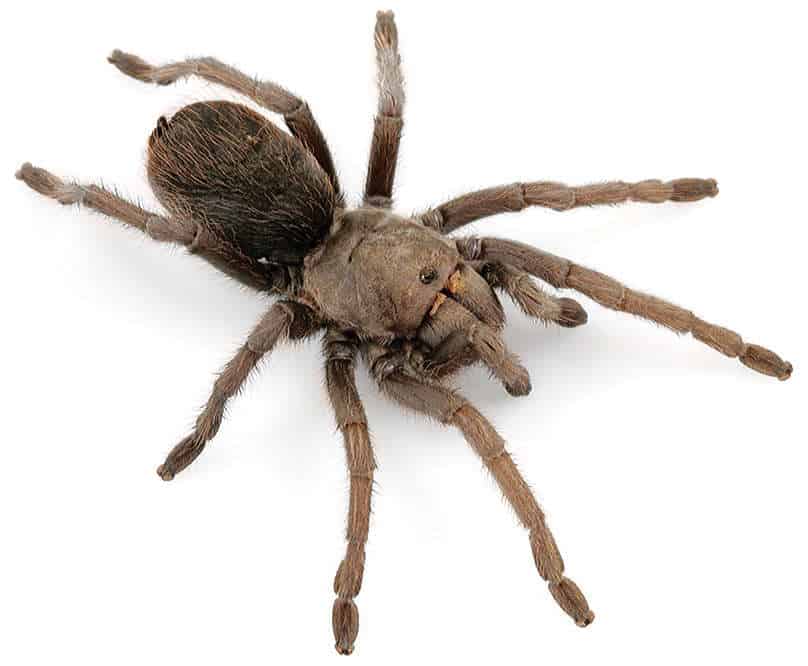
Tucson bronze tarantulas are found in the scrublands of southeastern Arizona.
©Chris A. Hamilton, Brent E. Hendrixson, and Jason E. Bond / CC BY 4.0 – Original / License
The Tucson bronze tarantula (Aphonopelma vorhiesi), also called the Madrean red rump tarantula, is primarily found in the scrublands of southeastern Arizona and New Mexico. They can reach between 1-2 inches in body length, with a leg span of 3 to 5 inches. The females are light brown, while males are black with rusty-colored hairs on their abdomens.
They hide in burrows or under rocks during the day, emerging to hunt for insects at night. The Tucson bronze tarantula is said to be shyer and more docile than other tarantula species. However, they also have urticating hairs that they can flick at threats when provoked. Their venom is relatively harmless to humans and is said to be similar to a bee sting.
1. The Arizona Blond Tarantula
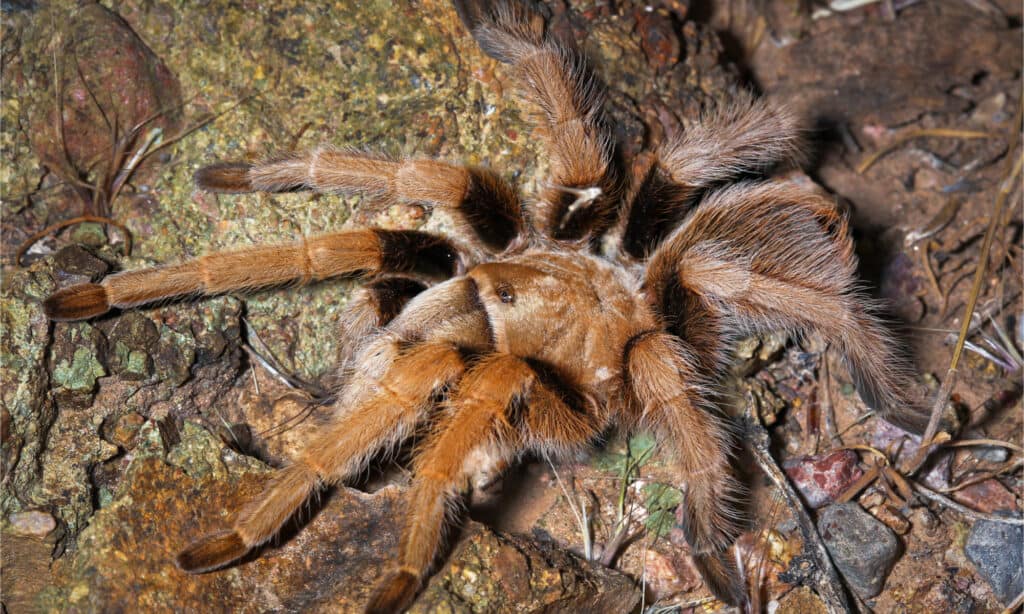
Also known as the western desert tarantula, the Arizona blond tarantula is found in the Sonoran desert.
©Ryan M. Bolton/Shutterstock.com
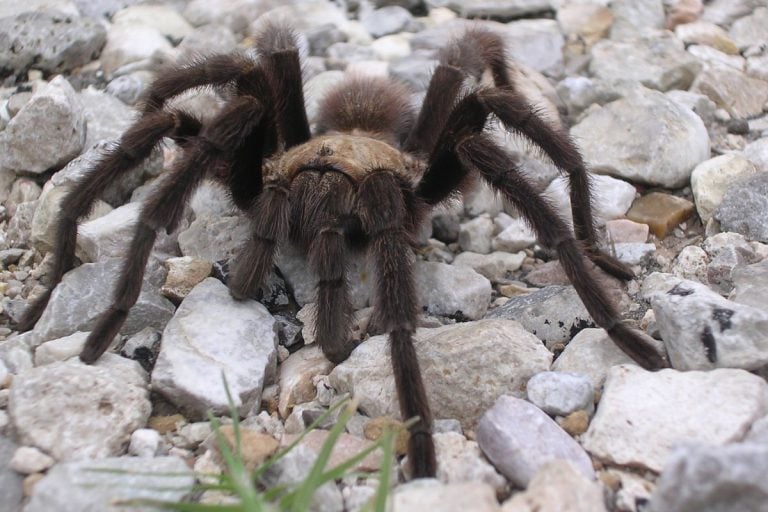
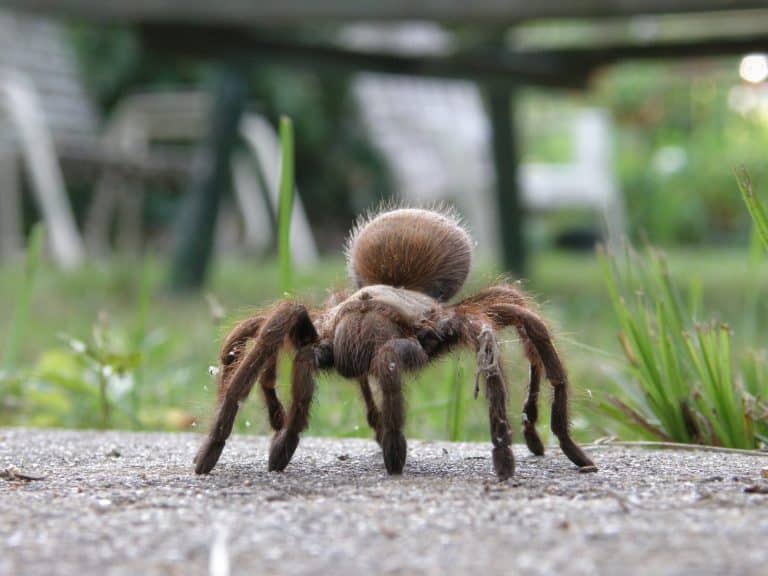
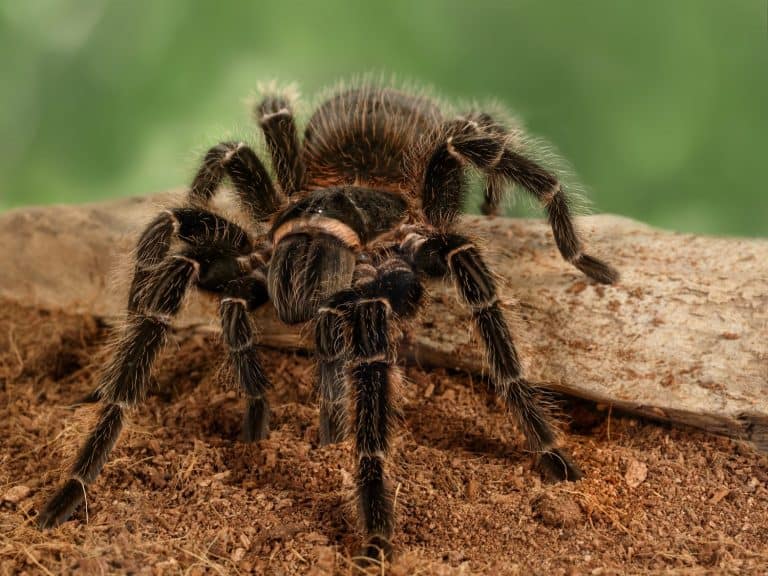
The Arizona blond tarantula (Aphonopelma chalcodes), also known as the Western desert tarantula or the Mexican blond tarantula, is found in the Sonoran desert. They can also be found across desert regions in New Mexico, Southern California, and northwest Mexico. They are the most common tarantula in Arizona. These tarantulas can grow 3-5 inches in length and have a leg span of up to 6 inches, with females being measurably larger.
The carapace is covered with tiny, pale brown hairs. The stockier females are light brown with tan-colored legs that can be darker at the top. The more slender males have dark brown bodies and dark legs. They have urticating hairs on their abdomens, which they use for self-defense. These tarantulas use their fangs to inject venom into their prey, which includes insects and other invertebrates. They live in burrows and wait to ambush insects that trip over the silk at the entrance. A bite from this tarantula is uncommon, but it can be painful. It is typically not dangerous to humans and is often compared to a wasp sting.