
Quick Take
- Some sturgeon species grow large enough that their leaps from the water likely sparked legends, and a few are still out there doing it today. Discover their size →
- When summer temperatures rise, sturgeon pull off a physiological trick that most fish simply can't, and this ability changes how scientists think about heat tolerance. Explore the heat survival →
- A sturgeon's slow life cycle, once a survival advantage, has quietly become its biggest liability. Slow maturation explained →
If there is any fish out there that could be mistaken for a river monster, it’s a sturgeon. They can grow to sizes that rival beasts straight from a fairy tale. These ancient fish haven’t changed much in hundreds of millions of years.
Nothing can prepare you for seeing a sturgeon break the water surface. Some are so huge that they likely inspired legends about sea monsters. While they face increasing threats from human development, sturgeons are hardy, capable, and intimidating creatures that give new meaning to the term living fossil.
The Sturgeon Situation
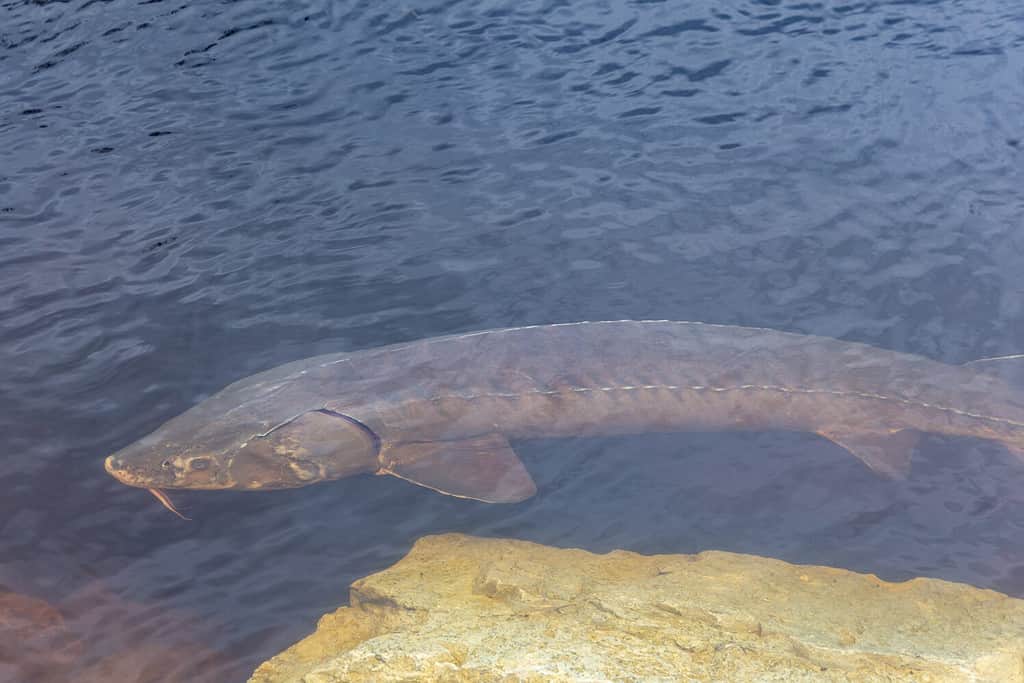
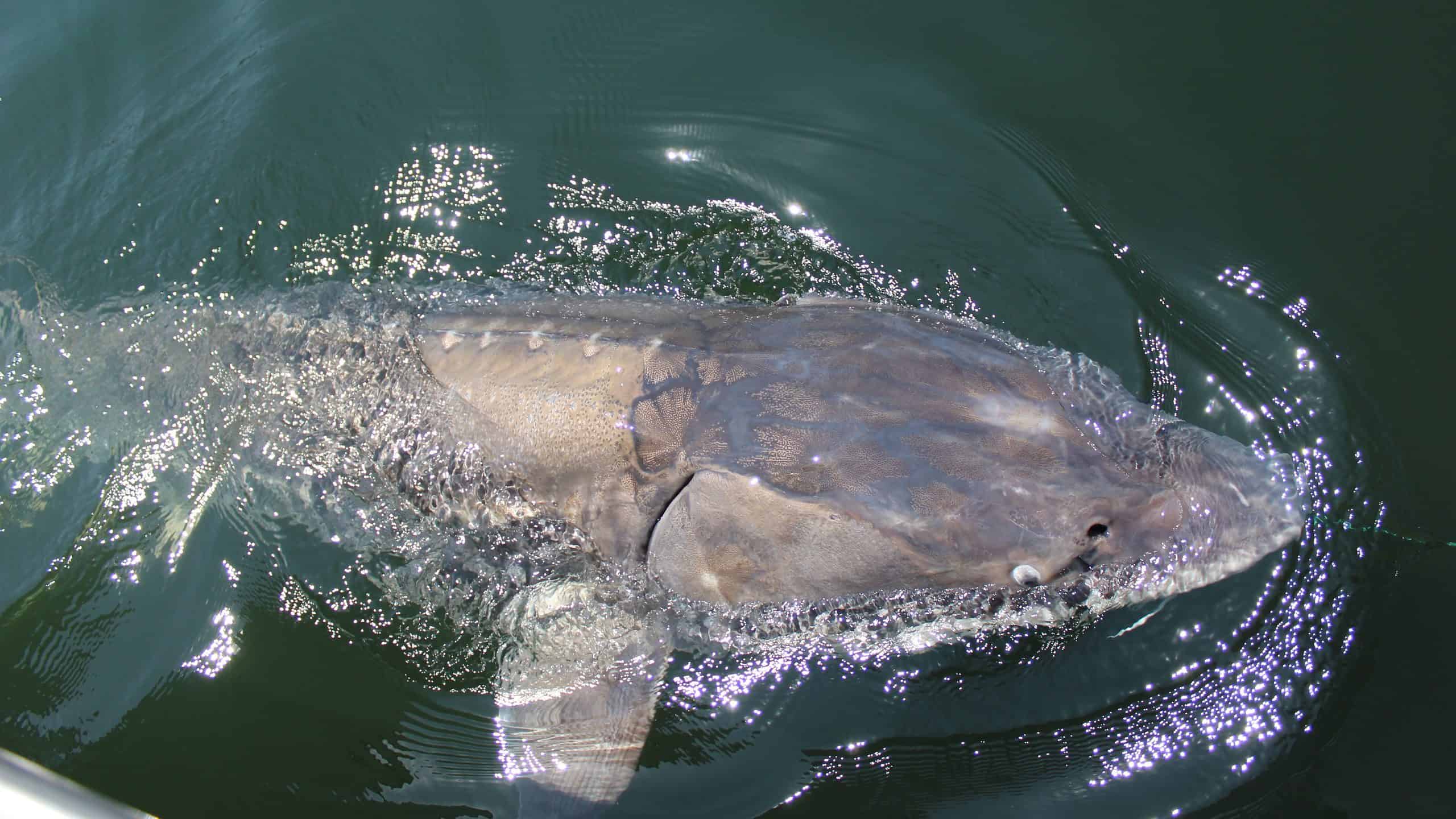
Some sturgeon species can grow over 10 feet in length.
©James.Pintar/Shutterstock.com
The Acipenseridae family contains 27 sturgeon species, with the earliest sturgeon fossils dated to the Late Cretaceous period. Since then, they have hardly evolved. While they are native to subtropical, temperate and sub-Arctic rivers, lakes, and coastlines of Eurasia and North America, their reach was once wider. A fossil found in Morocco proves they once lived in northern Africa.
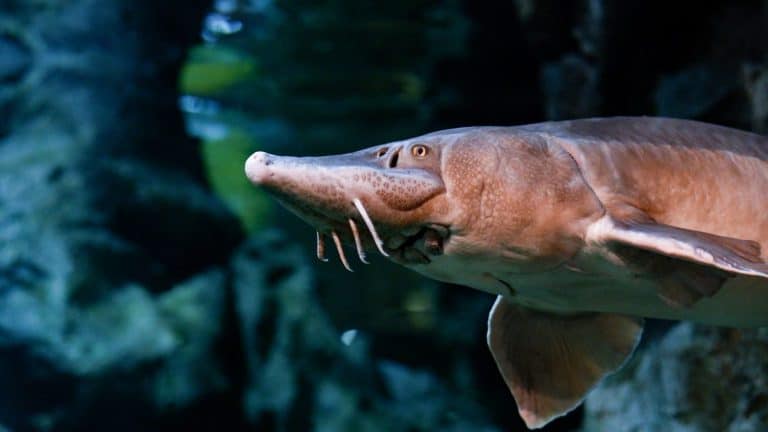
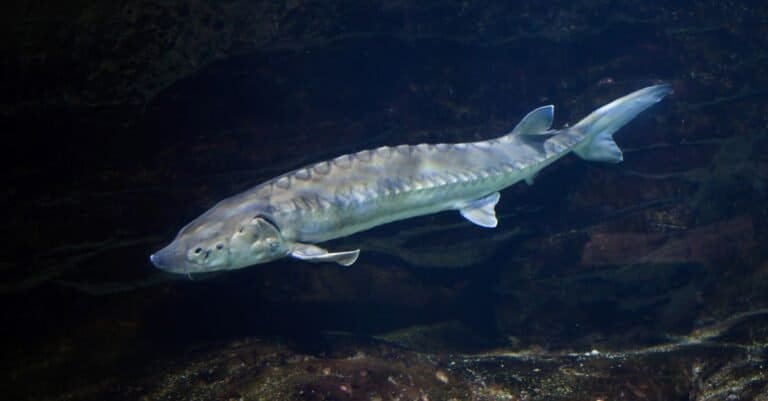
Sturgeons feature fins similar to those of sharks and elongated bodies with bony plates called scutes. They also have a catfish-like appearance, with long barbels on the sides of their mouths that they use to detect prey. While some sturgeon species are on the smaller side, others can grow to mythical proportions. North American white sturgeons are capable of growing to 20 feet in length, though most of the bigger specimens top out between 10 and 12 feet. Green sturgeon can also grow quite large.
Sturgeons live remarkably long lives, with some varieties living up to 100 years. As anadromous bottom-feeders, they forage for food low in the water column. Though sturgeon migrate upstream to spawn, they spend most of their lives in river deltas and estuaries.
Aquatic Adaptability
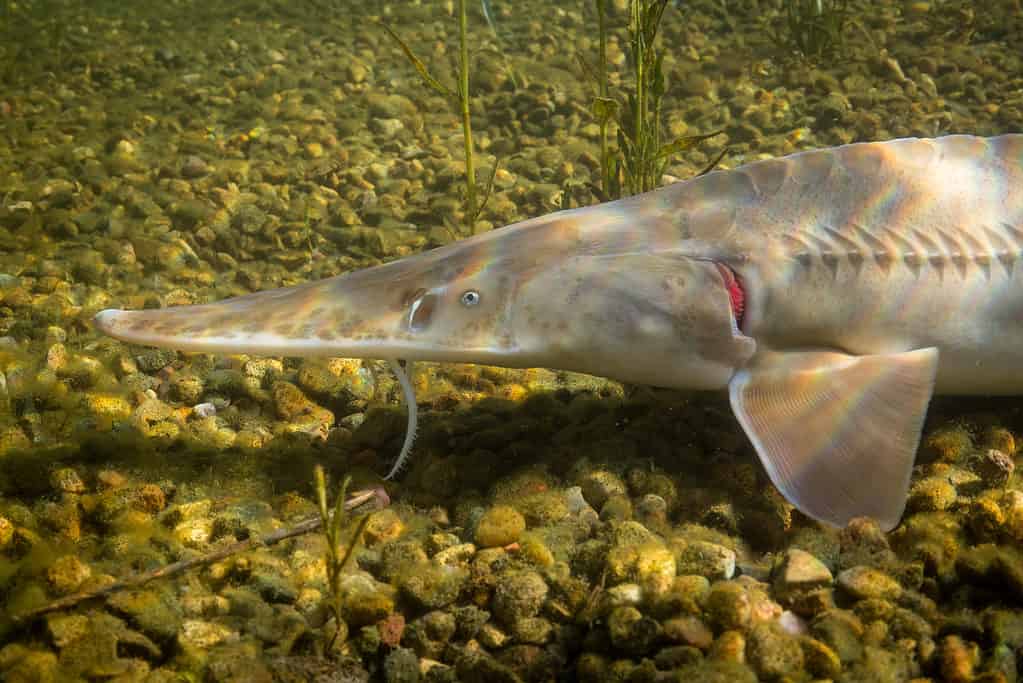
Sturgeon are bottom feeders. They tend to stick to lower levels of the water column, which helps them beat the heat.
©Ryan Hagerty/USFWS, Public domain, via Wikimedia Commons – Original / License
Their incredible size and armored scales (scutes) help sturgeon avoid most predators. Sturgeon also employ some impressive skills to beat the summer heat. They often congregate around cold-water springs in riverbeds to protect themselves from surface temperatures. In general, they tend to linger in cooler parts of the water column.
A general rule of thumb for sturgeons is the cooler the average water temperature, the slower they grow and the longer they live. When diving to the bottom is not enough to avoid the heat, certain sturgeon species undergo physiological changes. Lake sturgeon, for example, can suppress their metabolic rate by nearly a quarter. This reduces their need for oxygen and energy, making them more resistant to heat.
When all else fails, species like green sturgeon can synthesize specialized proteins that repair and preserve cellular enzymes. This allows them to endure thermal stress better than the average fish.
Growing Threats
Sturgeons have survived for tens of millions of years with hardly any evolution, but rapidly expanding human development threatens their survival. They may live long lives, but this means they don’t mature until about 15 years of age. They don’t spawn every year, either.
Sturgeon are prized for their eggs, which are sold as caviar. This demand, combined with habitat destruction, has led to serious threats to sturgeon species worldwide. Indeed, the IUCN Red List features 27 sturgeon species, 63% of which are listed as Critically Endangered. As such, various conservation organizations and government agencies have stepped in to help. Strategies include population monitoring, restrictions around overfishing, and even guarding programs for spawning sites.
Dwindling populations make seeing a large freshwater sturgeon in the wild all the more exciting. There is no experience quite like seeing a dolphin-sized sturgeon breach the surface, fly through the air, and disappear again into the murky depths.