
Quick Take
- This fish outlasted dinosaurs and a mass extinction, yet a few decades of human activity nearly finished it off for good. See what nearly wiped them out →
- The recovery milestone conservationists just hit sounds like progress, though the math behind it reveals how precarious the comeback really is. Explore the recovery numbers →
- Female lake sturgeon can outlive most humans, and that biological quirk is exactly what makes saving them so difficult. Learn about their lifespan →
- If you accidentally hook one of these protected giants, the wrong move could undo years of conservation work, so there is a specific protocol anglers need to know. Get the release protocol →
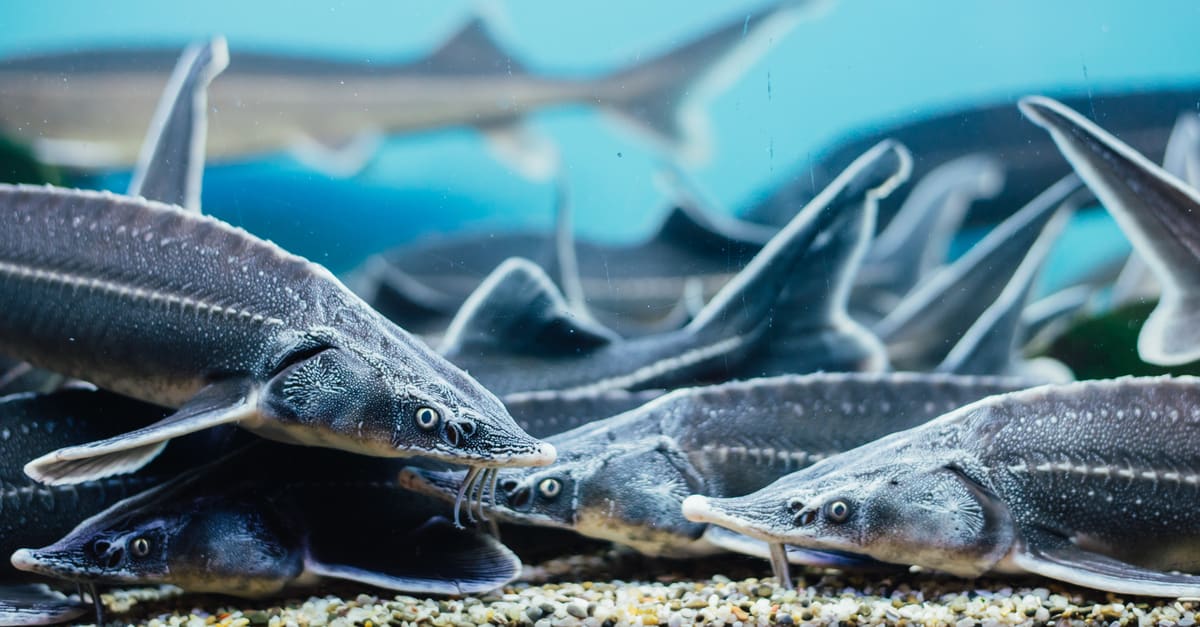
An ancient “river monster” is reappearing in U.S. lakes after nearly going extinct. That so-called monster is the mild-mannered lake sturgeon, a fish that was once abundant in the Great Lakes before decades of waterway mismanagement and overfishing led to their decline. But thanks to aggressive conservation efforts, the massive fish may just beat the odds.
Conservation Efforts Have Made Improvements in the Lake Sturgeon Population
Lake sturgeon have been around since prehistoric times. The massive fish that look like sharks with armored scales predate Tyrannosaurus Rex. Somehow, the fish managed to survive the last extinction event. Even with that resilience, by the early 1900s, it looked as though the lake sturgeon would go the way of the dinosaurs anyway as it was forced to near-extinction. Thanks to conservation efforts at the end of the century, the lake sturgeons’ fate may have changed.
By the late 1990s, the lake sturgeon population had declined significantly in all the Great Lakes. In some streams and rivers, they had gone regionally extinct. It is believed that of the lake sturgeon in the Great Lakes today, the majority of the ancient populations have been extirpated.
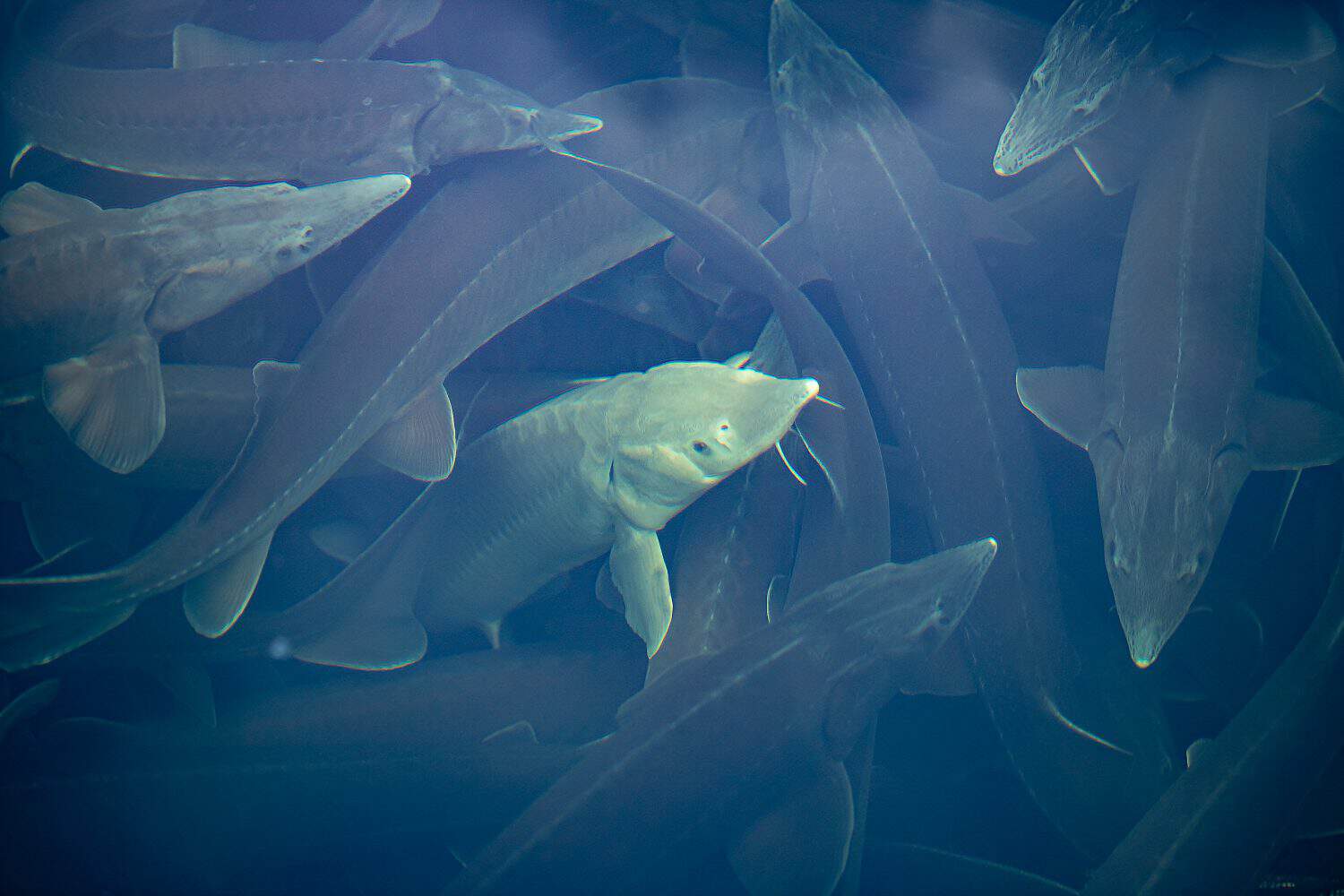
Lake sturgeon, similar to these, are making a recovery after several decades of conservation efforts.
©Parilov/Shutterstock.com
When conservation efforts for lake sturgeon began in the late 1990s to early 2000s, with stream and riverside nurseries and fish hatcheries, an estimated 1% of the original population called the Great Lakes home. Thanks to the efforts of the Department of Natural Resources, Fish and Wildlife Service, local universities, and local tribal agencies working together, there has been a positive turnaround for the lake sturgeon.
Today, it is believed there are approximately 150,000 lake sturgeon in the Great Lakes.
Conservation efforts to save the lake sturgeon have reached a milestone. Many have been working for the past quarter of a century to raise lake sturgeon in streams and rivers that feed into the Great Lakes. This timing matters because it can take female lake sturgeon up to 25 years to reach maturity. Recovery efforts are slow, only an estimated 200 lake sturgeon spawn annually. Many more efforts will need to be made if the population is to be self-sustained.
A lofty goal has been set for a self-sustaining population of lake sturgeon in Lake Erie by 2040. Other lakes have set similar goals. While there is much work to be done to reach a milestone of this magnitude, it is encouraging to see that a species once on the brink of extinction may just beat the odds and recover.
What Caused the Lake Sturgeon Population to Decrease?
The Great Lakes have always been home to lake sturgeon. At the height of their population, it is believed that upwards of 15 million lake sturgeon lived in the lakes. Today, that number is significantly less, with an estimated 150,000 remaining.
The decline of the lake sturgeon began in the 1800s. The population was overfished. Given how long it takes for adults to reach maturity and spawn, this had devastating effects not only on the fish alive at the time but also on future generations.
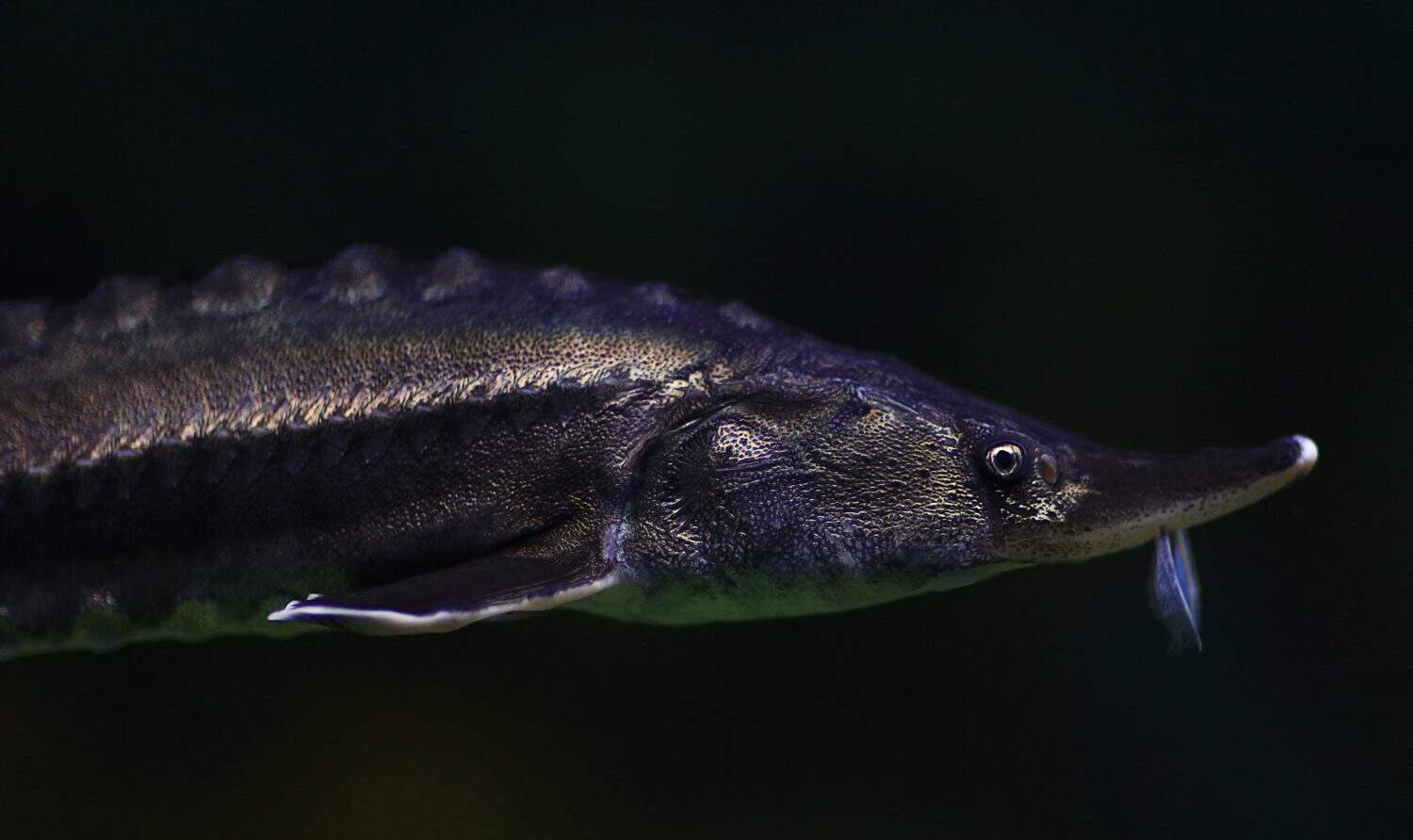
Lake sturgeon were overfished, leading to a massive population decline.
©Kichigin/Shutterstock.com
In addition to being overfished, the lake sturgeon population has declined due to other factors:
- Climate change
- Dams blocking routes to spawning grounds
- Polluted waterways
Had conservation efforts not begun in the late 1990s to early 2000s, it is very possible that the lake sturgeon would have gone extinct. Populations are slowly recovering thanks to organizations that have raised fish past the point of high vulnerability to larger species. Now, waterways need to be addressed to give the lake sturgeon a fighting chance to live the long lives they were intended to.
How Long Do Lake Sturgeon Live?
Lake sturgeon can live long lives if given the opportunity to do so. Before conservation efforts were made to save the fish, many did not live long enough to spawn. This is typically between eight and 22 years for males and 14 and 30 years for females. Due to conservationists’ hard work to bring the species back from the brink, the lake sturgeon are living longer than they have in decades.
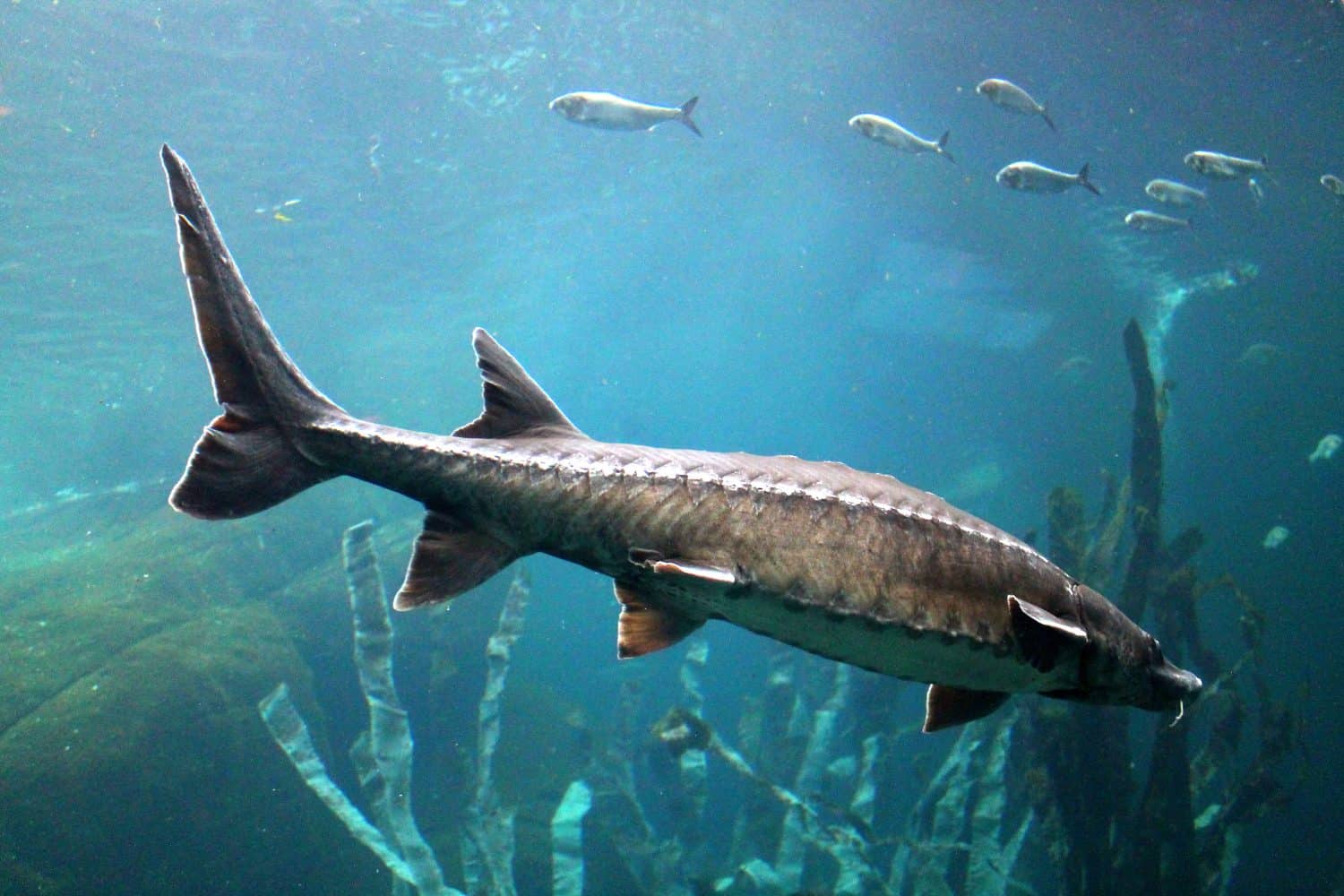
Lake sturgeon that are 50 years or older can reach six feet long or more.
©Jennie Wright/Shutterstock.com
Male and female sturgeon have different lifespans. Male sturgeon, according to the Fish and Wildlife Service, live to be approximately 55 years old, and females live between 80 and 150 years old. Lake sturgeon take years to reach their massive four- to six-foot (and in some cases, longer) length. Their approximate age-to-length growth is as follows:
- 10 years: 2.5 feet
- 12 years: 2.9 feet
- 15 years: 3.3 feet
- 19 years: 3.75 feet
- 23 years: 4.2 feet
- 28 years: 4.6 feet
- 32 years: 5 feet
- 42 years: 5.4 feet
- 51 years: 5.8 feet
It has been quite some time since lake sturgeon have reached their true growth potential. But with recovery efforts showing positive signs, the hope is these giants can again safely swim in their Great Lakes homes.
What To Do If a Sturgeon is Hooked While Fishing
Lake sturgeon is considered an endangered species by the IUCN. However, in the United States, the Fish and Wildlife Service has determined that lake sturgeon do not meet the criteria for endangered species status in all regions due to ongoing conservation efforts to increase the fish’s population.
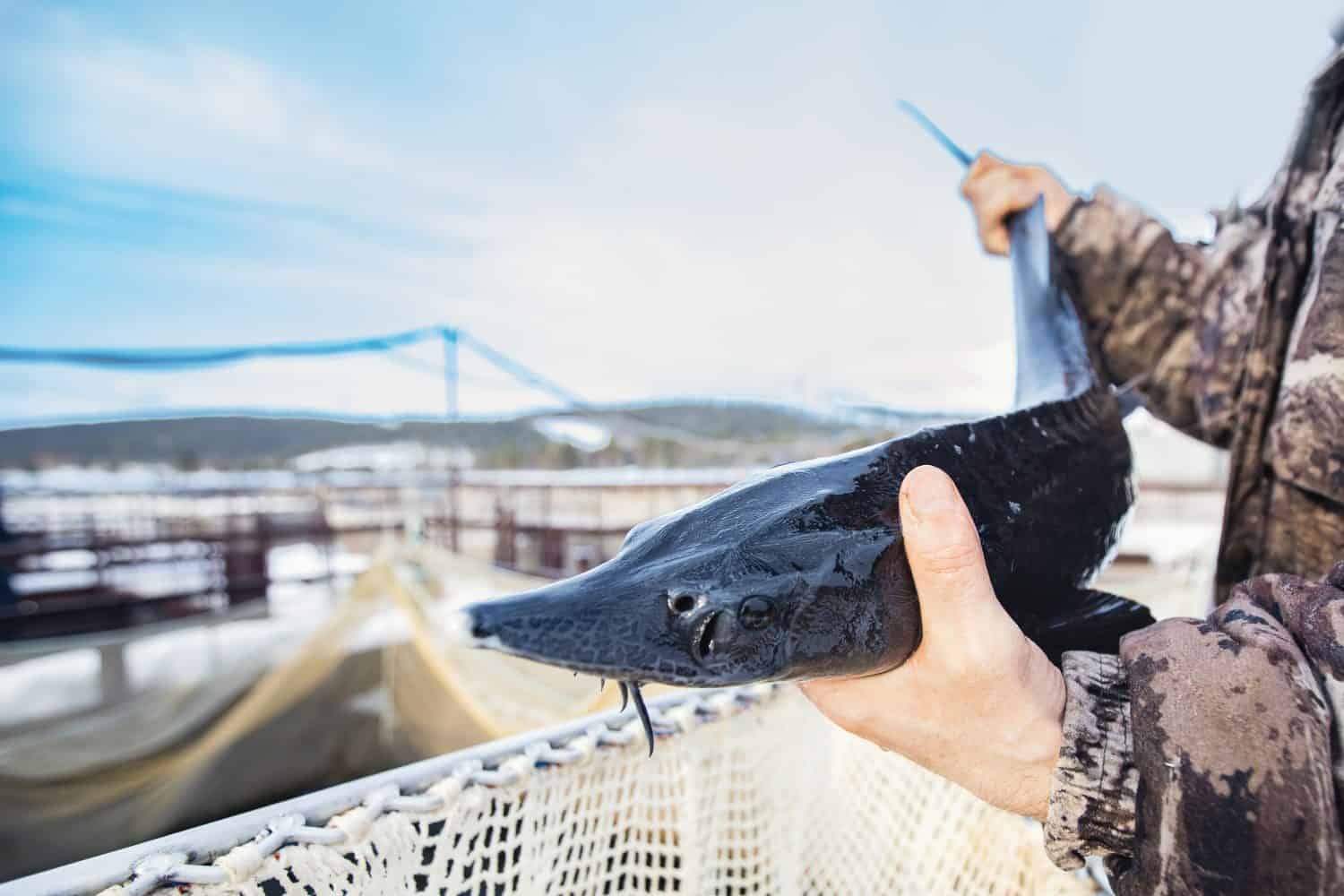
If lake sturgeon, similar to this one, are caught, they should be released immediately.
©Parilov/Shutterstock.com
While the lake sturgeon may not be endangered, they are considered threatened. Consequently, it is prohibited to fish for lake sturgeon in most areas. If one is accidentally caught on the line, there are steps that can be taken to ensure the fish returns unscathed to the waterway. Those steps include:
- Never hold the lake sturgeon vertically
- Do not touch the lake sturgeon’s gills or eyes
- Only handle the lake sturgeon with wet hands
- When removing the hook, do so in the water
- Remove the lake sturgeon as quickly as possible
If the hook cannot be removed from the lake sturgeon, then it is necessary to cut the line as close to the fish as possible to avoid hampering its ability to swim or hunt.
With continued efforts, it may be possible to increase the lake sturgeon population to the point where it is no longer a threatened species. But to do so, waterways will need to be returned to their natural state. Dams will have to be removed, and smaller rivers and streams will need to be restored. Only then will the lake sturgeon be capable of returning to their native spawning grounds, instead of having to be raised in nurseries to ensure their survival.