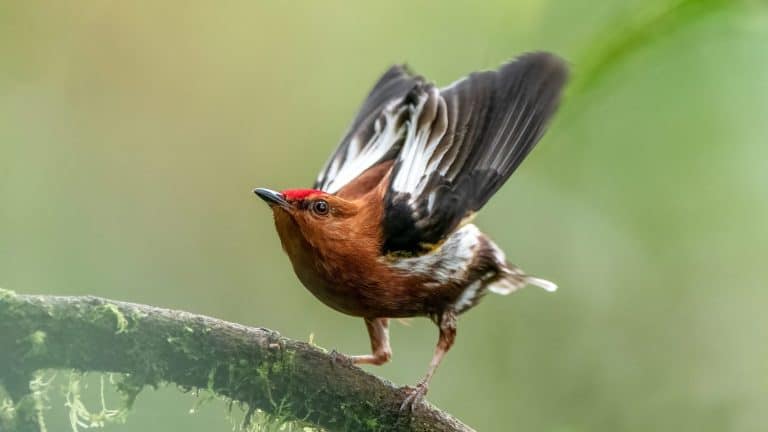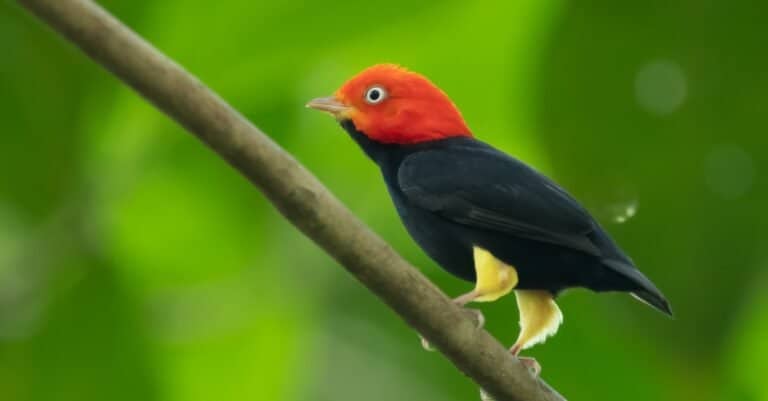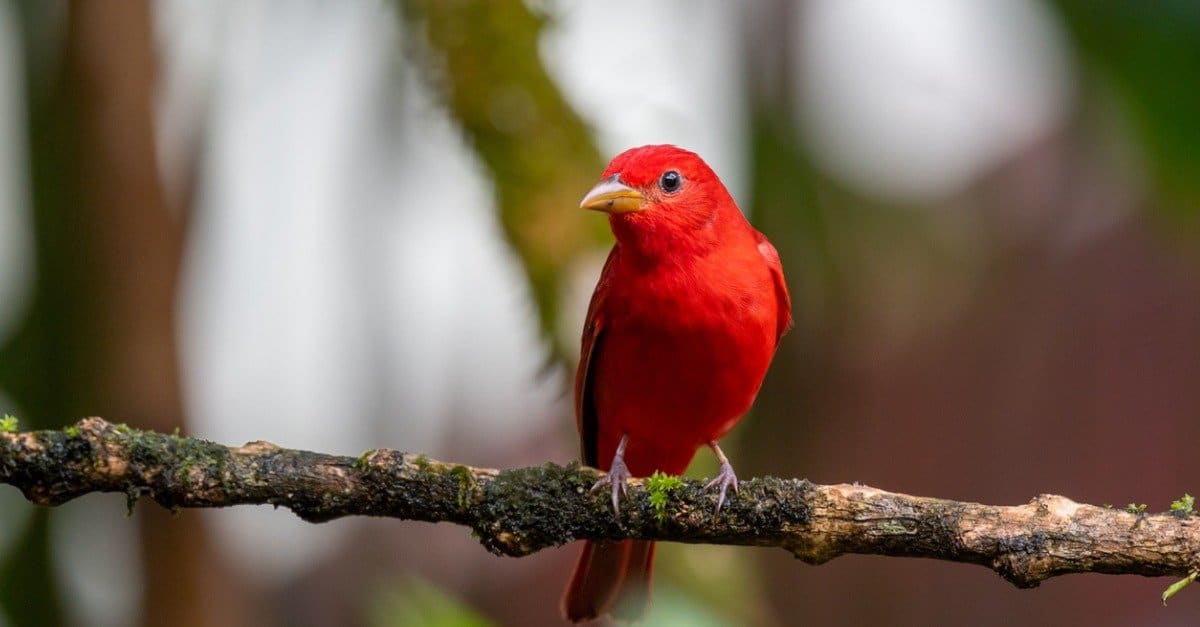

Red birds are found throughout the world in all types of habitats. They can be found in dry prairie lands or deep in pine forests. In some bird species, both males and females have brightly colored feathers. However, in most red bird species, the male is brightly colored, while the female’s colors are more subdued.
The shades of red found on these birds range from vermilion to rust. Some birds are red all over, while others have differently-colored wings or tails. Some species of red birds remain red all year long, while others molt to more subdued shades after the breeding season. Keep reading to learn more about different types of red birds.
1. Northern Cardinal
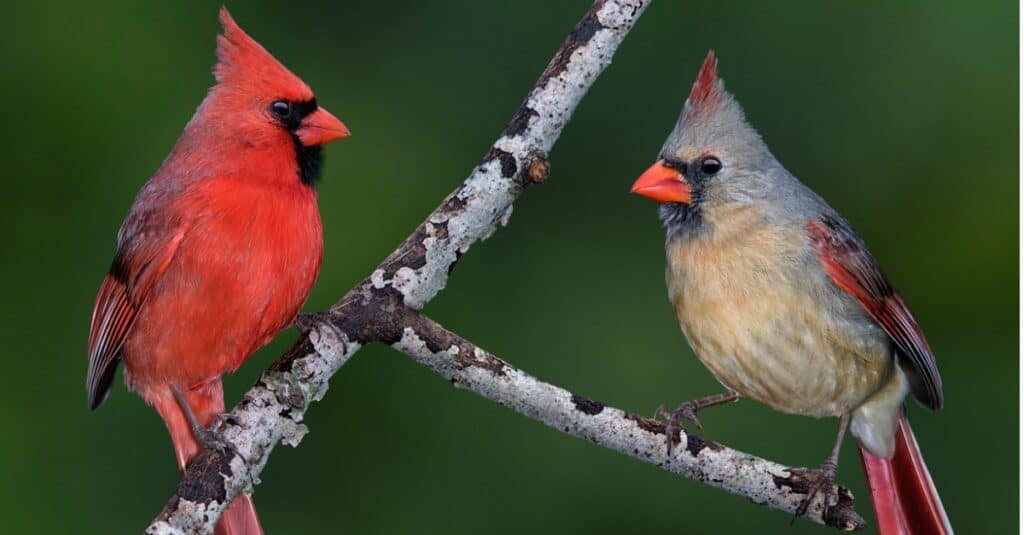
Northern cardinal males have a redder body than females.
©Cathy Keifer/Shutterstock.com
One of the most common red birds in North America, the northern cardinal (Cardinalis cardinalis) is instantly recognizable. The males are known for their majestic red plumage. While the females are a more subdued brown, they do have red accents on their bodies. Both males and females have a sharp crest that gives them an easily identifiable profile.
The northern cardinal doesn’t migrate, making it a fixture at bird feeders all year long. When away from the bird feeder, these birds can be found in dense brush and undergrowth.
2. Red Crossbill
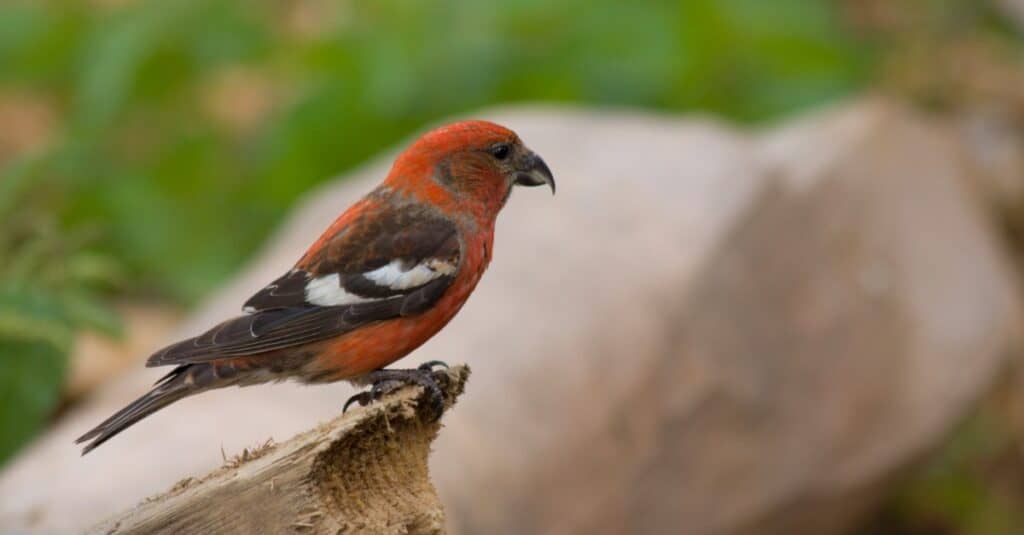
The red crossbill has a unique overlapping beak, which allows it to easily open seed cones.
©iStock.com/bobloblaw
A member of the finch family, this red bird’s most distinctive feature is its unique beak. The upper and lower portions of the beak overlap, or cross, which is where it gets its name. This crossed bill allows it to open unopened spruce, hemlock, pine, and Douglas-fir cones and eat the seeds.
The red crossbill’s (Loxia curvirostra) ability to open cones before they open on their own allows it to access food unavailable to other birds when resources are scarce. These birds love the forest, although they may also descend on urban areas and domestic gardens.
3. White-Winged Crossbill
The white-winged crossbill is a more rosy-red color, with black wings and and black tail.
©iStock.com/tkosachev
The white-winged crossbill (Loxia leucoptera) male is a rosy shade of red, with a black tail and wings. They also have white wing bars. The females, as well as the young males, have the same tail and wing pattern. However, their bodies are yellow.
These birds live in flocks all year, even during mating season. They prefer living in coniferous forests, where they have an abundant food supply. In particularly lean years, they will range far outside their normal territory in search of food.
4. Vermilion Flycatcher
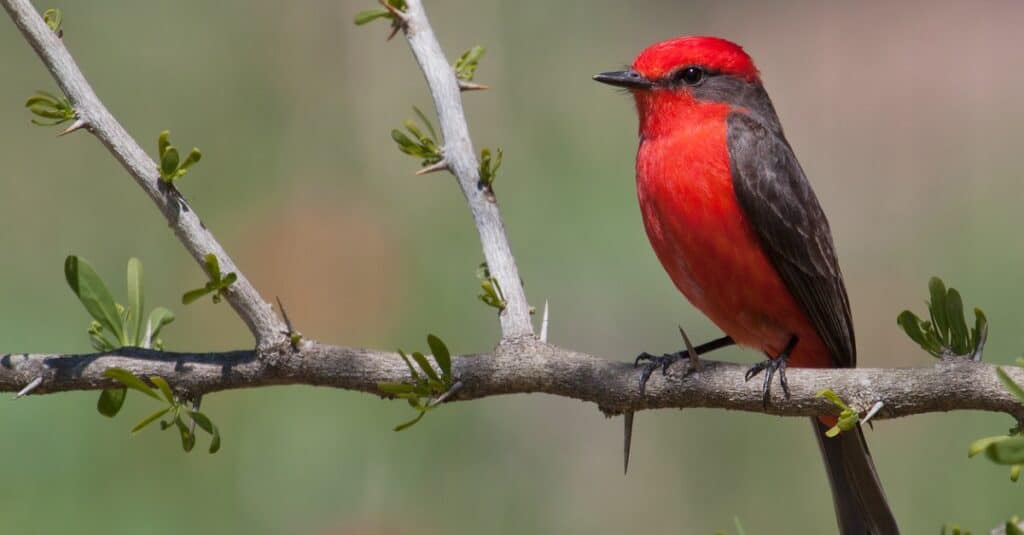
The male vermilion flycatcher is vibrant red, but the female is gray-brown.
©iStock.com/jsdeoliv
The male of this compact, stocky species is bright red with black wings and back. The black extends in a line across its face, covering the eyes and giving the bird the appearance of wearing a mask. Like many bird species, the female vermilion flycatcher (Pyrocephalus obscurus) is not as vibrant. She has a white breast, darkening to a reddish tan undertail. Her upper body is gray-brown.
The vermilion flycatcher spends its days perched on fence posts or other exposed spots. When an insect flies by, it quickly leaves its post, catches its unsuspecting prey in mid-air, and then returns to its hunting spot.
5. Pine Grosbeak
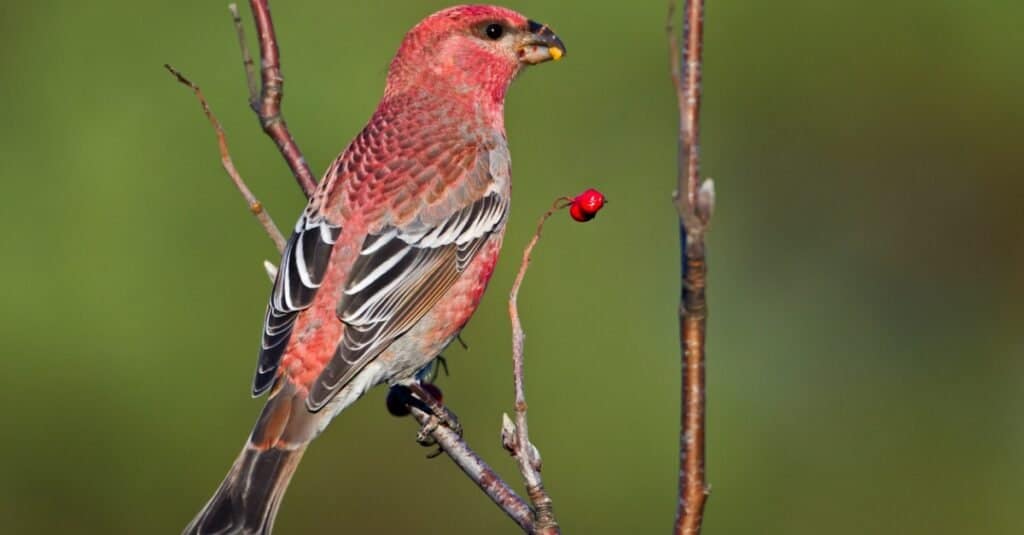
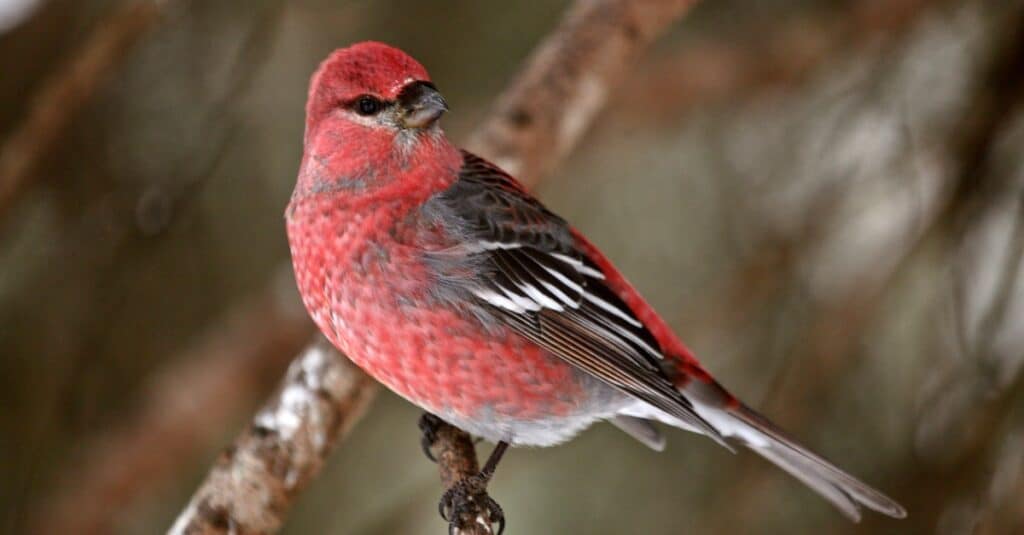
The male pine grosbeak is pinkish-red, while the female is yellow.
©iStock.com/aseppa
Pine grosbeaks (Pinicola enucleator) are another type of red bird that belongs to the finch family. However, its stubby bill separates it from other members of the group. They are also one of the larger members of the finch family.
The male pine grosbeak has a pinkish-red body, while the female’s body is yellow. Both males and females have gray wings. The gray may extend onto the breast or belly. Their thick bills are designed for easy access to seeds, and they generally reside in pine, spruce, or fir forests. However, they will visit backyard feeders, particularly in cold weather.
6. Scarlet Tanager
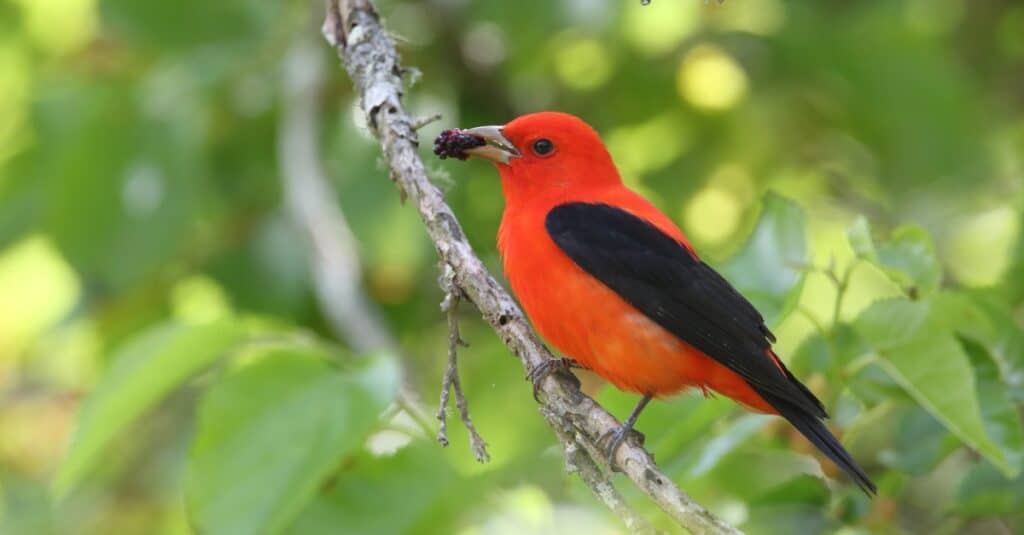
Male scarlet tanagers have very pronounced black wings and tails.
©iStock.com/BrianLasenby
A true red bird, the scarlet tanager (Piranga olivacea) is an eye-catching species. The males are vibrant red, with distinctive black wings and tails. The females are a muddy yellow with wings and tails that are just slightly darker than their bodies.
Primarily dining on insects, the scarlet tanager adds fruit to its diet during migration and through the winter. They typically make their homes in deciduous or pine forests.
7. Hepatic Tanager
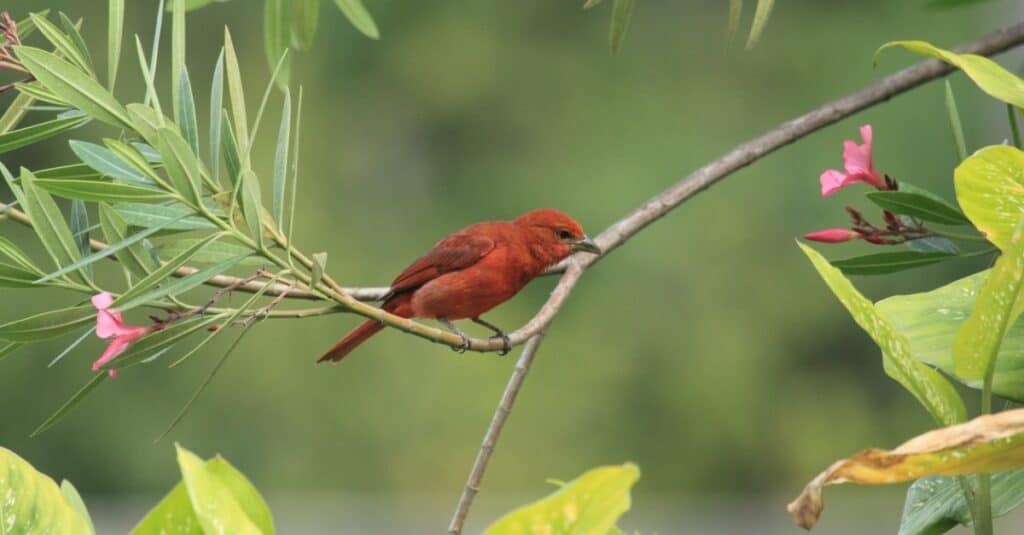
Like the scarlet tanager, the male of this species is red and the female is yellow.
©iStock.com/emarys
The male hepatic tanager (Piranga flava) is predominantly brick red, but it may have some darker-colored feathers on its wings. Like its cousin, the scarlet tanager, the female hepatic tanager is yellow. They make their homes in pine-oak and pine forests in the southwestern U.S., as well as Central and South America.
One interesting fact about the tanagers located in North America, which include the hepatic, western, scarlet, and summer tanager, is that they are now classified in the same family as the northern cardinal. There are over 300 species of tanagers in Central and South America that are not closely related to these birds.
8. Summer Tanager
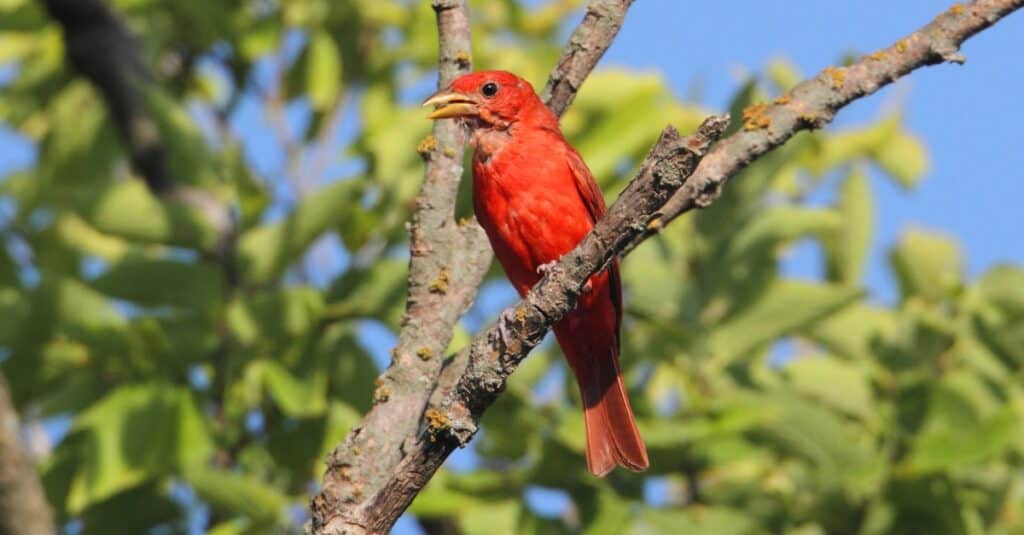
Summer tanagers can catch bees and wasps mid-flight.
©iStock.com/SteveByland
As with the other tanagers on our list, the adult male summer tanager (Piranga rubra) is vibrant red while the female is yellow. These compact, stocky birds have thick, blunt bills that they use to capture insects mid-flight and to browse for seeds.
The summer tanager can be found throughout the southeastern, southwestern, and midwestern parts of the U.S. These birds prefer deciduous or pine-oak forests. They are reputed to have a beautiful voice that carries easily from their high perch in a tree.
9. Cinnamon Teal
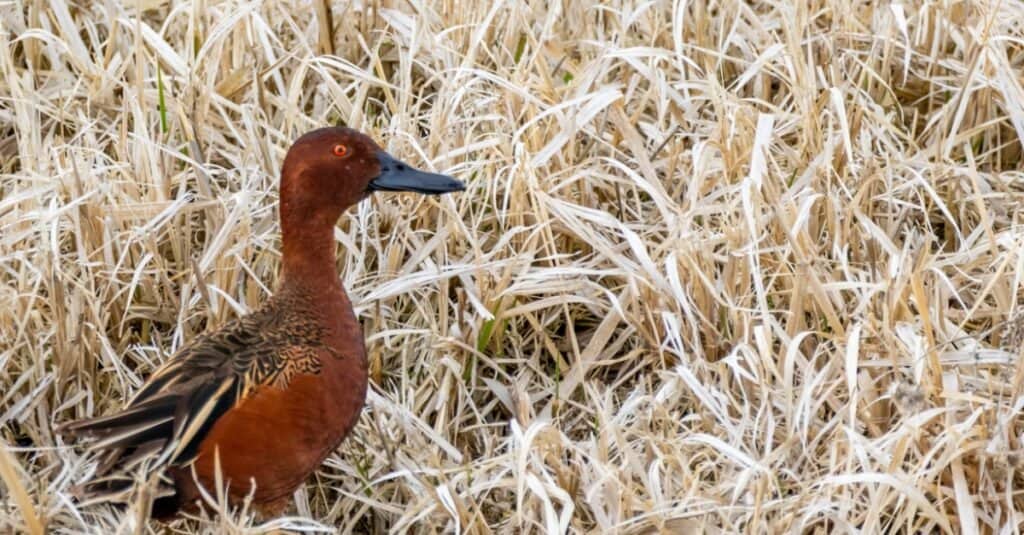
Although both the male and female cinnamon teal are brown, the male has a reddish tint.
©Michael Chatt/Shutterstock.com
The cinnamon teal (Anas cyanoptera) is a duck, making its home in freshwater wetlands. The male is brownish-red with a black back, black tail feathers, and distinctive red eyes. The female is brown with dark eyes. Both males and females have sky-blue markings that are visible when they spread their wings.
Smaller than many other ducks, the cinnamon teal has a long bill and a large head for its body size. These ducks spend the warm weather months in the western areas of North America and winter in Central and South America.