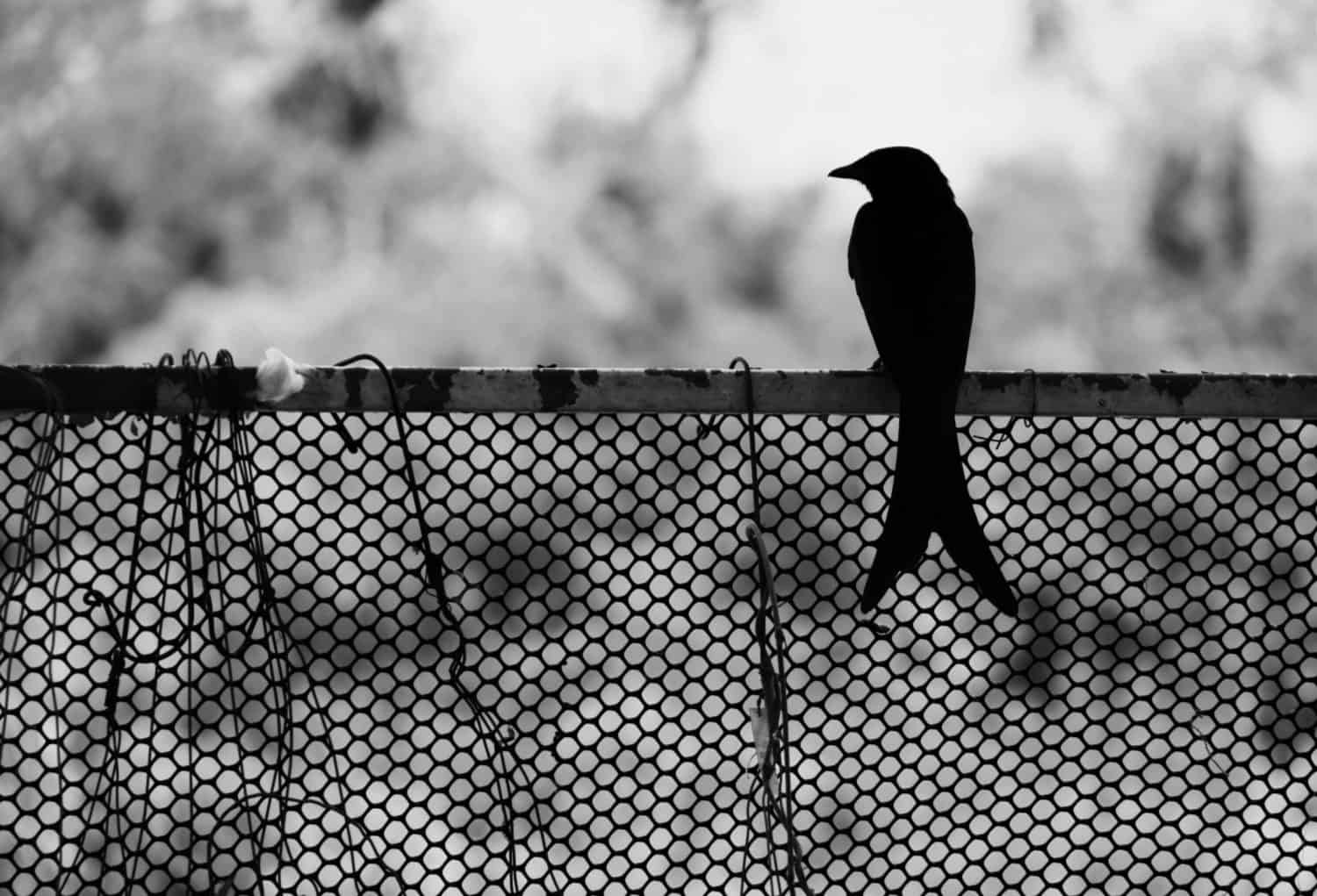

Quick Take
- A male bird's final recorded song contains an eerie silence that reveals everything about why this species vanished. Hear the final recording →
- The Kauaʻi ʻōʻō did not simply disappear. A chain of unlikely threats converged to make its extinction almost inevitable. See the converging threats →
- This bird's mating ritual made it uniquely, tragically vulnerable in a way no other species quite matches. Discover the fatal vulnerability →
One of the most joyous things about the arrival of spring is the return of birdsong. Few things are as uplifting as the lyrical melody between birds. From mating calls to territorial ballads, these remind us that we’re not alone, and neither are the birds. But for one species, its once-beautiful music came to a startling, and tragic, end.
The sad song of the last Kauaʻi ʻōʻō was heard for the very last time in 1987. Its call was recorded, becoming a haunting memory of Hawaii’s beloved bird that sings no more. The heartbreaking plea of the last remaining male was only answered by death, caused by avian malaria and human activity.
The Legacy of Hawaii’s Kauaʻi ʻōʻō Honeyeaters
The Kauaʻi ʻōʻō was the last honeyeater bird ever seen in Hawaii. It was an endemic species whose life was tragically cut too short. Prior to the 1960s, the Kauaʻi ʻōʻō could be found across Hawaii. Their songs could be heard from the high cliffsides down to the beach, and though they weren’t the flashiest birds, they were often sighted. The majority of its population lived in Hawaii’s lush forests, where the species originated more than 20 million years ago.
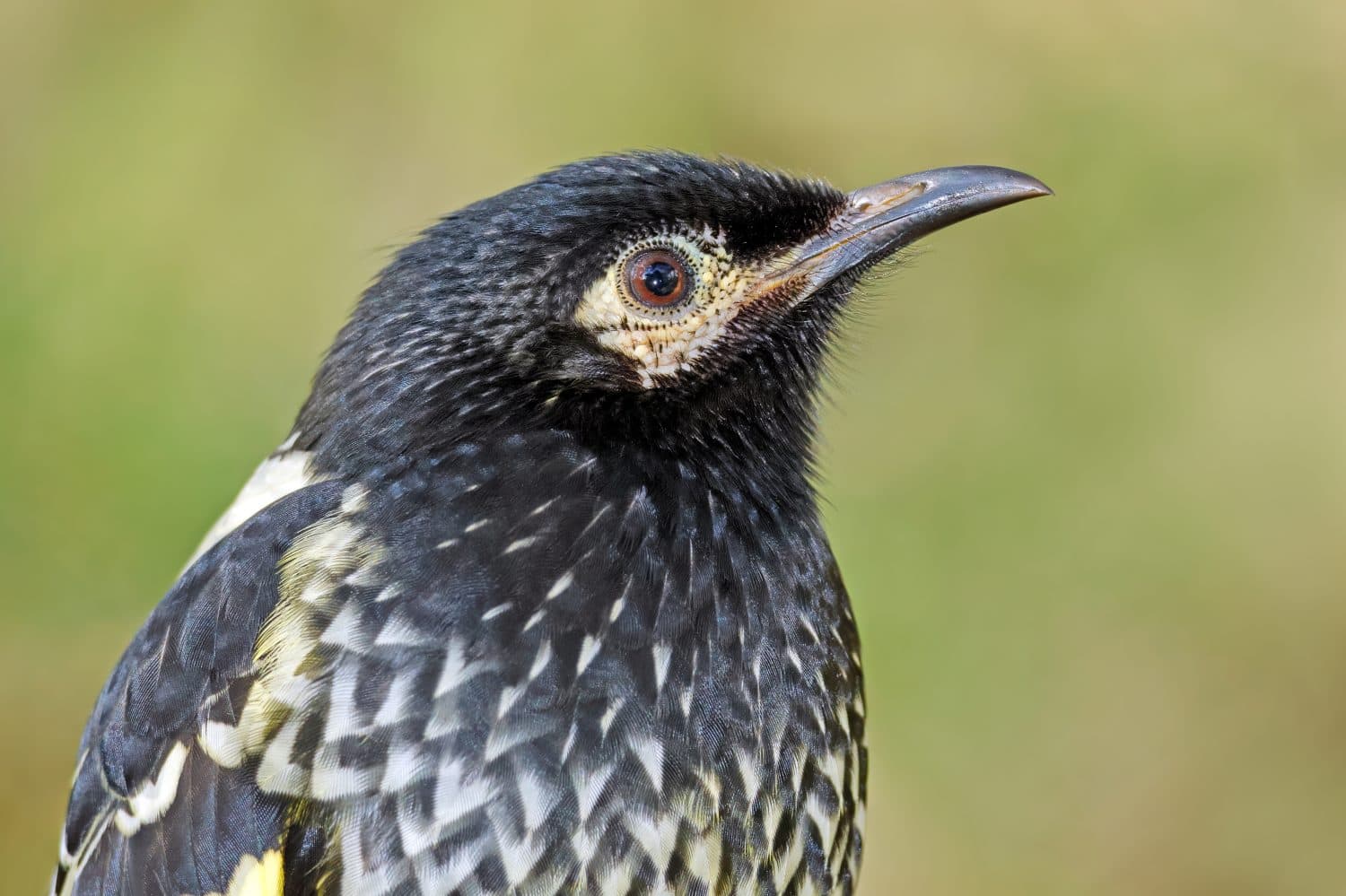
Almost all honeyeaters consume some type of nectar in their diets with specialized beaks.
©EcoPrint/Shutterstock.com
Skilled birdwatchers could pick out its shimmering black feathers and white barring, which were more pronounced in females. Their yellow leg feathers were sometimes the first clue to their proximity, and they could be observed feeding on nectar with their long, slender beaks. Honeyeaters were once a crucial part of Hawaii’s ecosystem and consumed many small pests. Because of their fondness for nectar, they were also unintentional pollinators. And though the birds were small, their songs were deceptively loud.
What Killed the Honeyeaters?
The Kauaʻi ʻōʻō honeyeaters were known for their striking, flute-like songs. They could be heard from the Kaua’i canyon forests, their chorus echoing through the surrounding valleys. Sometime around the 1960s, honeyeater populations decreased dramatically. It was estimated that only 34 individuals remained in the 1970s. Only one individual was ever recorded during this time, rendering the species critically endangered. From this point on, death and destruction plagued the species, which could not survive what was coming.
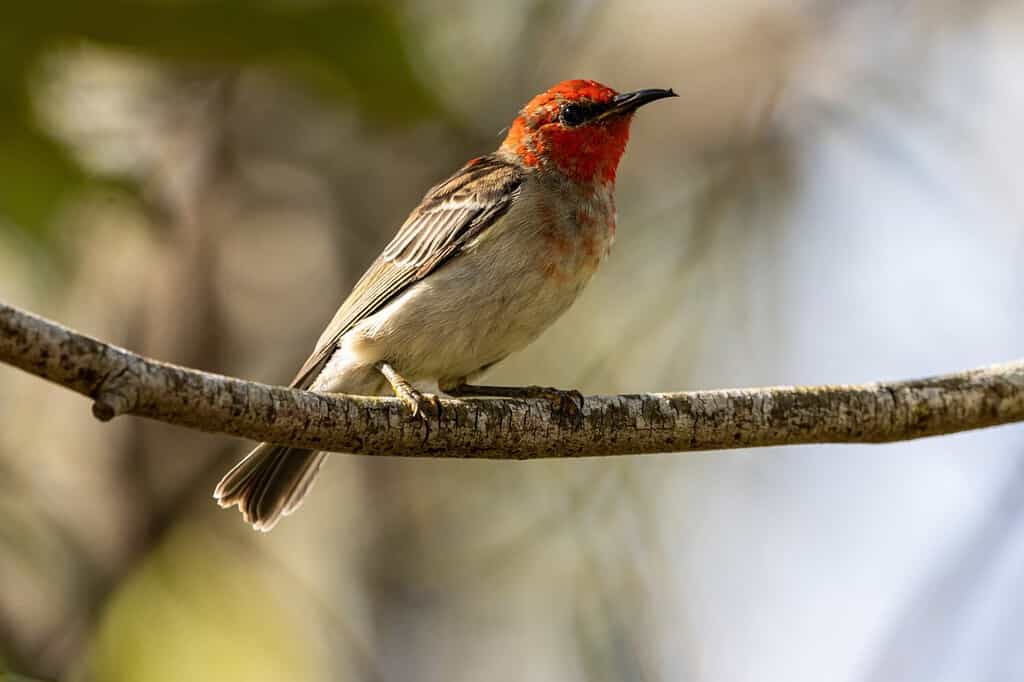
Some species, such as the scarlet honeyeater, can be as small as 3.5 to 4.3 inches long.
©Audra Thomson/Shutterstock.com
Hurricanes Iwa and Iniki destroyed many of the honeyeaters’ native homes, including ancient trees that offered shelter. Pests, such as mosquitoes, carried avian malaria, which was believed to be the cause of death for the last remaining Kauaʻi ʻōʻō. Other invasive species, such as Polynesian rats, small Indian mongooses, and domestic pigs, became natural predators of the birds.
Human activity, such as development, has also destroyed many of the species’ natural habitats. The landscape of Kaua’i was permanently altered by deforestation. At the time, conservation of its honeyeater species was not as high a priority as it would be today. Despite many failed expeditions to locate the species once again in the late 1980s, no evidence was ever found. It’s believed the last remaining female was lost after Hurricane Iniki in 1992, which eventually led to the species’ collapse.
How an Unanswered Call Became a Tragic Love Story
The last sighting of a Kauaʻi ʻōʻō was in 1985. After that, the final recording of this species would be taken in 1987. The audio, which is less than a minute long, is a stunning rendition of a traditional honeyeater mating call. In it, a male Kauaʻi ʻōʻō is heard singing to a mate that doesn’t exist. Traditionally, a female bird fills in the short gaps in the male’s song.
This mating ritual, known as a duet, is how the birds once found one another. After their initial meeting, the Kauaʻi ʻōʻō honeyeaters were known to mate for life, taking only one partner. Their songs were a tribute to the lifelong bond they formed after mating for the first time. Now, only heartbreaking silence fills the gaps in the last recorded Kauaʻi ʻōʻō song.
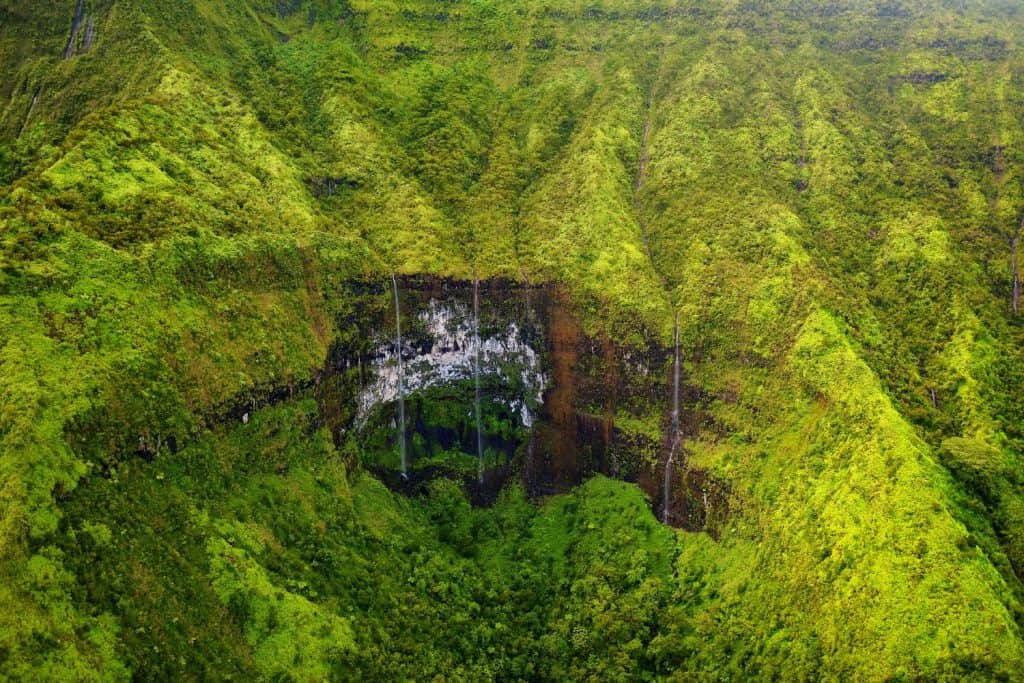
Kaua’i’s canyons were once full of the honeyeater’s songs.
©MNStudio/Shutterstock.com
Many say the male was singing for a female that would never respond to his call. This, if nothing else, was the final proof that the species was at the precipice of extinction. In 2000, after more than a decade of silence, the Kauaʻi ʻōʻō was declared extinct by the IUCN. It was the last member of the Mohoidae family—the family to which the Hawaiian honeyeaters belonged—to disappear. Though its song lives on through various recordings, Hawaii’s birdsong still lacks the beauty of this once-abundant species.