Quick Take
- Idaho is uniquely situated between the Pacific Flyway and Central Flyway.
- Idaho has recorded 409 bird species, including 119 species of neotropical migratory birds.
- The Idaho Birding Trail spans over 2,000 miles and 250 sites for bird watching.
With 4.7 million acres of protected wilderness, Idaho offers a myriad of possibilities for wildlife and bird watching. Idaho’s unique position between the Pacific Flyway and Central Flyway makes it a bustling thoroughfare for waterfowl, shorebirds, and migratory songbirds. The state has recorded 409 bird species, including 119 species of neotropical migratory birds. The Idaho Birding Trail is a network spanning over 2,000 miles and 250 sites, making it easy for Idaho birders and out-of-state visitors to find birds throughout the state. Whether you’re new to the hobby or an avid birder, read on to explore Idaho’s best birding destinations.
Camas National Wildlife Refuge
The Camas National Wildlife Refuge offers around 11,000 acres of wetlands and upland habitats in southeastern Idaho. The refuge has the highest bird count in the state, with a bird list of over 260 species, so it comes as no surprise that birding is one of the most popular activities on the refuge. Visitors can drive the 3.5-mile auto-tour route, or take an easy 1.8-mile birding trail through some of the best bird-watching areas. During spring and fall, bird-watching enthusiasts may see up to 50,000 waterfowl. Sandhill crane numbers also peak in the spring. Raptors, sagebrush birds, and songbirds are common sights on the refuge as well.
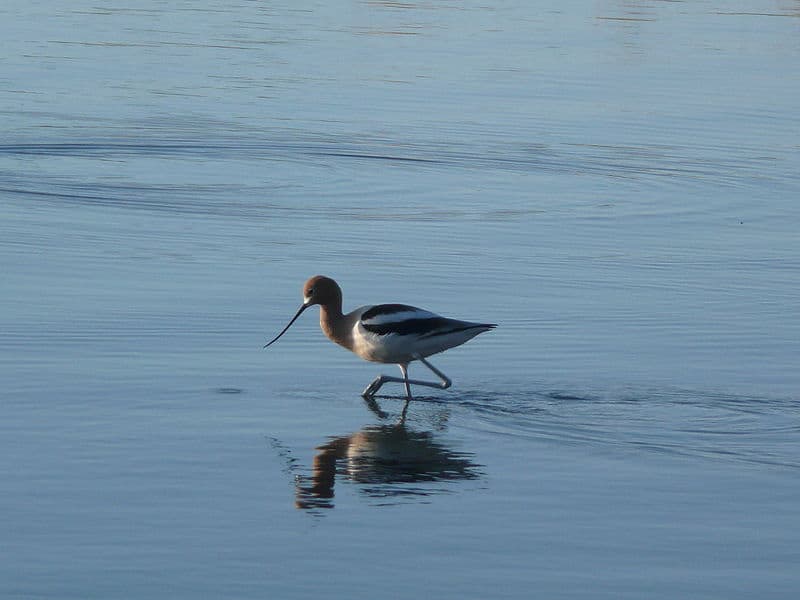
American avocets are some of the breeding birds seen at Camas National Wildlife Refuge.
©Shenille C, CC BY-SA 3.0, via Wikimedia Commons – Original / License
Common birds you may see at the Camas National Wildlife Refuge include:
- Sage thrasher
- American white pelican
- Snow goose
- Wilson’s phalarope
- Trumpeter swan and Tundra swan
- American bittern
- Bald eagle
- Short-eared owl
- Greater sage-grouse
- Peregrine falcon
- Black-crowned night-heron
- Yellow-headed blackbird
Hagerman Wildlife Management Area
The Hagerman Wildlife Management Area is located along the Snake River in south-central Idaho. It offers 882 acres of wetlands, ponds, cottonwood-willow riparian woodlands, and sagebrush steppe. Over 40,000 ducks and geese winter at the Hagerman Wildlife Management Area. The area is open year-round, but some sections may be off-limits to visitors during winter and spring to protect wintering birds, nesting waterfowl, and waterbirds. Birders can walk along trails and non-motorized access roads to explore the area.
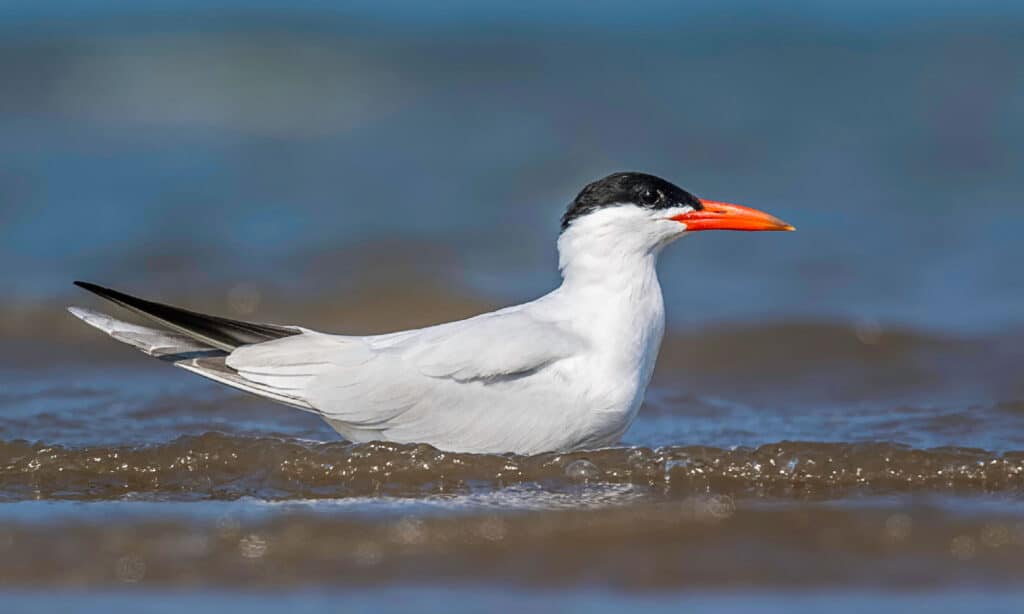
Caspian terns are among the birds to watch for at Hagerman Wildlife Management Area.
©Sriram Bird Photographer/Shutterstock.com
Common birds seen at the Hagerman Wildlife Management Area include:
- Black-crowned night-heron
- California quail
- Herring gull
- Northern harrier
- Tundra swan
- Belted kingfisher
- Virginia rail
- Bald eagle
- Marsh wren
- Golden eagle
- Yellow-breasted chat
- Lesser black-backed gull
Market Lake Wildlife Management Area
The Market Lake Wildlife Management Area encompasses 6,062 acres of wetlands and sagebrush grassland, making it a perfect stopover for various migrating waterfowl and shorebirds. Over 180 bird species use the wildlife management area throughout the year. Many birds also breed at Market Lake, including American white pelicans, at least four species of grebe, and short-eared owls. During spring migration, visitors may see more than a dozen species of duck and up to 50,000 snow geese. Non-motorized trails provide access to the wetlands, open waters, and upland areas. The area also offers a wildlife viewing blind that is popular with birders.
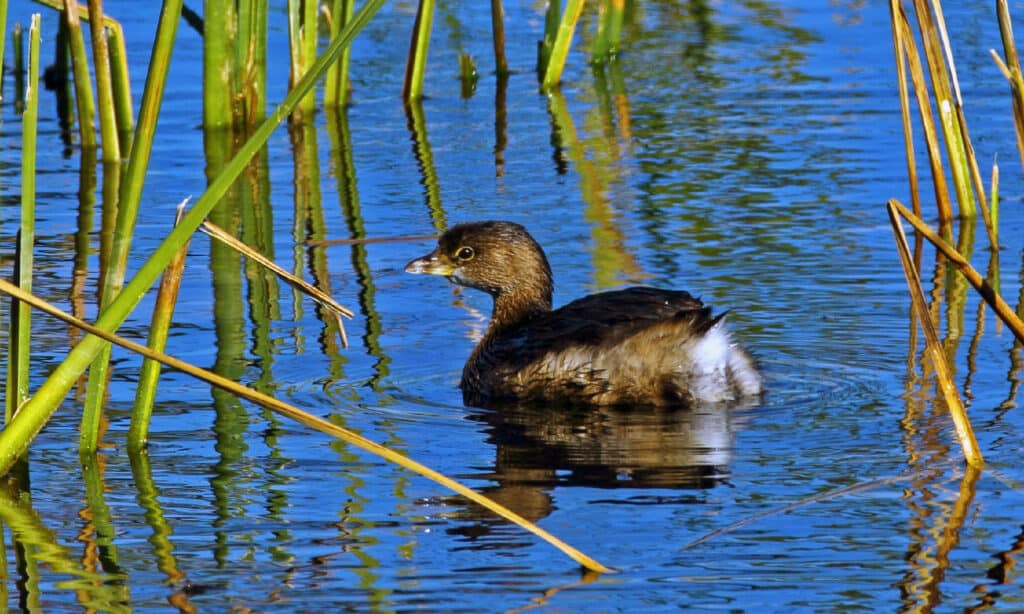
Market Lake comes alive in the spring with many species of migrating birds, including the pied-billed grebe.
©iStock.com/photographybyJHWilliams
Common birds at the Market Lake Wildlife Management Area include:
- Northern saw-whet owl
- Yellow-headed blackbird
- American avocet
- White-faced ibis
- Virginia rail
- Forster’s tern
- Sora
- Ross’s goose
- Bald eagle
- Rough-legged hawk
- Bullock’s oriole
- Ring-billed gull
Harriman State Park
Harriman State Park is part of an 11,700-acre wildlife refuge in the Greater Yellowstone Ecosystem. The park offers 22 miles of trails through diverse habitats, including grasslands, evergreen forests, marshes, and lakes. Harriman State Park is well-known for its large wintering populations of trumpeter swans. Barrow’s goldeneye ducks also spend the winter in the park. Summer and fall are the best times to see American white pelicans and double-crested cormorants.
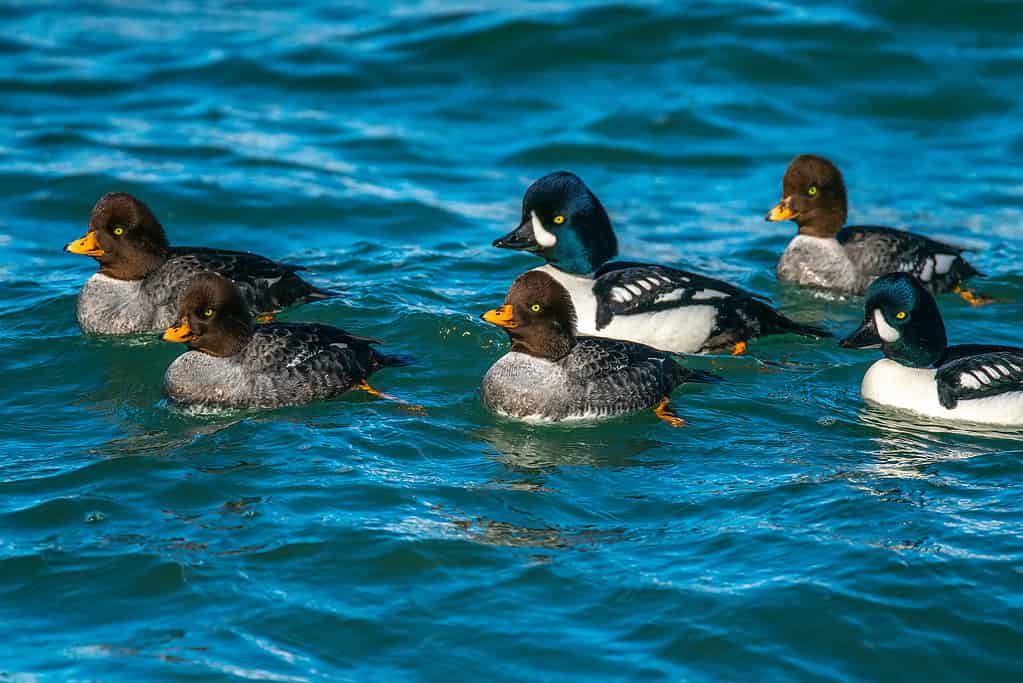
Barrow’s goldeneye ducks winter at Harriman State Park.
©Sen Yang/iStock via Getty Images
Common birds you may see at Harriman State Park include:
- Mountain chickadee
- Red-necked grebe
- White-crowned sparrow
- Red-breasted nuthatch
- Sandhill crane
- Osprey
- Grey jay
- Red crossbill
- Great blue heron
- Bald eagle
- Western tanager
- Pine siskin
Morley Nelson Snake River Birds of Prey National Conservation Area
If you’re a fan of birds of prey, then the Morley Nelson Snake River Birds of Prey National Conservation Area in southwestern Idaho should be on your list of top birding destinations. Each spring, the canyon of the Snake River shelters the largest population of nesting birds of prey in North America, and possibly the world. Around 800 pairs of hawks, falcons, eagles, and owls nest in the 757-square-mile conservation area. It is also one of the few places in the state where you can see black-throated sparrows. The area is rugged and remote, so the terrain may be challenging for some visitors.
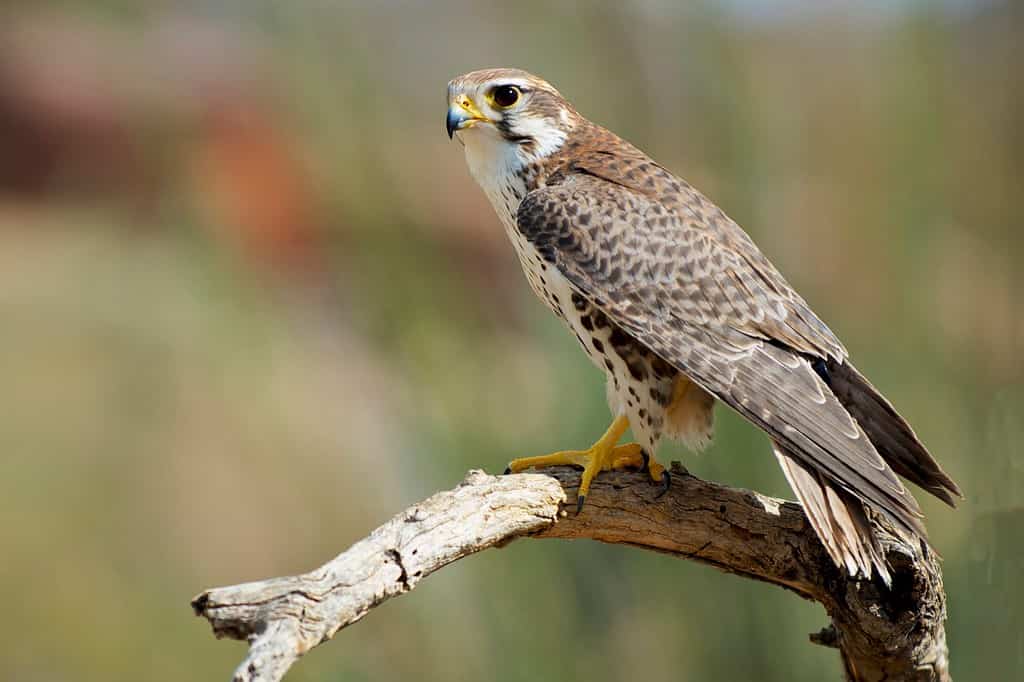
Snake River Birds of Prey National Conservation Area has the largest concentration of nesting prairie falcons in the world.
©Danita Delimont/Shutterstock.com
Common birds you may see at Snake River Birds of Prey National Conservation Area include:
- Prairie falcon
- Golden eagle
- American kestrel
- Barn owl
- Cooper’s hawk
- Great horned owl
- Merlin
- Northern goshawk
- Ferruginous hawk
- Peregrine falcon
- Western screech owl
Deer Flat National Wildlife Refuge
Located in southwest Idaho, Deer Flat National Wildlife Refuge is an important stop for waterfowl migrating along the Pacific Flyway, including large concentrations of mallard ducks and Canada geese. The 11,300-acre refuge is centered around the nearly 9,000-acre Lake Lowell. Tens of thousands of waterfowl can be seen on and around Lake Lowell during migration, with the highest concentration of ducks in December. During summer, water is pumped from Lake Lowell, exposing mudflats that attract many species of shorebirds. The area has over 10 miles of trails, or visitors can take the official 29-mile driving tour.
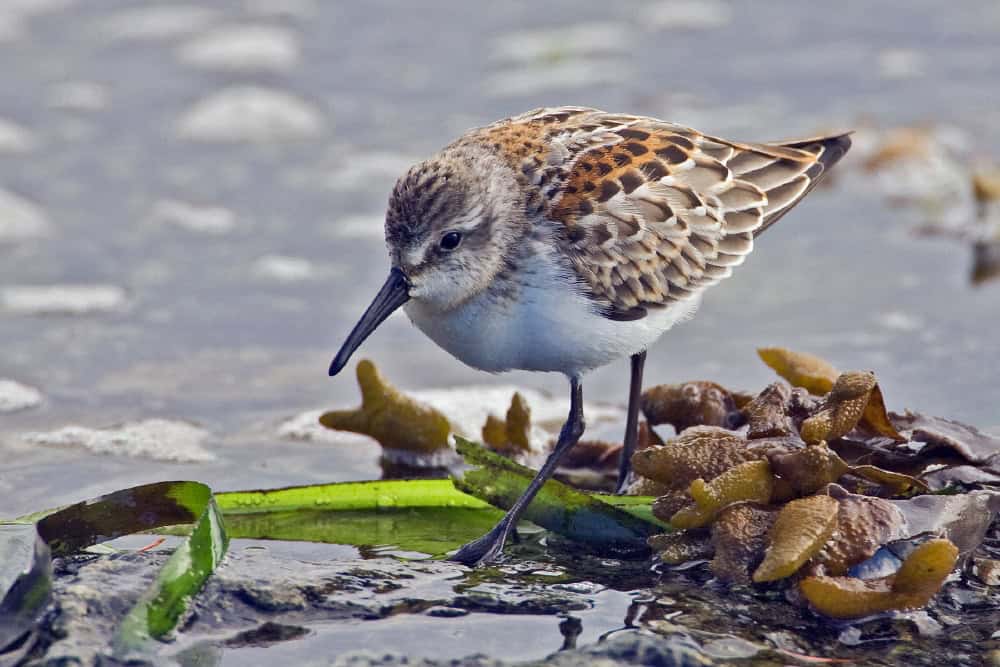
Western sandpipers can be seen in the mudflats exposed by low water levels in Lake Lowell.
©"Western Sandpiper" by Alan D. Wilson is licensed under BY-SA 3.0. – Original / License
Birds you may see at the Deer Flat National Wildlife Refuge include:
- Black-necked stilt
- Snow goose
- Marbled godwit
- American wigeon
- Common merganser
- California quail
- Forster’s tern
- Lazuli bunting
- Black-chinned hummingbird
- Black-headed grosbeak
- Clark’s grebe
- Common goldeneye
Whether you live in Idaho or are planning a bird-watching trip to the state, there are many great birding destinations to explore. Other popular locations for bird watching include Grays Lake National Wildlife Refuge, C.J. Strike Wildlife Management Area, Kootenai National Wildlife Refuge, Mud Lake Wildlife Management Area, Mink Creek Recreation Area, City of Rocks National Reserve, and American Falls. There is also excellent birding in Idaho’s many state parks.