
Quick Take
- This bird looks nothing like what most people picture when they hear 'purple gallinule,' and that visual mismatch is exactly what tipped off experts to how extraordinary the sighting really was. See the juvenile's appearance →
- California has logged fewer sightings of this bird than most people have fingers on one hand, and the pattern of when those sightings happened hints at something bigger brewing. View all California sightings →
- Biologists think they know exactly what blew this bird thousands of miles off course, and if they're right, Southern California birdwatchers may want to update their expectations. See the El Niño explanation →
- The surge of visitors came so fast that wildlife managers had to step in. Their concern was not to protect the bird from predators, but from the fans who loved it too much. Read about the visitor surge →
Southern California’s warm climate makes it a refuge for many tropical birds. From various parrot species to conures and even hooded orioles, the southern part of the state offers no shortage of brightly plumed birds.
However, even the most seasoned birdwatcher was taken off guard in August 2026, when an unlikely visitor made its way to the Golden State. It caused a flock-like frenzy among birders as they swarmed the Irvine Marsh for a rare sighting of a purple gallinule.
Rare Juvenile Purple Gallinule Spotted in Orange County
Thanks to its wetlands, nature preserves, and wildlife sanctuaries, Orange County, California, is home to hundreds of bird species. However, the native wetlands welcomed a new visitor this summer, causing quite a stir in the local birdwatching community and bringing guests from far and wide to catch a glimpse of the rare purple gallinule.
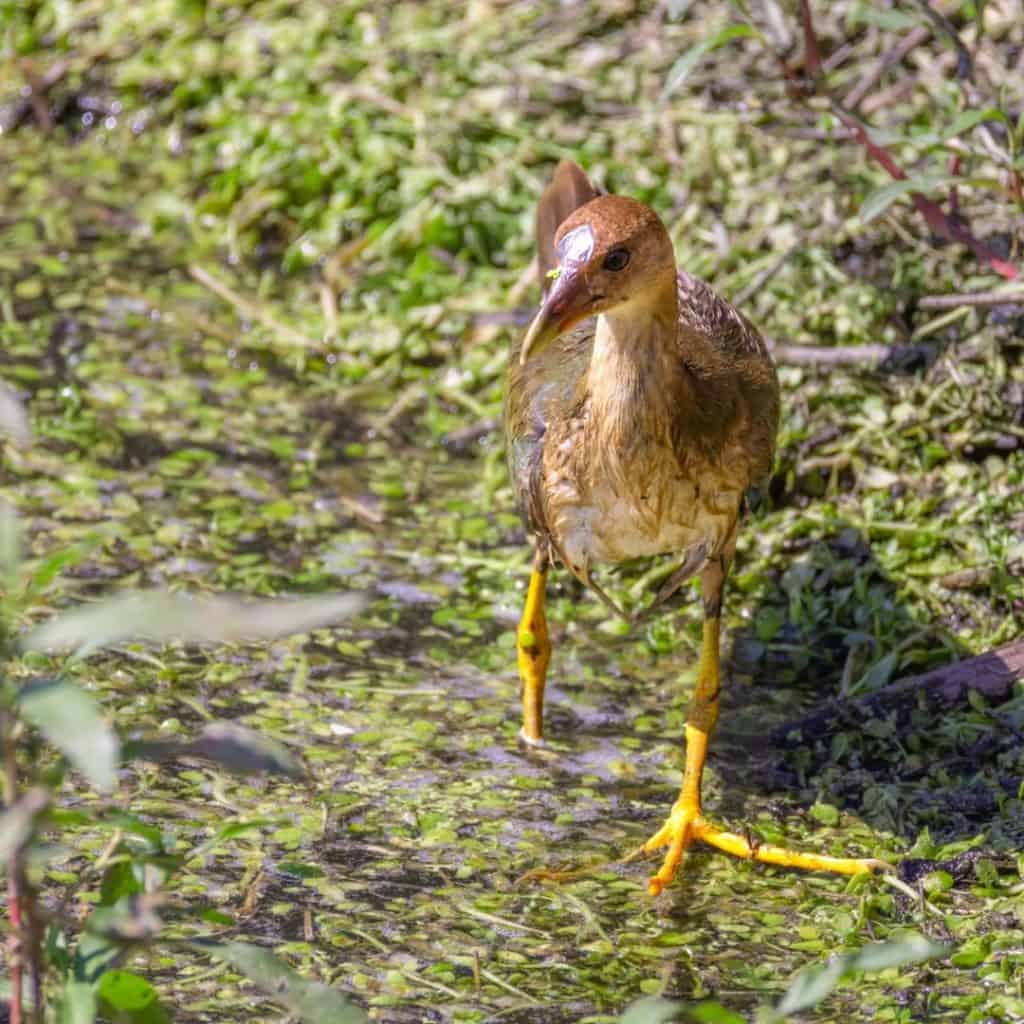
A juvenile purple gallinule was spotted for the first time in Irvine, California in August 2026.
©Irvine Ranch Water District / Facebook – Original
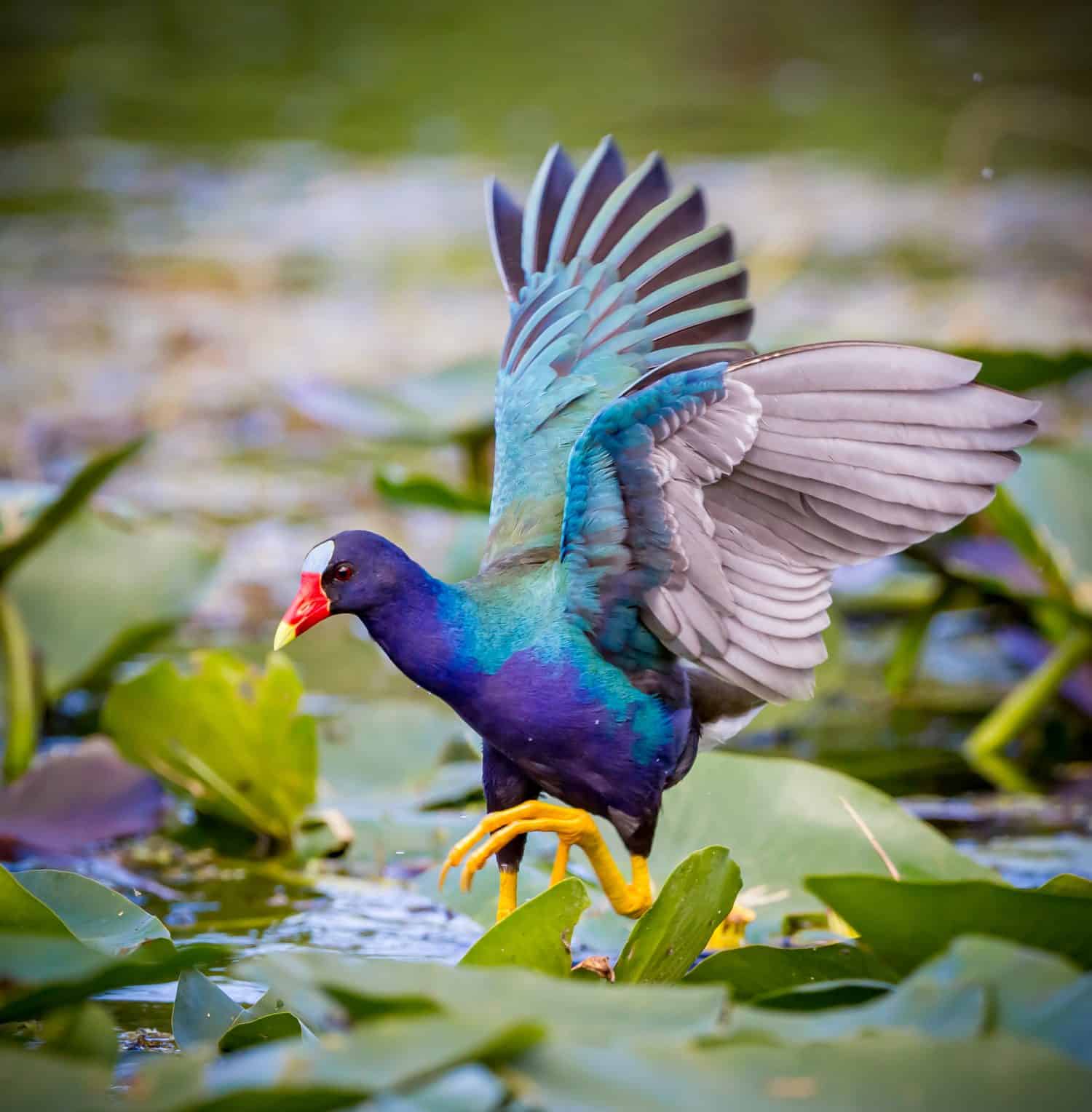
In mid-August, birdwatchers first spotted a purple gallinule at the San Joaquin Marsh and Wildlife Sanctuary. This bird looked very different from adults of the species, which are known for striking purple, blue, green, red, and yellow feathers. Instead, it had brown feathers. This alerted birdwatchers and biologists that the bird was a juvenile and had likely strayed during migration.
Located at Pond C, the juvenile bird delighted birdwatchers daily. There was so much foot traffic that the Irvine Ranch Water District, which manages the marsh and sanctuary, had to remind visitors to leave bikes and dogs at home. This was done not only for the safety of the bird, but also for the surge in visitors.
Why is it Rare to See a Juvenile Purple Gallinule in California?
The juvenile purple gallinule at the San Joaquin Marsh and Wildlife Sanctuary is a unique visitor indeed. These birds are rarely seen in California because their migration patterns typically keep them far from the Golden State. So, just how far off course was this particular bird?
During the spring and summer, purple gallinules prefer to live in Florida. Warm temperatures and access to freshwater marshes and ponds make perfect breeding grounds for these birds. While some individuals prefer to live in Florida year-round, there are others that migrate for the winter months.
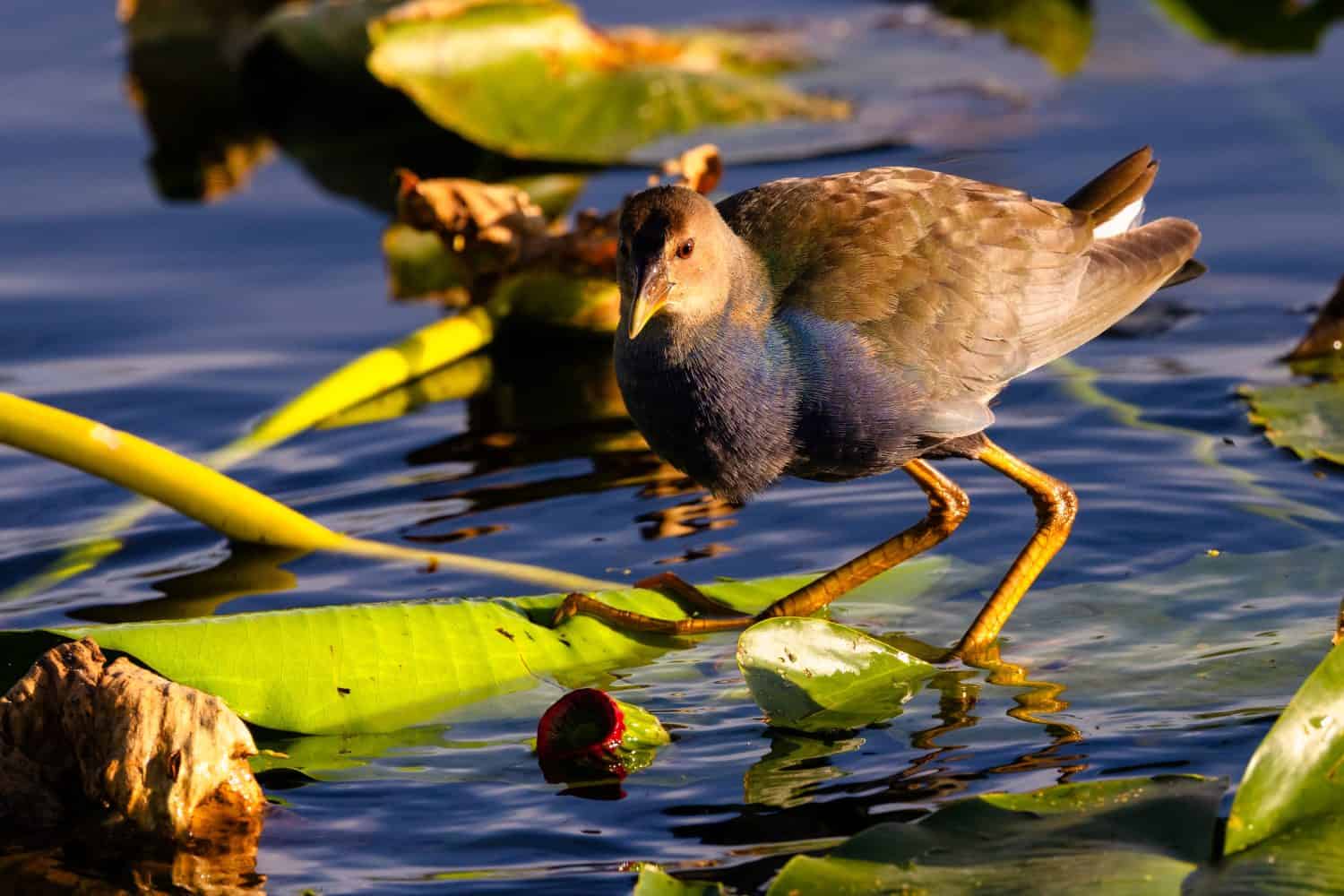
It is rare to see purple gallinules in California, given they live in Mexico, South America, and Florida.
©BrittanyO/Shutterstock.com
As they begin migrating between August and October, purple gallinules head toward Mexico and South America. During this time, Central America becomes a stopover location for the birds. California is a bit off the migration path, which is why so few have been seen in the state over the years.
Just as some purple gallinules live year-round in Florida, the same occurs along the Pacific and Gulf coasts of Mexico. However, during the migration season, more are seen in inland wetlands, where the seasonal birds live until it is time to migrate again.
Purple Gallinules Have Only Been Seen Eight Other Times in California
Southern California birdwatchers came out in droves to catch a glimpse of the juvenile purple gallinule at the San Joaquin Marsh and Wildlife Sanctuary. This created quite a stir near Pond C, where people had most often observed the bird. The reason was not that the species is threatened or endangered. It had to do with how few have ever been spotted in the Golden State in general.
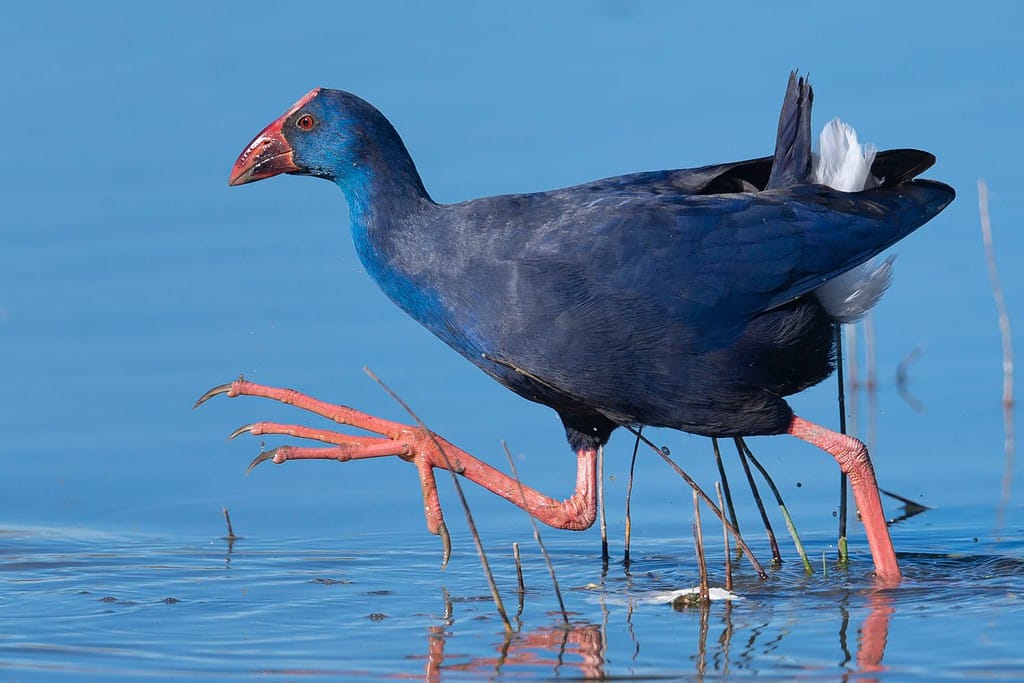
Purple gallinules have only been spotted in California eight times since 1961.
©Jesus Cobaleda/Shutterstock.com
Since 1961, only eight sightings of purple gallinules have been reported in California. The locations and years in which the tropical birds were first observed include:
- October 1961: One bird; Pt. Loma, San Diego County
- October 1986: One bird; Lake Elizabeth, Alameda County
- September 1997: Nine birds; Furnace Creek, Inyo County
- September 2010: One bird; San Gabriel Creek (Pico Rivera) Los Angeles County
- September 2010: One bird; San Gabriel Creek (Peck Road), Los Angeles County
- November 2018: One bird; San Diego County (bird found dead)
- November 2023: One bird; Arcata Marsh and Wildlife Sanctuary, Humboldt County
- August 2026: One bird; San Joaquin Marsh and Wildlife Sanctuary, Orange County
During some of these years the birds were observed, there were strong climate patterns, such as the current 2026 El Niño. While El Niño is not the common thread between these encounters, many believe that climate change is driving the purple gallinules and other species to expand their ranges. Whether this means these tropical birds will become a more common sight in upcoming years remains to be seen.
Reason Biologists Believe the Juvenile Purple Gallinule Was Spotted Far from Home
Purple gallinules are not known for veering off course. They are most often found off the Pacific and Gulf coasts of Mexico, Central America, the Caribbean, and the southeastern United States. However, when there are unusual weather patterns or extreme weather, these birds can be found far from home, just like with the juvenile in Southern California.
It is believed the juvenile in Orange County found its way there because of changing patterns caused by El Niño. This also explains why the birds in Death Valley stayed there in 1997 for nearly three months.
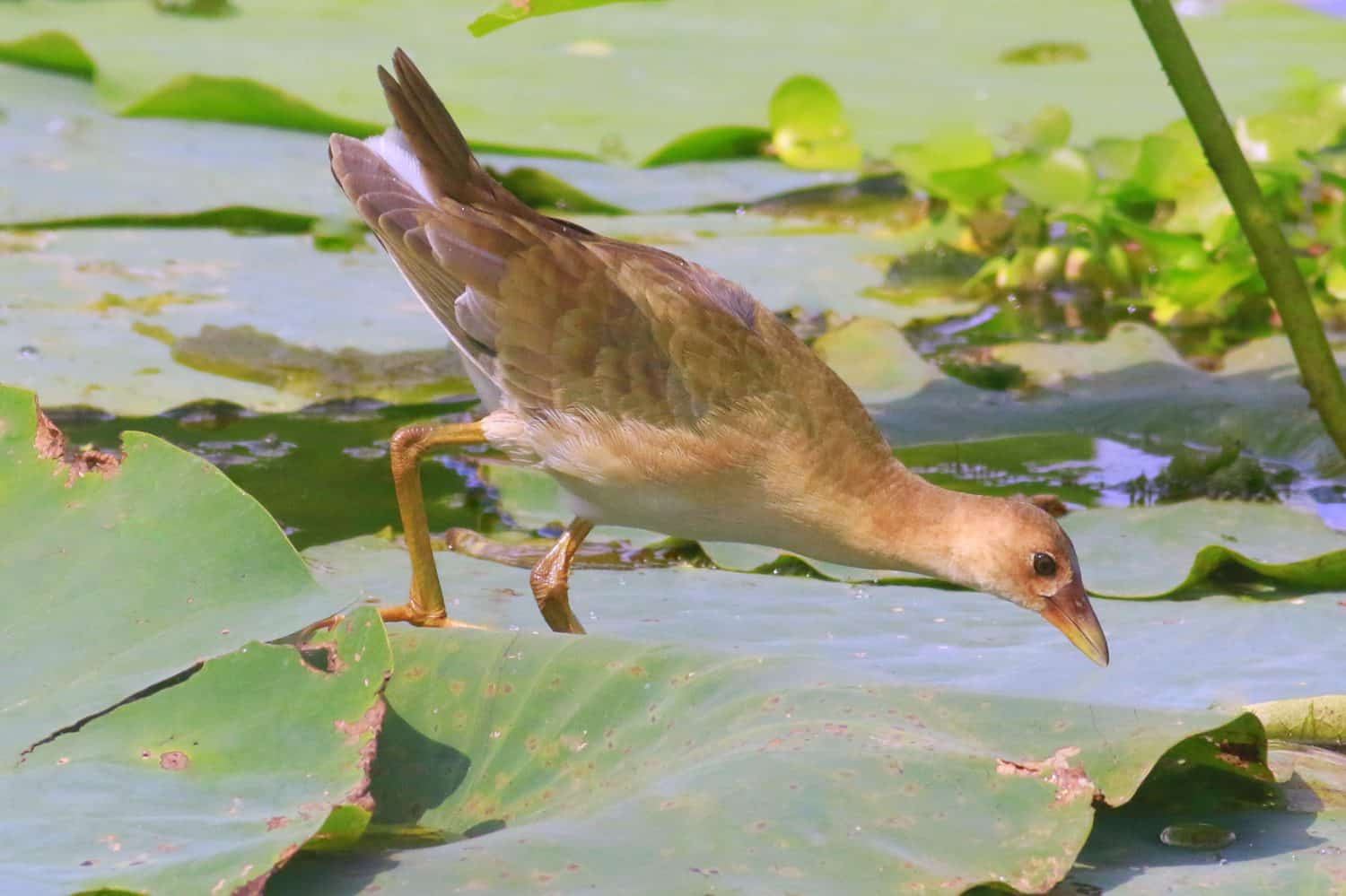
It is believed the juvenile purple gallinule veered off course due to El Niño conditions.
©Rosemary Brooks/Shutterstock.com
However, purple gallinules are also known for being vagrants from time to time. Strong weather can blow them off course. As a result, researchers have observed them in more northeastern U.S. states in recent years, such as Maine, Massachusetts, and Vermont, in northeastern Canada, and even in locales such as Ireland, Portugal, and Iceland.
In the coming years, it will be interesting to see whether breeding and wintering grounds shift as the climate changes. If they do, Southern California may no longer be an odd place to observe purple gallinules, but a major migration stopover instead.
Is the Juvenile Purple Gallinule Likely to Stay Through the Winter?
Since the juvenile purple gallinule was first spotted on August 18, 2026, many wondered whether the warmer temperatures Southern California had been experiencing would allow the tropical bird to remain in the region through the fall and winter. However, all good things must come to an end, and to the disappointment of birdwatchers, the purple gallinule bid the region adieu.
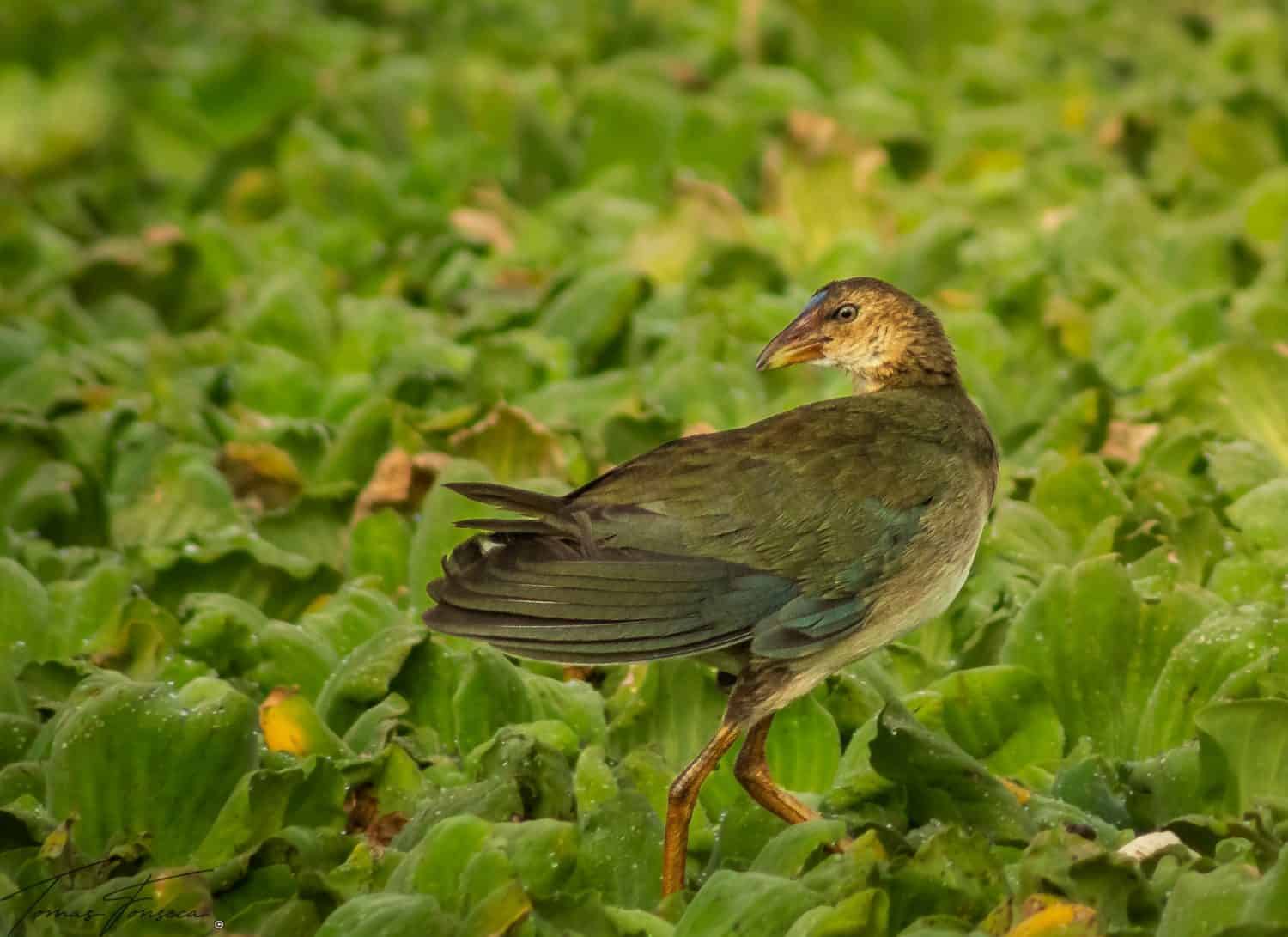
The juvenile purple gallinule appears to have left Southern California as of September 2026.
©Tomassavage/Shutterstock.com
According to the California Bird Records Committee, the last time the juvenile purple gallinule was spotted in Pond C at the San Joaquin Marsh and Wildlife Sanctuary was on September 3, 2026. Reports from Birdr note that there have been no sightings of the purple gallinule between September 8 and October 8, 2026. Consequently, it appears the juvenile moved on from its Southern California stopover grounds to unknown locations.
Although only a small number of purple gallinules have been observed in California, most sightings have occurred in recent years. Does this mean that the tropical birds have become more commonplace in the state? Not necessarily. However, if climate change continues to alter weather patterns, it is not out of the realm of possibility for more of these beautiful birds to be seen in habitats far from home.