Quick Take
- Migration is already deadly for birds under normal conditions, and the modern journey has become something far more dangerous than most people realize. See the mortality risks →
- Losing migratory birds isn't just a wildlife problem. The ripple effects reach your food supply, your local forests, and ecosystems you depend on daily. Explore the ecosystem roles →
- One migratory bird species has already crossed the point of no return, a fact that scientists only recently confirmed. See the confirmed extinction →
- International conservation efforts are already working in surprising places, and the results challenge assumptions about how long recovery takes. Explore recovery efforts →
As BirdLife International’s State of the World’s Birds report explains, flyways are essentially the super-highways birds take while migrating. Flyways connect all areas of the world, from continent to continent and over oceans. Sadly, migratory birds face increasing pressures that are already contributing to devastating impacts. In fact, 45% of all migratory bird species are declining, and 11% are at risk of extinction.
Migratory bird routes are becoming increasingly dangerous. Due to factors ranging from habitat degradation to predation, birds are facing more perilous journeys than ever before. However, that doesn’t mean we have to accept this decline. Through collaborative international habitat restoration efforts, we can do more to protect migratory birds.
Why Do Birds Migrate?
During migration, birds face predators, hazards, and more strenuous flight conditions that leave them prone to exhaustion. As a result, mortality rates are 3x higher during fall migration and 6.3x higher during spring migration than if migratory birds just stayed in one place.
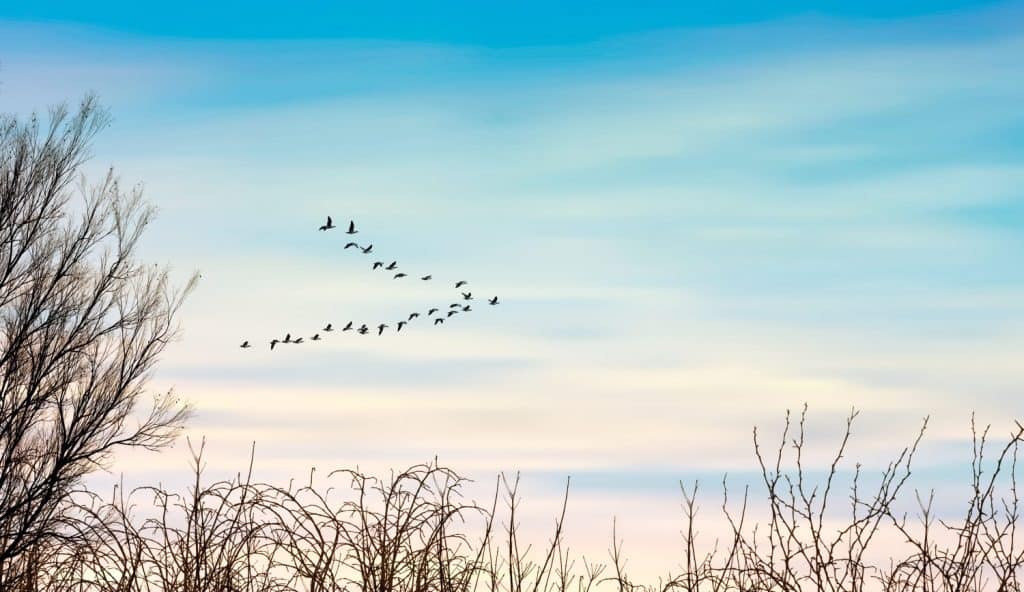
Migratory birds fly in a V pattern to help conserve energy.
©Gergitek/Shutterstock.com
Despite the perils of migration, there are many reasons why birds make the trek. Some face food scarcity during harsh winters and relocating opens the door to more food resources. Areas with more abundant food and more daylight mean the birds have more time to hunt and gather food for themselves and their young. Others migrate to breed.
The Ecological Importance of Migratory Birds
Bird migration is actually very important to environmental and ecological health. For one, migratory birds that are insectivores, or whose diet primarily consists of insects, help control pest populations and thus agriculture. Migratory birds also play a role in plant pollination and seed dispersal, as well as the transport of nutrients. Through these activities, birds can contribute to plant growth in new areas. Finally, many predators eat migratory birds, allowing the food chain to thrive.
2026 State of the World’s Birds Report
BirdLife International puts out its State of the World’s Birds report to track the status of birds across the world, what threats they’re facing, population changes and declines, and conservation efforts. This information actually tells us a lot about how the world’s birds are doing. As the report explains, “Birds are powerful indicators of environmental health.” This is due to their sensitivity to environmental changes. Unfortunately, the rapid decline in migratory bird species does not signify anything positive for the planet as a whole.
What Did the Findings Show?
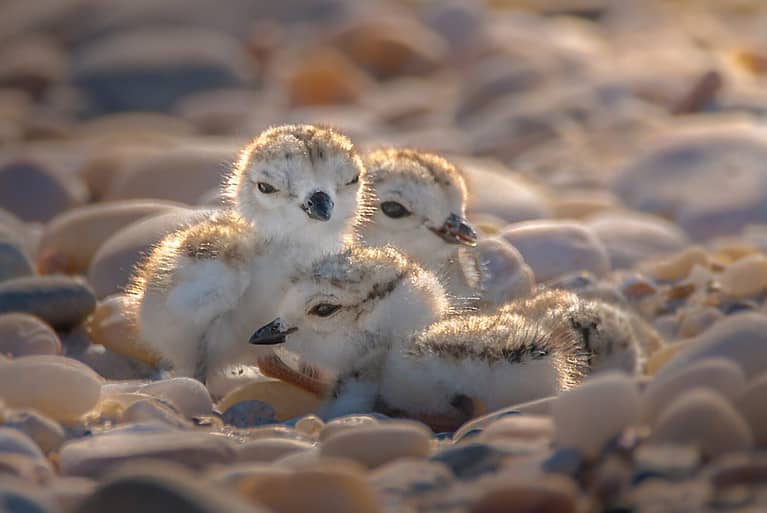
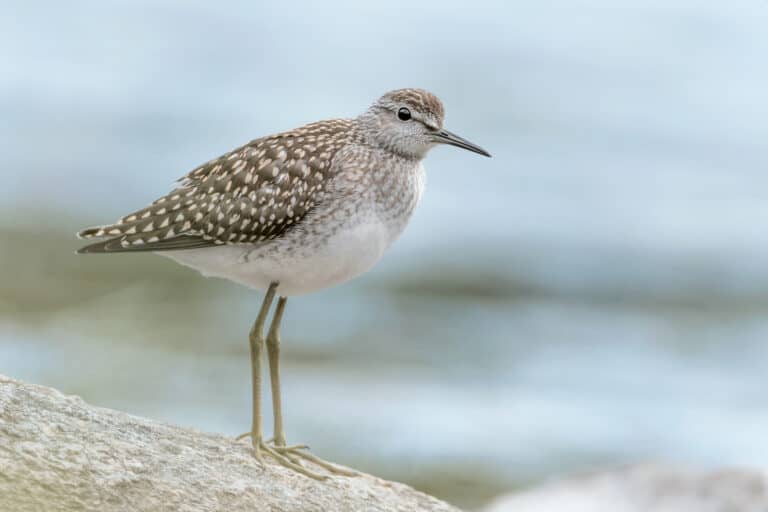
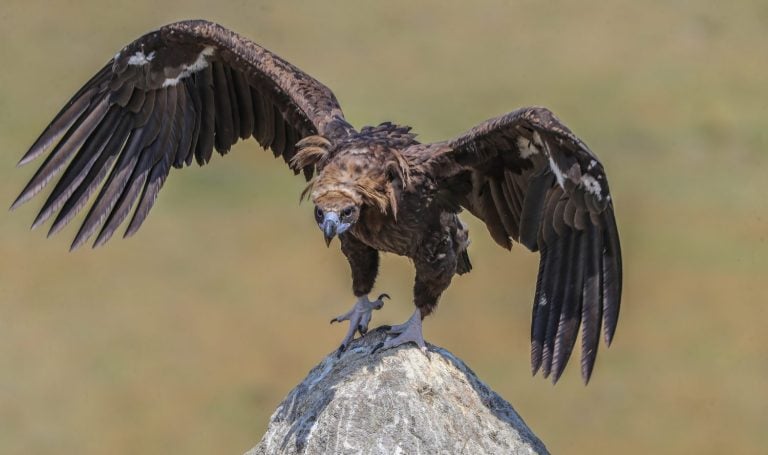
The report found that 45% of the world’s migratory bird populations are in decline. Shorebirds (54% decline) and seabirds (49% decline) are facing the largest population reductions, though raptors (44% decline), passerines (42% decline), and waterfowl (42% decline) aren’t far behind.
Species dependent on forests, coastal wetlands, and marine habitats are most affected. These include cuckoos, turtle doves, Arctic terns, spoon-billed sandpipers, and curlew sandpipers.
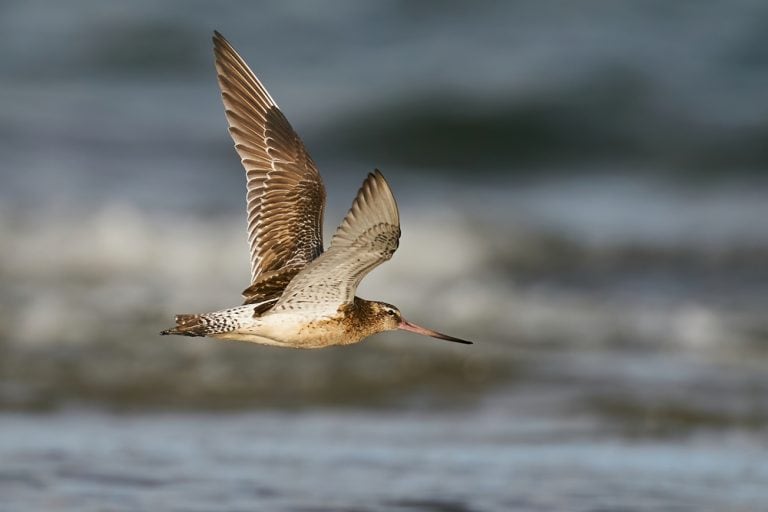
Without changes, we could expect to see more population declines and even the erasure of species, such as the slender-billed curlew, a migratory shorebird. In late 2024, scientists published a paper suggesting there was a 96% probability that the slender-billed curlew was extinct. This was officially declared by the IUCN in 2025. Although seven species are believed to have been lost in the last 150 years, the slender-billed curlew marks the first confirmed global bird extinction in Africa and Eurasia.
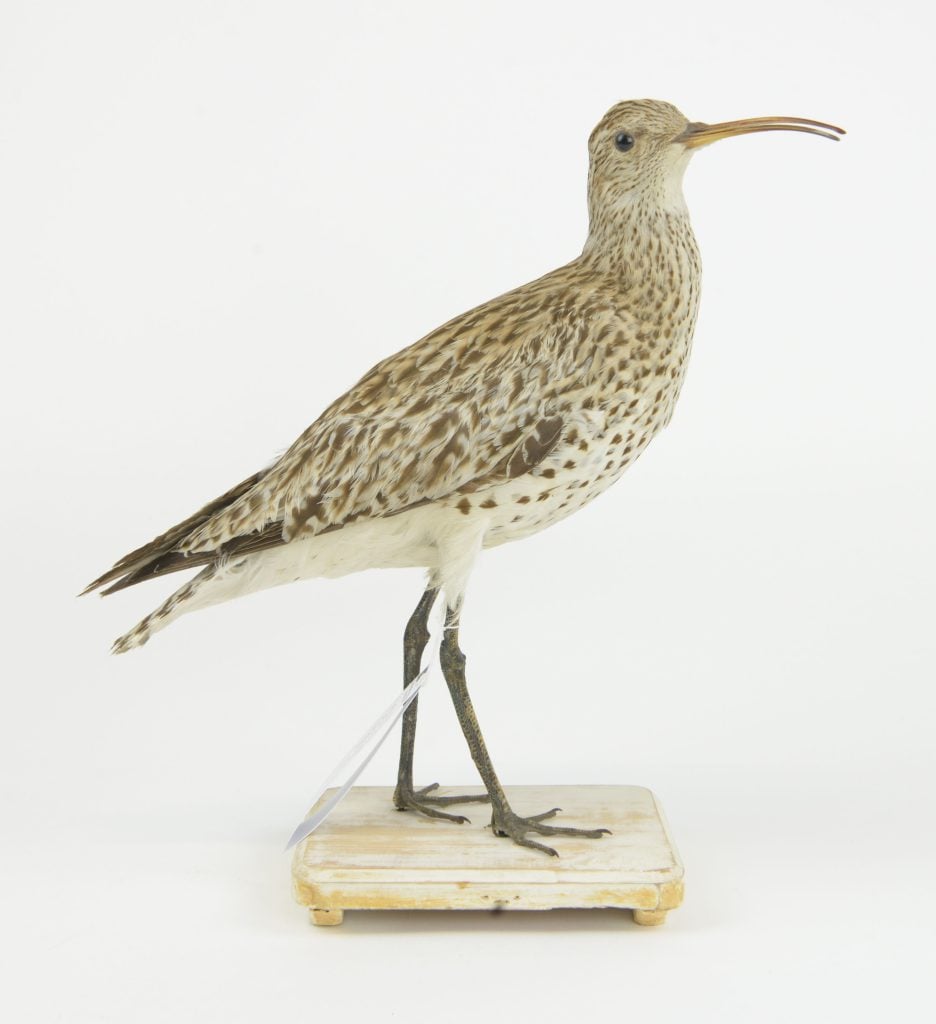
The last confirmed sighting of the slender-billed curlew happened in 1995.
The Factors Affecting Migratory Bird Loss
There are many different factors that are negatively impacting the health and longevity of migratory birds. In many cases, these factors actually intersect and contribute to one another. To help mitigate harm and reinvigorate bird populations, we have to consider how to address the following in tandem:
Habitat Loss and Pollution
As cities expand, forests are cut down for logging, and landscapes are razed for agricultural developments, migratory birds are finding fewer rest areas. Losses are also compounded, as habitat destruction reduces food sources. Migratory birds subsequently have a harder time finding spots to rest and less time to refuel.
Pollution also degrades habitats. When toxic products are discharged into soil or water, it can hurt every level of the food cycle. Plastic waste is also a huge and growing problem globally. If birds ingest plastic, it can fill up their stomach and prevent them from eating more, leading them to starve.
Illegal Hunting and Trapping
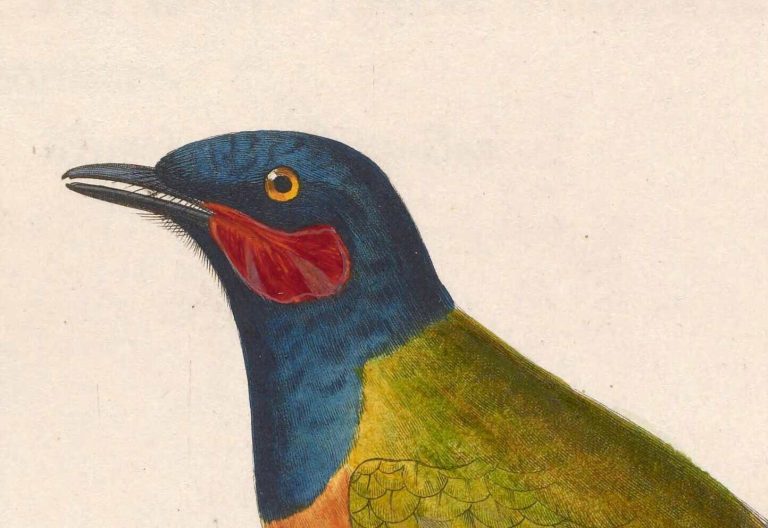
Many birds become trapped in mist nets, deterrence nets, or on lime sticks, which are posts coated in a sticky substance. Data captured by BirdLife International found that 49% of these birds are trapped to be sold into the pet trade, especially songbirds like blue grosbeaks. Some individuals may continue this trapping because it is economically beneficial for them or their community. An additional 30% of captured birds are eaten for food, while 15% are hunted for sport. Some birds are simply trapped when trying to fish, getting caught in lines as bycatch. Annually, an estimated 13.1-42.7 million birds are thought to be killed in Europe, the Arabian Peninsula, the Mediterranean, and the Caucasus alone from hunting and trapping.
Climate Change
Insect reproduction depends heavily on the season. With climate change, shifting temperatures may interrupt reproduction, leading to food scarcity for migratory birds. Climate change also contributes to worsening weather and storms, which can heighten erosion, as well as droughts.
Invasive Species
When non-native species become established in an area, they can place more pressure on migratory birds. Invasive plants like kudzu, for example, can destroy the native vegetation and plant life that birds rely on for shelter or roosting. Native insects may not find the invasive plants palatable, which means a loss of insect populations for the birds to feed on. Invasive predators, like feral cats and mice, may also hurt migratory bird populations. In some areas of the world, birds did not evolve to have adequate defense mechanisms. When predators are introduced, the birds often do not know how to protect themselves. Invasive species can also introduce unknown pathogens or diseases that can decimate migratory birds with no natural immunity.
How We Can Protect Migratory Birds
Because migratory birds travel worldwide, we need to work together on an international scale to implement protective measures, including more policies to protect these birds, climate initiatives, coordinated habitat restoration, and more punitive measures for those illegally harvesting birds.
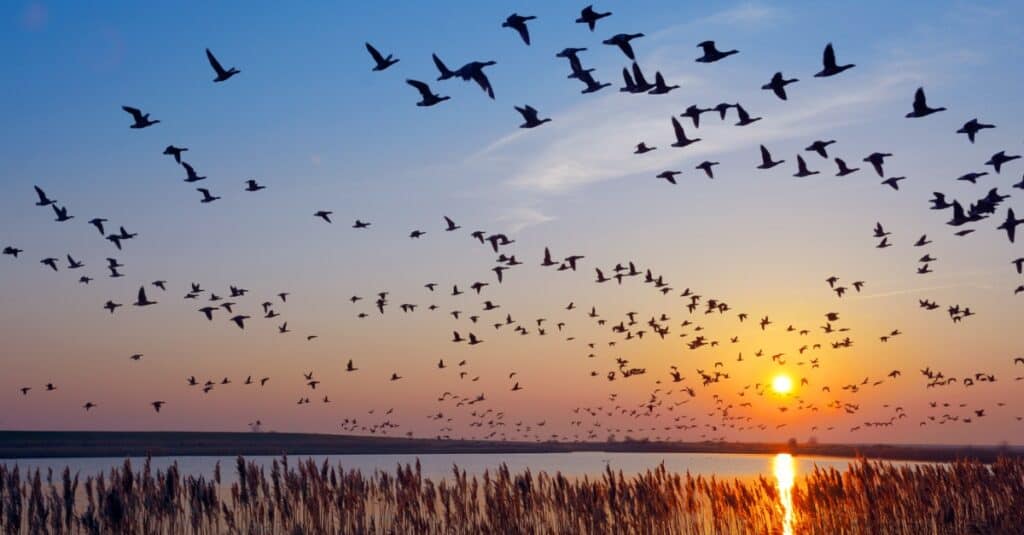
It’s especially important to begin rebuilding and restoring coastal environments for migratory birds.
©eurotravel/Shutterstock.com
The efficacy of habitat restoration can already be seen. In China, removing cordgrass from coastal mudflats has brought in more shorebirds. Roughly 32,000 waterbirds returned to Essex, in England, after coastal erosion was addressed. In the U.S., the Partners for Fish and Wildlife Program has worked in Vermont to repair riparians where migratory birds can nest or forage for food.
Admittedly, conservation efforts take time, hard work, and financial backing. But if we can keep migratory birds from going extinct, the efforts will certainly be worthwhile.