
Quick Take
- From alpine forests to arid deserts, New Mexico‘s multiple ecosystems support an astounding array of avian life.
- New Mexico is a corridor along the Central Flyway, a principal path for migratory birds.
- New Mexico is one of the few places in North America to host all three species of rosy-finches: black, brown-capped, and gray-crowned.
With multiple ecosystems, New Mexico’s topography supports a wide range of avian species. From alpine conifer forests and grassland plains to arid deserts and wetlands, the state provides vital habitats for approximately 550 documented bird species. The state also serves as a corridor for migratory birds along the Central Flyway. The Rio Grande corridor serves as a critical stopover for millions of birds migrating between breeding grounds in North America and winter habitats in Mexico and beyond. Continue reading to learn about some of the best locations for bird-watching in New Mexico.
Bosque Del Apache National Wildlife Refuge
Bosque del Apache National Wildlife Refuge in San Antonio, New Mexico, is a first-class birding destination, popular for its winter populations of sandhill cranes, snow geese, and Ross’s geese. From mid-November through January, the refuge is home to a multitude of migratory waterfowl.
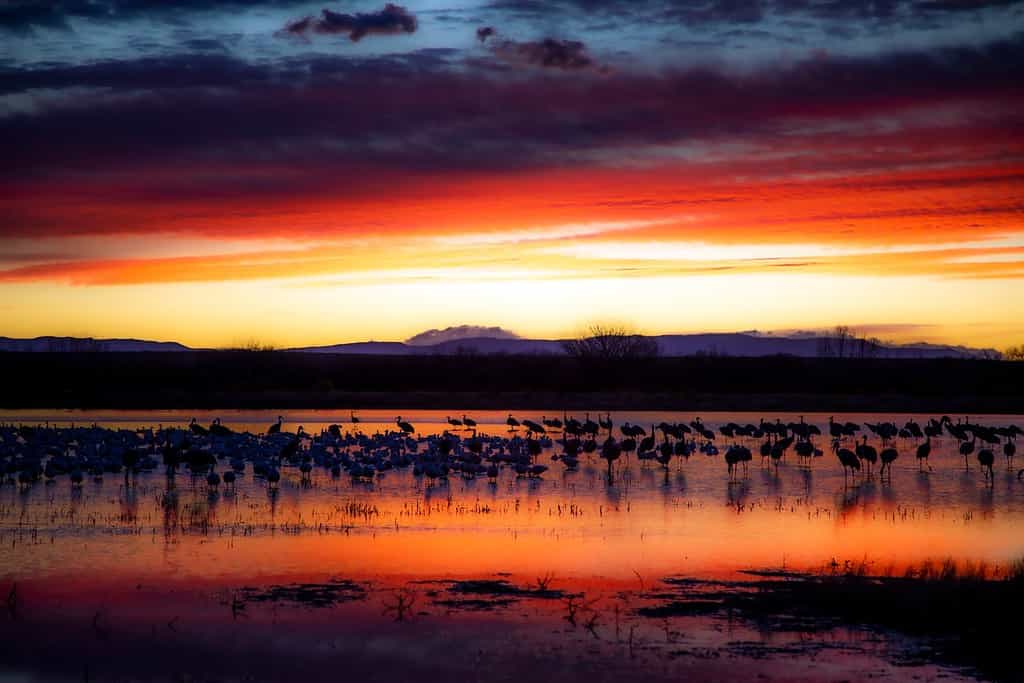
Sandhill cranes and snow geese are silhouetted by the sunrise at Bosque Del Apache National Wildlife Refuge.
©Lindsey Lu/Shutterstock.com
In addition to wintering flocks, the refuge supports a diverse array of birdlife, including bald eagles, hawks, hummingbirds, and numerous shorebird species during spring migration.
The refuge features a well-known auto-tour loop, multiple observation decks, blinds, and walking trails, all of which allow for intimate wildlife viewing and photography. Its design provides a high-quality experience for both professional and novice birders. Some of the bird species seen at the refuge include:
- Rufous Hummingbird
- Ross’s Goose
- Sandpiper
- Stilt
- Sandhill Crane
- Snow Goose
- Plover
- Quail
- Wild Turkey
- Red-winged Blackbird
Bitter Lake National Wildlife Refuge
Not far from the town of Roswell, New Mexico, Bitter Lake National Wildlife Refuge is at the convergence of the Chihuahuan Desert and the Southern Great Plains. The refuge serves as a critical wetland oasis for over 350 bird species. It is internationally renowned for its massive fall and winter migrations of Sandhill Cranes, snow geese, and ducks, as well as its diverse populations of shorebirds and waders.
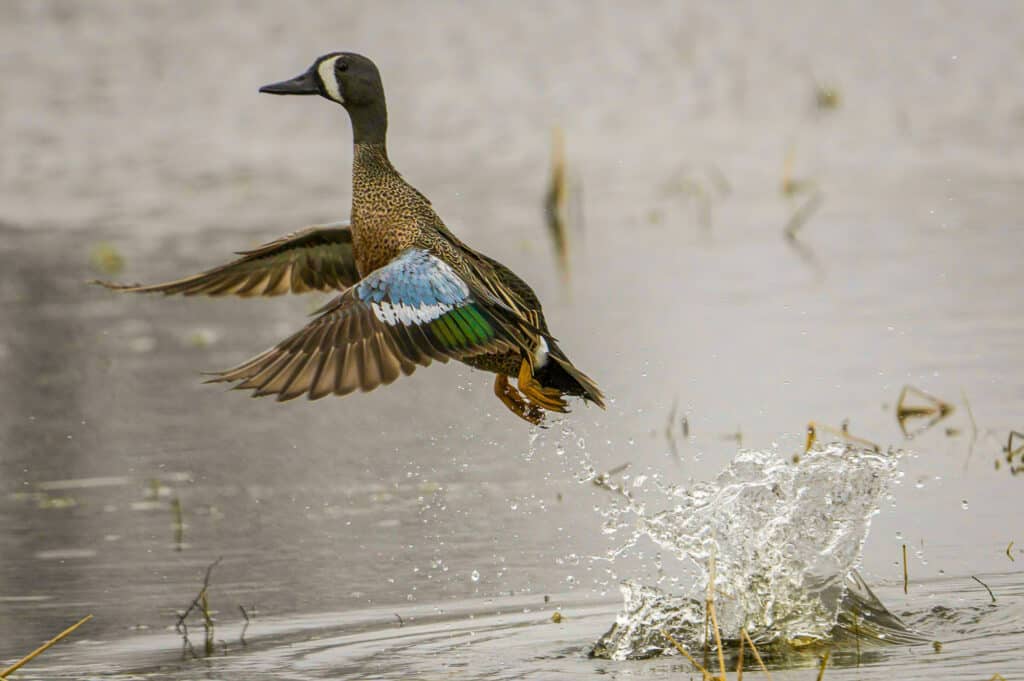
Blue-winged teal pass through New Mexico while migrating.
©iStock.com/Brian Reinke
During peak migration, the refuge supports tens of thousands of Sandhill Cranes, snow geese, and various duck species. Beyond waterfowl, birders frequently spot American Avocets, Black-necked Stilts, Snowy Plovers, Great Blue Herons, and White-faced Ibis.
Other species frequently seen at Bitter Lake National Wildlife Refuge include:
- Cinnamon Teal
- Blue-winged Teal
- Sandhill crane
- Lesser Yellowlegs
- Least Tern
- Western Sandpiper
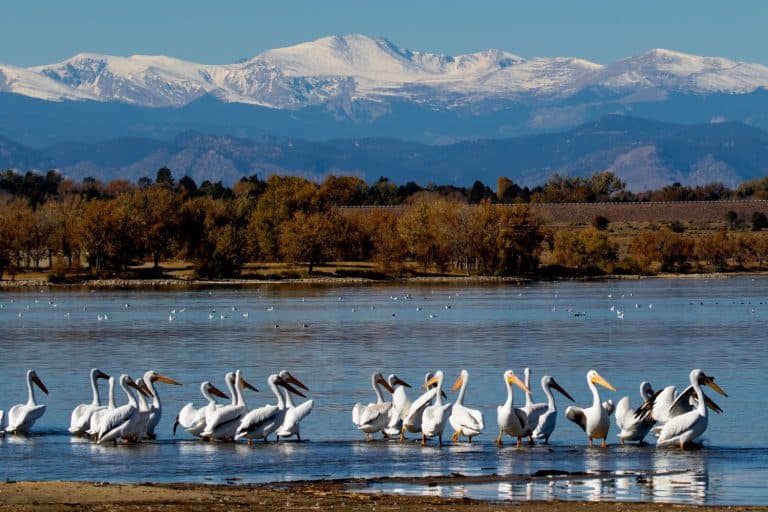
- White Pelican
Carlsbad Caverns National Park: Rattlesnake Springs
Rattlesnake Springs is a year-round birding oasis within Carlsbad Caverns National Park. As a rare desert riparian habitat featuring natural springs and cottonwood trees, it attracts over 350 bird species. It serves as a vital breeding and stopover site in the otherwise arid Chihuahuan Desert. While Carlsbad Caverns is world-renowned for its caves and bat flights, Rattlesnake Springs offers a world-class birding experience.
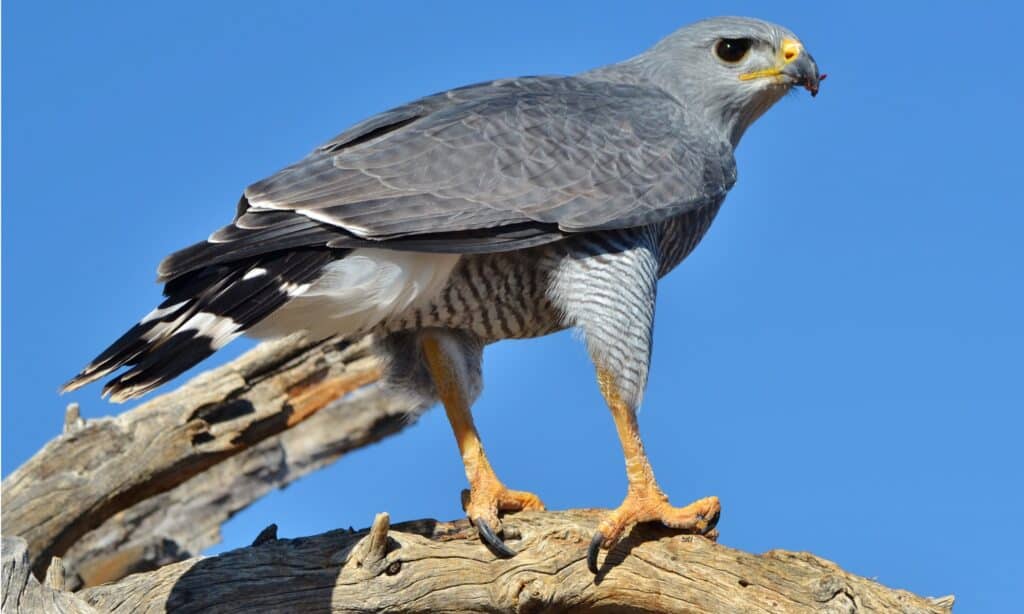
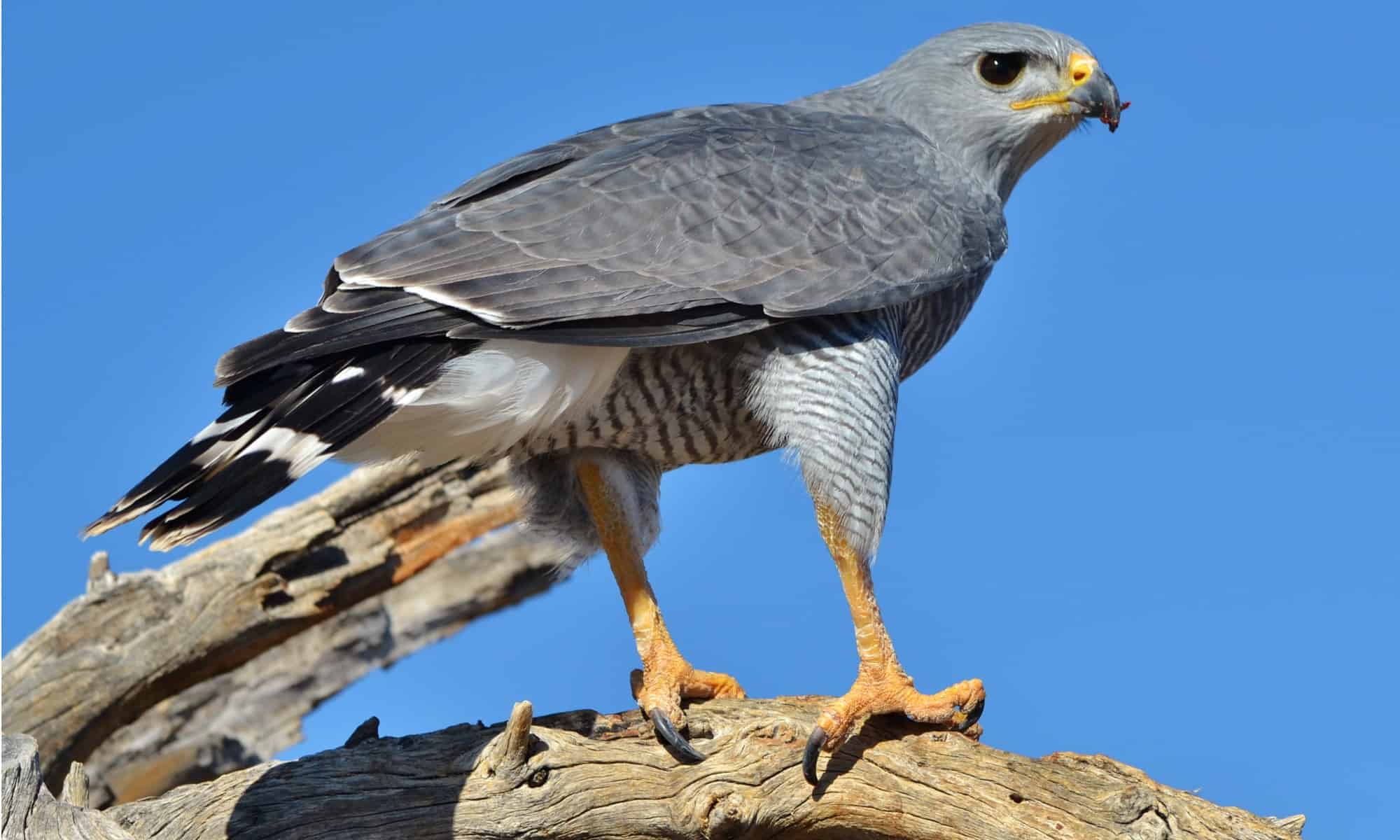
The gray hawk can be seen in Carlsbad Caverns National Park.
©iStock.com/mjf795
Located in the Chihuahuan Desert, Rattlesnake Springs is a lush oasis with a natural spring and a grove of mature cottonwood trees, providing water, shade, and food for birds that would otherwise struggle to survive in the desert.
Rattlesnake Springs is an isolated unit of Carlsbad Caverns National Park and is designated as an Important Bird Area (IBA) because of its critical water source. Shaded picnic tables and restroom facilities are available, making the area comfortable for extended birding sessions. Birds that can be viewed at Rattlesnake Springs include:
- Gray Hawk
- Worm-eating Warbler
- Williamson’s Sapsucker
- Say’s Phoebe
- Wild Turkey
- Summer Tanager
- Bell’s Vireo
- Blue-headed Vireo
- Painted Bunting
- Ash-throated Flycatcher
- Yellow-breasted Chat
- Vermillion Flycatcher
- Black-chinned Hummingbird
- Southwestern Willow Flycatcher
- Lucy’s Warbler
- Elf Owl
Rio Grande Nature Center State Park
Located in Albuquerque, New Mexico, Rio Grande Nature Center State Park is a birding hotspot located on the Rio Grande flyway. Featuring a cottonwood forest and wetland habitats, the park supports over 300 bird species. Its position along the Rio Grande flyway makes it a critical stop for approximately 40 species of seasonal migrants and a year-round haven for resident birds.
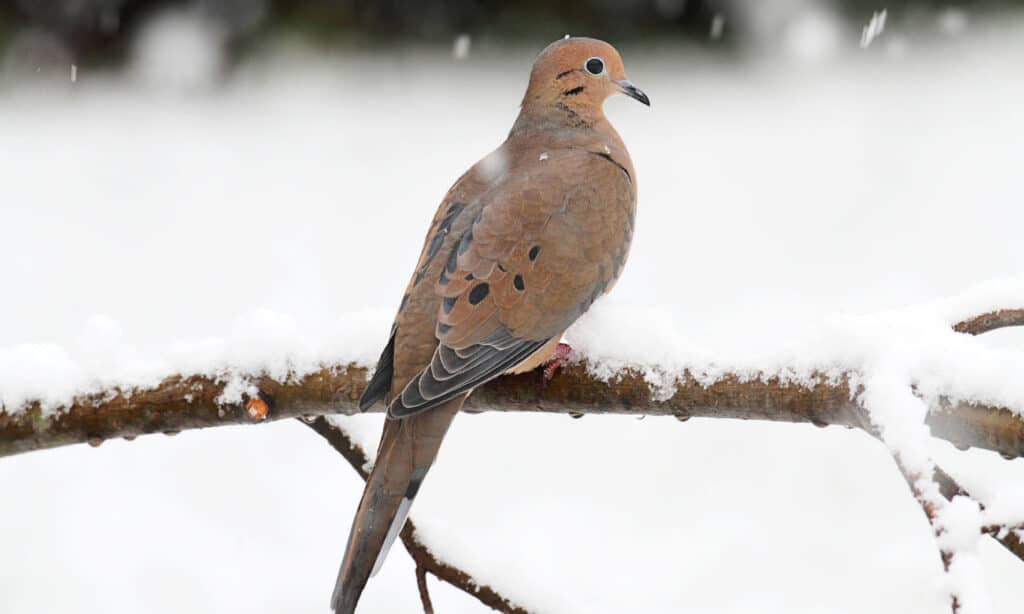
Mourning doves are one of the over 300 bird species in Rio Grande Nature Center State Park.
©iStock.com/SteveByland
The park supplies binoculars and hosts free guided bird walks led by volunteers. It is widely recognized as an essential destination for bird enthusiasts. Birds that may be observed at Rio Grande Nature Center State Park include:
- Cooper’s Hawk
- Great Horned Owl
- Woodpecker
- Wood Duck
- Gambel’s Quail
- Heron
- Black-chinned Hummingbird
- Greater Roadrunner
- Ruby-crowned Kinglet
- Ring-necked Duck
- American Wigeon
- Blue-winged Teal
- Mourning Dove
- Mallard
Sandia Crest
Sandia Crest is one of the most reliable locations in North America to see all three species of rosy-finches: black, brown-capped, and gray-crowned. They are frequently seen feeding at the Sandia Crest house area. January and February are considered the peak months for viewing rosy-finches.
At over 10,000 feet, birders must contend with severe winter weather, including high winds, freezing temperatures, and snow. However, the park maintains a paved road to the crest, which features numerous tight switchbacks and sharp turns as it climbs nearly 4,000 feet to the summit.
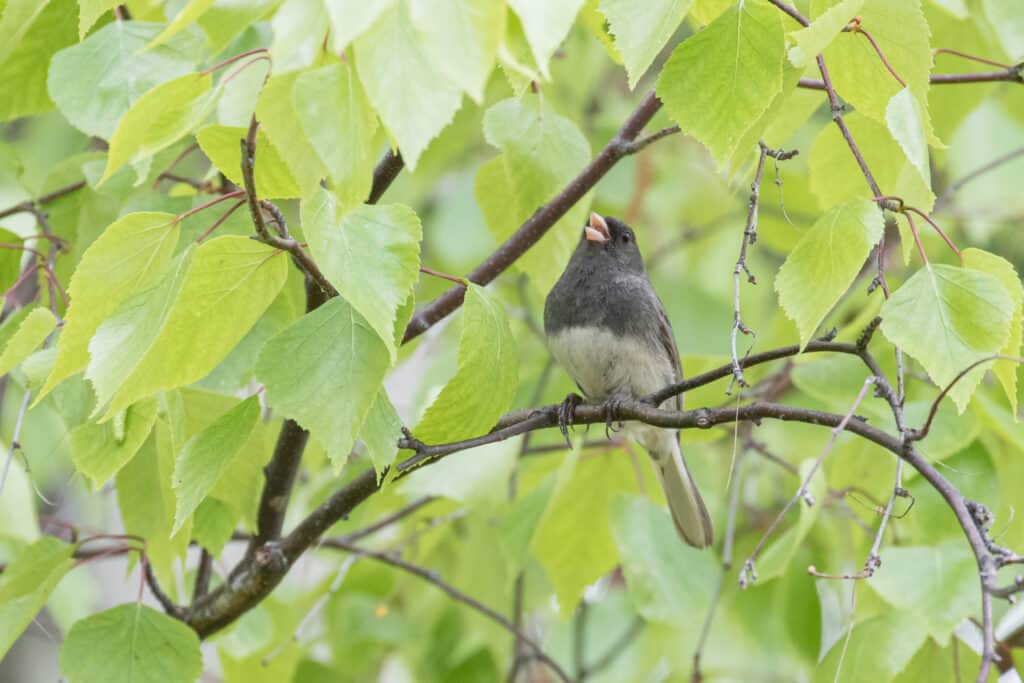
The dark-eyed junco is one of the popular birds in Sandia Crest.
©iStock.com/Dee Carpenter Photography
Allow about an hour for the drive and be prepared to pay for parking. Dress appropriately for the weather, as temperatures at the crest are typically 20–30 degrees cooler than at the base. Birds spotted at Sandia Crest include:
- Plumbeous Vireo
- Hermit Thrush
- Pine Siskin
- Mountain Chickadee
- Red Crossbill
- Steller’s Jay
- Cordilleran Flycatcher
- Brown Creeper
- Pygmy Nuthatch
- Yellow-rumped Warbler
- Dark-eyed Junco