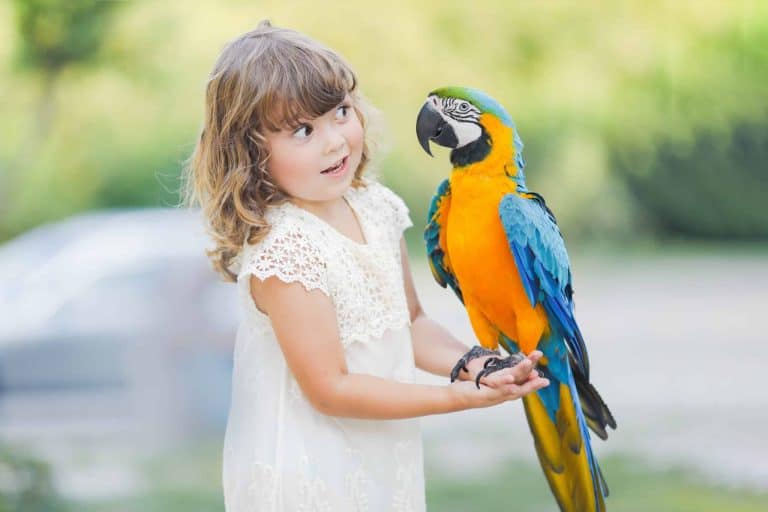

Birds can be wonderful pets if raised and handled correctly. There are many types of house birds, but not every bird is appropriate for a pet. Some birds need to live in large flocks to be healthy and happy, while others have an instinct to migrate. In general, the larger the bird, the more time and attention it will need. Parrots and parakeets are the most popular pet birds. In the wild, these are very social, gregarious birds who live in large flocks. Some of the large parrot breeds can be very long-lived, with some species living more than 80 years. When hand-raised, these birds develop very deep bonds with their human friends.
However, some birds take well to being domesticated, and they can provide years of pleasure for their owners. Here are some different types of pet birds and how to take care of them.
1. Princess of Wales Parakeet
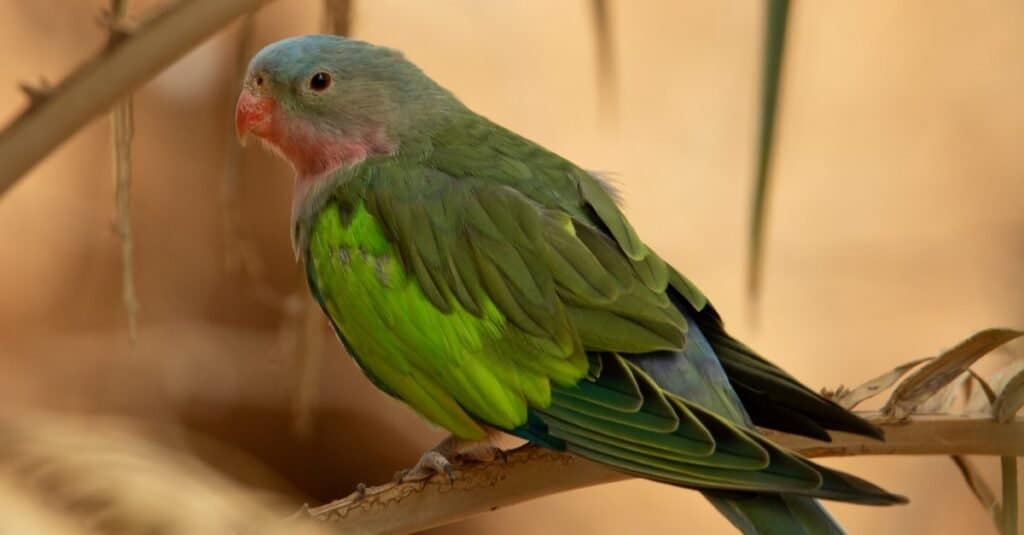
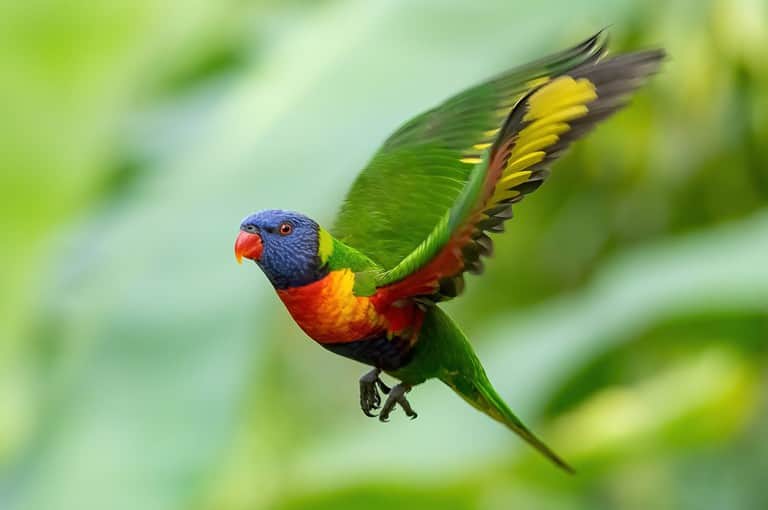
One of the more beautiful pet birds, the Princess of Wales parakeet, looks like a flying sherbet.
©Ian Peter Morton/Shutterstock.com
One of the most beautiful birds on the list is the Princess of Wales parakeet, which looks like a flying sherbet. The crown of the head is blue, there are lemon yellow and green patches on the wings, the back is ultramarine, the cheeks are pinkish-red, there are red feathers around the legs, and the tail coverts are green-yellow. The male has a red beak, and the female’s coloration is similar but duller. The parakeet is between 14 and 18 inches long and weighs about 3.53 ounces. Friendly and biddable, it is one of the birds that talk, but it is not a champion talker like the African grey parrot.
The parakeet forages on the ground in its native Australia, so the best place to place its food, which is mostly seeds and fruit, is on the bottom of its enclosure. The best sort of enclosure is a flight cage, which is tall and wide and not only allows the bird to exercise but also makes room for its long tail.
2. Star Finch
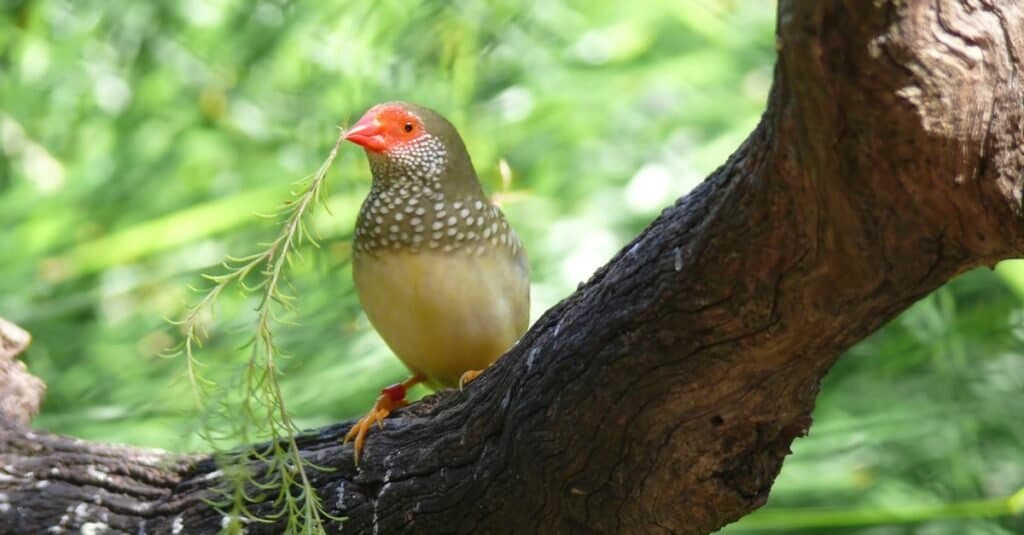
Star finches love to fly and need a large enclosure.
©Susan Flashman/Shutterstock.com
The star finch is a friendly little bird that is known for its red face and bill. It is yellowish-green on top, and its breast is spotted with pearly white. These birds are only about 4 to 4.72 inches long, and they weigh around 0.35 to 0.42 ounces.
Since the star finch likes to fly, it needs a fairly large enclosure. Star finches primarily eat seeds, but they also enjoy a small amount of fresh fruit and vegetables.
3. Budgerigar
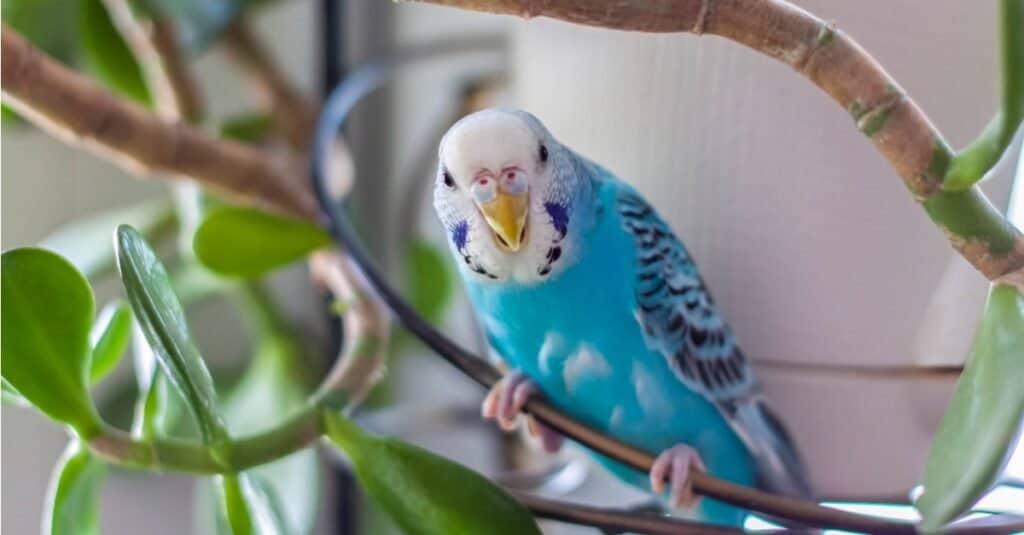
Budgies are one of the most popular types of pet birds in the world.
©iStock.com/Alina Lebed
Also known as parakeets or budgies, budgerigars are among the most popular birds in the world. In their Australian habitat, budgies are green and yellow, but they’ve been bred to be either yellow, green, violet, white, gray, blue, or pretty combinations of these colors. They don’t need a very large cage, though they will need toys to play with. Budgies are excellent for kids and beginners, as their needs are uncomplicated. They’re also one of the types of small pet birds that talk if they’re trained to do so. There are two types of budgerigars on the market, the English and the American. The English is the larger of the two, and its plumage is described as fluffier than that of the American bird. Budgies are about seven inches long and weigh between one and 1.4 ounces, with a 12-inch wingspan.
The budgie can be easily kept in an indoor cage, but the cage still needs to be a suitable size so that it can move around freely. Parakeets should be fed a balanced diet of either seed or pellets.
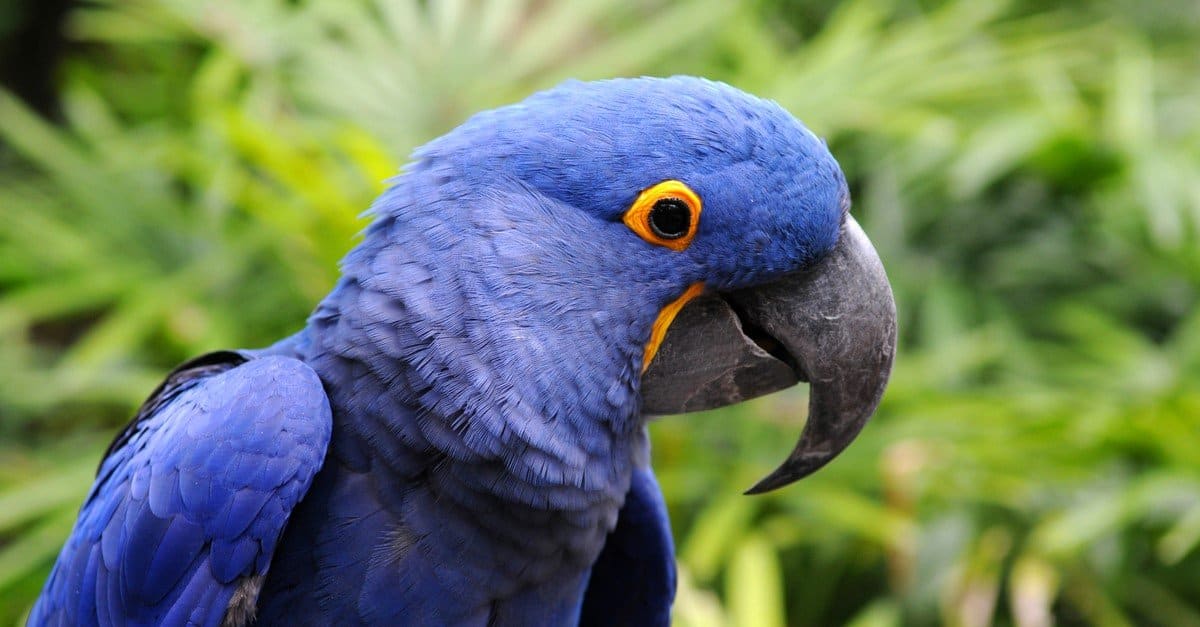
4. Hyacinth Macaw
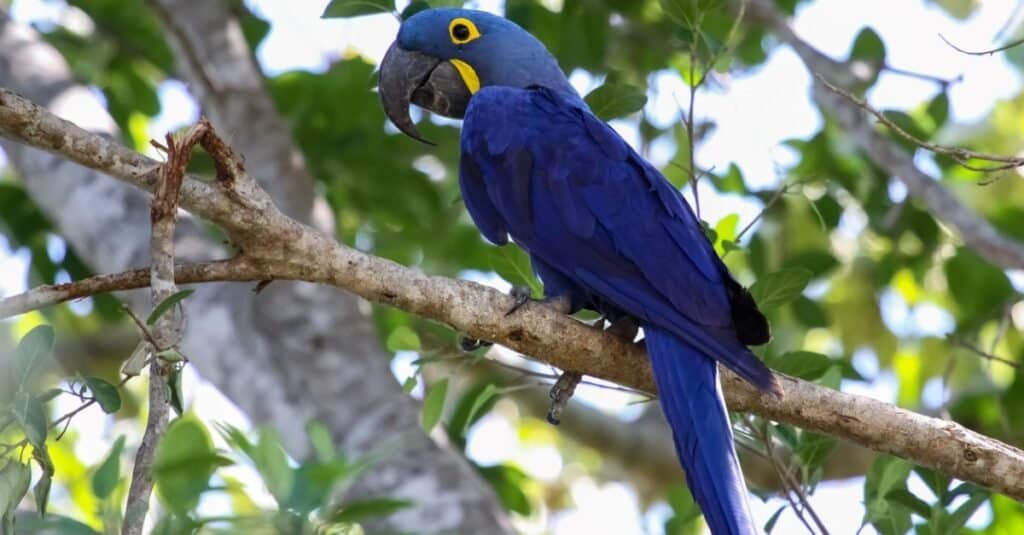
The hyacinth macaw is the largest flying parrot.
©iStock.com/Uwe-Bergwitz
In contrast to the types of small pet birds, the hyacinth macaw is a giant. At about 3.3 feet long and 2.6 to 3.7 pounds, it’s longer than any other parrot. It’s also the largest flying parrot and can live for half a century. One of the most beautiful birds, it is purplish blue with yellow around its eyes and the corners of its beak.
The hyacinth macaw is not recommended for beginners as it requires a lot of space and regular exercise. It can also be quite a destructive bird and needs a strong cage as it is known to break out of standard ones. In the wild, the hyacinth macaw primarily eats palm nuts. However, other sorts of nuts, such as cashews and macadamias, can be substituted when they are kept as pets. The parrot can also be coaxed into eating parrot pellets.
5. Canary
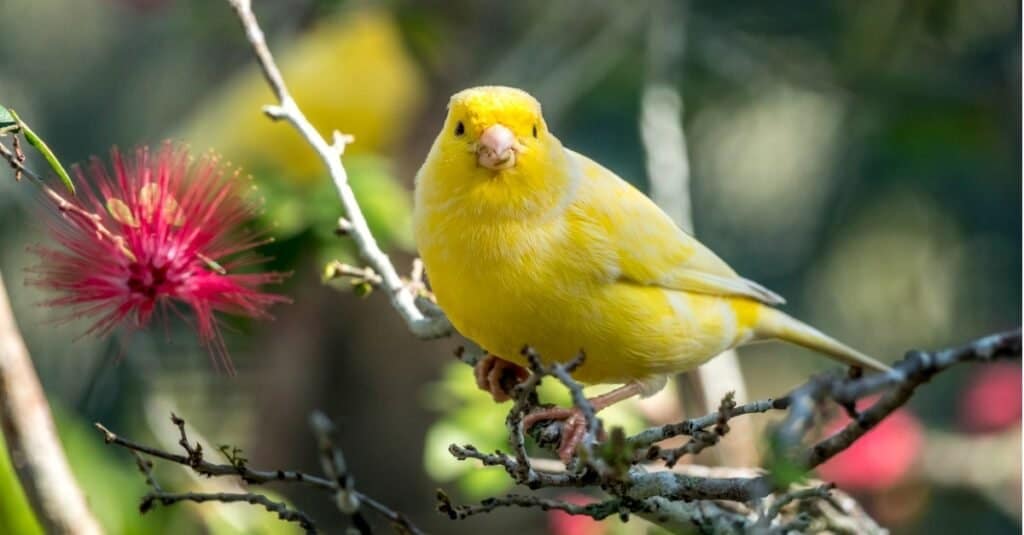
Canaries are one of the most popular domestic birds.
©iStock.com/johnandersonphoto
Another popular pet bird is the canary, which is prized for the male’s beautiful song. Canaries are a type of finch, and though “canary” is a shade of yellow, the bird has been bred to come in many colors. Canaries are relatively small birds at only three to four inches long. They are largely solitary, and being alone encourages the male to sing. Canary maintenance is easy, and they are suitable birds for beginners and for children. Though wild canaries are omnivores, pets should be fed canary pellets supplemented with seeds, fruits, and vegetables. Male canaries shouldn’t share the same cage, and one interesting fact about them is that they’ll stop singing if a mirror is put in their cage.
6. Red-Cheeked Cordon Bleu
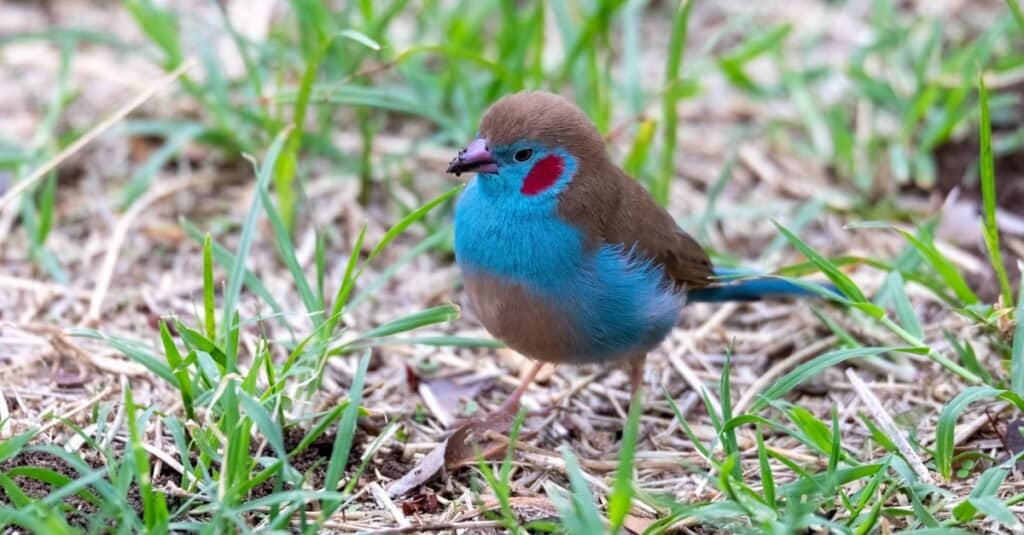
The red-cheeked cordon-bleu is a small bird that’s easy to care for.
©Artush/Shutterstock.com
This sensationally beautiful African finch has an aquamarine blue body, and the males have startling red patches on their cheeks. Red-cheeked cordon bleus are omnivores, but unlike the canary, they can’t really do without some insects in their diet. Therefore, they do well on a combination of seed mix and insects.
At 4.9 to 5.1 inches long, the red-cheeked cordon bleu needs plenty of space and does well in an aviary planted with vegetation. It is ok to house them with other types of small pet birds, as they tend to get along well with others.
7. Masked Lovebird
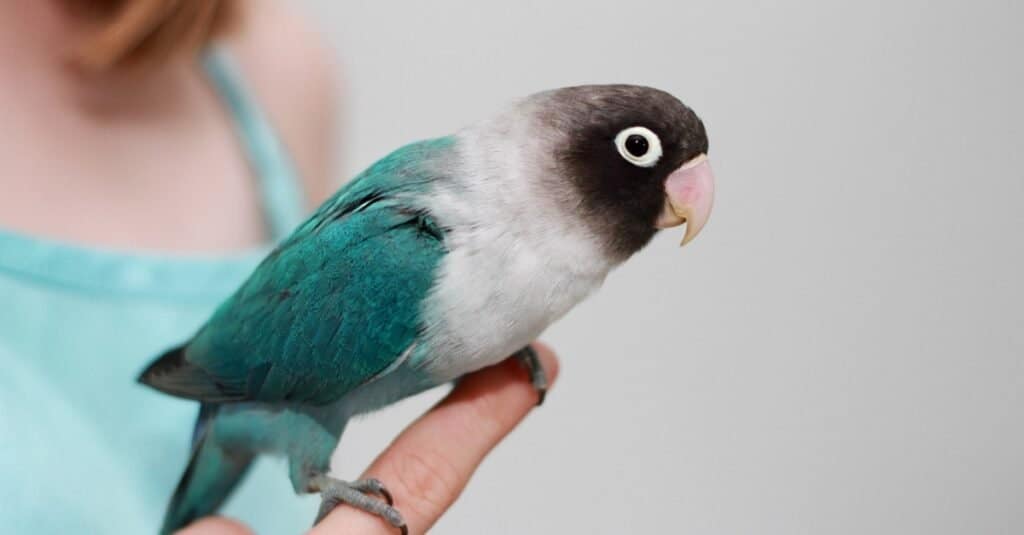
Masked lovebirds are named for the intense bond formed between a pair.
©JCM Photos/Shutterstock.com
Lovebirds are small types of parrots named for the intense bond formed between a pair. This particular lovebird gets its name from the black mask over its face. It is only six inches long, has a stubby tail, a golden neck, and olive green wings. The bill is red, and there are white circles around the eyes that contrast beautifully with the black mask. It is difficult to tell the sexes apart, though hens are slightly larger. Lovebirds are playful and affectionate. They are considered good for beginners and are generally suitable for older children as well.
Like other types of parrots, masked lovebirds eat seeds, nuts, and fruit and do well on pellets supplemented with leafy greens and fresh fruit. Though they’ll do well in a 24-inch by 24-inch cage, lovebirds should be let out once in a while to explore.