
Quick Take
- Only three bird groups — songbirds, parrots, and hummingbirds — are capable of true vocal learning.
- Birds use specialized brain regions, similar to the human basal ganglia, to learn and refine songs.
- Some young bird species must hear and practice songs during a critical developmental window or may never sing normally.
- Social cues and positive reinforcement play a major role in helping birds learn and improve their vocalizations.
Countless YouTube videos feature pet birds singing and talking to their owners. Although it may seem like simple mimicry, birds learn to vocalize through a complex neurological process that is not unlike how humans learn language. Whether it’s a pet bird mimicking human sounds or a wild songbird singing its mating song, specialized brain regions regulate song learning in birds. Furthermore, if a young bird misses its early learning opportunity, it may never learn to sing its species-specific song. However, pet bird owners can still encourage vocal behavior later in life, especially in birds that are open-ended learners.
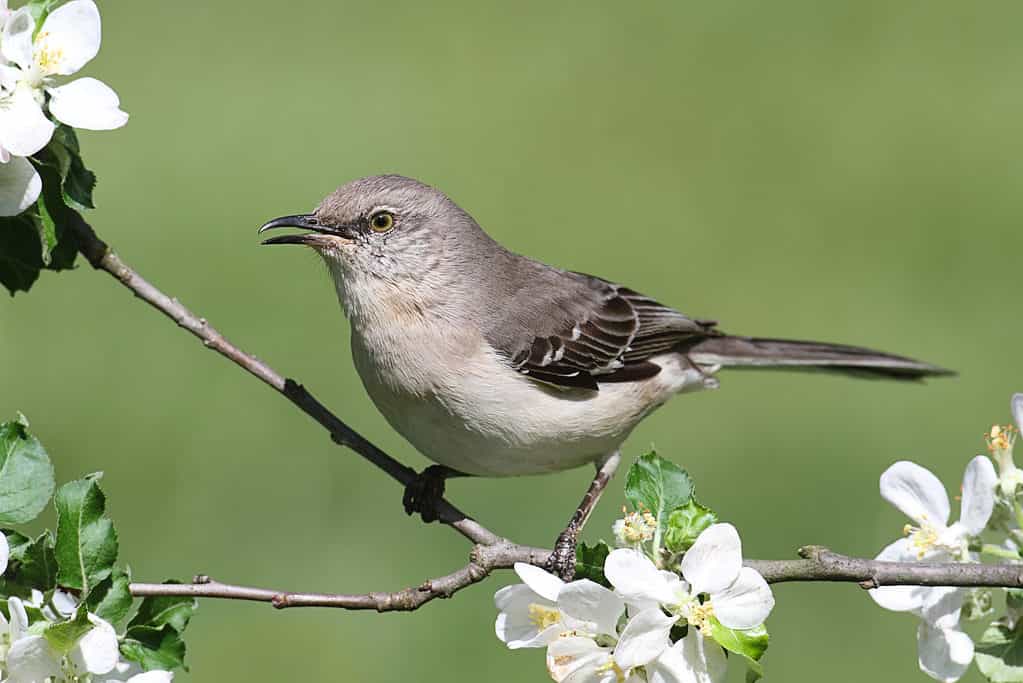
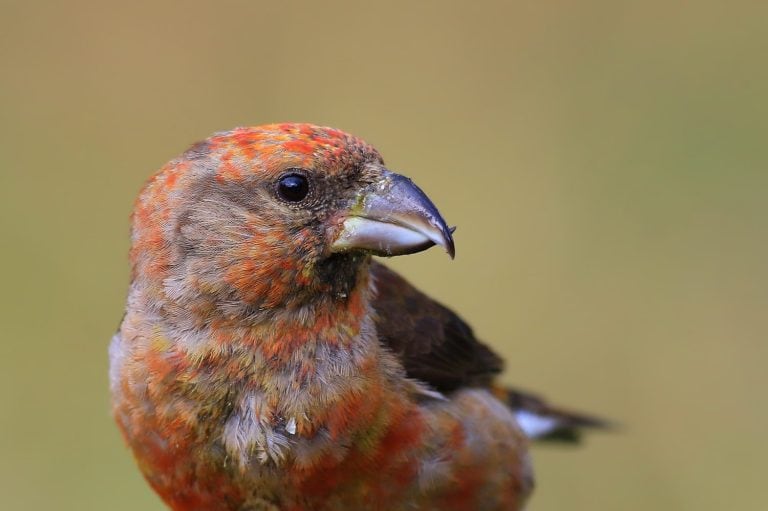
Unlike some songbird species, northern mockingbirds continue to learn new songs as adults.
©Steve Byland/Shutterstock.com
Songbirds, Parrots, and Hummingbirds Are Capable of Complex Vocal Learning
Few animals have the ability for vocal learning. Among mammals, it’s humans, elephants, whales, seals, and bats that can hear, learn, and remember a large number of sounds. In birds, only three groups (songbirds, parrots, and hummingbirds) are capable of complex vocal learning. Recent research on songbirds has revealed that birds with advanced vocal learning abilities are also better problem solvers and have larger brains relative to the size of their bodies.
DNA Research Revealed a Connection Between Songbird and Human Vocal Learning
In 2014, DNA research found 50 genes that are critical for vocal learning. These 50 genes are common to both songbirds and humans. What’s more, birds that don’t learn songs and primates that aren’t capable of speech don’t have these active genes. Interestingly, this research revealed the similarity between how young songbirds learn their songs and how human babies learn to speak, despite humans and birds being vastly different from each other.
Zebra Finch Males Learn to Sing by Watching Their Moms
Later research on zebra finches showed that the males learn to sing their species-specific mating song with the help of their mothers. Zebra finches are small Australian songbirds that are highly social and tend to travel in large flocks in the wild. Zebra finches are incredibly intelligent and have shown the ability to recognize individual birds in a flock by the sound of their song.
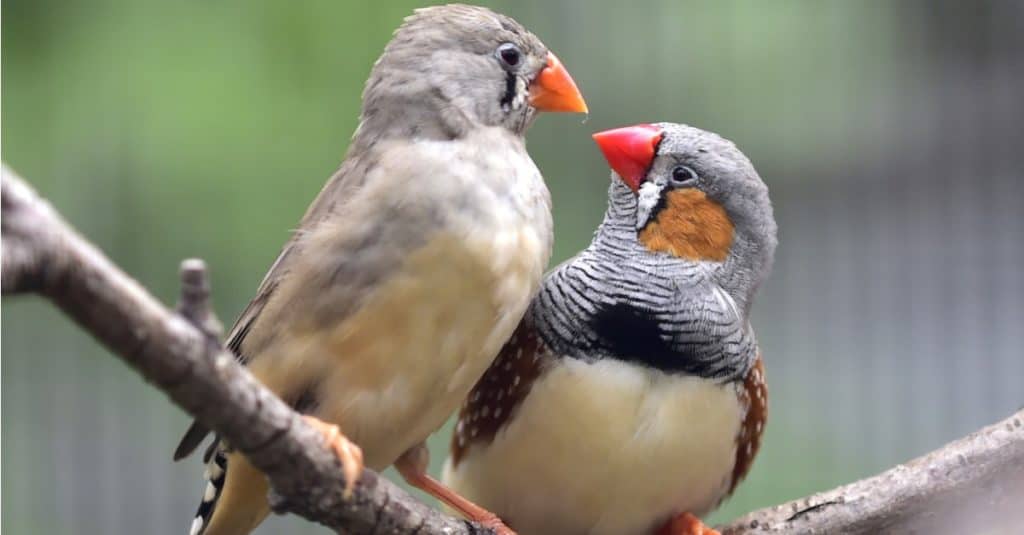
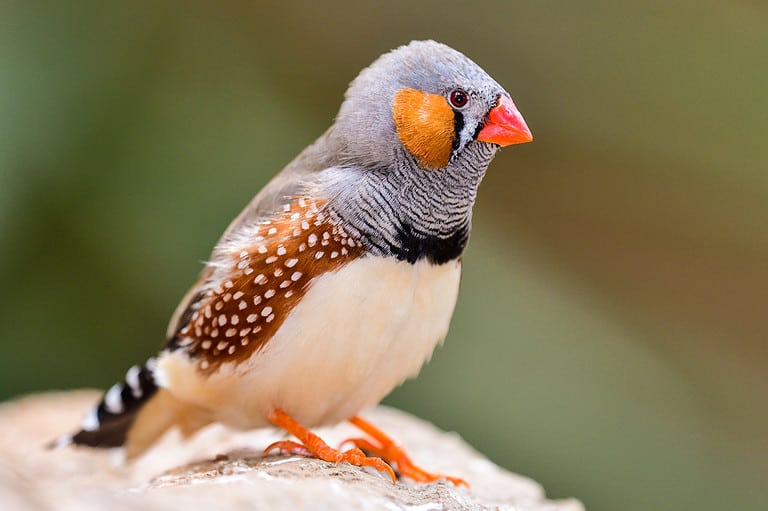
Male zebra finches sing and dance for their mates during courtship.
©Wang LiQiang/Shutterstock.com
The study answered the question of why juvenile male zebra finches learn to sing better when female zebra finches are nearby. What scientists found is that the young male birds take social cues from the adult females, similar to the way human babies learn to talk by interacting with adults.
Although this behavior could only be observed with slowed-down video, the females fluff up their feathers when the males hit the right note. By following social cues, the males learn to sing the mating song of their fathers.
Specialized Brain Regions Regulate Learning in Both Birds and Mammals
In mammals, a brain structure called the basal ganglia regulates learning and memory. Similarly, in birds, the song control nuclei are interconnected brain nuclei that form a specialized circuit for producing sound and for learning.
When young songbirds begin to learn how to sing, the song control nuclei help them experiment with different sounds. It’s reinforcement from adults and social learning that help them learn their species-specific songs. While in humans the basal ganglia help us learn skills and adjust when we make mistakes, birds also learn to practice and perfect their songs.
Do Some Birds Never Fully Learn to Sing if They Miss Critical Developmental Windows?
In the same way that human babies learn to talk by first hearing others talking around them, and then practicing speech through babbling, baby birds also learn their songs from the adult birds around them. When juvenile birds miss the opportunity to hear, practice, and memorize songs during a sensitive development window, they may never learn to sing their species-typical song.
Song plasticity—the ability to learn a new song—occurs in many songbirds around three to four months of age. However, the amount of song plasticity in adulthood varies by species. For example, mockingbirds continue to learn new songs throughout their life, not just as juveniles. Additionally, wild parakeets can learn new songs as adults when they join a new flock.
Training Tips: How to Encourage Vocal Behavior in Your Bird Later in Life
If your pet bird missed its early window for vocalization, you may still be able to encourage vocal behavior. This is especially true for birds that are open-ended learners, such as parrots, which can learn to make new sounds more easily. Here are a few training tips to get you started.
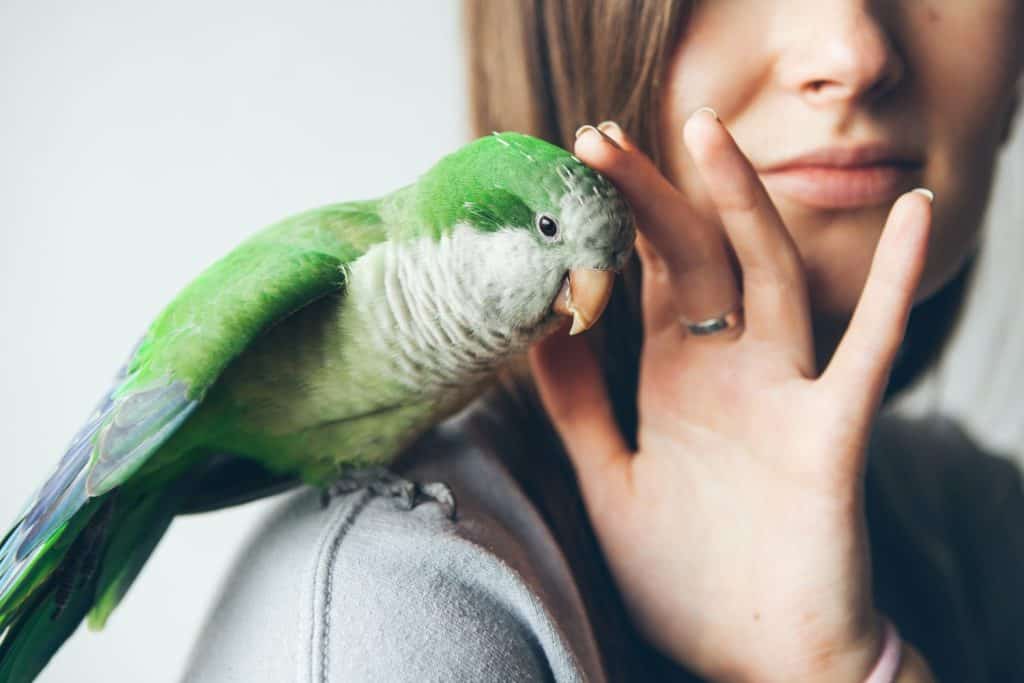
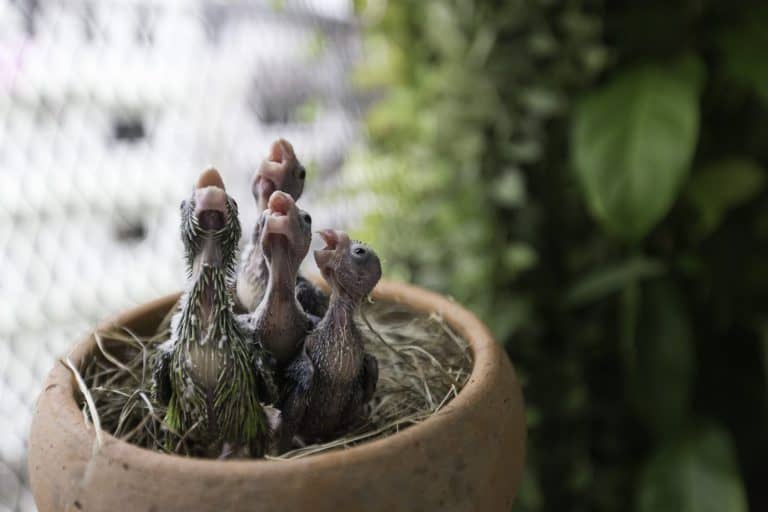
Before you can teach your bird to talk, you need to build a trusting relationship.
©Veera/Shutterstock.com
Bond with your bird.
The first and most important step is to establish trust and develop a bond with your bird. Birds are social animals that live in flocks. They need to trust you to consider you a member of their flock before they will be motivated to communicate with you. Be sure to show your bird love through head scritches, verbal praise, and treats.
Find the bird’s favorite reward.
Some birds will be food-motivated, while others would rather get a head pet. Find out what your bird enjoys the most, and use it as a reward for doing the behavior you want.
Start simple.
If you want your bird to talk, start with one easy word. If you want it to sing a tune, start with a very simple, short one. Repeat it over and over. Be patient. When the bird repeats what you said, be sure to offer rewards.
Build from there.
Once your bird can say one word, you can gradually add more words using the same reward methods. If your bird learns an unwanted sound, such as a car alarm, experts recommend ignoring the bird when it makes that sound. Only reward the calls and songs you want the bird to say. Your bird’s language will be shaped by how you reinforce it.