
Quick Take
- One bobcat sound is so eerily human that witnesses have called 911 thinking someone was in danger. Can you guess which one? Hear about the scream →
- If you hear a bobcat's growl or hiss in the wild, there is a reason to be immediately alarmed, since these sounds only carry a few yards. Close-range warning signals →
- Bobcats have one vocalization so rare that most wildlife experts almost never hear it. When it does occur, it signals something has gone seriously wrong. Discover the rarest call →
- Despite being wild predators, bobcats share one surprisingly domestic-sounding behavior with your house cat, though the context is completely different. Bobcat purring explained →
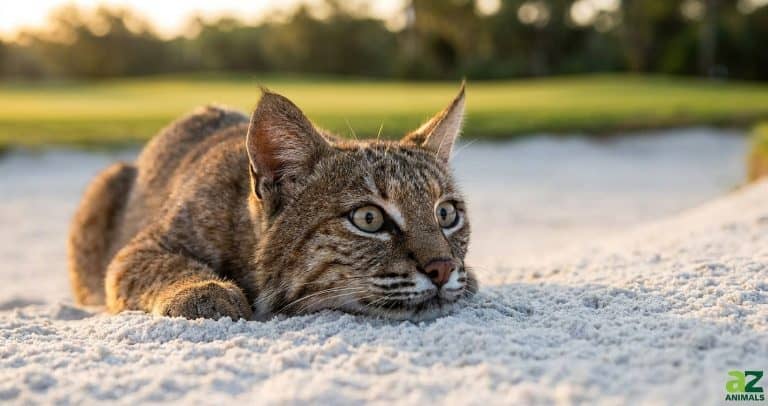
Bobcats (Lynx rufus) are solitary predators that rely on camouflage, acute senses, and precise stalking behaviors to capture their prey. They use their soft, padded paws to muffle the sound of their movement, which allows them to creep within feet of rabbits, rodents, or birds without making a sound. However, when they do make a sound, as members of the purring cat group, bobcats can sound quite similar to a domestic house cat. While they may be unable to roar, bobcats can express themselves through various sounds, some more familiar than others. Continue reading to learn about the sounds bobcats make and what they mean.
Purring
Bobcats belong to the cat family, Felidae, which includes all 41 living species of cats. These species are divided into two subfamilies: Pantherinae and Felinae. Pantherinae includes big cats, such as lions and tigers, which can roar but cannot purr. Felinae includes smaller cats like cougars, bobcats, and house cats, which can purr but cannot roar.
The purring of bobcats is similar to that of domesticated cats. Bobcats purr when they feel relaxed or otherwise content.
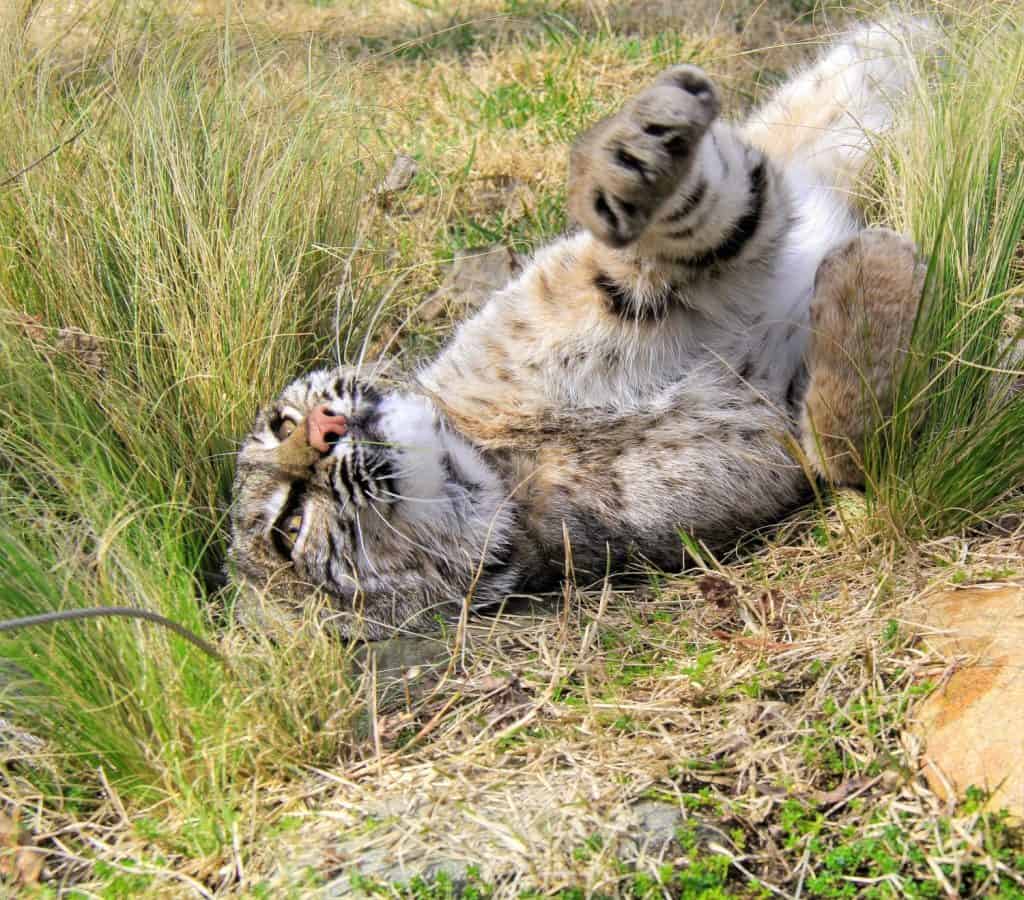
Purring signifies that a bobcat is relaxed and content.
©Martens Coyotes/Shutterstock.com
Screaming
Bobcats can produce an eerie, high-pitched noise that sounds startlingly like a human screaming or crying in pain. This dramatic sound is most frequently caused by the onset of the mating season in late winter and early spring, during which males and females wail loudly to attract potential mates or ward off competitors. A bobcat may also emit a harsh scream or squall during intense territorial confrontations or when facing sudden distress or aggression from another animal.
Cough-bark
The bobcat’s vocal repertoire includes a highly distinct, explosive vocalization known as the cough-bark. This sharp, raspy sound resembles a deep, resonant cough. Unlike the persistent barking of canines, a bobcat typically uses this barking sound as a defensive mechanism when it feels startled, cornered, or threatened.
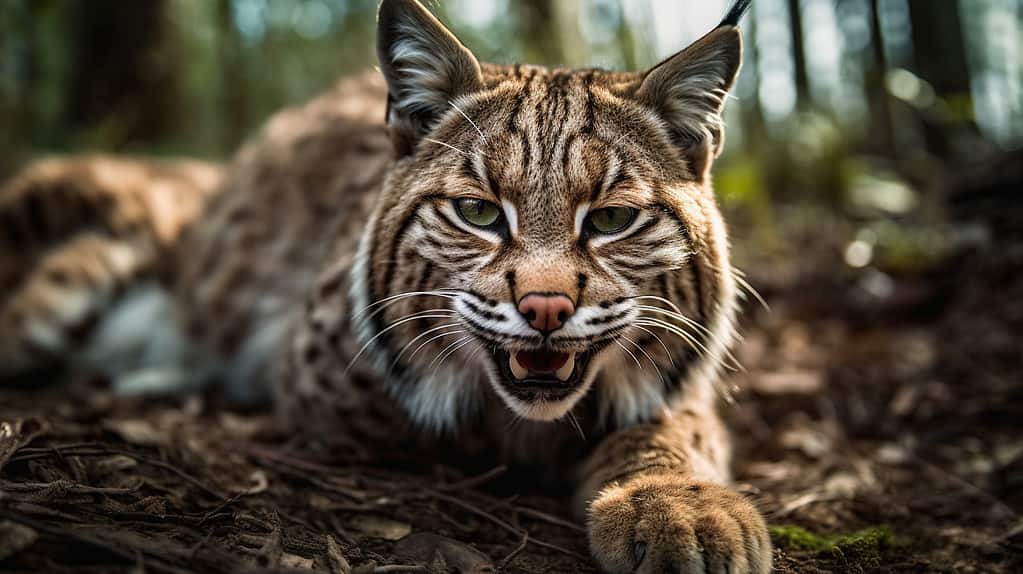
The cough-bark acts as an immediate warning signal to an intruder or a perceived predator to back off. The cough-bark simultaneously alerts any nearby bobcats to potential danger.
Howling
Bobcats use a loud, piercing howl, often described as an unearthly scream, as a long-distance call that can carry for miles across their territory. Unlike their quiet, defensive growls, this vocalization is meant to broadcast an individual’s presence, reproductive status, and location to other bobcats. Howls are primarily heard during the winter breeding season. These dramatic calls help solitary adults locate and attract potential mates.
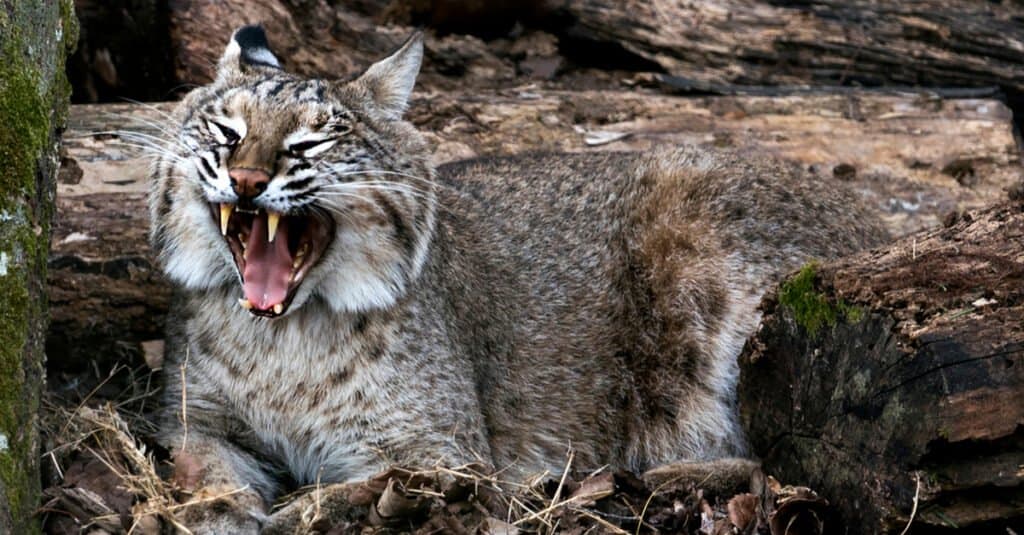
Bobcats will use their howls in a way similar to their screams to communicate with other bobcats.
©Rejean Bedard/Shutterstock.com
A bobcat’s howl is reminiscent of its scream, and much like their high-pitched screams, bobcats will howl as a way to communicate with potential mates.
Growling
Another sound bobcats make is a deep, guttural growl. Unlike lions or tigers, bobcats cannot roar. Instead, their growl is a warning intended to communicate the clear message: back off. A bobcat will typically growl when it perceives an immediate threat from a larger predator. The rumbling sound is a defensive mechanism to de-escalate a confrontation without fighting.
Growling is also frequently heard when solitary adult bobcats cross paths and must defend their territory or establish social hierarchy. During the winter breeding season, intense growls are paired with hisses and screams as rivals compete for mates or protect their offspring. Because these vocalizations carry only a few yards, hearing a bobcat growl in the wild indicates that the animal is alarmingly close and requires immediate space.
Hissing
Hissing in bobcats is similar to growling. A hissing bobcat is feeling threatened and may attack. Its hiss is also a faint sound, which means that when you hear it, the bobcat is nearby.
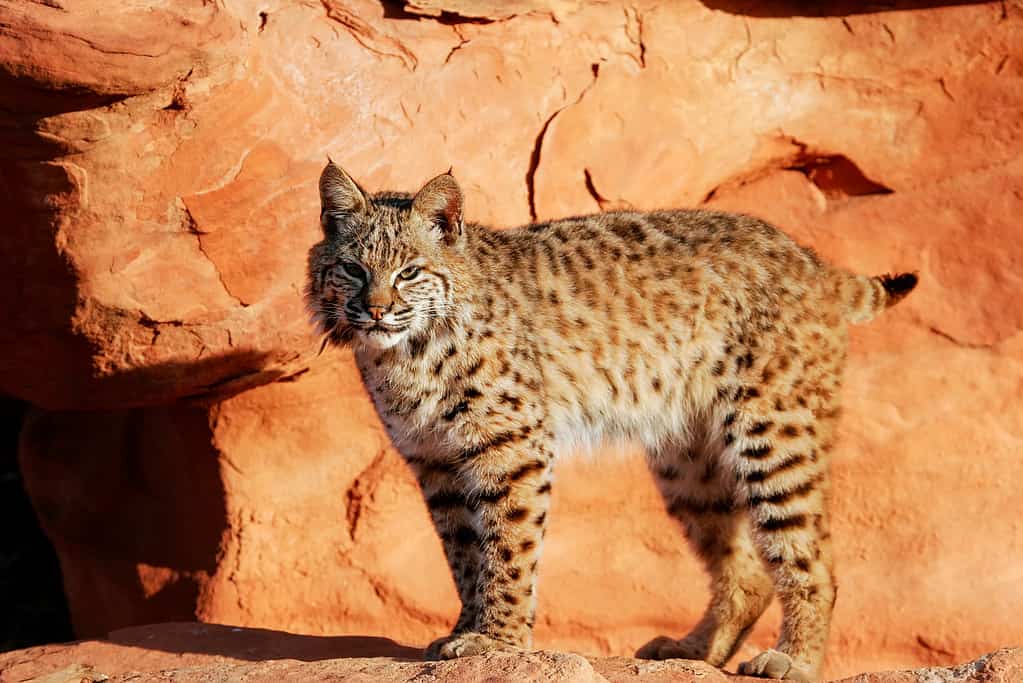
If you hear a bobcat hissing, it means one is nearby.
©Don Mammoser/Shutterstock.com
A bobcat’s hiss sounds similar to that of a domesticated cat. As a result, you may more readily identify the sound if you have experience with scared cats.
Meowing
A bobcat’s meow is exceptionally rare because these solitary animals primarily rely on scent markings to communicate. When they do vocalize, it is typically during the mating season.
During the winter breeding season, a bobcat may use a loud, altered meow, often described as a yowl, to find and communicate with a potential mate. Outside of courtship, a more traditional, domestic-sounding meow is usually reserved for communication between mothers and their young.
Squalling
The bobcat squall is one of the rarest bobcat sounds, as it is reserved for when a bobcat is injured, severely alarmed, or experiencing intense physical pain.
Wildlife behavior experts note that because bobcats rely heavily on stealth and scent marking to communicate without drawing attention to themselves, hearing a sharp squall in the wild is quite rare and serves as an immediate indicator of a high-distress situation or a sudden threat.
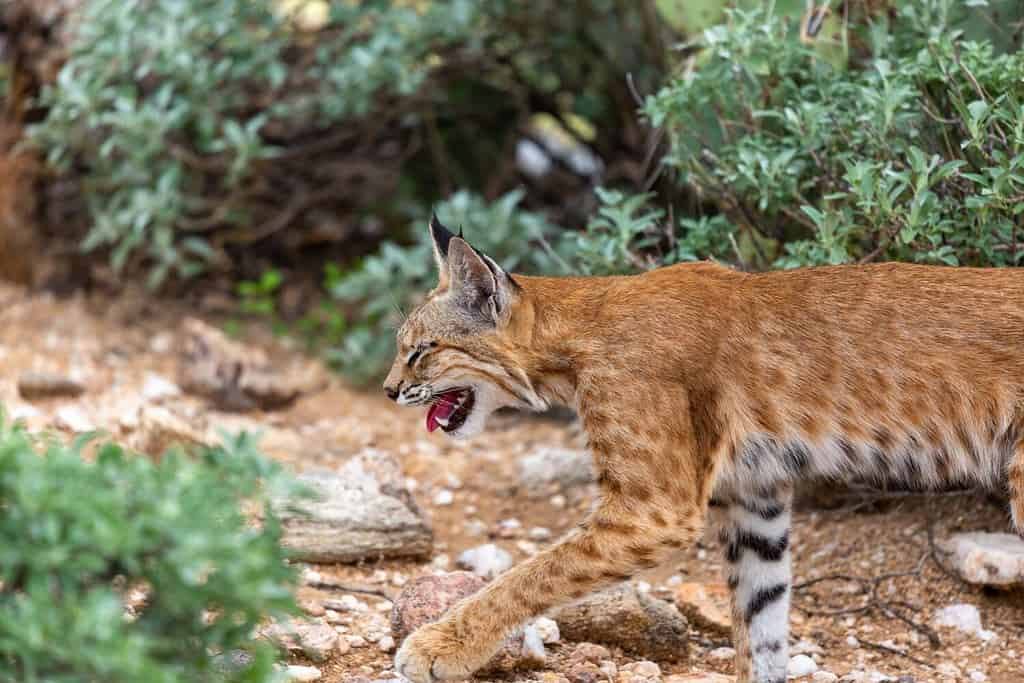
Bobcats will only squall when injured or frightened.
©Charles T. Peden/Shutterstock.com