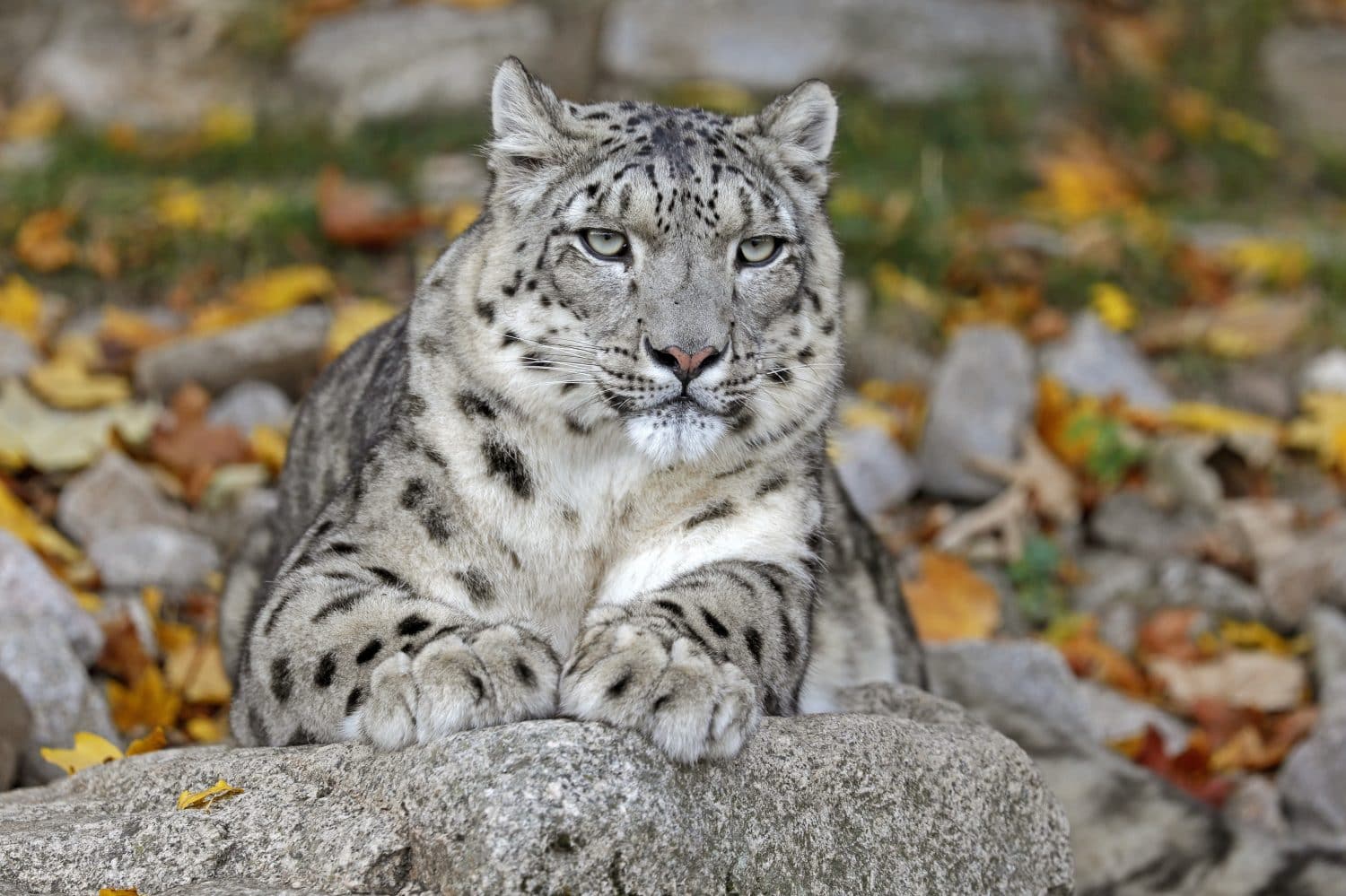

Big cat fans around the world are on the edge of their seats as they await the arrival of International Snow Leopard Day. The annual holiday is approaching on October 23, and it’s a celebration of all things snow leopards. The United Nations made this yearly holiday official in 2024, with the aim of garnering international support for the well-being of this majestic species.
We believe that more people would be interested in supporting snow leopards if they knew more about these magnificent animals. That’s why we created this list of 10 incredible facts about the big cats that are affectionately called the “ghosts of the mountains.” We believe you’ll be truly stunned at the beauty of these majestic creatures.
Snow Leopards Aren’t Actually Leopards
The first fact may be life-changing if you consider yourself to be a big fan of this majestic species. Despite the fact that the word is in their name, many scientists don’t consider snow leopards (Panthera uncia) to be actual leopards. That’s because they consider snow leopards to be more closely related to tigers.
There are numerous reasons why this is so. One of them is that the skull structure of the snow leopard is more similar to that of a tiger than to a leopard. Also, the snow leopard’s vocal cords are underdeveloped, which prevents them from roaring like most leopards and big cats. Instead, snow leopards communicate through a variety of other noises, including growls, hisses, and mews. Essentially, they sound like a louder domestic cat.
Snow Leopards Are Known as the Ghosts of the Mountains
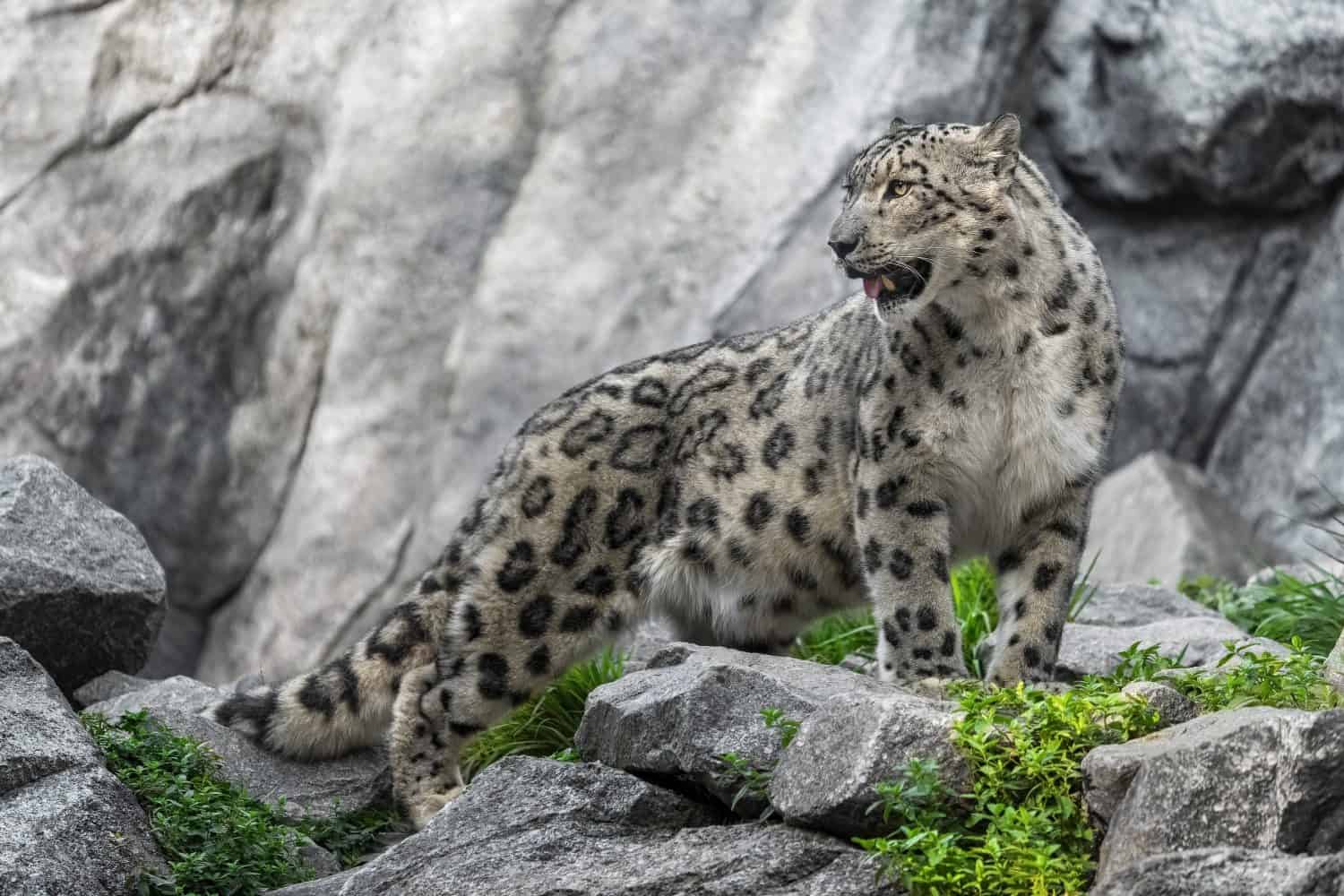
Snow leopards are called the Ghosts of the Mountains mostly because of how well they bend into the scenery.
©jindrich_pavelka/Shutterstock.com
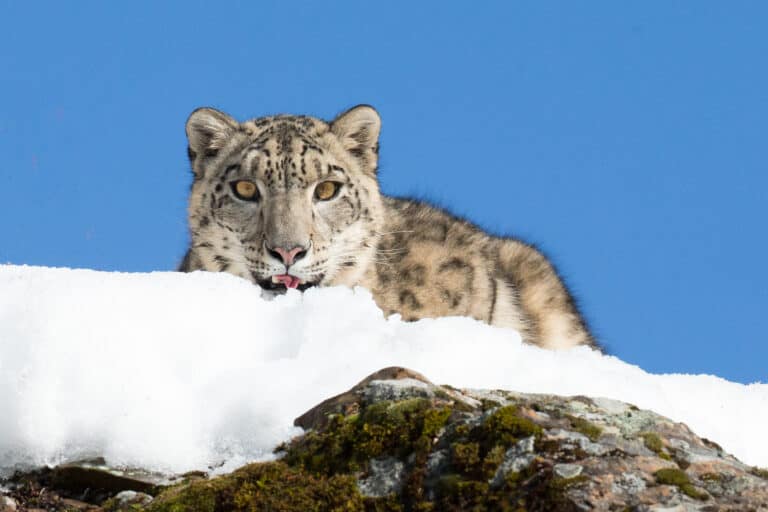
If you hear anyone refer to it as Ghost of the Mountain Day instead of International Snow Leopard Day, don’t be alarmed. There’s a reason for that. That’s the nickname of this elusive species, and that’s for several reasons. The most important thing is that snow leopards are incredibly elusive. With their smoky grey fur and dark spots and rosettes, they blend in remarkably well with the steep slopes and rocks they typically roam around. As the name suggests, they also hang out in the snow. With their white fur, they often blend in so well that they can’t be seen.
Snow leopards are so elusive that they’re rarely ever seen in the wild by humans. In addition to living in the mountains where humans rarely go, snow leopards fear humans and want to stay out of danger. Even if they were to come across a human, they’d likely run away. Encounters are so rare that, according to the Snow Leopard Trust, there has never been a verified attack by a snow leopard on a human.
A Snow Leopard’s Tail Has Multiple Uses
Another great fact to share with your friends on International Snow Leopard Day is that a snow leopard’s tail is more than just for wagging. A snow leopard’s tail is 2 ½ to 3 ¼ feet long. Like many animals with tails, it’s used to help keep the leopard balanced. This is especially important when navigating rocky terrain and treacherous crevasses.
A snow leopard’s tail is also essential for keeping the animal warm in cold climates. The leopard will wrap its tail around its body for warmth, like a scarf. Also, the thick tail is designed to provide fat storage when they’re low on food. That way, they can stay healthy until they find their next meal. This is an animal that is truly designed for life in the mountains. While their tails keep them warm, their large paws have cushions of hair that prevent them from sinking in the snow and help them to scale steep slopes.
Finally, snow leopards are known for biting their own tails, which researchers believe may be a form of stress relief. Some snow leopards in zoos have been known to bite their tails when there has been an adjustment to their surroundings or routine. Other animal experts believe the tail biting may also just be playful behavior.
The Snow Leopard’s Nose Keeps it Warm
It can get quite cold in the high-altitude homes of snow leopards, often dropping to lows of minus 40 degrees Fahrenheit in winter. Fortunately, this species possesses several attributes that enable it to remain warm even during the harshest weather conditions. One of those attributes that surprises many is the snow leopard’s nose.
It begins with the leopard’s chest muscles, which can absorb large amounts of oxygen even in the thin mountain air. When the leopard inhales, short, wide tubes in the nose work to warm the air before it reaches the lungs. Along the way, the nose also removes heat from the air before it’s exhaled. As a result of this special nose, the leopard must also have a higher forehead and shorter muzzle.
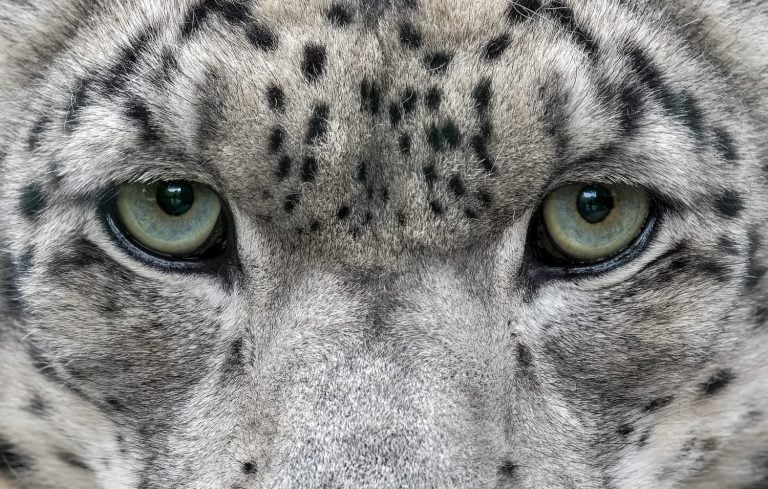
That nose is not the only amazing thing about the snow leopard’s face. That higher forehead means that its eyes are set higher on its head. That’s useful because it allows the snow leopard to peer over the tops of rocks when pursuing prey, so they’re less noticeable. Finally, there are the ears. They are quite small, and that feature allows them to reduce heat loss while wandering around their mountainous habitat.
Snow Leopards Can Jump Over 50 Feet
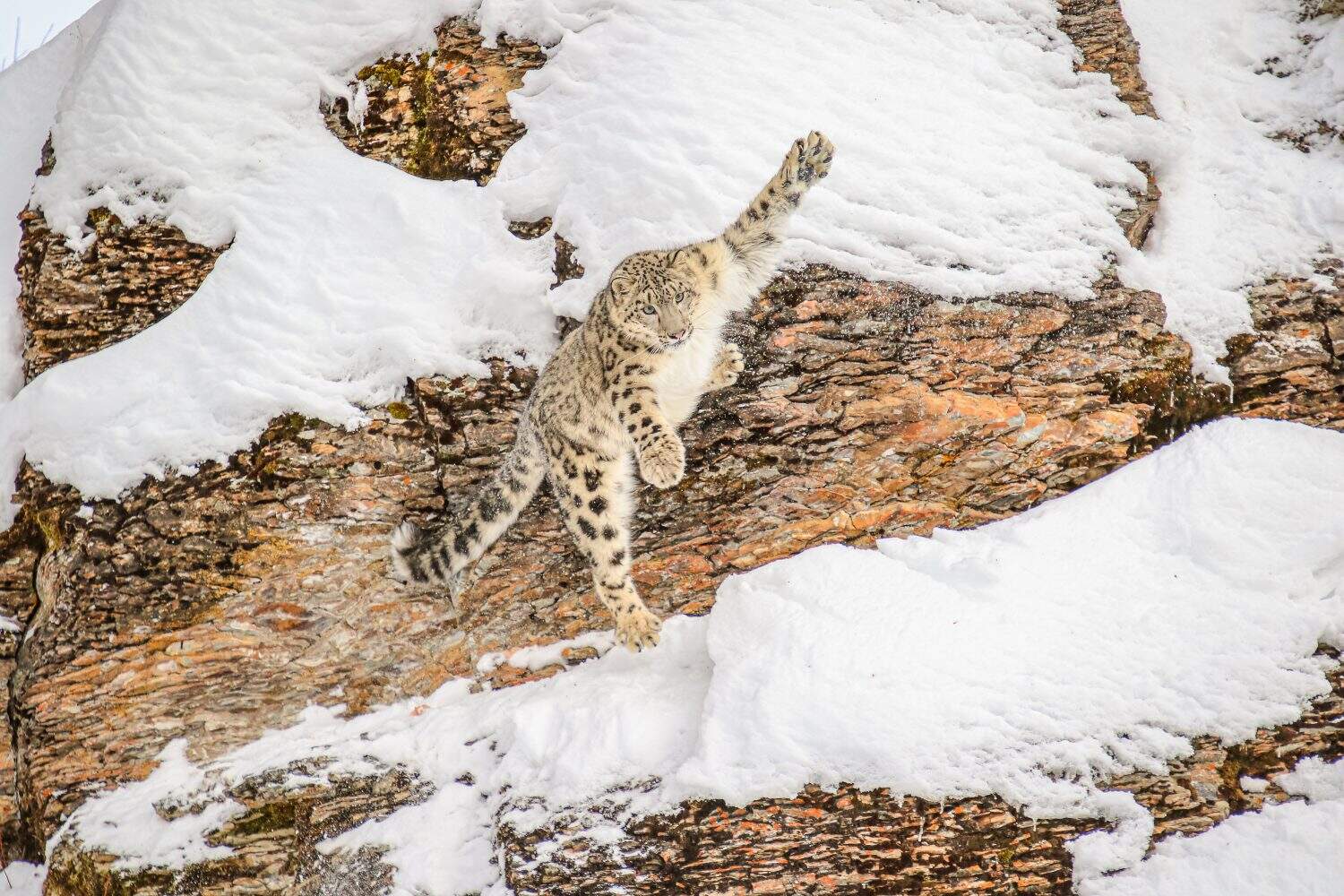
Snow leopards need to jump from peak to peak, so jumping 50 feet is easy for them.
©Holly S Cannon/Shutterstock.com
In order to catch prey and jump from mountain peaks, snow leopards need to jump really high and really far. Many experts say that snow leopards can jump as far as 50 feet in a single bound. A leopard can perform this feat due to its powerful hind legs, which allow it to quickly propel itself from many surfaces, including steep cliffs. After a jump that far, the leopards are able to stabilize their jump using their tails to stay balanced.
Leopards have also been recorded jumping 30 feet from a solitary standing position. Perhaps the most impressive fact is that snow leopards have been known to jump 20 feet straight up into the air. That’s the equivalent of a standard two-story building. This skill comes in handy when jumping up to higher peaks.
All of this is in addition to their running speed of up to 55 miles per hour in short bursts. Put it all together, and you have quite the agile predator.
Snow Leopards Are Solitary Creatures
You won’t see snow leopards roaming in prides or groups. If you were in the wild and you saw a snow leopard, you shouldn’t be too concerned that there are others hidden nearby. That’s because snow leopards are very reclusive and spend most of their lives alone.
If you wanted any chance of possibly seeing a snow leopard in the wild, you would have to go to the various places they call home, which are mostly countries along the mountains of Central Asia, including Afghanistan, China, India, Nepal, Russia, and Uzbekistan, among others.
The only time you’re likely to see two snow leopards together is during mating season. Once mating is done, the father goes on his way. The males do not play any role in the rearing of their offspring.
Snow leopards are very good at splitting up their hunting territories. Other snow leopards rarely cross over into a competitor’s area. A typical territory can range from 10 to 40 square miles, depending on the availability of prey. The leopards use scent markings to determine when they’ve gone too far. They recognize that they’re crossing over into areas where they don’t belong.
Baby Snow Leopards Love Their Mamas
It may seem like a hard and lonely existence living alone, but snow leopards get plenty of training before they venture out on their own. Like many newborn animals, baby snow leopards start out without being able to see. They’re also quite small, typically weighing under 25 ounces, which is similar to a tiny teddy bear. Once born, they already have their trademark warm coat of fur to keep them safe in the cold climates. Baby leopards are typically able to see at seven days old, and they are weaned at 10 weeks old.
At this point, the dad is already out of the picture since the father usually leaves a few days after mating. However, the baby snow leopard will remain with its mother for at least 22 months. While with her, the cub will learn how to hunt, along with all the other skills it needs to survive and thrive when it’s on its own.
They’re Crepuscular
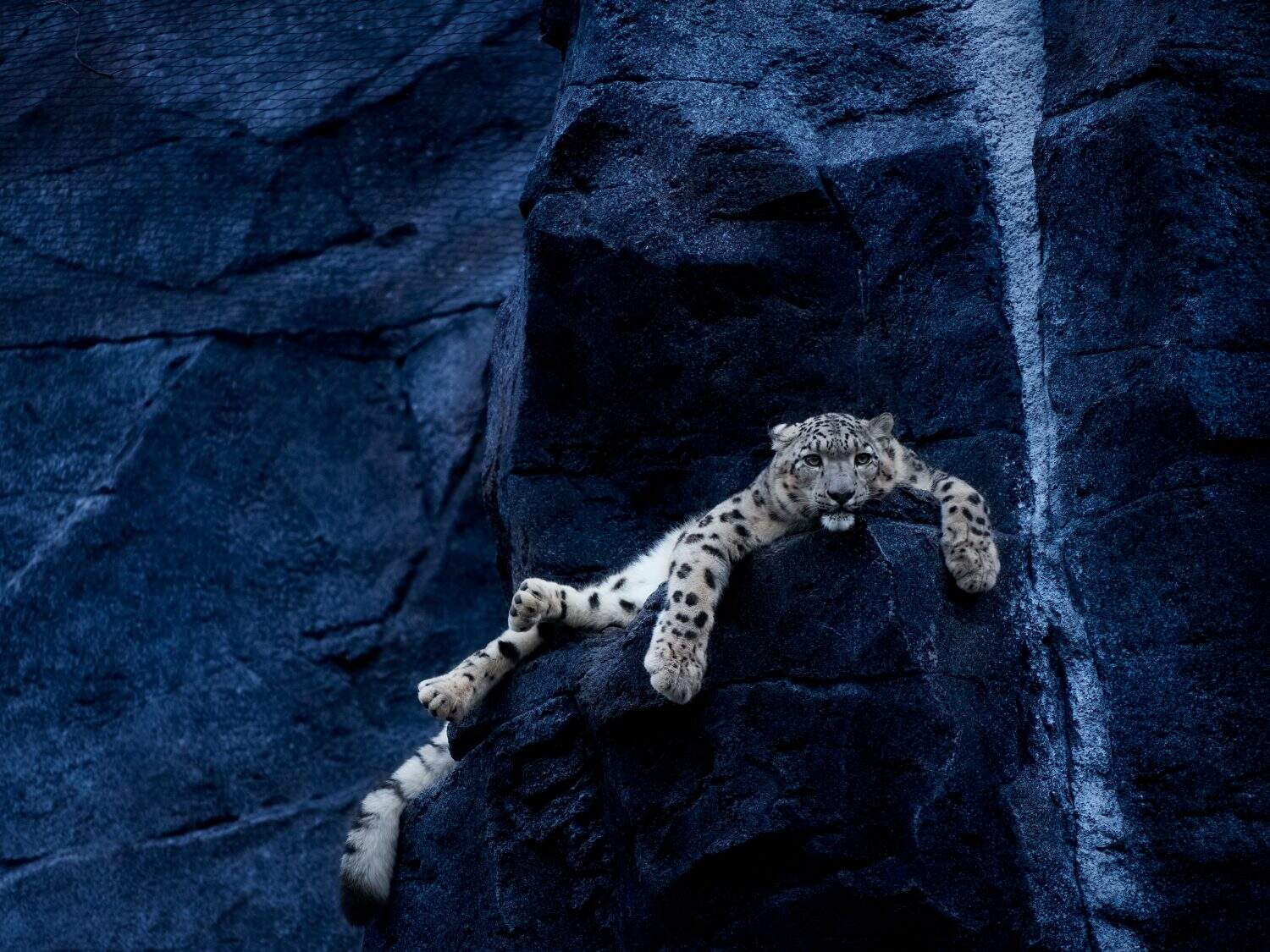
Snow leopards are a crepuscular species, which means they’re mostly active during dawn and dusk.
©Johann rampl/Shutterstock.com
You can show how smart you are this International Snow Leopard Day by telling your friends that snow leopards are a crepuscular species. That means that they are most active during dusk or dawn, early in the morning, and late at night. You’ll rarely see them during the day, and even if they were out, they blend in so well with the surrounding rocks and ledges that you probably wouldn’t see them anyway.
It should be noted that being crepuscular is different from being nocturnal. There are times when snow leopards modify their routines and come out during the day, especially if human activities or other disruptions affect their normal routine. Other crepuscular animals include bobcats, red pandas, and some species of bats.
They Eat Everything From Goats to Birds
As many of the facts on this list indicate, snow leopards inhabit fairly isolated environments where food may be scarce at times. To cope, they enjoy a broad diet.
Snow leopards mainly hunt and eat sheep, goats, ibex, and other larger prey. However, that’s not always going to be available. When they aren’t, the leopards will happily settle for smaller prey, including birds, rabbits, and various small rodents. This varied diet is also helpful since snow leopards are built for short-distance bursts of speed and can’t chase their prey over long distances. So when they see food, they often go for it.
Once they claim their meal, snow leopards are known for taking their time to eat. They’ll slowly consume the prey over several days. To keep the meal fresh and keep it from going bad, the leopards will often store the food in snow tunnels. That way, they can come back later for seconds.
Snow Leopards Are in Trouble
If you are as amazed by the beauty of these creatures as we are, then the biggest takeaway from International Snow Leopard Day is that this species is listed as vulnerable by the International Union for Conservation of Nature and Natural Resources, due to ongoing threats to its population. Without the proper precautions, snow leopards could one day be extinct.
There are many reasons for the dwindling numbers. Many scientists blame climate change, stating that many areas that leopards call home, including the high elevations of the Tibetan Plateau, experience warmer temperatures than most other places in the world. This means that the snow leopard’s habitat could be disappearing.
Snow leopard numbers are also falling due to excessive poaching and illegal hunting operations. The species is able to stay warm due to its thick and soft fur. A high-quality coat could sell for close to $60,000 on the black market. Many hunters will place strategically located bamboo spears covered with deadly poison in order to quickly kill the animals when they jump from one place to another.
It’s not nice to think about these majestic creatures in trouble. The good news is that you can do your part by supporting conservation organizations. Visit Wildnet and the Snow Leopard Trust to learn more. Together, we can help this amazing creature live in peace once again. Happy International Snow Leopard Day!