Quick Take
- One mouse in the house feels like a relief, but it might actually be the scariest scenario of all. See why one mouse matters →
- Your nose can tell you something about your mouse problem that your eyes never could. Sniff out the problem →
- Mouse droppings aren't just disgusting. They're actually a map that leads somewhere important. Trace droppings to nests →
- Mice carry more than 35 diseases, and you don't have to be bitten to catch one. See the health risks →
If you have found mice droppings in your home or heard mice scurrying around at night, then you have probably wondered if you have a mouse infestation. The next question that comes to mind, in that case, is how many mice are in your house. In most cases, any estimate depends on numerous factors, and no foolproof method exists to determine precisely how many mice have invaded your home. Nevertheless, there are ways to determine whether you have a few mice or a severe infestation lurking in your home.
Count the Number of Droppings
Mice leave behind some undeniable signs that they’re in your home. These include droppings and urine. A single mouse can drop between 50 and 75 pellets per day. Count the droppings, and if you see large mounds of them, it is a sign that there is more than one mouse in your house.
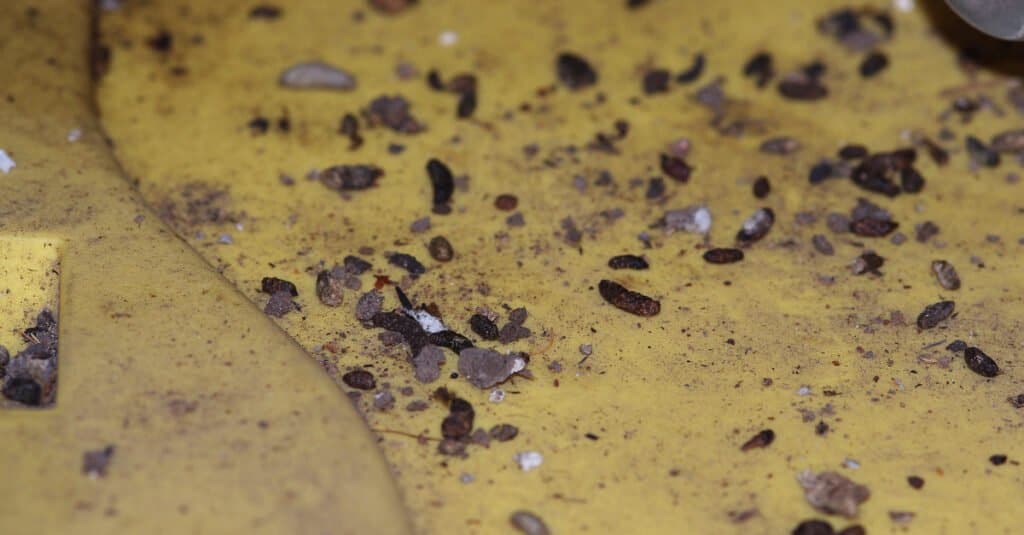
Mouse poop is an obvious sign of an infestation.
©Photo – TMD/Shutterstock.com
Mice tend to defecate while they’re eating and even while they’re moving. If you see a large number of droppings trailing away in an area of your home, you can use that trail to help estimate the number of mice in your house.
Follow the trail of mouse droppings back to their nest. This can also help you identify untidy spaces that encourage mice to nest, and uncover the cracks and crevices through which mice are entering your house.
Follow Your Nose
The more mice there are in your home, the worse it will smell. You may not notice a single mouse in your house because one mouse does not typically produce enough urine to cause a noticeable or overpowering odor.
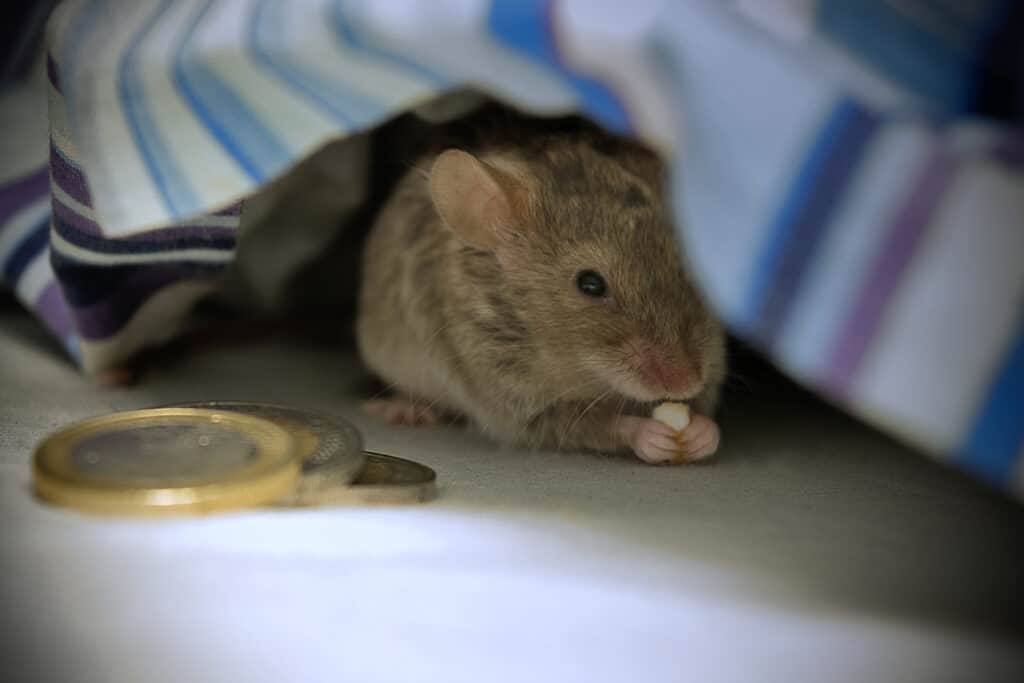
Mice leave behind many signs of their existence, including smells.
©iStock.com/Flore Sakowski
Although mouse droppings don’t smell strongly, their urine leaves a stale, ammonia-like odor in your home. If you open a cabinet or walk into your basement to an acrid odor, chances are you have multiple mice in your home.
You also need to watch out for the smell of mice that have died. The smell of a decomposing animal is pungent and obvious, even when the body is small.
Following bad smells in your house can also lead you to where mice have died or to where they are nesting.
Hunt for Nests
The number of mouse nests in your home can determine how many mice are in your home. Identifying a mouse nest is not difficult. Mouse nests are small and circular, and they can be anywhere from 4 to 6 inches in diameter.
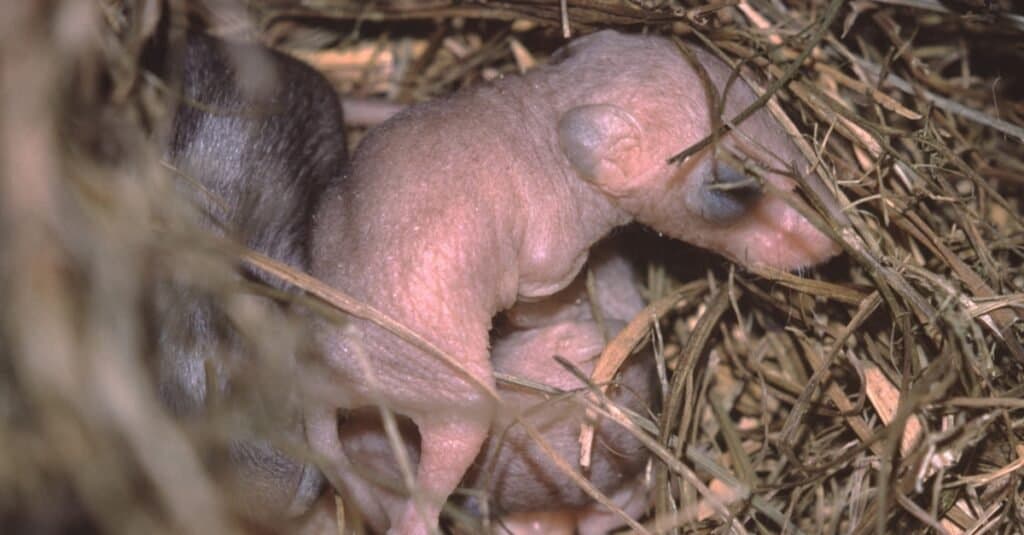
Mice nests are small and made from whatever soft materials are available.
©Liz Weber/Shutterstock.com
Mouse nests are made from a variety of materials, depending on what is available. For example, if you find a mouse nest in a field, it will primarily be made of grassy materials. In a home setting, mice will scavenge for paper products like paper towels or toilet paper. They’ll also use carpet fibers, lint, cotton, and materials from your bedding and furniture.
Mouse nests usually house one to two dozen mice. They are used to keep mice warm and to raise their young. You’ll usually find nests in hidden places, such as:
- Basements
- Attics
- Inside wall gaps
- Drawers
- Cabinets
- Ceilings
Finding multiple active nests means you have more than one mouse in your house.
If you find a mouse nest in your home, you should remove it. Wear gloves and a mask to protect yourself from serious diseases, such as hantavirus. After eliminating the mice and their nests, disinfect the area where they were found with bleach. Never dry-sweep or vacuum mouse droppings or nesting materials, as this aerosolizes viral particles and bacteria, dramatically increasing your risk of inhaling them.
Mice carry diseases and harbor parasites and other vectors of illness. More than 35 diseases can be contracted through mouse infestations.
Check Your Pantry
Mice invade homes for a variety of reasons, including safety from predators and warmth in the winter. However, they tend to settle in homes with a ready supply of food. If you have a stray mouse in your home, you’ll find signs of gnawing and scratching on bags of pet food and soft containers like cereal boxes.

In the event of an infestation, a big mess will be left behind.
©Landshark1/Shutterstock.com
A large infestation will leave a significant mess. Substantial damage and missing food are clear indicators of a serious problem.
Why One Mouse Is Still a Concern
Even if you think you have only one mouse, you could be on the verge of an infestation. A single pregnant mouse can give birth to as many as 12 babies after a 3-week gestation period. Those baby mice reach maturity in as little as 6 to 8 weeks, during which time they will begin eating your food and breeding.

Humane mouse traps are available and best used at the first sign of a mouse in the house.
©PhotoDictionary/Shutterstock.com