
Quick Take
- One wolf howls, triggering something instinctive that makes the other unable to stay silent. Watch the duet →
- The 'alpha wolf' you've heard about almost certainly doesn't exist the way you think it does. Debunking the alpha myth →
- A wolf's howl can travel farther than most people realize, and the reason it's built that way is stranger still.
- Wolves bark, whimper, and growl too, but each sound carries a very different message than you'd expect. Explore wolf vocalizations →
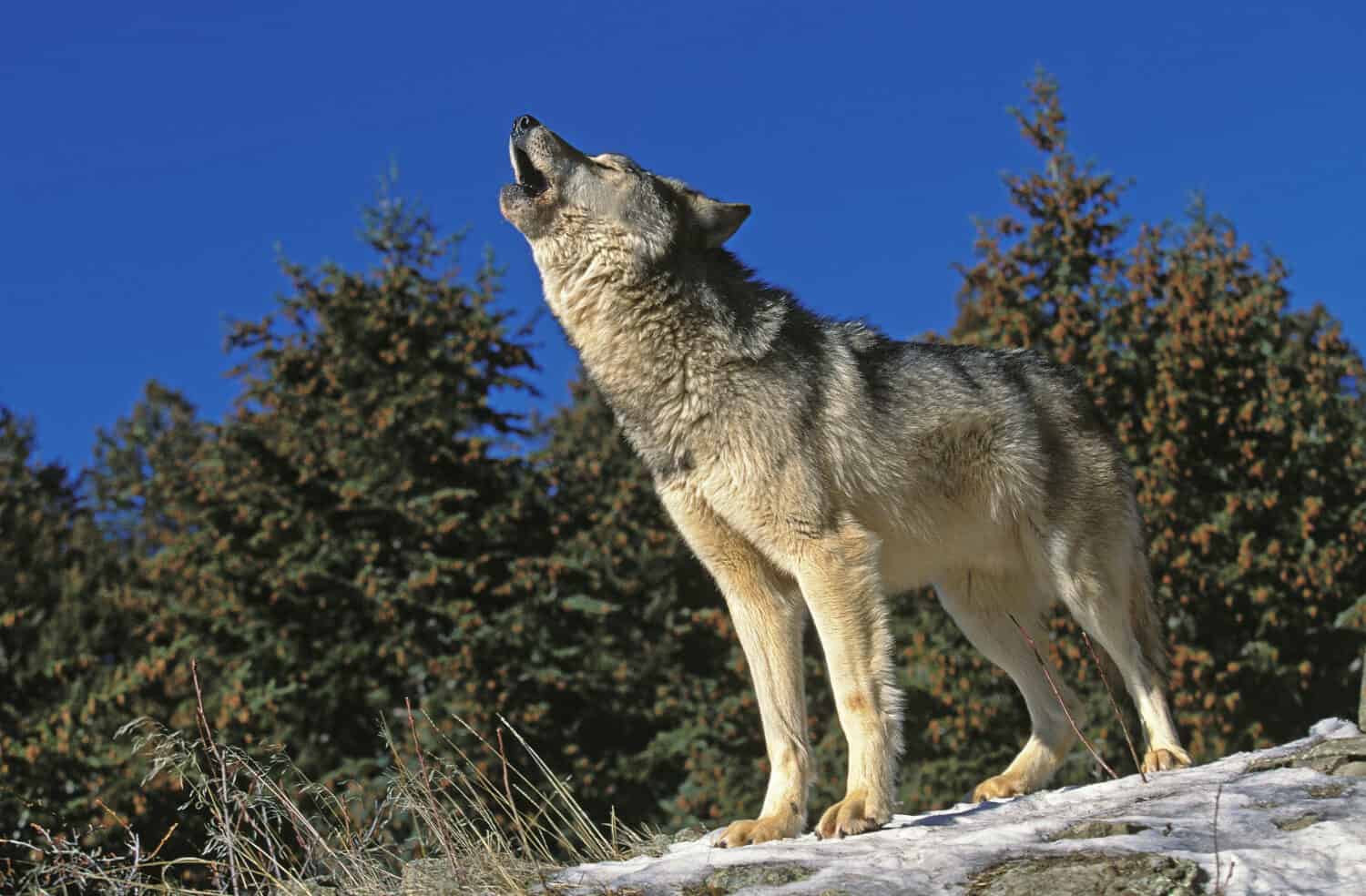
Silas begins with a long, rising howl. Before he can finish making his announcement to most of Westchester County, Nikai lifts his muzzle and joins him. The two wolves do not exactly land on perfect harmony, but subtlety was never the point. Within seconds, one voice has become a full duet.
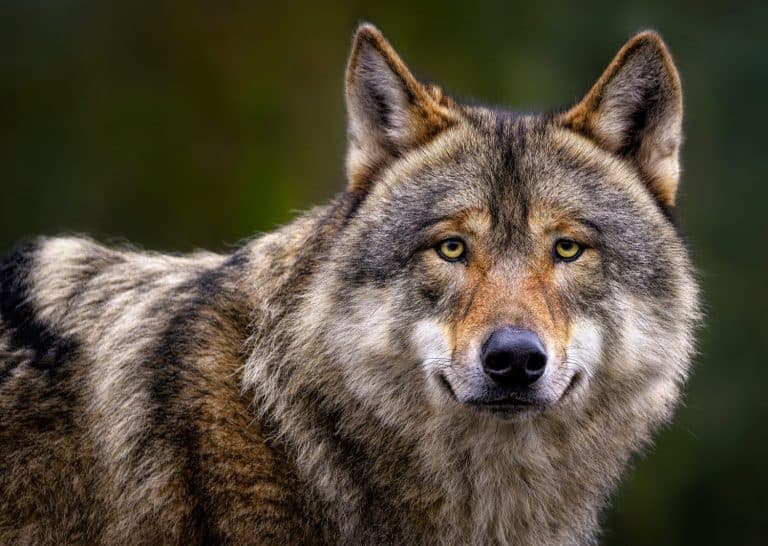
Silas and Nikai are captive-born gray wolves that serve as ambassadors at the Wolf Conservation Center in South Salem, New York. The clip gives us a beautiful example of how quickly a lone call can spread between socially connected wolves. It also raises the obvious question: What are they actually saying to each other? The answer is more complicated than one tidy translation.
Watch Silas and Nikai Break Into a Howling Duet
Who Are Silas and Nikai?
Nikai was born in 2014 and arrived at the Wolf Conservation Center as a pup. Silas joined the center in 2023, also as a young pup. Both are part of the center’s ambassador program, meaning they help visitors understand wolf behavior and conservation. The center’s endangered red wolves and Mexican gray wolves are generally kept away from public contact because some animals or their descendants may participate in recovery efforts.
The two ambassadors live together, but calling them biological brothers would be misleading. They arrived nearly a decade apart and function as social companions rather than littermates. That age difference does not prevent them from responding to each other’s calls. Wolves form and maintain relationships through repeated interaction, and howling is one of the most conspicuous tools available to them.
What Are the Wolves Saying When They Howl?
There is no responsible way to assign one sentence to this particular duet. A howl is not a fixed word with a single meaning. Wolves use long-distance calls in several situations: to locate separated companions, assemble before movement or a hunt, announce their presence, defend territory, warn unfamiliar wolves away, and reinforce connections within the group.
The National Park Service notes that biologists still do not know every reason wolves howl. Context changes the meaning. A lone wolf calling after becoming separated from its family is doing something different from a pack answering unfamiliar wolves across a territorial boundary. A group beginning a chorus while resting together may be reinforcing social cohesion rather than urgently coordinating travel.
Silas and Nikai are already close to one another in a familiar enclosure, so this is probably not a long-distance effort to find a missing packmate. Their posture and the surrounding behavior would help the center’s wolf-care team interpret the moment more precisely. From the clip alone, the safest description is a social duet: one wolf calls, and his companion chooses to participate.
Why Does One Wolf Join Another’s Howl?
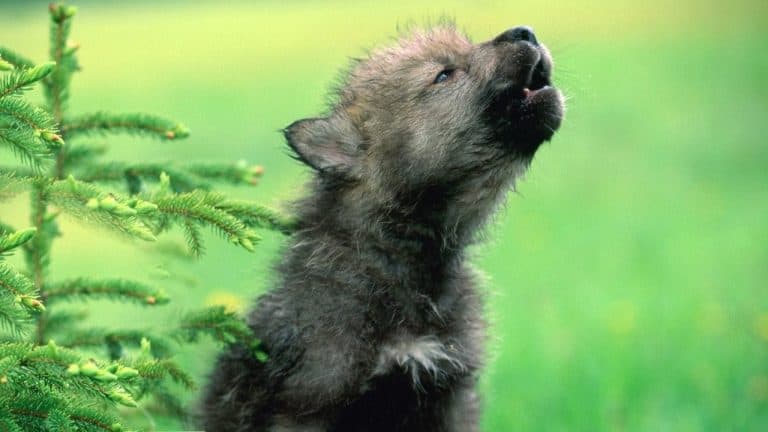
A howl can trigger a reply because wolves are intensely social animals. Joining helps turn an individual signal into a group announcement, whether the goal is gathering companions or making the group sound present and organized. A chorus can also advertise occupancy to other wolves without requiring a dangerous face-to-face encounter. It is essentially a property line with considerably better acoustics.
Relationships matter too. A 2013 study of captive wolves found that an animal was more likely to howl when a socially important companion was led away. The strength of the relationship predicted the response better than measured stress hormones did. That does not prove why Nikai joins Silas in this exact moment, but it supports the broader idea that howling reflects whom a wolf cares about, not merely where another wolf happens to be.
Wolf Conservation Center educators sometimes call group howling “social glue.” The phrase is informal, but it captures a real function: shared vocal behavior can help maintain cohesion. Humans sing together, wolves howl together, and only one of those activities will have the neighbors checking whether their windows are closed.
How Far Can a Wolf’s Howl Travel?
Howling is built for distance. Under favorable conditions, a wolf’s call can carry for several miles. The actual range depends on wind, terrain, vegetation, background noise, weather, and the positions of both caller and listener. A quiet, open landscape offers very different acoustics from a forest beside a highway.
That reach allows wolves to exchange information without remaining physically together. Wild pack members spread out while traveling, hunting, or patrolling large territories. A long howl helps bridge those gaps. Wolves tend to howl more often during the evening and early morning, when they are active and the air may be quieter, but they can call at any time of day. Silas and Nikai are not checking the clock before starting rehearsal.
Do Wolves Really Howl at the Moon?
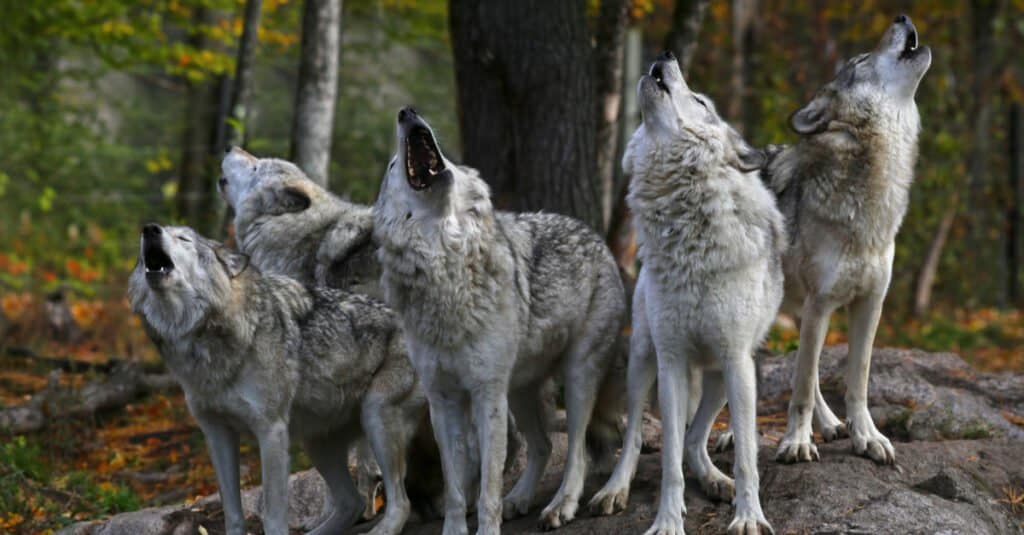
Wolves may howl during bright moonlight, but lunar phases do not cause the behavior.
©Alexander Sviridov/Shutterstock.com
No. Wolves certainly howl on nights when the moon is visible, but they also howl during a new moon, beneath clouds, and in broad daylight. The familiar silhouette of a wolf calling toward a full moon is powerful artwork, not a biological relationship. Wolves raise their muzzles while howling because that posture helps project a long call, not because they are singing to an object in space.
Moonlit nights may simply make wolves easier for people to see. Add centuries of folklore and one extremely photogenic pose, and the association was bound to stick. Silas and Nikai do not need celestial permission. One of them needs only to start, and the other may decide the song could use another voice.
How Do Wolf Packs Normally Work?
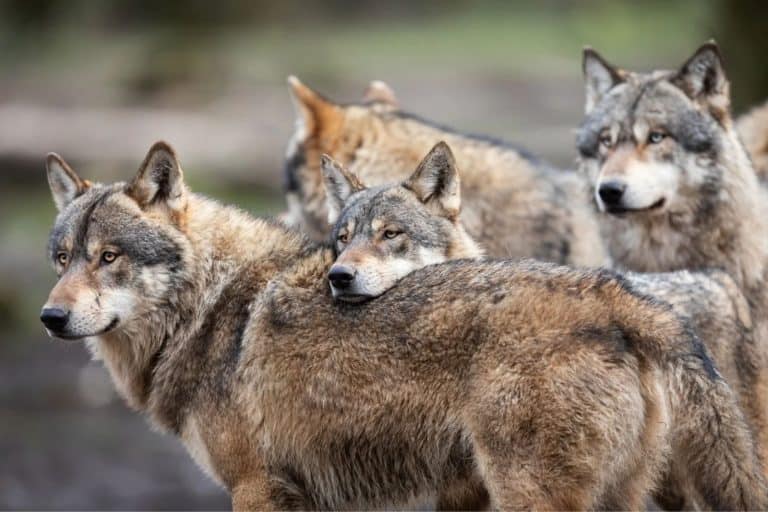
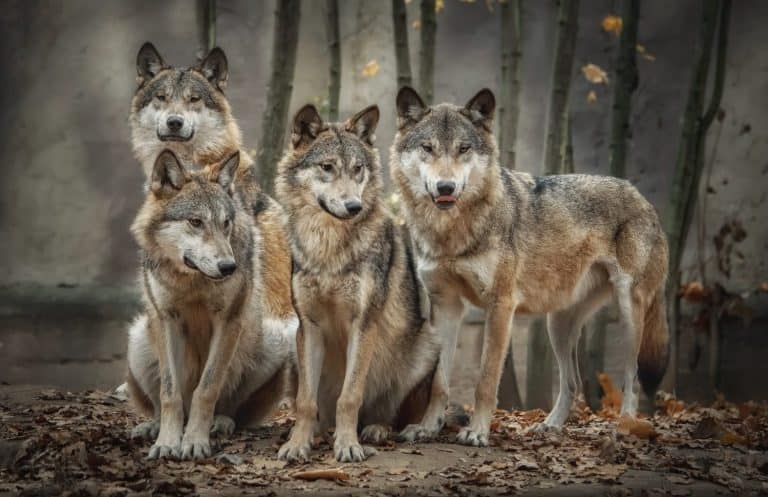
Gray wolves usually live in family groups consisting of the parent wolves and offspring from one or more years. Pack size changes with births, deaths, dispersal, prey availability, and local conditions. Some wild packs contain only a few animals, while unusually large groups can exceed 20. The family may hunt, travel, raise pups, defend territory, and protect food together.
Young adults commonly leave their birth pack to find a mate and unoccupied territory, though the timing varies. This normal dispersal helps explain why a pack is not a permanent committee with fixed membership. Wolves come of age, some remain to help, and others head out to start families of their own. It is complicated, but no more so than Thanksgiving seating arrangements.
The popular “alpha wolf” story also needs context. The image of unrelated wolves constantly battling for leadership grew largely from observations of artificial captive groups. In a typical wild pack, the leading male and female are usually the parents. Biologist L. David Mech has argued that calling them alphas adds little more information than calling two human parents the alpha adults of their household. There can be dominance and conflict, but the basic structure is a family, not a furry corporate ladder.
What Other Sounds Do Wolves Make?
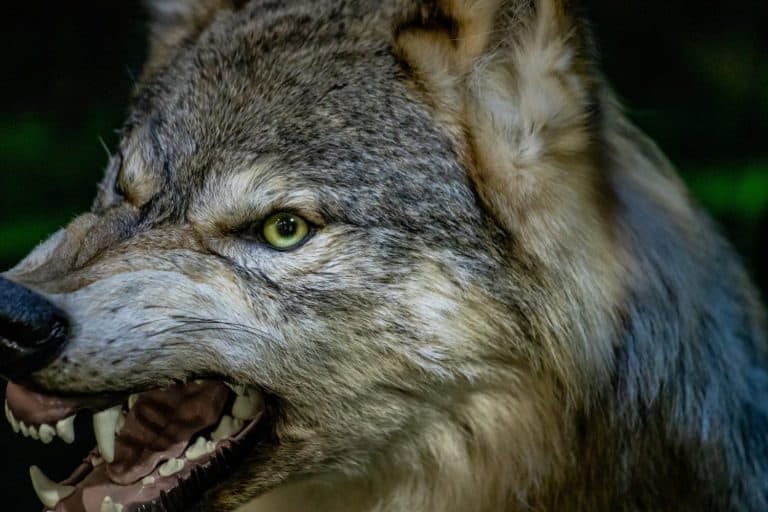
Howling receives the movie posters, but wolf vocal communication includes barking, whimpering, whining, growling, and combinations such as the bark-howl. A short bark may warn of danger or accompany defensive behavior. Whimpers and whines appear in social interactions, including communication between adults and pups and submissive exchanges. Growls can warn another animal to back away from food, space, or a wolf that is prepared to escalate.
Sound is only part of the conversation. Wolves communicate through scent marking, facial expressions, ear and tail positions, posture, touch, and movement. The same growl can carry a different meaning when paired with a stiff body and bared teeth than when it appears during play. That is why no responsible observer should translate a vocalization while ignoring the rest of the wolf.
The video captures one small piece of that larger system. Silas calls, Nikai answers, and the pair briefly fills the enclosure with sound. We cannot turn the duet into a word-for-word transcript. We can say that responding to a companion is entirely normal for a species whose survival has always depended on staying connected to the group.