Quick Take
- Bobcats have been spotted somewhere in Michigan that would genuinely surprise most residents, and this location changes how you would think about encountering one. See every county documented →
- A male bobcat's territory is far larger than most people imagine, a fact that has real implications for how often they go unseen. Explore their home ranges →
- The Upper and Lower Peninsulas tell very different stories about where bobcats actually hide, with only one offering the conditions they truly prefer. Compare peninsula habitats →
- If you want to hunt bobcats in Michigan legally, there's an age and timing detail that catches most people off guard. Check the hunting rules →
Bobcats (Lynx rufus) are wild cats that are native to North America. They are common throughout the continent, ranging from southern Canada through most of the U.S. and south to northern Mexico. Bobcats occur in Michigan, with stable populations that are slowly growing in both the Upper Peninsula and the Lower Peninsula. Learn more about these wild felines in Michigan, including their habits and habitats.
Bobcat Characteristics
According to the Michigan Department of Natural Resources (MDNR), bobcats in Michigan typically range from 10-40 pounds, with females being smaller. Their bodies measure up to 3.5 feet in length, and they have short, bobbed tails that measure 6-8 inches in length. They stand around 1.5-2 feet at the shoulder. Bobcats have brown to grey ticked coats with black or brown stripes or spots. They have lighter undersides and white muzzles. Bobcats also have facial ruffs, ear tufts, and white spots on the backs of their ears. They generally have a black-tipped tail on the upper side.
These wild cats are crepuscular and nocturnal, which means they are generally most active at dawn, dusk, and night. However, they may be active at any time of the day. They have large home ranges, with males patrolling a territory of around 15–30 square miles, while females have a home range of 10-20 square miles. Bobcats are solitary, coming together only to mate or for mothers raising kits. They are opportunistic carnivores, but in Michigan, their primary prey includes squirrels, rabbits, hares, rodents, geese, and even small deer fawns. They are adaptable and occupy a wide range of habitats, from forests and swamps to deserts.
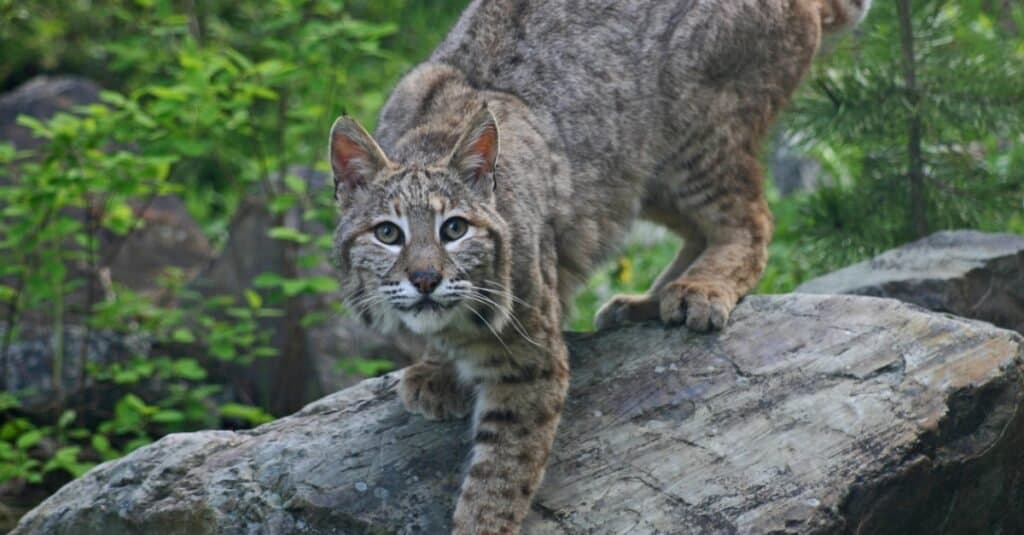
The bobcat has a brown to grey ticked coat with black or brown stripes or spots.
©iStock.com/Anita Elder Design
Where Do Bobcats Live in Michigan?
MDNR Bear and Furbearer Specialist Adam Bump stated that bobcats have been documented in every county in Michigan. Bump also said they had seen an increase in sighting reports of bobcats in the Lower Peninsula over the last decade, indicating a “healthy, resilient population.” Take a closer look at where you can find bobcats in Michigan in the following sections.
Upper Peninsula
Most bobcats in Michigan inhabit the Upper Peninsula. Trail-cameras, harvest, and telemetry records show that they are frequently seen in Alger, Baraga, Marquette, Menominee, Delta, and Luce counties. They particularly favor the remote mixed hardwood and conifer forests. There are fewer roads and fewer people in these areas, so sightings are more likely. Researchers also note that surveys typically find bobcat signs such as scat and footprints in the Huron Mountains, Hiawatha National Forest, and the Escanaba River watershed.
Lower Peninsula
In the Lower Peninsula, bobcats are found in more isolated populations. Researchers note that their presence is inferred from footprints, trail-cameras, and sightings. Verified records typically come from more rural areas with large tracts of mature forest, as well as riparian zones with little development. Sightings are most common in the northern Lower Peninsula, such as Cheboygan and Presque Isle counties, in some state game areas, and near river corridors with forest cover.
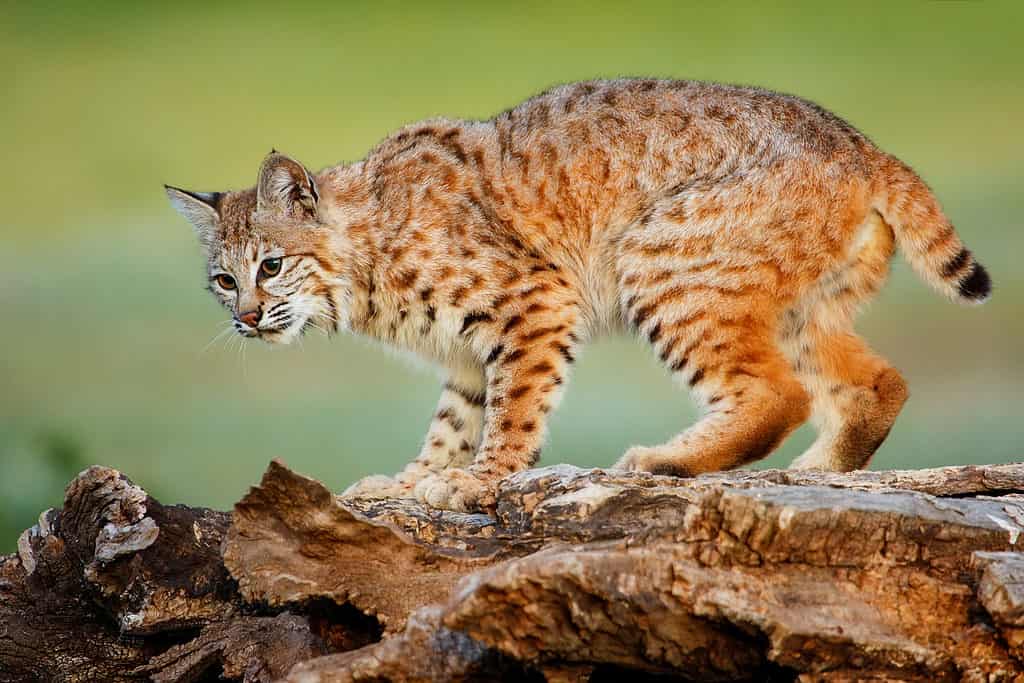
Bobcat sightings have been confirmed in every county in Michigan.
©Don Mammoser/Shutterstock.com
Bobcat Hunting in Michigan
State officials have ensured that bobcat populations are large enough to sustain a short hunting season. Bobcat hunting and trapping is allowed in certain areas, but the length of the season depends on the management unit. Hunters and trappers must be Michigan residents aged 8 years or older to obtain kill tags for bobcats. Kill tags can be obtained from May 1-October 31.
Trapping season begins in November and December, depending on the unit. Hunting season begins in January for all units, though end dates vary by unit. See the 2026 MDNR furbearer harvest regulations summary for more information.
Bobcat Sightings in Urban and Suburban Areas
Although bobcats are typically elusive and tend to avoid people, spotting a bobcat in populated areas of the state, even during the daytime, is not unusual. The best way to deter a bobcat is by waving your arms while yelling, clapping, stomping, or making other loud noises to scare it away. A bobcat that is afraid of people is less likely to cause problems.
However, there are other things residents can do to make their property unattractive to bobcats. Key strategies include:
- Clean up spilled bird seed, pet food, brush piles, and other areas that provide food or shelter for birds, mice, and squirrels that are their primary prey.
- Bring small pets inside at night.
- Keep poultry and other small livestock in sturdy enclosures with roofs.
- Keep garbage and compost in animal-proof bins.
- Clean grills of food waste.
- Keep fence gates, garage doors, or other access points closed.
- Use sprinklers, lights with motion detectors, and/or noise-makers to deter bobcats from your property.