

Quick Take
- One overlooked puppy need is quietly causing hyperactivity and irritability, and most owners don't realize they're getting it wrong.
- Spaying or neutering too early may carry a hidden cost for this breed. The research behind the right timing might surprise you.
- Puppy training should start earlier than you think, but not with the commands you'd expect.
- Punishing potty accidents can backfire in a sneaky way. There's a smarter approach.
Bringing home a border collie puppy and wanting to be as prepared as possible? Our guide covers what you need to know about your border collie’s progression from puppy to adult, including a growth chart, milestones, training tips, and common health issues.
Border Collie Breed Summary
The existence of herding dogs working in partnership with nomadic and settled humans to protect and herd livestock dates back thousands of years. The emergence of the border collie roughly 130 years ago is a continuation of this history of humans and dogs working in partnership.
The term “collie dog,” can broadly refer to working farm dogs originating throughout the regions of Ireland, Scotland, Wales, and England. So, in the late 1800s, when a distinct breed of sheepdog originated in the border region between Scotland and England, they eventually came to be referred to as border collies, a name first used in 1915.
The working requirements expected of border collies is indicative of the breed’s characteristics. They needed to be swift, able to produce bursts of energy, agile, non-predatory, sure-footed, have high stamina, focus, intelligence, be easily seen by shepherds, and have the ability to be comfortable in constant exposure to a rainy, chilly environment.

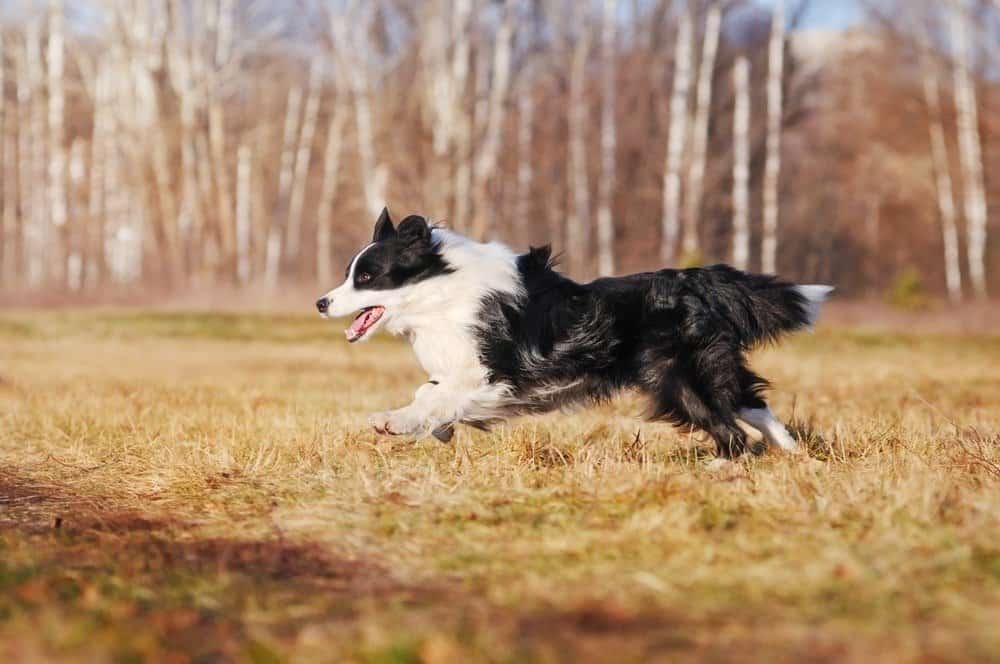
Border collies were bred to herd livestock such as sheep.
©iStock.com/Vladimir1965
Attributes and Some Breed Standards
From these above-listed requirements, the border collie was born. It is a medium-sized dog of athletic, graceful build, with an intelligent, alert expression, semi-erect ears, and a skull and muzzle approximately equal in length to each other.
Two varieties of coats are accepted by the American Kennel Club (AKC) for border collies: smooth and rough-coated. They both have a dense, weather-resistant double coat of many colors, often with white markings, especially on the chest and tip of the tail. Some of the coat colors include black and white, blue and white, red and white, red merle, blue merle, and slate merle.
There are a few characteristics often attributed to and seen in border collies. These attributes aren’t guaranteed to develop, but genetics can play some role in determining the personality of your pup. Other equally important factors include environment, health, early socialization, and how owners interact with and raise their puppies.
As mentioned above, border collies are described as intelligent, alert, active, and curious. This breed is prone to developing neurotic tendencies if they aren’t able to perform natural and selected behaviors. If you are thinking about adopting a border collie puppy, it’s best to have an active lifestyle and be able to provide a life full of both physical and mental stimulation.

Blue merle is one of the rarest colors of border collie.
©Medenka Nera/Shutterstock.com
Border Collie Growth Chart
Below is a growth chart that outlines how you may expect healthy male and female border collies to develop from 8 weeks to 2 years old.
| Age | Male Weight | Female Weight |
|---|---|---|
| 2 Months | 5-10 pounds | 5-8 pounds |
| 3 Months | 9-14 pounds | 8-11 pounds |
| 4 Months | 12-19 pounds | 12-15 pounds |
| 5 Months | 16-23 pounds | 15-20 pounds |
| 6 Months | 20-25 pounds | 18-23 pounds |
| 7 Months | 23-28 pounds | 20-25 pounds |
| 8 Months | 28-33 pounds | 23-28 pounds |
| 9 Months | 31-35 pounds | 25-30 pounds |
| 10 Months | 33-38 pounds | 28-33 pounds |
| 11 Months | 35-40 pounds | 30-36 pounds |
| 12 Months | 35-43 pounds | 30-39 pounds |
| 1.5 Years | 35-48 pounds | 30-42 pounds |
| 2 Years | 35-50 pounds | 30-45 pounds |

Your border collie pup to reach their max height at 12 months old and max weight at 18-24 months.
©Kseniya Resphoto/Shutterstock.com
When Will My Border Collie Stop Growing?
You can expect your border collie pup to reach their full height at 12 months and full girth at about 18-24 months old. It’s important to provide the appropriate caloric intake of quality puppy food 3-5 times per day while your pup is actively growing. Throughout their life, it’s imperative to also always have clean, fresh water available.
Note that in addition to providing quality puppy food, it’s crucial to ensure your puppy is getting enough sleep to properly develop. Sleep deprivation is actually a huge health issue for puppies, as many caretakers simply are unaware of how much puppies need to sleep, and the long-term health and behavioral consequences such as hyperactivity, restlessness, and irritability that can develop from sleep deprivation.
At 8 weeks, your pup needs about 20 hours of sleep per day. This must be deep, restful sleep. So setting up a quiet area for your puppy to rest is imperative. By 4 months old, your puppy should be sleeping 18 hours per day. By the time your border collie puppy is 6 months old, they need 16-18 hours of sleep per day. As an adult, your dog should be sleeping 12 hours per day, though some may need up to 14 hours of sleep, especially as they get older.

Your border collie puppy will need plenty of sleep to ensure proper development.
©xkunclova/Shutterstock.com
How Big Will My Border Collie Be When Fully Grown?
On average, you can expect a healthy, adult female border collie to stand 18-21 inches tall at the withers and weigh 30-45 pounds. Adult, healthy male border collie should stand 19-22 inches tall at the withers and weigh 35-50 pounds.
Please note that the heights reflect the AKC breed standard, which does not set a weight (the AKC lists 30-55 pounds for the breed), and variation may occur due to genetics and diet.
When Should My Border Collie Be Spayed or Neutered?
When considering when to spay or neuter your border collie, it’s important to become well-informed on the latest information regarding both the potential benefits and risks associated with this procedure. Currently, studies indicate that spaying and neutering can decrease or eliminate the risk of developing certain cancers of the reproductive system. Recent studies are also focusing on the potential health risks of spaying or neutering which include the development of other cancers and long-term health issues.
One study researching 105 intact male, 85 neutered male, 88 intact female, and 121 spayed female border collies found that while this breed is not at higher risk of joint and bone illnesses due to altering, they are at greater risk of developing some types of cancers from spaying or neutering. This risk is made even greater if spaying or neutering occurs under the age of 12 months old. As such, informed veterinarians will often suggest waiting to spay or neuter your border collie until they are at least 1 year old.

Discuss the best time to spay or neuter your border collie with your veterinarian.
©Susan McQuade/Shutterstock.com
When Should My Border Collie Be Potty Trained?
You can begin potty training your border collie pup as early as 8 weeks old. When you begin training, it’s important to understand that puppies this young can only hold their bowels for up to 2 hours. For puppies, the number of months they are roughly equals how many hours they can go before needing to use the bathroom. It’s best to make sure to take them out 15-30 minutes before this maximum time. Additionally, you’ll also want to take young pups out right after they’ve had a lot to drink and after meals. You can use puppy pads at night to prevent having to get up all night long. You can also take these puppy pads outside initially to help your pup make the connection.
It’s imperative to make house training a happy, safe experience for your puppy. Shower them with lots lots of love and affection when they go outdoors and don’t scold them or punish them in any way if they have an accident inside. Punishment only serves to scare your puppy and may damage your relationship. You may also find that they start going to the bathroom in hidden places if they are scared. Instead of punishment, proactively show them what you’d like them to do with positive reinforcement, patience, and gentleness.
When Should My Border Collie Stop Eating Puppy Food?
At about 10-12 months old, your border collie is ready to transition to eating adult food. At this time, you can also switch to feeding them twice a day, rather than multiple times. However, you can continue to feed lunch if you like. Just make sure you’re providing the correct amount of caloric intake throughout the day. If you are using a lot of treats during training (and that’s a great idea), then you can also calculate those calories in as well. This will prevent your pup from putting on too much weight while using lots of yummy treats during training.

You can transition your border collie to adult food at 10-12 months.
©Ermolaev Alexander/Shutterstock.com
When Will My Border Collie Start Losing Teeth?
At about 12 weeks old, your border collie puppy will begin to lose their set of 28 baby, or primary, teeth. At this time, a set of 42 adult, or permanent, teeth will start to come in. By the time your pup is about 6 months old, they should have their full set of adult teeth.
As their adult teeth come in, you’ll likely notice an increase in chewing behaviors from your border collie pup. This is known at teething, and it serves to alleviate the discomfort of the adult teeth coming in. Make sure to provide plenty of items for your puppy to chew during this time. It can be helpful to have a variety of textures available like soft, plushy, hard, and rubbery.
If you find that your puppy is chewing on inappropriate items, simply trade them for an appropriate chew toy or chew treat. Avoid just taking things from your pup without giving them something in return as this can teach your puppy that you are someone to hide and protect items from. Trading is an invaluable tool you can use throughout your dog’s life. Management is also important during this time. You may need to be extra vigilant to put away items you don’t want your puppy to reach. After all, how are they supposed to logically distinguish between their toys and your slippers?
When Should I Start Training My Border Collie Puppy?
You can begin training your border collie pup at 8 weeks old. However, it’s important to know that what’s really crucial during this time is building a strong foundation of trust and friendship between the two of you. The best thing you can do for your puppy is help form a secure attachment bond that shows them that you will be there for them. This means comforting your pup when they’re scared, advocating for them by not letting people or other animals overwhelm them, and providing healthy, consistently positive interactions.
It’s also crucial during this time to practice socialization with your puppy. Between the ages of 3-12 weeks of age is the early socialization period for your dog. This time is when their brain is most primed for taking and processing new events, stimuli, and environments. A good rule of thumb is to gently, and supportively introduce your puppy to one new thing each day during this period. It’s also crucial to not overwhelm your puppy or force them to interact with an environment, person, or animal that they are uncomfortable with. If your puppy seems uncomfortable, the intensity or proximity of the environment or new stimuli needs to be lowered.
Training and socialization are crucial components in raising a happy, healthy border collie.
©Ann Tyurina/Shutterstock.com
What Cues Should I Teach My Border Collie First?
Border collies are known for having a high degree of cognitive intelligence and the ability to learn new information quickly. This breed thrives on learning new tasks, especially when taught in a safe, ethical, and compassionate manner. Some people love to practice agility sports with border collies. However, you should first teach them to master basic cues, such as “sit,” “stay,” “down,” “come,” and “leave it.”
You can start pre-agility training with pups as young as 8 weeks old, but you must stay away from high-impact training until their joints and bones are much more developed. Instead, focus on low-impact skills like teaching your border collie puppy how to touch a target. Target training is a crucial foundational skill for agility work.

Border collies excel at agility, but wait to practice high-impact sports until your puppy is fully developed.
©Nadezhda V. Kulagina/Shutterstock.com
When Will My Border Collie Calm Down?
Around 3-4 years of age, you can expect your border collie to reach full social maturity. At this point, you may see a decrease in energy-fueled adolescent behaviors. As with all dogs, your border collie can only feel a sense of contentment and calmness if all their basic needs are being met. This includes mental and physical enrichment, quality and enough sleep, proper nutrition, social bonding, and feeling safe.
If your border collie seems to be displaying hyperactivity, repetitive behaviors such as tail chasing, or other concerning signs, it’s important to make sure all of their needs are being met. You should also consult a behavior-informed vet and force-free, fear-free behaviorist if your border collie doesn’t seem to be able to settle.
Common Health Issues Your Border Collie Might Experience
Overall, border collies are generally considered a healthy breed that isn’t prone to many innate health conditions. However, there are a couple of health concerns associated with this breed. Your border collie may be more prone to developing dental issues than other dogs, so providing good dental hygiene and scheduling regular dental health vet visits is crucial. You also may want to start cooperative care dental work with your pup at a young age. Cooperative care is the practice of using force-free and fear-free, husbandry to help keep your pet healthy.
Border collies are also at higher risk of developing a heart condition called patent ductus arteriosus (PDA). With PDA, a small vessel near your border collie’s heart does not close as it should soon after they’re born. Instead, the vessel remains open between the aorta and the pulmonary artery, sending too much blood flow to the lungs. This can result in fluid buildup and strain on the heart. If this condition causes symptoms, your vet may opt for surgery to close this vessel.
What Is the Expected Lifespan of a Border Collie?
If you diligently take as good care of your border collie as possible, how long should you expect it to live? The average lifespan of a border collie ranges from 10 to 17 years. Usually, they live to around 12 years of age, and some individuals live up to 18 years. Similarly-sized breeds have a median life expectancy of 12-13 years. The most common reasons that border collies pass away are due to old age or illnesses like cancer or neurological disorders.