
Quick Take
- To be classified as a Gifted Word Learner, a dog must master a large and complex vocabulary of object names without formal training or explicit instruction.
- These dogs replicate a developmental milestone typically seen in human children between 18 and 24 months of age, a cognitive achievement that would pose significant challenges for most dog breeds.
- Findings confirm that social-cognitive processes once thought to be uniquely human are active when certain dogs “eavesdrop” on conversations and extract meaning from them.
- Researchers used two experimental methods designed to isolate how and why some dogs track human attention and interpret social cues during conversations.
For generations, dog owners have joked that their pets listen in on conversations and seem to understand what people are saying in surprising ways. Now, new scientific studies show this idea is more than just a charming story. In some rare cases, it’s actually true.
A new study finds that a small, exceptional group of dogs known as Gifted Word Learners (GWL) can learn the names of objects simply by overhearing humans talk about them, without being directly taught. This capacity closely mirrors how human toddlers pick up vocabulary from everyday conversations, challenging long-held assumptions about where and how language-related learning can occur across species. So, your dog may actually know what you are talking about.
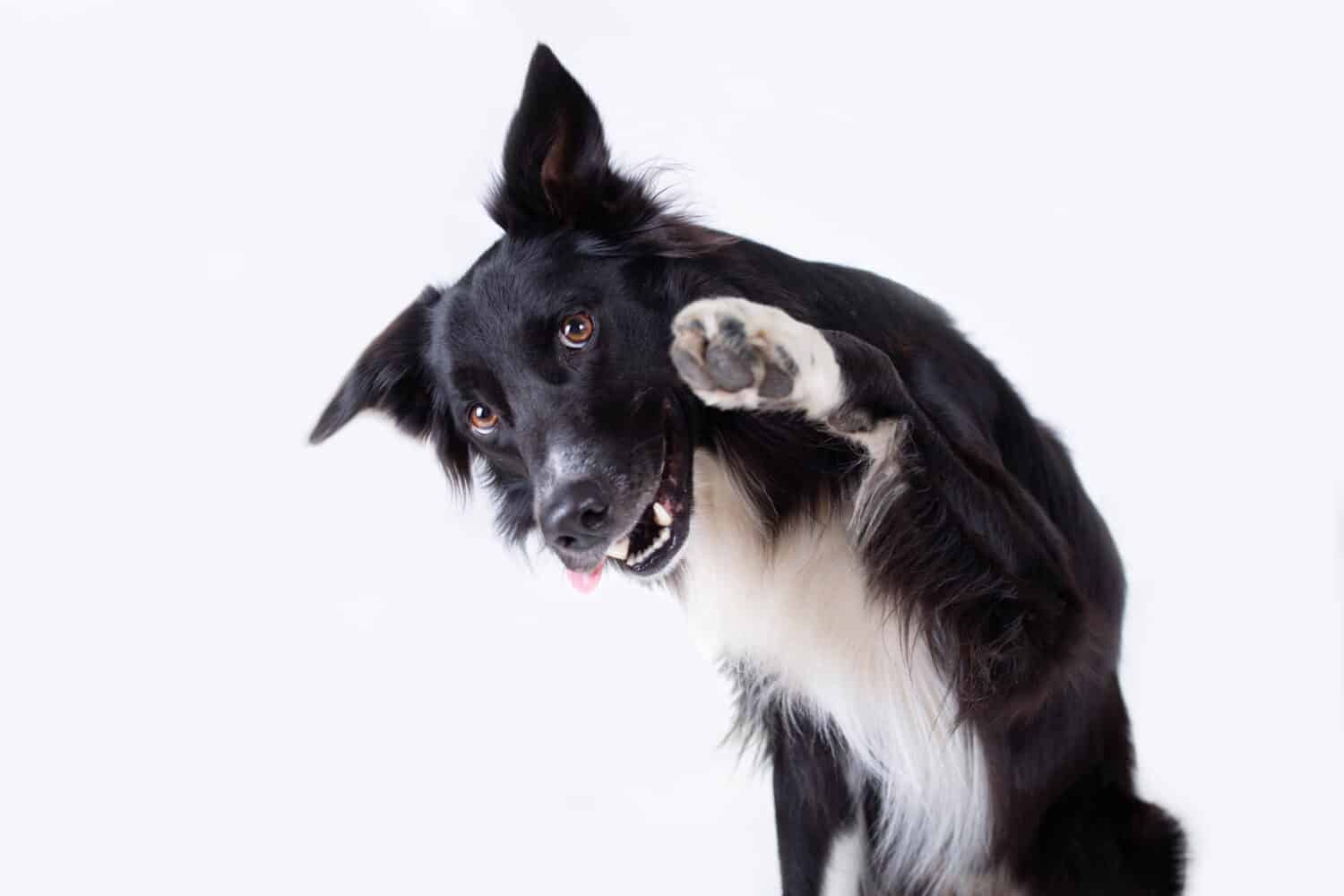
Gifted Word Learner dogs are a rare group of canines capable of learning human language.
©Jaroslav Frank/iStock via Getty Images
Of course, we know that most dogs can learn basic commands like sit, stay, and walk. Or dare we say, treat. However, only a few dogs can remember the names of hundreds of different objects. These Gifted Word Learners have unusually large vocabularies and have been found in several breeds, such as Border Collies, Labradors, Golden Retrievers, and other dogs that are very social with people.
Importantly, Gifted Word Learners are not limited to one breed or region. They have been documented in different countries and households, suggesting that this rare ability can emerge in a variety of environments, though it remains uncommon.
A 2026 study led by Shany Dror at Eötvös Loránd University found that GWL dogs can learn new object names simply by overhearing human conversations. In the study, 7 out of 10 dogs were able to correctly identify new objects after overhearing their names, even when the object was out of sight.
This finding suggests that their socio-cognitive language abilities may be comparable to those of 18-month-old children. In some cases, their performance matched or even exceeded that of human toddlers at the same developmental stage.

These GWL learning abilities mirror how human toddlers acquire vocabulary.
©Koen Adriaenssen/Shutterstock.com
To better understand how these dogs acquire new words, researchers designed a series of controlled experiments to test whether learning required direct instruction or could occur more passively through observation. The goal was to separate simple repetition from true word learning and to determine whether the dogs were actively interpreting human social interactions.
To test this, the team ran experiments in two ways:
- Direct teaching: The owners showed a dog a new toy and repeatedly said its name.
- Overheard speech: The owners and another person discussed and handled the toy within the dog’s view, but never addressed the dog directly.
Later, the dogs were asked to fetch the toy by name. Surprisingly, the Gifted Word Learners performed just as well when they had only overheard the toy’s name as when they had been taught it directly. They were able to identify the correct toy from a selection of several distractors, demonstrating that their understanding was not dependent on direct instruction or repeated reinforcement.
This suggests that GWL dogs are capable of forming mental associations between words and objects purely by observing human interactions— a level of cognitive processing that goes far beyond simple command training. Their ability to infer meaning from context highlights a sophisticated capacity for social learning, attention tracking, and memory integration, skills previously thought to be largely exclusive to humans. It turns out these skills are not exclusive to humans.

GWL dogs achieved a median accuracy rate of 83% when learning through overhearing.
©xkunclova/Shutterstock.com
What’s even more impressive is that when researchers showed the toy and then named it later, after it was out of sight, several dogs still learned the name. Seven out of ten dogs chose the correct toy after overhearing its name, even though the object and word were not shown together.
These results show that GWL dogs are not just reacting to repeated words or tone of voice. They seem to watch people closely, pay attention to what’s happening, and connect words with objects over time. This ability is similar to how young children start learning language. It suggests that dogs can understand more than simple commands and possess a surprising capacity for abstract thinking. This abstract thinking is what makes their abilities so special.
This research also raises interesting questions about how dogs communicate and understand people. Learning how dogs connect words with objects helps us appreciate their intelligence and could lead to improved training methods. Ultimately, these findings help us build stronger bonds with our dogs and expand our understanding of animal intelligence and its evolution.

These dogs share the capacity to extract meaning from social interactions.
©Jaromir Chalabala/Shutterstock.com
Research shows that living with humans has greatly influenced how dogs have evolved. Over thousands of years, dogs have learned to read our gestures, expressions, and words. This shared history means their understanding of people is deeply rooted in adaptation and learning. One important takeaway from this research is the chance to improve how we train dogs. By understanding exactly how dogs interpret our communication, we can develop better training methods. Leveraging their natural sensitivity could help dogs learn more quickly and easily.
This new understanding of how dogs communicate could also help improve relationships between people and their dogs. When we realize how much dogs understand our feelings, we may interact with them more kindly, strengthening our bond and improving the well-being of both dogs and owners.
As research continues, dogs may take on even more roles as assistance and therapy animals. While therapy and assistance dogs already play important roles in emotional support and crisis intervention, ongoing research into dogs’ sensitivity to human emotions may further inform training methods for these jobs.
More studies on how dogs think could teach us about how intelligence develops in social animals. Learning what makes dogs so sensitive could also help us understand how humans learn and think, giving us a better picture of intelligence in different species.
Examining how dogs have adapted to living with people can also teach us about domestication in general. This research could change our perspective on the process of turning wild animals into pets and reveal more about the close relationship between humans and dogs. Recognizing that dogs can understand human communication can help improve animal welfare efforts. Policies could be updated to support better treatment, training, and living conditions that respect dogs’ emotional and mental needs, leading to improved overall care.
This research could also help us learn more about how different species communicate. If dogs can learn by watching people, perhaps other animals can as well. This idea could lead to new studies that improve how we interact with animals and understand their behavior.
In short, this research could help us learn more about dogs, improve our relationships with them, and contribute to fields such as psychology, animal welfare, and evolutionary biology.

©hedgehog94/Shutterstock.com
It’s important to remember that these skills are rare. Most family dogs, even very smart ones, do not learn words at this level. Gifted Word Learners stand out because of their large vocabularies and their ability to learn from overhearing people talk.
Even so, this research raises new questions. If dogs, after thousands of years with humans, can learn words just by listening, what does this tell us about the origins of language? And could other animals possess similar hidden abilities?
For both dog lovers and scientists, one thing is clear: we are just starting to understand how smart our dogs really are. Sometimes, when they seem to be quietly resting, they might actually be listening and learning more than we realize.