
Quick Take
- Puerto Rico's climate should be paradise for gators and crocs, yet something else rules its waterways.
- A predator arrived decades ago and quietly took over the island. How it got there may surprise you.
- This apex predator's diet defies what you'd expect from a big carnivore.
- Spotting the difference between these look-alike reptiles comes down to a few telltale traits, and one is on their faces.
Puerto Rico is a small island in the Caribbean Sea. At 5,325 square miles, it is roughly the same size as Connecticut. The island is home to many fascinating animals, including one crocodilian that belongs to the order Crocodilia. This order contains alligators, crocodiles, and caimans. Read on to learn more about this crocodilian and where in Puerto Rico it can be found.
Puerto Rico Location and Climate
Puerto Rico is located in the Caribbean Sea between the Dominican Republic and the U.S. Virgin Islands. It is around 1,000 miles southeast of Miami, Florida, and 500 miles north of Venezuela. According to the Köppen climate classification system, Puerto Rico has a tropical rainforest climate. The island has year-round warm temperatures and a long rainy season from April to November.

El Yunque National Forest is one of the rainiest places, with an average of 150 inches of rain per year.
©dennisvdw/iStock via Getty Images
Crocodilians in Puerto Rico
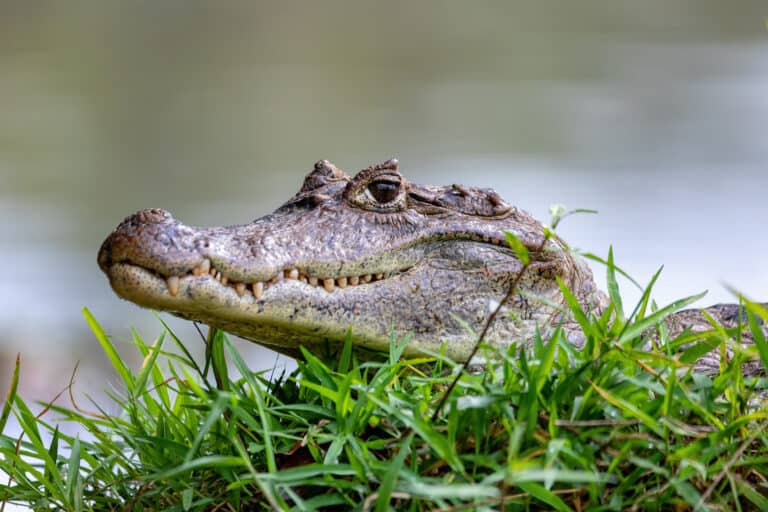
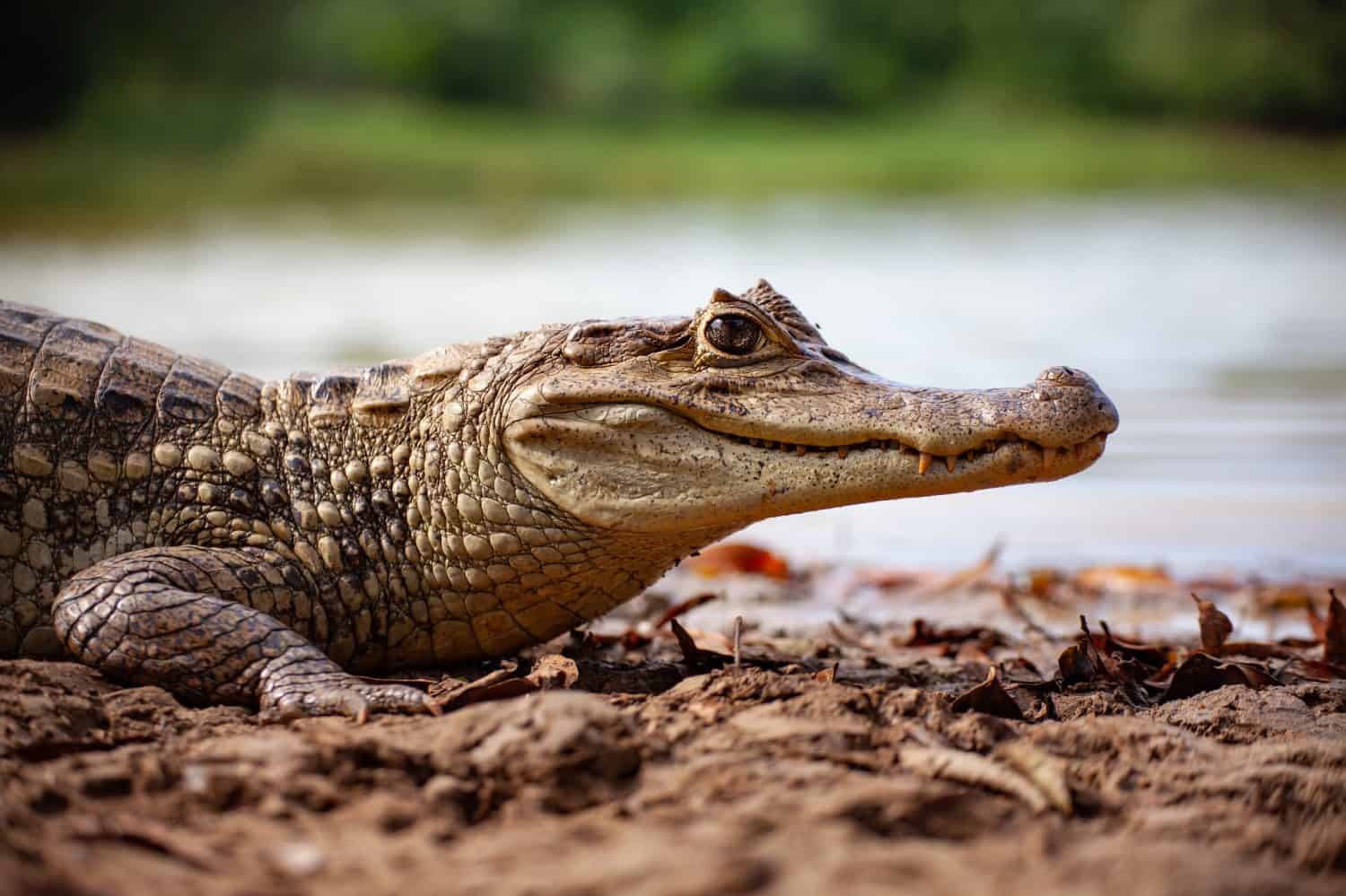
Despite Puerto Rico’s tropical rainforest climate, which is perfect for alligators and crocodiles, the island is not home to either animal. It is, however, home to a population of non-native spectacled caiman (Caiman crocodilus). Spectacled caimans were first introduced to Puerto Rico over 50 years ago and have since become apex predators. The species was first introduced at Laguna Tortuguero Natural Reserve, a freshwater lagoon near the northern coast. In the following sections we’ll take an in-depth look at caimans in Puerto Rico and how the caiman differs from alligators and crocodiles
What Is a Caiman?
As mentioned above, caimans belong to the same order as alligators and crocodiles. There are six species of caiman, all of which are native to Central and South America. These six species vary greatly in size, from the massive black caiman (Melanosuchus niger), which can weigh over 1,000 pounds, to Cuvier’s dwarf caiman (Paleosuchus palpebrosus), which only weighs around 11-15 pounds. Caimans primarily live in freshwater aquatic environments such as rivers, lakes, and marshes.
The Spectacled Caiman (Caiman crocodilus)
The spectacled caiman lives across a wide range of Central and South America. In fact, it has the largest native range of any caiman species. It is found from Mexico to Peru on the Pacific coast, as well as from Mexico to Brazil on the Atlantic coast. In addition to its native range, the spectacled caiman has also been introduced in Puerto Rico, Cuba, and Florida.
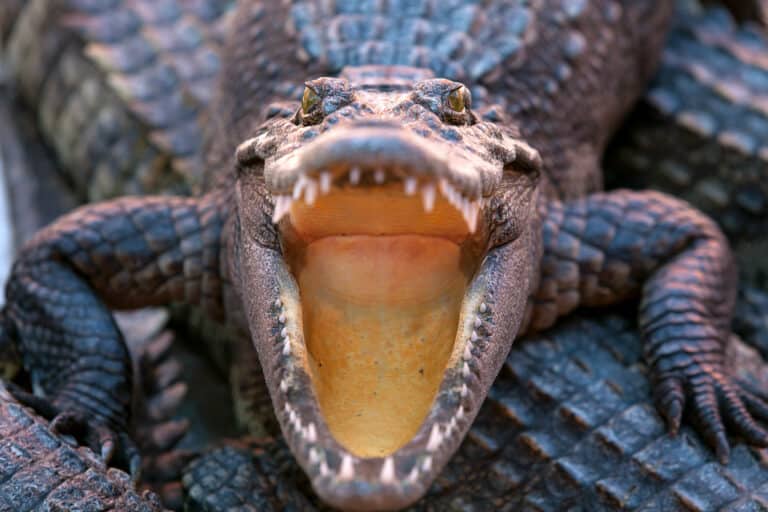
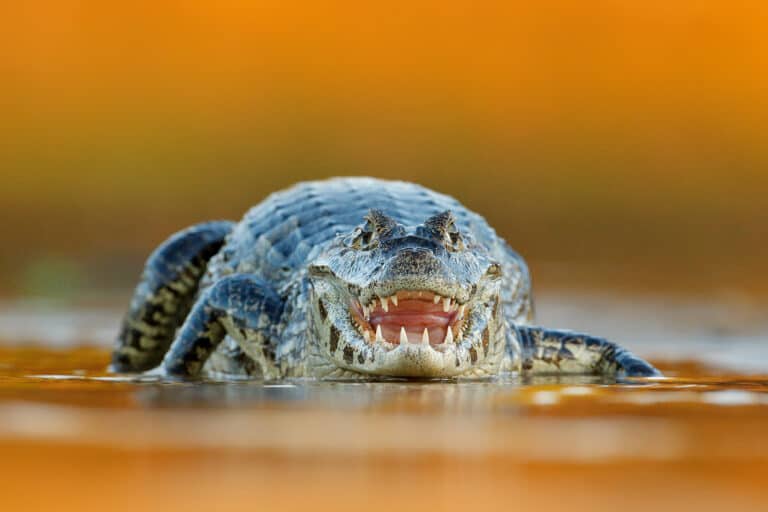
Spectacled caimans are small- to medium-sized crocodilians. Adult females typically measure up to 4.9 feet in length, while adult males can reach as long as 8.2 feet. The typical weight of an adult spectacled caiman is 15-88 pounds. They have a bony ridge between their eyes at the top of the snout that looks like the nose piece or bridge of a pair of glasses, or spectacles.
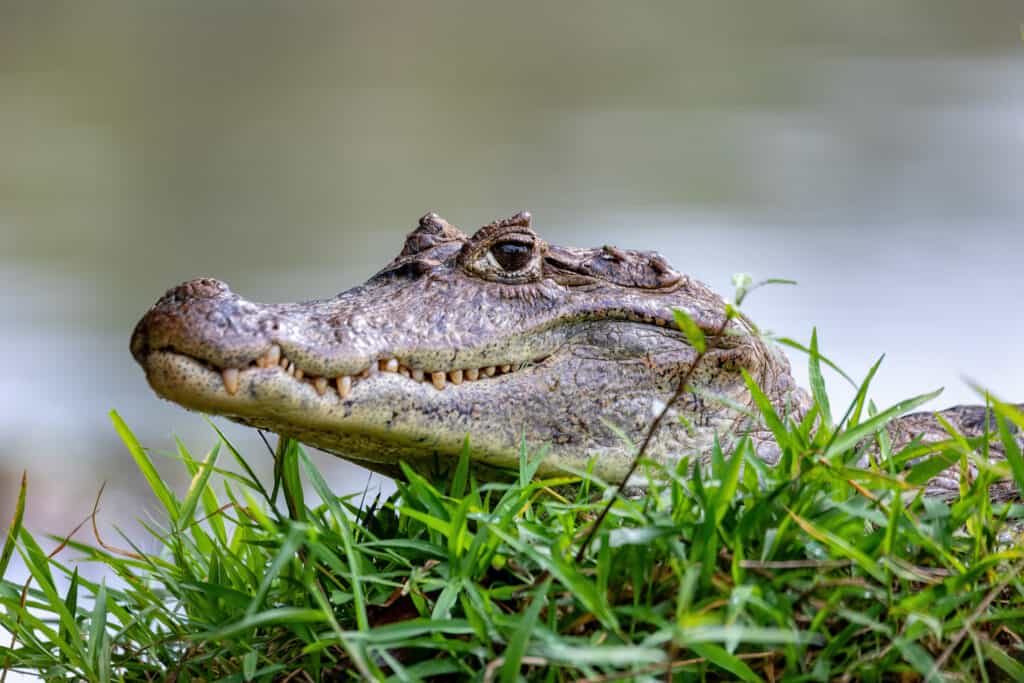
Spectacled caimans are found from Mexico to Peru and Brazil, as well as the U.S., Cuba, and Puerto Rico.
©Artush/Shutterstock.com
Spectacled Caimans in Puerto Rico
The spectacled caiman has adapted extremely well to Puerto Rico. They can lay up to 40 eggs at a time, which has helped their population explode on the island. Caimans are still the most concentrated around Tortuguero Lagoon and the surrounding marshlands between Vega Baja and Manatí. They favor slow-moving freshwater rivers and streams, as well as lakes and canals. Caimans are rarely seen in urban areas, but they occasionally appear in flooded yards after heavy rains.
Since being introduced over 50 years ago, caimans have become a top predator in Puerto Rico. However, for such a large carnivore, their prey is different than one might expect. Researchers in Puerto Rico found that hatchling and juvenile caimans mostly eat insects and larvae. In contrast, adult caimans primarily eat fish. Adults and juveniles were also found to eat large amounts of plant material such as seeds and grass, as well as gastropods, which include snails and other mollusks.
What Are the Differences Between Caimans vs. Alligators?
There are two living species of alligators, the American alligator (Alligator mississippiensis) and the Chinese alligator (Alligator sinensis). While alligators are the closest living relatives of caimans, they have some key differences. One is where they live. The two extant species of alligators live in North America and China, respectively, while the six extant species of caiman live in Central and South America.
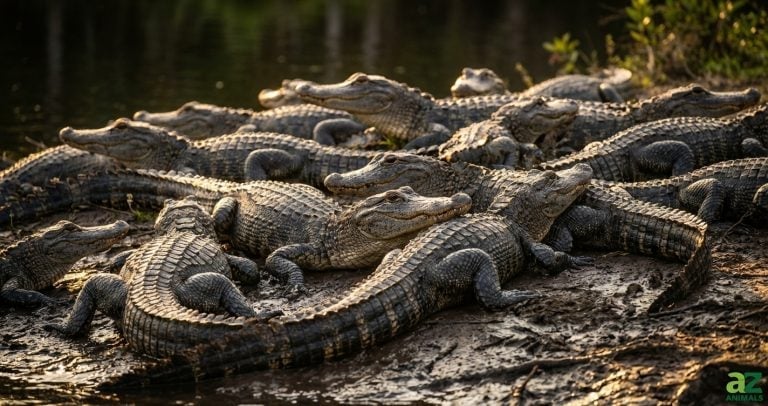
Another key difference is their size. Alligators are generally much larger than caimans, reaching between 10-15 feet in length and weighing up to around 1,000 pounds. Most caimans rarely grow larger than 8 feet. Only the largest species of caimans, black caimans, can grow as large as alligators. Caiman skin is also much harder than alligator skin due to heavy calcium deposits, or osteoderms, embedded in their scales. Alligators have shorter, rounder teeth than caimans, which have long, sharp teeth. Additionally, caimans have slightly longer, narrower, and more pointed snouts than alligators.

The Differences Between Caimans vs. Crocodiles
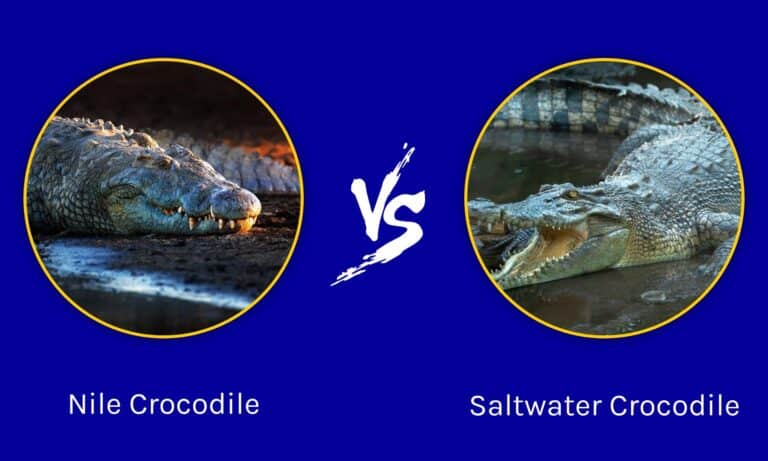
The differences between caimans and crocodiles can be challenging to spot at first. However, there are some key differences between the two. There are 18 extant species of crocodiles and six extant species of caimans. One key difference between caimans and crocodiles is where they live. Crocodiles live on every continent except Europe and Antarctica, while caimans only live in Central and South America.
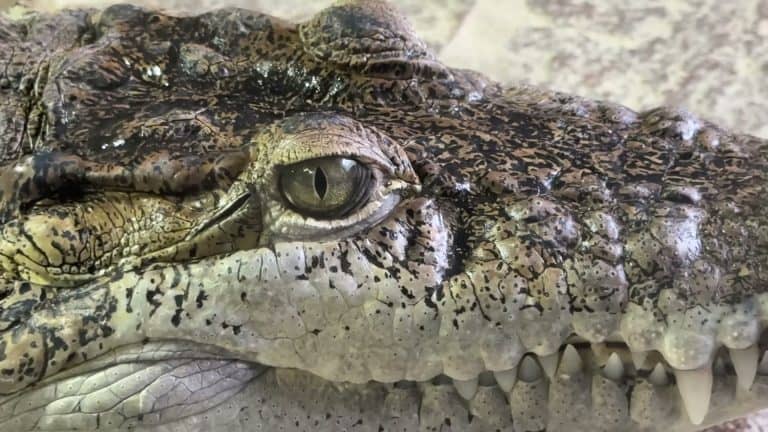
Another main difference is their size. Crocodiles are typically much larger than caimans. Saltwater crocodiles are the largest living reptile, measuring up to 20 feet and weighing up to 3,300 pounds. In contrast, the black caiman measures up to 16 feet and can weigh up to 1,000 pounds. Caimans generally only live in freshwater, while crocodiles favor saltwater. However, both can tolerate or even thrive in brackish water. Crocodiles also have longer, narrower, and more pointed V-shaped snouts while caimans have more rounded snouts with a distinct overbite.