
Caimans (Caimaninae) and crocodiles (Crocodylidae) are both large, predatory, semi-aquatic reptiles in the order Crocodilia. They share similar physical characteristics, such as a heavy body, a powerful tail, and armored scales. They also share similar hunting behaviors, use their powerful tails for swimming, and exhibit parental care, such as nesting, protecting eggs, and carrying hatchlings to the water. However, caimans and crocodiles have three key differences: snout shape, size, and temperament. Continue reading to learn what sets these two animals apart.
Physical Characteristics
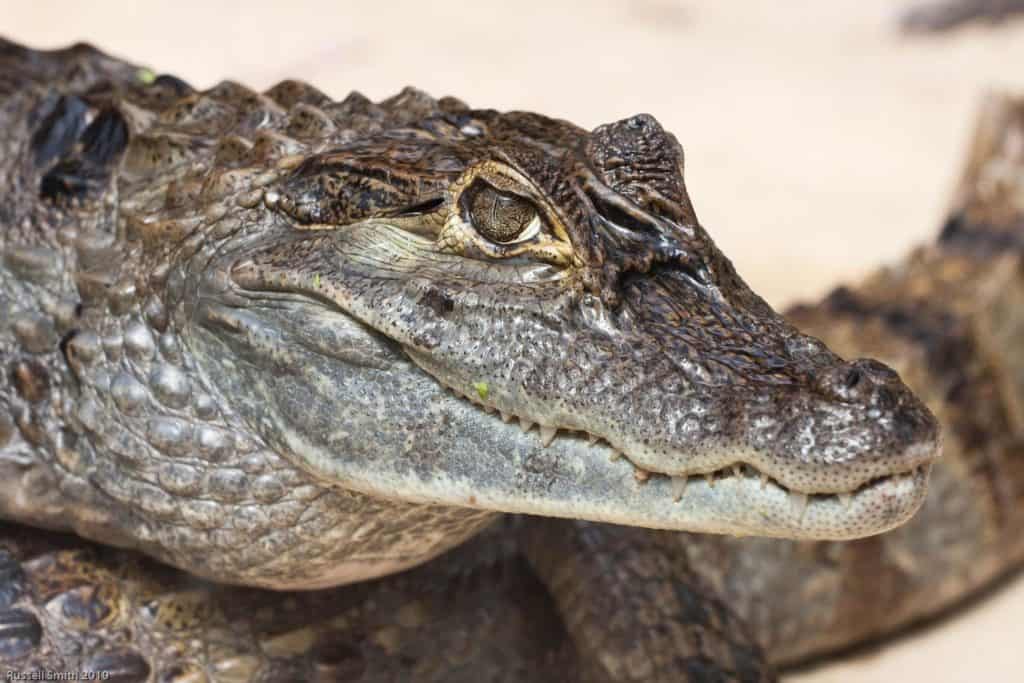
Caimans have a smaller body compared to crocodiles on average.
©Russell Smith / Flickr – Original
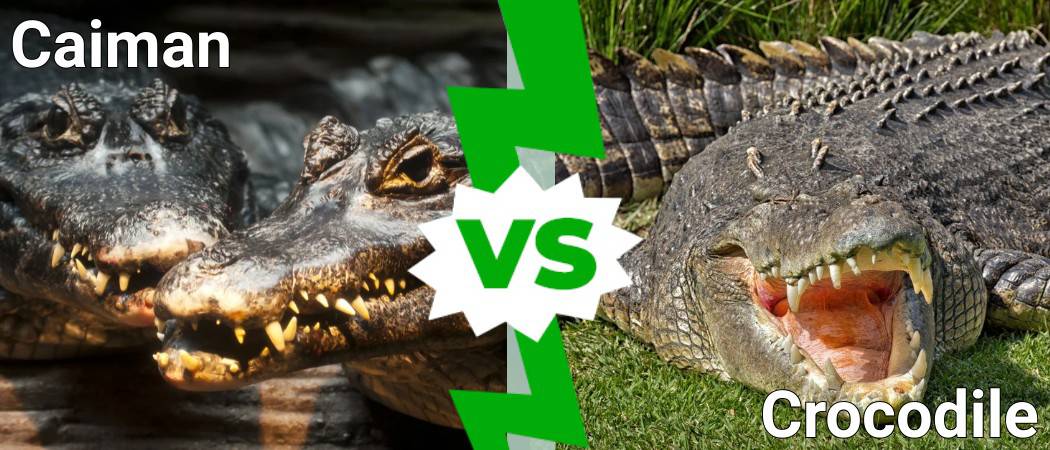
Much like alligators, caimans have U-shaped snouts, while crocodiles have V-shaped snouts. Many caimans also have overbites, while crocodiles do not. Otherwise, the physical appearance of caimans and crocodiles is very similar, except for one important physical difference: their size.
The average caiman is between 5 and 19 feet long and weighs between 10 and 600 pounds, while crocodiles can be up to 25 feet long and weigh 50 to 2,000 pounds. While it depends on the specific species of crocodile, caimans rarely grow as large as crocodiles.
Behavior and Diet
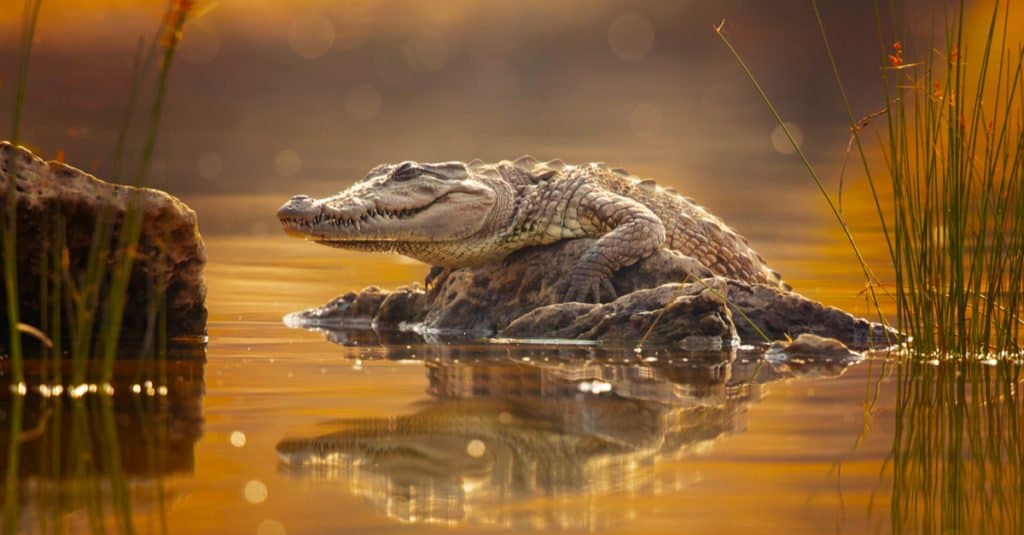
Caimans and crocodiles both eat fish and crustaceans.
©Milan Zygmunt/Shutterstock.com
The diets of the caiman and the crocodile vary significantly. While both are predators, caimans typically hunt smaller prey. Crocodiles can take down much larger animals. Both caimans and crocodiles eat fish and crustaceans. Caimans also prey on waterfowl and capybara, while crocodiles supplement their diet with deer and buffalo.
As reptiles, caimans and crocodiles are ectothermic. This means that they rely on external heat sources, like the sun, to regulate their body temperature, rather than generating their own heat internally. Though both caimans and crocodiles are territorial and can be dangerous, especially during mating season, caimans are generally less aggressive than crocodiles.
Distribution and Habitat
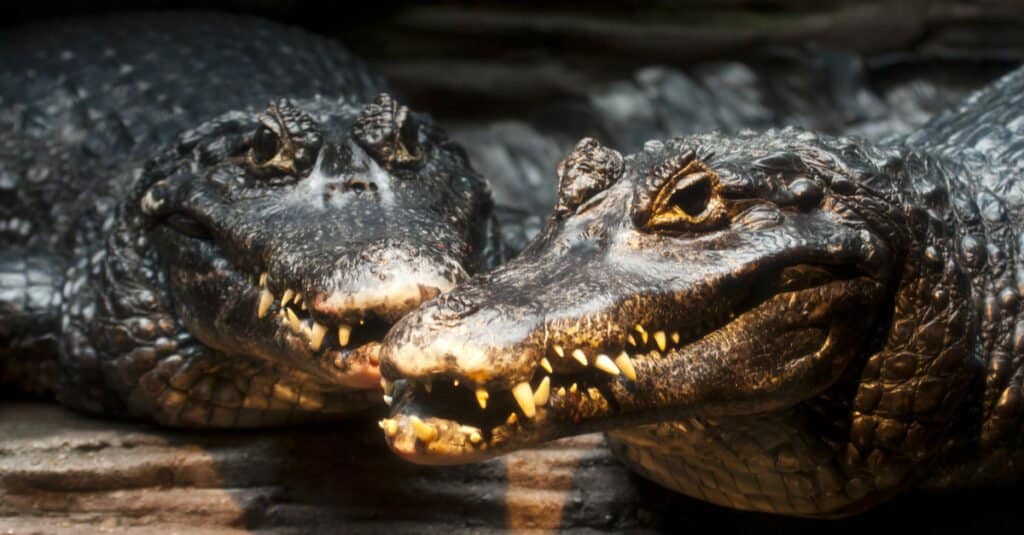
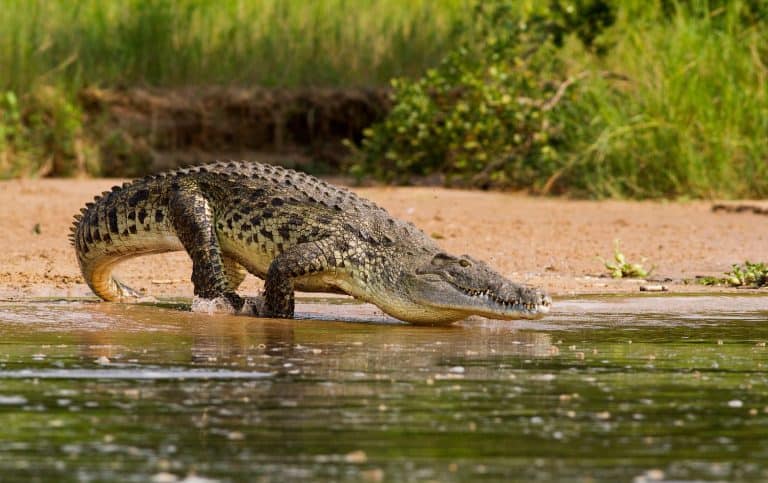
Crocodiles have a more widespread presence than caimans.
©Glenn Young/Shutterstock.com
Depending on the species, crocodiles are found in a variety of environments and habitats. Crocodiles are globally distributed throughout tropical and subtropical regions, inhabiting freshwater, brackish, and sometimes marine environments across Africa, Asia, Australia, and the Americas. Crocodiles live in freshwater and saltwater environments, such as freshwater marshes, rivers, lakes, and mangrove swamps. Caimans have a more limited distribution, living in rivers, lakes, and swampland throughout Central and South America. Some species of caiman burrow in mud when their watery environments run dry, and some species of crocodile are capable of climbing trees. The location and habitat of these two reptiles greatly influence their behavior and hunting habits.
Lifespan
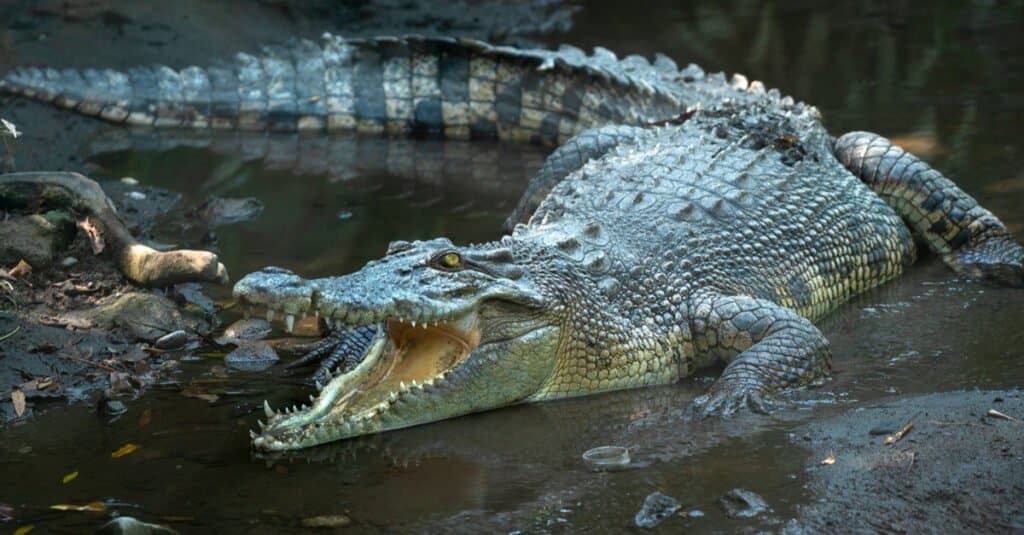
Crocodiles have a longer lifespan than caimans.
©Pius Rino Pungkiawan/Shutterstock.com
Caimans typically live 30-40 years, while crocodiles can live 35-70 years in the wild and sometimes over 100 years in captivity. Crocodiles live an average of 20-70 years. Crocodiles likely outlive caimans due to their larger size and fewer threats as apex predators. Caimans are excellent predators, but their smaller size often makes them vulnerable, especially when they are young.