
Quick Take
- One crocodile here has a snout built for catching fish, yet documented kills include primates. Meet the false gharial →
- A rare color mutation that would get any wild crocodilian killed before adulthood is exactly why this Czech facility matters to science. See the leucistic Nile crocodiles →
- Saltwater crocodiles regularly wash up on remote Pacific islands, and this is no accident. They have a biological feature most crocodilians lack entirely. Explore saltwater crocodile traits →
- Cuban crocodiles hunt in a way almost no other crocodilian can pull off. Discover Cuban crocodile behavior →
The Crocodile Zoo Protivin in the south of the Czech Republic holds one of the largest collections of crocodilians in Europe, with representatives of most of the world’s 26 recognized species under a single roof. A recent tour by herpetology YouTuber Chandler’s Wild Life offers a fascinating window into several species that are difficult to observe in the wild, and into the behaviors that make them biologically distinct.
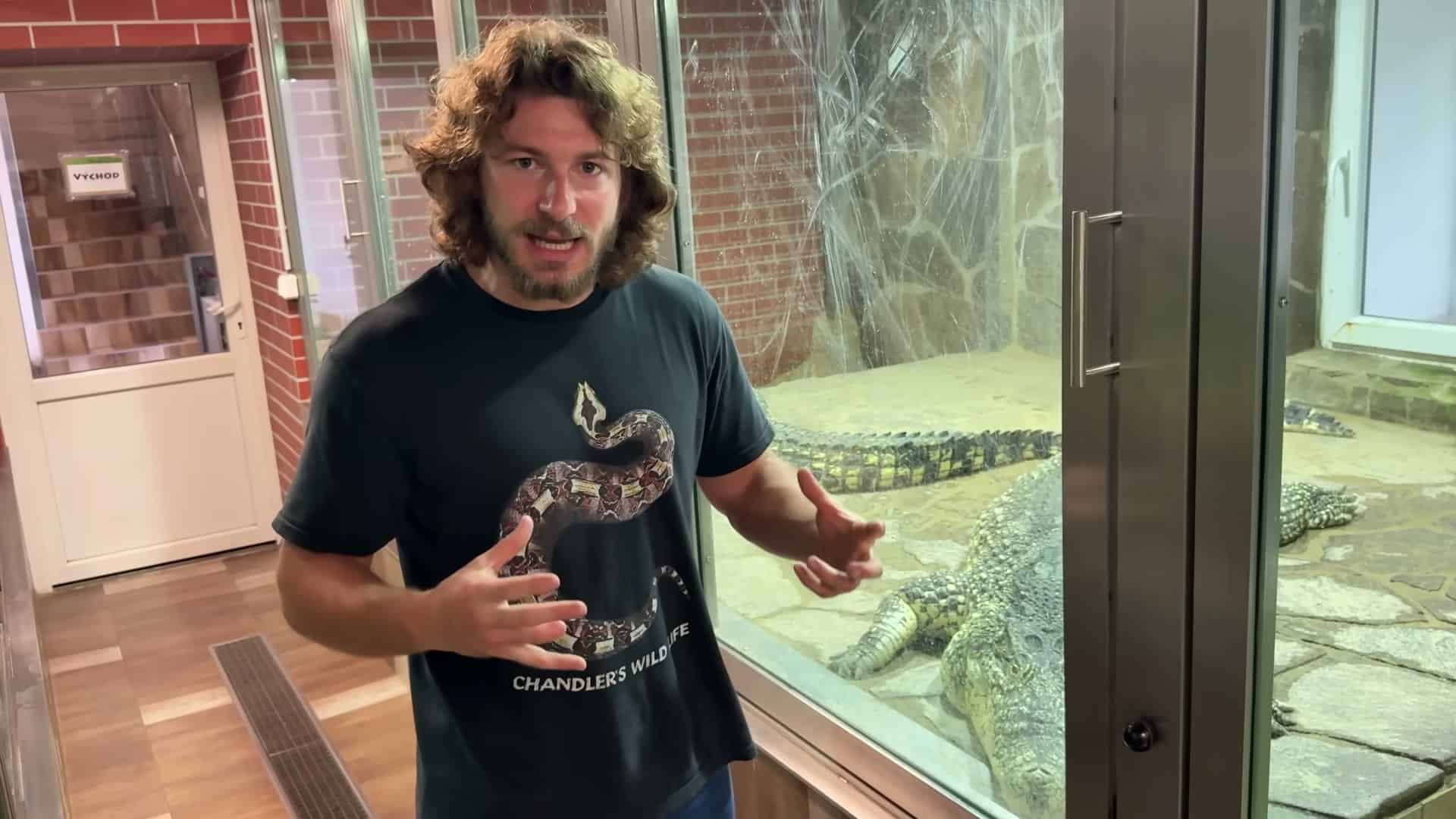
Chandler Kamenesh of Chandler’s Wild Life, a wildly successful YouTube channel
©Chandler's Wild Life via YouTube — used under fair use – Original / License
Meet the Animals
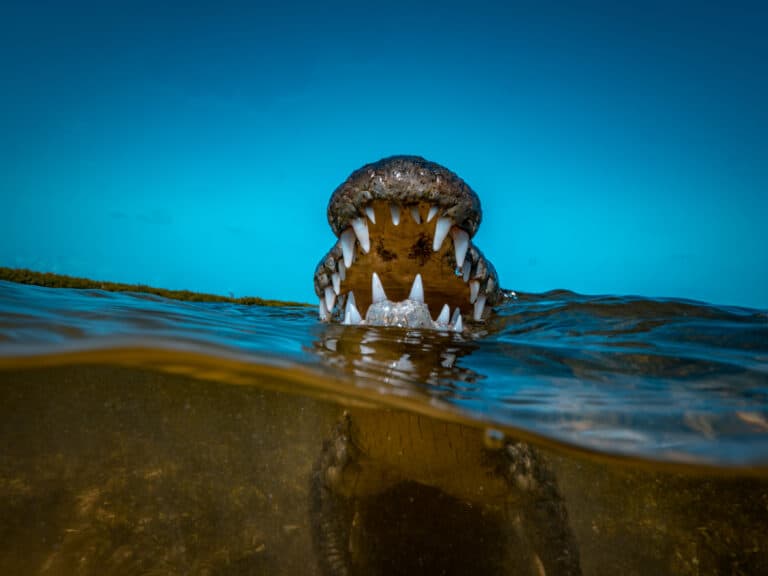
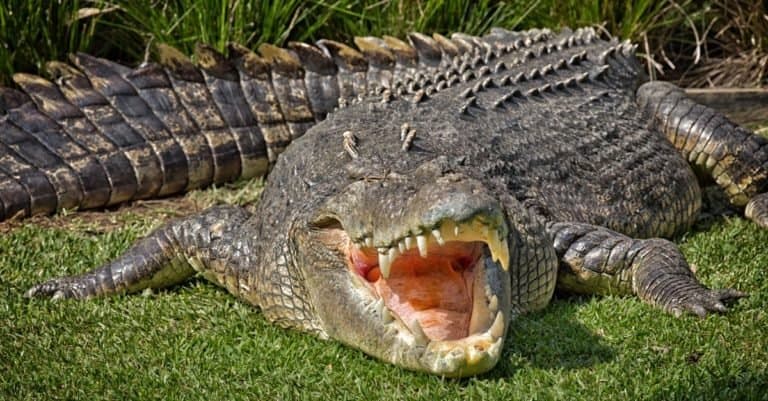
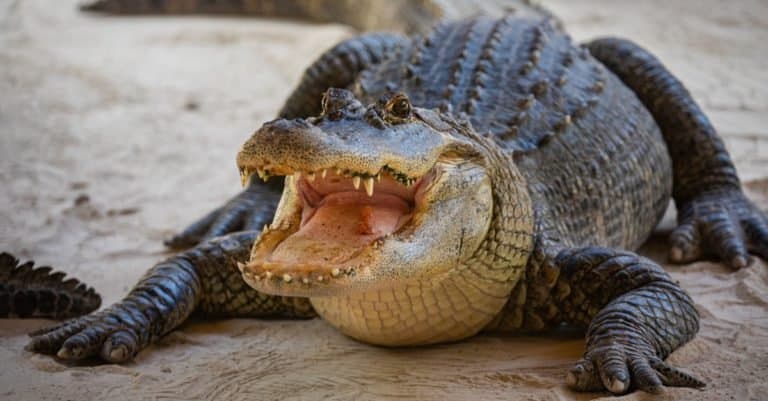
The headline animal is Gollum, a saltwater crocodile (Crocodylus porosus) estimated at around 16 feet long. “Salties” are the largest living reptile, with verified individuals exceeding 6 meters (~20 feet). The species is one of the few crocodilians with functional lingual salt glands, though its salt glands are particularly active compared to most other species, allowing it to excrete excess salt and remain at sea for extended periods. This is why salties routinely turn up on remote islands across the Indo-Pacific.
Wild saltwater crocodiles use vertical lunges as a hunting strategy, both in the wild and in captivity at feeding time. These motions are powered by their tail to ambush prey from below the waterline.
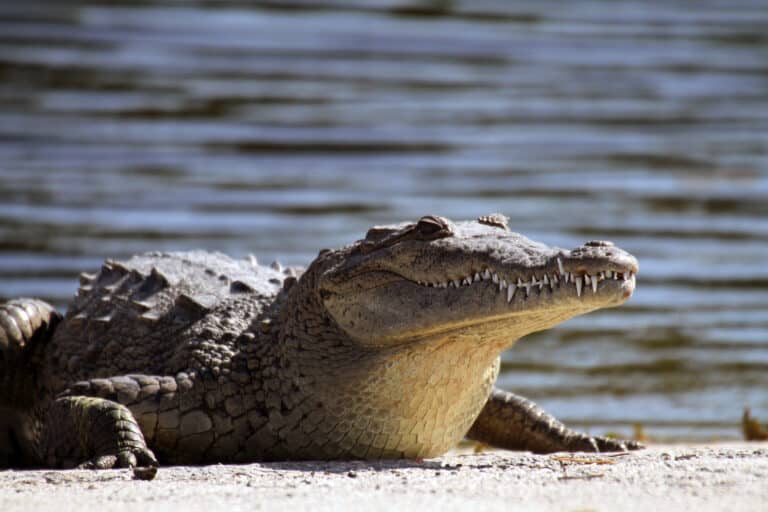
The facility in the video also houses Cuban crocodiles (Crocodylus rhombifer), one of the most range-restricted crocodilians on Earth. Wild populations are confined largely to the Zapata Swamp, and the IUCN Red List classifies the species as Critically Endangered with an estimated wild population of roughly 3,000 to 4,000 individuals. Cuban crocodiles are notable for their relatively long legs and a leaping behavior used to take arboreal prey, behaviors observed both in captivity and in the wild.
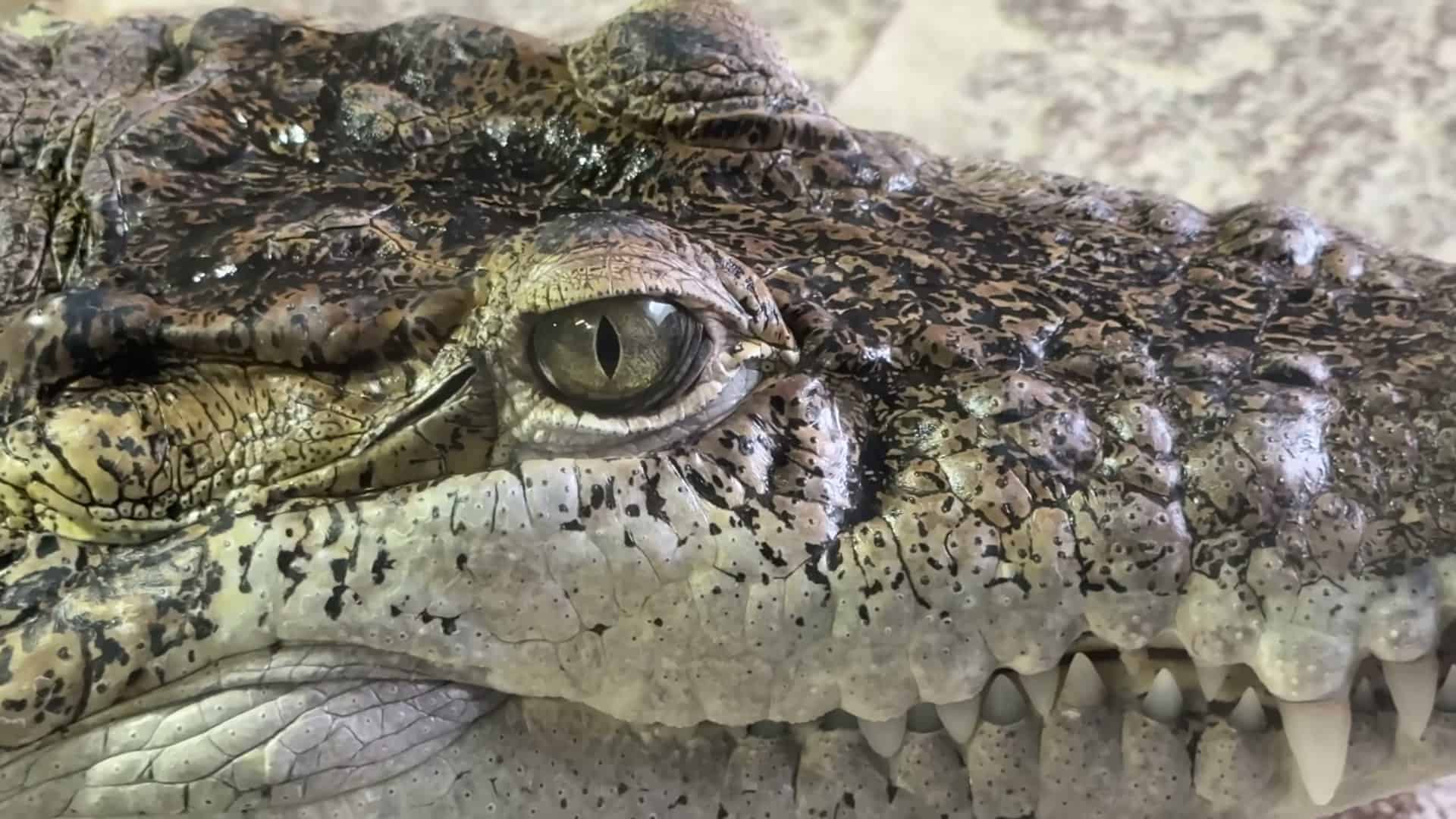
Black caimans (Melanosuchus niger), which also make an appearance, are the largest members of the family Alligatoridae, reaching lengths comparable to American alligators and occasionally larger. Stomach-content studies in the Amazon Basin have documented black caimans consuming large prey including capybara. Heavy hunting for hides through the mid-20th century severely impacted black caiman populations, though they have partially recovered in protected areas.
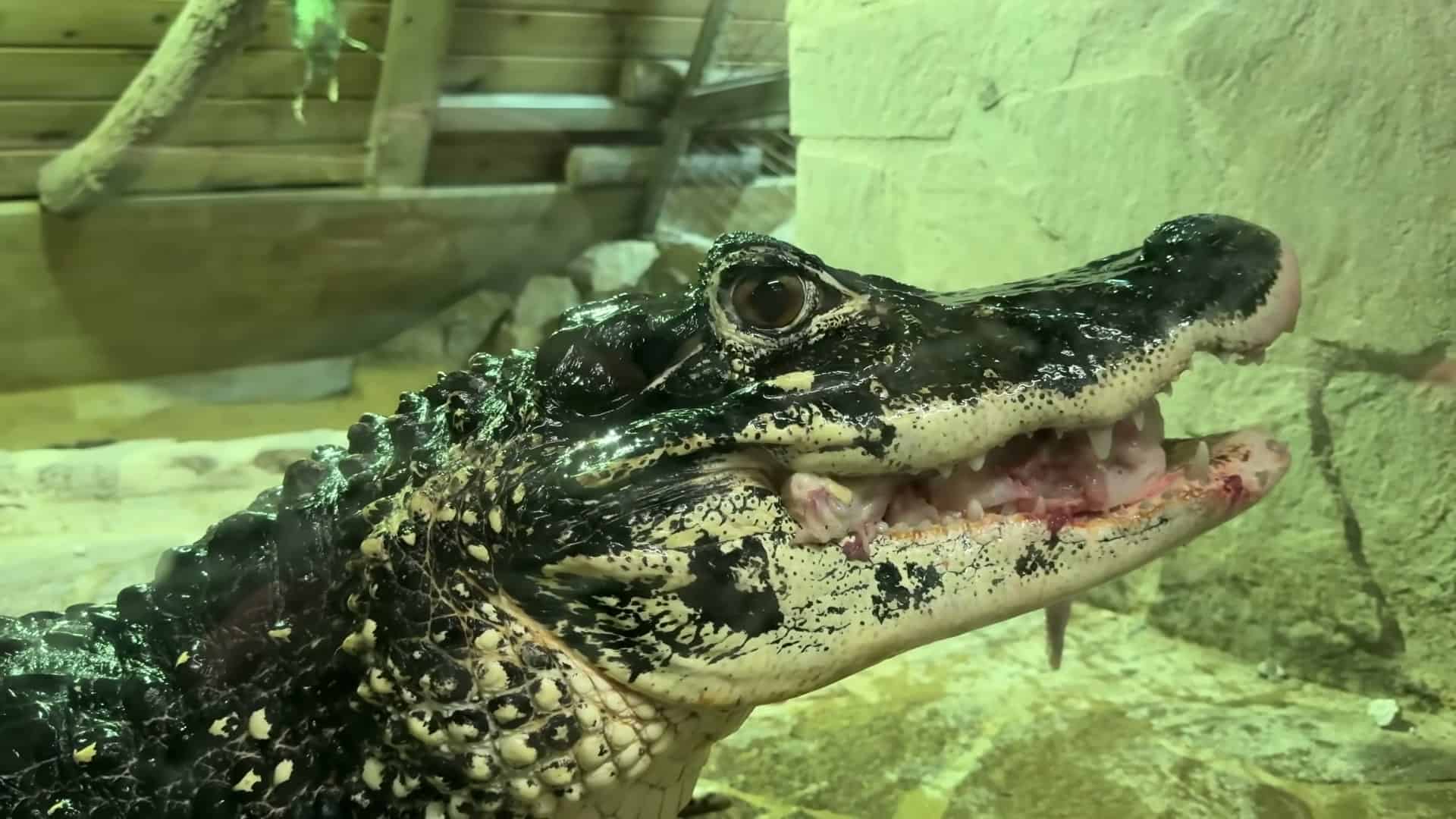
Get a close-up view of this caiman.
©Chandler's Wild Life via YouTube — used under fair use – Original / License
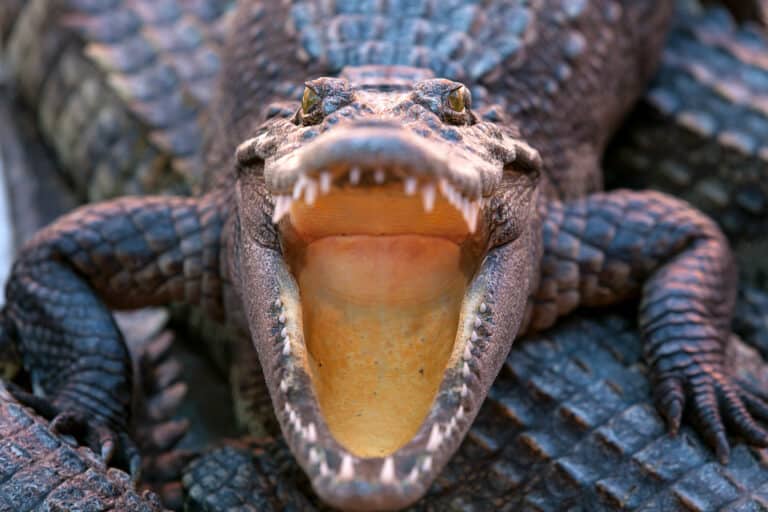
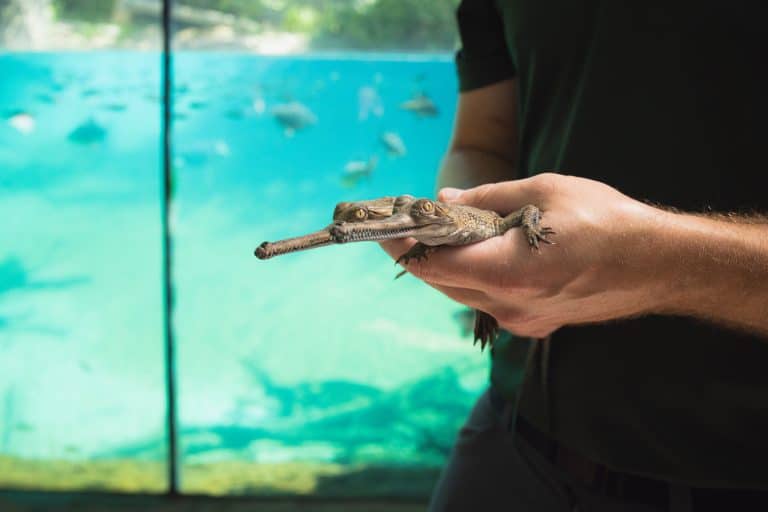
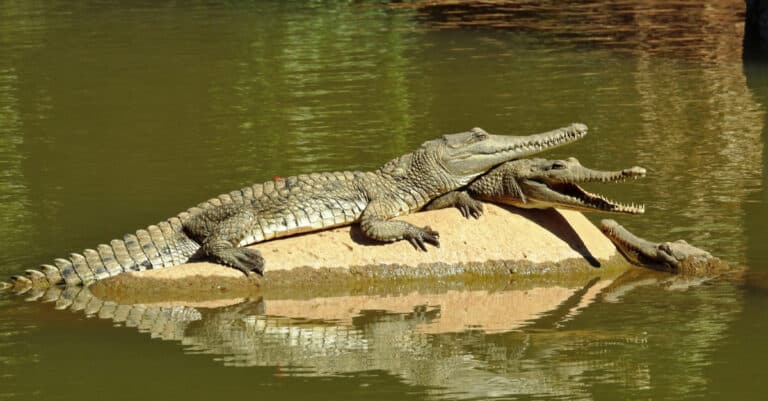
Among the most biologically interesting animals on the tour are the false gharials (Tomistoma schlegelii). Despite the slender snout typically associated with fish specialists, dietary studies and field observations in Borneo confirm that adult tomistomas take large mammalian prey, including proboscis monkeys and, in rare cases, orangutans. Genetic work in the 2000s reclassified Tomistoma as more closely related to true gharials than to true crocodiles.
The true gharial (Gavialis gangeticus) housed at the facility is the only confirmed surviving member of its lineage. Critically Endangered, with the wild population estimated at fewer than 1,000 mature adults concentrated in a handful of Indian river systems, the species is distinguished by the bulbous narial growth, the ghara, that develops on mature males. This feature modifies vocalizations and produces the buzzing hiss used in courtship displays.
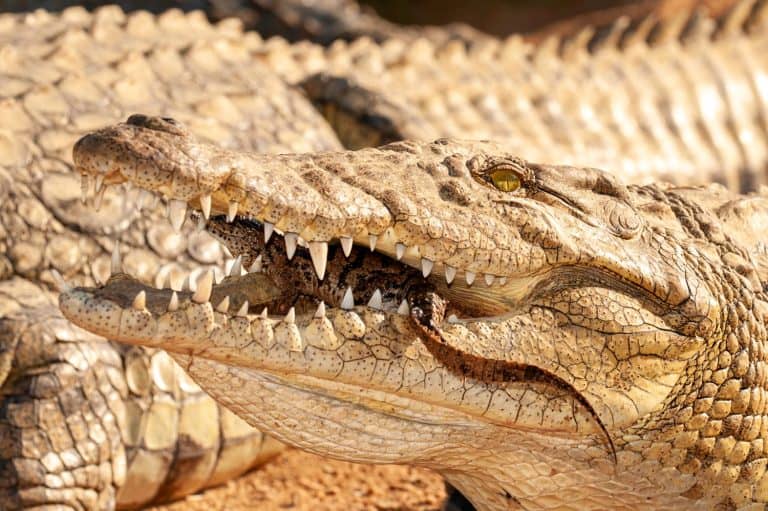
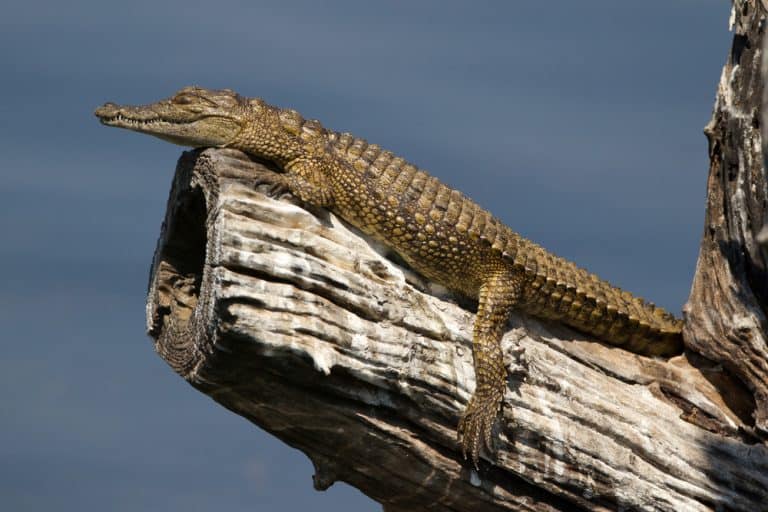
The pied and leucistic Nile crocodile (Crocodylus niloticus) residents show a rarely seen phenomenon. Leucism is a partial loss of pigmentation that, unlike albinism, does not affect the eyes. Wild leucistic crocodilians almost never reach adulthood because the pale coloration removes their camouflage, leaving juveniles highly visible to predators and to their own prey. Captive breeding is essentially the only way adult leucistic crocodiles can be studied.
While this private tour is fascinating, it also shines a light on the more serious topic of these creatures’ conservation needs. The IUCN Crocodile Specialist Group lists Cuban crocodiles, gharials, and false gharials as priorities for ex situ breeding programs, meaning breeding them in protected captive spaces to help populations recover. European facilities have contributed founder animals and husbandry data to range-country recovery efforts. Facilities like Protivin are open to the public but also play an important conservation role. They help protect rare animals by maintaining healthy breeding populations, especially as those animals lose more of their natural habitat.