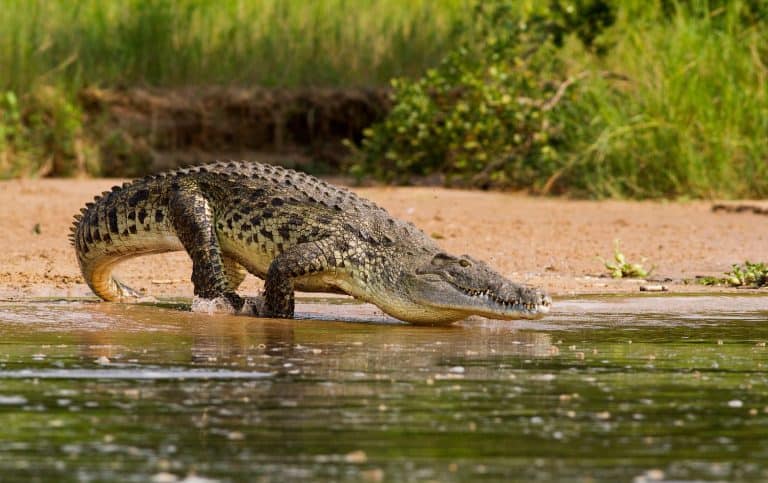

Caimans are among the largest reptiles in the world. They are often considered some of the closest living relatives to the ancient reptiles that lived during the age of dinosaurs. Modern caimans live in Central America, South America, Florida, the Caribbean, and Mexico. Most caiman species are relatively small, but one species, the black caiman, can grow even larger than American alligators. Learn about the largest caimans and how they compare to other giant reptiles. Then, discover the largest caiman ever recorded.
The Largest Caiman Species in the World Today
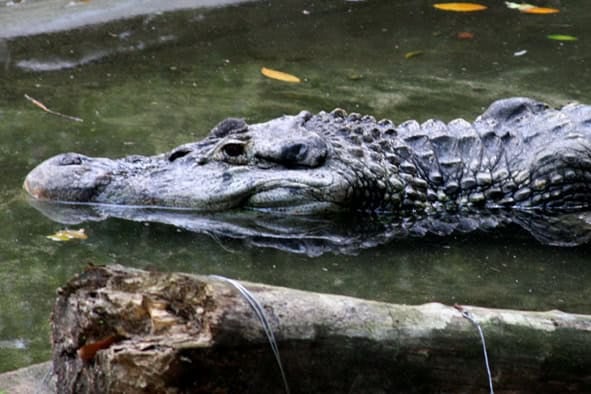
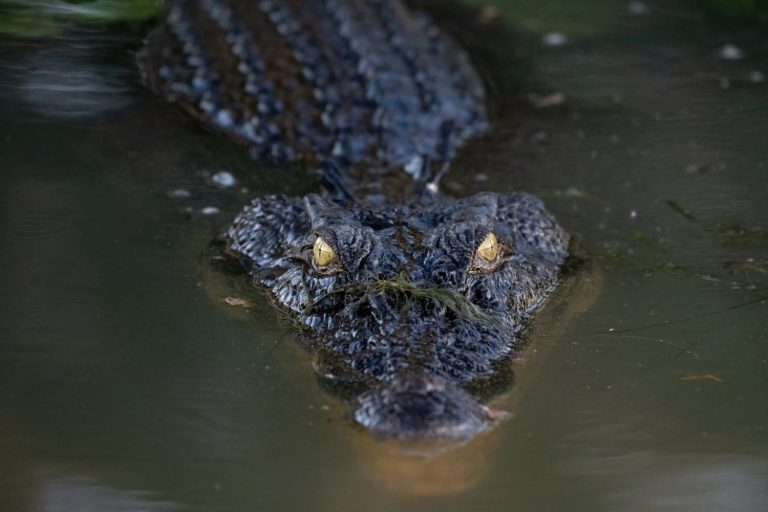
Black caimans average between 13 and 16 feet in length.
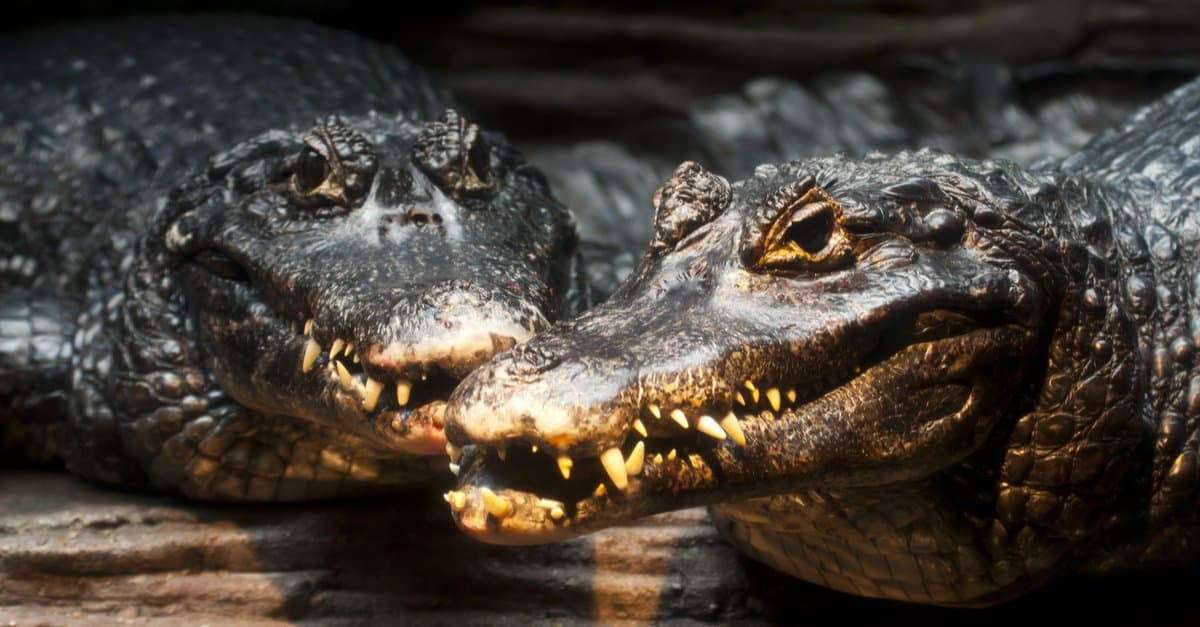
Caimans are members of the order Crocodilia, which contains the families Gavialidae, Crocodylidae, and Alligatoridae. Caimans belong to the family Alligatoridae and are classified in the subfamily Caimaninae. There are six species in this subfamily, but most are relatively small, reaching only about 8 feet in length and weighing up to 88 pounds. However, the largest caiman species on Earth today, the black caiman (Melanosuchus niger), is actually the largest member of the Alligatoridae family.
Black caimans average between 13 and 16 feet long and weigh around 770 pounds, although some larger males can weigh more. Various sources state that black caimans can reach 20 feet or even longer. While a black caiman of this length is theoretically possible, there have been no official reports of caimans that size.
More About Black Caimans
Black caimans can be found in northern and central South America, particularly in the Amazon River Basin in Brazil, Bolivia, Guyana, Colombia, and Peru. They favor slow-moving freshwater habitats, including lakes, rivers, swamps, lagoons, and wetlands. They frequently hunt in the water but may also emerge at night to hunt on land. Black caimans are opportunistic carnivores that primarily eat fish, mollusks, other caimans, and mammals such as capybaras, deer, boar, and livestock.
Black caimans range in color from charcoal grey to black. They have brown or grey banding on their lower jaws, with pale yellow or white banding on their tails and flanks. Caimans have long tails, short legs, webbed toes, and sharp claws. Like alligators, they have blunt, rounded snouts; however, caiman snouts are longer and slightly more pointed. Caimans also have longer and sharper teeth than alligators. Additionally, caimans have bony plates, or scutes, on their bellies, while alligators have smoother undersides.
Black Caimans vs. Other Crocodilians
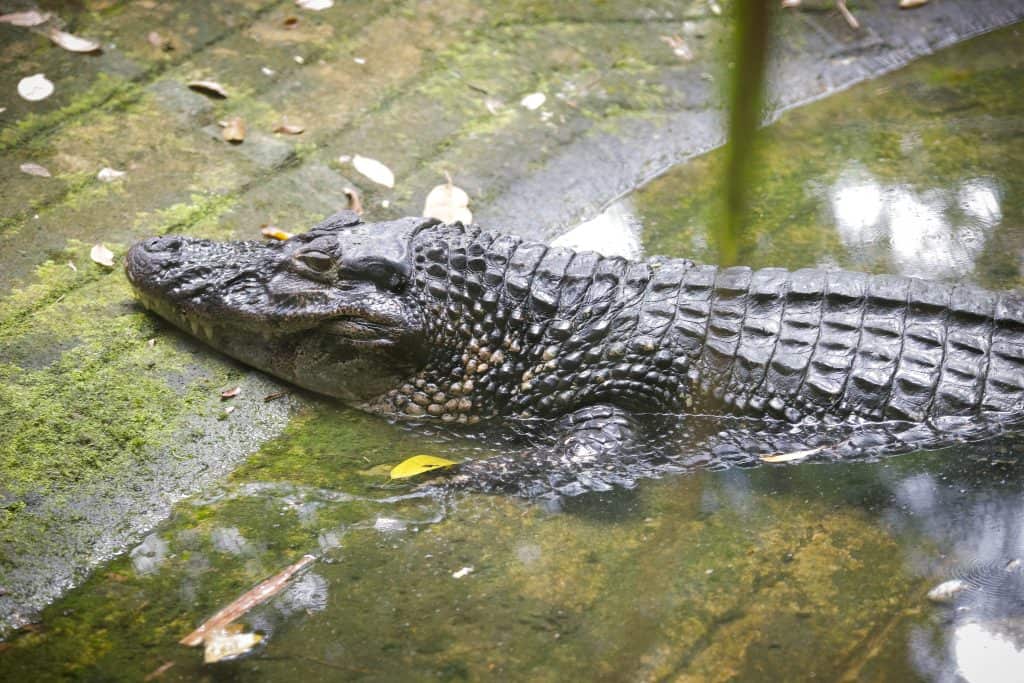
The black caiman is the largest member of the family Alligatoridae.
The largest crocodilian species is the saltwater crocodile (Crocodylus porosus). The average saltwater crocodile measures about 17 feet in length and weighs around 1,000 pounds. Naturally, the largest crocodilian ever officially recorded was a saltwater crocodile. Lolong was a saltwater crocodile captured in 2011 in Bunawan, Philippines. Lolong measured 20.3 feet and weighed 2,370 pounds. Some sources suggest saltwater crocodiles can grow up to 23 feet.
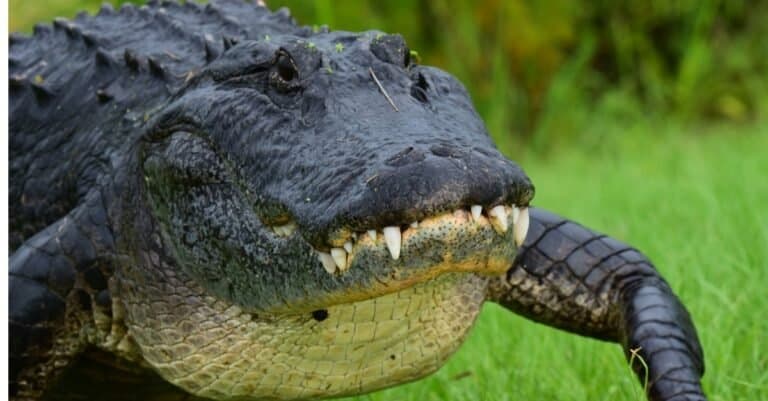
The largest alligator species is the American alligator (Alligator mississippiensis). The average alligator measures 11 feet long and weighs around 500 pounds. However, exceptionally large individuals can weigh over 1,000 pounds. The Safari Club International world-record alligator measured 15.75 feet long and weighed 1,011.5 pounds. It was captured in Alabama in 2014. So, while black caimans are typically smaller than an average saltwater crocodile, they are usually much larger than an average American alligator.
The Largest Caiman Ever Recorded
The largest caiman ever recorded was found in 2022 as part of Conservation International’s Amazonia Verde project. With the assistance of indigenous community elders, researchers conducted the first population survey of black caimans in Puerto Caimán, a system of three interconnected blackwater lakes in Colombia.
As apex predators in the ecosystem, black caimans are crucial to the health of the Amazon River Basin. They were hunted nearly to extinction for their skin, but the species is beginning to rebound thanks to community efforts. The survey counted 123 black caimans, including a massive adult caiman that reached 18.7 feet in length. To date, this is the largest black caiman ever officially recorded.
The Largest Prehistoric Caiman Ever
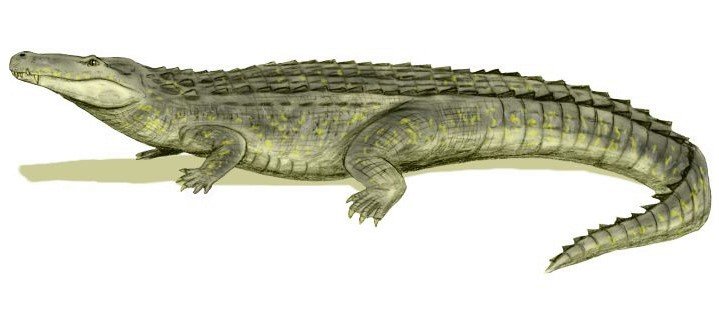
Purussaurus brasiliensis was a huge caiman that lived in South America during the Miocene epoch.
©Nobu Tamura (http://spinops.blogspot.com) / CC BY 3.0 – Original / License
Purussaurus brasiliensis is an extinct caiman species that lived during the Miocene epoch, 13 to 8 million years ago, in the northwestern part of South America. It is the largest known species of caiman to have ever lived. These prehistoric caimans are believed to have reached up to 41 feet in length and weighed an estimated 18,518 pounds.
Based on fossil records and computer modeling, scientists believe the massive bite force of Purussaurus brasiliensis could reach 69,000 Newtons. That’s more than four times the bite force of today’s most powerful crocodile, the saltwater crocodile, which has a bite force of 16,414 Newtons. Saltwater crocodiles have the strongest bite force ever recorded in a laboratory setting. The second strongest bite force is the American alligator, with a measured bite force of 13,300 Newtons.