
Quick Take
- A T-Rex would need an enormous territory, likely far larger than most modern nature reserves. Explore territory requirements →
- The biggest challenge would not be space alone, but finding enough prey to sustain such a massive predator. See why modern prey falls short →
- Modern ecosystems lack the dense populations of giant herbivores that helped support T-Rex in the Late Cretaceous.
- Despite de-extinction projects involving animals like dire wolves, bringing back a real T-Rex is currently impossible due to a lack of dinosaur DNA. See the DNA problem →
The Tyrannosaurus rex is the most famous of all of the dinosaurs, largely due to its reputation as one of history’s most fearsome predators. However, a recent Reddit post has sparked a hypothetical debate about whether it could be kept in a zoo or a nature reserve if it somehow walked the Earth today. Although it sounds like something inspired by Jurassic Park, if we assume it could somehow be safely contained, there are actually some surprising answers. Let’s examine its size and dietary needs to determine whether any place on Earth could realistically support a T-Rex.
How Much Space Would a T-Rex Need?
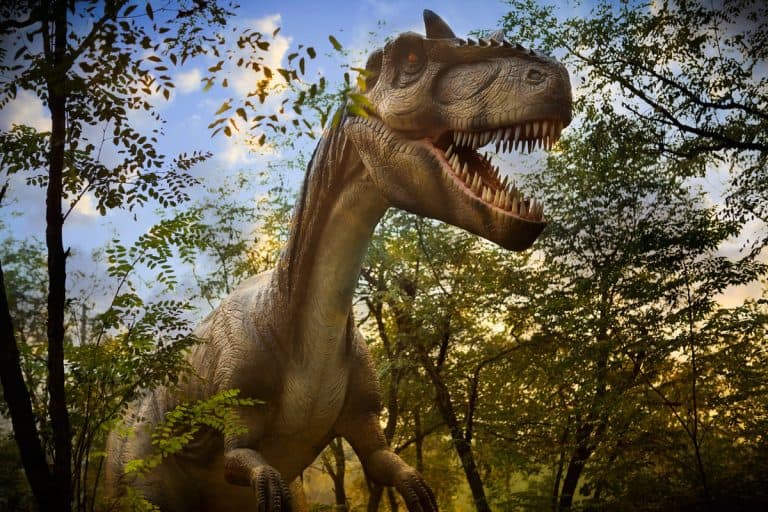
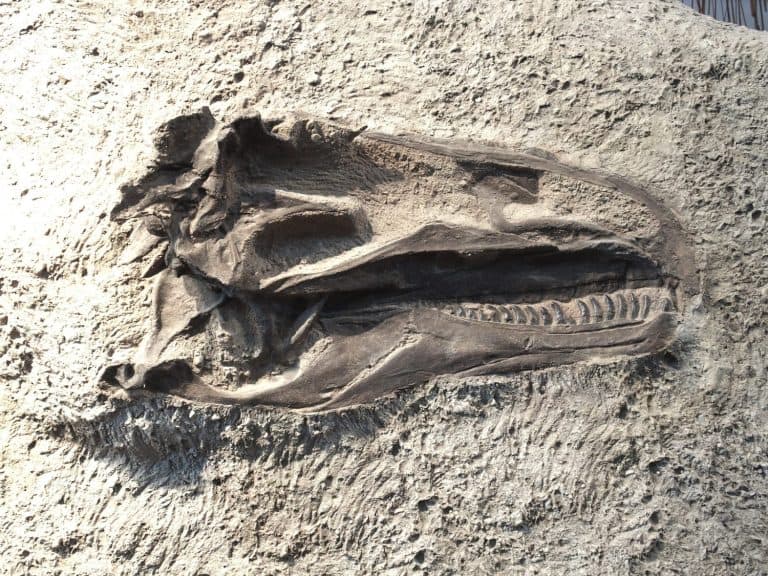
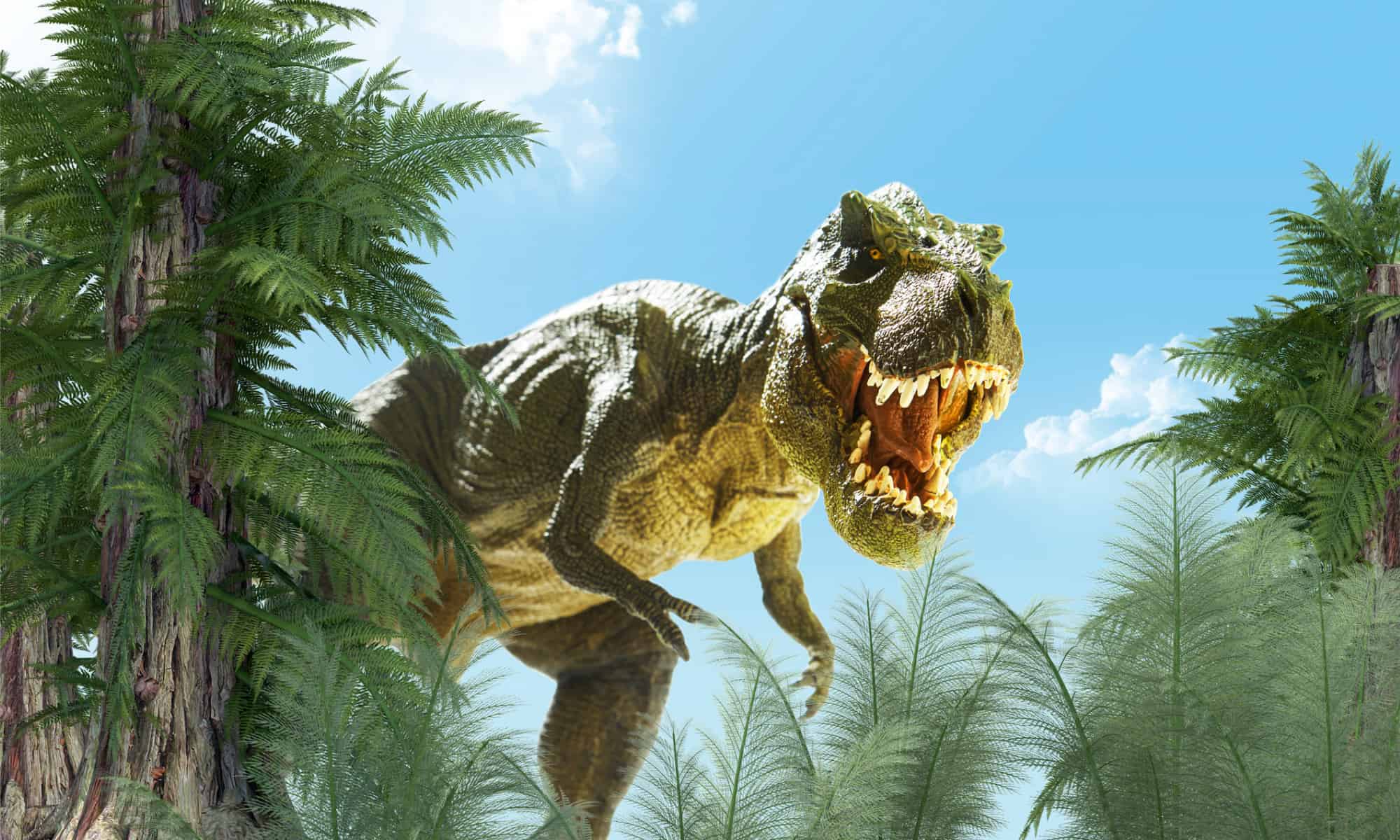
The T-Rex is one of the best-known dinosaurs ever discovered, due to its countless appearances in films. Although these portrayals sometimes exaggerate what dinosaurs were like, the T-Rex is generally shown as a huge, heavy-bodied carnivore that was bigger and stronger than anything else. An adult T-Rex was one of the largest predators to ever walk the Earth. They reached approximately 40 to 43 feet long and weighed between six and nine tons.
Given its enormous size, it’s easy to assume that a T-Rex would need a vast amount of space to live in. However, body size alone doesn’t determine the amount of land that an animal needs. This is because the size of an animal’s territory depends not only on its body size but also on how much space it needs to hunt for food. The T-Rex originally inhabited the area that now makes up the western region of North America. It’s impossible to know just how large their territories were, but we can make comparisons with other apex predators.
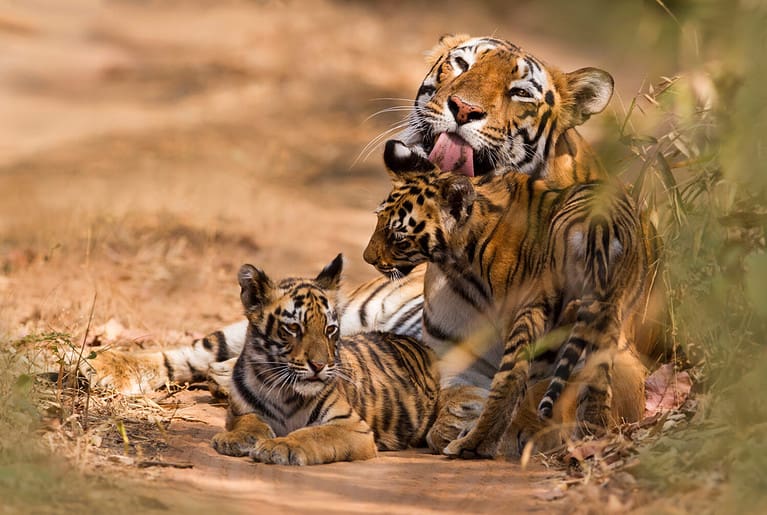
Large carnivores such as lions and tigers have vast territories because they need access to enough prey to survive. The territory of a tiger can cover as much as 200 square miles, depending on prey availability. Because T-Rexes were much larger than any predator alive today, their home range would likely need to be significantly larger as well. This means that even a relatively large reserve would not be big enough for a T-Rex to live naturally. While there are still vast wilderness regions on Earth today, such as Yellowstone National Park or areas in Siberia and Alaska, the environment would also need to be suitable. The T-Rex lived during a much warmer period, so even a large enough area today might not provide the ideal conditions for it to survive.
Feeding a T-Rex
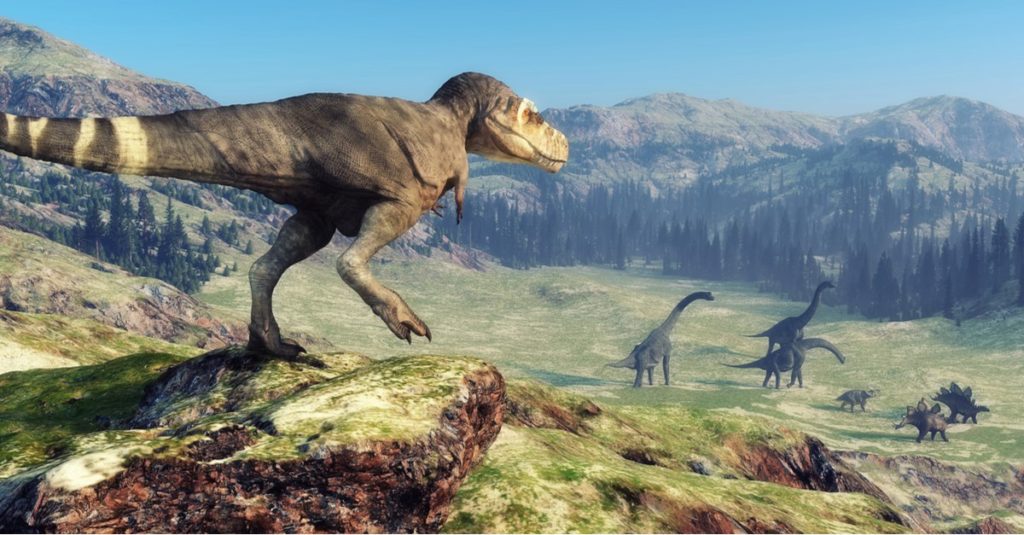
T-Rex often hunted large herbivores.
©Orla/Shutterstock.com
Even if we found a place big enough for a T-Rex, the main problem would be food. The T-Rex was likely an apex predator, preying on other large dinosaurs such as ankylosaurs, triceratops, and hadrosaurs. It may also have scavenged, but due to its large size, it would require a significant amount of food to sustain itself.
The prey that T-Rex ate were also huge dinosaurs and needed a significant amount of space themselves. Many of them were large herbivores, so they would require a large area with suitable vegetation. Although the T-Rex probably didn’t eat every day—similar to modern crocodiles and alligators—there would still need to be a sustainable population of prey animals to support it. The modern world still has large herbivores, such as elephants, rhinos, and bison. However, they don’t exist in the same abundance as the giant herbivores of the Late Cretaceous period that T-Rex preyed on. Therefore, the likelihood of there being enough prey to support a T-Rex is extremely low.
It’s also important to consider that this is just what one T-Rex requires. If there were an entire population of T-Rexes, the space and food requirements would increase dramatically.
Could We Ever Bring One Back?
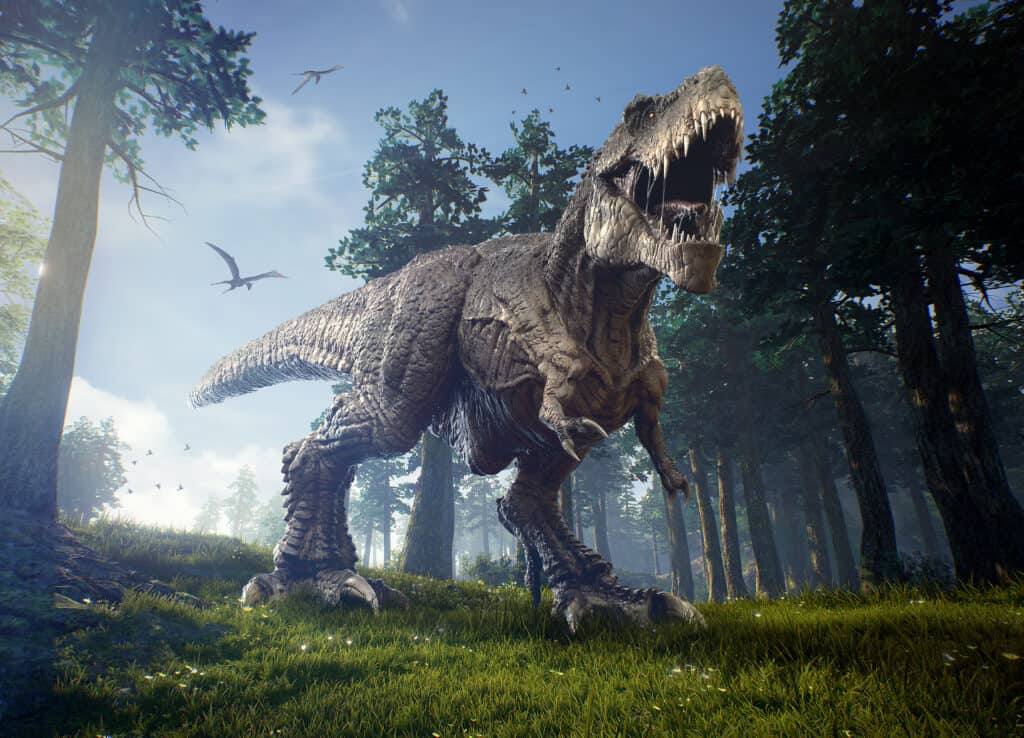
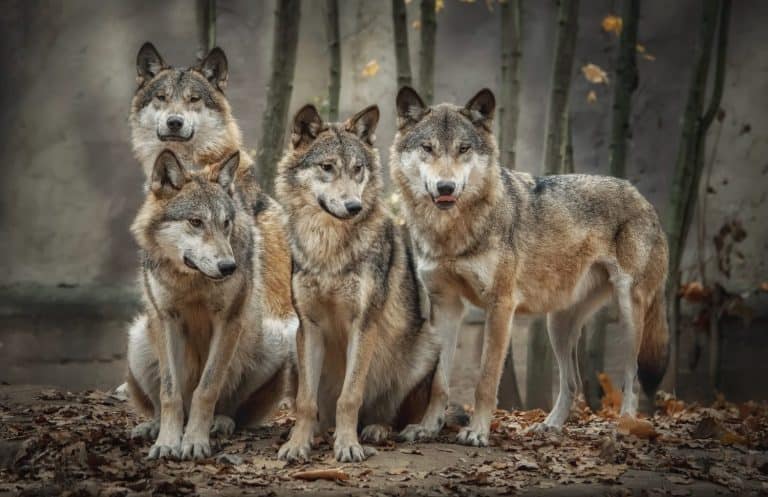
It’s not possible to bring the T-Rex back due to a lack of DNA.
©Herschel Hoffmeyer/Shutterstock.com
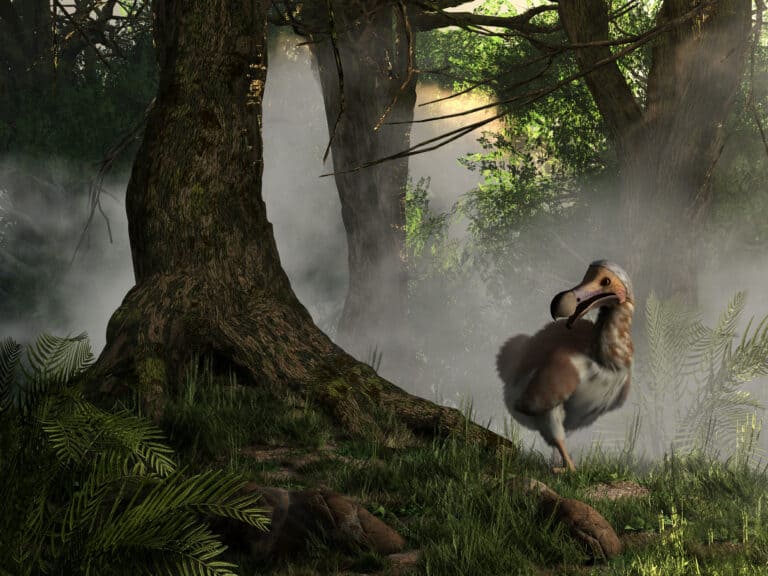
There has been a lot of discussion in recent years around de-extinction, with one of the most notable examples being the project to bring back dire wolves. However, these projects do not always result in true resurrections of extinct species. For example, in the case of dire wolves, scientists genetically modified modern gray wolves to give them traits associated with dire wolves. Other animals that have been considered for potentially bringing back to life are woolly mammoths and dodos. Given the popularity of the Jurassic Park franchise, dinosaurs often become part of the discussion. However, it is currently impossible to recreate a T-Rex due to the lack of viable DNA.
The T-Rex went extinct 66 million years ago. However, the oldest DNA discovered from an animal is mammoth DNA from around one million years ago. DNA breaks down over time, although some can survive for long periods in ideal conditions, such as in the permafrost, where mammoth DNA was preserved. No confirmed dinosaur DNA has ever been discovered because too much time has passed since they became extinct.
For now, the idea of keeping a T-Rex in a nature reserve remains entirely hypothetical. There are currently no credible projects underway to try to recreate dinosaurs, as the lack of viable DNA makes it impossible right now. Even if that changed in the future, finding enough space and food to support them would still be almost impossible challenges to overcome.