
Quick Take
- Contender holds an impressive Atlantic record, though a surprising caveat means he doesn't hold the title you'd expect. See the record caveat →
- Great whites don't wander near crowded beaches by accident. A specific prey behavior is what pulls them dangerously close to shore. Understand what draws them in →
- His satellite tag has a quirky limitation that means scientists only know a fraction of where he actually goes. See how the tag works →
- You can watch Contender's next move in real time, something tens of thousands of people are already doing. Follow Contender live →
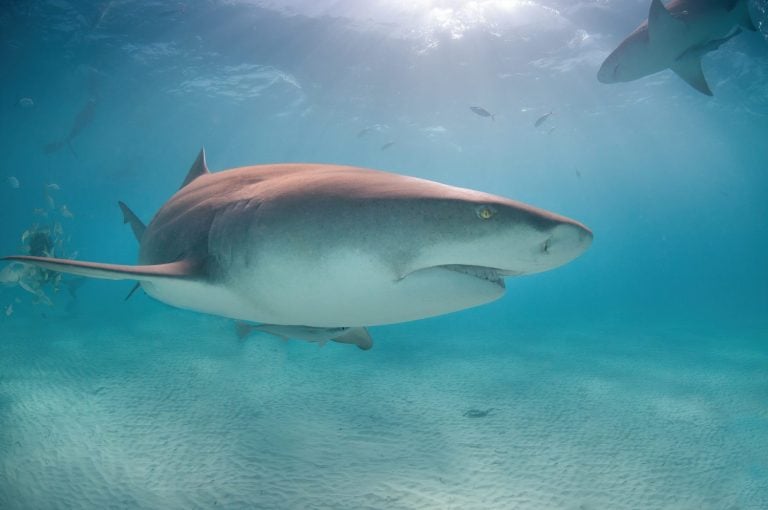
Contender isn’t just another great white shark — he is the largest male ever tagged in the western North Atlantic, weighing in at nearly 1,700 pounds. This massive predator is currently making his annual journey north. His latest satellite ping off North Carolina’s Outer Banks shows he is headed toward Cape Cod.
But how do scientists know where he’s going, what else have they learned about his behavior, and can you follow his journey in real time? Here’s what to know about one of the Atlantic’s most famous sharks.
Meet Contender, the Atlantic’s Biggest Tagged Male Great White
The largest male great white shark tagged in the Atlantic has resurfaced off the Outer Banks of North Carolina. Known as Contender, the 30-year-old shark is currently making his annual summer journey north toward Cape Cod, Massachusetts, and eastern Canada.
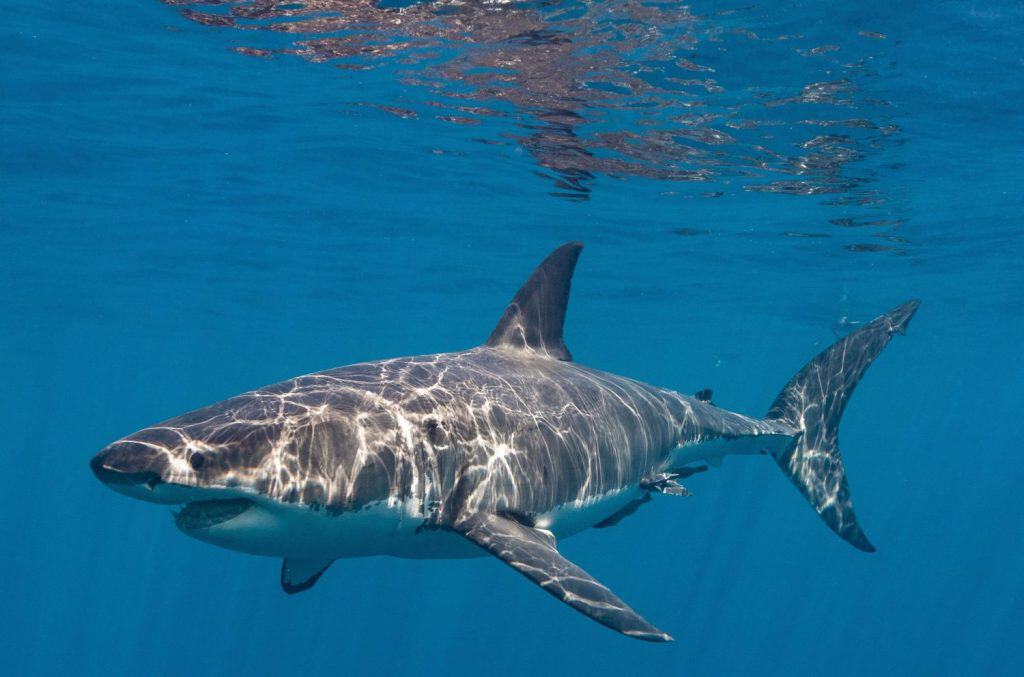
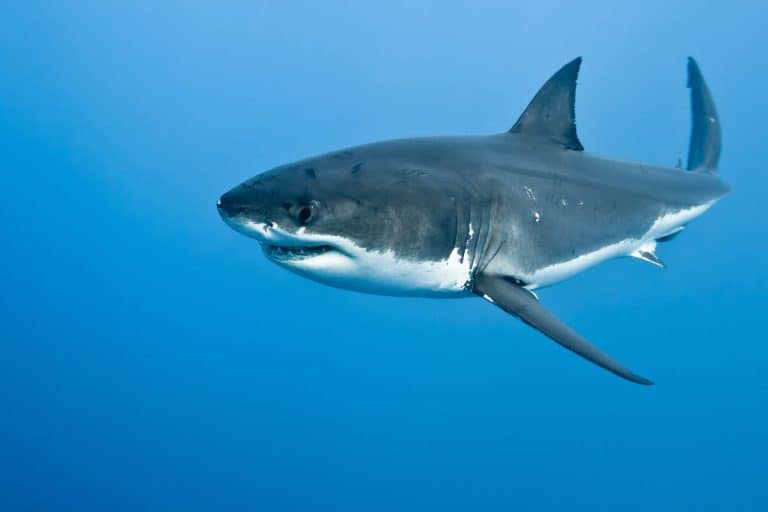
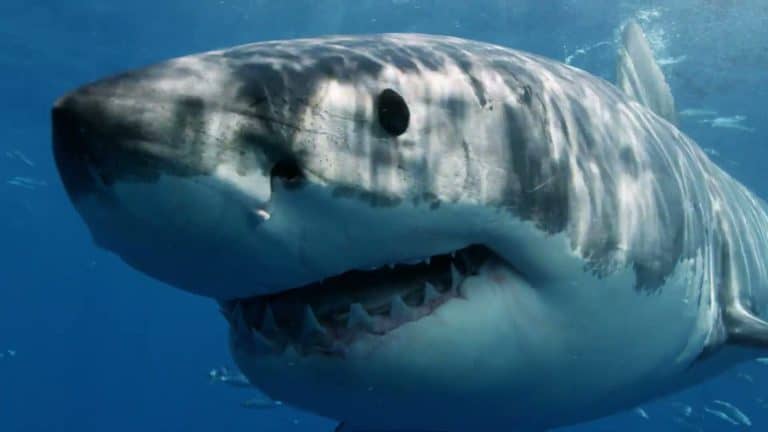
Great white sharks can weigh 4,000 to 7,000 pounds.
©Wirestock Creators/Shutterstock.com
The adult great white measures 13 feet 9 inches long and weighs about 1,653 pounds. He is one of the most closely watched great whites in the Atlantic. His satellite tag most recently transmitted a location at 4:56 p.m. on July 16, 2026. This followed earlier tracking updates on July 10 and another in April.
Researchers with OCEARCH first captured, sampled, and tagged Contender on January 17, 2025, about 45 miles off the Florida-Georgia coast. His name comes from Contender Boats, a longtime OCEARCH partner whose vessels support the organization’s research expeditions.
How Scientists Are Tracking His Journey North
Researchers track Contender using a satellite tag attached to his dorsal fin. They expect the tag will last for about five years. The tag only sends a location when his fin breaks the water’s surface long enough to connect with satellites.
Although his recent signal near the Outer Banks was too brief to provide an exact GPS location, it confirmed that he is in the area and continuing his seasonal migration north. Since being tagged in January 2025, Contender has traveled more than 7,000 miles (11,000 kilometers). This includes multiple stops near Canada’s Cape Breton Island in late October 2025, a pattern scientists expect him to repeat every year.
Why Great Whites Make This Journey Every Summer
Contender’s movements match the patterns of other great white sharks in the western North Atlantic. As ocean temperatures rise, these sharks migrate north to spend the summer and early fall around Cape Cod and Atlantic Canada before heading back south.
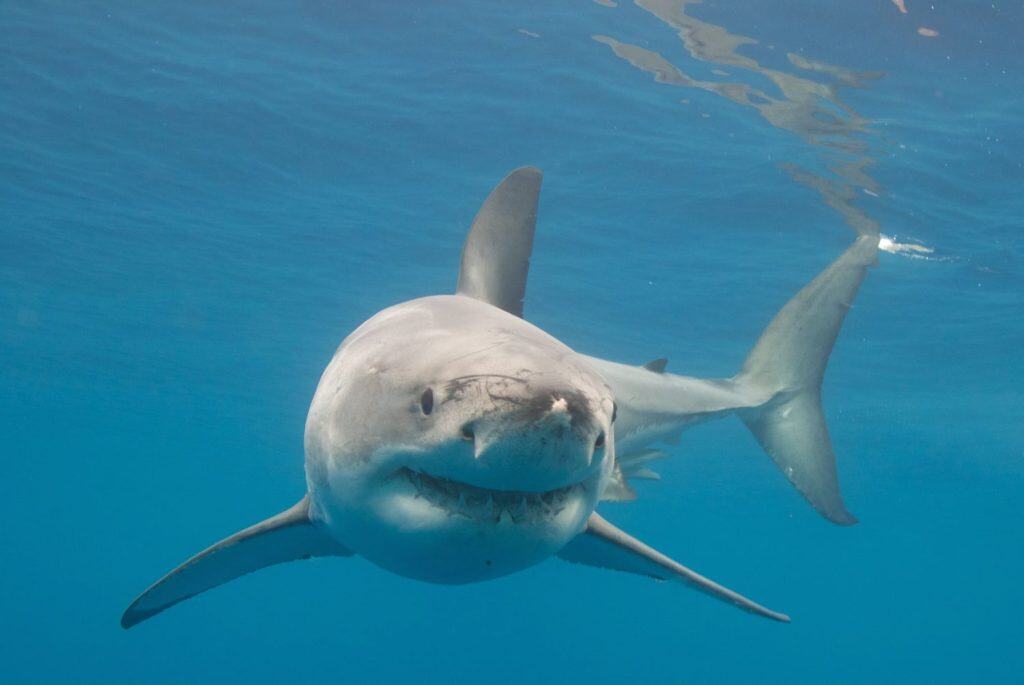
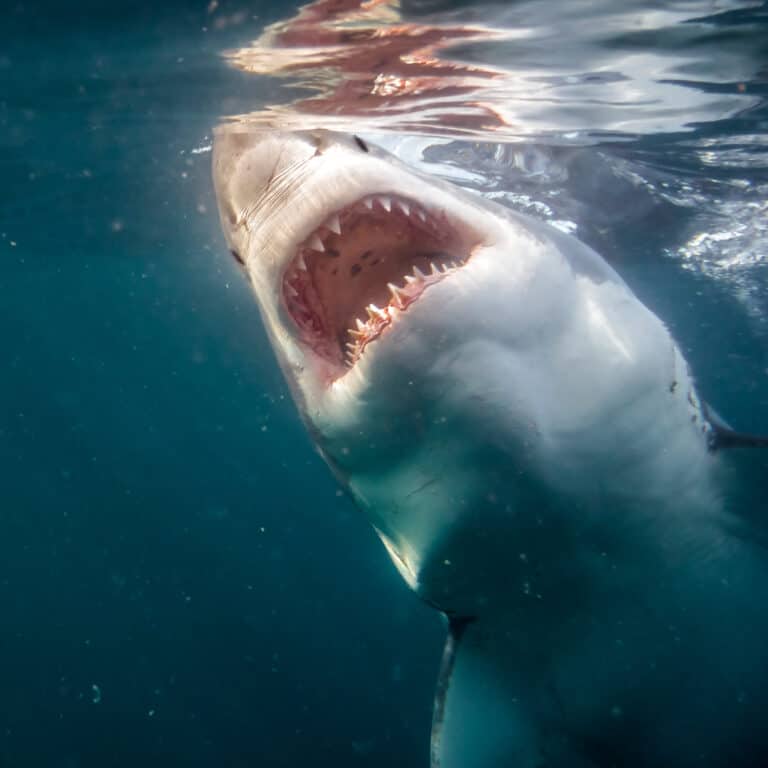
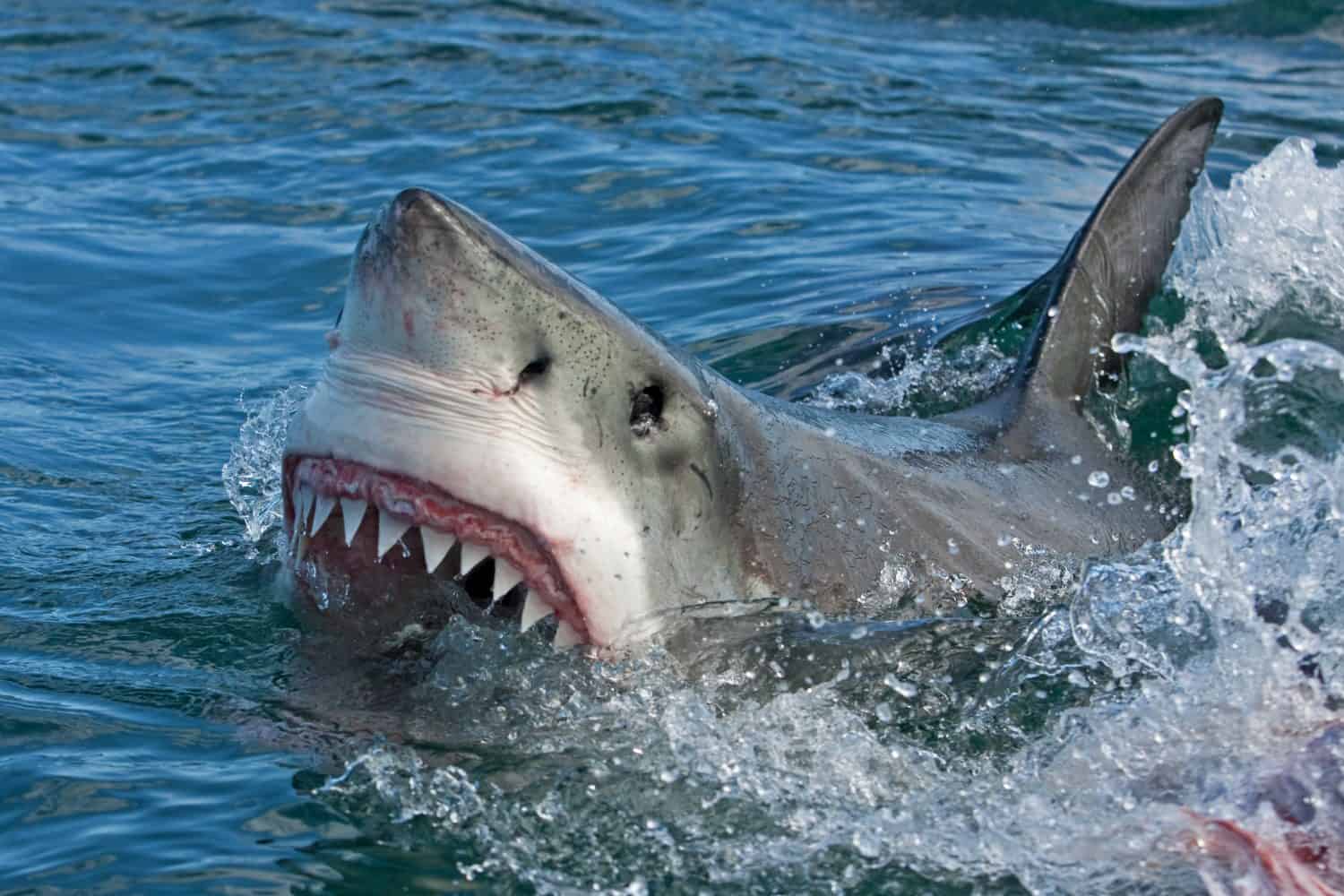
Great white sharks have 300 teeth.
©Wirestock Creators/Shutterstock.com
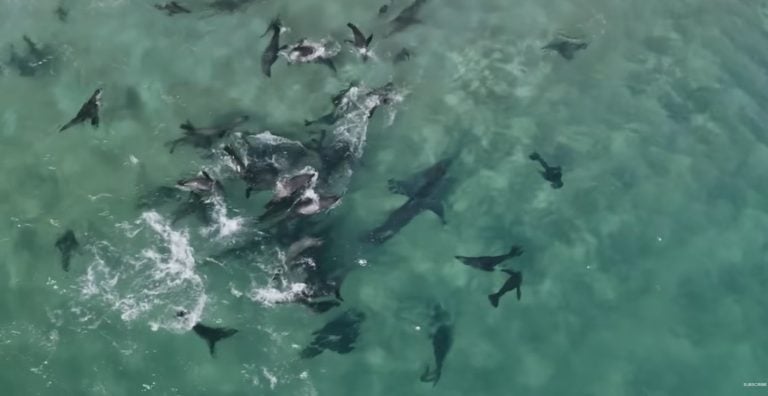
These cooler northern waters offer plenty of food, including grey seals and large schools of menhaden fish. When feeding on menhaden, great whites can travel very close to shore, including near New York’s Long Island. OCEARCH data shows that 88 percent of white sharks tagged in the southeastern United States eventually travel to Atlantic Canada, making that region a critical seasonal feeding ground.
Is Contender the Biggest Great White Ever?
Not quite. While Contender is the largest male great white ever tagged in the western North Atlantic, he is not the largest great white overall. That title generally goes to Deep Blue, a famous female shark estimated to be around 20 feet long and weigh roughly 4,500 pounds.
Should Beachgoers Be Worried?
There is no record of Contender ever harming a human. Like all great white sharks, he is an apex predator that naturally hunts marine prey like grey seals and large fish. During his only direct interaction with humans—when researchers tagged him in 2025—scientists safely collected biological samples to study shark health, reproduction, and toxin levels before releasing him.
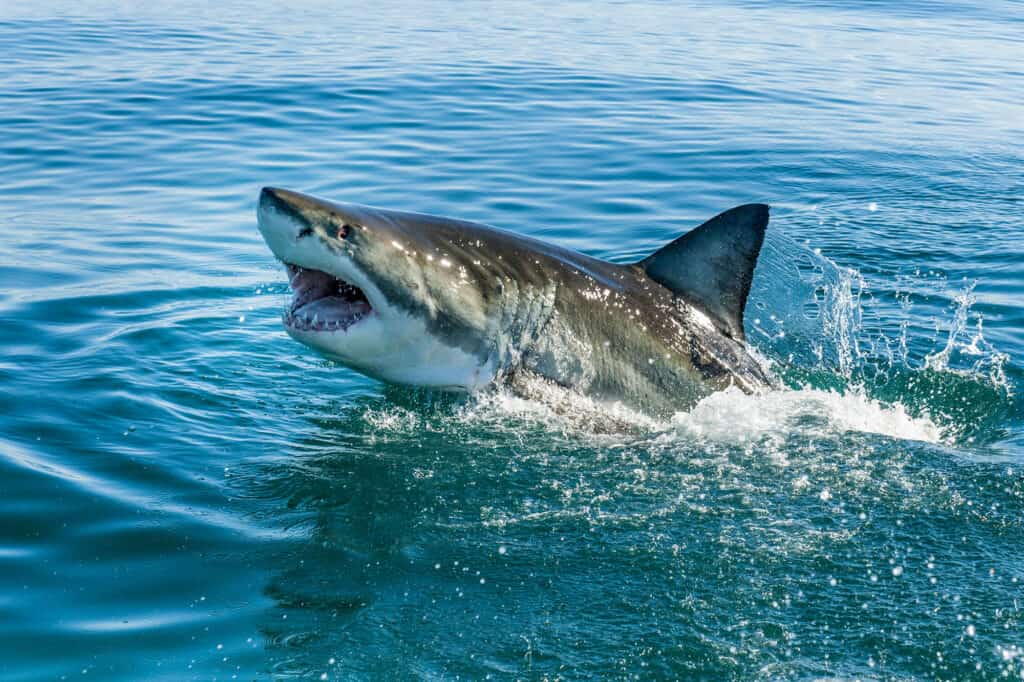
The IUCN Red List lists the great white shark as a vulnerable species.
©iStock.com/ELizabethHoffmann
Although sharks regularly migrate past popular beaches, experts emphasize that attacks remain exceptionally rare. Beachgoers should simply follow local safety advisories and avoid swimming near seals or large schools of fish.
How to Track Contender’s Next Move
Yes! You can follow Contender’s movements through OCEARCH’s Global Shark Tracker, which is already used by more than 67,000 people to track his journey.
His satellite tag will provide location data for about five years, helping researchers understand migration routes, feeding habits, and critical habitats. Combined with data from more than 100 other tagged white sharks in the western North Atlantic, every new signal helps scientists protect the species and support long-term conservation.