
Quick Take
- There are between 228 and 236 documented species of Chameleons in a range of sizes
- Chameleons are latrine animals that generally have a designated spot where they defecate.
- Chameleons do not defecate daily.
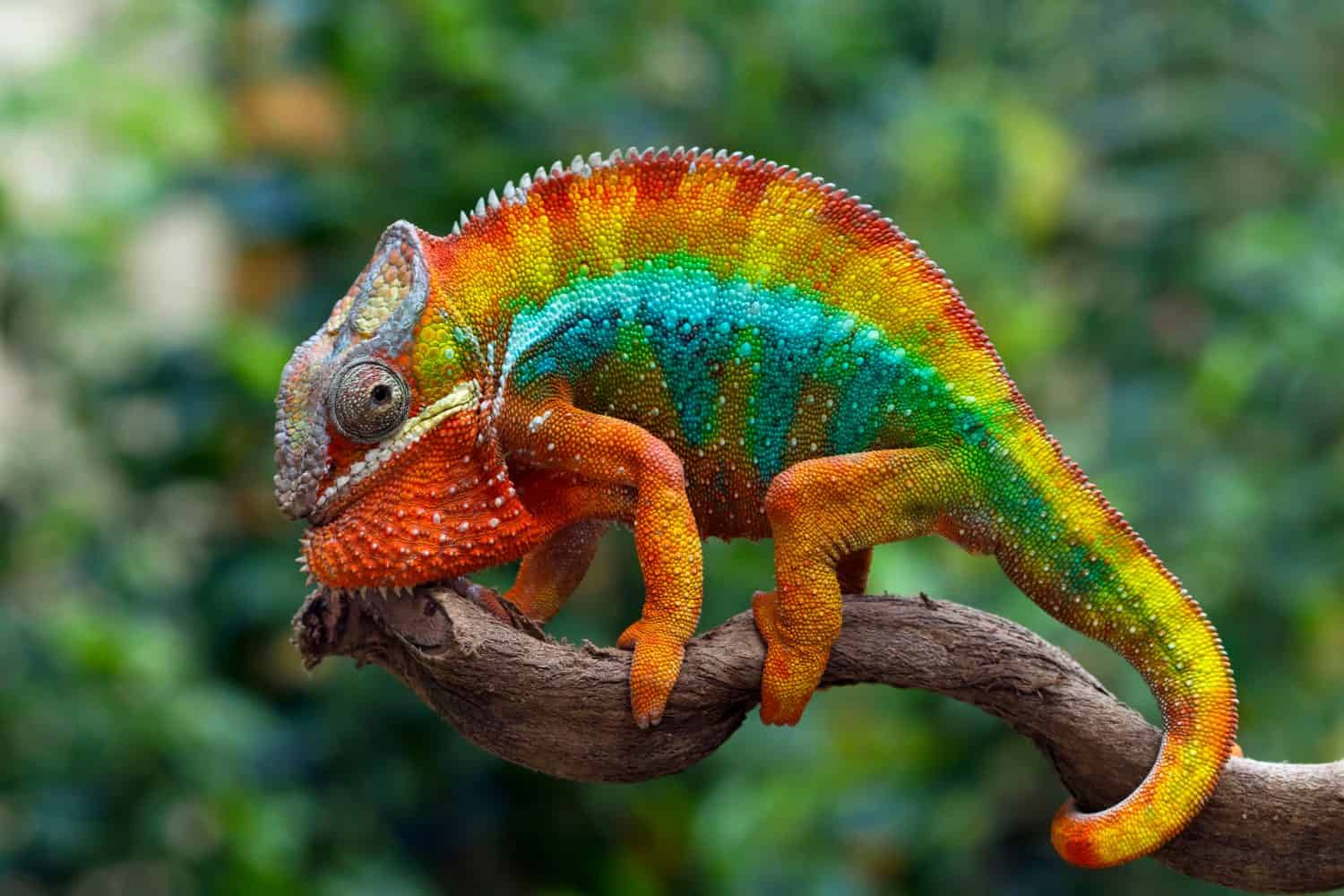
Chameleons are Old World lizards recognized for their remarkable diversity in size, habitat, and adaptation. They are distributed predominantly across Africa and Madagascar, but are also found in Southern Europe, the Middle East, and parts of South Asia, including India and Sri Lanka. Chameleons exhibit an extreme range of sizes, from species that are less than one inch to those that are 27 inches long. In the wild, a chameleon’s diet consists of insects, spiders, and other arthropods. Larger species occasionally eat small vertebrates, such as lizards, small rodents, or birds, if they can fit them in their mouths. Chameleons are considered latrine animals because they tend to consistently use the same spot to defecate. This behavior is helpful to those with captive chameleons, as it makes cleaning the enclosure easier. Continue reading to discover everything you ever wanted to know about chameleon poop.
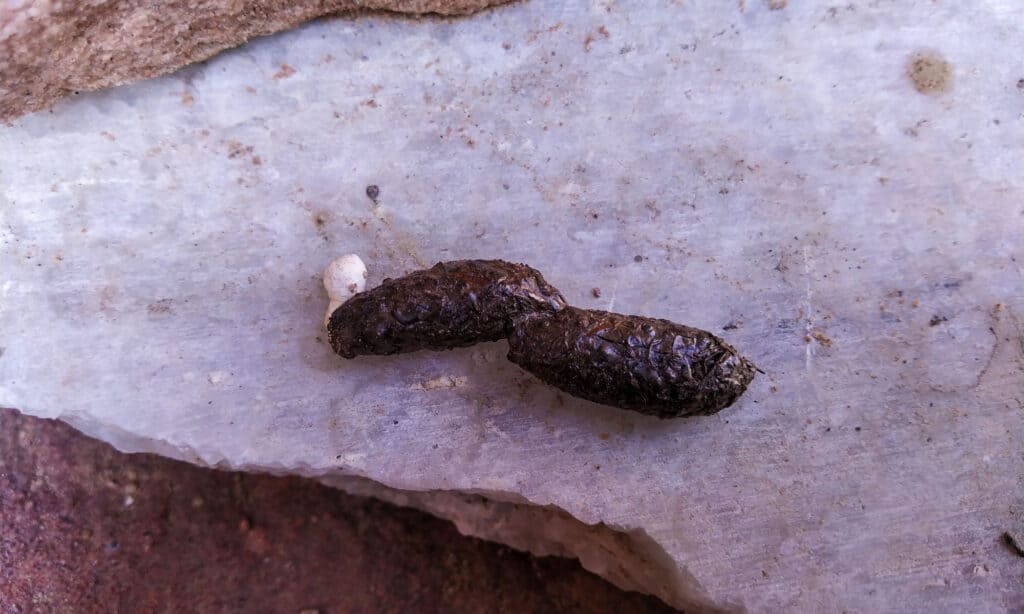
Chameleon poop is oval-shaped and should normally be soft and firm.
©Suthar Naveen P/Shutterstock.com
What Does Chameleon Poop Look Like?
Chameleons pass solid waste through a single, multipurpose opening called a cloaca (or vent). The cloaca acts as a shared outlet for feces, urine, and reproductive fluids. It is located at the base of the tail where the reproductive, digestive, and urinary tracts converge. Chameleon feces consist of a dark brown or black solid portion and a soft, white or yellowish-white part called urate, which is concentrated urine.
Although they are expelled almost simultaneously, the digestive waste (feces) is usually passed first, followed immediately by the urinary waste (urate), which appears as a white cap at the end of the feces. Chameleons excrete urate instead of liquid urine to help conserve water.
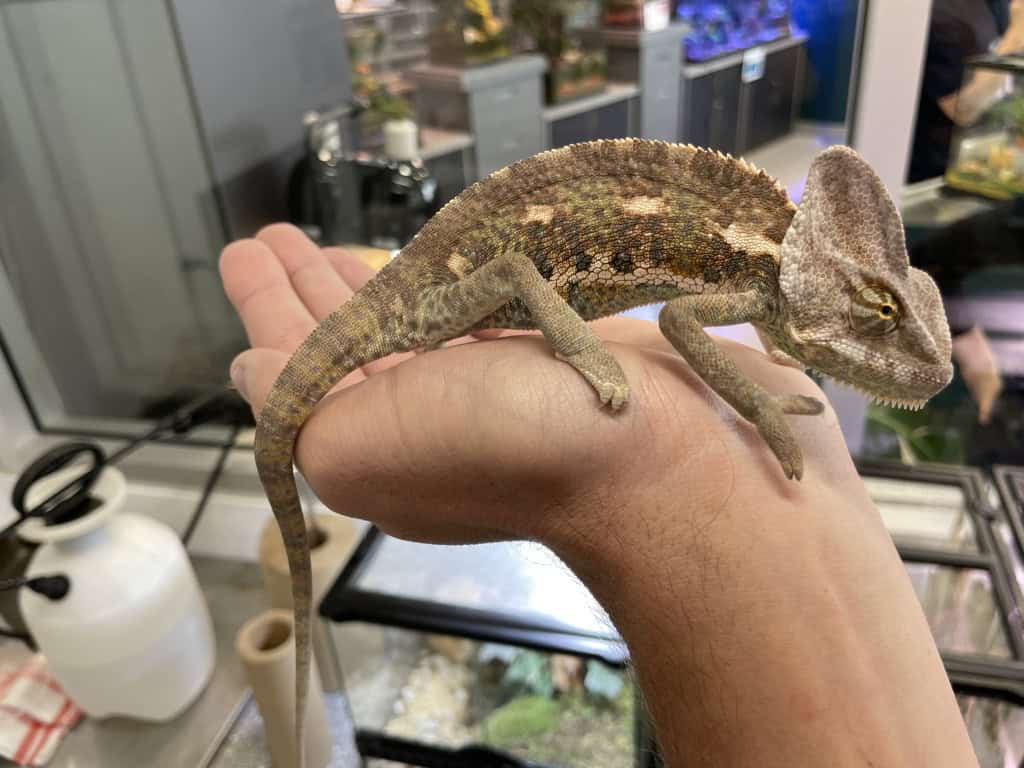
Chameleons only defecate a couple of times per week.
The size and amount of a chameleon’s solid waste vary significantly depending on the species, as well as the age and diet of the individual chameleon.
How Often Do Chameleons Poop?
How often a chameleon poops depends on the quantity, frequency, and type of food it consumes. Adult chameleons typically defecate once every few days. Baby chameleons, known as hatchlings, defecate more frequently than adults, often at least once daily, and sometimes more frequently, depending on their diet and growth rate.
Is Chameleon Poop Dangerous?
Chameleon feces can be hazardous to humans, primarily because of the risk of Salmonella bacteria transmission. Although rarely fatal, this bacterium can cause severe gastrointestinal distress.
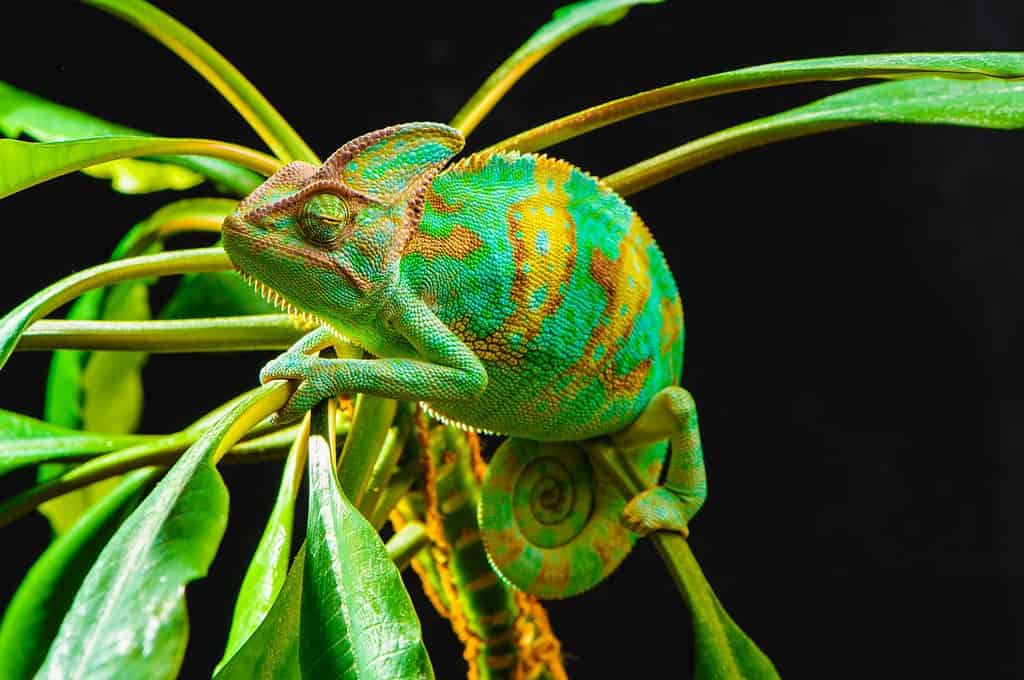
Chameleon poop should not be handled with bare hands.
©Baishev/Shutterstock.com
Chameleon waste may also contain parasites such as roundworms and tapeworms, which can cause serious health issues if ingested. Infection typically occurs via the fecal-oral route, such as touching a contaminated cage, pet, or cleaning materials and then touching the mouth or food.
Both captive and wild chameleons can carry these pathogens and parasites in their feces, so strict hygiene should be practiced when handling chameleons or cleaning their habitats.