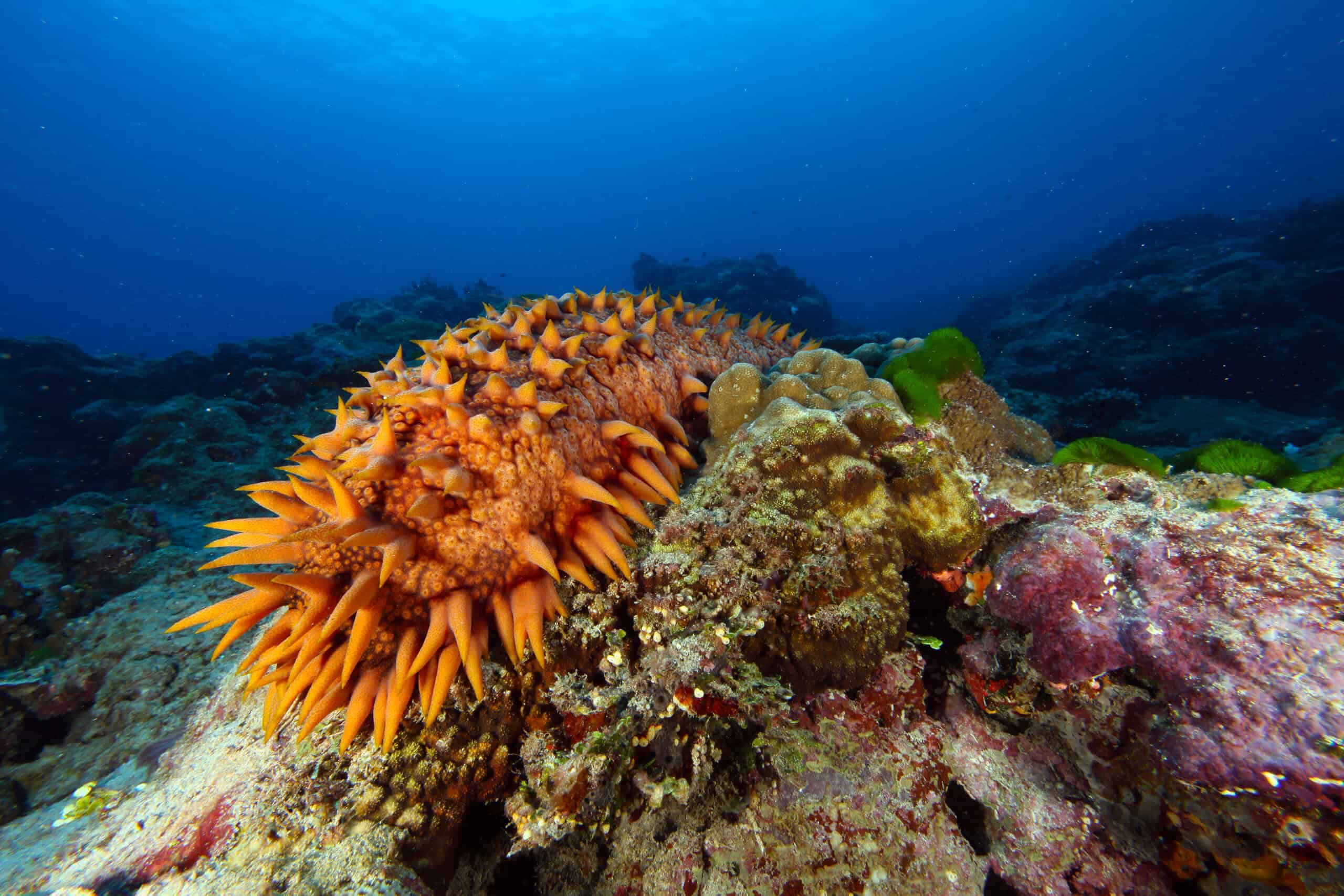

Unless you are a scuba diver or snorkeler, you’ve probably never seen a sea cucumber in the wild, let alone seen one pooping. But they do poop. And they poop with a purpose!
Read on to discover everything you never knew about one of nature’s most unexpectedly industrious creatures.
What Is a Sea Cucumber?
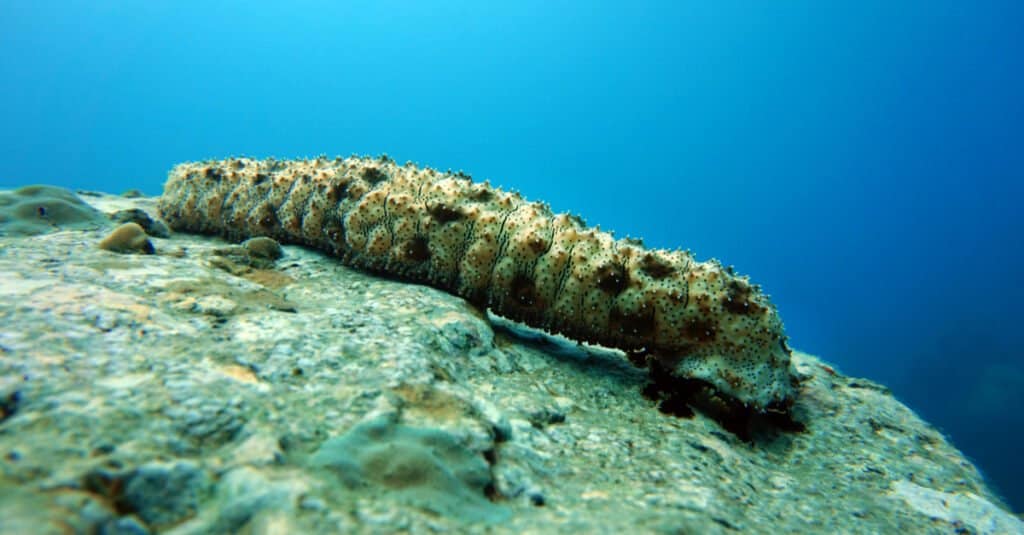
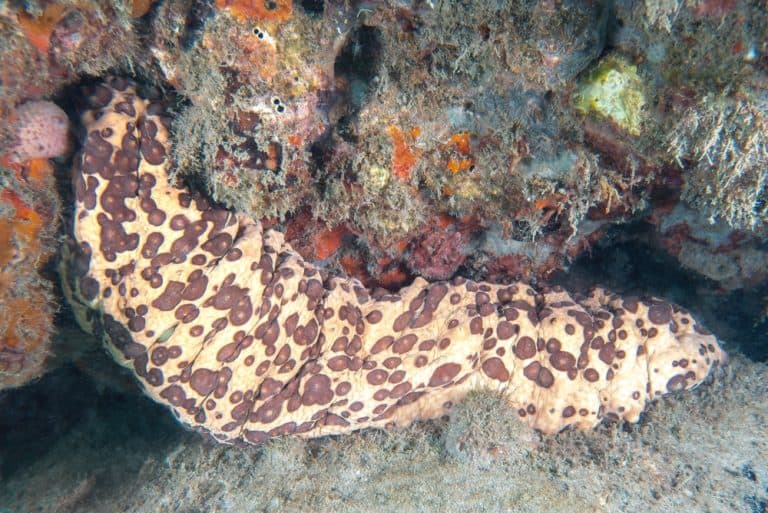
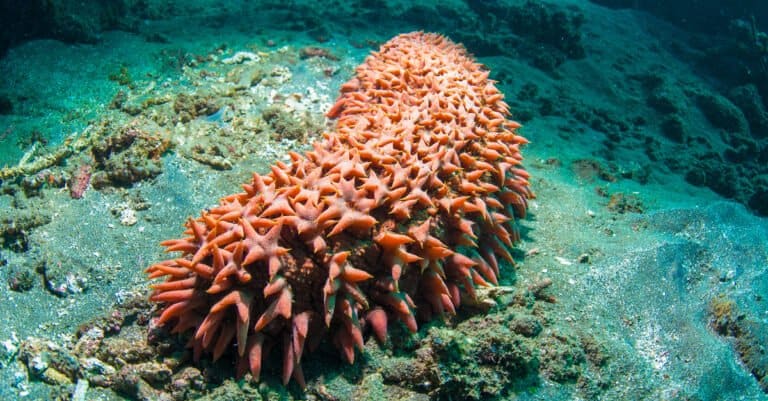
Sea cucumbers move slowly along the ocean floor thanks to rows of tentacle-like feet.
©Natalia Siiatovskaia/Shutterstock.com
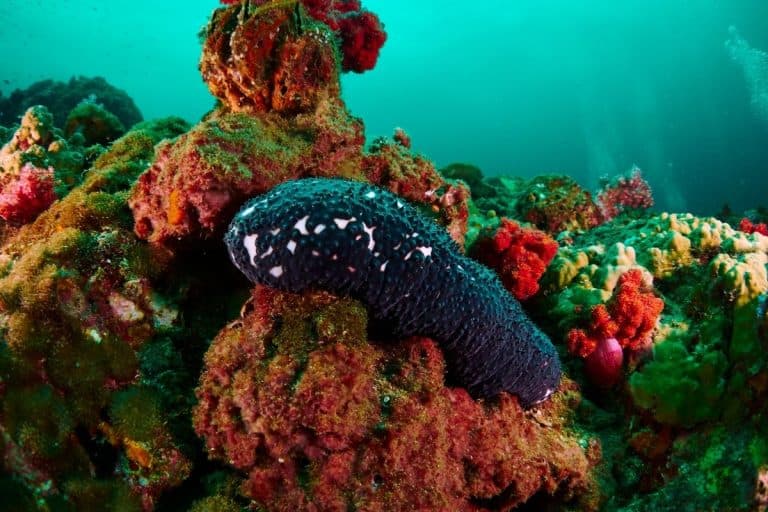
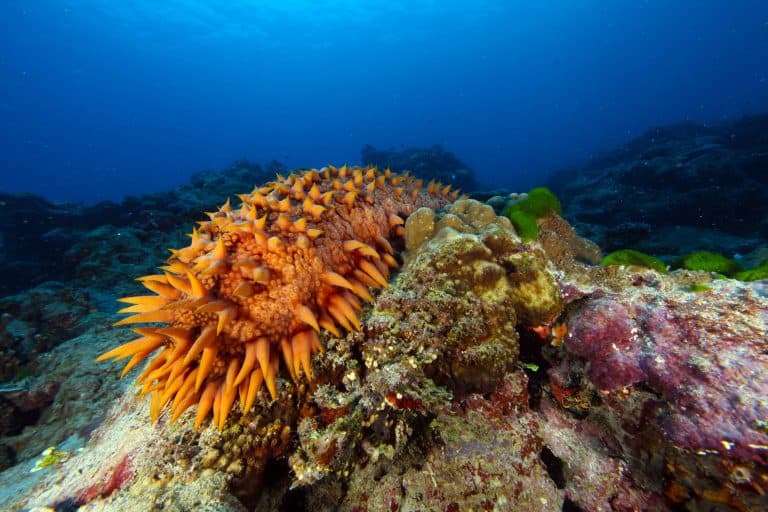
Believe it or not, sea cucumbers are close cousins to starfish, sand dollars, and sea urchins. While none of these sea critters looks very much alike, they’re all echinoderms — the scientific name for marine invertebrates. Sea cucumbers are benthic animals, meaning they spend their entire lives on the ocean floor.
As their name suggests, sea cucumbers look like, well, cucumbers. And like cucumbers, some people around the world consider these underwater dwellers edible. In certain cultures, sea cucumber is even considered a delicacy. In China, people believe sea cucumbers have medicinal properties. They also consider them a status symbol on the dinner plate.
Sea cucumbers move slowly along the ocean floor using tiny, tube-shaped feet located on their undersides and around their mouths. Although they are not fast, these feet are effective for more than just movement. Sea cucumbers use them to stir up sediment in search of food, feeding on algae, other invertebrates, and organic waste found on the ocean floor.
Where to Find Sea Cucumbers
![Scuba diver holding up a sea cucumber (Holothuroidea) [MR]](https://a-z-animals.com/media/2025/06/shutterstock-121845376-huge-licensed-scaled-1024x685.jpg)
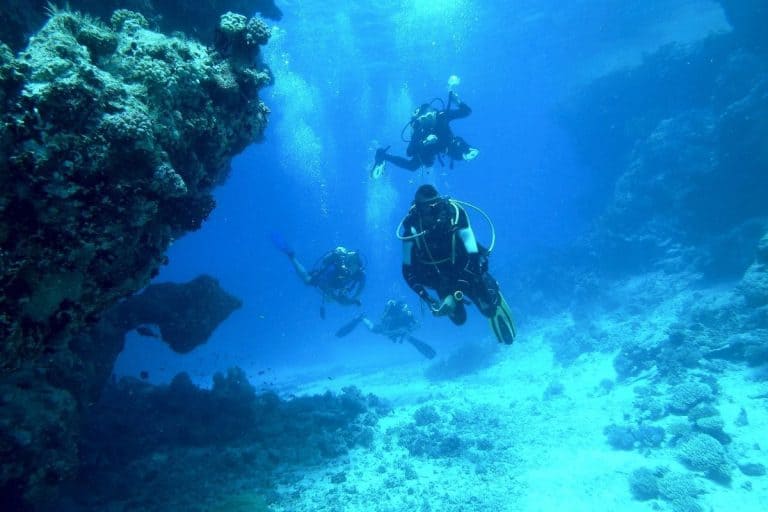
Sea cucumbers live on the ocean floor. Scuba diving is the easiest way to spot one.
©e2dan/Shutterstock.com
Sea cucumbers are found in all the world’s oceans and at all depths. From shallow coral reefs to the deepest trenches, sea cucumbers live in nearly all marine habitats. They can tolerate a wide variety of water temperatures, from tropical waters near the equator to the temperate conditions found further north. They always live on the sea floor, making them harder to spot than other marine animals like turtles or dolphins. Some species even bury themselves in sand or sediment and only emerge at night, making them even more difficult to find.
Are Sea Cucumbers Actually Pooping?
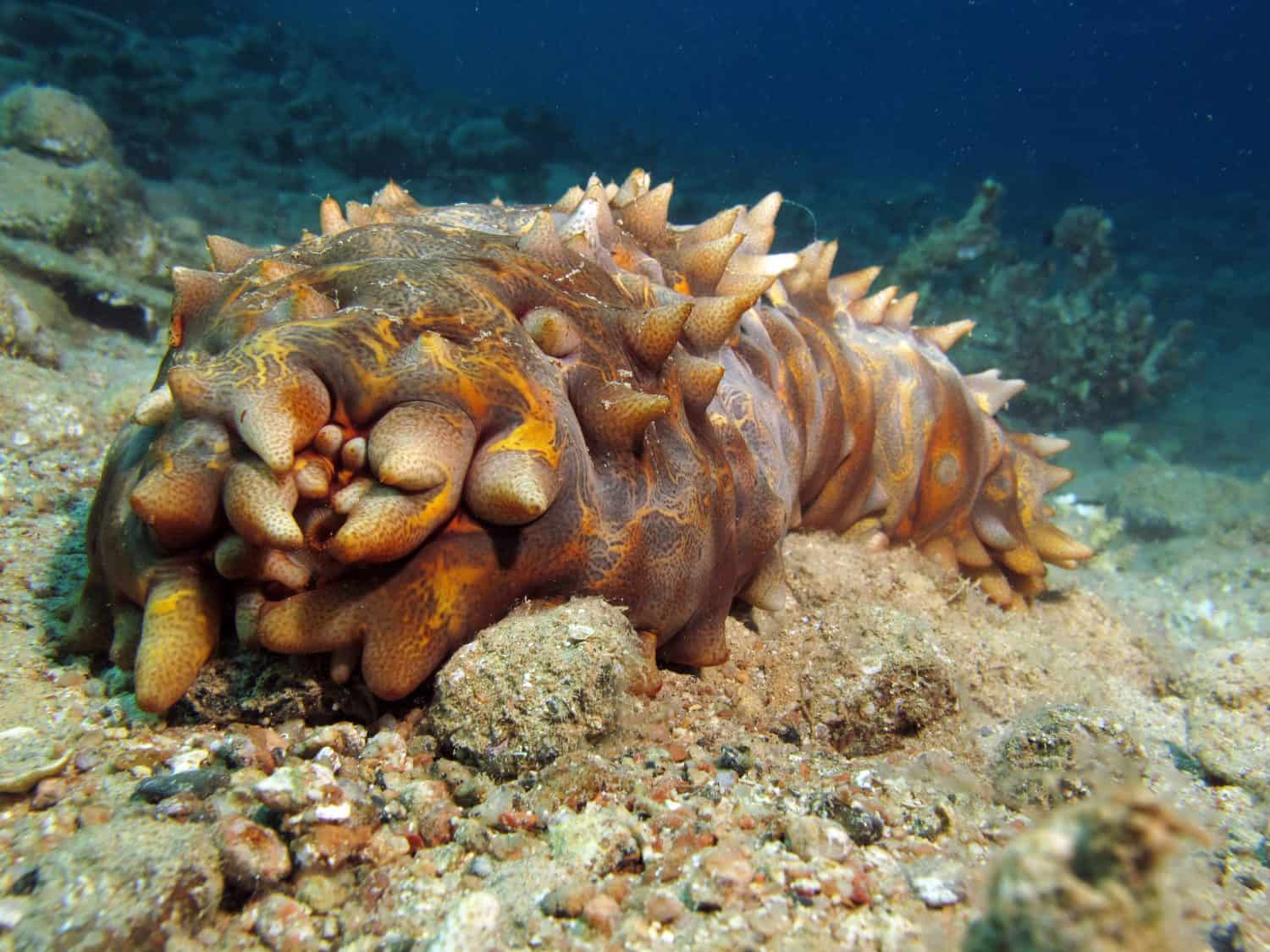
Sea cucumbers have openings at both ends of their tubular bodies.
©Laura Dts/Shutterstock.com
Yes! What goes in must go out. The humble sea cucumber has two openings: one at each end of its tube-like body. One opening is its mouth, which is used as you would expect — to ingest its food. The other opening is a bit more complicated. The sea cucumber’s anus, located at the other end of its body, actually has a few purposes. The primary purpose is to expel the non-digestible parts of whatever the sea cucumber ate. So when you see a sea cucumber shooting soft tubes of matter out of its anus, it is actually pooping.
But the sea cucumber’s anus has other purposes, too. Another use is to breathe. Each time a sea cucumber opens its anus, it takes in water. Inside its rectum, there are tiny organisms called respiratory trees whose sole job is to extract oxygen molecules from the water. Another, far more unexpected use is as a home for other sea creatures, like the star pearlfish. These tiny, eel-like fish find an unsuspecting sea cucumber, then wait for it to exhale through its anus. At that point, the pearlfish dives in and makes itself at home. Most pearlfish are content simply to live inside the sea cucumber for shelter and protection. But not all. The Encheliophis pearlfish treats its host as a meal, eating away at the sea cucumber from the inside.
How Sea Cucumbers Help Keep Our Oceans Clean
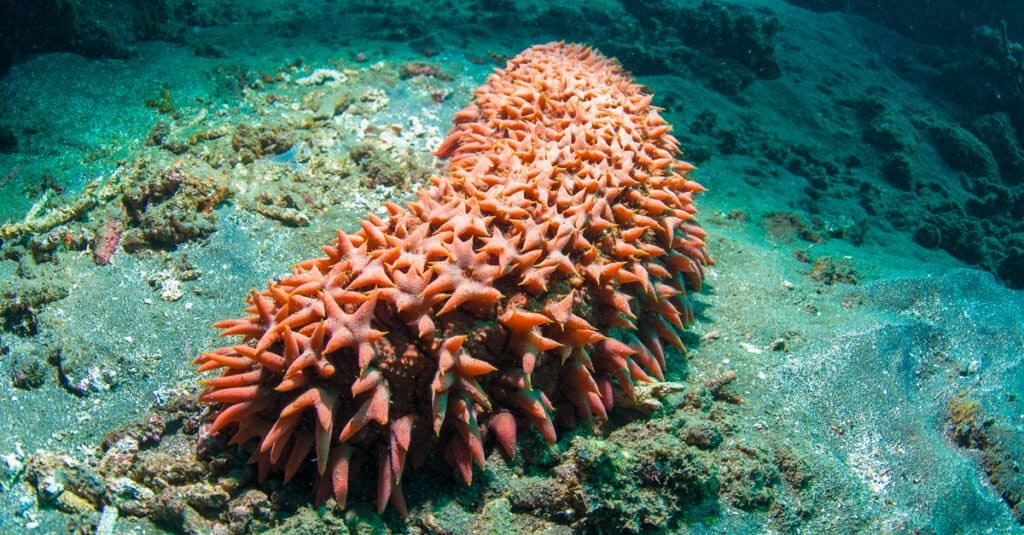
The unassuming sea cucumber plays a vital role in ocean health.
©e2dan/Shutterstock.com
Sea cucumbers are an important part of the overall ocean ecosystem. More accurately, their poop is the star of the show. Researchers studying the pooping habits of sea cucumbers recently discovered that on a single coral reef, three million sea cucumbers generated more than 64,000 metric tons (141 million pounds) of poop in one year. The same research found that a single sea cucumber generates more than 30 pounds of poop in a single year. That’s a lot of poop. But it is poop with a purpose.
As sea cucumbers suck up sediment, they consume the tiny organisms within it. Aerating the sediment helps release nutrients into the water. Their digestive system breaks down the ingested material, absorbing some nutrients for energy and expelling the rest. When they poop, nutrients like nitrogen, calcium carbonate, and ammonia are released back into the seawater, adding even more nutrients to the ecosystem. For sea cucumbers living in coral reef environments, the calcium carbonate is especially helpful. It’s a building block for healthy corals. The more the sea cucumbers poop, the healthier the coral reef system can become.