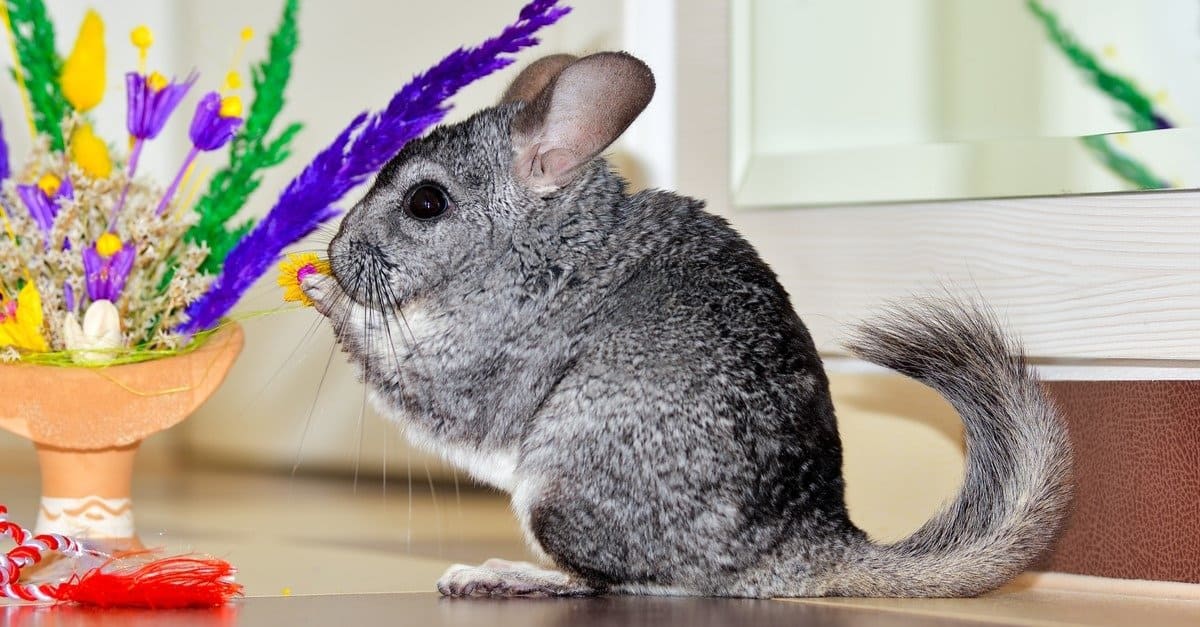

Chinchillas are native to South America, specifically in the Andes Mountains, where they live at heights of around 14,000 feet. At first glance, chinchillas may look closely related to rabbits because of their fluffy fur resembling hares, long incisors that love gnawing, long whiskers that almost extend to the ground, and their cute, bead-like eyes. However, chinchillas are rodents, like mice, whereas rabbits are lagomorphs. Chinchillas are actually more closely related to guinea pigs than to either mice or rabbits. This is because chinchillas are rodents, and they belong to the huge family Rodentia. Like all rodents, chinchilla teeth keep growing throughout their lifetime and must constantly be used to keep them at a proper length. Chinchillas have increased in popularity as pets, so it’s important to understand their teeth so you can ensure they remain healthy. So, let’s take a look at everything you need to know about chinchilla teeth!
What Kind of Teeth Do Chinchillas Have?
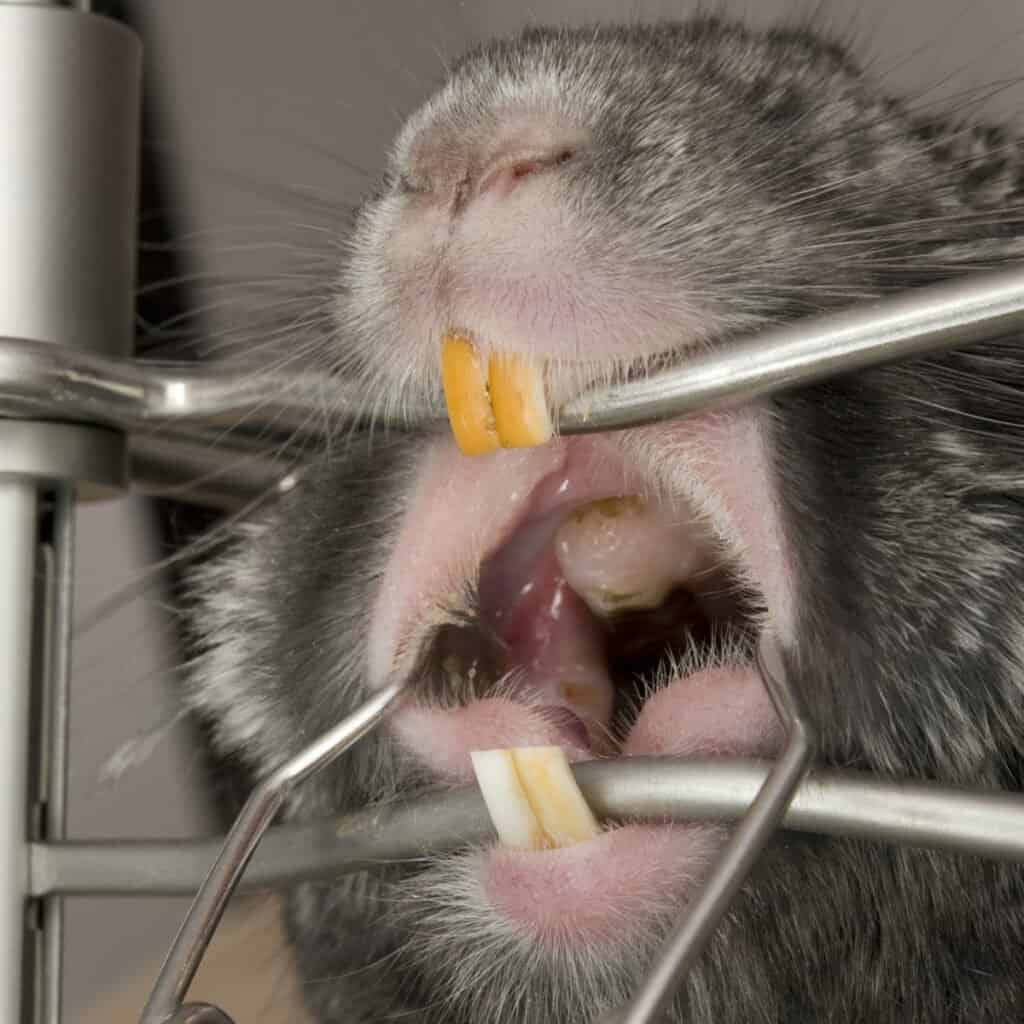
Chinchillas have long and sharp incisors that never stop growing.
©hightowernrw/Shutterstock.com
As rodents, chinchillas have the same feature distinct to all members of the rodent family: long and sharp incisors that never stop growing. The upper and lower mandible of a chinchilla has two pairs of long incisors, or front teeth. At the back of these incisors are premolars and molars, which are known as “cheek teeth,” following a gap called a diastema.
Rodents are well-known for their constant chewing. This is where they got their name in the first place. The term “rodent” was translated from a Latin word that meant “to gnaw,” and chewing things is not just a coincidental favorite sport for all rodent species. Gnawing is vital for them to help keep their incisors at a reasonable length. As their incisors keep growing, they need to wear them down by continuously chewing on things.
Chinchillas’ teeth are open-rooted, allowing them to grow throughout their lives. A chinchilla’s set of incisors grows an average of two to three inches every year. Overgrown chinchilla teeth can cause serious dental conditions, which is why chinchillas must continue to gnaw regularly, even in captivity, to prevent their teeth from overgrowing.
How Many Teeth Do Chinchillas Have?
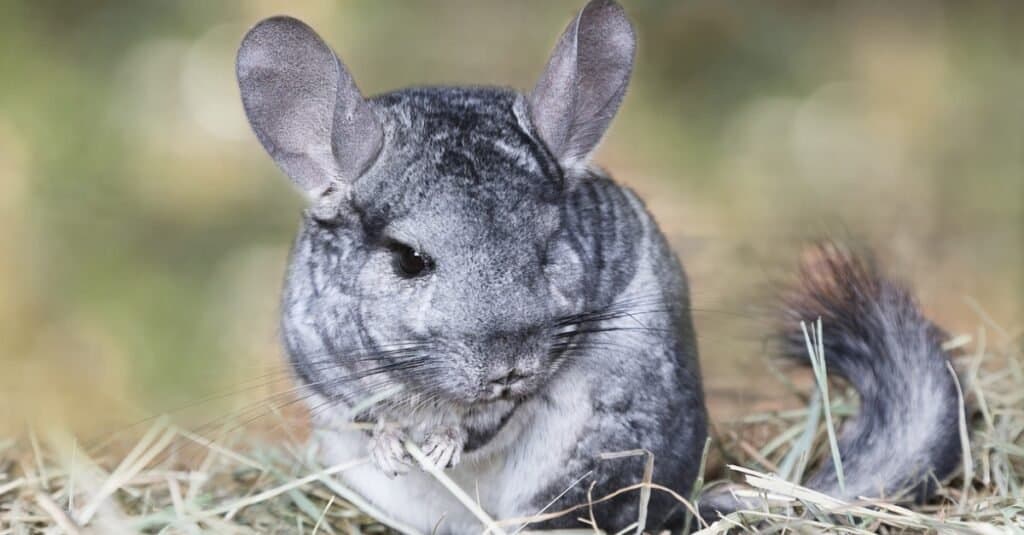
Chinchillas have 20 teeth.
©iStock.com/alkir
Chinchillas have a total of 20 teeth that include four incisors, four premolars, and 12 molars. They have two pairs of incisors protruding from both the upper and lower mandibles. Since chinchillas lack canine teeth, these front incisors are followed by a huge gap called a diastema. Chinchillas are not carnivores, so they are in no need of sharp canine teeth. This gap helps chinchillas in grinding their food more thoroughly.
The typical formula for a chinchilla dentition is incisors 1/1, canines 0/0, premolars 1/1, molars 3/3 = 20. These numbers represent the number of teeth in each quadrant of the upper and lower jaws. The molars at the rear of their mouth may seem short, but they have open roots, too, and can extend to excessive lengths.
What Do Chinchillas Use Their Teeth For?
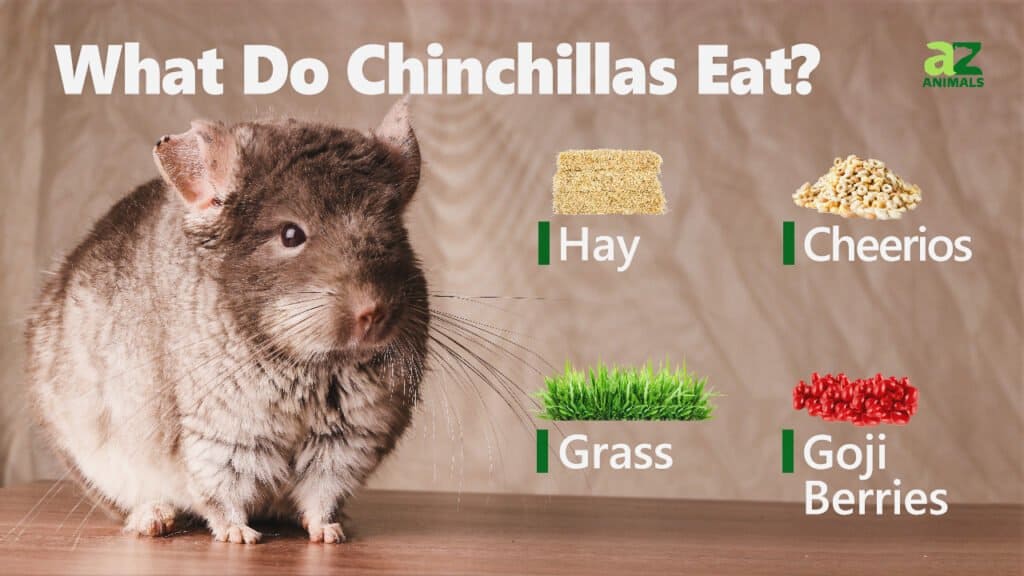
Chinchillas are herbivores, and their diet mainly includes plant material and vegetation. Chinchillas use their cheek teeth in grinding, crushing, and juicing their food, such as hay, grass, seeds, bark, leaves, and twigs. However, their front incisors are used to cut rough shrubbery and vegetation in their natural habitat. When in captivity, chinchillas still need to constantly gnaw on elm, maple, apple, birchwood, tree bark, and anything else that they find chewable to help them wear away their front teeth and keep them at a proper length.
Do Chinchillas Have Baby Teeth?
Chinchillas are monophyodonts, which means they only grow one set of teeth throughout their lifetime. Baby chinchillas are born with a set of teeth that continue to grow as they age and wear away as they use them. The same set of teeth that they were born with will be the same set of teeth they have throughout the rest of their lives. This is why dental care for chinchillas is very important, as their teeth are susceptible to wear and several dental problems.
For chinchillas in captivity, there are excellent chewing materials that you can offer so they can keep up with their ever-growing incisors. Even inside cages, chinchillas still need to chew on the same type of abrasive items they are used to in the wild. Pumice stones and chew blocks are two excellent choices, as these also keep chinchilla teeth healthy. Chinchillas can chew on other materials, including apple, pear, birchwood, orange, ash, elm, and peach.
Common Dental Problems
Chinchillas have hypsodont teeth, which extend beyond the gums and often need tooth trims. If a chinchilla’s teeth overgrow, they bend and stick out between the rodent’s lips. These overgrown front teeth can get stuck between things or extend beyond the roof of their mouth. This overgrowth hinders proper feeding, and as the molars overgrow too, their crowns might develop sharp edges that may cause sores inside the chinchilla’s gums and cheeks.
Apart from feeding your pet chinchilla with items they can gnaw on, there are other methods for keeping their teeth at a proper length as well, such as incisor and molar tooth trimming. However, this should only be done by a trained professional, such as a veterinarian.