
Quick Take
- Blue whales are the largest animals.
- In its embryonic stages, the blue whale has tooth buds, which suggest that these massive mammals once had teeth.
- Refining the suction-feeding process was essential for the evolutionary survival of blue whales.
Blue whales (Balaenoptera musculus) are the largest animals in the sea and the largest animals known to have ever existed, reaching lengths of up to 100 feet and weighing 200 tons. As you might imagine, blue whales have massive internal organs to match their enormous size: a heart that can weigh over 400 pounds, a liver that can weigh 1000 pounds, and enormous lungs with a capacity of 5000 liters, which allows them to stay submerged for up to 90 minutes. However, one thing that blue whales do not have is large teeth. They don’t have any teeth at all. Instead, blue whales have hundreds of baleen plates in their mouths. These brush-like, bristly filters strain tiny prey, like krill, from seawater, which blue whales swallow whole. Continue reading to learn everything you need to know about the blue whale’s baleen plates.
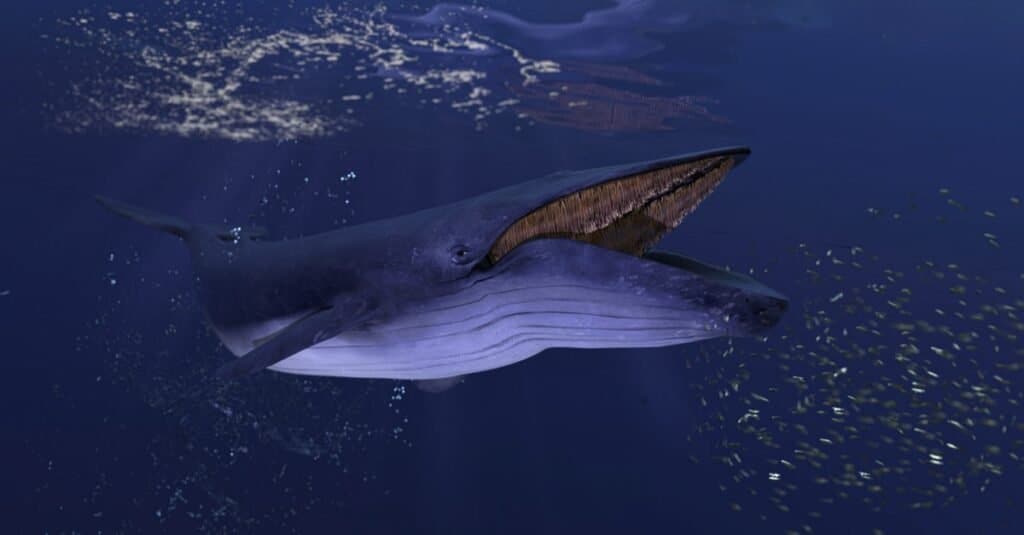
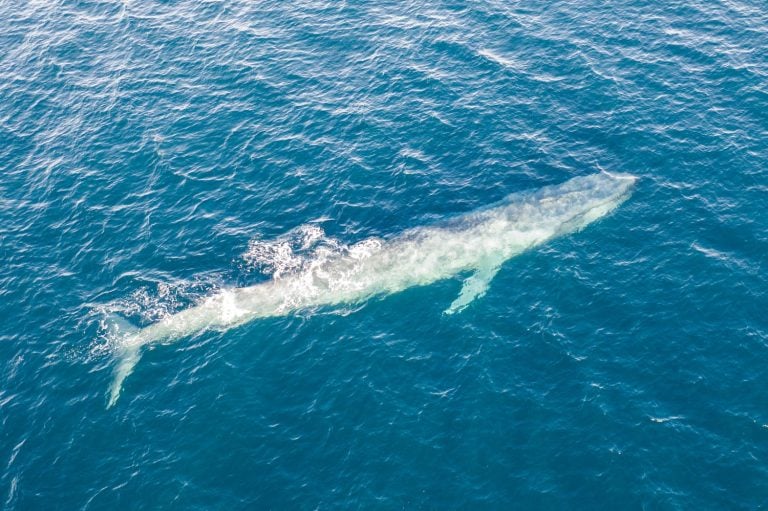
Blue whales have baleen plates instead of teeth, which they use to filter prey.
©bekirevren/Shutterstock.com
What are Baleen Plates?
There are two types of whales, toothed whales (Odontoceti) and baleen whales (Mysticeti). There are approximately 80 species of toothed whales as compared to 15 baleen whale species. Toothed whales are predators of large prey, while baleen whales are filter feeders that feed on krill, plankton, and other microscopic organisms by straining huge volumes of water through their baleen plates to capture these tiny, abundant food sources.
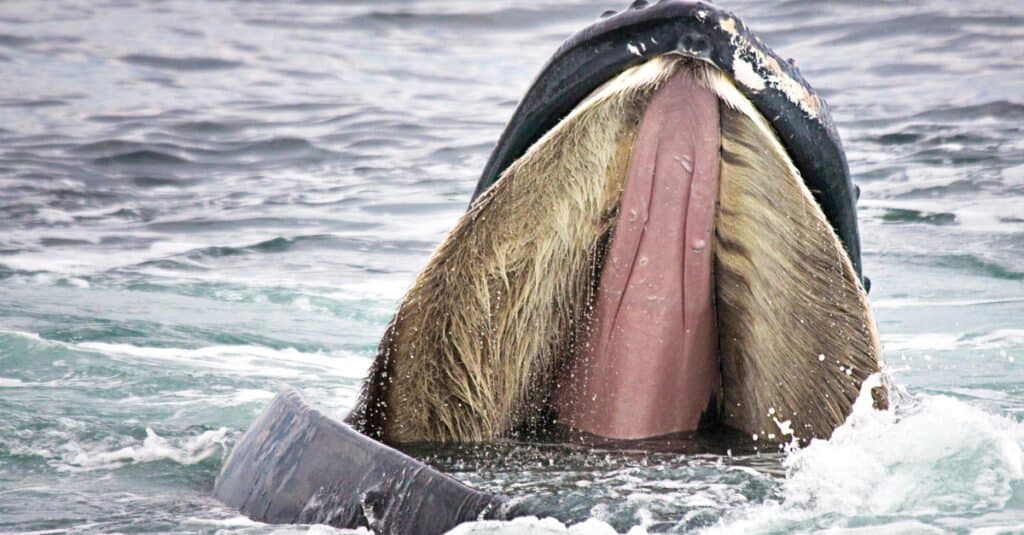
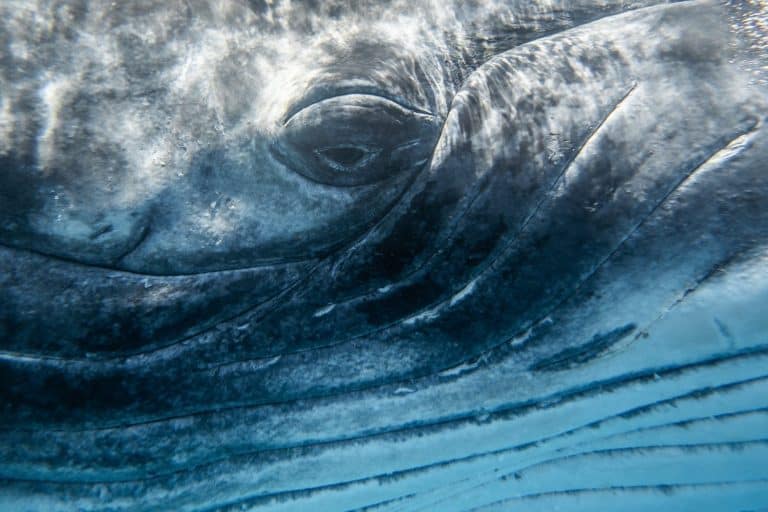
A closer look at baleen inside a humpback whale’s mouth
©John Tunney/Shutterstock.com
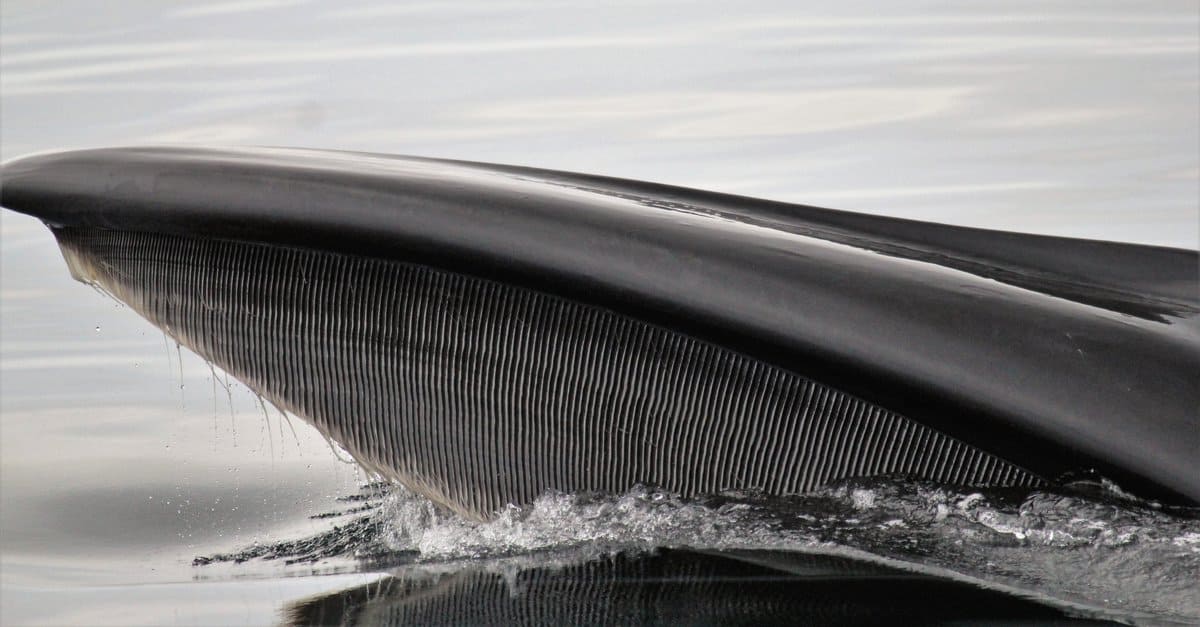
In place of teeth, blue whales have bristly hair-like structures that are adapted to strain food from the water. Called baleen plates, they work like a sieve to filter millions of liters of water and tons of microscopic food.
Baleen plates grow from the whale’s upper jaw and are made of keratin, the same protein as human hair and nails.
Blue whale baleen plates contain hundreds of tiny tubes called tubules. These tubules split apart to form a frayed, hair-like edge on the side facing the tongue and develop into a dense mat of bristles at the bottom of the plate. Each strand of baleen keratin measures less than an inch in diameter.
How Many Baleen Plates Do Blue Whales Have?
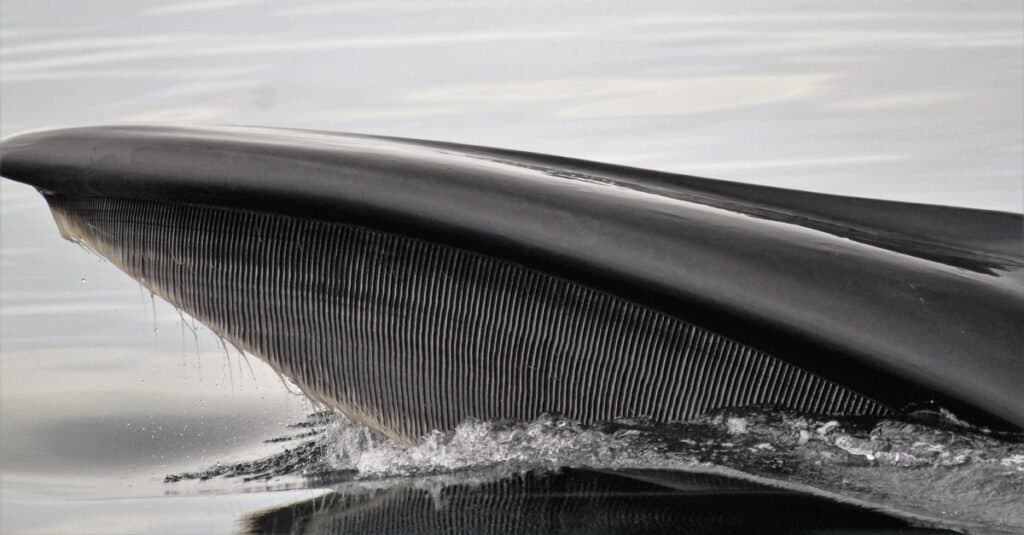
Ballen plates can be up to three feet long.
©Sharlyn/Shutterstock.com
Baleen is composed of strong bristles packed between two rigid plates that look similar to vertical blinds across the top jaw.
Blue whales use these bristle-like plates as a giant sieve to filter krill from the ocean. An adult blue whale can have baleen that is up to three feet long. Like human fingernails and hair, they continuously grow and wear down over time.
The hard parts of the baleen plates that face the inside of the blue whale’s mouth wear down much more quickly than the bristles, causing the bristles to stick out and intertwine. This entanglement forms a filter that allows water to flow more easily, but traps prey.
Blue whales typically have between 270 and 395 baleen plates on each side of their upper jaw.
What Do Blue Whales Use Their Baleen For?
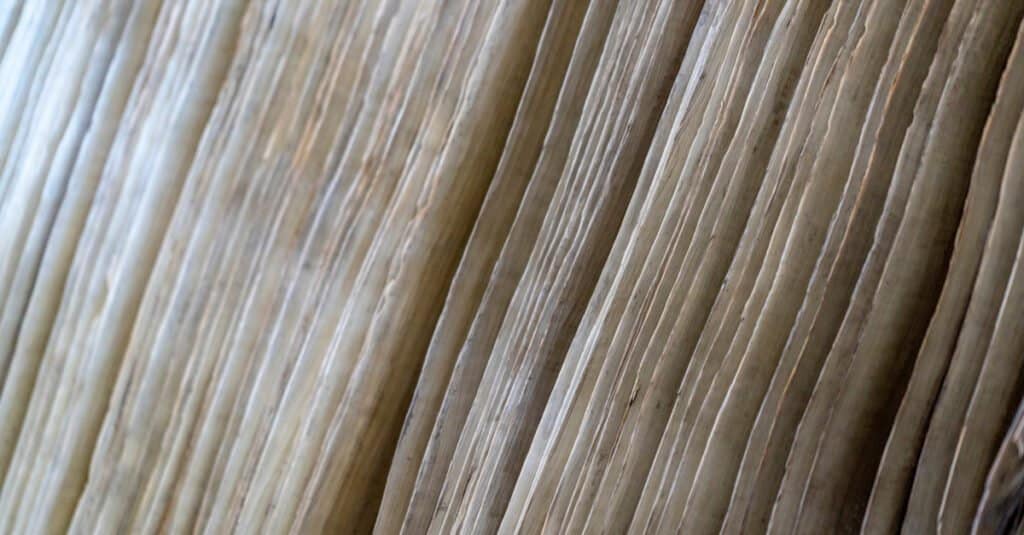
Blue whales use their baleen plates to catch krill and other zooplankton.
©Andrea Izzotti/Shutterstock.com
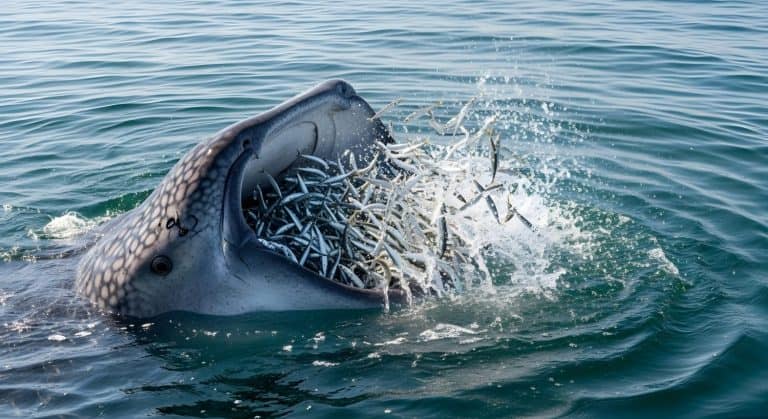
Blue whales use their baleen plates to filter water containing masses of krill and other zooplankton, trapping them inside to eat as the water flows back out. The blue whale partially seals its mouth after sucking in krill and water simultaneously, forcing the water to pass through the baleen as it returns to the ocean. The baleen bristles of blue whales can catch krill and other zooplankton as small as 0.02 inches.
Blue whales accelerate when approaching a mass of krill, because opening their massive mouths slows them down significantly. This is why blue whales only eat when there are huge masses of krill. Blue whales have been observed to eat up to 16 tons of krill in a single day.
Blue Whales May Have Once Had Teeth
Scientific studies suggest that blue whales may have once had teeth. Like their land-dwelling predecessors, early blue whales are thought to have had teeth. Some whales began feeding by suction, using their tongues to draw in prey, and evolved. The absence of teeth is thought to have resulted in the development of baleen on the jaw, which enabled whales to sift their prey. Although baleen whales do not grow teeth, tooth buds can still be seen during their embryonic stages.