
Quick Take
- Chinchillas have the densest fur of any land mammal, with up to 80 hairs growing from a single follicle.
- Chinchilla’s dense fur prevents parasites from surviving in it.
- A chinchilla’s coat doesn’t dry when wet due to the density, so they bathe with fine volcanic ash to remove oil and dirt.
- Female chinchillas are pregnant for about 111 days, and their babies are born fully developed with open eyes and all their fur.
Cute and cuddly, the chinchilla is an adorable resident of the Andes Mountains, which it calls home. A member of the rodent family, the chinchilla derives its name from the Chincha people, an Indigenous Andean tribe who historically hunted it for its most impressive attribute: its thick, soft fur.
However, this same attribute also led to the wild chinchilla being placed on the IUCN’s list of endangered species. Overhunting for fur contributed significantly to the decline of wild chinchilla populations. Today, both species of wild chinchillas, the long-tailed and the short-tailed, are considered endangered and are protected by laws in the South American countries where they live. Read on to discover what makes the wild chinchilla so special.
Built for Life at High Altitude
If you’re going to survive at high altitudes, you need to stay protected from the icy cold temperatures and endless snowfall. Chinchillas have survival down pat thanks to their impressive fur coats, which provide excellent insulation and extreme warmth. One reason is the extreme density of the chinchilla’s fur. It is the densest fur of any land mammal. Up to 80 hairs grow from a single follicle. This causes the rodent’s fur to be so thick that not even a single flea can survive in it.

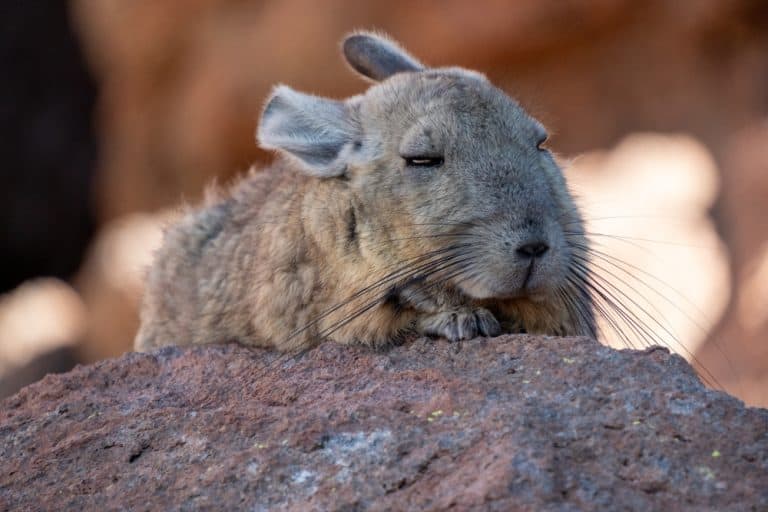
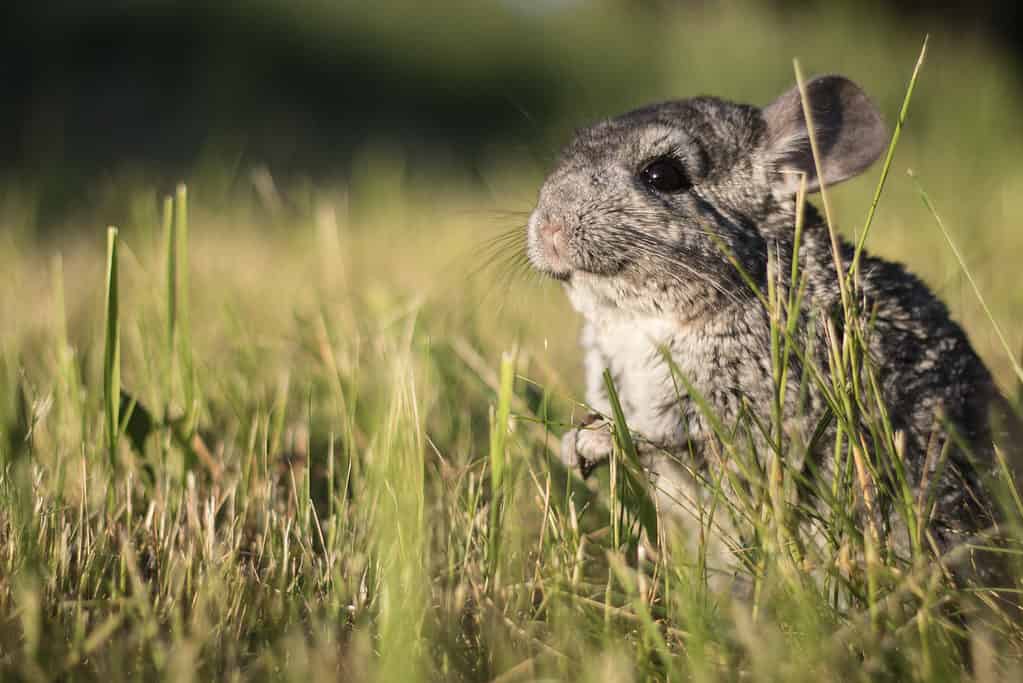
Chinchillas are native to the Andes Mountains of South America.
©Daz Hopper Photography/Shutterstock.com
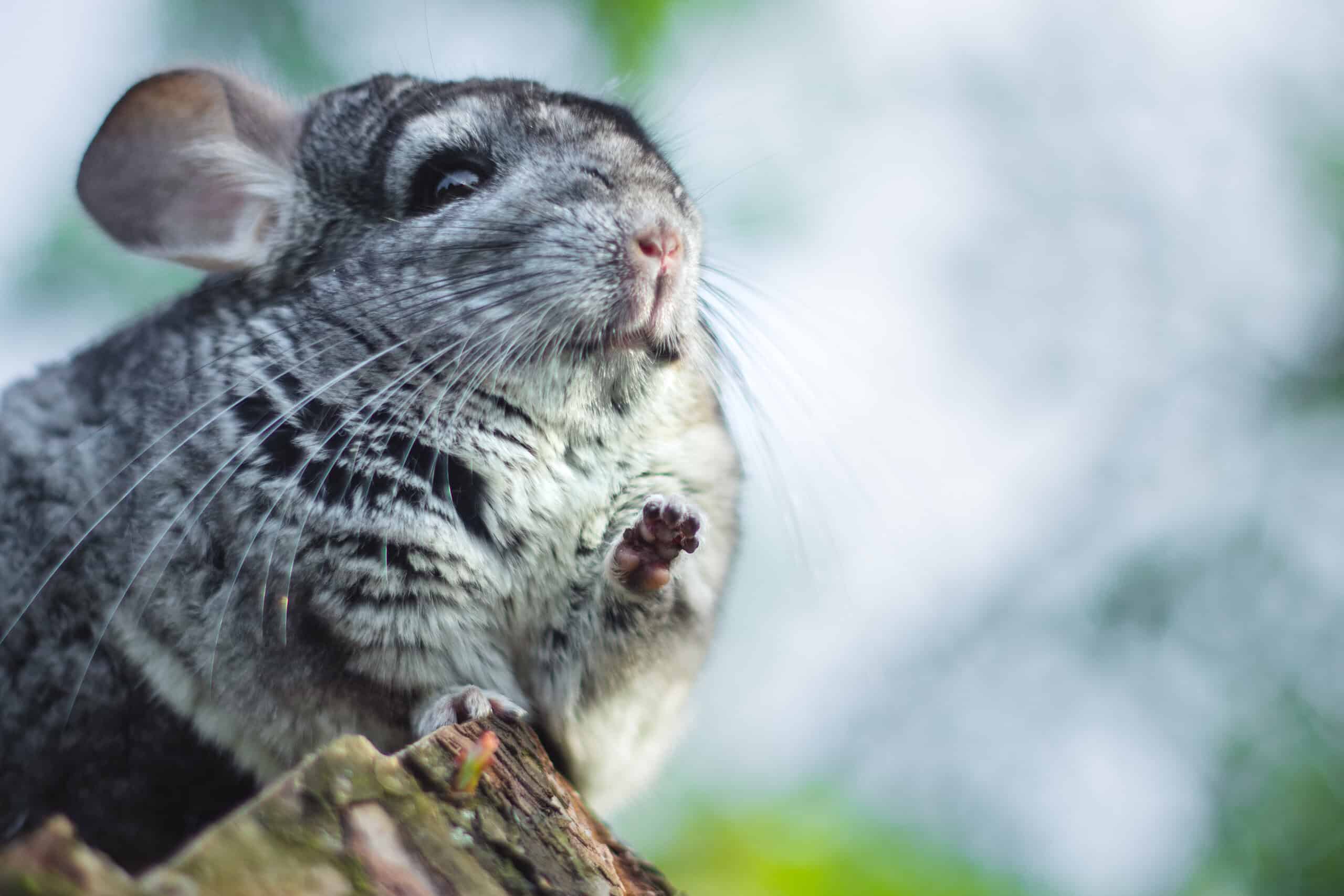
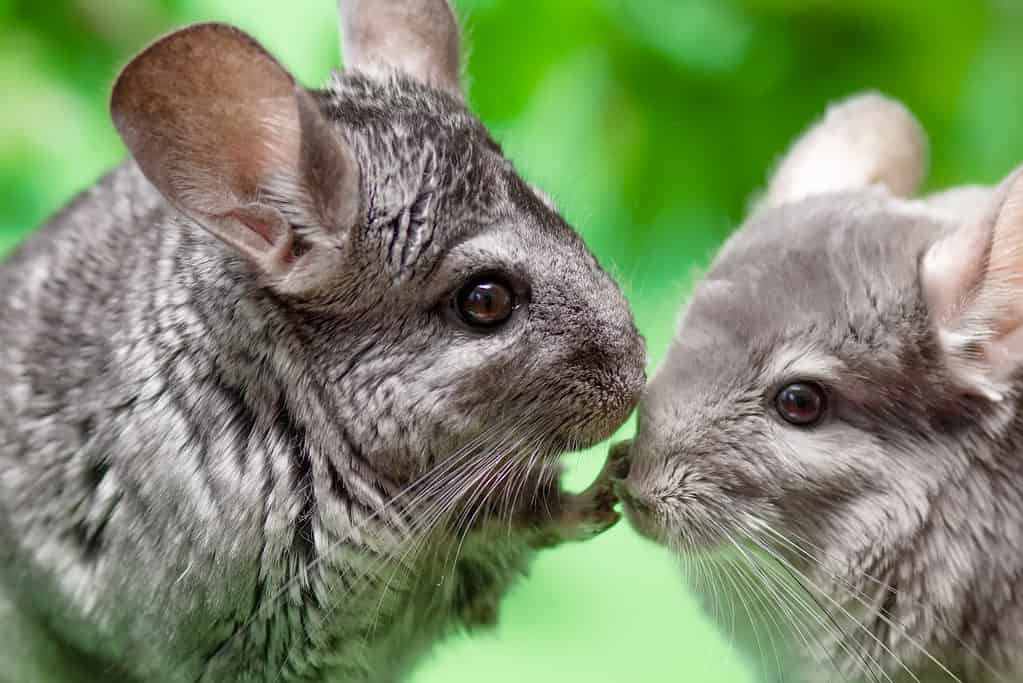
The chinchilla’s fur is also among the softest of any mammal, often described as feeling like velvet. Their coats are what earned chinchillas the nickname “living cloud.” Chinchilla coat colors are typically brownish- or bluish-gray, allowing them to blend seamlessly with their rocky surroundings.
In addition to their incredibly dense and insulating fur, chinchillas have another adaptation to cope with life at high altitudes. Their red blood cells are adapted to carry more oxygen than other rodents. This means they can easily survive in the thin air found at even the tallest mountain elevations.
No Water, No Problem
As you’d expect, life at extremely high altitudes doesn’t offer an abundance of fresh water in the winter months. This is not a problem for the chinchilla. They’ve evolved over the centuries to deal with the limited water supplies typical of high elevations. When it comes to staying hydrated, chinchillas get most of the moisture they need from the succulent vegetation found in their habitat. Their bodies have developed ways to conserve that moisture more efficiently than their rodent counterparts at lower altitudes.
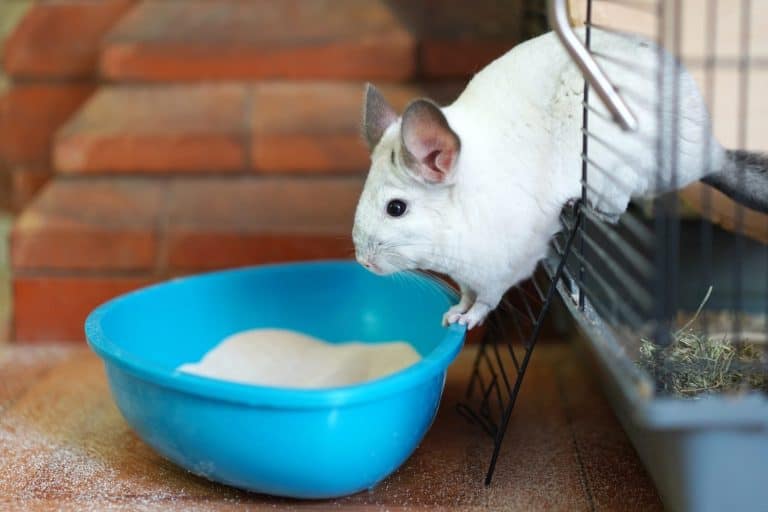
Chinchillas take baths with fine volcanic ash instead of water.
©PawelPonichtera/Shutterstock.com
The same is true when it comes to staying clean. While lower-elevation rodents and other mammals usually turn to water for their bathing needs, chinchillas do not. They use dust in the form of fine volcanic ash to absorb oil and dirt and keep their coats clean while maintaining their insulating properties.
However, dust bathing is about more than just a lack of water at extreme altitudes. Chinchilla fur is so dense that it cannot get wet and air-dry like normal animal fur. Constantly wet chinchilla fur would lead to fungal infections, which can cause secondary infections that could kill the animal. So dust bathing it is.
Living Their Best and Sassiest Lives
Chinchillas are most active at dusk and dawn, which helps them avoid predators and the extreme heat of Andean mountain summers. To cope with the low light conditions during their prime activity times, chinchillas have developed large eyes with vertical pupils, well-suited for the darker hours before and during sunrise and sunset. They also have very sensitive hearing, which is especially helpful when visibility is low.
Chinchillas have large eyes with vertical pupils.
©Creatopic/Shutterstock.com
Chinchillas are social animals, usually living in large colonies of over 100 individuals for protection from predators. This social structure provides safety in numbers. They communicate through vocalizations such as growls and chattering, as well as scent marking and body language.
Even if they get singled out by a hawk, snake, or puma (their most common natural predators in the mountains), chinchillas are extremely agile with powerful hind legs. To avoid predators, chinchillas can jump up to six feet in the air thanks to those leg muscles.
They have other techniques to escape predators, including urine spraying and a behavior called “fur slip,” in which the chinchilla voluntarily releases a large patch of its dense coat, leaving the attacker with a mouthful of fur while the chinchilla escapes. New fur will grow in within a few months.
Like other rodents, chinchillas are primarily herbivores. They eat mostly bark, seeds, and plant leaves, but will occasionally consume a small insect if one is available. A chinchilla’s teeth grow constantly, meaning they must continuously gnaw to keep their incisors in check, much like their distant rodent cousin, the beaver.
Female chinchillas have a relatively long pregnancy, averaging around 111 days—a marathon by rodent standards. As a result of this unusually long pregnancy, chinchilla babies are born with full fur and open eyes. They are fully developed, miniature versions of their parents, ready for action from day one.
Chinchillas in the wild live to about ten years on average, but in domestic situations, they can live much longer—sometimes even up to 20 years. They make the most of those years, displaying big personalities thanks to their intelligence and unique behaviors. Chinchillas are definitely not your average rodent.