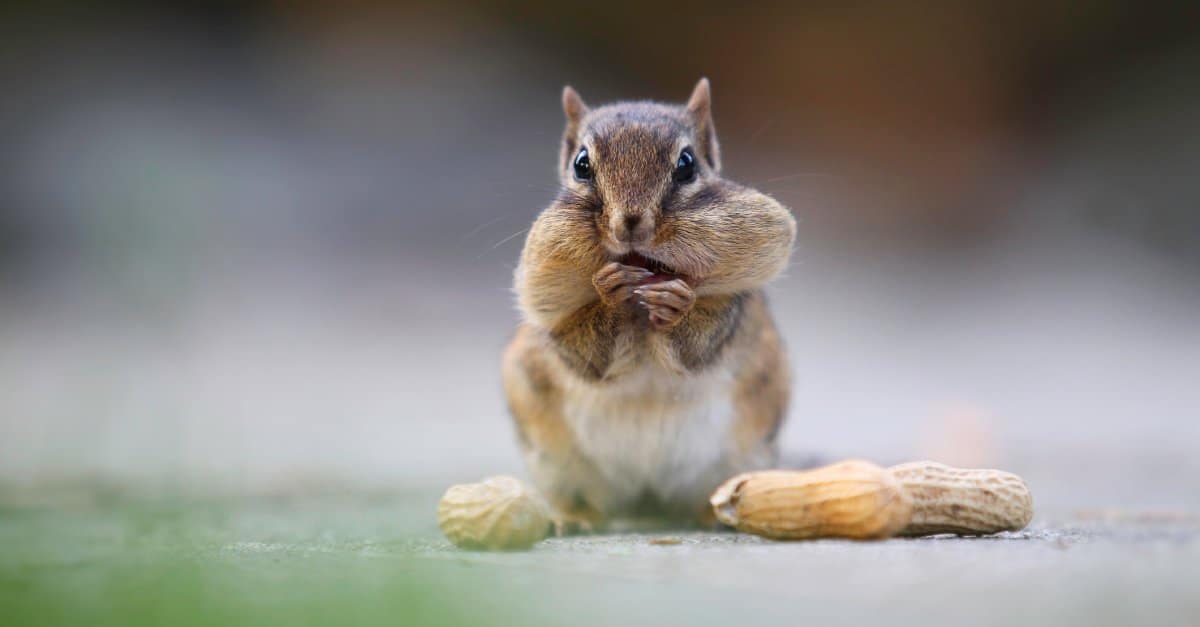

Chipmunks are rodents belonging to the family Sciuridae. They are native to North America, although one species, the Siberian chipmunk, is found in Asia. It’s easy to spot a chipmunk by the distinctive stripes that run across its back. The term chipmunk is believed to derive from the Ojibwe word ‘ajidamoo,’ which means ‘one who descends trees headlong.’ Over the years, they have also been known as striped squirrels, timber tigers, or ground squirrels. Chipmunks are a fairly common sight in North America, and many people associate them with playfulness and fun. However, while they are certainly well-known creatures, few people can answer the question, “What do chipmunks eat?” In this article, we’ll answer this question for you and many more about chipmunks. Let’s get started!
What Do Chipmunks Like to Eat?
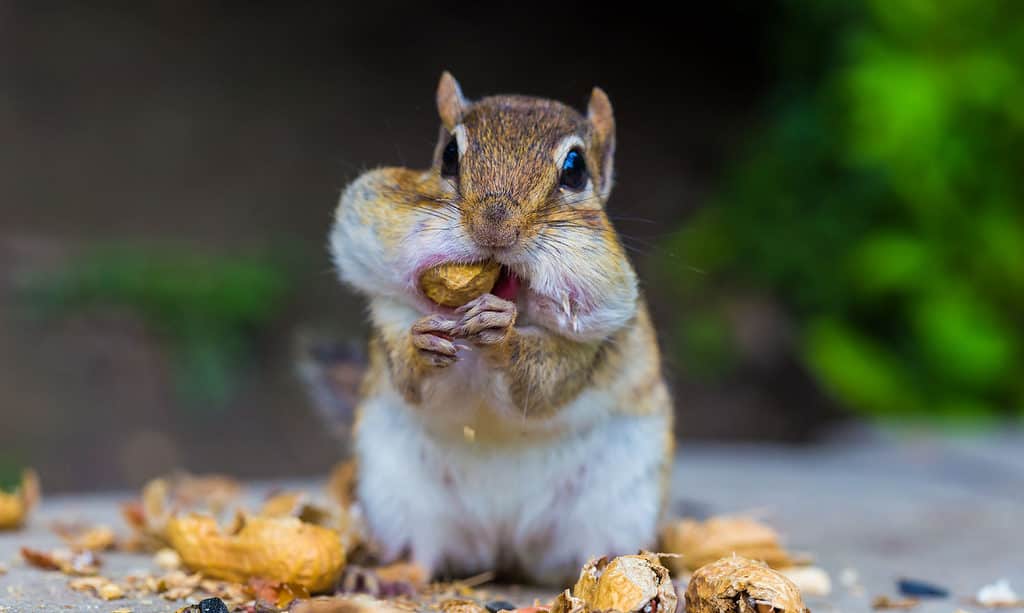
Nuts can be good for your heart, lower unhealthy cholesterol levels, and reduce the risk of high blood pressure.
©colacat/Shutterstock.com
Chipmunks are omnivores, meaning they eat both plant and animal matter. However, their diet largely consists of seeds, nuts, fruits, grains, insects, worms, and fungi. They are not known to be picky eaters, although they may show a preference towards certain foods. While they do eat animal protein, plants make up the bulk of a chipmunk’s diet. That said, chipmunks are opportunistic feeders and will eat whatever they can stuff into their cheeks. Therefore, they tend to eat a wide variety of foods.
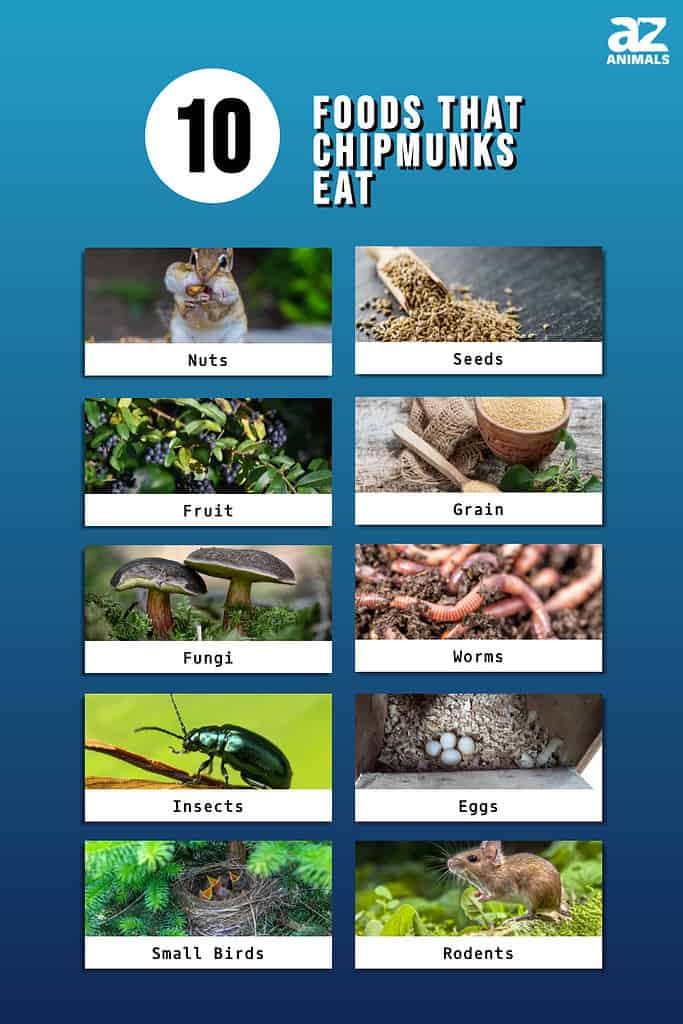
In addition, chipmunks live in various habitats, although they typically live in forested environments. As such, the foods they eat can vary depending on where they live. However, generally speaking, there are several foods that most chipmunks like to eat. We’ve identified 10 foods that chipmunks frequently like to eat both in the wild and captivity. While there’s no way of knowing just how much chipmunks like these foods, it’s safe to assume they’re the favorites. These 10 foods include:
- Nuts
- Seeds
- Fruit
- Grain
- Fungi
- Worms
- Insects
- Eggs
- Small birds
- Other rodents
How Do Chipmunks Hunt and Forage for Food?
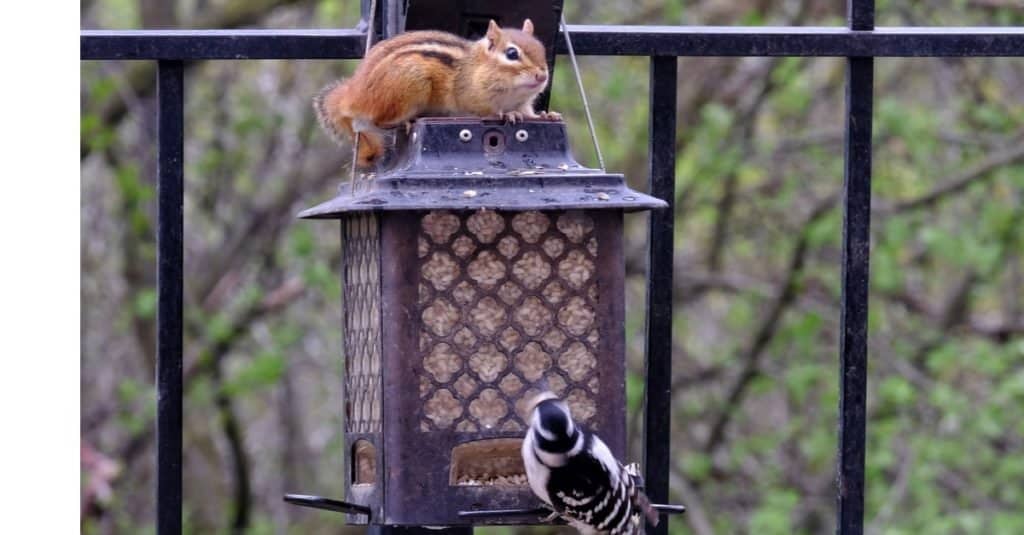
Chipmunks rely on their excellent eyesight and keen smell to find food.
©Nancy Salmon/Shutterstock.com
Chipmunks possess the same senses as humans and rely on their senses to find food. That said, while they can see, smell, taste, touch, and hear, they use certain senses more than others, particularly when searching for something to eat. By far, a chipmunk’s most useful senses for finding food are sight and smell. Chipmunks process visual information very quickly, which allows them to see things clearly in “slow motion.” They can detect motion well, which enables them to both escape predators and hunt for food. However, their sight is limited during the night, so you’ll mostly only see them during the day. Meanwhile, their sense of smell is also quite potent, and they often rely on their olfactory senses to find and distinguish different foods. While they do use touch, taste, and hearing to survive, these senses are less useful when finding food.
Chipmunks are diurnal, meaning that they are most active during the day. When awake, chipmunks spend most of their time foraging for food on the ground. While foraging, they will look under rocks, logs, and bushes to find food. This helps them find food while also avoiding predators.
Upon finding food, chipmunks will either eat what they find or save some food for the lean winter months. Any food that is saved is either stored in the chipmunk’s burrow or buried in a safe spot underground. Additionally, chipmunks will often pack extra food inside their cheeks to be eaten later. Along with foraging, chipmunks will also hunt for insects and scavenge for eggs and small, vulnerable animals.
What Do Pet Chipmunks Eat?
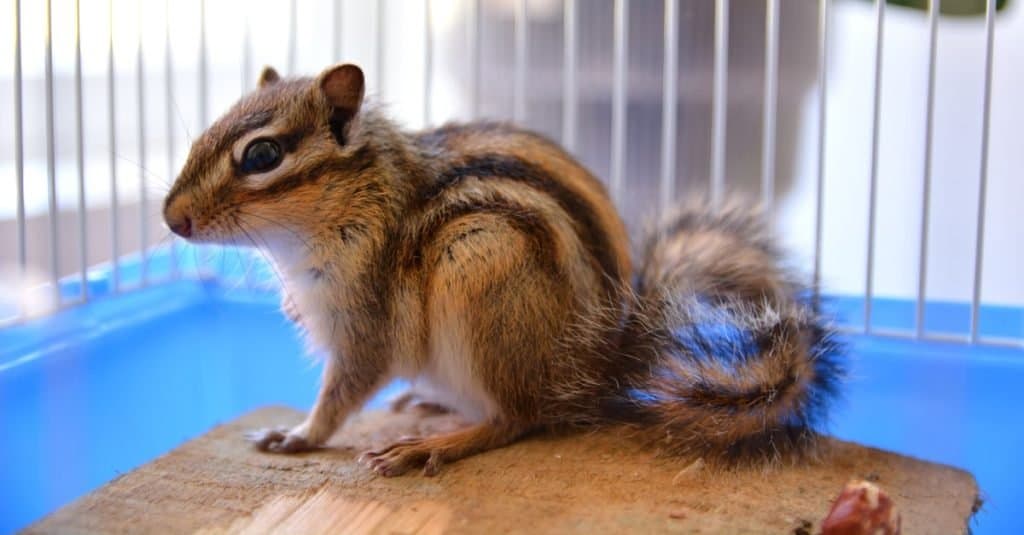
Grains, cereals, nuts, seeds, and fruits will make up the majority of a pet chipmunk’s diet.
©Emmily/Shutterstock.com
Due to their cute appearance and lively nature, some people opt to keep chipmunks as pets. If you decide to keep a chipmunk as a pet, you’ll want to make sure you feed it a proper diet. To stay healthy, a chipmunk will require a mix of grains, fruits, nuts, and vegetables, as well as plenty of water. Generally speaking, they need grains and cereals such as oats, barley, corn, millet, and wheat. You can also provide a pet chipmunk with nuts such as acorns, pine nuts, pecans, and hazelnuts.
Chipmunks may eat a small amount of fresh fruit such as apples, berries, pears, or bananas. Optional vegetables include carrots, sweet potatoes, bean sprouts, and leafy greens. Some owners opt to feed their pet chipmunk a pellet diet suitable for rodents. If you go this route, you’ll want to consult with an expert to ensure the formula is right for your chipmunk.
What Do Baby Chipmunks Eat?
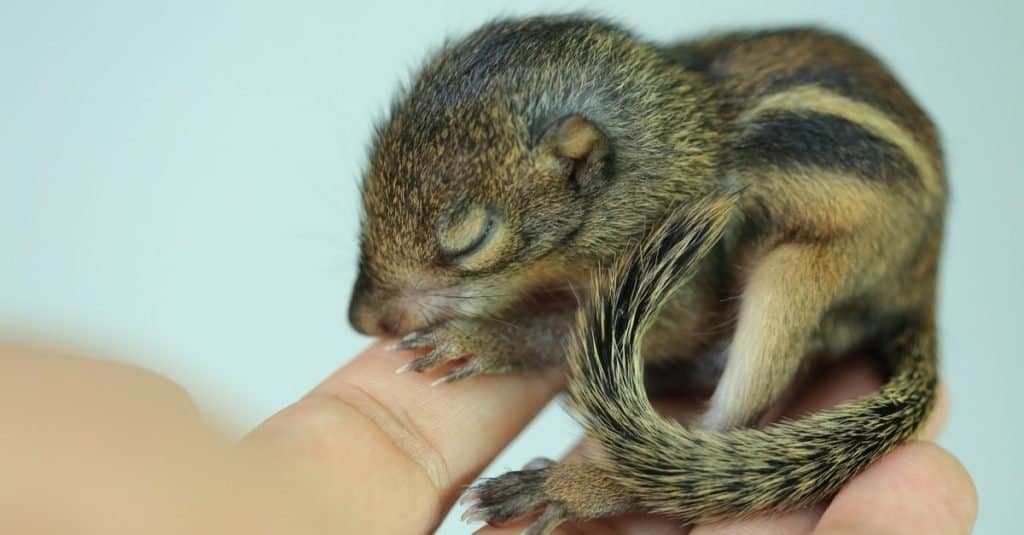
Chipmunk babies measure only around the size of a bean when born.
©wanpapha sichana-in/Shutterstock.com
Baby chipmunks, or pups, are born blind and measure around the size of a bean. At first, baby chipmunks rely on their mother’s milk and the food she provides to survive. After around two months, young chipmunks are old enough to venture out on their own.
If you are raising a baby chipmunk, you can feed it puppy milk replacer. You can typically purchase this from your vet’s office or a local pet store. Once a baby chipmunk is around a month old, you can start to feed it soft, solid foods. Start with soft fruits like apples or berries. You can also introduce softened pellet formulas suitable for rodents. Eventually, you can start to add things like seeds, nuts, and veggies to your baby chipmunk’s diet.